

Heart pine is dense, resin-rich heartwood from mature pine trees, most closely associated with old-growth longleaf pine, or Pinus palustris. It is a botanical softwood valued for its amber color, strong grain, historic character, and use in reclaimed heart pine flooring.
Commercial labels don’t guarantee one species, age, grade, or heartwood percentage, so buyers need written specifications before comparing products. This guide explains what heart pine is, how to identify it, and how to select, install, finish, and source it responsibly.
Table of Contents
What Is Heart Pine?
Heart pine refers to the darker inner wood of a mature pine, particularly the dense heartwood of the longleaf pine tree. Antique material usually comes from factories, mills, warehouses, bridges, and homes built with large southern pine timbers.
Heartwood vs. Sapwood
Heartwood occupies the nonliving inner part of a mature trunk. Extractives and resin often make it darker, heavier, and more resistant to some forms of decay than the pale outer sapwood.
Sapwood transports water and dissolved minerals while its cells remain active. On a freshly cut board, it usually appears creamy white or yellow beside the amber heartwood, though aging and finish can reduce that contrast.
The word “heart” identifies a part of the tree, not a formal age or flooring grade. A board may contain both heartwood and sapwood, so ask what heartwood percentage the grade permits.
Longleaf Pine Connection
American heart pine is closely connected with longleaf pine, a fire-adapted species native to the southeastern Coastal Plain. Mature trees can produce dense wood with pronounced dark latewood bands and substantial resin.
The longleaf pine tree has long needles commonly grouped in bundles of three, large cones, and a juvenile grass stage during which the young tree resembles a tuft of grass. Those botanical traits identify a living tree, but they can’t confirm the species of a finished pine floorboard.
Commercial Label Variations
Heart pine isn’t a single universal retail grade. The label may describe reclaimed old-growth longleaf pine, newer longleaf heartwood, or mixed southern yellow pine containing an unspecified amount of heartwood.
That variation explains why two products carrying the same name can differ sharply in color, ring count, hardness, width, and price. A useful invoice states the species or species group, source, cut, grade, moisture content, sapwood allowance, and reclaimed status.
Softwood Classification
Heart pine is a softwood because it comes from a conifer rather than a broadleaf flowering tree. The botanical term doesn’t mean every pine board feels soft or performs poorly under foot traffic.
Dense latewood bands can resist wear better than pale earlywood, producing a faint ridged texture after years of use. Comparisons with yellow pine need care because that trade group can include longleaf, loblolly, slash, and shortleaf pine.
Heart Pine History and Heritage
Heart pine became a major building material because historic longleaf forests supplied large, straight, resinous timbers. Much of today’s antique stock survives inside structures erected before faster-growing plantation pine became common.
Historic Longleaf Forests
Longleaf ecosystems once covered about 90 million acres across the southeastern United States. Logging, farming, development, fire suppression, and conversion to other pine types reduced that area to a small share of its former extent.
America’s Longleaf Restoration Initiative reports about five million acres in recent estimates. That number describes the broader longleaf ecosystem, not five million acres of old-growth timber available for flooring.
Traditional Timber Uses
Builders used dense old-growth pine for factory beams, warehouse decking, bridges, railroad structures, ship parts, residential framing, and flooring. Its high resin content also supported the naval-stores trade in tar, pitch, rosin, and turpentine.
- Heavy beams and columns in textile mills
- Thick warehouse decking and factory floors
- Bridge members and railroad structures
- Residential joists, framing, siding, and flooring
- Shipbuilding timbers and naval-stores products
Slow-grown timbers often show tight rings and large clear sections that are hard to obtain from younger trees. Still, slow growth alone doesn’t prove species, age, or structural capacity.
Reclaimed Building Sources
Reclaimed heart pine commonly comes from textile mills, tobacco warehouses, industrial plants, barns, and waterfront buildings. Salvage crews remove the timbers, scan for metal, dry them when needed, and remill the usable sections into flooring blanks.
Recovery losses can be substantial. A massive beam may contain deep checks, bolt channels, rotten ends, oil penetration, or embedded fasteners, leaving far less finished flooring than its original volume suggests.
Provenance and Character Marks
Nail holes, black fastener stains, mortises, circular-saw marks, and worn edges provide visible history. Under bare fingers, filled nail holes can feel glassy beside the warmer, lightly rippled grain of old pine.
Buyers paying for a named mill, warehouse, or construction date should request recovery records and lot photographs. Character marks confirm prior use, but they don’t independently establish the board’s species or exact age.
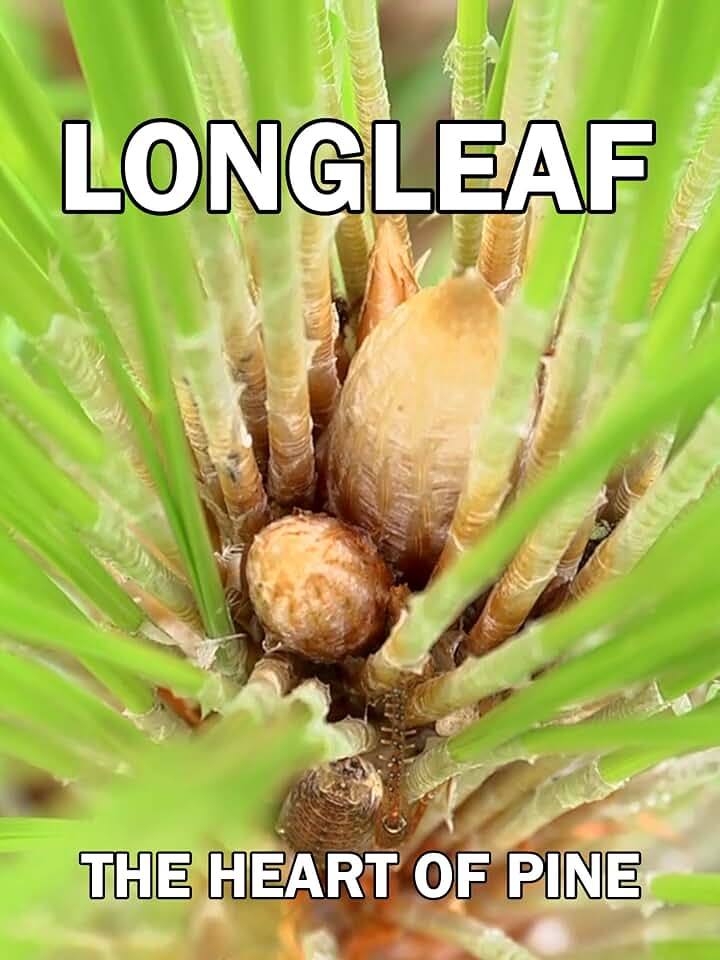
Longleaf: The Heart of Pine
- Explores the heritage of longleaf pine
- Adds context to heart pine history
- Useful for reclaimed lumber enthusiasts
- Connects forests with traditional wood use
- A thoughtful resource for pine lovers
 Buy on Amazon
Heart Pine Properties and Identification
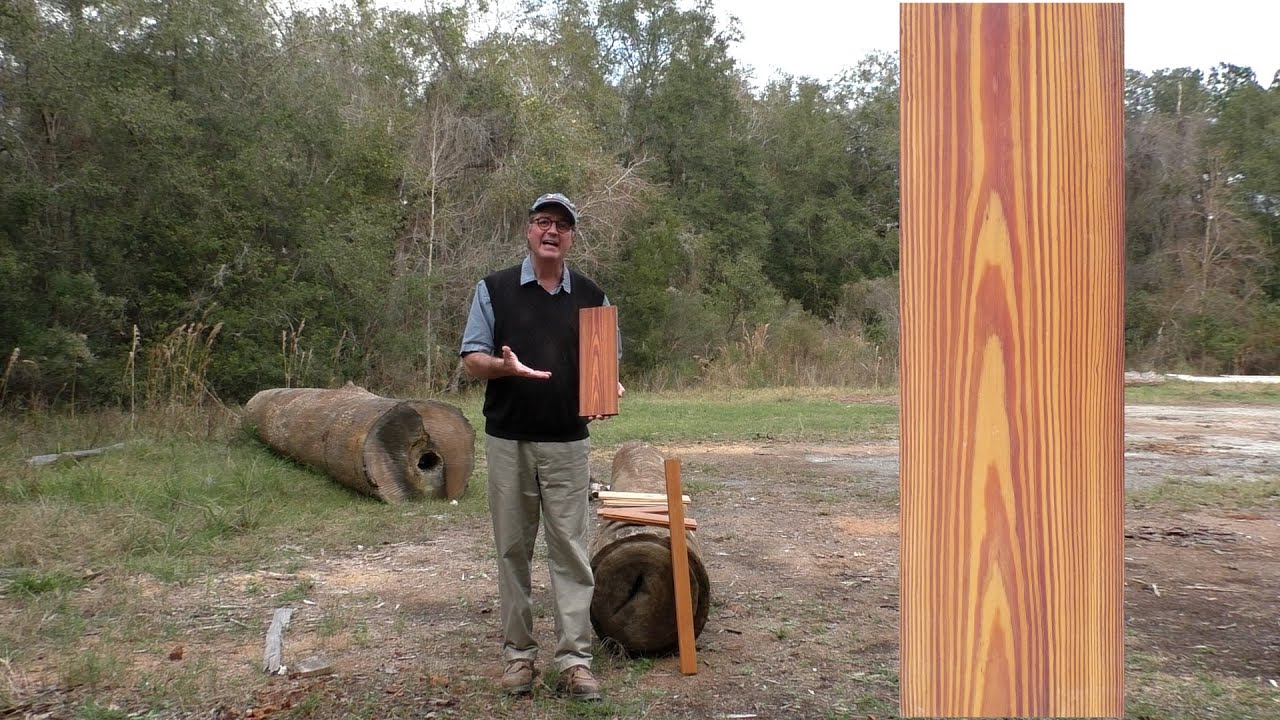
Heart pine typically has warm golden-to-red heartwood, bold growth rings, resinous surfaces, and a noticeable pine scent when freshly cut. Those clues support identification, but documentation beats appearance when species and provenance affect the price.
Color, Grain, and Resin
Colors range from golden yellow and orange to reddish brown and deep brown. Oxidation, ultraviolet light, age, resin, and finish chemistry can make the wood appear warmer than a newly milled sample.
Dark latewood stripes stand firmly above softer earlywood after prolonged wear, creating a subtle washboard feel. Plain-sawn boards display sweeping cathedral patterns, while vertical-grain material shows straighter lines; see this guide to wood grain patterns for cut-related examples.
Fresh machining may release a sharp, sweet pine-resin scent, and pitch pockets can feel tacky under a fingertip. Resin isn’t proof of longleaf origin because several southern pines produce resinous wood.
Published Longleaf Pine Data
Reference figures describe average clear wood tested under defined conditions; they don’t guarantee every reclaimed floorboard. The Wood Database longleaf pine profile lists the following approximate values.
| Property | Longleaf pine reference value | Practical meaning |
|---|---|---|
| Average dried weight | 41 lb/ft³ or 655 kg/m³ | Relatively dense for pine |
| Janka hardness | 870 lbf or 3,870 N | More dent-prone than common oak averages |
| Modulus of rupture | 14,500 psi | Bending-strength reference, not a flooring grade |
| Modulus of elasticity | 1.98 million psi | Measures stiffness in clear test specimens |
| Crushing strength | 8,470 psi | Compression reference parallel to grain |
| Radial shrinkage | 5.1% | Movement across quartered orientation |
| Tangential shrinkage | 7.5% | Greater movement across flat-sawn orientation |
| Volumetric shrinkage | 12.2% | Total drying-related volume change |
Recovered timbers may differ from these averages because species, ring density, resin content, defects, and moisture history vary. Mechanical values also don’t certify an old board for structural reuse.
Janka Hardness vs. Oak
Published longleaf pine hardness is about 870 lbf, compared with roughly 1,290 lbf for red oak and 1,360 lbf for white oak. Standard data places longleaf below both oak species in resistance to indentation.
Some sellers report antique stock near 1,200 lbf or higher, but that figure can’t represent every heart pine product. Request the species, sample method, ring density, and test basis before relying on a wood hardness rating.
Janka testing measures the force needed to embed a steel ball into wood. It doesn’t measure finish durability, fastener holding, board stability, subfloor support, or how easily a damaged surface can be repaired.
Dimensional Movement
Heart pine gains and loses moisture as indoor humidity changes, causing most movement across board width. Tangential shrinkage exceeds radial shrinkage, so plain-sawn boards tend to move more in width than vertical-grain boards.
Wide planks make seasonal movement easier to see. Dry winter conditions can open narrow gaps, while humid periods can close those gaps or produce edge pressure if installation clearances and indoor moisture control are poor.
Visual Identification Clues
Useful clues include amber or red-brown heartwood, strong earlywood-to-latewood contrast, resin, tight rings, and straight grain on quartered faces. Reclaimed boards may also retain nail holes, oxidation around iron, mortises, and historic saw marks.
- Inspect clean end grain with magnification.
- Compare heartwood and sapwood distribution.
- Count rings across a measured distance rather than describing them as “tight.”
- Look for resin canals and pronounced latewood bands.
- Record milling marks and fastener evidence separately from species clues.
Identification Limits
Dark color isn’t proof of longleaf pine because stains, heat, oxidation, and finish can alter appearance. Tight rings don’t reveal an exact age, and nail holes establish previous use rather than species.
Finished flooring can be harder to identify after surface color and edge profiles have been altered. High-value or conservation work may call for end-grain examination, source records, or laboratory wood identification.
Supplier Documentation
Request a written product specification before approving a sample. A small presentation board can omit the sapwood, defects, color range, and shorter lengths present in the full production lot.
- Botanical species or commercial species group
- Reclaimed, newly harvested, or blended source
- Documented building or recovery source
- Guaranteed heartwood percentage and sapwood allowance
- Ring-density range, if marketed
- Kiln-drying or heat-treatment record
- Moisture content at shipment
- Metal-detection and contaminant-screening process
- Written grade rules and defect limits
- Representative full-lot sample policy
Reclaimed vs. Newly Harvested Heart Pine
Reclaimed heart pine offers historic patina, tight rings, and character marks, while newly harvested material usually offers cleaner stock and easier repeat ordering. The better choice depends on design goals, replacement needs, documentation, budget, and tolerance for variation.
Reclaimed Heart Pine
Reclaimed material is sawn from previously used beams, decking, and structural lumber. It can provide large old-growth sections, deep oxidation, dense ring patterns, and marks that connect a floor to its former building.
Risks include embedded metal, oil, soot, coatings, insect channels, hidden decay, and limited quantities. Heavy defect removal may reduce usable yield, while patches and filled holes can raise finishing labor despite a lower character-grade material price.
Newly Harvested Heart Pine
New heart pine can come from managed longleaf forests or other southern pine sources. Buyers often receive cleaner boards, clearer forestry documentation, more consistent milling, and a better chance of obtaining matching replacement stock.
Younger trees may produce wider rings, smaller heartwood zones, and more pale sapwood than antique beams. Confirm that “new heart pine” means the species and heartwood content expected, rather than a broad marketing name for mixed pine.
Source Comparison Factors
| Factor | Reclaimed heart pine | Newly harvested heart pine |
|---|---|---|
| Source | Historic timbers or decking | Managed contemporary forests |
| Ring density | Often tight, but variable | Often wider, depending on stand and age |
| Patina | Oxidized and historically worn | Fresh, lighter, and more uniform |
| Character marks | Nail holes, stains, checks, and patches | Usually fewer former-use marks |
| Metal risk | Moderate to high before screening | Low |
| Available quantity | Limited by recovery lot | More predictable |
| Replacement | Difficult to match later | Often easier to reorder |
| Documentation | Recovery records vary | Forestry records may be clearer |
| Price pattern | Premium recovery and processing costs | Varies by species, cut, and heartwood content |
Compare actual specifications rather than choosing from source labels alone. A clean, accurately milled new floor may suit a formal room better, while a documented reclaimed lot can carry the irregular surface and historic texture wanted in a restoration.
Supply and Replacement Differences
A reclaimed lot is finite. Once its matching boards are installed or sold, later repairs may require custom milling, salvaged attic boards, or visibly different replacement pieces.
Keep several full-length boards from the original order in a dry, conditioned location. Offcuts help with small patches, but full spare boards give installers room to stagger joints during a larger repair.
Heart Pine Flooring Benefits and Uses
Heart pine flooring combines warm color, strong grain, repairable solid wood, and historic character. Its main trade-offs are denting, moisture movement, resin-related finishing problems, lot variation, and the high cost of premium reclaimed stock.
Flooring Benefits
The amber-to-red surface develops richer tones with light and oxidation. Dense latewood bands create strong visual rhythm, while old fastener marks can make scratches and future wear feel less visually disruptive.
Thick solid flooring can often be sanded several times if enough wood remains above the tongue. A skilled refinisher can also make local repairs to penetrating-oil systems without stripping an entire room, subject to the installed product’s repair instructions.
Flooring Limitations
Standard hardness data shows that longleaf pine dents more easily than red or white oak. High heels, dog claws, dropped cookware, and grit can mark the softer earlywood first, leaving visible compression dents.
Seasonal movement becomes more noticeable as board width increases. Resin can slow finish curing or create adhesion trouble, and later replacement boards may differ in color after the original floor has aged in sunlight.
Suitable Interior Rooms
Heart pine suits living rooms, dining rooms, bedrooms, libraries, offices, retail areas, and historically sensitive renovations. It works best where indoor humidity remains controlled and occupants accept natural wear as part of the floor’s appearance.
Entry areas need effective mats because sand behaves like abrasive paper under shoes. Felt pads, soft casters, and runners at repeated traffic paths reduce concentrated scratches and dents.
Kitchens and Damp Areas
Heart pine can work in a kitchen when spills are wiped up quickly and the finish remains intact. Dishwashers, ice makers, sinks, and refrigerator supply lines present the greatest leak risk, so accessible shutoffs and leak alarms are useful safeguards.
Full bathrooms, wet rooms, and persistently damp basements carry greater risk. Standing water can enter seams, swell board edges, stain iron residue, and keep concealed wood wet after the face appears dry.
Wide-Plank Flooring
Wide-plank heart pine flooring highlights cathedral grain and reduces the number of seams across a room. Reclaimed beams can yield impressive widths, but wide solid boards demand closer control of moisture, subfloor flatness, fastening, and seasonal humidity.
Don’t select width from a showroom photograph alone. Lay several sample boards across the room because bold grain and color variation appear much stronger over a large floor than on one small sample.
Exterior Wall Boards
Heart pine can be milled into exterior wall boards, but interior flooring isn’t automatically suitable for siding. Exterior use requires an appropriate profile, drainage path, fasteners, coating schedule, end treatment, and allowance for wetting and drying.
Resin content alone doesn’t make every board weatherproof. Use material graded and milled for exterior exposure, back-prime where the coating maker calls for it, seal cut ends, and keep boards clear of soil and splashback.
Flooring Cuts, Grades, and Milling
Cut orientation controls grain appearance, milling yield, price, and part of a board’s dimensional behavior. Grade names vary between suppliers, so a written defect schedule carries more value than labels such as “clear,” “select,” or “character.”
Vertical-Grain Flooring
Vertical-grain flooring has growth rings meeting the face at a steep angle, often around 60 to 90 degrees. The face shows straight, narrow lines and usually moves less in width than plain-sawn stock.
This cut often costs more because suitable timber is limited and milling produces lower face-width yield. Some sellers use “vertical grain” and “quartersawn” loosely, so request the accepted ring-angle range.
Rift-Sawn Flooring
Rift-sawn heart pine presents straight, restrained grain with ring angles between common plain-sawn and quartered orientations. It can suit formal interiors where cathedral patterns would feel too active.
True rift cutting creates substantial waste, which raises cost. Confirm whether a quote covers true rift stock or a mixed rift-and-quartered visual grade.
Plain-Sawn Flooring
Plain-sawn boards show broad cathedral patterns and strong contrast between earlywood and latewood. The method usually delivers better lumber yield and more width options than quartering.
Its ring orientation permits more seasonal width movement. Proper moisture readings and stable indoor conditions matter more as board width increases.
Clear and Select Grades
Clear and select grades favor uniform faces with fewer knots, holes, checks, and stains. Premium lots may also limit sapwood and color variation, but no universal rule defines either label.
Ask for maximum knot diameter, sapwood allowance, permitted checks, patch rules, and average length. A photograph of the full laid-out lot reveals grade variation more accurately than a single ideal board.
Character Grade
Character grade may include sound knots, nail holes, bolt holes, stains, checks, saw marks, and color variation. It can produce an expressive historic floor, yet the allowed features differ sharply among mills.
A low material price can be offset by labor for sorting, plugging, filling, trimming, and finish touch-ups. Approve the filler color under the final coating because a dark filler can look like scattered black dots across pale sapwood.
Milling Specifications
A flooring order should state thickness, face width, tongue-and-groove profile, end matching, edge treatment, back relief, and surface condition. Engineered products also need a declared wear-layer thickness and approved installation method.
- Solid or engineered construction
- Finished thickness and face width
- Tongue-and-groove dimensions
- End-matched or square-ended boards
- Micro-beveled or square edges
- Back relief or flat back
- Unfinished, factory-finished, or site-finished surface
- Wear-layer thickness for engineered flooring
- Moisture-content range at shipment
Widths, Lengths, and Yield
Random-width and random-length orders use recovered wood efficiently, but they require layout planning. Fixed long lengths and wide clear faces carry premiums because fewer sections of a reclaimed timber meet those requirements.
Ask whether invoiced square footage is measured before or after defect removal. A nominal 500-square-foot lot with poor ends and unusable holes may provide much less than 500 usable feet.
Installation, Finishing, and Maintenance
Successful heart pine flooring installation depends on measured moisture, normal building conditions, a flat subfloor, compatible fasteners or adhesive, and finish testing on project boards. Fixed acclimation periods can’t replace moisture readings.
Site and Subfloor Conditions
The building should be enclosed, wet trades complete, and heating or cooling operating near occupied conditions. Crawl spaces and basements need working drainage, vapor control, and ventilation or conditioning suited to the building design.
Check subfloor flatness with a long straightedge and correct high seams or low areas before laying boards. A hollow beneath a plank can produce a dull drumming sound, movement underfoot, broken adhesive contact, or squeaks.
Moisture Testing Benchmarks

Test multiple boards from several bundles and record subfloor readings across the room. Use meter settings or correction tables suited to the species and density rather than accepting one reading from the top board.
National Wood Flooring Association technical guidelines commonly use a maximum difference of about four moisture-percentage points for boards under three inches wide and two points for boards three inches or wider over wood subfloors. Product, adhesive, and project instructions can set tighter limits.
Concrete requires the quantitative test accepted by the adhesive and flooring system. Surface meters can locate suspicious areas, but they don’t replace a specified slab-moisture test where the system calls for one.
Installation Methods
Nail-down installation is common over wood subfloors, while glue-down systems can work over prepared wood or concrete substrates. Wide solid planks may call for adhesive assistance plus mechanical fastening, subject to the flooring maker’s instructions.
Floating installation belongs to engineered flooring manufactured for that method. Radiant heat also needs written approval covering construction, plank width, surface-temperature limits, moisture targets, and startup procedure.
Practical notes from real-world use: open several bundles before layout and arrange boards under the room’s actual light. A red board that seems moderate in a dim workshop can glow orange beside a sunny window, while pale sapwood becomes much more obvious across adjacent courses.
Waste and Lot Matching
Simple rooms with consistent material may need roughly 5% to 10% overage. Character grades, diagonal layouts, complex borders, aggressive defect selection, and random widths can require more.
Mix boards from multiple bundles during installation to distribute color and grain. Ordering the full quantity at once reduces the chance that a later shipment differs in ring density, oxidation, milling, or finish tone.
Metal and Contaminant Screening
Reclaimed lumber can conceal nails, screws, staples, bolts, wire, lead coatings, oil, soot, and industrial residue. Suppliers should de-nail and metal-detect material before milling, yet installers should scan suspect boards again before sawing or sanding.
A planer knife striking hidden steel can chip instantly, and a floor sander can throw sparks from buried fasteners. Painted or coated stock needs hazardous-coating assessment before machining; don’t dry-sand an unknown old surface based only on appearance.
Resin-Safe Finish Testing
Resin-rich spots can repel stain, slow curing, or weaken finish adhesion. Pine also absorbs pigment unevenly, producing dark earlywood patches and light latewood stripes known as blotching.
Test the complete sanding, stain, sealer, and topcoat sequence on several project boards. Include a resinous board, pale sapwood, dark heartwood, filler, and any patches because each surface can react differently.
Sanding and Routine Care
Soft earlywood sands faster than dense latewood. Excessive pressure or skipped grits can create a rippled face, erase historic patina, and reduce the wood remaining above the tongue.
Oil-based polyurethane usually adds amber warmth, while many water-based coatings preserve a lighter appearance. Penetrating oils and hard-wax oils can simplify local maintenance, but they follow different cleaning and recoating schedules.
- Remove grit with a soft broom or flooring-safe vacuum head.
- Place mats at exterior entrances without trapping moisture.
- Fit furniture legs with clean felt pads.
- Wipe spills before liquid enters board seams.
- Use cleaners approved for the installed finish.
- Avoid steam mops without written approval from both flooring and finish makers.
- Maintain the specified indoor humidity range throughout the year.
Cost, Quotes, and Responsible Sourcing
Reclaimed heart pine flooring commonly falls around $10–$30 or more per square foot for material, with rare cuts and documented long lengths exceeding that benchmark. A useful budget also covers delivery, waste, installation, subfloor work, finishing, trims, and future spare boards.
$10–$30+ Material Benchmark
The $10–$30+ range is a planning benchmark rather than a fixed market quote. Provenance, species verification, heartwood percentage, ring density, cut, grade, width, length, milling, finish, order size, and freight all affect the number.
Vertical-grain boards, unusually long lengths, wide clear faces, and documented historic stock can exceed the range. Character material may cost less per square foot but require more trimming, filling, and sorting.
Total Installed Costs
Total installed cost can include demolition, disposal, moisture testing, slab mitigation, subfloor flattening, plywood repair, adhesive, fasteners, installation, sanding, stain, finish, and protection during later work. Stairs and custom vents often carry high labor costs relative to their area.
Freight quotes also need review for residential delivery, lift-gate service, limited access, storage, and damage claims. A low flooring price can lose its advantage after shipping and yield are included.
Quote Comparison Checklist
Compare quotes line by line rather than using the square-foot figure alone. Each bid should describe the same construction, grade, cut, dimensions, finish state, usable quantity, and delivery terms.
- Confirm solid or engineered construction and finished thickness.
- Match species, source, heartwood percentage, and grade rules.
- Compare fixed or random widths and lengths.
- Check tongue-and-groove milling, end matching, and edge profile.
- Ask whether square footage reflects usable flooring after defect removal.
- Add the recommended waste allowance.
- Separate unfinished, prefinished, and site-finishing costs.
- Include delivery, lift-gate, storage, and damage-claim terms.
- Price transitions, thresholds, vents, nosings, and stair parts.
- Reserve matching boards for future repairs.
Supplier Verification Questions
Ask questions in writing so the answers become part of the purchase record. Verbal descriptions such as “antique,” “clear,” and “all heart” are difficult to enforce without measurable limits.
- Is the lot reclaimed, newly harvested, or blended?
- Which species or species group does it contain?
- What minimum heartwood percentage is guaranteed?
- How much sapwood and color variation is allowed?
- Which knots, holes, checks, stains, and patches pass the grade?
- Has every board been kiln-dried, inspected, and metal-detected?
- What moisture-content range applies at shipment?
- Are samples representative of the whole lot?
- What happens if boards arrive damaged or unusable?
- Can matching material be supplied after the first order?
Reclaimed Material Sustainability
Reusing old timbers extends the service life of material already harvested and can reduce demand for newly milled lumber. The benefit depends on recovery yield, transport distance, drying energy, remilling losses, finish chemistry, and the completed floor’s lifespan.
Reclaimed doesn’t mean clean or fully traceable. Ask where the timber came from, how coatings and contaminants were assessed, what portion became usable flooring, and how waste was handled.
Managed Longleaf Sourcing
New longleaf pine can support working forests where owners retain long-term tree cover, apply suitable fire management, and protect habitat. Buyers should distinguish managed contemporary material from unsupported old-growth claims.
Look for credible chain-of-custody records and certification such as the Forest Stewardship Council system where available. Certification scope matters: a company logo doesn’t prove that every heart pine product in its inventory carries certified status.
The strongest purchase record identifies the species, forest or recovery source, chain of custody, milling location, finish system, and expected usable yield. That information lets buyers compare the whole material story rather than relying on color, age claims, or a romantic product name.
FAQs
What Is Special About Heart Pine?
Heart pine is prized for its dense grain, warm color, and exceptional durability. It comes from the heartwood of slow-growing old-growth pine trees, which developed tighter growth rings than most modern lumber. Its rich character, natural strength, and historic appearance make it popular for flooring, beams, furniture, and restoration projects.
Is Heart Pine The Same As Longleaf Pine?
Heart pine usually comes from longleaf pine, but the terms are not exactly interchangeable. Longleaf pine identifies the tree species, while heart pine describes the dense inner heartwood harvested from mature trees. Heart pine may also refer to heartwood from other southern yellow pine species, especially in reclaimed lumber.
Is Heart Pine A Hardwood Or Softwood?
Heart pine is a softwood because it comes from a pine tree. However, its slow growth and dense heartwood make it much harder and more durable than many common softwoods. This density gives heart pine flooring and lumber a strength and wear resistance that can resemble some hardwoods.
Is Heart Pine Flooring Harder Than Oak?
Heart pine flooring can be as hard as or harder than some oak varieties, depending on the wood’s age and density. Old-growth heart pine often has very tight growth rings that improve its hardness and stability. It generally outperforms red oak in density, while white oak may be similarly hard or harder.
Why Is Reclaimed Heart Pine So Expensive?
Reclaimed heart pine is expensive because old-growth trees are no longer widely available and salvaging the wood requires significant labor. Boards must be carefully removed from old buildings, cleaned, inspected, and processed around nails or defects. Its limited supply, historic character, and exceptional density also increase demand among homeowners and builders.
Affiliate Disclosure: Some links in this post are affiliate links. If you make a purchase through these links, we may earn a small commission at no extra cost to you. We only recommend products we genuinely believe in.