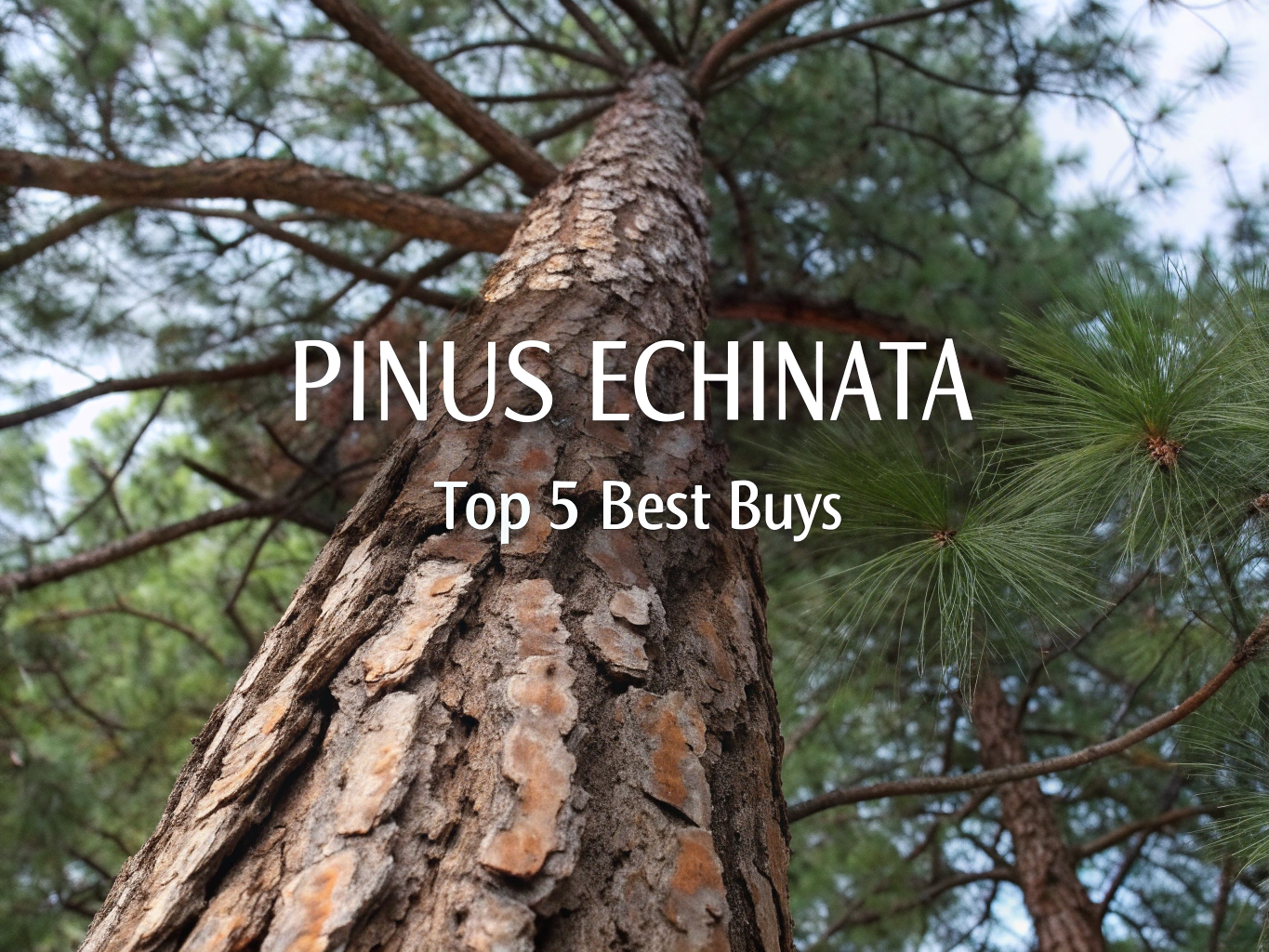

Pinus echinata, commonly called shortleaf pine, is an evergreen conifer native to the eastern and southeastern United States. It’s identified by flexible needles in bundles of two or three, small prickly cones, plated bark with resin pockets, and a fire-adapted basal crook on young trees.
Suggested SEO title: Pinus echinata: Shortleaf Pine Identification, Range and Care
Suggested meta description: Identify Pinus echinata shortleaf pine by its needles, cones, bark, and basal crook. Learn its range, fire ecology, timber uses, pests, planting needs, and bonsai care.
Table of Contents
Pinus echinata Quick Facts and Taxonomy
Pinus echinata Mill. belongs to the pine family, Pinaceae, and the commercial southern yellow pine group. It’s a medium to large, sun-loving tree that commonly reaches 50–100 feet (15–30 meters) and can live beyond 200 years.
Quick Facts Table
| Attribute | Pinus echinata details |
|---|---|
| Accepted name | Pinus echinata Mill. |
| Common name | Shortleaf pine |
| Family | Pinaceae |
| Plant type | Evergreen coniferous tree |
| Native region | Eastern and southeastern United States |
| Typical height | 50–100 feet (15–30 meters) |
| Exceptional height | About 130 feet (40 meters) |
| Mature trunk diameter | About 2–3 feet (0.6–0.9 meter) |
| Needles | Usually two per fascicle, sometimes three; 3–5 inches (7.5–12.5 centimeters) |
| Seed cones | 1.5–2.5 inches (4–6 centimeters) |
| Light | Full sun; shade intolerant |
| Preferred soil | Well-drained acidic loam or fine sandy loam |
| Longevity | Commonly 200 years or more; exceptional trees near 300 years |
| Pollination | Wind |
| Key adaptation | Basal resprouting by young trees after top-kill |
| Main uses | Lumber, plywood, pulp, poles, habitat, and restoration |
Botanical Classification
The accepted classification places this species in kingdom Plantae, the tracheophytes and gymnosperms, order Pinales, family Pinaceae, genus Pinus, subgenus Pinus, section Trifoliae, subsection Australes, and species Pinus echinata. The abbreviation “Mill.” names Philip Miller, the botanist who published the name.
This classification places shortleaf among the hard pines rather than soft pines such as eastern white pine. Its dense, resinous wood also fits the commercial traits discussed in our guide to southern yellow pine, a market group that includes several species rather than one botanical taxon.
Names and Etymology
The Latin genus name Pinus means pine, while echinata refers to something prickly or hedgehog-like. The name points to the small cone prickles, not the texture of the needles.
Shortleaf describes needle length relative to loblolly and longleaf pine. Regional names include shortstraw pine, yellow pine, old-field pine, and Arkansas soft pine, though “southern yellow pine” can’t identify the species by itself.
Size and Longevity
A mature shortleaf pine commonly stands 50–100 feet tall (15–30 meters), with a trunk 2–3 feet (0.6–0.9 meter) across. Favorable soil, moisture, and stand density can produce trees approaching 130 feet (40 meters), while exposed ridge trees may stay much smaller.
Growth is moderate and often slower than loblolly pine on rich plantation sites. Healthy trees can exceed 200 years, and rare individuals may approach 300, but storms, beetles, fire injury, rot, and harvesting shorten the life of most stands.
How to Identify Shortleaf Pine
Identify shortleaf pine by combining five field traits: mostly two-needle fascicles, 3–5-inch needles, small prickly cones, plated mature bark containing resin pockets, and the tree’s location. No single feature remains reliable across every age, site, or naturally hybridized population.
Overall Tree Form
Forest-grown trees develop straight trunks, narrow crowns when young, and long clear boles after shaded lower branches die. Older crowns become open and irregular, while a shortleaf pine tree grown in full exposure keeps heavier limbs and forms a broad, rounded crown.
Form provides supporting evidence rather than proof. Wind, ice, browsing, tip-moth damage, and earlier competition can leave forked or crooked stems that don’t match a textbook silhouette.
Needles and Fascicles
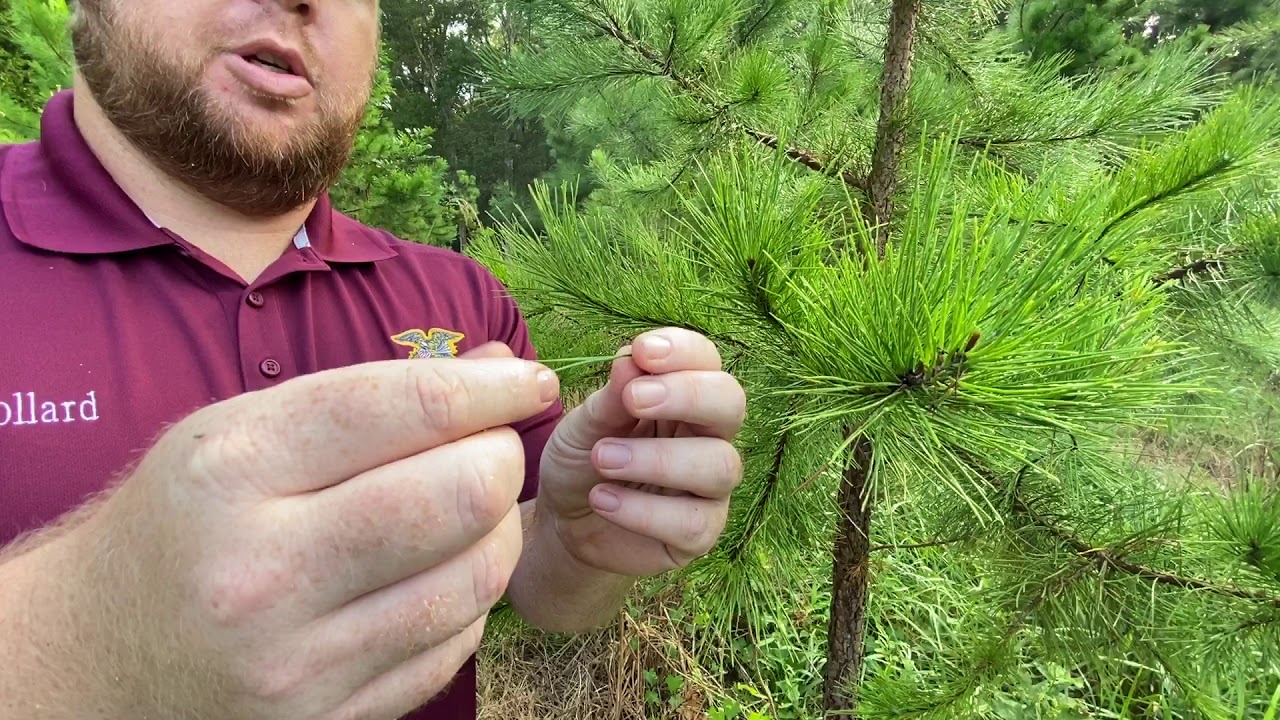
Shortleaf pine needles usually occur in bundles, called fascicles, of two; bundles of three appear often enough to matter. Each needle measures about 3–5 inches (7.5–12.5 centimeters) and feels slender and flexible when rolled between a thumb and forefinger.
The foliage ranges from blue-green to dark yellow-green, and the fascicle sheath remains around the bundle base. Needle count alone causes many bad identifications because Virginia pine, pitch pine, and loblolly pine can depart from their usual bundle counts.
Seed Cones
Mature seed cones are ovoid to conical and only 1.5–2.5 inches long (4–6 centimeters). Their gray-brown or reddish-brown scales carry small sharp prickles that catch lightly against bare skin but feel less heavy and aggressive than loblolly cone spines.
Female cones mature during their second growing season and open to release winged seeds. Some remain on branches after release, yet they’re seldom as conspicuously persistent as the prickly cones of Virginia pine.
Bark and Resin Pockets
Young bark is gray and thin, then becomes reddish-brown to dark brown with age. Mature trunks break into irregular flat plates, often with small resin-filled pits hidden inside them.
A freshly loosened plate may expose glossy amber dots and release a sharp, turpentine-like scent. These resin pockets are among the better mature-tree clues, but don’t strip sound bark merely to search for them; inspect naturally loose plates or recently fallen bark.
Twigs, Buds, and Seeds
Twigs are slender, sometimes with a pale bloom on young growth. Winter buds are reddish-brown and ovoid, while the small mottled-brown seeds carry papery wings for wind dispersal.
Seeds and buds help confirm an identification, but they’re weaker field characters than cones, needles, and mature bark. Bud size also changes with shoot vigor, drought, and browsing.
Seedling Basal Crook
Young seedlings form a bend near the root collar that places dormant buds at or slightly below the soil surface. Soil shields those buds from part of the heat during a surface fire, allowing a new shoot to emerge after the original top dies.
The crook can sit beneath litter or shallow soil and shouldn’t be exposed aggressively; scraping can damage the protected tissue. It confirms a young shortleaf more strongly than needle count, yet natural hybrids may form a weak or absent crook.
Field Identification Checklist
Use this shortleaf pine identification sequence rather than relying on one needle bundle:
- Confirm that the pine occurs within or near its native eastern US range.
- Measure several needles; typical length is 3–5 inches (7.5–12.5 centimeters).
- Check multiple fascicles for mostly two needles and occasional groups of three.
- Look for 1.5–2.5-inch (4–6-centimeter) cones with small prickles.
- Inspect naturally loose mature bark for resin pockets.
- Compare crown form, drainage, elevation, and associated trees.
- Look for a basal crook only on seedlings or young saplings.
- Treat intermediate trees in mixed loblolly stands as uncertain without genetic evidence.
Shortleaf Pine vs Similar Pines
Shortleaf pine differs most clearly from similar pines through a combination of needle and cone size, fascicle count, bark traits, and seedling fire adaptations. Variable trees and shortleaf-loblolly hybrids can fall between the usual descriptions.
Loblolly Pine
Shortleaf usually carries two needles per fascicle, 3–5 inches long, and cones 1.5–2.5 inches long. Loblolly pine usually has three needles measuring 6–9 inches and larger cones measuring about 3–6 inches.
| Feature | Shortleaf pine | Loblolly pine |
|---|---|---|
| Scientific name | Pinus echinata | Pinus taeda |
| Needles per fascicle | Usually 2, sometimes 3 | Usually 3, occasionally 2 |
| Needle length | 3–5 inches | 6–9 inches |
| Cone length | 1.5–2.5 inches | 3–6 inches |
| Bark clue | Resin pockets in mature plates | No equivalent diagnostic pattern |
| Young-tree fire response | Can resprout from basal buds | Usually lacks reliable basal resprouting |
| Common site tendency | Uplands and moderately dry sites | Moister, productive sites |
Virginia Pine
Virginia pine usually has shorter needles, about 1.5–3 inches, with a tight twisted appearance. Its strongly prickled cones may remain attached for years, and mature trees are commonly smaller and rougher in form than shortleaf pine.
Longleaf Pine
Longleaf pine has needles commonly measuring 8–18 inches, usually in bundles of three, and cones around 6–10 inches long. Its seedlings pass through a distinctive grass stage, while shortleaf seedlings develop an upright stem and basal crook.
Pitch Pine
Pitch pine commonly carries three stiff needles, larger persistent cones, and conspicuous shoots emerging from older trunks. Where its range overlaps shortleaf in Appalachian and northeastern areas, check sprout position and cone persistence along with fascicle count.
Hybrid Identification Limits
Shortleaf and loblolly pine hybridize where their ranges overlap. Intermediate needle length, mixed fascicle counts, or an uncertain basal crook can suggest introgression, but appearance can’t confirm ancestry; genetic testing offers the dependable answer.
Environmental stress can mimic hybrid traits. A shaded loblolly may carry shorter needles, while a vigorous shortleaf shoot may produce more three-needle fascicles, so observations should cover several branches and more than one season.
Native Range, Habitat, and Ecology
The shortleaf pine range spans roughly 22 eastern US states, from parts of the Mid-Atlantic south to northern Florida and west into Texas, Oklahoma, Arkansas, and Missouri. It favors sunny, well-drained uplands but occupies varied climates, elevations, and pine–oak communities.
Native Distribution
Natural populations occur through the Piedmont, southern Appalachians, Cumberland Plateau, Ozark Mountains, Ouachita Mountains, Gulf states, and adjoining interior regions. The broad distribution covers more than about 440,000 square miles (1.14 million square kilometers), though county maps differ in their treatment of marginal records.
The species is scarce on deeply flooded land and the wettest parts of the lower Mississippi Alluvial Valley. Arkansas and the Ouachitas retain especially strong ecological and forestry connections with shortleaf pine.
Elevation and Range Map
Shortleaf grows from low country to mountain slopes near 3,000 feet (900 meters), with local occurrences somewhat higher. Elevation limits shift with latitude, slope direction, cold-air drainage, and summer moisture, so a single cutoff misrepresents the species.
The USDA Forest Service silvics profile provides a source-backed distribution map and detailed regional descriptions. A published map should distinguish native records from plantings and use alt text such as “Native range of Pinus echinata shortleaf pine.”
Light, Climate, and Soils
Shortleaf pine needs abundant light for regeneration. Seedlings decline beneath a closed hardwood canopy, and thick leaf litter blocks seed contact with the exposed mineral soil needed for dependable germination.
Deep, well-drained acidic loams and fine sandy loams support the best growth. Established trees tolerate moderate drought, but waterlogged clay, hard compaction, severe erosion, and extremely dry sand restrict roots and raise disease or mortality risk.
Horticultural references commonly place the species around USDA zones 6–9, but provenance matters more than a zone label alone. Seed collected far south may flush or harden at the wrong time when planted near the cold northern range limit.
Forest Communities
Shortleaf occurs in pure stands, mixed pine forests, pine–oak woodland, rocky uplands, old fields, and openings produced by harvest or fire. Common associates include loblolly, Virginia, pitch, and longleaf pines, plus post oak, blackjack oak, white oak, southern red oak, black oak, and hickories.
Recurring disturbance keeps enough light at ground level for grasses, wildflowers, and pine seedlings. Without it, hardwoods form a dense midstory while old pines remain overhead, creating the misleading impression that the pine community is regenerating.
Wildlife and Biodiversity
Pine seeds feed birds and small mammals, while mature trunks and crowns provide nesting, roosting, and foraging structure. Open pine–bluestem woodland can support northern bobwhite, Bachman’s sparrow, brown-headed nuthatch, wild turkey, and, in suitable regional habitat, the red-cockaded woodpecker.
Wildlife value depends more on stand structure and groundcover than pine stem count alone. Retaining safe snags, scattered old trees, open patches, and a diverse herb layer often produces better habitat than planting a uniformly dense block.
Reproduction, Fire Adaptation, and Hybridization
Shortleaf pine reproduces by wind-dispersed seed and, while young, can recover from top-kill through protected basal buds. Fire can improve regeneration by reducing hardwood competition and exposing soil, yet severe or poorly timed burns can kill seedlings and mature trees.
Pollination and Seed Production
The tree is monoecious, carrying separate pollen and seed structures on one plant. Wind moves pollen in spring, female cones mature during the second growing season, and open scales release winged seeds mainly in autumn and early winter.
Open-grown trees may begin meaningful cone production near age 20, while crowded trees often start later. Strong crops occur periodically rather than every year, and most seeds land relatively close to their parent despite occasional longer wind transport.
Natural Regeneration
Natural regeneration works best where viable seed meets sunlight, moisture, and bare or lightly covered soil. Dense grass, hardwood sprouts, vines, and deep litter can defeat an otherwise strong seed crop.
Managers should assess seedlings rather than count cones or mature seed trees. A site can produce thousands of seeds yet retain almost no young pines after summer drought, browsing, or overtopping.
Basal Resprouting
If fire or cutting kills a young stem, dormant buds around the basal crook can produce a replacement shoot. The new stem initially feels soft and bends easily, so trampling or repeated heat can kill it before stored reserves recover.
Resprouting ability declines as trees age and protected buds lose function. Older shortleaf survives lower-intensity fire mainly through thicker insulating bark, not repeated basal sprouting.
Prescribed Fire Considerations
Fire can suppress hardwood stems, reduce litter, expose mineral soil, and preserve an open woodland structure. Its result changes with season, intensity, fuel moisture, drought, tree size, and the interval since the previous burn.
The USDA Fire Effects Information System documents shortleaf responses across life stages. Historical return periods often fell within several years to about a decade in open communities, but local ecological evidence should guide site objectives.
Never treat this ecological pattern as a burn prescription. Prescribed fire requires trained crews, legal approval, firebreaks, fuel and weather readings, smoke planning, and coordination with the relevant state forestry agency; new seedlings and drought-stressed stands can suffer complete losses.
Loblolly Pine Hybridization
Natural crossing with loblolly pine produces offspring carrying different mixtures of parental traits. Loblolly introgression may weaken basal-crook formation and post-fire sprouting, which can reduce the fire resilience of restoration stock.
Fire exclusion can favor loblolly and hybrids, changing both stand composition and genetic makeup. Restoration projects should use regionally compatible, verified shortleaf seedlings and monitor survival, fascicles, crook development, fire response, and loblolly recruitment.
Pests, Diseases, and Conservation
Major shortleaf pine threats include southern pine beetle, Ips engravers, littleleaf disease, root decay, drought, and failed regeneration. The species remains widespread, but shortleaf-dominated ecosystems have declined through conversion, fire exclusion, hardwood encroachment, and poor recruitment.
Southern Pine Beetle
Southern pine beetle, Dendroctonus frontalis, can kill groups of trees, especially in dense or stressed stands. Look for popcorn-like resin pitch tubes, reddish boring dust, S-shaped galleries beneath bark, fading crowns, and mortality spreading from tree to tree.
Timely thinning improves crown vigor and reduces risk, though it can’t prevent every outbreak. Beginners often wait for uniformly red crowns; by then, beetles may have moved into nearby green trees, so active groups need assessment by a forester or forest-health specialist.
Ips Engraver Beetles
Ips engravers commonly attack drought-stressed, storm-damaged, injured, or recently cut pines. Their galleries form recognizable Y- or H-shaped patterns beneath bark, and fresh pine slash can support a temporary population increase.
Promptly handling storm debris may reduce breeding material where local guidance supports removal. Scattered fading after drought may involve Ips, but bark inspection matters because crown color alone can’t separate beetles from root disease or mechanical injury.
Littleleaf and Root Diseases
Littleleaf disease is a site-related decline involving Phytophthora cinnamomi, poor drainage, root damage, and disrupted nutrient uptake. Symptoms include short yellow needles, thin crowns, weak shoots, small cone crops, and gradual decline.
Heterobasidion root disease can spread through root systems and infected stumps, particularly after thinning on susceptible sites. The practical workaround is site matching before planting: drainage and compaction problems are far harder to correct after roots occupy the ground.
Rust, Rot, and Tip Moths
Fusiform rust can form stem or branch galls, though shortleaf is usually less susceptible than loblolly and slash pine. Heart rot enters through wounds and reduces wood volume, while Nantucket pine tip moth larvae kill shoots and create forks in young trees.
Tip-moth injury often leaves browned tips and sticky resin around damaged shoots. Trees commonly survive, so control should reflect the objective: a fork matters in a timber plantation, while modest deformation may be acceptable in a wildlife restoration.
Population Decline
A widely cited estimate reports roughly a 53% reduction in shortleaf pine-dominated forest acreage from about 1980 to 2010. That figure describes a defined historical interval and forest category, not a present annual rate or equal decline in every state.
Conversion to loblolly plantations, development, altered timber priorities, fire suppression, hardwood encroachment, drought, disease, and hybridization all contribute. Acreage, standing volume, and ecological condition measure different things, so trend claims should retain their date range and inventory definition.
Restoration Priorities
Restoration should protect mature seed sources, establish regionally suitable genetics, control excessive hardwood competition, maintain herbaceous groundcover, and reintroduce appropriate disturbance with trained personnel. Counting planted stems alone misses whether a self-replacing woodland has formed.
- Protect healthy mature shortleaf and suitable seed trees.
- Match planting stock to latitude, elevation, and climate.
- Restore sunlight at the forest floor.
- Track natural seedlings through multiple growing seasons.
- Retain suitable old trees, snags, and open habitat structure.
- Monitor loblolly recruitment and signs of hybrid influence.
- Coordinate work with state forestry agencies and regional restoration partnerships.
Forestry, Timber, and Human Uses
Shortleaf pine supplies strong, resinous southern yellow pine lumber used for framing, plywood, pulp, poles, and industrial products. Its standing timber value depends on stem quality, size, defects, tract access, harvest volume, haul distance, and regional demand.
Wood Characteristics
The sapwood is pale yellowish-white, while heartwood ranges from yellow-brown to reddish-brown. Freshly cut wood has a pronounced resin scent, visible growth-ring contrast, and a firm, slightly sticky surface where pitch collects.
Basic specific gravity is commonly reported near 0.47, though growth rate, moisture basis, and test method change the result. Comparisons should separate species-level data from pooled values; our guide to wood density explains why moisture and measurement basis matter.
Commercial Uses
Common products include structural lumber, framing, plywood, veneer, pulp and paper, utility poles, pallets, crates, posts, and treated pilings. Resinous southern pines also supplied historical naval-stores materials such as turpentine and rosin.
Clear old-growth or slow-grown material may be marketed broadly as heart pine, but that market term doesn’t prove species, age, or provenance. Buyers should request documentation rather than identify boards solely by color or resin content.
Silvicultural Systems
Even-aged options include clearcutting followed by planting, seed-tree systems, and shelterwood systems. Uneven-aged management can work where enough light reaches prepared seedbeds and managers repeatedly control competing hardwoods.
The right system depends on seed supply, site quality, desired wildlife structure, equipment access, fire plans, and revenue goals. Leaving seed trees without creating a receptive seedbed is a common regeneration mistake; cones alone don’t overcome shade or deep litter.
Timber Value Factors
Large, straight stems with small knots and little decay usually enter higher-value product classes than crooked, forked, or beetle-damaged trees. Local mill specifications determine whether a log becomes sawtimber, poles, pulpwood, or another product.
Retail board prices don’t equal stumpage paid for standing trees. Appraisals need inventory data, tract size, terrain, road access, product mix, harvest cost, and nearby mill demand; species identity is only one part of value.
Establishing and Managing Shortleaf Pine
Plant shortleaf pine on sunny, well-drained land using regionally compatible stock, vertically arranged roots, and early competition control. Most failures trace to poor stock handling, unsuitable drainage, J-rooting, wrong provenance, dense competing vegetation, or fire before seedlings become established.
Site and Seed Source
Select upland loams or fine sandy loams where water drains after heavy rain. Test suspect ground with soil pits or compaction checks; a dry-looking surface can hide a dense clay layer that holds winter water around roots.
Buy stock from a forestry nursery or conservation program that can identify seed origin and genetic handling. Local or regionally compatible seedlings usually match seasonal cold, rainfall, and growing-season length better than anonymous stock.
Planting Density Examples
Spacing changes early competition, branch size, equipment access, and future thinning needs. These are mathematical stocking examples, not universal prescriptions:
| Spacing | Approximate trees per acre | Practical effect |
|---|---|---|
| 8 × 8 feet | 681 | Faster crown competition; earlier density review |
| 8 × 10 feet | 545 | Moderate stocking with wider equipment lanes |
| 10 × 10 feet | 436 | More early growing space; potentially larger branches |
Choose spacing from expected mortality, timber or habitat goals, equipment width, planned thinning, and desired openness. A wildlife woodland may use wider or irregular spacing, while a timber planting may begin denser to improve stem form.
Planting Technique
Keep bare-root seedlings cool, shaded, and moist until each bundle reaches the planting line. Fine roots should feel damp and flexible; roots that feel warm, papery, or brittle have already lost valuable moisture.
- Plant during the locally recommended dormant-season period.
- Open a hole deep enough to hold roots vertically.
- Keep roots straight rather than curled into a J-shape.
- Set the root collar at the correct level for the stock and site.
- Close and firm the soil without leaving large air pockets.
- Pull lightly on the seedling to test soil contact.
- Excavate a sample after planting to check depth and root position.
J-rooted seedlings may remain green for a season, which hides the error, but their distorted roots can limit stability and later growth. Inspecting a few planted seedlings immediately is cheaper than discovering poor root form after a year.
Competition and Thinning
Control hardwood sprouts, vines, and dense grass before they overtop young pines. Mechanical work must avoid clipping terminal shoots, while any herbicide use must follow the label and local forestry guidance.
Dense stands develop small crowns, slow diameter growth, and greater beetle susceptibility. Thinning decisions should use stand age, basal area, crown condition, site quality, and management goals rather than a fixed tree count copied from another property.
Common Establishment Failures
Practical Notes From Real-World Use: planting crews often lose more seedlings through warm storage and bent roots than through poor nursery quality. Open only the bundle being planted, keep the rest shaded, and check holes behind each planter before the same mistake spreads across an acre.
- Planting on saturated, compacted, or severely eroded soil.
- Allowing roots to dry in wind or direct sun.
- Burying the root collar or leaving roots exposed.
- J-rooting long bare-root seedlings.
- Using seed from an unsuitable latitude or elevation.
- Ignoring grass, vine, and hardwood competition.
- Assuming drought tolerance protects first-year seedlings.
- Burning before roots and basal buds are sufficiently established.
- Overstocking without a future thinning plan.
- Using unverified stock in a genetics-focused restoration.
Check survival after the first growing season and again after drought, not just after spring flush. Brown needles, loose stems, exposed roots, and weak terminal growth can reveal problems that a quick drive-by count misses.
Shortleaf Pine Bonsai
Shortleaf pine bonsai is possible, but it suits growers prepared to manage strong taproot tendencies, full-sun growth, coarse juvenile needles, and pine-specific pruning cycles. It won’t behave like a Japanese maple, and a moisture-retentive maple soil mix can keep shortleaf roots too wet.
Start with a young seedling so the taproot can be shortened in stages while retaining fine feeder roots. Removing too much root mass at once often produces delayed failure: candles open, stored moisture runs out, and needles fade weeks later.
Use a fast-draining, oxygen-rich substrate and a container with unobstructed drainage. Water thoroughly until water exits the holes, then let the upper layer begin drying; permanent sogginess invites root loss, while a bone-dry root ball can kill fine roots during summer heat.
Place the tree outdoors in full sun with good air movement. Needles should feel firm and flexible rather than limp, while sticky buds and swelling candles signal active spring growth. Indoor display should remain brief because shortleaf pine needs winter dormancy and high outdoor light.
Prune with respect for living foliage. Shortleaf pine may produce buds on younger wood, but beginners often cut branches back to bare wood without active buds and lose the branch; shorten candles and manage shoots gradually instead of applying broadleaf-tree techniques.
Wire flexible young branches before they become rigid, checking often where wire crosses swelling bark. The plated bark becomes a prized feature with age, yet wire can bite quickly during active growth and leave spiral scars that remain visible for years.
Repot before strong spring extension, with timing adjusted to local climate and tree condition. Don’t combine severe root pruning, major branch removal, wiring, and heat exposure in one session; spreading stress across seasons gives the tree enough foliage and roots to recover.
A healthy bonsai still retains the species’ ecological preferences: sun, drainage, airflow, and dormancy. Needle reduction comes mainly from mature branching, balanced feeding, controlled vigor, and time—not starvation, chronic dryness, or repeated removal of all candles.
FAQs
How Do You Identify A Shortleaf Pine Tree?
Shortleaf pine is identified by its small paired needles, scaly bark, and slender cones. Its needles are usually 3 to 5 inches long and grow in bundles of two, sometimes three. Mature trees develop dark, plated bark with small resin pockets, while cones measure about 1.5 to 2.5 inches long.
Where Does Pinus Echinata Grow Naturally?
Pinus echinata grows naturally across the southeastern and south-central United States. Its native range extends from New York and New Jersey south to Florida and west to eastern Texas and Oklahoma. It commonly grows in uplands, dry ridges, mixed forests, and well-drained sandy or loamy soils.
What Is The Difference Between Shortleaf Pine And Loblolly Pine?
Shortleaf pine has shorter needles, smaller cones, and greater tolerance for dry, upland sites than loblolly pine. Loblolly pine typically grows faster, has longer needles in bundles of three, and prefers moist, fertile lowlands. Shortleaf pine also develops thicker, more fire-tolerant bark as it matures.
Is Shortleaf Pine Resistant To Fire?
Shortleaf pine is relatively fire resistant, especially once it reaches maturity. Older trees have thick bark that helps protect their trunks from low-intensity ground fires. Young trees are more vulnerable, but some can resprout after fire from buds near the base of the trunk.
Can Shortleaf Pine Be Grown As A Bonsai?
Shortleaf pine can be grown as a bonsai with regular pruning, wiring, and careful watering. It responds best when started from young nursery stock or collected material with a strong root system. Give it full sun outdoors and avoid cutting too much foliage or root mass at one time.
Affiliate Disclosure: Some links in this post are affiliate links. If you make a purchase through these links, we may earn a small commission at no extra cost to you. We only recommend products we genuinely believe in.