
Alaskan Cedar Guide: Identification, Care, Cultivars, and Wood

Alaskan cedar is a long-lived Pacific Coast conifer valued for its hanging evergreen foliage, narrow weeping cultivars, durable yellow wood, and natural decay resistance. This guide explains identification, mature size, growth rate, care, browning, cultivar selection, native ecology, and how Alaska cedar wood performs outdoors.
Alaskan cedar belongs to the cypress family, not the true-cedar genus Cedrus. Species trees may reach 70–100 feet, while a named weeping Alaskan cedar tree often grows 20–35 feet tall with a width ranging from about 2 to 15 feet.
Table of Contents
Alaskan Cedar Quick Facts and Identification
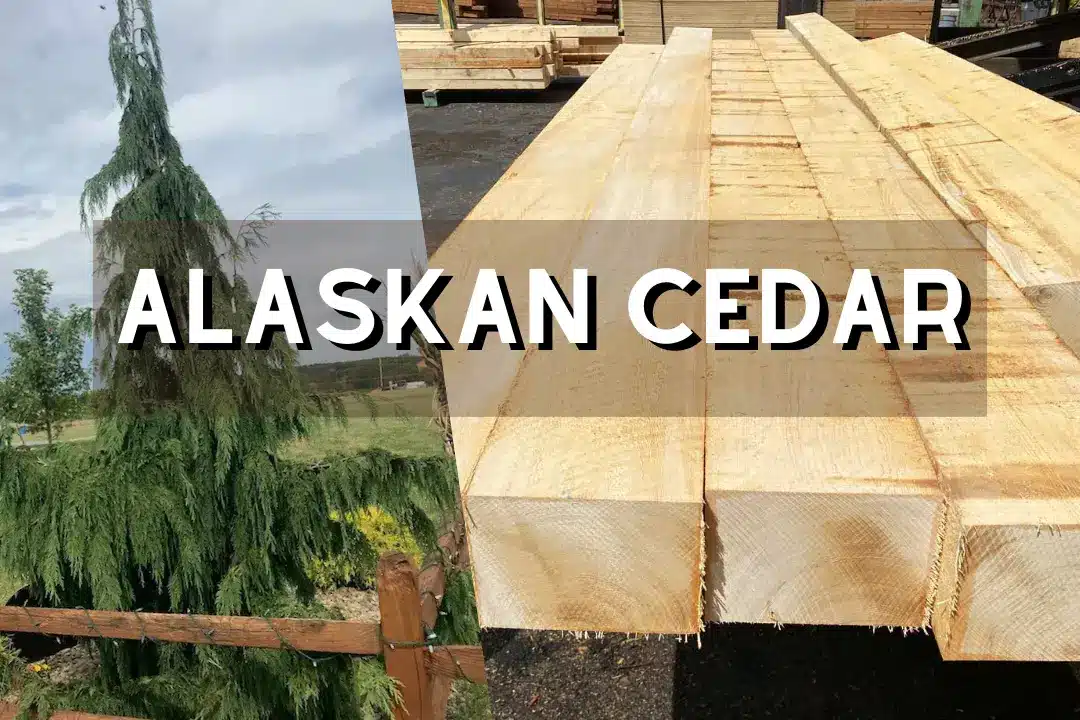
An Alaskan cedar has scale-like evergreen foliage, small rounded cones, fibrous bark, and branch tips that hang downward. Species trees form conical crowns, while selected weeping forms develop narrow leaders draped with long curtains of foliage.
Quick Facts Table
| Feature | Practical description |
|---|---|
| Common names | Alaskan cedar, Alaska cedar, Alaska yellow-cedar, yellow cedar, Nootka cypress |
| Family | Cupressaceae |
| Plant type | Evergreen conifer |
| Native range | Alaska and British Columbia south through Washington, Oregon, and scattered parts of northern California |
| Species height | Commonly 70–100 feet in native forests; exceptional trees can grow taller |
| Ornamental height | Often 20–40 feet, depending on cultivar and site |
| Growth rate | Usually 6–12 inches per year after establishment |
| Hardiness | Often listed for USDA Zones 4–8; some cultivars are rated Zones 5–8 |
| Light | Full sun in cool climates; afternoon shade in hotter districts |
| Soil | Cool, moist, fertile, and well drained |
| Main limitations | High heat, drought, reflected heat, salt, compaction, and stagnant soil |
Names, Taxonomy, and Nootka Origin
The Alaskan cedar scientific name varies among references. Labels may show Callitropsis nootkatensis, Cupressus nootkatensis, Chamaecyparis nootkatensis, or Xanthocyparis nootkatensis; these names usually identify the same species rather than four different trees.
Botanists reassigned the species after comparing cone anatomy, visible plant traits, and genetic relationships. Kew Plants of the World Online is useful for checking accepted names, but nursery catalogs often retain older horticultural names familiar to buyers.
“Nootka” refers to Nootka Sound on Vancouver Island and survives in the species epithet nootkatensis. “Cedar” reflects historical trade usage and the aromatic, durable wood; botanically, this plant is closer to cypresses than to Atlas cedar or Cedar of Lebanon.
Alaskan cedar foliage consists of tiny overlapping scales, not separate needles. The sprays feel firm yet pliable between the fingers, and crushed foliage releases a sharp resinous scent, though odor varies enough that it shouldn’t serve as the sole identification test.
Young Alaskan cedar cones start green and mature to brown, rounded structures with several woody scales. Mature bark shifts from gray-brown to reddish brown and develops a fibrous, furrowed texture that pulls into narrow strips on older trunks.
For a useful Alaskan cedar identification photo set, capture the entire crown, hanging branch tips, both sides of a foliage spray, mature cones, and bark. A close foliage image alone can mislead because several cypress-family trees carry similar scales.
- Western redcedar: flatter sprays and narrow, elongated cones; compare its traits in the western red cedar guide.
- Port Orford cedar: similar foliage but different branching, cone traits, and disease concerns; see Port Orford cedar.
- Leyland cypress: usually grows faster and lacks the same refined, naturally hanging branchlets.
- Deodar cedar: a true cedar with visible needles clustered on shoots rather than scale foliage.
- Weeping Norway spruce: carries distinct needles and often heavier hanging secondary branches.
Species, Weeping Forms, and Mature Size

A species Alaska cedar can become an estate-scale tree, while a weeping Alaskan cedar is a selected cultivar with stronger hanging growth, a narrower crown, or both. The cultivar name predicts size more reliably than descriptions such as “weeping cedar.”
Species Versus Cultivars
Seed-grown trees retain the species’ conical form but vary in width, branch angle, and vigor. Named cultivars are propagated clonally so their selected traits persist, making cultivar verification particularly useful for small properties and narrow planting strips.
An Alaskan weeping cedar isn’t a separate species. The phrase describes forms such as ‘Green Arrow’, ‘Van den Akker’, and ‘Pendula’, which exaggerate the species’ naturally pendent tips but produce very different silhouettes.
Mature Size, Growth, and Landscape Spacing
Native trees commonly reach 70–100 feet tall. Many garden cultivars finish around 20–40 feet, with widths ranging from roughly 2–5 feet for narrow selections to 10–15 feet or more for broader weeping forms.
The typical Alaskan cedar growth rate is 6–12 inches annually after establishment. A young tree in cool, moist, aerated soil may extend faster, while heat, drought, root restriction, or transplant stress can reduce growth to only a few inches.
Nursery descriptions often mix three measurements: shipping height, expected size at ten years, and long-term mature size. A “two-foot-wide” tree may exceed that figure as its side branches lengthen, especially in open soil with steady moisture.
Read container terms carefully. A one-gallon plant may be a slender rooted liner, while a five-gallon plant can vary greatly in height; “two-year tree” describes age, not landscape readiness. Ask whether stated height includes the pot.
Allow lower branches to hang without rubbing siding or blocking a path. Use a narrow cultivar at the end of a sightline, beside an entry with clearance, or among dwarf conifers; place broader ‘Pendula’ forms where their layered branching can remain visible.
A practical field lesson is to mark the advertised width on the ground, then add at least 12–24 inches of working clearance. This prevents the common mistake of forcing a tall columnar weeping conifer against a wall once its outer branch cords lengthen.
Climate, Soil, and Landscape Suitability

Alaskan cedar grows best in a cool, humid climate with moist, oxygenated soil and moderate summers. Winter hardiness alone can’t predict success because summer heat, hot nights, dry wind, and warm soil may cause decline inside a suitable USDA zone.
Hardiness, Sun, and Reflected Heat
The usual Alaskan cedar hardiness zone range is USDA Zones 4–8, with some cultivars listed for Zones 5–8. The USDA Plant Hardiness Zone Map measures winter minimums, not summer heat load.
Full sun produces dense foliage in cool coastal or mountain districts. In hotter inland areas, afternoon shade can protect the soft hanging tips from bleaching and crisping; a west-facing masonry wall creates reflected heat that may stress the tree after air temperatures begin falling.
Deep shade brings another trade-off. Growth may become sparse, the leader may bend toward light, and lower foliage can thin, so choose bright partial shade rather than a dark space beneath a dense canopy.
Soil, Moisture, Wet Sites, and Companions
Alaskan cedar soil requirements center on moisture plus oxygen. Loam with moderate organic matter works well, but compacted clay can hold water around the root ball and produce the same brown foliage that gardeners often mistake for drought.
Check moisture by pushing a finger or narrow soil probe several inches into both the nursery root ball and surrounding soil. The potting mix may feel dusty and repel water while the native soil feels slick and wet, a root-zone mismatch common after planting.
Rain-garden margins can work where water drains between storms. Avoid low pockets that stay flooded, downspout outlets, and clay basins; native peatlands and wet mountain slopes remain cool and often move water through the soil, unlike stagnant urban holes.
- Rhododendrons and azaleas in acidic, moisture-retentive soil
- Japanese maples where afternoon shade benefits both plants
- Ferns and hostas in bright, partly shaded sites
- Dwarf conifers that won’t crowd the hanging lower branches
- Woodland perennials kept clear of the trunk and root flare
Planting and Alaskan Cedar Care
Successful Alaskan cedar care starts with a visible root flare, a broad shallow planting hole, even moisture, and protection from intense heat. Most early failures trace back to a buried trunk, a dry container root ball, poor drainage, or an unsuitable climate.

Site Inspection, Planting, and Initial Watering
Before planting a weeping Alaskan cedar, check overhead wires, roof runoff, salt exposure, mature width, and afternoon heat. Inspect the plant for an intact leader, evenly colored foliage, trunk wounds, circling roots, and ties cutting into the supple young stem.
Scrape loose media from the trunk until the first substantial roots appear. Container soil may conceal the flare several inches below its surface, so planting the top of the potting mix level with grade can still leave the root flare buried.
Dig the hole two to three times wider than the root ball but no deeper than the measured root system. Set the first major roots at or slightly above grade, then backfill mainly with native soil to limit a sharp texture boundary.
Water slowly after backfilling until the soil settles around the roots. During the first two growing seasons, inspect both soil zones instead of following a fixed calendar; water must penetrate the original root ball rather than running around its dry outer crust.
Mulching, Watering, Feeding, Pruning, and Protection
Spread 2–3 inches of organic mulch across the root zone and leave several inches bare around the trunk. Mulch should feel cool and slightly springy under the hand, not form a damp mound pressed against the lower bark.
Stake only when the root ball rocks or a young leader needs temporary guidance. Use broad flexible ties, allow slight movement, inspect monthly, and remove ordinary support after establishment; forgotten wire can disappear under bark and girdle the stem.
Water established trees deeply during long dry periods, then allow excess water to drain. Shallow daily sprinkling wets only the surface and promotes surface roots, while prolonged saturation drives oxygen from deeper soil.
Don’t fertilize automatically. A soil test or clear deficiency offers a sounder basis for feeding; excess nitrogen creates soft extension growth, increases watering demand, and can loosen the tree’s naturally narrow architecture.
Pruning weeping Alaskan cedar should remain light. Remove dead, broken, rubbing, or competing branches outside the branch collar, but don’t shear the crown or cut deeply into bare old wood because replacement growth may be slow or absent.
Preserve one central leader on ‘Green Arrow’ and ‘Van den Akker’. If snow breaks the top, guide a flexible side shoot upright and shorten competing tops gradually; forcing a stiff branch sharply can leave a crack that feels wet and stringy beneath the bark.
Protect young trees from deicing spray and hot afternoon exposure. In marginally warm districts, mulch, morning sun, and reliable deep irrigation help more than wrapping the foliage in plastic, which traps heat and moisture around the sprays.
Browning, Pests, and Common Failures
An Alaskan cedar turning brown may have drought stress, saturated roots, transplant shock, mites, salt injury, heat damage, or normal interior shedding. Start by locating the browning and checking root-ball moisture, drainage, planting depth, and recent weather before applying fertilizer or pesticide.
Troubleshooting Table
| Symptom | Likely causes | Inspect first | Useful response |
|---|---|---|---|
| Brown outer tips | Drought, wind, heat, or salt | Root-ball moisture and exposure | Correct moisture slowly and reduce heat or salt exposure |
| Whole tree fading | Root stress, deep planting, poor drainage | Root flare and soil saturation | Expose the flare and assess drainage before treatment |
| One branch dies | Wound, girdling tie, canker | Branch base and bark | Remove the tie or obtain a diagnosis before cutting |
| Interior foliage browns | Normal seasonal turnover | Healthy outer tips | Monitor rather than spray |
| Bronzed or stippled sprays | Spider mites | Foliage undersides with a hand lens | Confirm live mites before selecting control |
| Leaning or split top | Snow load or leader damage | Leader, ties, and cracks | Select and support one replacement leader |
Common Failure Patterns and Workarounds
Transplant shock often follows root disturbance, delayed planting, or installation before hot weather. A dry root ball becomes light and hard, and water may bead across its surface; use a slow hose flow in several passes rather than flooding the surrounding soil.
Overwatering produces reduced vigor and widespread fading that can resemble drought. Alaskan cedar root rot, including damage associated with Phytophthora, becomes more likely in saturated soil, but brown foliage alone can’t confirm a pathogen.
Spider mites leave pale stippling, bronzing, and sometimes fine webbing, especially during hot dry spells. Scale insects may cause localized yellowing; inspect with a hand lens and identify the pest stage before spraying, since unnecessary broad treatments can kill beneficial predators.
Normal interior shedding affects older shaded foliage while the outer tips stay flexible and green. Progressive browning at active tips, entire dead branches, or fading across the whole tree points to active stress rather than routine turnover.
Salt injury often faces the road, while reflected-heat damage tends to face pavement or a hot wall. Winter injury can appear later in spring, so compare the damaged side with prevailing wind, snow cover, irrigation placement, and nearby hard surfaces.
Deep planting causes slow trouble. Bark remains dark and damp below grade, roots lose oxygen, and girdling roots may develop; carefully expose the flare and seek arborist help if correction would remove a large part of the established root system.
A sizing mistake can’t be repaired safely through repeated heading cuts. Beginners often buy a broad plant for a tight corner and shear it later, leaving blunt stubs and brown gaps; replacing it with the right narrow cultivar usually gives a better long-term result.
Weeping Cultivars and Buying Guide
Choose a weeping cultivar by verified identity, long-term width, leader habit, and climate fit. ‘Green Arrow’ offers the narrowest effect, ‘Van den Akker’ forms a slim upright specimen, and ‘Pendula’ needs room for a broader irregular crown.
Cultivar Comparison Table
| Cultivar | General habit | Approximate height | Approximate width | Best use |
|---|---|---|---|---|
| ‘Green Arrow’ | Extremely narrow and strongly weeping | 20–35 ft | Often listed at 2–5 ft | Tight vertical accent |
| ‘Van den Akker’ | Narrow upright weeper | About 20–30+ ft | Source-dependent | Compact specimen planting |
| ‘Pendula’ | Broad, irregular weeper | 25–35 ft | About 10–15 ft | Large focal specimen |
| ‘Glauca Pendula’ | Weeping with blue-green foliage | Source-dependent | Source-dependent | Color and form accent |
| ‘Jubilee’ | Narrow specialty form | Seller and age dependent | Seller and age dependent | Specialty conifer collections |
These figures are planning ranges, not fixed limits. Ask whether a seller gives ten-year dimensions or expected mature size, then allow extra room for open-grown side branches and changes after leader damage.
‘Green Arrow’, ‘Van den Akker’, ‘Pendula’, and Other Forms
‘Green Arrow’ forms a dramatic narrow spear with cords of hanging foliage. Its commonly advertised two-foot width often describes a young or ten-year plant, not a permanent boundary; older side branches and a forked top can create greater spread.

Green Arrow Weeping Alaska Cedar
- Live two-year plant ready for planting
- Exceptionally slim habit grows only two feet wide
- Weeping form adds dramatic vertical interest
- Ideal statement tree for compact landscapes
- Evergreen foliage provides year-round structure
 Buy on Amazon
‘Van den Akker’ also produces a narrow upright effect and suits sites where broad ‘Pendula’ would crowd paths or buildings. Protect its central leader during shipping and winter because a broken top can alter the cultivar’s vertical outline.

Van den Akker Weeping Alaskan Cedar
- Live two-year plant for landscape planting
- Narrow weeping form creates a graceful focal point
- Chamaecyparis nootkatensis cultivar
- Upright shape suits tighter garden spaces
- Distinctive evergreen choice for year-round interest
Buy on Amazon
‘Pendula’ develops wider, layered branches and works best as an open-lawn specimen. The name has been used loosely in commerce, so request propagation records or a reliable nursery label rather than trusting a generic “weeping cedar” tag.
‘Glauca Pendula’ adds blue-green foliage, though color shifts with season, light, health, and nursery source. ‘Jubilee’ and other specialty forms may offer narrow habits, but availability and published dimensions vary, making source verification more useful than catalog adjectives.
A genuine named cultivar should be produced by cuttings or grafting, not seed. Before buying an Alaskan cedar tree for sale online, confirm the full botanical label, actual height, pot size, dormancy status, shipping date, state restrictions, and replacement policy.
A two-year plant may arrive as a thin flexible whip with little of its later character. That isn’t automatically poor quality; inspect for moist roots, live green tissue under a tiny bark scratch, an intact leader, and no sour odor from saturated media.
Weeping Alaskan cedar price differences reflect rarity, age, container volume, grafting work, leader training, and freight. Compare total delivered cost rather than sticker price: a cheap liner may need years of training, while a very large tree can face greater transplant stress.
Native Ecology and Yellow-Cedar Decline
The Nootka cypress native range follows cool Pacific regions from Alaska and British Columbia through Washington and Oregon, with scattered southern populations in northern California. Yellow-cedar decline is linked chiefly to reduced snow insulation and spring root freezing, not one introduced pest.
Native Range, Habitat, and Longevity
Native Alaska yellow-cedar grows in coastal forests, mountain slopes, peatlands, and other high-precipitation habitats. Its associates vary by latitude and elevation but can include western hemlock, mountain hemlock, Sitka spruce, western redcedar, and Pacific silver fir.
Trees can live for more than 1,000 years, and some estimates pass 1,500 years. Exact ages vary with sampling and measurement methods, yet the species’ slow decay allows dead standing trunks to remain visible long after their crowns disappear.
Native habitat shouldn’t be copied without checking urban soil. A cool sloping forest may receive heavy rain while retaining oxygen around roots, whereas a compacted lawn depression can remain warm, airless, and slick for days.
Yellow-Cedar Decline Mechanism and Garden Lessons
The USDA Forest Service Pacific Northwest Research Station describes research into yellow-cedar decline across Alaska and nearby regions. Mapped damage covers hundreds of thousands of acres, though survey totals change with monitoring dates and boundaries.
Warmer winters can create a counterintuitive injury sequence. Reduced snow leaves shallow roots exposed, mild periods reduce cold hardiness, and a later freeze damages roots that would otherwise sit beneath an insulating snow layer.
This forest process doesn’t mean every ornamental tree will fail. It shows why root temperature, moisture, snow cover, and seasonal timing interact; home gardeners can reduce avoidable stress through correct planting depth, stable mulch, healthy drainage, and a climate that supports cool roots.
Alaska Cedar Wood Uses and Properties
Alaska cedar wood is a pale yellow, aromatic softwood valued for natural decay resistance, dimensional stability, fine texture, and clean machining. It’s used for boats, exterior joinery, siding, shingles, decking, carving, musical instruments, lumber, and outdoor structural parts.
Appearance, Decay Resistance, and Common Uses
Freshly cut Alaskan cedar wood ranges from creamy yellow to yellow-brown and carries a distinct resinous smell. Planed stock feels smooth and almost waxy, while its straight, even grain takes crisp edges with less coarse fuzz than many construction softwoods.
Commonly reported air-dry weight is around 31 pounds per cubic foot, with actual weight changing by moisture content and growth source. For comparisons across species, the site’s wood density guide explains why moisture condition matters.
Alaska cedar decay resistance comes from durable heartwood rather than a surface coating. That property supports marine construction, boatbuilding, exterior doors, window parts, siding, shingles, decking, carving, and outdoor furniture, though sapwood and exposed end grain still need sound detailing.
For exterior projects, durability doesn’t replace drainage. Leave water-shedding gaps, seal vulnerable end grain where the design calls for it, use compatible fasteners, and keep posts from trapping water at ground level; persistent moisture can defeat even durable heartwood.
Lumber, 4×4 Posts, Name Confusion, and Safe Handling
Alaska yellow cedar lumber may be sold as boards, timbers, decking stock, or a 4×4 cedar post. A nominal 4 x 4 cedar post commonly measures about 3½ by 3½ inches after surfacing, so structural plans and hardware must use actual dimensions.
A 4×4 cedar member suits rails, pergola parts, light outdoor framing, and posts where the grade and engineering match the load. Ground contact, span, knots, fastener placement, wind load, and local code still control performance; species durability can’t correct an undersized structure.
Wood sellers may shorten the name to yellow cedar, Alaska cedar, or Nootka cypress. It isn’t the same material as western redcedar, eastern red cedar, Port Orford cedar, Atlantic white cedar, or a true Cedrus species.
Ask suppliers for the botanical or standardized trade name when color, durability, or machining behavior matters. “Cedar” covers woods with very different densities, scents, weathering patterns, and mechanical properties; the broader cedar wood overview clarifies those distinctions.
Sawing and sanding create fine dust that can irritate skin, eyes, and airways. Use local dust extraction, eye protection, and a properly fitted respirator suited to wood dust; clean with a vacuum rather than blowing the fine yellow dust back into the room.
Beginners often judge Alaska yellow cedar only by its resistance to rot and overlook movement, grade, end checking, and fastener stains. Acclimate boards before joinery, predrill near ends, reject structurally weak pieces, and test the chosen finish on an offcut before coating the project.
FAQs
Is Alaskan Cedar The Same As Nootka Cypress?
Alaskan cedar and Nootka cypress are common names for the same tree, Callitropsis nootkatensis. It is also called Alaska yellow cedar because of its pale, durable heartwood. Although it is often sold as a cedar, botanists classify it as a cypress relative.
How Fast Does A Weeping Alaskan Cedar Grow?
A weeping Alaskan cedar usually grows about 6 to 12 inches per year once established. Growth varies by cultivar, sunlight, soil moisture, and climate. Young trees may grow more slowly while developing roots, but regular watering and well-drained soil help support steady growth.
Where Should A Weeping Alaskan Cedar Tree Be Planted?
Plant a weeping Alaskan cedar in full sun to partial shade with moist, well-drained soil. Choose a location protected from hot, drying winds and give the tree enough room for its graceful, spreading branches. It performs best in cool climates and slightly acidic to neutral soil.
Why Is My Alaskan Cedar Turning Brown?
An Alaskan cedar commonly turns brown because of drought, poor drainage, winter burn, or root stress. Check that the soil stays evenly moist without becoming waterlogged, especially during dry weather. Browning can also result from pests, disease, or salt exposure, so inspect branches and roots for additional signs of damage.
What Is Alaska Cedar Wood Used For?
Alaska cedar wood is used for shingles, siding, decking, outdoor furniture, boatbuilding, and carving. Its natural resistance to decay and insects makes it especially useful for exterior projects. The wood is lightweight, stable, and easy to work with, while its fine grain also suits detailed decorative work.
Affiliate Disclosure: Some links in this post are affiliate links. If you make a purchase through these links, we may earn a small commission at no extra cost to you. We only recommend products we genuinely believe in.