
Types of Wood Fences: Styles, Materials, and Selection Guide

Types of wood fences differ by design, board arrangement, wood species, and installation system. Privacy, shadowbox, horizontal, picket, split-rail, lattice, louvered, wood-and-wire, and no-dig fences each balance screening, airflow, cost, maintenance, and structural load differently.
Table of Contents
Types of Wood Fences at a Glance

Fence type can describe four separate choices: the overall design, board layout, wood species, or installation method. Treating cedar, shadowbox, and prefabricated panels as competing options causes confusion because one fence could use all three.
Four Fence Classifications
Four classifications cover most types of wooden fences. Design describes the purpose, board arrangement controls privacy and airflow, species affects decay resistance and movement, and the installation system determines how the structure meets the ground.
- Design: privacy, picket, split-rail, lattice, louvered, or wood-and-wire.
- Board arrangement: stockade, board-on-board, shadowbox, horizontal, tongue-and-groove, or basket weave.
- Wood species: cedar, redwood, pressure-treated pine, cypress, Douglas fir, SPF, black locust, or tropical hardwood.
- Installation system: site-built, rigid panel, racked panel, surface-mounted, or no-dig.
Privacy and Airflow Comparison
Privacy and airflow usually move in opposite directions. A continuous six-foot wall blocks sightlines but catches more wind, while spaced boards reduce post loads and let leaves, light, and cooling air pass through.
| Fence design | Privacy | Airflow | Common height | Slope fit | Material use | Common application |
|---|---|---|---|---|---|---|
| Board-on-board | Full | Low | 6 feet | Good when site-built | High | Backyard screening |
| Stockade | High at installation | Low | 6 feet | Good stepped or site-built | Medium | Affordable privacy |
| Shadowbox | Partial | Medium | 4–6 feet | Good when site-built | High | Good-neighbor boundary |
| Horizontal slat | Adjustable | Low to medium | 4–6 feet | Needs planned transitions | Medium | Modern patios and yards |
| Louvered | Partial to high | Medium | 4–6 feet | Best on mild grades | High | Privacy with ventilation |
| Picket | Minimal | High | 3–4 feet | Good racked or site-built | Low | Front yards and gardens |
| Split-rail | None | Very high | 3–5 feet | Very good | Low | Large open properties |
| Lattice-top | High below, partial above | Low to medium | 5–6 feet | Good when framed | Medium | Decorative privacy |
| Wood-and-wire | Minimal | Very high | 3–8 feet | Very good | Low | Pets, gardens, and deer |
Height and slopes change those ratings. Privacy depends on terrain, viewing angle, board shrinkage, and the observer’s elevation, so a nominal six-foot fence may still expose a raised deck or uphill window.
Material use rises sharply with overlapping boards, decorative trim, narrow slats, and woven layouts. More wood also means more wet weight, fasteners, finish, labor, and force on the posts during storms.
Site-built fencing adapts best to irregular grades because each post, rail, and picket can follow the site. Prefabricated panels speed up straight runs but often leave triangular gaps when stepped, while no-dig systems suit small screens and borders rather than exposed perimeter fencing.
Types of Wood Fence Designs
Wood fence designs range from solid privacy walls to open boundary markers. The best layout depends on how much visibility, ventilation, containment, lumber, and maintenance the site can accept.
Stockade and Tongue-and-Groove
Stockade fencing places vertical pickets edge to edge on horizontal rails. It offers strong initial screening with less lumber than an overlapping fence, but wet boards can shrink enough to open visible seams after one dry season.
Tongue-and-groove boards interlock, keeping sightlines covered through modest movement. The tight surface needs sound drainage and expansion allowance; forcing swollen boards together can lead to buckling, split tongues, or a rippled face.
Board-on-board construction overlaps adjacent boards, so later shrinkage doesn’t create direct sight gaps. It provides dependable privacy but uses more lumber and loads the rails and posts more heavily than stockade construction.
Cap-and-trim details hide uneven board tops and give the fence a finished line. A beginner mistake is laying a flat cap where water sits after rain; a slight slope, sealed end grain, and drip clearance reduce decay around the trim joints.
Shadowbox Good-Neighbor Fences
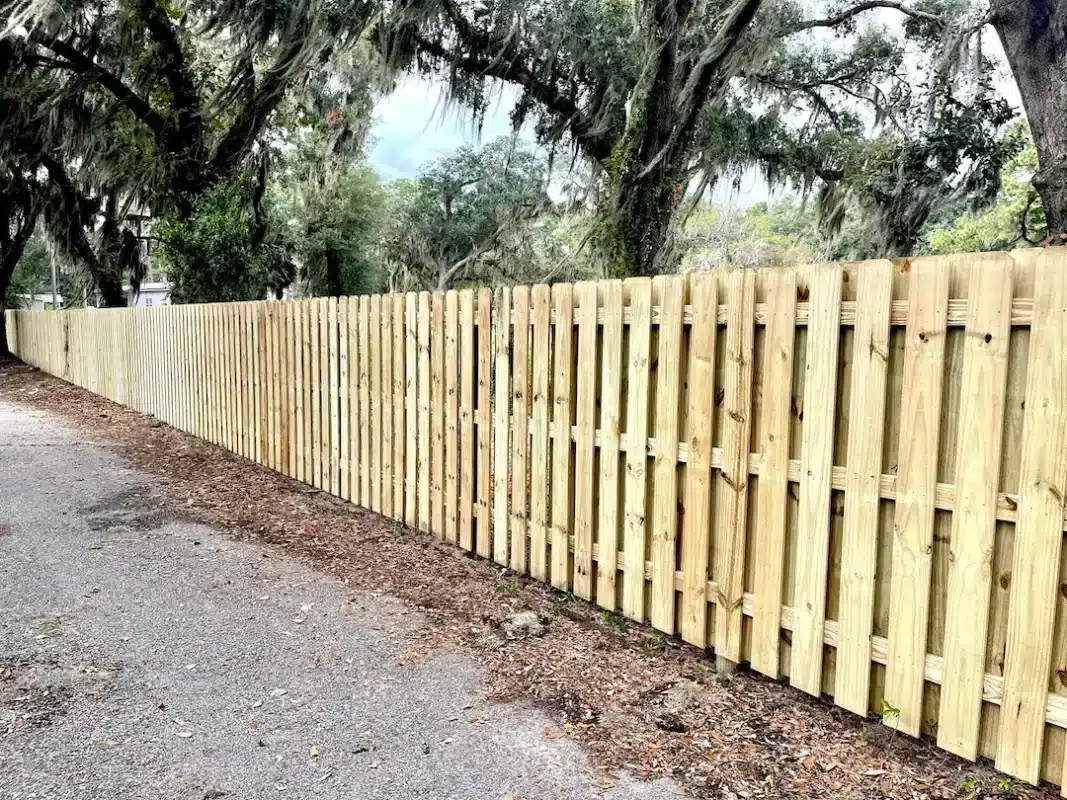
Shadowbox fences alternate pickets on opposite sides of the rails. Both neighbors receive a finished-looking face, and air can pass between boards, but angled views still reveal activity through the openings.
Good-neighbor layouts use more boards and fasteners than a simple spaced-picket fence. Keep the overlap consistent with a spacer block; small layout errors become obvious when sunlight creates uneven bright stripes through the panel.
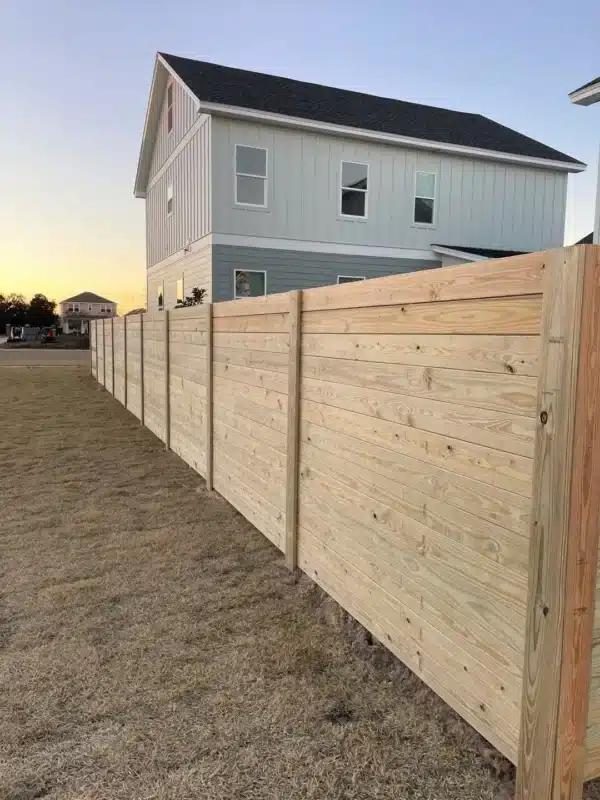
Horizontal wood fences can be solid or slatted. Long boards magnify every bow and twist, so straight stock and intermediate vertical supports matter more than they do in a short vertical picket.
Solid horizontal boards provide high privacy and high wind resistance. Spaced slats feel lighter and let air through, yet the apparent privacy changes as a person walks past because each viewing angle exposes a different gap.
Louvered wood fences angle their slats to block direct views while admitting air and light. Position the angle so rain sheds outward; reversed or nearly level louvers collect damp debris along their lower edges.
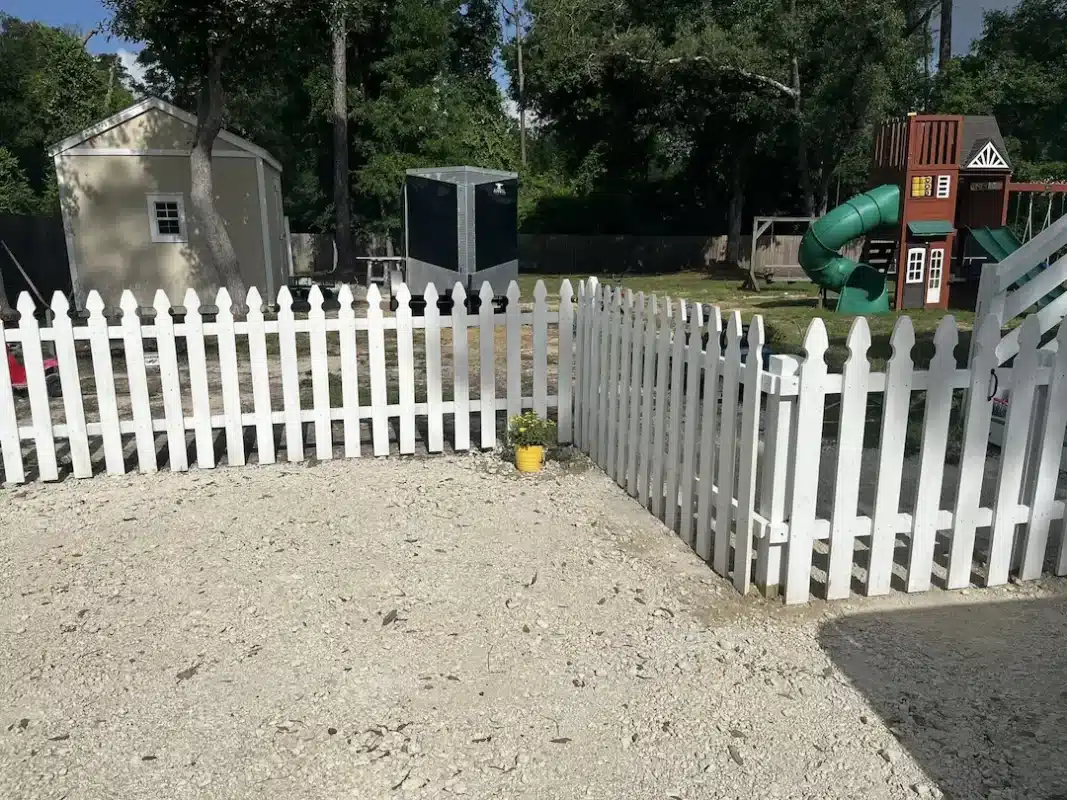
Picket fence profiles include flat, dog-ear, pointed, Gothic, rounded, arched, and scalloped tops. Spaced pickets preserve visibility and use less material, but gaps must be smaller than the head or body of any pet being contained.
Arched sections rise at the center, while scalloped sections dip there. Lay out several panels together before cutting; repeating curves that differ by half an inch look wavy from the sidewalk.
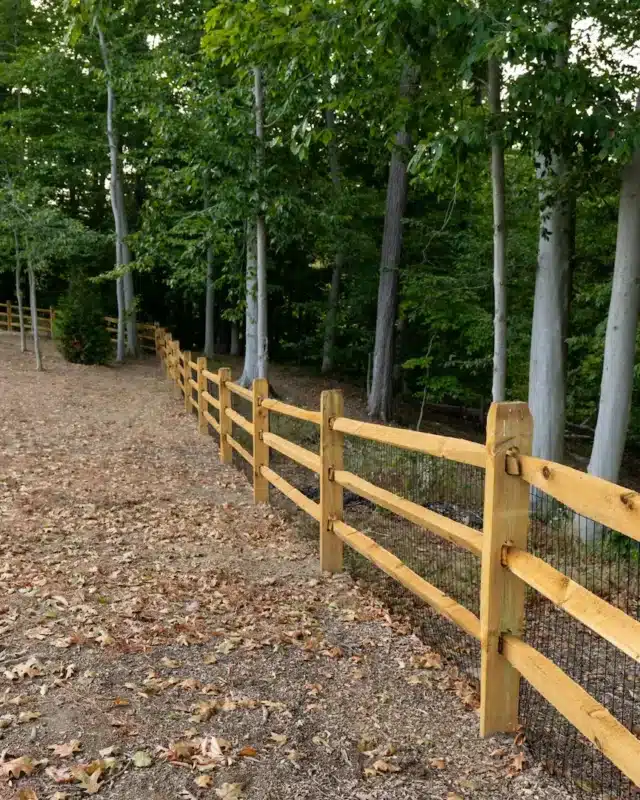
Split-rail fencing uses mortised posts and two or three horizontal rails to mark broad boundaries with little visual mass. It follows rolling ground well, but it won’t contain dogs or protect vegetables without properly sized wire mesh.
Post-and-rail fences use milled rails for a more regular appearance. A two-rail design uses less wood; a three-rail layout closes the lower openings and looks more substantial without providing privacy.
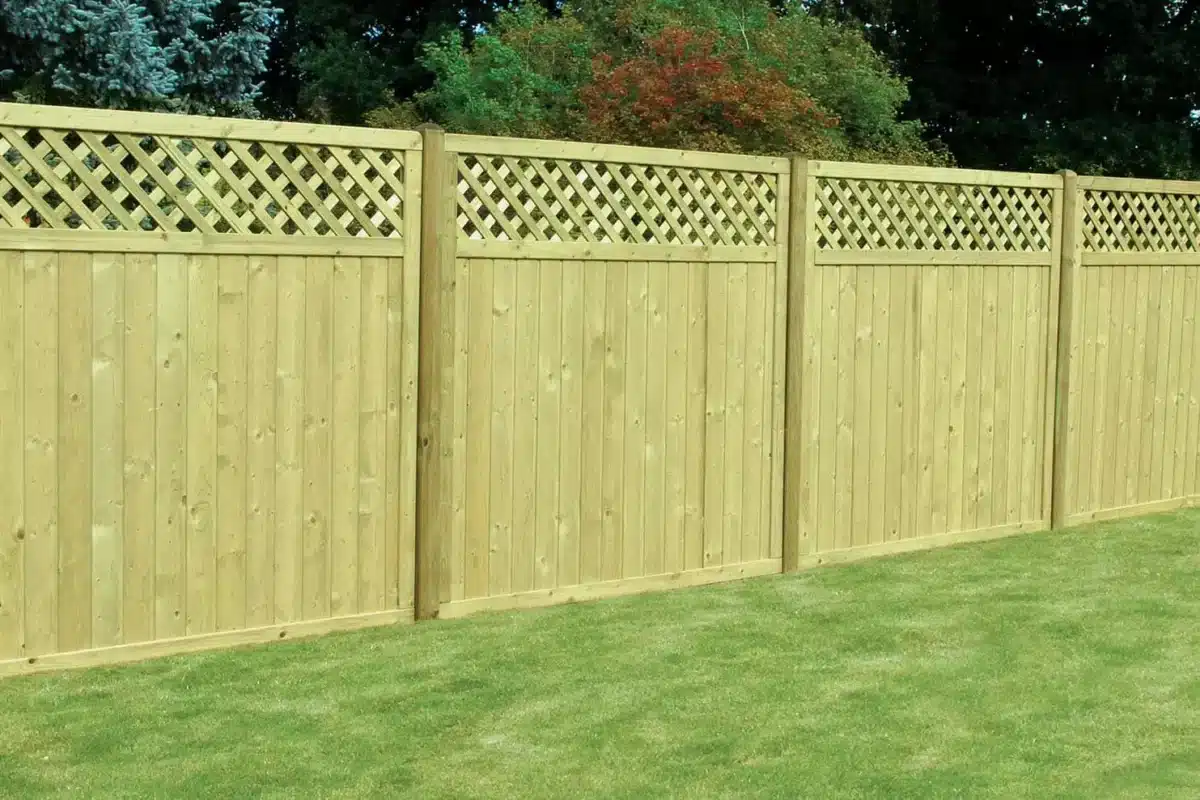
Lattice fences offer filtered screening as complete panels or as a top section above solid boards. Thin strips split easily when fasteners land near their ends, so the perimeter needs a supporting frame rather than scattered nails alone.
Basket-weave fencing bends thin boards alternately around vertical supports. The woven texture hides views, but overlapping contact points dry slowly and need closer inspection for mildew, trapped leaves, and softened fibers.
Wood-and-wire fencing combines the warmth of wood posts and rails with welded, woven, or livestock mesh. Choose the opening size for the animal: broad cattle panels can admit rabbits, while fine mesh adds cost and catches more vegetation.
No-dig screens use driven stakes or surface mounts instead of conventional footings. They work for planting beds, trash cans, condensers, and sheltered patios, but decorative anchors aren’t substitutes for engineered posts, pool barriers, or security fencing.
Wood Species Used for Fencing
Fence wood species affects weight, movement, appearance, availability, and natural decay resistance. Grade, treatment rating, heartwood content, drainage, and hardware can matter more than the species printed on a sales tag.
Western Red Cedar and Redwood
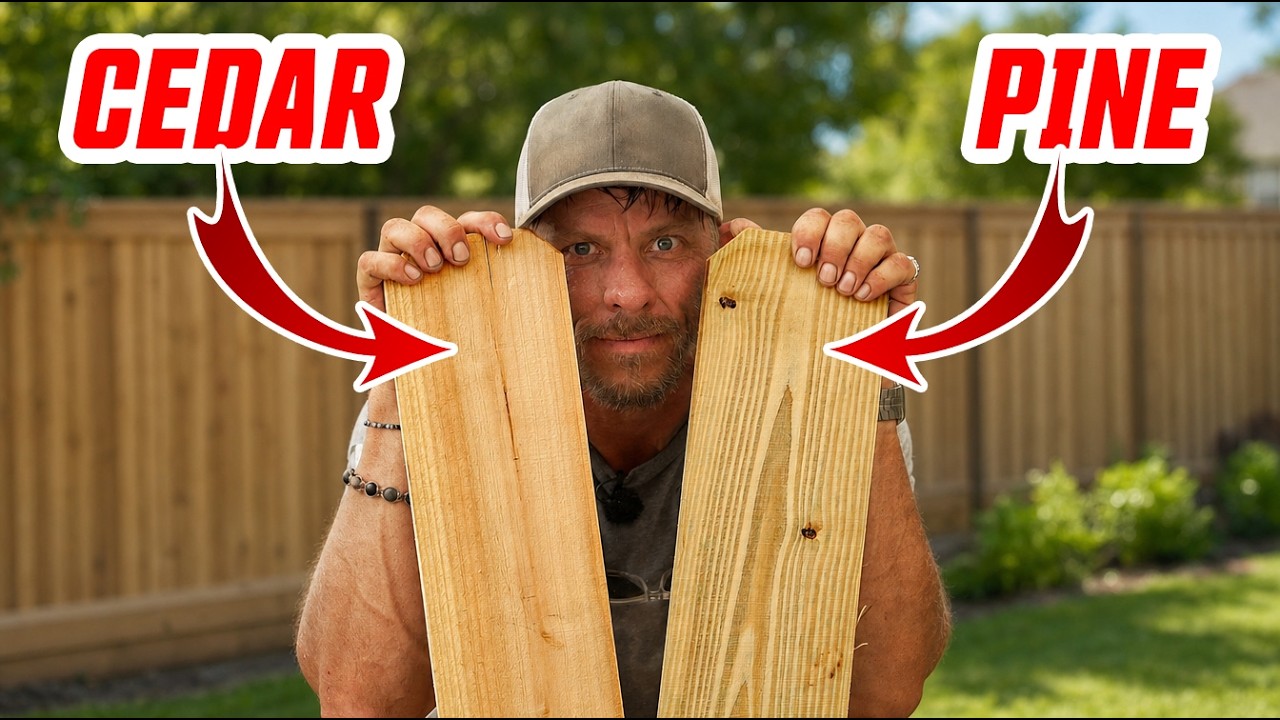
Western red cedar is light, stable, easy to cut, and naturally durable when boards contain substantial heartwood. A well-detailed cedar fence commonly serves about 15–30 years, though sapwood-heavy boards near wet soil can fail far sooner; read more about Western red cedar.
Cedar grain releases a dry, spicy scent as a saw crosses it, and fresh boards feel noticeably lighter than wet treated pine. Left unfinished, the warm brown surface fades to silver-gray rather than retaining its original color.
Redwood heartwood offers good dimensional stability and natural decay resistance. Under favorable conditions it may last 20–30 years or longer, but price and heartwood grade vary sharply by region; the site’s redwood guide explains its material traits.
Dark fastener streaks on cedar and redwood often come from tannins reacting with unsuitable steel. Stainless steel, rated hot-dip galvanized hardware, or manufacturer-approved coated fasteners prevent the rusty black trails that appear below cheap nails after rain.
Pressure-Treated Pine and Other Fence Woods
Pressure-treated pine is widely available and often costs less than cedar or redwood. Properly rated and installed material commonly serves about 15–20 years, but wet boards can feel cold and heavy in the hand, then check, twist, and shrink as they dry.
Treatment color doesn’t prove that lumber is rated for ground contact. Read the end tag or ink stamp, and use an approved field-cut preservative where the manufacturer requires it; yellow pine is a common structural choice.
Cypress heartwood contains naturally decay-resistant compounds and is most available in the southeastern United States. Performance drops in lower grades with substantial sapwood, so compare grade and heartwood rather than buying from color alone; see the cypress wood guide.
Douglas fir is stiff and useful for rails, yet untreated stock doesn’t match quality cedar heartwood in repeated wet exposure. Use an appropriate preservative and finish, keep it clear of soil, and review its structural traits in the Douglas fir guide.
Spruce-pine-fir lumber, often marked SPF, is a commercial grouping rather than one species. Untreated boards need protection from persistent moisture and soil contact; low purchase price doesn’t compensate for decayed bottom edges after several wet seasons.
Black locust heartwood is highly decay resistant and can make long-lived rustic posts. Its hardness taxes blades and drill bits, dimensions can be inconsistent, and pre-drilling near ends reduces splitting around large fasteners.
Tropical hardwoods such as ipe are dense, heavy, and durable. They need carbide tooling, pre-drilled fastener holes, strong handling support, and verifiable sourcing certification; a premium board still needs drainage and compatible hardware.
Grade and heartwood deserve close inspection. Heartwood is often darker and more decay resistant, while sapwood takes up more moisture; loose knots, wane, splits, and wild grain also raise the risk of broken or distorted pickets.
| Wood | Practical service-life orientation | Main strength | Main caution |
|---|---|---|---|
| Western red cedar | About 15–30 years | Stable and lightweight | Sapwood and tannin staining |
| Redwood | About 20–30+ years | Stable, durable heartwood | Regional cost and grade variation |
| Pressure-treated pine | About 15–20 years | Accessible structural material | Shrinkage, checking, treatment rating |
| Cypress | Variable by grade and exposure | Durable heartwood | Regional availability |
| Douglas fir | Variable with treatment | Strong, stiff rails | Needs moisture protection |
| Black locust | Often long-lived as posts | High natural decay resistance | Hard to source and machine |
| Tropical hardwood | Potentially several decades | Density and durability | Cost, weight, sourcing, tooling |
Lifespan figures are planning ranges, not warranties. Poor drainage, shallow posts, incompatible metal, sprinklers, climbing vines, and unsealed end grain can shorten the life of any species.
Choosing the Right Wood Fence
The right fence matches its opening size, height, opacity, footing system, and maintenance needs to a defined use. Choose the function before choosing the picket profile or stain color.
Backyard Privacy, Dogs, and Gardens
Backyard privacy is strongest with board-on-board, tongue-and-groove, solid stockade, or solid horizontal boards. Check uphill views and deck elevations before setting height, then account for the extra wind force created by a continuous surface.
Dogs and pets need a fence selected by jumping, climbing, squeezing, and digging behavior rather than body weight alone. Solid designs reduce visual triggers, while slopes, gate edges, and eroded low spots often create the first escape route.
Garden fences can use pickets, wood-and-wire panels, low borders, or post-and-rail frames. Deer exclusion calls for a much taller purpose-built system than decorative garden edging, and mesh openings must suit rabbits or other local pests.
Pools, Wind, Front Yards, and Slopes
Pool barriers must meet locally adopted rules for height, openings, climbability, gate swing, self-closing hardware, latch placement, and access control. The International Residential Code commonly references a 48-inch minimum barrier, but local amendments govern each property; check the International Residential Code and the local building office.
Horizontal rails and decorative lattice can create footholds, so an attractive fence isn’t automatically pool compliant. Never use a low no-dig border or ordinary privacy screen as a pool safety barrier.
Windy sites favor spaced pickets, shadowbox boards, louvers, rails, or other open layouts. Solid panels behave like sails; taller posts alone won’t fix weak embedment, soft soil, wide spacing, or undersized footings.
Front-yard fences are commonly lower and more open than backyard fences. Pickets, low lattice, and post-and-rail designs preserve visibility, but corner sight triangles, driveway visibility, HOA rules, and municipal height limits may restrict placement.
Sloped ground accepts stepped, racked, or custom site-built construction. Stepped panels remain level but leave triangular spaces below; racked sections follow the grade, while site-built pickets offer the closest control over pet-sized gaps.
| Use | Strong candidates | Common mistake |
|---|---|---|
| Backyard privacy | Board-on-board, tongue-and-groove, solid horizontal | Ignoring wind and uphill views |
| Dogs | Solid stockade, board-on-board, close mesh | Leaving gaps below gates |
| Garden | Picket, wood-and-wire, low border | Using broad mesh against rabbits |
| Pool | Locally approved non-climbable barrier | Assuming a style name proves compliance |
| Exposed site | Shadowbox, louvered, spaced picket | Installing solid panels on light posts |
| Front yard | Picket, low lattice, post-and-rail | Blocking driveway visibility |
| Steep slope | Racked or custom site-built fence | Creating pet escape gaps |
Wood Fence Costs and Maintenance
Wood fence costs commonly fall near $20–$50 per linear foot installed as a broad planning range. Height, species, grade, gates, demolition, soil, slope, finish, post design, permits, and local labor can move a project outside that range.
Cheapest Fence to Build and Installed Cost Factors
The cheapest fence to build is often a simple two-rail, split-rail, spaced-picket, or wood-and-wire design using locally available treated lumber. The cheapest privacy option is commonly stockade because it uses one board layer instead of overlapping boards.
Linear-foot pricing measures horizontal fence length, not board footage or panel area. Ask every bidder to state height, lumber grade, post dimensions, post spacing, rails, fasteners, gate sizes, disposal, stain, permit work, and property-line assumptions.
- A six-foot solid fence uses more lumber and catches more wind than a four-foot spaced-picket fence.
- Board-on-board layouts require extra boards, fasteners, labor, and finish.
- Rock, roots, frost-depth rules, and steep grades raise excavation costs.
- Demolition and haul-away can form a sizable part of a replacement quote.
- Decorative caps, lattice, arches, and custom profiles add cutting and assembly time.
- Wide gates need heavier posts, hinges, bracing, and adjustment labor.
DIY fence kits from large retailers, including searches for D.I.Y. fence kits at Bunnings, need the same structural review as loose materials. Panel price rarely includes site grading, post footings, gate hardware, delivery, waste, stain, or disposal.
Lifespan, Gates, and Ownership Costs
Ownership cost includes washing, refinishing, loose-fastener replacement, vegetation control, gate adjustment, damaged pickets, and eventual post repair. A modest treated-pine fence can outperform premium boards if its posts drain well and its hardware resists corrosion.
Gates cost more than equal lengths of fixed fence because their weight hangs from a small number of hinges. Double gates add drop rods, meeting stops, more movement, and a larger opening that must remain aligned through wet and dry seasons.
Annual inspection should follow major storms and include loose boards, cracked rails, rocking posts, rust stains, gate sag, fungal softness, soil buildup, and sprinkler spray. Press a blunt screwdriver into suspicious end grain; a spongy feel points to decay below the surface.
Cleaning first prevents mildew and dirt from being trapped under a new finish. Aggressive pressure washing raises soft fibers and leaves a furry texture, so use a wood-safe cleaner, moderate pressure, and enough drying time for the selected coating.
Staining every 2–5 years is common, though direct sun, rainfall, board orientation, and product chemistry control the real interval. Recoat when water stops beading and color loss becomes uneven rather than relying on the calendar alone.
Repairable construction lowers long-term expense. Screwed trim and individually replaceable pickets cost slightly more at installation but avoid dismantling a whole panel when one board splits or a buried sprinkler damages the bottom edge.
Installation Details That Affect Performance
Fence performance depends heavily on treatment rating, post installation, drainage, board moisture, compatible fasteners, and gate support. Many early failures start below grade or inside a joint rather than on the visible board face.
UC3B, UC4A, Posts, and Board Movement
UC3B lumber is intended for exterior above-ground exposure, while UC4A covers general ground contact. Fence posts need the rating required by their exposure and local specification; the AWPA use categories explain how service conditions differ.
Cut ends and drilled holes may expose untreated inner wood. Apply the lumber producer’s approved end-cut preservative where directed, especially at post tops, trimmed post bottoms, notches, and large hardware holes.
Post spacing commonly measures about 6–8 feet on center, but panel width, post size, soil, wind, height, and gate loads can call for closer placement. No universal post depth suits every frost line, hurricane zone, clay soil, or six-foot privacy wall.
Footing drainage matters at the soil line, where oxygen and moisture support decay. Crown concrete away from the post and avoid a depressed collar that holds a dark ring of water after every storm.
Three rails commonly support a six-foot vertical privacy fence. Two rails leave long picket ends free to cup and rattle, especially where sun heats one face while the shaded face stays damp.
Ground clearance limits moisture uptake and mower damage. Don’t bury ordinary pickets; choose the smallest practical gap that still permits drainage without creating an escape path for pets.
Wet treated boards shrink as they dry, so installing them tightly can create later gaps. Dry cedar needs a planned movement gap; spacing it too widely at installation sacrifices privacy once seasonal shrinkage begins.
Practical Notes From Real-World Use
Board selection saves more correction time than any assembly trick. Sight along each edge at the lumber rack; a board that already resembles a shallow propeller rarely becomes straight after fastening.
Fastener compatibility prevents corrosion and staining. Copper-based treated lumber can attack unsuitable metal, while cedar tannins darken around plain steel; use stainless steel, rated hot-dip galvanized metal, or an approved exterior coating.
Gate bracing must transfer the free corner’s weight back to the lower hinge area when using a rigid diagonal wood brace. A brace installed in the wrong direction looks correct for a few weeks, then the latch corner slowly sinks and scrapes.
Heavy gate posts need secure footings and exterior hinges rated for the gate’s size. Leave controlled bottom clearance for gravel heave, leaf buildup, and seasonal movement rather than trimming the gate repeatedly.
Wind failures often begin with one loose post, followed by flexing rails and fasteners pulling from wet end grain. Reinforce corners, ends, and gates, and obtain local structural guidance for coastal, hurricane-prone, or highly exposed sites.
Boundary checks must happen before materials arrive. A utility locate isn’t a survey, and a fence placed inside an easement may need removal; verify boundaries, setbacks, height, finished-side rules, HOA limits, and corner visibility.
Call 811 before digging in the United States so participating public utilities can mark buried lines. Private lines to sheds, wells, pools, propane systems, and detached buildings may need a separate locator; use the official 811 service.
- Confirm the surveyed boundary, easements, permits, and local fence rules.
- Request utility markings and identify private underground lines.
- Match lumber labels to above-ground or ground-contact exposure.
- Set post size, spacing, footing, and embedment for soil, frost, height, gates, and wind.
- Sort and acclimate boards before fixing final gaps.
- Use compatible exterior fasteners and protect required field cuts.
- Inspect drainage, gates, and post movement after the first storm season.
Best Type of Saw to Cut Wooden Fence
A 7¼-inch circular saw is the best type of saw to cut wooden fence boards, rails, and installed picket tops during general construction. Use a sharp 24–40-tooth carbide blade, stable support, and a speed square or straightedge for controlled cuts.
Circular Saw for General Cuts and Miter Saw for Repetition
The circular saw moves easily along a fence line and cuts pickets, rails, and common posts. For a level top, snap a clear line, clamp a guide where practical, and cut in manageable sections rather than reaching across installed panels.
A miter saw produces fast, square, repeatable crosscuts when dozens of pickets or rails need one length. Set up stop blocks away from the blade path, and support long stock so its weight doesn’t lift the cut end.
Specialty Saws, Blades, and Treated-Wood Safety
A reciprocating saw suits demolition and rough repairs, particularly where hidden nails may be present. Fit a nail-embedded-wood blade; an ordinary wood blade can lose teeth or kick when it hits metal.
A table saw rips boards into narrower slats but isn’t ideal for crosscutting long, awkward rails. Use the riving knife, push sticks, featherboards where suitable, and outfeed support; never guide a table-saw cut freehand.
A jigsaw handles Gothic points, arches, scallops, and notches. Thin pickets vibrate enough to produce a ragged edge, so clamp them over a sacrificial board and use a fine, sharp blade.
Blade tooth count changes the feel and finish of the cut. A 24-tooth blade moves quickly through wet treated lumber, while a 40-tooth blade leaves cleaner cedar edges but cuts more slowly and can heat in dense hardwood.
Treated-wood dust calls for eye protection, hearing protection, suitable respiratory protection, and outdoor cutting or effective extraction. Check for wire and fasteners, clamp unstable stock, support both sides without pinching the blade, and never burn treated scraps.
Field-cut treatment may be required after trimming pressure-treated lumber. Brush the approved preservative over exposed end grain after the cut is clean, then let it dry according to the product label before finishing.
Prefabricated Wood Fence Examples
Prefabricated wood fences work best for small, clearly defined tasks such as patio screening, garden borders, compact pet boundaries, and utility concealment. Product panels don’t remove the need to assess wind, anchoring, grade, property rules, and service clearances.
Cedar No-Dig Privacy Screen
Targeted privacy screens can block a patio chair, trash bin, or utility view without enclosing an entire yard. Confirm anchor compatibility with soil or paving, and don’t treat a no-dig screen as a structural perimeter or pool barrier.

Cedar No Dig Privacy Fence
- Tall cedar panels create a private outdoor screen
- No-dig design installs on hard surfaces or soil
- Aluminum posts add sturdy support
- Useful for patios decks and garden areas
- Can conceal air conditioning equipment or bins
 Buy on Amazon
Cedar Garden Picket Border
Low picket borders define beds and paths while keeping flowers visible. Their short height won’t provide privacy, security, deer exclusion, pool protection, or dependable containment for a large dog.
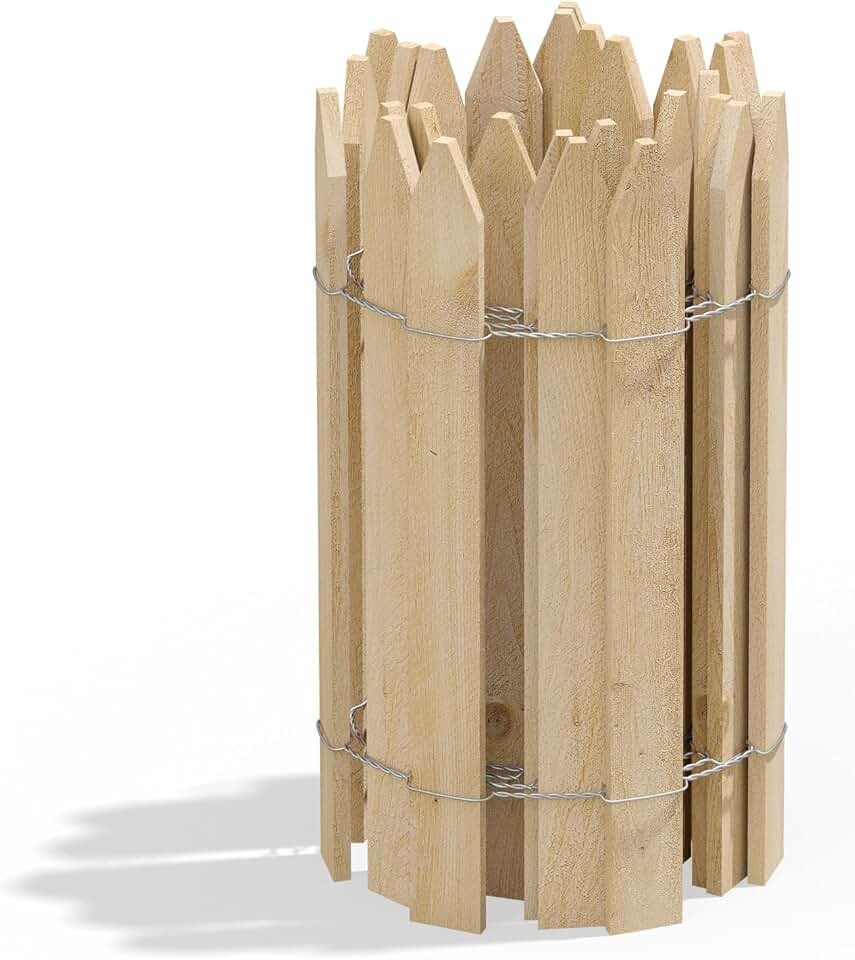
Cedar Garden Picket Border
- Classic picket style defines garden spaces
- Cedar construction brings natural outdoor appeal
- Four-pack provides 32 feet of coverage
- Low profile suits flower beds and pathways
- Helps create a neat decorative boundary
Buy on Amazon
No-dig boundary kits can suit a compact yard or calm small dog after checking panel height, opening width, anchoring, slope, and digging behavior. Inspect driven stakes after saturated soil or frost movement.

Newberry No Dig Cedar Fence
- Pre-stained cedar offers a finished appearance
- No-dig stakes simplify installation
- Two panels create a compact yard boundary
- Suitable for enclosing small dogs
- Forest Stewardship Council certified wood supports responsible sourcing
Buy on Amazon
Utility screens should conceal equipment without choking its airflow. Keep the manufacturer’s intake, exhaust, service, and fire clearances open around an air-conditioning condenser or similar unit.
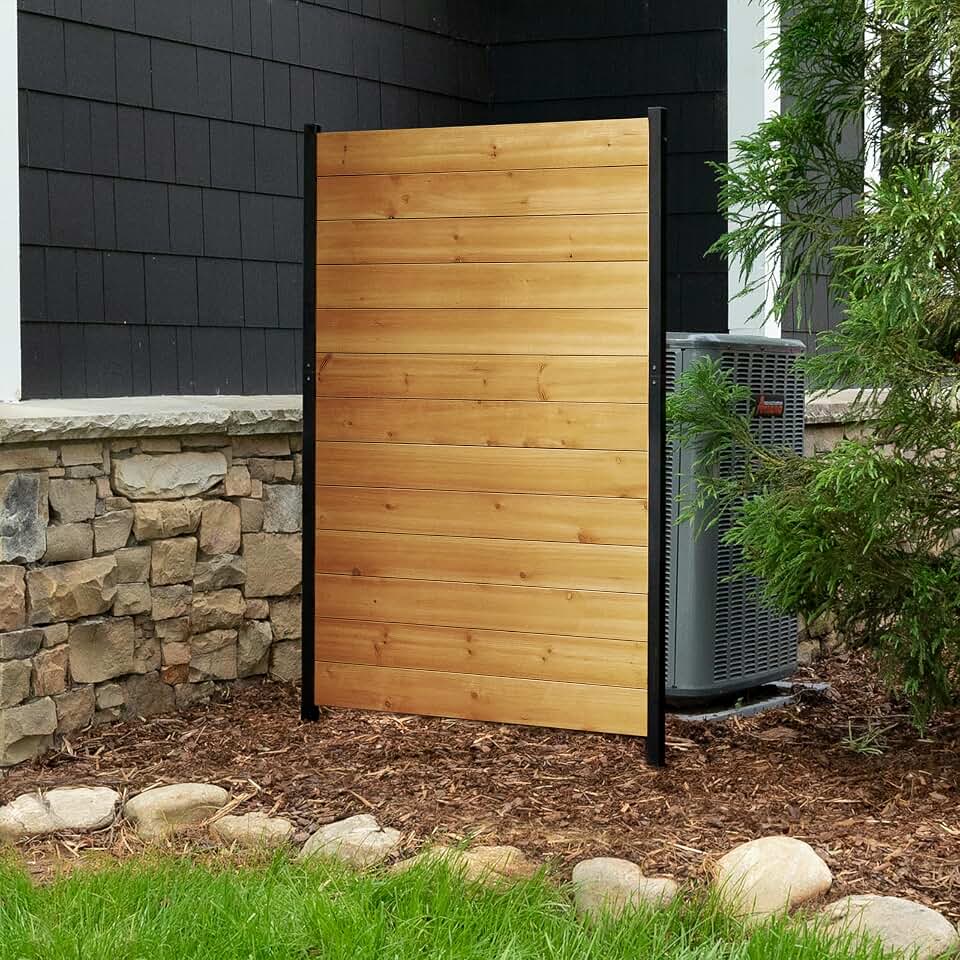
Fairmont Cedar Privacy Screen
- Five-foot cedar screen adds targeted privacy
- Pre-stained finish saves preparation time
- No-dig kit makes setup more approachable
- Designed to hide trash cans or utility items
- Forest Stewardship Council certified wood supports responsible sourcing
Buy on Amazon
The final choice should pair a suitable design with sound posts, correctly rated wood, controlled board movement, compatible hardware, and realistic maintenance. Those hidden construction decisions often influence service life more than the visible fence style.
FAQs
What Are The Main Types Of Wood Fences?
The main types of wood fences are privacy, picket, split-rail, post-and-rail, lattice, and board-on-board fences.
Privacy fences use closely spaced boards, while picket and rail styles create a more open look. Lattice and board-on-board designs add decoration or extra coverage. The best choice depends on your desired privacy, budget, and maintenance level.
What Type Of Wood Is Best For A Fence?
Cedar is often the best all-around wood for a fence because it naturally resists rot, insects, and warping.
Redwood is also durable and attractive, but it usually costs more. Pressure-treated pine is a budget-friendly option that resists decay when properly maintained. Choose a wood that suits your climate, budget, and preferred appearance.
Which Wood Fence Design Offers The Most Privacy?
A solid board-on-board or stockade fence offers the most privacy.
These designs use tightly placed or overlapping boards to block views through the fence. A six-foot height is common for residential privacy, subject to local rules. Add a top cap or lattice extension if you want a more finished appearance without sacrificing coverage.
Is Cedar Better Than Pressure-Treated Pine For Fencing?
Cedar is generally better than pressure-treated pine for natural beauty and resistance to rot and insects.
It is lighter, less likely to warp, and does not require chemical treatment. Pressure-treated pine costs less and can last for years with regular sealing or staining. Cedar is often the premium choice, while pine is practical for budget-conscious projects.
What Type Of Saw Should I Use To Cut Wooden Fence Boards?
A circular saw is the most practical saw for cutting wooden fence boards.
Use a sharp wood-cutting blade and a straight guide to make clean, accurate cuts. A miter saw works well for repeated crosscuts and precise angles. Always support the board securely, wear eye protection, and check for hidden nails before cutting.
Affiliate Disclosure: Some links in this post are affiliate links. If you make a purchase through these links, we may earn a small commission at no extra cost to you. We only recommend products we genuinely believe in.