Douglas Fir Wood: Properties, Uses, Durability, and Buying Guide

Douglas fir wood is a strong North American softwood from Pseudotsuga menziesii, valued for framing, beams, plywood, flooring, furniture, and millwork. Its high stiffness-to-weight ratio is useful, but grade, moisture, grain orientation, treatment, and exposure determine how a board performs.
Table of Contents
Douglas Fir Wood at a Glance

Douglas fir is a coniferous softwood, yet its stiffness and bending strength exceed those of many lumberyard softwoods. The hyphenated name Douglas-fir usually describes the tree, while Douglas fir wood and Douglas fir lumber describe the material.
Definition and Botanical Identity
The scientific name is Pseudotsuga menziesii, which places the tree in the pine family, Pinaceae. It isn’t a true fir from the genus Abies; Pseudotsuga means “false hemlock,” another clue that common lumber names don’t always match botanical relationships.
Native Range and Tree Size
The species grows naturally across western North America. Coast Douglas-fir commonly exceeds 200 feet on productive sites, while exceptional old-growth trees can approach 300 feet; those record sizes don’t represent a typical managed forest. The USDA Forest Service silvics profile documents its range, forms, and growth habits.
Coast and interior varieties. Coast Douglas-fir, P. menziesii var. menziesii, supplies much of the large structural and appearance lumber sold in western markets. Rocky Mountain Douglas-fir, var. glauca, grows inland and usually forms smaller trees. Region, growth rate, ring spacing, and variety can change density and machining behavior.
Color, grain, and texture. Sapwood runs from creamy yellow to light tan. Heartwood ranges from yellow-brown through reddish or orange-brown and darkens with light exposure. Flat-sawn faces show broad cathedral arches, while vertical-grain Douglas fir has narrow parallel lines. Fresh cuts release a warm resin scent, and coarse latewood bands feel slightly ridged under a bare fingertip.
Typical properties. The figures below are reference averages rather than guarantees. Variety, moisture, growing site, defects, and test methods all affect the result.
| Property | Typical reference value | Practical meaning |
|---|---|---|
| Wood type | Softwood | Botanical classification, not a claim of weakness |
| Dried density | About 32 lb/ft³ or 510 kg/m³ | Moderate carrying weight for its strength |
| Janka hardness | About 620 lbf or 2,760 N | Dents more readily than many hardwood floors |
| Modulus of rupture | About 12,500 psi or 86.2 MPa | Clear-wood bending reference, not an allowable design value |
| Modulus of elasticity | About 1.77 million psi or 12.2 GPa | Indicates relatively high stiffness |
| Crushing strength | About 6,950 psi or 47.9 MPa | Clear-wood compression reference |
| Radial shrinkage | About 4.8% | Movement across quarter-sawn thickness or width |
| Tangential shrinkage | About 7.6% | Greater movement across flat-sawn faces |
| Volumetric shrinkage | About 12.4% | Total green-to-oven-dry volume change |
Strength, Hardness, and Movement

Douglas fir offers high stiffness for its weight, which explains its broad use in joists, rafters, beams, and engineered panels. A species average can’t size a load-bearing member because knots, slope of grain, moisture, grade, treatment, and connection details change capacity.
Clear-Wood Reference Values
Commonly quoted values—12,500 psi bending strength, 1.77 million psi stiffness, and 6,950 psi compression strength—come from representative clear test specimens. The USDA Forest Products Laboratory’s Wood Handbook explains wood mechanics, moisture relationships, and the limits of species averages.
Structural Design Values
Allowable design values come from the stamped species group, grade, size classification, service moisture, and applicable code tables. Engineers may also apply adjustments for load duration, repetitive members, temperature, incising, treatment, and beam stability. Never substitute clear-wood averages for an approved span table or structural calculation.
Density and weight. Dry stock averages about 32 pounds per cubic foot, but a green beam or freshly treated post feels markedly heavier and colder in the hands. Moisture adds weight without adding proportional design capacity, which affects lifting, freight, and installation planning. See this guide to wood density for related measurements.
Janka hardness. The approximate 620 lbf rating measures resistance to indentation, not bending strength or rot resistance. Chair legs, pet claws, grit, and dropped tools can mark a Douglas fir floor. Compare this value with other species on the wood hardness scale.
Shrinkage and stability. Tangential shrinkage of roughly 7.6% exceeds radial shrinkage of about 4.8%, so flat-grain boards tend to cup more visibly than vertical-grain stock. Most service movement occurs across the grain. Leave panels room to move, orient growth rings thoughtfully, and mill moisture-sensitive parts in stages.
Grades, Stamps, and Lumber Sizes

A Douglas fir board’s grade stamp often tells you more about structural suitability than its color or ring count. Read the species group, grade, moisture marking, mill identification, and treatment tag before using lumber in regulated construction.
Structural and Appearance Grades
Structural grades may include Select Structural, No. 1, No. 2, No. 3, Stud, Construction, or Standard under the applicable grading rules. Limits address knot size, knot position, slope of grain, wane, checks, splits, warp, and manufacturing defects.
Appearance products use terms such as clear vertical grain, clear flat grain, finish, select, or shop grade. “Clear” doesn’t always mean flawless. Request the seller’s written grading standard, especially when long pieces, matching color, or clean door stiles affect yield.
DF-L Species Group
DF-L means Douglas Fir-Larch, a structural species group that can contain Douglas fir and western larch graded under recognized rules. It isn’t proof that each stamped board is botanically pure Douglas-fir. Readers comparing the two can review western larch.
Grade stamp guide. Look for the grading agency or mill number, species group, structural grade, and moisture designation. The WWPA grade-stamp guide explains common western lumber marks. An unstamped decorative board may look excellent but can’t automatically replace stamped structural stock.
Moisture and heat labels. S-GRN usually means surfaced above 19% moisture, while S-DRY means surfaced at 19% or less. KD indicates kiln drying, and KD15 typically indicates 15% or less when surfaced. HT is phytosanitary heat treatment; it doesn’t mean furniture-dry or preservative-treated. Learn more about kiln-dried wood.
Nominal versus actual sizes. A nominal 2×4 commonly measures about 1½ × 3½ inches, a 2×6 about 1½ × 5½ inches, and a 1×6 about ¾ × 5½ inches. Rough-sawn, reclaimed, and custom-milled pieces can differ, so measure before planning joinery or ordering brackets. This lumber dimensions guide provides further examples.
Common Douglas Fir Wood Uses
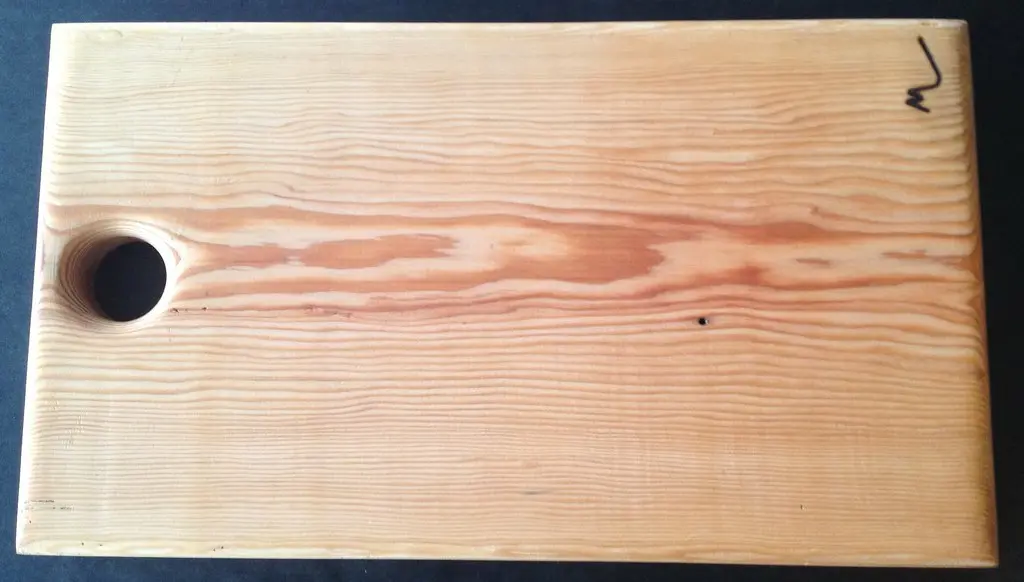
The most common Douglas fir wood uses include structural framing, Douglas fir plywood, engineered beams, doors, flooring, cabinets, furniture, and exterior millwork. The right grade differs sharply between a concealed stud, a clear cabinet face, and a wet exterior assembly.
Structural Framing
Framing applications include studs, joists, rafters, headers, posts, beams, roof systems, floor systems, and bracing. Select members from approved span tables or engineered plans based on grade, actual size, load, spacing, bearing, connections, and service conditions—not species reputation by itself.
Engineered Wood Products
Manufacturers use Douglas fir in plywood and glulam, laminated veneer lumber, structural composite lumber, I-joists, and mass-timber components. Product layups and species vary, so use the panel stamp or manufacturer’s data rather than assuming every Douglas fir plywood sheet carries identical ratings.
Interior millwork. Clear vertical-grain material suits doors, windows, trim, paneling, built-ins, stairs, mantels, and decorative beams. Its straight lines look calm across long runs, while flat-grain boards create wider, more animated arches. Resin pockets need removal or sealing before a pale finish.
Furniture and cabinetry. Douglas fir works for tables, benches, shelves, utility cabinets, and architectural furniture. It holds screws well, yet thin edges can splinter and broad surfaces can dent. Beginners often choose construction boards by price, then lose much of each piece to knots, pith, twist, and checks; appearance stock can produce a lower usable cost.
Douglas fir flooring. Flooring has warm reddish tones and bold ring contrast but shows heel marks, grit scratches, and dropped-object dents sooner than harder species. Acclimate the boards, verify subfloor moisture, and keep indoor humidity reasonably steady. Vertical-grain flooring gives a more linear look and usually displays less obvious cupping.
Boats and exterior millwork. Clear, straight-grained Douglas fir has a long record in spars, boat components, doors, and windows. That history doesn’t make every stud suitable for continuous wet exposure. Marine and exterior work calls for careful grain selection, dry stock, sealed end grain, drainage, suitable adhesives, protective coatings, and regular inspection.
Outdoor Durability and Weather Resistance
Douglas fir can perform outdoors, but it is not waterproof and isn’t the automatic best timber for outdoor use. Long service depends on natural durability, preservative treatment where needed, drainage, ventilation, compatible fasteners, and coating maintenance.
Natural Decay Resistance
Douglas fir heartwood has moderate decay resistance in some classifications, while sapwood is more vulnerable. Neither should sit against soil or remain wet for long periods without a suitable treatment rating. Cedar often suits exposed, nonstructural work better; compare the material with western red cedar.
Common Exterior Failures
Real-world failure points cluster around exposed end grain, flat ledges, unflashed joints, checks, soil contact, and end-grain contact with masonry. Water darkens these locations first, and softened fibers often feel cool and slightly spongy before widespread decay becomes visible.
Practical notes from use: coating the face while leaving cut ends bare is a common beginner mistake. Seal cuts before assembly, slope cap rails, leave drainage gaps, add flashing over joints, and keep trim clear of roofs and paving. A thick coating can’t rescue damp wood; trapped moisture can make peeling worse.
Moisture-smart construction details. Separate lumber from soil and standing water, ventilate the rear of siding and trim, and avoid upward-facing pockets. Use a pigmented exterior finish where UV exposure is strong. Check joints and end grain before the main painted faces because small openings admit water faster than broad surfaces.
Pressure-treatment categories. Treatment isn’t one universal rating. The tag should identify the preservative, retention, and intended AWPA Use Category. Above-ground stock mustn’t be buried. Douglas fir heartwood can resist deep penetration, so mills may incise the surface; those small slits assist treatment and aren’t automatically defects. The AWPA Use Categories explain exposure classifications.
Fasteners and connectors. Use hardware compatible with the preservative and local code. Hot-dip galvanized or stainless steel may be required because some preservative systems increase metal corrosion. Match hangers, nails, screws, bolts, and flashing as one system rather than mixing metals that can corrode at contact points.
Workability, Fastening, and Finishing
Douglas fir machines and bonds well when it is dry and clean, but hard latewood bands cut differently from softer earlywood. Sharp tools, staged sanding, predrilling, and finish tests prevent most tear-out, splitting, and blotchy color.
Cutting and Machining
Sharp carbide edges leave the cleanest cuts. Dull blades crush pale earlywood and lift splinters along dark latewood bands. Use a backing board for crosscuts, take light router passes, and climb-cut only where the tool and setup permit safe control. Pitch buildup raises friction and should be cleaned from cutters.
Drilling and Fastening
Douglas fir has good screw holding, but fasteners near an end can split dry stock with a sharp cracking sound. Predrill for large screws, countersink cleanly, and maintain required edge distances. Structural screws and nails must match the approved diameter, length, spacing, and connector schedule.
Gluing Douglas fir. Freshly machined, accurately fitted surfaces usually bond well. Scrape away resin, remove oily contamination, and avoid glue joints on wet or burnished faces. Choose an adhesive rated for the service exposure; an interior PVA isn’t a substitute for a tested exterior or marine bonding system.
Sanding and preparation. Start with the least aggressive grit that removes machining marks, then progress without large grit jumps. Excess sanding can hollow soft earlywood while leaving latewood ridges. Vacuum the surface and test the full finish schedule on an offcut from the same batch.
Staining challenges. Earlywood absorbs color differently from dense latewood, producing stripes or blotches under dark penetrating stain. A washcoat, conditioner, dye-and-toner schedule, or gel stain offers more control. Test both flat-grain and edge-grain surfaces because they can shift color differently.

Clear finishes and paint. Oil-based finishes add amber warmth, while waterborne products tend to keep the wood paler. Exterior clear coats offer limited UV protection and need frequent inspection. Prime resin pockets and end grain before painting, and coat only wood that has reached a suitable moisture level.
Workshop safety. Dust can irritate the eyes, skin, nose, and lungs. Use extraction, eye protection, and suitable respiratory protection; the OSHA woodworking guidance covers common shop hazards. Never burn pressure-treated scraps, and follow local disposal rules for treated wood, finishes, and adhesives.
Douglas Fir Versus Other Woods
Douglas fir usually offers greater structural stiffness than many readily available softwoods, but cedar and redwood provide better natural decay resistance in exposed applications. Grade, treatment, dimensions, and local supply can matter more than species-level averages.
Douglas Fir vs Pine
“Pine” covers many species, so a fair comparison must name the pine and grade. Douglas fir is often chosen for stiffness and straight grain, while some pine is cheaper or easier to machine. Southern yellow pine can be dense and strong; see the guide to yellow pine.
Douglas Fir vs Cedar
Douglas fir is usually stronger and stiffer, while western red cedar is lighter and more naturally resistant to decay. Cedar suits siding, shingles, and fencing; Douglas fir suits framing and structural members. Exposed Douglas fir calls for more deliberate drainage, treatment, and coating maintenance.
Douglas fir vs redwood. Douglas fir dominates structural framing and engineered products. Quality redwood heartwood offers strong natural decay resistance and a refined appearance, but availability and cost vary sharply by region and grade. Sapwood-heavy redwood shouldn’t be compared with clear heartwood as if both have equal durability.
Douglas fir vs spruce. Douglas fir is often denser and stiffer than commercial spruce, though stamped grade values govern framing choices. Spruce remains common for framing, instruments, and specialty work. Compare regional stock with this overview of spruce wood.
Douglas fir vs hemlock. DF-L and Hem-Fir are separate structural groups. Hem-Fir may combine western hemlock with certain true firs under grading rules. Use values for the exact stamp rather than swapping species-group tables. The hemlock wood guide explains its material traits.
Advantages and limitations. Douglas fir combines stiffness, fastening strength, structural availability, and expressive grain. Its drawbacks include denting, splintering, uneven staining, resin pockets, flat-grain cupping, and limited durability in persistently wet conditions. Clear vertical-grain stock also carries a sizeable premium over framing grades.
| Wood | Relative strength | Natural exterior resistance | Common choice |
|---|---|---|---|
| Douglas fir | High for a common softwood | Moderate heartwood; lower sapwood | Framing, beams, plywood, millwork |
| Pine | Varies widely by species | Usually limited without treatment | Framing, furniture, trim |
| Western red cedar | Lower | Good heartwood resistance | Siding, fencing, shingles |
| Redwood | Moderate and grade-dependent | Good in quality heartwood | Exterior finish work, decking |
| Spruce | Moderate | Limited | Framing and specialty work |
| Hem-Fir | Grade-dependent | Limited without treatment | Structural framing |
How to Choose Douglas Fir Lumber
Choose Douglas fir by matching the grade, moisture, dimensions, and treatment to the project, then inspect each board for usable yield. Compare delivered project cost rather than the advertised piece price, particularly for long lumber shipped to a residence.
Match Grade to Project
- Use an appropriate stamped structural grade for framing, beams, joists, and rafters.
- Choose clear, straight stock for visible furniture, trim, doors, and windows.
- Favor vertical grain where straight lines and reduced visible cupping matter.
- Verify treatment category for wet, exterior, or ground-contact exposure.
- Check veneer thickness, backing, grain direction, and adhesive compatibility.
Inspect Individual Boards

Sight both directions along the face and edge. Reject troublesome bow, crook, cup, twist, end splits, loose knots, severe wane, pitch pockets, and steep grain where they compromise the planned cuts. A board that rocks on a flat rack will rarely become straighter after ripping.
Verify moisture content. Heated interiors often call for stock near 6–9% moisture, though the correct target follows the local service environment. Use a calibrated meter, apply species correction if required, test multiple boards and locations, then acclimate stock before precision milling.
Calculate size and quantity. Confirm actual dimensions and whether material is rough, S2S, S3S, or S4S. Board feet equal thickness in inches × width in inches × length in feet ÷ 12. Add waste for defects, matching, trim cuts, test pieces, and movement after milling.
Compare delivered cost. Include milling, packaging, minimum orders, oversize fees, liftgate service, waste, and return restrictions. Local yards are often cheaper for studs and long beams because shipping bulky low-value pieces costs disproportionately more than moving veneer or short project boards.
Local and online suppliers. A lumberyard lets you inspect straightness, stamps, moisture, and end checks before purchase. Online sellers make sense for samples, short boards, veneer, rare profiles, or buyers without regional supply. Ask whether the photographed face represents the shipped grade.
Sustainable sourcing. FSC, SFI, and PEFC certification can document chain-of-custody or forest-management standards, but certification doesn’t establish structural grade or decay resistance. Compare transport distance, drying energy, expected service life, repairability, and available environmental product declarations rather than relying on a broad “renewable” claim.
Standard framing stock. Before buying an eight-foot nominal 2×4 online, verify its actual dimensions, grade stamp, moisture marking, straightness policy, and delivered price. Structural suitability still depends on the approved plans and local code.

Douglas Fir 2 x 4 Stud 8 Foot
- Premium Douglas fir construction lumber
- Nominal 2 x 4 board size
- Eight foot length for standard framing
- Great for walls supports and bracing
- Durable material for building projects
 Buy on Amazon
Small woodworking stock. Short 1×6 pieces suit finish tests, patches, craft work, and color samples. They aren’t economical replacements for full-length local lumber on larger furniture or trim projects, but they reduce waste when only a small matching piece is needed.

Douglas Fir 1 x 6 Board 1 Foot
- Premium Douglas fir board stock
- Nominal 1 x 6 board size
- One foot piece for small tasks
- Wide face suits trim and craft work
- Handy for samples repairs and details
Buy on Amazon
Furniture and cabinet veneer. Real Douglas fir veneer gives panels and cabinets a vertical-grain face without the movement or cost of thick solid stock. Confirm sheet size, thickness, backing, substrate flatness, seam placement, adhesive method, and finish compatibility before application.

Douglas Fir Vertical Grain Veneer Sheets
- Douglas fir vertical grain veneer
- Pressure sensitive adhesive backing
- Adds real wood character to panels
- Great for refinishing furniture and cabinetry
- Easy option for detailed wood surfaces
Buy on Amazon
FAQs
Is Douglas Fir A Hardwood Or Softwood?
Douglas fir is a softwood. It comes from a coniferous evergreen tree, but it is denser and stronger than many common softwoods. Its durability and attractive grain make it popular for framing, flooring, trim, and furniture projects.
Is Douglas Fir Stronger Than Pine?
Douglas fir is generally stronger and stiffer than most common pine species. It has excellent structural strength, which is why it is widely used for beams, framing lumber, and load-bearing projects. Strength can vary by grade, moisture level, and the specific type of pine being compared.
Is Douglas Fir Good For Outdoor Use?
Douglas fir can be used outdoors when it is properly sealed, painted, or treated. Untreated wood can absorb moisture and may eventually rot or weather in direct exposure. For decks, fences, and other exterior projects, use a durable finish and maintain it regularly.
Does Douglas Fir Stain Well?
Douglas fir can stain well, but it may absorb stain unevenly without preparation. Applying a pre-stain wood conditioner helps reduce blotchiness and produces a more consistent color. Test the stain on an offcut first, especially if you want a dark or rich finish.
Is Douglas Fir Good For Furniture?
Douglas fir is a good choice for sturdy, affordable furniture with a distinctive straight grain. It works well for tables, benches, shelving, and rustic-style pieces, although it can dent more easily than hardwoods. Choose clear, kiln-dried boards and sand carefully for the best finish.
Affiliate Disclosure: Some links in this post are affiliate links. If you make a purchase through these links, we may earn a small commission at no extra cost to you. We only recommend products we genuinely believe in.