Parawood Guide: What It Is and Whether It’s Good for Furniture

Table of Contents
Parawood is a light-colored hardwood from the Hevea brasiliensis rubber tree, and it is the same material most furniture sellers call rubberwood. It’s real wood, used most often for affordable indoor furniture such as tables, chairs, desks, bookcases, stools, and unfinished pieces you can paint or stain.
What Is Parawood?
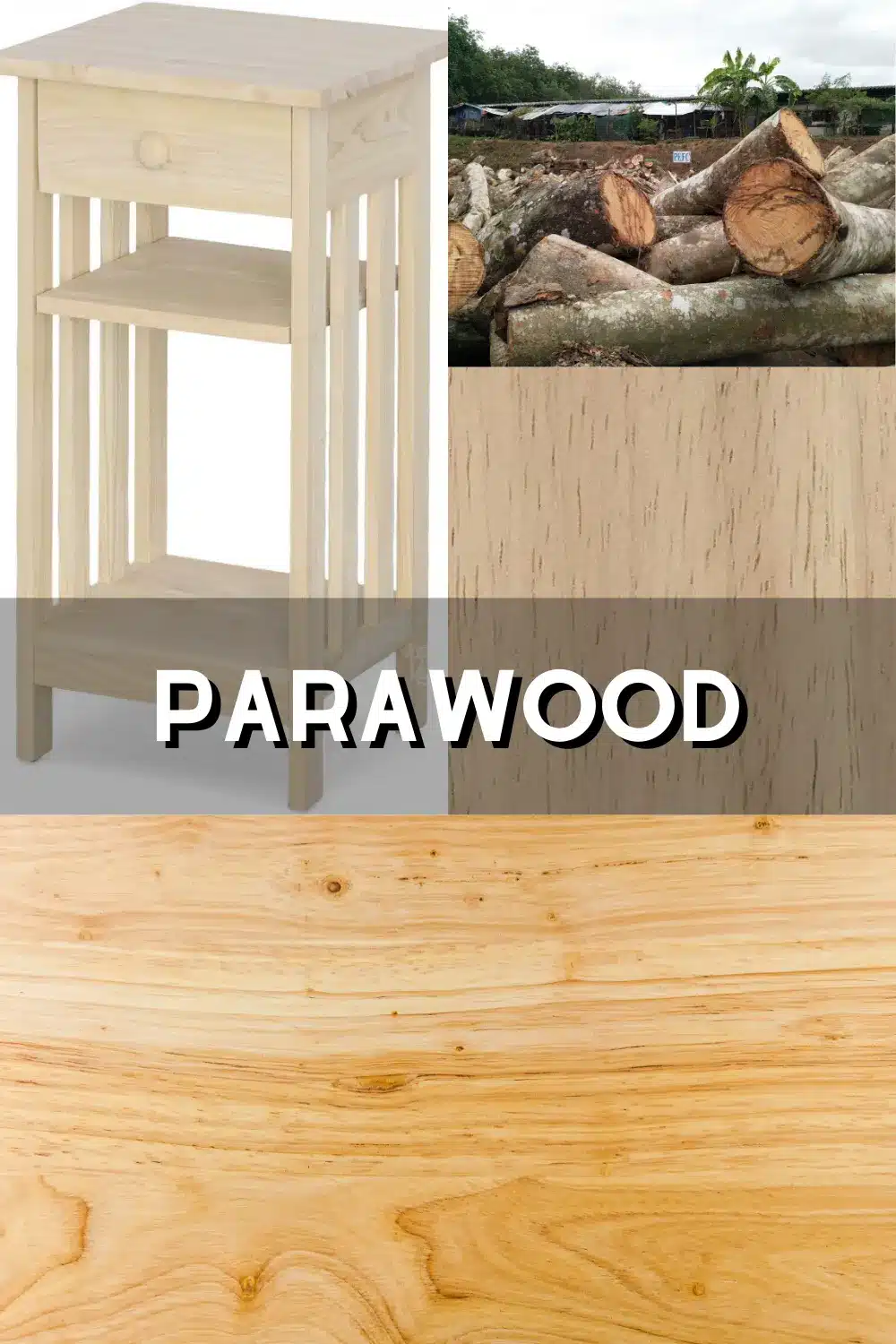
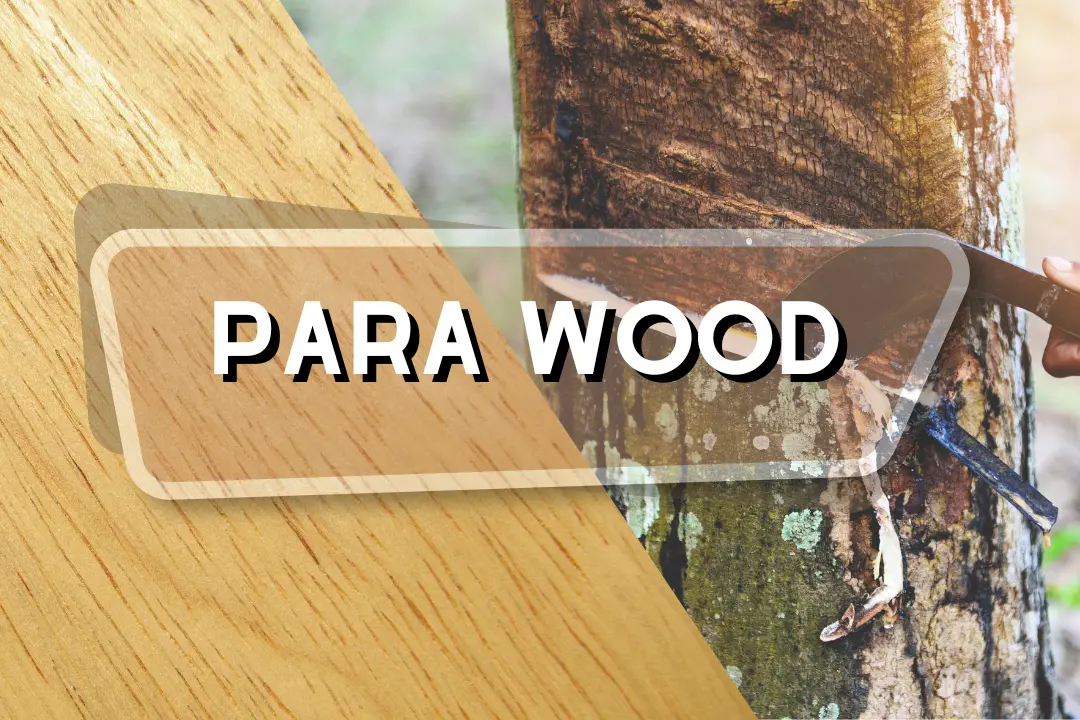
Parawood is rubberwood, which comes from the rubber tree used for natural latex production. If you searched “what is parawood” or even “what is par wood,” the short answer is simple: it’s a real plantation hardwood, not MDF, particleboard, laminate, or plastic.
The feel is familiar if you’ve handled unfinished furniture: smooth, pale, slightly warm to the touch, with a faint dry wood smell after sanding. The pale cream color makes parawood easy to customize, which is why it appears so often in ready-to-finish furniture.
Parawood vs Rubberwood
Parawood and rubberwood usually mean the same wood in furniture listings. Sellers often use “parawood” because it sounds cleaner and more furniture-focused than “rubberwood,” but both names point to timber from Hevea brasiliensis.
The buying risk comes from vague listings, not the name itself. A piece described as “rubberwood solids and veneers” may include solid parawood legs with veneer panels, while “solid parawood” should mean the main parts are made from real wood throughout.
Hevea Brasiliensis Source
Hevea brasiliensis is grown mainly for latex first, then the wood can be harvested after latex yield drops, often around 25 to 30 years. The Kew Plants of the World Online database identifies Hevea brasiliensis as the accepted botanical source behind this wood.
That second use explains why parawood became popular in furniture factories. Instead of treating old latex trees as waste, mills saw them into boards, dry them, treat them against insects and staining, then glue them into panels for furniture parts.
Common Parawood Names
Common names include rubberwood, Hevea wood, rubber tree wood, plantation hardwood, Malaysian oak, and bois d’hévéa in French-language listings. “Malaysian oak” is a marketing name, not a sign that parawood is botanically related to oak.
- Parawood
- Rubberwood
- Hevea wood
- Rubber tree wood
- Plantation hardwood
- Malaysian oak
- Bois d’hévéa
Why It’s Called Parawood
The name Parawood is linked to the Pará rubber tree and the Pará region of Brazil. In stores, the name helps separate furniture-grade timber from the soft, elastic idea people associate with rubber.
The label can help, but it can also hide details. Always read the material line because a “parawood finish” can mean a color style, while “solid parawood” points to the actual lumber.
Is Parawood Real Wood?
Yes, parawood is real wood when the listing says solid parawood or solid rubberwood. It is a hardwood by botanical classification because it comes from a broadleaf tree, though it is not as hard or premium as oak, maple, or hickory.
The confusion starts because many furniture pieces mix materials. A table may have solid parawood legs, a veneered top, plywood drawer bottoms, and MDF panels, so the phrase “made with parawood” needs a closer look.
Solid Parawood

Solid parawood means the part is cut or glued from real rubberwood boards, not pressed fibers. Glued-up panels are still solid wood because furniture makers often edge-glue narrow boards to create stable tabletops, shelves, and seats.
A good sign is visible end grain on legs, rails, or shelf edges. Run your finger along an unfinished edge and you’ll feel a slight open-pore texture rather than the chalky, fuzzy feel of raw MDF.
Engineered Wood Labels
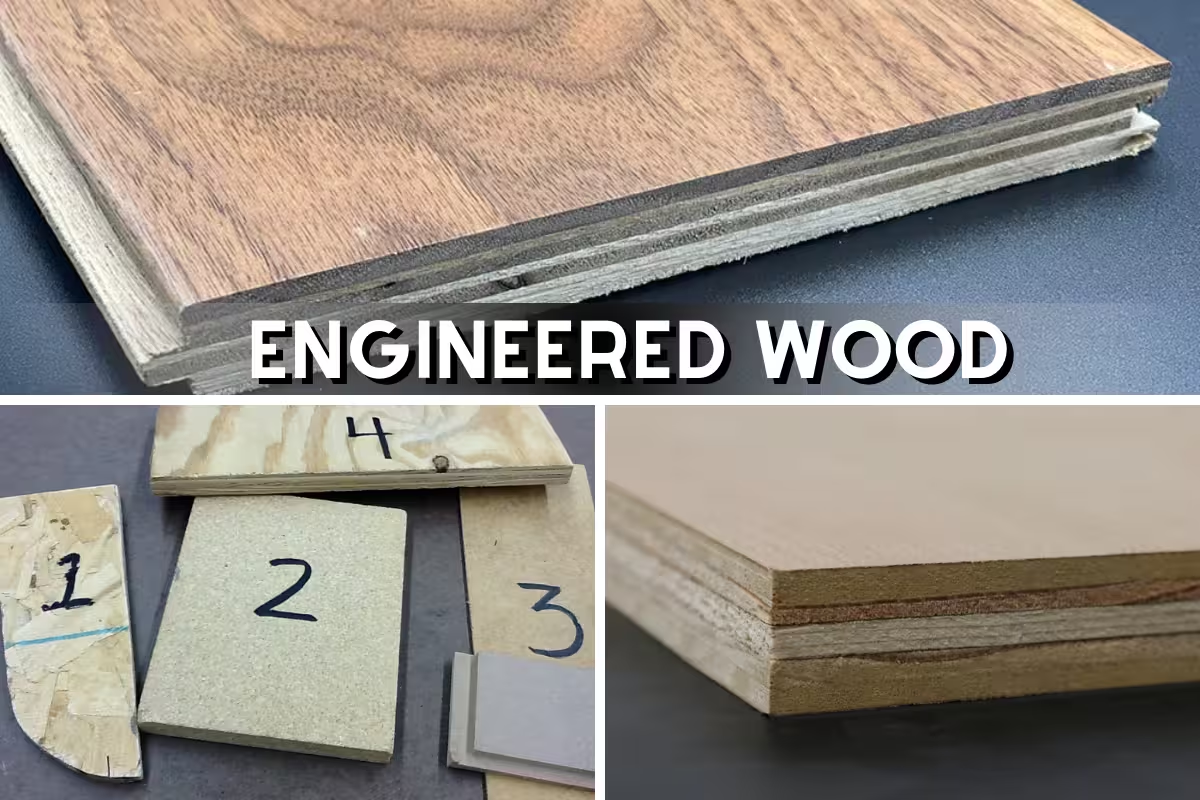
Engineered labels such as “manufactured wood,” “wood product,” “composite wood,” or “MDF” do not mean solid parawood. If you’re comparing labels, this guide to engineered wood explains how these products differ from solid lumber.
The workaround is to check each component separately. Ask whether the top, legs, shelves, back panel, drawer boxes, and drawer bottoms are solid wood, plywood, veneer, MDF, or particleboard.
Veneer and Mixed Materials
Veneer is not bad by itself; high-quality furniture can use veneer over stable panels. The issue is disclosure, because a thin rubberwood veneer over MDF cannot be sanded and refinished like a solid parawood tabletop.
Beginner mistake: sanding through veneer during refinishing. If the surface pattern repeats too perfectly or the edge has a separate banding strip, treat it gently and avoid aggressive sanding.
Furniture Listing Checks
Check the listing for “solid parawood,” “solid rubberwood,” “unfinished,” “ready to stain,” “kiln dried,” and “solid wood.” Vague wording usually signals mixed construction, which may still work for light use but should cost less than solid furniture.
Ask before buying if the product photos do not show the underside, shelf thickness, drawer construction, or assembly points. Cheap pieces often fail at cam locks, drawer slides, and screw holes long before the wood itself wears out.
Parawood Properties and Durability
Parawood is durable enough for everyday indoor furniture, but it is not a waterproof or rot-resistant outdoor wood. Its numbers place it in the practical mid-range: stronger than many soft pines, softer than oak, and stable when properly dried and sealed.
Color and Grain
The color range runs from pale cream to light tan, yellowish beige, and light brown. The grain is usually straight to slightly interlocked, with a medium texture that feels smooth after sanding but still catches stain in subtle streaks.
The visual trade-off is plainness. Parawood rarely has the bold cathedral grain of oak or the deep figure of walnut, but that calm surface works well for painted Shaker furniture and modern stained pieces.
Janka Hardness
Parawood averages about 960 lbf on the Janka hardness scale. That makes it harder than Eastern white pine and Ponderosa pine, but softer than red oak, white oak, hard maple, and hickory, based on figures compiled by The Wood Database rubberwood data.
In real use, a dropped mug can dent a parawood tabletop, but normal plates, books, laptops, and daily chair movement rarely damage a good finish. The finish often scratches before the wood compresses.
Density and Strength
Average dried weight is about 35 lb/ft³, or 560 kg/m³, with specific gravity around 0.49 basic and 0.56 at 12% moisture. For a broader comparison, see this internal guide to density of wood.
Strength values matter because furniture parts carry load in different ways. Parawood has a modulus of rupture around 9,730 psi, elastic modulus around 1.31 million psi, and crushing strength near 4,890 psi, which suits chairs, stools, shelves, desks, and small tables when the joinery is sound.
Shrinkage and Stability
Shrinkage is moderate, with radial shrinkage near 2.3%, tangential shrinkage near 5.1%, and volumetric shrinkage near 9.1%. These numbers explain why kiln-dried parawood behaves well indoors but can still move across the grain with seasonal humidity swings.
The professional workaround is to seal all sides when possible, including undersides and end grain. Leaving the bottom raw while coating the top can create uneven moisture exchange, which may cup a tabletop over time.
Moisture and Rot Limits
Parawood is not waterproof and has poor natural resistance to decay if left damp. It should not be your first pick for patio furniture, shower benches, wet basements, planters, or bathroom vanities near constant humidity.
Use teak instead for wet outdoor exposure, or compare proven exterior species in this guide to the best outdoor furniture wood. A thick finish helps parawood resist spills, but no clear coat turns it into a marine-grade material.
Latex and Dust Safety
Latex sensitivity deserves careful handling because parawood comes from the same tree used for natural latex. Finished furniture is not the same as a latex rubber glove, but people with severe sensitivity should ask the manufacturer about processing and finishes.
Sanding dust irritates eyes, skin, and lungs, especially in a closed room where the air starts to feel dry and gritty. Wear eye protection and a respirator or dust mask, vacuum between grits, and keep air moving away from your face.
| Property | Typical Parawood Figure | Practical Meaning |
|---|---|---|
| Janka hardness | About 960 lbf | Good indoor dent resistance, softer than oak |
| Dried weight | About 35 lb/ft³ / 560 kg/m³ | Medium weight furniture wood |
| Specific gravity | About 0.49 basic / 0.56 at 12% MC | Solid feel without extreme weight |
| Modulus of rupture | About 9,730 psi / 67.1 MPa | Suitable for chairs, desks, stools, and tables |
| Radial / tangential shrinkage | About 2.3% / 5.1% | Stable indoors when kiln dried and sealed |
| Rot resistance | Low natural resistance | Needs indoor use and protective finish |
Is Parawood Good for Furniture?

Parawood is good for indoor furniture when it is kiln dried, properly joined, and sealed with a suitable finish. It is best seen as a mid-range solid hardwood: better than many budget composites, usually less costly than oak, and very useful for paintable or stainable furniture.
Practical shop note: parawood machines cleanly, but the pale surface shows sanding scratches under dark stain. Under bright side light, missed 120-grit scratches look like dull gray lines after the first coat, so careful sanding saves more time than fixing color later.
Best Indoor Uses
Best uses include dining tables, kitchen tables, stools, chairs, bookcases, desks, console tables, side tables, benches, children’s furniture, and storage pieces. Parawood furniture is especially common in unfinished furniture because the wood is smooth, light-colored, and easy to customize.
For furniture planning, parawood belongs beside practical hardwoods like birch, beech, poplar, and maple rather than luxury woods like walnut. This broader guide to types of wood for furniture helps place it by use case.
Parawood Pros
The main benefits are value, strength, paintability, stainability, and indoor stability. It glues well, machines cleanly, and gives buyers real solid wood without the higher cost of oak, walnut, cherry, or hard maple.
- Real hardwood from the rubber tree
- Usually harder than many common pine species
- Good for indoor tables, chairs, desks, shelves, and stools
- Often sold unfinished for custom paint or stain
- Light color works with natural, honey, walnut, espresso, gray, and painted finishes
- Uses rubber plantation trees after latex production declines
- Holds screws better than many particleboard furniture parts
Parawood Cons
The main drawbacks are moisture sensitivity, plain grain, and lower dent resistance than oak or hard maple. It can swell, stain, warp, or develop raised grain if you leave it unfinished in a damp room.
- Not naturally waterproof
- Not naturally rot-resistant
- Poor choice for outdoor furniture
- Softer than red oak, white oak, and hard maple
- Dark stains can turn blotchy without testing
- Lower-end furniture may use weak hardware or thin parts
- Sustainability claims depend on plantation practices and certification
Price and Value
Parawood value is strongest when you want solid wood but don’t need the prestige of oak, cherry, walnut, or maple. It usually costs more than MDF, particleboard, and laminate furniture, but it can last longer because solid parts can be sanded, repaired, and tightened.
Unfinished pieces hide extra cost. Budget for sandpaper, wood conditioner, stain or paint, primer, topcoat, tack cloth, brushes, rags, gloves, and ventilation supplies before assuming the unfinished price is the final cost.
Sustainability Claims
Parawood can be sustainable because it uses rubber plantation trees after their latex-producing life. The claim is stronger when the seller can show chain-of-custody records, responsible plantation management, low-VOC finishes, and formaldehyde-compliant engineered components where panels are used.
Marketing alone isn’t proof. Land conversion, biodiversity loss, long shipping routes, adhesives, and finishing chemistry can affect the environmental footprint, so a certification signal carries more weight than a green product badge.
Certification Signals
Look for FSC, PEFC, chain-of-custody documentation, low-VOC finish claims, and clear panel-emission statements when mixed materials are used. The FSC standards page explains how certification systems track responsible sourcing beyond a simple “eco-friendly” label.
A practical shortcut is to ask for the certificate code or product documentation. If support cannot explain whether the wood is certified, treat the sustainability claim as a possibility rather than a verified feature.
Parawood Comparisons
Parawood compares best against pine, oak, MDF, particleboard, and plywood because those are the materials buyers see in the same furniture categories. It wins on solid-wood value, loses to oak on toughness and prestige, and usually beats low-cost composites for load-bearing parts.
Parawood vs Pine

Parawood vs pine depends on the pine species, but parawood is harder and denser than many common pines. Parawood is about 960 lbf Janka, while Eastern white pine is about 380 lbf and Ponderosa pine is about 460 lbf.
Choose parawood for smoother indoor furniture, stools, desks, dining pieces, and bookcases that need better dent resistance. Choose pine for rustic pieces, visible knots, budget shelving, farmhouse projects, and DIY builds where dents add character.
Parawood vs Oak
Oak is harder, more dent-resistant, and more visually distinctive than parawood. Red oak is about 1,290 lbf and white oak is about 1,360 lbf, so red oak is roughly 34% harder than parawood and white oak is roughly 42% harder.
Choose parawood when price, paintability, and easy customization matter most. Choose oak for heirloom dining tables, high-wear tabletops, flooring, premium cabinetry, and pieces where bold natural grain is part of the design; for deeper oak detail, see white oak wood.
Parawood vs MDF
Parawood is solid natural wood, while MDF is an engineered fiberboard made from wood fibers and resin. MDF paints smoothly, but it can swell badly with water and doesn’t show natural grain.
Use parawood for legs, frames, chairs, stools, shelves, and tabletops that need screw-holding strength. Use MDF for painted cabinet doors, decorative panels, and low-impact surfaces kept away from moisture.
Parawood vs Particleboard
Parawood usually lasts longer than particleboard in furniture parts that carry weight or take fasteners. Particleboard can work for low-cost flat-pack furniture, but screw holes and cam-lock points often loosen after repeated moves.
The common mistake is comparing only the price tag. A cheap particleboard bookcase may sag under books, while a solid parawood shelf of similar thickness often holds shape better under daily load.
Parawood vs Plywood
Parawood is better for visible solid edges, legs, rails, seats, carved parts, and furniture meant to be sanded and refinished. Plywood is better for wide panels, drawer bottoms, cabinet backs, and areas where sheet stability matters.
A well-built piece may use both materials: solid parawood for the frame and plywood for the back or drawer bottom. That mix is not a red flag if the listing clearly describes each part.
| Material | Compared With Parawood | Best Choice When |
|---|---|---|
| Pine | Softer in many common species, more knotty | You want rustic style or a lower-cost DIY material |
| Oak | Harder, stronger grain, higher perceived value | You want premium furniture or high-wear tabletops |
| MDF | Smoother for paint but weaker with moisture | You need painted panels kept dry |
| Particleboard | Cheaper but weaker around fasteners | You need temporary or low-cost flat-pack furniture |
| Plywood | More stable in sheets, less like solid lumber | You need backs, bottoms, cabinet panels, or wide sheets |
Finishing Parawood Furniture
Parawood finishes well when you sand evenly, test color first, and seal it fully. It can be stained, painted, clear-coated, or whitewashed, but unfinished parawood should not be used as-is in kitchens, dining rooms, or humid rooms.
Sanding Preparation
Start with 120 or 150 grit only if the surface feels rough or has milling marks, then move to 180 and finish at 220 grit. The surface should feel silky, not polished slick, because stain and topcoat need a surface they can grip.
Remove dust carefully with a vacuum, then a tack cloth or clean lint-free cloth. If dust remains in pores, the first coat can feel gritty under your palm, like fine sand trapped under dry varnish.
Staining Parawood
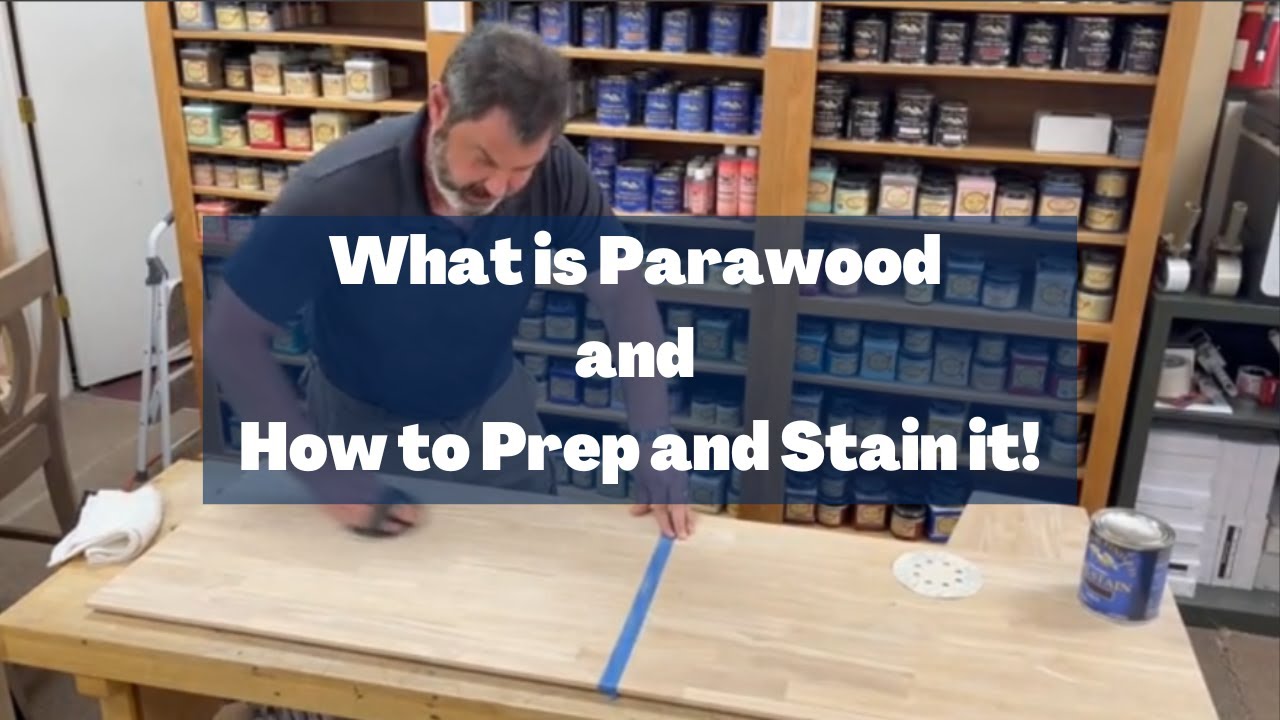
Parawood can stain, but test an underside, back rail, hidden corner, or sample piece first. The pale base can take honey, walnut, espresso, oak-toned stains, gray wash, whitewash, and natural finishes well, but absorption can vary from board to board.
Use gel stain when you want more color control, especially on tabletops or dark finishes. If test spots look blotchy, apply wood conditioner or use a toner-style finish rather than forcing heavy liquid stain into uneven grain.
Painting Parawood
Parawood paints well because the grain is calm and the surface sands smooth. For clean painted furniture, sand, prime, apply two thin paint coats, then protect high-wear surfaces with a compatible clear topcoat.
Thin coats win over thick coats. Heavy paint can pool around Shaker rails, soften corners, and leave a rubbery feel for days, while lighter coats level better and cure harder.
Sealing and Topcoats
Topcoats protect parawood from spills, oils, abrasion, and humidity changes. Use polyurethane, lacquer, varnish, shellac, water-based topcoat, oil-based topcoat, or paint with a protective clear coat where wear is high.
For tabletops, use two to three coats and sand lightly between coats as directed by the finish maker. Let the finish cure before heavy use because a surface that feels dry can still dent, print, or stick under warm dishes.
Waterproofing Limits
No finish makes parawood fully waterproof for outdoor exposure. A sealed dining table can handle wiped-up spills, but standing water, wet planters, soaked towels, and repeated steam exposure can still damage joints and raise grain.
Seal end grain with extra care because it drinks finish faster than face grain. Legs, cut edges, screw holes, and underside corners often fail first when moisture finds a path into the wood.
Buying Parawood Furniture
Buy parawood furniture when you want affordable solid wood for indoor use and are willing to check construction details. The best pieces clearly state solid parawood or solid rubberwood, show stable joinery, and match your finishing comfort level.
What to Look For
Look for clear wording such as solid parawood, solid rubberwood, kiln dried, unfinished, ready to stain, ready to paint, and solid wood. Good construction signs include corner blocks, solid legs, reinforced drawers, thick shelves, and smooth sanding.
- Confirm whether the main parts are solid parawood
- Check if the piece arrives unfinished, stained, painted, or sealed
- Read dimensions carefully, especially height and shelf depth
- Check weight capacity for stools, shelves, desks, and tables
- Review assembly hardware, drawer slides, and joinery photos
- Budget for finishing supplies if the piece is unfinished
- Ask about certifications if sustainability is a buying reason
What to Avoid
Avoid vague descriptions that say only “wood product,” “manufactured wood,” “wood solids,” or “rubberwood veneer” without component details. Those phrases may describe acceptable budget furniture, but they should not be priced like solid wood.
Skip unfinished pieces if you need furniture ready for heavy use the same day. Raw parawood can absorb fingerprints, cooking oils, condensation rings, and spilled drinks before you get around to sealing it.
Common Furniture Types
Common parawood furniture includes Shaker bookcases, console tables, writing desks, saddle stools, small dining tables, side tables, benches, chairs, and storage cabinets. The simple grain works well where the form matters more than dramatic wood figure.
Check shelf thickness on bookcases and desks. A wide, thin shelf can sag no matter what wood you choose, so support span and board thickness matter as much as species.
Kitchen and Household Items
Parawood appears in kitchen tables, counter stools, trays, bowls, utensils, small boxes, salt cellars, and cutting-board-style panels. Food-contact items need food-safe finishes, and they should be wiped clean rather than soaked in the sink.
Water is the risk in kitchens. If a table edge feels slightly fuzzy after repeated wiping, the finish has worn thin and the raised grain is telling you moisture is reaching the wood.
Product Examples
These examples show common parawood furniture categories, including bookcases, tables, desks, and stools that buyers often customize with paint or stain.

Classic Shaker Bookcase
- Tall 5-shelf design for books and decor
- adjustable shelves for flexible storage
- solid parawood construction for lasting strength
- unfinished surface ready for custom paint or stain
- ideal for living rooms, offices, or study spaces
 Buy on Amazon

Shaker Console Table
- Long 48 inch surface for display or entryway use
- solid parawood offers strong everyday durability
- clean Shaker design blends with many styles
- unfinished wood is easy to personalize
- works well behind sofas or in hallways
Buy on Amazon

Customizable Writing Desk
- Compact 36 inch by 20 inch footprint saves space
- built-in drawer keeps supplies close at hand
- solid parawood provides sturdy home office support
- unfinished surface is ready for paint or stain
- useful as a desk, reception table, or study station
Buy on Amazon

Counter Height Saddle Stool
- 24 inch counter height fits many kitchen islands
- saddle seat offers comfortable everyday seating
- solid parawood build for lasting stability
- unfinished wood can match your decor
- simple style works in kitchens, bars, or workspaces
Buy on Amazon

Square Fixed Top Table
- 30 inch by 30 inch top fits small dining areas
- solid parawood construction offers dependable strength
- easy assembly gets it ready faster
- unfinished surface is ideal for custom paint or stain
- great for everyday residential use
Buy on Amazon
Treat product examples as starting points, not automatic recommendations. Confirm whether each piece is solid parawood, whether it arrives unfinished, and whether the dimensions fit your room before buying.
Buyer Questions
Ask direct questions before you buy if the listing leaves gaps. The best sellers can answer material, finish, and assembly questions without guessing.
- Is this solid parawood or rubberwood veneer?
- Are the shelves, top, legs, backs, and drawer bottoms all solid wood?
- Is the surface unfinished, stained, painted, or sealed?
- Can it be used immediately, or does it need finishing first?
- What finish does the maker recommend?
- What is the stated weight capacity?
- Is the wood FSC, PEFC, or otherwise certified?
Hidden Finishing Costs
Finishing costs add up because raw furniture needs more than one can of stain. You may need sandpaper, conditioner, primer, stain, paint, topcoat, brushes, rags, gloves, drop cloths, tack cloths, mineral spirits or water cleanup supplies, and a ventilated workspace.
Labor is the cost beginners miss. A small table can take several sessions once you count sanding, dust removal, stain testing, drying, topcoating, light sanding between coats, and cure time before daily use.
Parawood Care and Maintenance
Care for parawood like indoor hardwood furniture: keep it clean, dry, supported, and protected from heat and standing water. Most damage comes from worn finish, wet objects, dragging items, and loose hardware rather than sudden wood failure.
Everyday Cleaning
Dust with soft cloths and clean with a lightly damp cloth when needed. Avoid harsh chemical cleaners because they can dull the finish, soften wax, or leave a sticky film that traps grit.
Use gentle pressure on painted or stained surfaces. If the cloth drags instead of gliding, the surface may have grease buildup or a worn finish that needs deeper cleaning and possible recoating.
Spill Protection
Wipe spills quickly, especially water, wine, coffee, cooking oil, and acidic foods. Coasters, placemats, and trivets do more for a parawood table than any single care product.
A white ring usually means moisture or heat reached the finish layer. Try gentle finish-safe repair methods first, because aggressive sanding can turn a small surface mark into a full refinishing job.
Scratch Prevention
Prevent scratches with felt pads under lamps, trays, decor, and small appliances. Lift objects instead of dragging them because grit under a ceramic vase can cut fine lines into the clear coat.
For shallow marks, use matching stain markers, repair wax, or a compatible touch-up pen. Deep dents may need steam-raising before finish repair, but test first because heat and moisture can cloud some topcoats.
Long-Term Upkeep
Check hardware yearly on chairs, stools, tables, and desks. Loose bolts let joints move, and that movement can oval out screw holes or crack glue lines over time.
Keep humidity stable where possible. If doors stick in summer and gaps open in winter, the furniture is reacting to indoor moisture swings, so avoid placing it beside vents, radiators, damp walls, or sunny windows.
Recoating Surfaces
Recoat high-use surfaces when the finish looks dull, feels rough, or no longer beads water. Tabletops, desk surfaces, chair seats, and stool tops need attention sooner than bookcase sides or decorative rails.
Clean before recoating, scuff sand lightly, remove dust, and use a compatible topcoat. If you don’t know the old finish, test a hidden spot first to avoid peeling, fisheyes, or a cloudy surface.
FAQs
What Is Parawood?
Parawood is wood harvested from the rubber tree, usually after the tree stops producing latex. It is commonly used for furniture, flooring, and home goods because it is affordable and easy to work with. Many people choose it as a practical hardwood option.
Is Parawood Real Wood?
Yes, parawood is real wood. It comes from an actual tree, not a synthetic material or wood composite. Because it is a natural hardwood, it can be stained, finished, and used in many of the same ways as other solid woods.
Is Parawood The Same As Rubberwood?
Yes, parawood and rubberwood are generally the same thing. “Parawood” is often used as a furniture-market name for rubberwood. Both terms refer to wood from the rubber tree, especially after latex production has ended.
Is Parawood Good For Furniture?
Yes, parawood is good for furniture, especially indoor pieces like tables, chairs, and cabinets. It is stable, attractive, and takes finishes well. For best results, it should be kept away from long-term moisture and extreme humidity.
Is Parawood Better Than Pine Or Oak?
Parawood is not always better, but it can be a smart choice depending on your needs. It is often more durable than pine and usually less expensive than oak. Oak is typically harder and more premium, while parawood offers a good balance of strength, appearance, and value.
Affiliate Disclosure: Some links in this post are affiliate links. If you make a purchase through these links, we may earn a small commission at no extra cost to you. We only recommend products we genuinely believe in.