
Blue Mahoe Guide: Identification, Wood, Uses, and Jamaican Importance

Blue mahoe is a tropical evergreen or semi-evergreen tree in the mallow family and Jamaica’s national tree. Its accepted name is Talipariti elatum, while Hibiscus elatus remains common in forestry; the species bears yellow flowers and produces decorative hardwood with variable blue-green, gray, olive, or brown streaks.
Table of Contents
Blue Mahoe Quick Facts
The blue mahoe tree is a medium-to-large Caribbean broadleaf valued for timber, shade, bark fiber, and changing flower color. It isn’t a true mahogany, and its wood isn’t consistently bright blue.
Quick-Facts Table
| Feature | Blue mahoe fact |
|---|---|
| Accepted scientific name | Talipariti elatum (Sw.) Fryxell |
| Common synonym | Hibiscus elatus Sw. |
| Family | Malvaceae |
| Growth form | Tropical evergreen or semi-evergreen tree |
| Typical height | About 15–25 m (50–80 ft) |
| Possible mature trunk diameter | Roughly 0.6–1.2 m, with wide site-related variation |
| Flowers | Yellow when fresh, often changing through orange to red |
| Fruit | Dry capsule containing multiple seeds |
| Native region | Greater Antilles |
| Cultural status | National tree of Jamaica |
| Main uses | Furniture, cabinetry, veneer, carving, turning, shade, and forestry planting |
Size and Growth Form
A mature tree commonly reaches 15–25 meters, but soil depth, moisture, wind, competition, and management affect its final dimensions. Trees in open ground develop broad crowns, while forest-grown specimens tend to form narrower crowns and longer clear trunks as they compete for light.
Flowers, fruit, and uses: The large flowers resemble hibiscus blooms, complete with a projecting staminal column. Their thin yellow petals can feel soft and slightly papery before darkening with age; the later dry capsules contain seeds, while the trunk supplies a moderately hard decorative timber used for furniture and craft work.
Taxonomy and Name Explained
The accepted blue mahoe scientific name is Talipariti elatum. The older name Hibiscus elatus refers to the same species rather than a second type of blue mahoe.
Accepted Name and Synonym
Major modern references place the species in Talipariti; Kew Plants of the World Online records its accepted taxonomic treatment and distribution. Forestry books, lumber sellers, older herbarium labels, and woodworking references still use Hibiscus elatus, so both names commonly appear in searches.
Botanical Classification
- Kingdom: Plantae
- Order: Malvales
- Family: Malvaceae
- Genus: Talipariti
- Species: Talipariti elatum
Common name origins: “Mahoe” has been applied to several tropical trees associated with useful inner-bark fiber. “Blue” refers to blue-green, gray-blue, olive, or purple-gray heartwood seen in some logs—not to the yellow flowers and not to a uniform color across every board.
Blue mahoe is also not true mahogany. Readers comparing tropical cabinet timbers can review the separate guide to mahogany wood, which belongs to a different botanical family.
How to Identify Blue Mahoe

Identify blue mahoe by combining its heart-shaped leaves, palmate veins, large yellow hibiscus-like flowers, dry capsules, gray-brown bark, and tropical tree form. Wood color alone is unreliable because the blue-green streaking remains hidden until cutting and may be absent from a given board.
Overall Form and Size
A mature specimen has a straight or moderately formed trunk and a substantial crown. Open-grown trees often spread outward, while closely spaced trees rise with a more upright form; this difference can make two specimens of the same species look surprisingly unlike one another.
Heart-Shaped Leaves
The leaves are simple, alternate, broad, and usually heart-shaped to ovate-cordate. Look for palmate venation, with several strong veins spreading from near the petiole, plus possible differences in texture or hairiness between the upper and lower surfaces.
Color-changing flowers: Fresh blooms are commonly yellow with a red or maroon eye. One flower can shift through orange to dark red as it ages, which explains why photographs taken on different days appear to show different flower colors.
Bark, fruit, and seeds: Young bark is relatively plain gray-brown, becoming rougher or fissured with maturity. The fruit is a dry capsule rather than a soft edible fruit; old capsules and leaf venation provide useful evidence outside the flowering season.
Field identification checklist:
- Medium-to-large tropical tree with an open or upright crown.
- Alternate, broad leaves with a heart-shaped base.
- Several strong veins radiating near the leaf stalk.
- Large yellow flowers with a darker central eye.
- Orange or red aging flowers on the same tree.
- Projecting central staminal column.
- Dry seed capsules and gray-brown mature bark.
- No sharp eucalyptus scent from crushed foliage.
A beginner often identifies the tree from one yellow flower and overlooks other hibiscus relatives. Check the leaf arrangement, venation, capsule, bark, and mature form together, then use a regional flora or herbarium record to confirm the identification.
Range, Habitat, and Growing Blue Mahoe
Blue mahoe is native to the Greater Antilles, including Jamaica and other large Caribbean islands. Human planting has extended its presence, so a recorded tree may represent a native population, forestry planting, ornamental specimen, or naturalized population.
Native Distribution
The species is closely associated with Jamaica but isn’t restricted to that island. Botanical records also connect it with Cuba, Hispaniola, and Puerto Rico, while exact island-level status can differ between taxonomic treatments and regional flora records.
Introduced populations: “Introduced” means people moved the species beyond its historical range. “Naturalized” means it now reproduces there without repeated planting; neither term automatically means invasive, since invasive behavior must be assessed in a named location.
Habitat and Climate
Blue mahoe favors warm, humid conditions, reliable moisture, good light, and deep, free-draining soil. It occurs in moist forests, mountain forests, forest edges, disturbed sites, and plantations, but regular hard freezes make it a poor permanent outdoor choice in cold regions.
Seed propagation: Start with legally collected, correctly identified, fresh seed. Sow it in clean, free-draining medium, keep it warm and evenly moist rather than saturated, and move seedlings only after roots hold the growing medium together without circling tightly inside the container.
Planting and maintenance: Provide room for a 15–25 m tree, keeping it clear of roofs, buried services, paving, and overhead wires. Water during establishment, suppress competing weeds, keep mulch away from the trunk flare, and use structural pruning instead of topping.
A frequent planting mistake is setting the root collar too deep. Find the first structural roots before planting and leave the trunk flare visible; a buried flare stays damp, hides girdling roots, and can weaken an otherwise healthy young tree.
Jamaican Importance, Ecology, and Conservation
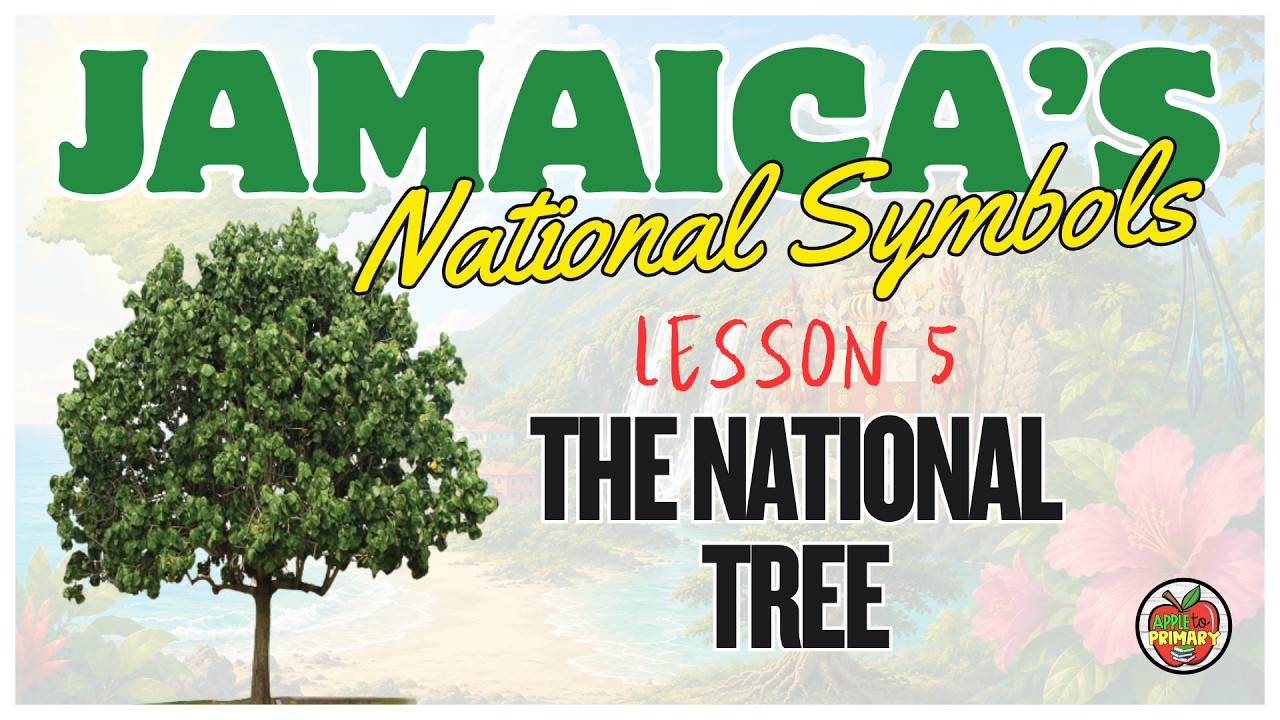
Blue mahoe is the national tree of Jamaica, linking a native Caribbean species with Jamaican identity, forestry, furniture making, and craft traditions. National-symbol status doesn’t give unrestricted permission to harvest trees or define their conservation position in every location.
National Symbol Status
The Jamaica Information Service national symbols resource identifies blue mahoe as Jamaica’s national tree. Its showy flowers, regional presence, useful bark, and attractively colored timber support its strong cultural association with the island.
Cultural and Economic Value
The timber has served furniture, cabinetry, carving, turning, veneer, and decorative work. Its value comes from both utility and appearance: a finished surface can show green-gray bands, dark streaks, and shifting figure that looks deeper as light moves across it.
Ecological role: A mature crown supplies shade and physical habitat, while flowers offer resources to visiting pollinators. Trees planted on suitable forestry sites can contribute canopy cover and soil protection, though benefits depend on site design rather than the species name alone.
Conservation status: Global classification, local abundance, and pressure on mature timber trees are separate measures. If a current global assessment can’t be located, the accurate wording is “no confirmed global category found,” not “safe,” “rare,” or “endangered.”
Harvest permissions vary with land ownership and law. Buyers should request the scientific name, country of origin, harvest authorization, and chain-of-custody records rather than treating national-tree status as proof that all trade is prohibited or permitted.
Blue Mahoe Wood Color and Properties

Blue mahoe is a moderately hard hardwood whose heartwood may show gray, olive, green, blue-green, brown, or purple-gray color. Density, strength, shrinkage, color, and grain vary between trees, boards, moisture levels, and test methods.
Heartwood and Sapwood
The sapwood is usually pale and more uniform than the darker heartwood. Freshly exposed heartwood may reveal cool blue-green streaks, but oxidation, drying, sunlight, sanding, and clear finishes can shift those colors into muted olive or brown.
Color variability: Blue coloring may occupy one narrow band, appear in scattered streaks, or be absent. Compare boards in neutral daylight and review the broader guide to colors of wood before matching material for cabinet fronts or a tabletop.
Strength and Shrinkage
Reference values published by The Wood Database place air-dry density near 550–620 kg/m³ and Janka hardness around 840 lbf or 3,740 N. Reported figures include roughly 12,800 psi modulus of rupture, 6,300 psi crushing strength, 3.8% radial shrinkage, and 6.9% tangential shrinkage.
Those numbers describe tested samples, not every board. Moisture content, growth rate, grain direction, defects, and testing standards change results; the article on wood density explains why apparent weight and mechanical performance shouldn’t be treated as interchangeable.
Grain and workability: Grain ranges from straight to irregular or interlocked, with medium-to-fine texture and possible natural luster. Reversing grain can feel glassy beneath a fingertip in one direction and fuzzy in the other, warning that a planer may lift fibers rather than slice them cleanly.
Durability and safety: Don’t describe blue mahoe as rot-proof or termite-proof without test data for the intended exposure. Extract dust at the tool, wear eye and respiratory protection, and cover sensitive skin; a lack of widely reported species-specific reactions doesn’t make hardwood dust harmless.
Blue Mahoe Uses and Woodworking Challenges
Blue mahoe suits furniture, cabinetry, turning, carving, veneer, and small decorative work, but grain reversal and color change demand careful stock selection. The most attractive board may also be the hardest to machine cleanly.
Furniture and Cabinetry
Cabinet doors, drawer fronts, boxes, tables, and decorative panels make good use of its streaked heartwood. Lay every board in assembly order before cutting because color mismatch becomes far more obvious across adjacent doors than it does on separate boards in a timber rack.
For project comparisons, see the guide to wood for furniture. Blue mahoe’s moderate hardness makes it practical for interior work, yet availability, provenance, grain behavior, and color consistency can matter more than a single hardness rating.
Carving, Turning, and Veneer
Bowls, vessels, handles, sculpture, veneer, inlay, and marquetry can display the wood’s layered color and figure. Turners should inspect blanks for end checks, insect galleries, embedded bark, and grain reversals before mounting them; a concealed split can open as speed rises.
Bark fiber uses: Historical use of inner bark includes cordage, rope, and ties. Common names create a research trap because several unrelated trees are called mahoe, so a use documented for another mahoe species shouldn’t automatically be assigned to Talipariti elatum.
Color and finishing: Test oil, shellac, lacquer, and water-based clear coat on labeled offcuts. Oil often deepens contrast but may push blue-green areas toward olive or brown; water-clear coatings reduce ambering, yet they can’t stop every change caused by oxidation or ultraviolet exposure.
Tearout and drying: Use sharp cutters, shallow passes, and a low cutting angle where possible. Change feed direction when the grain reverses, then use a finely set scraper on stubborn patches; progressive sanding alone can leave shallow torn hollows that become visible after the first clear coat.
Seal fresh board ends and dry thick stock slowly. Before assembly, check moisture at the core and surface, since a dry-feeling face can hide a wetter center that later causes cupping, open joints, or fine end checks.
Practical notes from real-world use: Don’t choose boards while they’re dusty. Plane or sand a small window, wipe it with mineral spirits to preview contrast, let it evaporate fully, and inspect both faces in daylight; the strongest blue band may disappear after resawing or sit too close to a defect.
Responsible timber sourcing: Ask for Talipariti elatum on the invoice, country of harvest, plantation or natural-forest origin, harvest authorization, and available chain-of-custody documents. “Mahoe” alone can describe another species, while unusually vivid blue material may be dyed, stained, or digitally over-saturated in photographs.
Blue Mahoe vs Blue Gum Eucalyptus
Blue mahoe and blue gum eucalyptus are unrelated trees. Blue mahoe belongs to Malvaceae and is associated with Jamaica, while blue gum commonly means Eucalyptus globulus or another eucalyptus in Myrtaceae.
Botanical Comparison Table
| Feature | Blue mahoe | Blue gum eucalyptus |
|---|---|---|
| Typical scientific name | Talipariti elatum | Often Eucalyptus globulus; “blue gum” also covers other species |
| Family | Malvaceae | Myrtaceae |
| Native association | Greater Antilles, strongly linked with Jamaica | Southeastern Australia and Tasmania for E. globulus |
| Leaves | Broad and often heart-shaped | Blue-gray juvenile leaves; long, lance-shaped adult leaves |
| Flowers | Large, yellow, hibiscus-like blooms aging orange or red | Usually white or cream flowers dominated by many stamens |
| Aroma | No defining eucalyptus-oil scent | Crushed foliage commonly has a strong eucalyptus aroma |
| Reason for “blue” | Variable blue-green or gray-blue heartwood | Waxy blue-gray juvenile foliage |
| Main association | Jamaican national symbol and decorative hardwood | Forestry, timber, oil, and ornamental planting |
Leaves, Flowers, and Aroma
Blue mahoe has broad cordate leaves and yellow flowers with a hibiscus-style staminal column. Blue gum has very different foliage: juvenile leaves often look rounded and powdery blue-gray, while adult leaves become narrow, drooping, and strongly scented when crushed.
The separate profile of eucalyptus wood covers the timber group in more detail. Never infer that blue mahoe supplies eucalyptus oil, has gum-tree bark, or shares blue gum’s leaf chemistry merely because both names contain “blue.”
Name confusion: “Blue gum” isn’t one universally fixed species name, though it often points to southern or Tasmanian blue gum, Eucalyptus globulus. Blue mahoe refers to Talipariti elatum; checking the Latin name resolves supplier labels, plant records, and image-search errors quickly.
FAQs
What Is Blue Mahoe And Why Is It Important In Jamaica?
Blue mahoe is Jamaica’s national tree and a native Caribbean hardwood valued for its beauty and strength. Its timber supports furniture making, carving, and other local crafts. The tree is also an important cultural symbol of Jamaica’s natural heritage and identity.
Why Is Blue Mahoe Called Blue?
Blue mahoe is called blue because its freshly cut wood can show distinctive blue-green streaks and coloring. These tones become especially noticeable as the timber is worked and finished. The unusual color makes blue mahoe popular for decorative furniture, veneers, and handcrafted items.
What Color Are Blue Mahoe Flowers?
Blue mahoe flowers are usually bright yellow with a dark red or purple center. As the blooms age, they can deepen to orange, red, or reddish-purple. Despite the tree’s name, its flowers are not typically blue.
What Is Blue Mahoe Wood Used For?
Blue mahoe wood is used mainly for fine furniture, cabinets, veneers, carvings, and turned decorative pieces. Its attractive grain and blue-green streaking make it especially suitable for visible finished surfaces. Craftspeople also value it for small specialty items and traditional Jamaican woodworking.
Is Blue Mahoe The Same As Blue Gum Eucalyptus?
No, blue mahoe and blue gum eucalyptus are different trees from unrelated plant groups. Blue mahoe is Hibiscus elatus, a Caribbean tree in the mallow family. Blue gum is Eucalyptus globulus, an Australian species commonly grown for timber, pulp, and essential oil.
Affiliate Disclosure: Some links in this post are affiliate links. If you make a purchase through these links, we may earn a small commission at no extra cost to you. We only recommend products we genuinely believe in.