
Bolivian Rosewood Guide: Properties, Uses, and Buying Advice

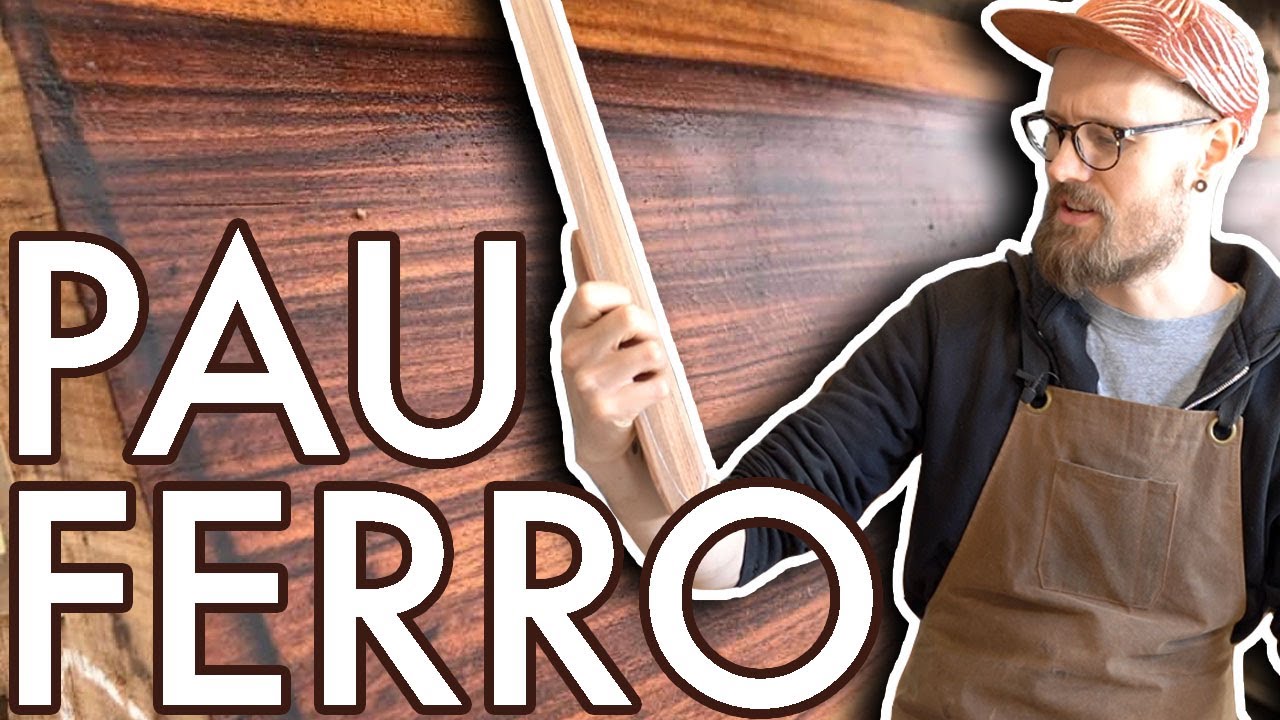
Bolivian rosewood is the trade name commonly used for Machaerium scleroxylon, a dense South American hardwood also sold as morado, Santos rosewood, or pau ferro; it has brown-to-violet heartwood, dark striping, high hardness, and strong decorative value.
It isn’t the same species as Brazilian rosewood, so buyers should verify its botanical name, moisture content, dimensions, origin, and legal documentation before choosing lumber for furniture, flooring, instruments, handles, or turning.
Table of Contents
Bolivian Rosewood at a Glance

The short answer: Bolivian rosewood is a heavy, hard tropical hardwood valued for its dark striped grain and smooth polish. Its commercial name describes appearance and use rather than membership in the traditional Dalbergia rosewood group.
Direct Definition
Most reputable lumber listings use Bolivian rosewood for Machaerium scleroxylon. It belongs to the Fabaceae family and is closely associated with morado, Santos rosewood, and pau ferro in the timber trade.
This wood feels noticeably heavy when lifted from a rack. A surfaced board often feels cool and glassy under the fingertips, while fresh sanding exposes reddish-brown dust and sharper contrast between chocolate-colored bands.
Names and Taxonomy
Commercial names overlap. Morado and pau ferro may refer to related Machaerium timber, so a name printed on a bin isn’t proof of species. The Kew Science plant database provides a useful botanical reference for checking accepted taxonomy.
- Common trade name: Bolivian rosewood
- Frequent alternatives: morado, Santos rosewood, pau ferro
- Typical botanical identity: Machaerium scleroxylon
- Family: Fabaceae
- Standard spelling: rosewood, rather than “rose wood”
Geographic range. The species grows in tropical South America, especially Bolivia and parts of Brazil. Mature trees are commonly reported at about 50–100 feet tall with trunks around 2–3 feet in diameter, though site conditions create wide variation.
True rosewood question. Under a narrow botanical definition, “true rosewood” means a species in the genus Dalbergia. Bolivian rosewood belongs to Machaerium, making it a legitimate rosewood-like trade timber rather than Brazilian or Indian Dalbergia.
Color and grain. Heartwood ranges from reddish brown and chocolate to violet brown, often crossed by nearly black streaks. Pale sapwood creates a clear border. Fresh purple-red shades usually become deeper and browner after exposure to light and oxygen.
Grain may be straight, irregular, or interlocked, with a fine-to-medium texture and moderate natural luster. Reversing grain can produce attractive ribbon stripes, yet those same fibers can tear when a planer knife meets them from the wrong direction.
Identification checks. Never identify this wood from color alone. Ask for the scientific name, origin country, invoice description, moisture reading, and harvest records; valuable or disputed stock may need end-grain analysis or laboratory identification.
Dark striping also appears in cocobolo, ziricote, and several unrelated woods. “Rosewood Commons” isn’t a recognized timber synonym and usually points to an unrelated place or proper name.
Physical and Mechanical Properties
Bolivian rosewood averages about 52 lb/ft³ when dried and has a commonly cited Janka hardness near 1,960 lbf. These figures describe a hard, heavy wood, but they don’t guarantee stability, toughness, or identical behavior across every board.
Property Table
| Property | Approximate average | Practical meaning |
|---|---|---|
| Average dried weight | 52 lb/ft³ or 825 kg/m³ | Heavy furniture and costly parcel shipping |
| Specific gravity | 0.67 basic; 0.83 at 12% moisture | Dense stock needs firm workholding |
| Janka hardness | 1,960 lbf or 8,710 N | Good dent resistance with faster tool wear |
| Modulus of rupture | 17,780 psi or 122.6 MPa | High bending strength in clear samples |
| Modulus of elasticity | 2.118 million psi or 14.61 GPa | Relatively stiff under load |
| Crushing strength | 9,280 psi or 64 MPa | Resists compression along the grain |
| Radial shrinkage | 2.9% | Movement across quarter-sawn faces |
| Tangential shrinkage | 6.6% | Greater movement across flat-sawn faces |
| Volumetric shrinkage | 9.7% | Total drying shrinkage is moderate |
| T/R ratio | 2.3 | Cup and distortion still need attention |
Figures above follow commonly cited averages from The Wood Database. Laboratory samples, moisture levels, growing sites, and uncertain trade-name identification can produce different results.
Hardness and Strength
A 1,960-lbf Janka rating signals strong resistance to indentation, which suits floors, handles, furniture edges, and other high-contact parts. Janka testing doesn’t measure shock resistance, screw-holding behavior, decay resistance, or seasonal movement.
In the shop, that hardness appears as a higher cutting note, warm sawdust, and quicker edge dulling. Thin edges can remain crisp, but forcing a dull cutter tends to burn the surface or pull out short chunks where the grain reverses.
Density and weight. At roughly 825 kg/m³, this timber is much heavier than black walnut, cherry, or genuine mahogany. A large cabinet door can strain hinges, and a thick tabletop may become awkward to move before the joinery is assembled.
Estimate finished weight before selecting hardware. Replacing a full solid panel with veneer over a stable core can retain the dark appearance while cutting mass, material use, and stress on doors or wall-mounted cabinets.
Movement and stability. The 2.3 tangential-to-radial ratio shows that flat-sawn and quarter-sawn faces don’t move equally. Quarter-sawn stock commonly behaves better in narrow rails, instrument parts, and doors, while wide flat-sawn panels need room for cross-grain movement.
Moisture checks. Measure several points on both faces and near each end. Dense tropical hardwood can mislead meters set for a lighter domestic species, so use the maker’s correction table, insulated pins where available, and a freshly cut offcut for confirmation.
- Ask whether the wood was kiln-dried or air-dried.
- Inspect ends for radial checks hidden beneath wax or paint.
- Check both faces for cup, bow, twist, and surface checking.
- Mill a sample strip to expose case-hardening stress.
- Acclimate the stock before final dimensioning.
Data source caveats. Published numbers are species averages, not promises for a purchased board. Moisture content, extractives, growth rate, grain angle, and accidental mixing of related species can shift density and strength enough to affect a close-fitting project.
Common Bolivian Rosewood Uses
Common Bolivian rosewood uses include furniture, flooring, instruments, turning, handles, knife scales, veneer, and decorative trim. Its best role often combines visible grain with wear resistance rather than consuming thick stock where a lighter wood would work.
Furniture and Cabinetry
Drawer fronts, door frames, table edging, small boxes, pulls, and exposed rails make good use of the wood’s color. For large casework, dark Bolivian rosewood accents pair well with lighter mahogany wood while limiting weight and cutter wear.
Wide solid panels need movement-friendly joinery. A beginner mistake is gluing a tabletop or door panel rigidly across its width; elongated screw holes, floating panels, and properly placed tabletop fasteners let the wood expand without splitting the surrounding frame.
Flooring
Its high dent resistance supports flooring use, but hardness alone doesn’t prevent gaps, cupping, or finish damage. Subfloor moisture, room humidity, board width, drying quality, expansion space, and installation method have greater influence on seasonal performance.
Use representative aged samples before approving a floor. Violet and reddish boards can turn browner after installation, while rugs and furniture may create uneven light exposure. Moving coverings during the first months helps reduce sharp color boundaries.
Musical instruments. Pau ferro appears in guitar fingerboards, bridges, backs, sides, and decorative components. It can replace more restricted rosewoods in some builds, but species alone can’t predict tone; cut, stiffness, thickness, bracing, moisture, and construction shape the finished response.
A fingerboard blank needs straight grain, stable drying, and enough thickness for leveling. A visually dramatic board with hidden stress may move after slotting, so rough-cut it oversize, let it rest, then inspect and flatten it again before final machining.
Turning projects. Pens, bottle stoppers, chess pieces, bowls, knobs, and tool handles benefit from the fine texture and polished surface. The wood produces a smooth, almost stone-like feel after fine sanding, though an unbalanced blank can transmit a hard rhythmic thump through the tool rest.
Handles and knife scales. Density resists everyday wear, while pins and liners help manage natural movement. Drill before shaping the outer profile, relieve sharp internal corners, and test the adhesive system on an offcut rather than trusting glue alone to hold an oily or burnished surface.
Veneer and accents. Veneer stretches high-grade figure across larger surfaces and reduces weight. Balance a panel with a compatible backer veneer, since applying decorative veneer to one face alone can pull a thin substrate into a shallow curve.
This wood isn’t an automatic choice for cutting boards. Food-contact suitability depends on construction, allergies, finish, sanitation, and reliable safety evidence, while the sensitizing dust created during fabrication remains a workshop concern.
Workability, Finishing, and Safety
Bolivian rosewood machines cleanly with sharp carbide tooling, light passes, steady feed, and firm support. Dull edges create heat, scorch marks, torn grain, oversized drill pressure, and fine dust that can irritate skin and lungs.
Cutting and Milling
Use a clean carbide-tipped blade and inspect boards for grit, staples, or embedded metal. A zero-clearance insert limits lower-face splintering, while a backing board supports fibers where a crosscut or router bit exits.
Planing interlocked grain requires shallow cutting passes. If the grain reverses halfway along a board, stop trying to chase one direction through the entire surface; use a high-angle hand plane, card scraper, or carefully controlled sander across the difficult patch.
Heat builds quickly in dense stock. Maintain a steady feed through the saw and use several shallow router passes rather than pausing inside one deep cut. A sharp, bitter scorched smell and a glossy black line signal excess friction.
Drilling and Fastening
Pre-drill every fastener, especially near an edge or end. Use a pilot hole sized for the screw’s root, add a clearance hole through the upper part, countersink the head, and stop tightening once the joint seats.
Backing the exit face prevents drill breakout. For accurately spaced knife-scale pins or hardware, begin with a short spotting bit before using the final diameter; long flexible bits can wander along dense, sloping grain.
Gluing dense stock. Machine mating faces shortly before assembly, vacuum away dust, and avoid sanding joints so finely that they become shiny and burnished. Standard indoor joinery may accept PVA, while gap-filling repairs or difficult surfaces may favor epoxy.
Acetone wiping is often treated as a universal cure for oily hardwood, yet it can spread extractives and adds solvent exposure. A better first response is fresh machining, sound joint geometry, controlled clamp pressure, and a destructive test joint made from project offcuts.
Sanding and finishing. Start at 100 or 120 grit only when milling marks require it, then move through 150 and 180; use 220 if the chosen coating calls for that surface. Heavy pressure heats and glazes the wood rather than shortening the job.
Oil can turn violet-brown stock almost chocolate-black and reduce visible contrast. Build a full sample using the same sanding schedule, pore treatment, sealer, and topcoat planned for the project. Dewaxed shellac can serve as a barrier beneath compatible lacquer or varnish.
Turning techniques. Inspect end grain for hairline checks before mounting a blank, then cut past suspect ends. Use conservative speed for the blank’s diameter and balance, keep the tool rest close, and take light bevel-supported cuts with freshly sharpened tools.
Dust and sensitization. Fine dust may cause eye, skin, and respiratory irritation or delayed sensitization. Use source extraction, sealed eye protection where needed, and a properly fitted particulate respirator; never blow settled sanding dust around an enclosed shop with compressed air.
The OSHA wood-dust guidance covers respiratory, skin, fire, and machine hazards. Wheezing, breathing difficulty, or a persistent rash calls for stopping exposure and obtaining medical advice rather than switching dust masks and continuing work.
Fire and equipment risks. Fine sanding dust is combustible, and dull belts can heat both the workpiece and collected dust. Clean filters and ducts, empty collection bins safely, and clamp small pieces instead of holding fingertips close to a cutter.
Common failure modes. Real projects usually fail through grain tear-out, burning, splitting, weak glue joints, moisture movement, color mismatch, or species substitution. Each problem leaves an early warning sign that is cheaper to address before assembly.
Practical notes from use: planer chatter sounds harder and sharper before visible tear-out appears, while a routed edge becomes warm within seconds when feed slows. Stop at those signals, clean or sharpen the cutter, and test the next pass on scrap.
- Read grain changes under low-angle side lighting before planing.
- Remove burns with a scraper before sanding alters the dimensions.
- Use pilot and clearance holes to prevent fastener splits.
- Surface glue joints shortly before clamping them.
- Measure moisture and leave cross-grain movement space.
- Wet-test surfaced boards to reveal finish color differences.
- Keep invoices and species declarations with the finished project.
Comparing Bolivian Rosewood
Bolivian rosewood is close to Brazilian and Indian rosewood in weight, but it differs in taxonomy, hardness, grain, availability, and trade controls. Walnut is lighter and easier to machine, making it more practical for large casework.
Brazilian Rosewood Comparison
Bolivian rosewood is usually Machaerium scleroxylon; Brazilian rosewood is Dalbergia nigra. The latter is harder by commonly cited Janka averages and faces far stricter international trade controls.
| Feature | Bolivian rosewood | Brazilian rosewood | Indian rosewood | Black walnut |
|---|---|---|---|---|
| Typical botanical name | Machaerium scleroxylon | Dalbergia nigra | Dalbergia latifolia | Juglans nigra |
| Average dried weight | 825 kg/m³ | 835 kg/m³ | 830 kg/m³ | 610 kg/m³ |
| Janka hardness | 1,960 lbf | 2,790 lbf | 2,440 lbf | 1,010 lbf |
| Typical color | Brown to violet brown with dark stripes | Brown, purple, or reddish with black lines | Golden brown to purple brown | Gray brown to chocolate |
| Machining | Hard; prone to burning and tear-out | Hard with regulatory constraints | Hard; interlocked grain is common | Moderate and usually predictable |
| CITES position | Species usually reported as unlisted | Appendix I | Falls within controls for listed Dalbergia | Not CITES-listed |
The secondary phrase “brazillian wood” contains a spelling error; Brazilian wood is correct. A seller must never relabel Bolivian stock as Brazilian rosewood, since that misstates species identity and may create serious customs problems.
Indian Rosewood Comparison
Indian rosewood, or East Indian rosewood, is normally Dalbergia latifolia. Its average density resembles Bolivian rosewood, yet it is harder by published Janka figures and belongs to a different regulatory category.
Similar density doesn’t make the woods interchangeable. Compare exact color, grain orientation, usable dimensions, drying quality, documentation, and destination rules before changing species in an instrument or matched furniture set.
Walnut comparison. Black walnut weighs roughly 25% less by common dried-weight averages and is much easier on cutting edges. It makes better sense for large carcasses, while Bolivian rosewood suits high-wear edges, pulls, handles, inlay, and small statement components.
Species substitution risks. A vague invoice reading “rosewood” can trigger confusion during resale, appraisal, repair, or border inspection. Require the botanical name and preserve the listing, invoice, origin statement, and supplier correspondence with project records.
Sustainability and Legal Status
Machaerium scleroxylon is usually reported as unlisted in the CITES Appendices, but that doesn’t prove a board was legally harvested or responsibly managed. National forestry laws, import rules, and truthful species declarations still apply.
CITES Status
Check the official CITES checklist before shipping, since listings and annotations can change. Brazilian rosewood, Dalbergia nigra, is listed in Appendix I, while other Dalbergia species may fall under Appendix II controls and product exemptions.
“Not CITES-listed” and “unregulated” aren’t equivalent. Export permits, phytosanitary rules, national harvest restrictions, customs declarations, and destination-country laws may apply independently of CITES.
Responsible Sourcing
Ask the seller for the botanical name, harvest country, legal-harvest statement, importer details, and chain-of-custody records. Certification is useful only when the claim matches a valid certificate scope and the product appears on the related sales documentation.
- Botanical name on the invoice
- Country of harvest and export
- Legal-harvest declaration
- Importer or distributor identity
- Permit numbers where applicable
- Certification claim and certificate code where offered
FSC and Lacey Act. FSC chain-of-custody certification can trace qualifying material through participating businesses, though certified stock may be scarce. In the United States, the Lacey Act can apply to illegally sourced plant products regardless of whether the species appears in CITES.
International transport. Raw boards, commercial shipments, veneer, and finished instruments may receive different treatment. Customs officers can question a rosewood trade name that lacks a scientific identity, especially when the material resembles restricted Dalbergia.
Documentation requirements. Keep invoices, declarations, permits, and clear species descriptions with valuable instruments or exported goods. Save digital copies before travel, since a retailer’s informal email saying “no permit needed” may carry little weight during inspection.
Buying Bolivian Rosewood Lumber
Before buying Bolivian rosewood lumber, verify species, actual dimensions, surfacing, moisture, defects, origin, photographs, return terms, and delivered cost. A cheap craft piece can cost far more per board foot than rough lumber once its small volume is calculated.
Botanical Name Verification
Look for Machaerium scleroxylon on both the listing and invoice. Listings that say only morado, pau ferro, Santos rosewood, or rose wood leave room for related species, mixed stock, and future documentation disputes.
A reliable seller should answer where the timber came from and whether the image shows the exact board. For costly matched sets, ask for face, back, and end-grain photographs beside a ruler and neutral color reference.
Dimensions and Surfacing
Confirm whether dimensions are rough, nominal, or finished. A listed three-quarter-inch board may arrive at that final thickness, or it may be rough stock that finishes thinner after flattening; the difference can invalidate joinery planned before delivery.
S2S means surfaced on two faces, S3S adds one straight edge, and S4S means all four long surfaces are dressed. None of these labels guarantees a perfectly flat board or square ends.
Drying and defects. Ask for moisture content and kiln history, then inspect for end checks, honeycombing, case hardening, cup, twist, bow, sapwood, and worm damage. Waxed ends may hide cracks, so budget enough extra length to cut beyond them.
A useful stress check is to rip a narrow strip from the board’s edge. If the kerf pinches the blade or opens sharply, internal drying stress may move smaller components after machining.
Board-foot calculation. Use: thickness in inches × width in inches × length in feet ÷ 12. A board measuring 1 inch × 6 inches × 4 feet contains 2 board feet.
For a surfaced piece measuring 0.75 × 6 inches × 3 feet, the physical volume equals 1.125 board feet. Sellers may price craft stock per piece, so calculate effective material cost and usable yield before comparing it with rough lumber.
Pricing and shipping. Compare the wood price, surfacing charge, wide-board premium, figure or matching premium, minimum order, packaging, and freight. Dense tropical stock can make shipping a large share of the delivered total, especially for single small orders.
Narrow strips, turning blanks, and thin craft boards commonly carry a higher effective board-foot cost because labor and packaging dominate their price. Long, wide, straight, defect-free boards also command premiums because usable yield is harder to source.
Photos and returns. Representative photographs can’t promise grain, sapwood, or color. Ask whether returns cover severe checks, twist, incorrect dimensions, and species disputes, and learn who pays return freight for heavy lumber.
Project stock selection. Buy boards thick and wide enough to survive flattening, defect removal, and grain matching. Surface all pieces lightly, wipe them with mineral spirits for a temporary finish preview, then arrange visible parts under the room’s actual lighting.
- Furniture: favor straight, color-matched boards with extra milling allowance.
- Flooring: require consistent moisture and an installation-grade product.
- Fingerboards: select quartered, straight-grained, stable blanks.
- Knife scales: reject checks around pin locations.
- Turning: choose sound, balanced blanks with clean ends.
- Inlay: store thin stock flat between supportive sheets.
Bolivian Rosewood Stock Options
Choose Bolivian rosewood stock by finished-part dimensions, grain direction, drying quality, and milling allowance rather than the listing title alone. The options below fit different project scales, but natural color and figure can vary from product photographs.
Long Furniture Boards
A 36-inch board can supply narrow shelves, box sides, rails, drawer fronts, or parts intended for resawing. Check the actual three-quarter-inch thickness before designing grooves or tenons, and reserve length for checking and squaring both ends.

Bolivian Rosewood Boards 36 Inch
- Two matching lumber boards
- Three-quarter inch thick stock
- Six-inch board width
- Generous 36-inch length
- Great for fine woodworking projects
 Buy on Amazon
Compact Project Boards
Short boards suit boxes, drawer faces, serving-board accents, small shelves, and decorative panels. Two-piece sets help with matching, but surface both boards before committing to a layout because rough faces can hide strong color differences.
Bolivian Rosewood Boards 24 Inch
- Two matching lumber boards
- Three-quarter inch thick stock
- Six-inch board width
- Versatile 24-inch length
- Great for custom woodworking projects
Buy on Amazon
The 18-inch format reduces waste on compact components. Check whether the required part can be shifted around end checks, sapwood, or grain runout without falling below its final dimensions.
Bolivian Rosewood Boards 18 Inch
- Two matching lumber boards
- Three-quarter inch thick stock
- Six-inch board width
- Handy 18-inch length
- Suited to compact woodworking projects
Buy on Amazon
Trim and accents. Narrow strips reduce waste for edging, rails, laminations, frames, and contrasting trim. Sight along each strip before cutting; a slight bow that seems harmless in a wide board becomes obvious in a two-inch component.

Bolivian Rosewood Strips 24 Inch
- Four narrow lumber pieces
- Three-quarter inch thick stock
- Two-inch strip width
- Useful 24-inch length
- Great for trim and accent work
Buy on Amazon
Inlay and craft stock. Thin boards work for overlays, jewelry, dividers, box panels, and detail parts. Store them flat between stable sheets with light, even weight because thin dense stock responds quickly to unequal moisture exposure.

Bolivian Rosewood Craft Board
- Single rosewood lumber piece
- Quarter-inch thin board
- Three-inch board width
- Useful 24-inch length
- Good for inlays and detail work
Buy on Amazon
A multipiece rough pack offers several chances to match grain or test finishes. Measure every piece independently, since rough three-eighths-inch stock may finish thinner after cup and saw marks are removed.

Morado Thin Board Pack
- Ten rough thin boards
- Morado also called Bolivian rosewood
- Three-eighths inch board thickness
- Three-inch width and 12-inch length
- Ideal for small detailed projects
Buy on Amazon
Turning and handle blanks. A two-inch-square, six-inch blank can suit a handle or small spindle project after checking the finished diameter, chucking waste, and end-check removal. Mark grain direction before rounding and orient attractive stripes where the hand will see them.

Bolivian Rosewood Turning Blank
- Solid Morado wood blank
- Two-inch square profile
- Six-inch blank length
- Made for turning and shaping
- Suitable for handles and knife scales
Buy on Amazon
FAQs
Is Bolivian Rosewood A True Rosewood?
Bolivian rosewood is not a true rosewood in the Dalbergia genus. It is usually Machaerium scleroxylon, a related South American hardwood commonly sold under a trade name. Its dark streaking and density resemble rosewoods, but its botanical classification and trade rules can differ.
What Is Another Name For Bolivian Rosewood?
Bolivian rosewood is commonly called Santos rosewood. It may also be marketed as morado, pau ferro, or by its botanical name, Machaerium scleroxylon, although trade names are used inconsistently. Confirm the scientific name with the supplier when buying lumber, flooring, or instrument wood.
How Hard Is Bolivian Rosewood?
Bolivian rosewood is an exceptionally hard, dense hardwood, with a Janka hardness of about 2,200 lbf (9,800 N). It resists dents and wear well, making it popular for durable flooring and fine furniture. Its hardness can also make cutting, planing, and sanding more demanding, so sharp tools are helpful.
Is Bolivian Rosewood Endangered Or CITES-Listed?
Bolivian rosewood is not generally treated as an endangered, separately CITES-listed species in the timber trade. However, its status can depend on the exact species and country of origin, and related Machaerium woods may have trade controls. Check current CITES rules, export requirements, and supplier documentation before importing or exporting it.
Is Bolivian Rosewood Toxic To Work With?
Bolivian rosewood can cause irritation or allergic reactions in some people when worked. Its dust may irritate the eyes, skin, and respiratory system, and sensitive individuals can develop dermatitis or asthma-like symptoms. Wear a properly fitted dust mask or respirator, use dust collection, and avoid prolonged skin contact when sanding or machining.
Affiliate Disclosure: Some links in this post are affiliate links. If you make a purchase through these links, we may earn a small commission at no extra cost to you. We only recommend products we genuinely believe in.