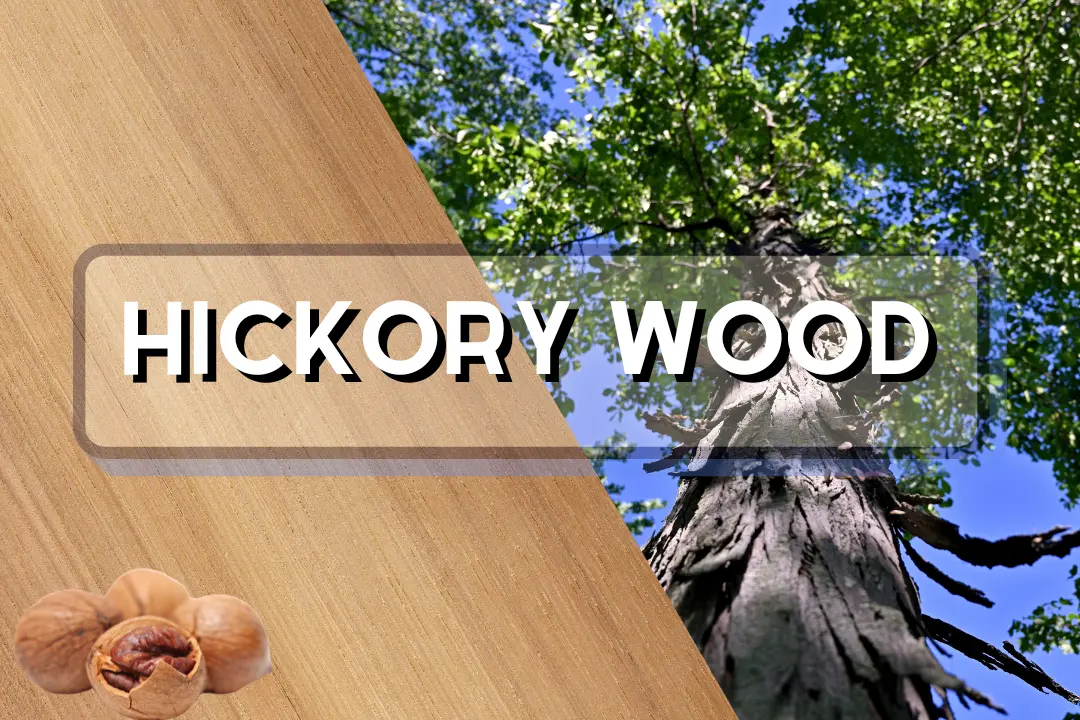

Hickory wood is dense hardwood lumber from trees in the Carya genus, valued for exceptional dent resistance, bending strength, shock absorption, high firewood heat, and strong barbecue smoke. This guide explains its species, appearance, performance, uses, drawbacks, care, buying factors, and differences from oak, maple, ash, and walnut.
Table of Contents
What Is Hickory Wood?

Hickory is wood from deciduous trees in the Carya genus, part of the walnut family, Juglandaceae. Botanists recognize about 18 species, though taxonomic totals vary, and North America contains the main commercial timber species. The Kew Plants of the World Online database records accepted Carya names and native ranges.
Is Hickory a Hardwood?
Yes, hickory is a true hardwood because it comes from flowering, broadleaf trees rather than conifers. Hardwood is a botanical classification, not a promise of physical hardness, but hickory happens to rank among the hardest common North American woods. See this broader guide to types of hardwood for related species.
A hickory board feels unusually heavy when lifted, and a fingernail barely marks its surface. Cutting dry stock produces a firm, glassy resistance rather than the softer slicing feel found in pine or poplar. These physical traits explain why hickory appears on many hardwoods lists and why it has a reputation as hard timber.
Definition and Quick Facts
| Characteristic | Typical hickory reference |
|---|---|
| Botanical group | Carya, family Juglandaceae |
| Wood class | Deciduous hardwood |
| Commercial region | Eastern and central North America |
| Sapwood | White, cream, or pale yellow-brown |
| Heartwood | Tan to reddish brown |
| Grain | Usually straight; sometimes wavy or irregular |
| Shagbark dried weight | About 50 lb/ft³ or 800 kg/m³ |
| Shagbark Janka hardness | About 1,880 lbf |
| Decay resistance | Usually non-durable to perishable |
What Makes Hickory Unique. The rare combination of hardness, bending strength, stiffness, and impact absorption separates hickory from many hard wood trees. A hammer handle must survive repeated blows without feeling brittle in the hands. Straight-grained hickory bends slightly under shock, spreads the force, and resists sudden failure better than many equally hard materials.
True Hickory Species. Commercial true hickories include shagbark hickory, shellbark hickory, pignut hickory, and mockernut hickory. Their botanical names are Carya ovata, Carya laciniosa, Carya glabra, and Carya tomentosa. Separate guides cover shellbark hickory, pignut hickory, and mockernut hickory.
Pecan Hickory Group. Pecan, bitternut, water hickory, and nutmeg hickory belong to the commercially related pecan group. Pecan is botanically a hickory, yet suppliers may market pecan wood separately. Pecan-group stock may be lighter, softer, or easier to machine than a true-hickory shipment.
Commercial Names. A bundle marked “hickory” may contain multiple Carya species, while another may carry the label “hickory/pecan.” This matters when matched color or repeatable mechanical performance is required. Ask the seller for the species, drying method, moisture range, grade, and any sapwood or heartwood sorting before ordering.
Color, Grain and Identification. Pale sapwood can sit beside tan or reddish-brown heartwood within one board, creating sharp cream-and-brown stripes. The grain usually runs straight with a medium-to-coarse texture, but reversing fibers occur. Identify lumber through weight, hardness, texture, grain, and color together; ash, oak, and pecan can resemble individual hickory boards.
Hickory Wood Properties and Performance
Hickory combines high density, dent resistance, bending strength, and shock resistance, but it also shrinks considerably during drying. Published values must be tied to a named species because Carya species, growth sites, and test samples don’t perform identically.
Density and Dried Weight
The often-quoted density of hickory wood comes from shagbark hickory, which averages about 50 lb/ft³, or 800 kg/m³, when dried. An eight-board-foot project can contain roughly 33 pounds of wood before hardware and finish, so cabinet doors, tables, and mobile furniture become heavy quickly. Learn how moisture affects such figures in this guide to wood density.
Hickory density varies within a tree and between species. Latewood-rich boards often feel heavier and resist cutting more strongly than pale, faster-grown pieces. Use actual moisture and measured dimensions for engineering work rather than treating 800 kg/m³ as a universal value.
Janka Hardness Explained
The Janka test measures the force required to embed a steel ball halfway into wood. Shagbark hickory’s reference result is approximately 1,880 lbf, placing it above many domestic flooring species. The test describes indentation resistance, not scratch resistance, stiffness, rot resistance, finish life, or overall floor longevity.
Mechanical Strength. Shagbark hickory reference values include a modulus of rupture near 20,200 psi, modulus of elasticity near 2.16 million psi, and crushing strength near 9,210 psi. The USDA Wood Handbook explains mechanical properties, moisture effects, and natural variability. Designers should use graded structural data rather than furniture-lumber averages for load-bearing work.
Hardness Comparison Table. The figures below are common species references. They make hickory’s position clear, but they don’t mean a hickory floor lasts exactly 38% longer than white oak. Sand, pet claws, finish thickness, moisture, and cleaning habits often control visible wear.
| Wood species | Approximate Janka hardness | Relative character |
|---|---|---|
| Black walnut | 1,010 lbf | Softer, dark, easy to machine |
| Red oak | 1,290 lbf | Open grain, familiar flooring wood |
| White oak | 1,360 lbf | Better decay resistance than hickory |
| Hard maple | 1,450 lbf | Fine texture and more uniform color |
| Shagbark hickory | 1,880 lbf | Very hard with high shock resistance |
Using these reference numbers, shagbark hickory is about 30% harder than hard maple, 38% harder than white oak, 46% harder than red oak, and 86% harder than black walnut. This wood hardness scale comparison helps predict dents, while species, grain direction, and board defects still affect real performance.
Shrinkage and Stability. Shagbark hickory has reference shrinkage near 7% radial, 10.5% tangential, and 16.7% volumetric from green to oven-dry condition. Tangential movement exceeding radial movement explains why wide flatsawn boards cup more readily than narrow or quartersawn stock. Indoor humidity control matters after installation, not just during acclimation.
Decay and Insect Resistance. Hickory heartwood is usually rated non-durable to perishable under decay exposure. Its hard surface doesn’t make it waterproof or rot-resistant. An uncovered hickory bench may remain dent-free while fungi soften joints and end grain, particularly where water sits under arms, feet, or fasteners.
Advantages and Disadvantages. Hickory suits jobs needing high impact resistance, hard-wearing surfaces, striking color variation, and strong fuel value. Its weaknesses include difficult machining, heavy weight, seasonal movement, inconsistent color, limited outdoor durability, and strong smoke that can overwhelm food.
- Advantages: strong, hard, shock-resistant, dent-resistant, locally available in North America, and visually distinctive.
- Disadvantages: heavy, hard on cutters, prone to tearout, difficult to nail without pilots, and poorly suited to wet exposure.
- Best workaround: buy dry stock, use sharp carbide tooling, predrill fasteners, test finishes, and keep exterior pieces sheltered.
Common Uses of Hickory Wood
Common hickory wood uses include tool handles, canes, flooring, cabinets, chairs, sporting goods, firewood, and cooking fuel. Its best applications exploit impact resistance or dent resistance without exposing untreated wood to prolonged moisture.
Tool Handles and Canes

Hickory remains a leading choice for axes, hammers, sledges, picks, shovels, ladder rungs, and heavy-duty wooden canes. A good handle uses straight grain running parallel to its length. Grain runout that exits the side creates a fracture path, no matter how hard the wood feels.
Inspect handles under strong side light before use. Long fibers should continue through the grip and striking end, while knots, bark pockets, checks, and abrupt grain changes should be absent. Beginners often select the heaviest blank; a slightly lighter, straight-grained piece usually feels less tiring and safer during repeated swings.
Sporting and Specialty Goods
Hickory has served in bows, baseball bats, skis, drumsticks, wagon parts, and early golf shafts. Ash, maple, metals, and composites replaced it in many mass-market products, yet hickory still works well where impact absorption matters more than minimum weight.
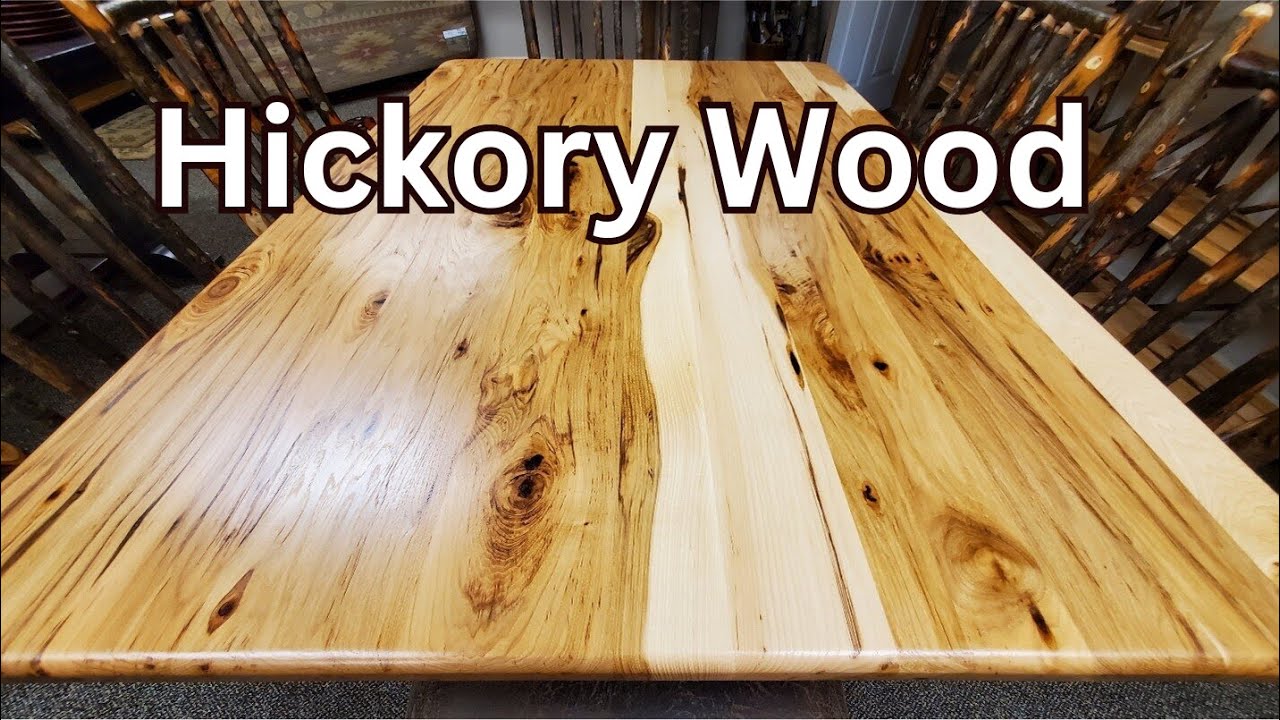
Furniture and Cabinetry. Hickory works for chairs, tables, cabinets, benches, and turned pieces. Building furniture from it requires attention to weight, color placement, and wood movement. Lay every visible board on the floor before cutting; moving one dark heartwood strip can balance a cabinet run that would otherwise look accidental.
Solid vs Engineered Flooring. Solid hickory offers a thick wear surface and can accept several refinishing cycles, but it responds strongly to humidity. Engineered flooring bonds a hickory wear layer to a stable core, making it a better candidate for many below-grade rooms, concrete slabs, wide planks, and approved radiant-heat systems.
Flooring Moisture Failures. Cupping raises board edges after moisture enters from below or indoor air becomes damp. Crowning raises the center, sometimes after a cupped floor is sanded before drying. Seasonal gaps reflect low humidity, while buckling points to severe moisture, poor fastening, or missing perimeter expansion space.
Store flooring in the occupied environment according to its manufacturer, then verify it with a calibrated moisture meter. Counting acclimation days alone is unreliable. Test multiple boards and the subfloor, record the readings, and delay installation when the moisture difference falls outside the flooring maker’s limits.
Hickory for Outdoor Furniture. Hickory can serve in sheltered outdoor furniture when it stays above ground, drains freely, and returns indoors during wet seasons. Seal all faces and end grain before assembly. Feet benefit from replaceable glides that keep end grain away from damp stone or soil.
Outdoor Use Limitations. Hickory isn’t a sound choice for uncovered benches, ground-contact posts, marine pieces, or wet decking. White oak, cedar, cypress, black locust, or suitable treated lumber lasts longer in decay-prone settings. No clear finish converts hickory into permanently waterproof wood.
Working With and Caring for Hickory
Hickory can be worked cleanly, but sharp cutters, controlled feed rates, pilot holes, and patient sanding make a clear difference. Dull tools leave dark burn lines, while aggressive passes can pull deep chips from reversing grain.
Cutting and Machining
Use carbide-tipped saw blades, clean router bits, and freshly sharpened planer knives. Feed the stock steadily: pausing against a spinning cutter creates heat and a sharp toasted smell, followed by a brown stripe that may remain visible after finishing. If the machine labors or squeals, don’t force the board.
Take shallow planer cuts where grain direction reverses. A card scraper often removes fuzzy or torn patches with less damage than another heavy planer pass. For figured stock, a helical cutterhead and skewed hand-plane stroke reduce the chance of lifting fibers below the final surface.
Drilling and Fastening
Predrill hickory near ends and edges, sizing the pilot close to the screw’s root diameter. Add a clearance hole through the upper member and countersink the head. Driving a large screw directly into dry stock can split the board or snap the screw before its head seats.
Dense flooring can bend cleats or leave fastener heads proud. Test the flooring nailer on scrap and adjust air pressure until the fastener seats without crushing the tongue. A fresh drill bit also produces cooler, cleaner holes than one pushed hard through dense latewood.
Gluing Hickory. Machine mating surfaces shortly before assembly and check that they close without clamp force. Use adhesive rated for the service conditions. Too much pressure can squeeze a joint nearly dry, while too little leaves visible gaps; apply enough pressure to form a thin, continuous bead along the seam.
Sanding and Finishing. Move through a sensible grit sequence without large jumps, and remove every burn mark before stain. Sapwood and heartwood absorb color differently, so test the complete finish schedule on offcuts from the same batch. Clear coats preserve the natural cream-and-brown contrast better than dark stains.
Furniture and Flooring Care. Remove grit with a soft cloth or vacuum attachment, wipe spills quickly, and place felt pads beneath furniture. Don’t drag heavy objects across finished boards. Avoid steam mops unless the flooring manufacturer approves them, since heat and moisture can enter seams and disturb the finish or core.
Wood Dust and Safety. Fine hickory dust can irritate the eyes, skin, and airways. Connect machines to dust extraction, wear eye and hearing protection, and use a fitted particulate respirator during sanding. The OSHA wood dust guidance covers exposure hazards and control methods.
Practical Notes From Real-World Use. Let the tool cut rather than leaning harder when hickory resists. A hot blade, blackened cut, or acrid smell signals dull teeth, resin buildup, or a feed problem. Stop, clean the cutter, verify alignment, and resume with a shallow test cut on scrap.
Hickory Firewood and Heating
Properly seasoned hickory is high-output firewood that burns steadily and forms long-lasting coals. Published charts commonly place it around 27–30 million BTU per full cord, though species, moisture, bark, stacking, and appliance efficiency change useful heat.
Heat Output and BTUs
Dense hickory stores more dry wood substance in a given volume than many lighter species. That gives a full cord substantial heat, but dense splits can be slow to catch. Start with dry kindling and smaller splits, then add larger pieces after a bright coal bed forms.
A BTU figure describes potential energy, not heat delivered into a room. Wet fuel spends energy evaporating water, and an inefficient stove sends more heat up the flue. Clean combustion, seasoned wood, and correct air control determine usable heat.
Full Cord vs Face Cord
A full cord occupies 128 cubic feet when stacked, traditionally 4 feet high by 4 feet deep by 8 feet long. A face cord describes one visible row but doesn’t establish volume without split length. A 16-inch face cord contains about one-third of a full cord if stacking dimensions are otherwise equal.
Ask a seller for stack width, height, depth, average split length, species mix, delivery charge, and moisture condition. Beginners often compare a face-cord offer directly with a full-cord price, making the smaller load appear much cheaper than it is.
Moisture and Seasoning. Burn hickory below about 20% moisture. Split a piece and press the meter pins into the freshly exposed center, parallel to the grain when the meter instructions call for it. Testing weathered ends or the outside surface can produce a falsely low result.
Seasoning time depends on climate, split size, starting moisture, sun, and airflow. Thick rounds may remain wet inside after their ends develop checks. The EPA Burn Wise practices explain why dry fuel and hot, clean fires reduce smoke and creosote.
Firewood Storage. Split pieces before stacking, raise them off soil, cover the top, and leave the sides open. A sealed tarp traps damp air and encourages mold. Keep stacks away from siding, doors, and crawl-space vents so insects and moisture don’t move directly into the building.
Pest Movement Rules. Buy firewood near the place where it will burn and follow state, provincial, or national transport restrictions. Bark and hidden galleries can carry insects beyond their normal range. Retail wrapping or a “seasoned” label doesn’t automatically satisfy quarantine rules.
Fire and Ash Safety. Hickory coals can remain hot long after flames disappear. Place ashes in a metal container with a tight lid, store it outdoors on a noncombustible surface, and keep it away from decks, walls, leaves, and firewood. Service chimneys and flues at intervals suited to use and local codes.
Hickory Smoking and Cooking Wood
Hickory creates a strong savory smoke with bacon-like and mildly sweet notes. It pairs naturally with pork, ribs, brisket, burgers, lamb, and dark-meat poultry, but a heavy dose can make fish, vegetables, or chicken breast taste bitter.
Smoke Flavor and Foods
Pork shoulder and brisket tolerate long exposure because their fat, seasoning, and deep flavor balance hickory smoke. Poultry needs a lighter hand. Begin with one small chunk in a charcoal cooker, taste the result, and increase the amount on the next cook rather than filling the firebox at once.
Good smoke smells warm, woody, and slightly sweet rather than sharp enough to sting the nose. Billowing white smoke often deposits bitter compounds on moist food surfaces. A clean flame and thin pale smoke produce a more controlled result.
Chips, Chunks, Splits and Logs
| Format | Burn behavior | Best fit |
|---|---|---|
| Chips | Ignite quickly; short smoke period | Smoker boxes and short grill cooks |
| Chunks | Slow, steady smoke | Charcoal grills and ceramic cookers |
| Splits | Serve as primary fuel | Offset smokers and compact ovens |
| Logs | Long burn; larger flame | Large pits and live-fire cooking |
Select wood by firebox dimensions, not package weight alone. Oversized chunks can smolder in a small grill, while chips disappear quickly in a large offset. Consistent piece size makes airflow, ignition, and smoke duration easier to repeat.
Blending Hickory Smoke. Mix hickory with oak for a steady, milder base or with apple, cherry, or maple for sweeter smoke. A useful starting blend is one part hickory to two parts milder wood. Increase hickory for beef and reduce it for poultry or vegetables.
Cooking Wood Safety. Use untreated hardwood from a known source. Never cook over pressure-treated lumber, painted boards, stained scraps, plywood, MDF, OSB, particleboard, moldy pieces, or unknown construction offcuts. Kiln drying doesn’t prove food suitability or rule out earlier chemical exposure.
Clean Smoke and Bark. Bark isn’t inherently unsafe when it is clean, but thick bark carries dirt, insects, and variable moisture and can make combustion less predictable. Remove loose, muddy, moldy, or heavily weathered bark. Maintain enough airflow for active combustion rather than choking the fire into a smolder.
Hickory Smoking Chunks. Chunks suit charcoal grills because they burn longer than chips and don’t require constant replacement. Place one or two near the edge of the lit charcoal so they ignite progressively rather than producing one dense burst.

Weber Hickory Smoking Chunks
- Rich subtly sweet hickory smoke
- Great match for beef pork poultry and lamb
- Chunk size delivers a longer burn
- Adds authentic wood-fired barbecue flavor
- Four pound bag for outdoor cooking
 Buy on Amazon
Buying Hickory Wood
Buy hickory by matching its form and condition to the job: graded lumber for woodworking, manufacturer-approved flooring for interiors, measured cords for heating, and food-intended chunks or splits for cooking. Compare equal units rather than package names.
Lumber Grades and Surfacing
Ask whether boards are rough-sawn, S2S, S3S, S4S, or straight-line ripped. Surfaced boards save machine time but contain less final thickness and may hide how much material milling removed. NHLA grade concerns usable clear cuttings, not guaranteed color matching, straightness, or exact species sorting.
Inspect for end checks, twist, bow, cup, mineral streaks, knots, and planer tearout. A low-grade board can be economical for short parts if defects fall between the cutting zones. Long rails and matched doors need straighter, clearer stock with more predictable color.
Thickness and Dimensions
Hardwood lumber commonly uses quarter designations. Rough 4/4 stock starts near 1 inch thick, 5/4 near 1¼ inches, and 8/4 near 2 inches before drying and surfacing. Ask for the actual measured thickness, since final S4S boards are thinner than their nominal rough size.
Board Foot Calculation. Multiply thickness in inches by width in inches by length in feet, then divide by 12. A board measuring 1 inch × 8 inches × 8 feet contains 5.33 board feet. If all three measurements use inches, divide the product by 144.
Price Comparison Factors. Normalize quotes for species sorting, grade, thickness, average width, rough or surfaced condition, moisture, color selection, waste, packaging, and freight. Wide, clear, matched boards often cost more than narrow natural-grade stock. Parcel-shipped craft boards include milling and handling that bulk board-foot prices omit.
Flooring Buying Checklist. Request the construction type, wear-layer thickness, finish system, board width, installation method, moisture limits, radiant-heat approval, visual grade, warranty exclusions, and required expansion space. Order waste based on room shape and sorting needs; high color selection can consume more stock than simple square footage suggests.
- Confirm solid or engineered construction.
- Check actual plank and wear-layer thickness.
- Review humidity and subfloor limits.
- Ask whether the carton is natural, sapwood-sorted, or heartwood-sorted.
- Open several cartons during layout to mix colors and grain.
- Keep documented moisture readings before installation.
Fuel Wood Formats. Compare heating wood by full-cord equivalent, measured dimensions, species mix, moisture, and delivery. Compare smoking chunks by cost per pound, usable size, bark proportion, source, and shipping. A cheap bag containing tiny fragments may supply less controlled smoking time than a smaller bag of uniform chunks.
Sustainable Certified Sourcing. Look for FSC or PEFC chain-of-custody certification when documented origin matters. The FSC chain-of-custody standard tracks certified material through the supply chain. Reclaimed hickory can work well after checks for hidden metal, coatings, decay, and contamination.
Hickory vs Other Hardwoods
Hickory beats many domestic woods in hardness and shock resistance, but it isn’t the best option for every project. Oak offers easier machining and better exterior choices, maple provides finer visual consistency, ash cuts more readily, and walnut supplies naturally dark color.
Hickory vs Oak

Shagbark hickory is harder than both red and white oak on common Janka references. Oak tends to machine more easily and presents a more familiar grain. White oak also has much better natural decay resistance, making it the stronger candidate for some exterior furniture and moisture-prone work.
For flooring, choose hickory for maximum dent resistance and dramatic cream-to-brown variation. Choose oak for easier color matching, broad product availability, and a calmer repeating grain. In a smoker, hickory tastes stronger and more bacon-like, while oak supplies a milder base for long cooks.
Hickory vs Hard Maple
Hickory’s 1,880-lbf reference exceeds hard maple’s roughly 1,450 lbf, while maple usually looks finer and more uniform. Both can scorch under dull cutters and accept stain unevenly. Choose hickory for contrast and impact resistance; choose maple wood for pale, restrained surfaces.
Hickory vs Ash. Both woods have long histories in handles and sporting goods. Hickory is usually harder and prized for shock absorption, while ash wood has a more open ring-porous grain and is often easier to machine. Availability can vary where emerald ash borer has affected local supplies.
Hickory vs Black Walnut. Hickory is far harder, paler, and more visually varied. Black walnut cuts and carves more easily and offers naturally dark heartwood, but it dents sooner. Choose walnut for refined color and easy shaping; choose hickory for demanding surfaces and rustic contrast.
Best Wood by Application. Hickory suits tool handles, hard-wearing floors, heavy furniture, heating, and bold barbecue smoke. White oak is better for exposed outdoor furniture. Maple fits pale, uniform cabinetry, ash suits easier machining with springy strength, and walnut works for dark decorative furniture. Material selection should follow exposure, weight, appearance, machining, and maintenance needs rather than hardness alone.
| Application | Strong choice | Main reason |
|---|---|---|
| Impact tool handle | Hickory | Shock resistance and strength |
| Dent-resistant floor | Hickory | High Janka hardness |
| Exposed outdoor chair | White oak | Better decay resistance |
| Pale uniform cabinetry | Hard maple | Fine texture and consistent color |
| Dark decorative furniture | Black walnut | Rich natural heartwood |
| Strong pork or beef smoke | Hickory | Bold savory flavor |
FAQs
Is Hickory A Hardwood?
Yes, hickory is a hardwood, meaning it comes from a deciduous broadleaf tree rather than a conifer. It is especially dense and strong compared with many common hardwoods. Hickory’s toughness makes it popular where wear resistance, impact strength, and a distinctive grain are useful.
Is Hickory Harder Than Oak?
Yes, hickory is generally harder than oak on the Janka hardness scale. Most hickory species rank around 1,800 to 2,100 pounds-force, while red and white oak are commonly lower. This extra hardness improves dent resistance, but it can make cutting, sanding, and fastening more demanding.
What Is Hickory Wood Used For?
Hickory wood is used for tool handles, flooring, cabinets, furniture, ladder rungs, and sports equipment because it resists shock well. Its bold grain also suits decorative interior projects. Woodworkers should use sharp tools and predrill fastener holes, since hickory is dense and can be challenging to machine.
Is Hickory Good For Outdoor Furniture?
Hickory is not usually the best choice for outdoor furniture unless it is carefully sealed and maintained. It can absorb moisture, move with weather changes, and may decay when left exposed. For long-term outdoor use, choose naturally durable woods such as teak, cedar, or white oak, or keep hickory furniture covered and dry.
Is Hickory Good For Firewood And Smoking?
Yes, hickory is excellent firewood and one of the most popular woods for smoking food. When properly seasoned, it burns hot, long, and with relatively little smoke. Its strong, savory smoke flavor works especially well with pork, beef, and poultry, but use it moderately to avoid an overpowering taste.
Affiliate Disclosure: Some links in this post are affiliate links. If you make a purchase through these links, we may earn a small commission at no extra cost to you. We only recommend products we genuinely believe in.