
Table of Contents
Ash wood is a strong, pale hardwood from Fraxinus trees, known for straight open grain, shock resistance, and common use in furniture, flooring, tool handles, baseball bats, guitars, and firewood. White ash wood has a Janka hardness of about 1,320 lbf, which places it close to red oak and white oak for everyday durability.
The key trade-off is simple: ash gives you strength and texture without heavy weight, but it doesn’t resist rot well and its open pores need careful finishing in furniture and flooring.
What Is Ash Wood?
Definition and hardwood status
Ash wood comes from deciduous trees in the Fraxinus genus, part of the Oleaceae family. It’s a true hardwood, which means the wood comes from broadleaf trees rather than softwood conifers; for a wider comparison of domestic hardwoods, see this guide to types of hardwood.
In North America, the name usually points to white ash wood, green ash, or black ash, depending on the region and supplier. In the shop, ash feels firm under a hand plane, cuts with a crisp shaving when the blade is sharp, and gives off a faint dry, grassy smell when freshly sanded.
Ash wood vs wood ash
Ash wood is lumber cut from ash trees; wood ash is the powdery mineral residue left after burning wood. Beginners mix up the terms when shopping online, so check that a product listing says lumber, board, plank, blank, flooring, furniture, or firewood rather than stove ash or garden ash.
Key properties
Ash has a useful mix of moderate weight, strength, elasticity, and shock resistance. The USDA Forest Products Laboratory lists ash among ring-porous hardwoods and explains how hardwood structure affects strength and working behavior in the Wood Handbook.
- White ash Janka hardness is about 1,320 lbf.
- Average dried weight is about 42 lb/ft³, or 675 kg/m³.
- Specific gravity sits around 0.55–0.60.
- The grain is usually straight, bold, and open-pored.
- The wood bends well when the stock is clear and straight-grained.
Common ash uses
Ash lumber works well for furniture, flooring, cabinets, baseball bats, oars, tool handles, turned parts, veneer, guitar bodies, and firewood. It shines in parts that take impact because the fibers flex before they fail, which is why old hammer handles often feel slightly springy rather than brittle.
Main Types of Ash Wood
White ash wood
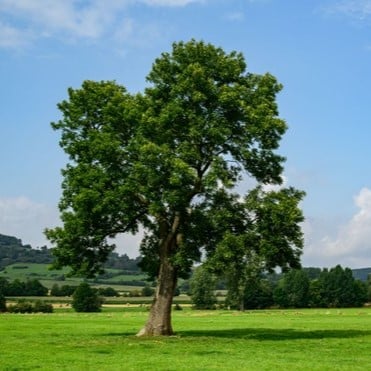
White ash wood, from Fraxinus americana, is the main commercial ash in much of North America. It has a pale cream to light brown color, a strong straight grain, and the shock resistance needed for baseball bats, handles, chairs, flooring, and interior millwork.
The feel is different from maple: white ash has more open texture, so a freshly sanded board can still feel faintly ridged under your fingertips. That texture is useful for bold visual grain, but it affects finishing choices later.
Green ash wood
Green ash wood, from Fraxinus pennsylvanica, often enters the lumber market under the broad ash name. It can look and work much like white ash, though quality depends more on log growth, drying, and grading than the label alone.
Green ash is common in utility lumber, furniture parts, handles, and firewood. Since emerald ash borer has hit green ash hard, local supply can swing sharply from one county to the next.
Black ash wood
Black ash wood, from Fraxinus nigra, tends to be lighter and softer than white ash. It’s historically valued for splint basketry and craft work, and it carries deep cultural value in Indigenous basketmaking traditions; for a deeper species profile, see this guide to the black ash tree.
Don’t choose black ash for heavy-duty flooring or bat blanks by habit. Its best use is often in crafts, baskets, interior pieces, and projects where workability matters more than high impact strength.
Swamp ash wood
Swamp ash wood is usually a trade term, not a single exact botanical species. In guitar making, it often refers to lightweight ash from wet or lowland growing sites, including green ash, pumpkin ash, black ash, or other lowland ash varieties.
The common buying mistake is assuming every swamp ash blank will be light and resonant. Ask for the blank weight, moisture content, and body dimensions, because heavier northern ash can look similar in photos but feel tiring on a finished electric guitar.
Ash Wood Grain and Appearance
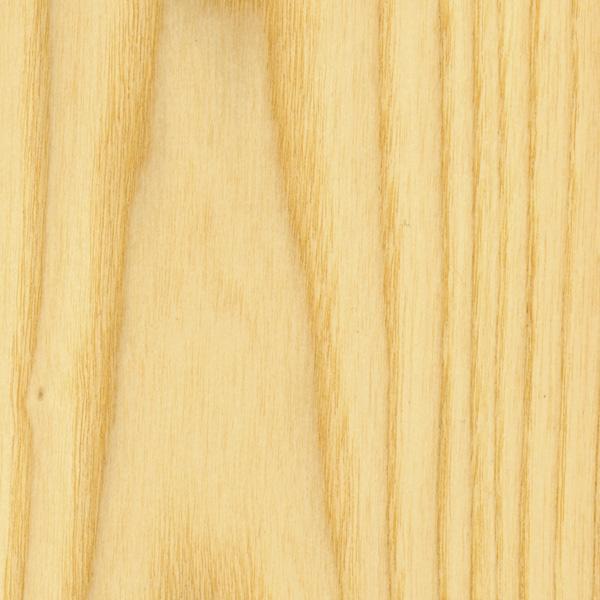
Ash wood grain is usually straight, bold, and open, with visible growth-ring bands caused by its ring-porous structure. It looks close to oak from a distance, but ash usually has less ray fleck and a cleaner, lighter face.

Color variation
Ash color ranges from creamy white and pale yellow to light tan and light brown. Wide tabletops and flooring runs can show clear board-to-board shifts, so lay boards out before fastening anything if matching matters.
Sapwood and heartwood
Sapwood in ash is often nearly white, while heartwood can run light brown to medium brown. Furniture buyers often prefer pale sapwood for modern interiors, but makers may include heartwood deliberately for contrast and movement.
Ring-porous grain
Ring-porous grain means ash forms large earlywood pores at the start of each growth ring, followed by denser latewood. This creates the bold lines that catch stain, collect finish, and remain visible through most clear coatings.
Flat-sawn grain
Flat-sawn ash shows broad cathedral patterns, especially on tabletops, cabinet panels, and many flooring boards. It gives the most dramatic face grain, but it can move more across its width than quarter-sawn stock.
Quarter-sawn grain
Quarter-sawn ash shows tighter vertical lines and better dimensional stability. It lacks the heavy medullary ray flash seen in quarter-sawn white oak, so the look is straighter and quieter.
Open-pore texture
Open pores give ash a tactile surface; after one coat of finish, you can often feel tiny troughs if you drag a fingernail across the grain. For glass-smooth cabinet doors or tabletops, use grain filler, sanding sealer, and enough topcoat to level the surface.
Hardness, Durability, Pros and Cons
Ash durability is best indoors, where the wood can stay dry and sealed. White ash is hard enough for furniture and normal residential flooring, but it isn’t naturally rot-resistant and shouldn’t be used bare outdoors.
White ash specs
White ash specs explain why the wood feels tough without feeling overly heavy. Typical figures include about 42 lb/ft³ average dried weight, 0.55–0.60 specific gravity, 15,000 lbf/in² modulus of rupture, 1.74 million lbf/in² elastic modulus, and 7,410 lbf/in² crushing strength.
Janka comparison
Janka hardness measures resistance to denting, not total toughness, so it’s one useful clue rather than the full story. Ash lands close to oak, below hard maple and hickory, and above walnut.
| Wood species | Approximate Janka hardness | Practical takeaway |
|---|---|---|
| White ash | 1,320 lbf | Strong, springy, close to oak |
| Red oak | 1,290 lbf | Common flooring benchmark |
| White oak | 1,360 lbf | Similar hardness, better moisture resistance |
| Hard maple | 1,450 lbf | Harder, smoother, less open grain |
| Black walnut | 1,010 lbf | Softer, darker, premium furniture look |
| Hickory | 1,820 lbf | Much harder, tougher to machine |
Shock resistance
Shock resistance is where ash earns its reputation. A good ash handle absorbs vibration in the hand rather than sending a sharp sting up the wrist, which is why the species became common for axes, hammers, shovels, oars, bats, and bent chair parts.
Rot resistance
Rot resistance is ash’s weak point. Use white oak, cedar, teak, ipe, or black locust for wet outdoor work instead, because untreated ash can decay, darken, check, and soften when exposed to repeated moisture.
Ash wood pros
Ash wood pros include high strength, good shock resistance, attractive pale color, visible grain, steam-bending ability, stain acceptance, and solid firewood performance. It’s often a practical domestic alternative to pricier walnut or cherry when a light hardwood suits the design.
Ash wood cons
Ash wood cons include poor natural decay resistance, open pores that may need filling, color variation, finish ambering, possible flooring dents, and supply issues tied to emerald ash borer. A smart workaround is to specify kiln-dried stock, test finishes on offcuts, and use ash indoors or under a maintained protective film.
Best Uses for Ash Wood
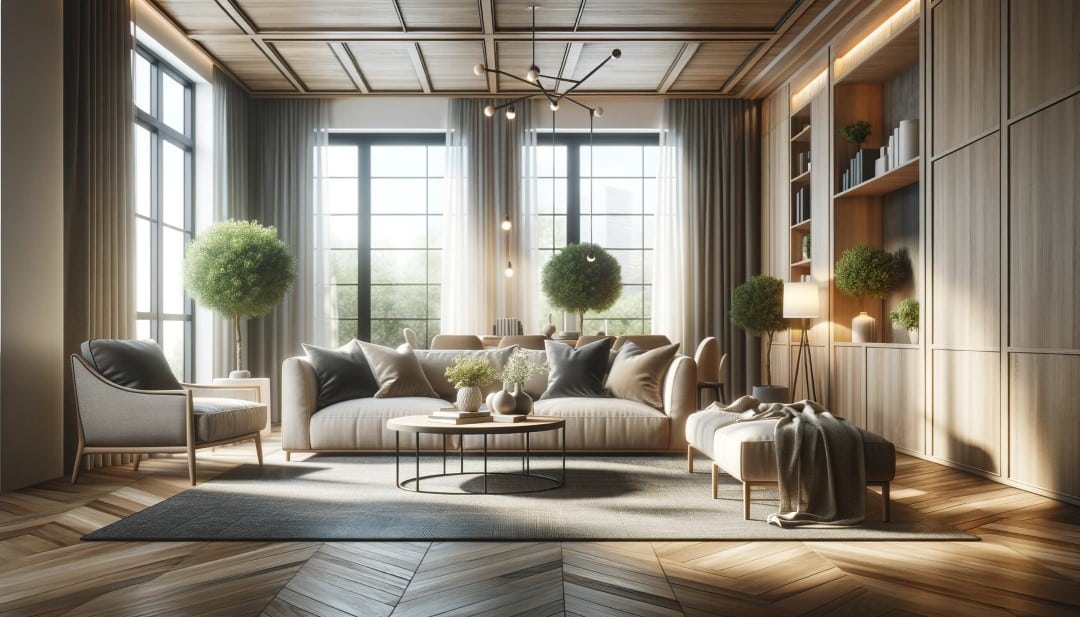
Ash wood uses cover both decorative and impact-heavy projects. Its pale color suits modern rooms, while its toughness makes it useful where legs, handles, bats, and flooring take repeated stress.
Ash wood furniture
Ash wood furniture works well for dining tables, chairs, desks, cabinets, dressers, shelves, benches, and bed frames. Chairs are a natural fit because ash can handle racking stress better than many decorative hardwoods when joints are well cut and the grain runs correctly.
The main mistake is leaving open grain unfilled on a formal tabletop, then wondering why crumbs and dark polish sit in the pores. Use grain filler for a smooth surface, or choose a matte textured finish if you want the wood to feel more natural.
Ash wood flooring
Ash wood flooring gives a bright alternative to oak, with similar hardness and a bolder pale grain. It works best in living rooms, bedrooms, dining rooms, home offices, and dry hallways rather than bathrooms, wet mudrooms, or damp basements.
Use felt pads, stable humidity, and good entry mats because grit scratches any hardwood finish over time. Ash hides fine marks better than smooth maple, but high heels, metal chair glides, pet claws, and dropped tools can still dent it.
Tool handles
Tool handles need straight grain, strength, and controlled flex, which ash supplies well. Look for handle blanks with no runout, knots, or short grain near the head, because those defects create failure points under impact.
Sports equipment
Sports equipment such as baseball bats, oars, paddles, and training clubs uses ash because it absorbs shock while staying reasonably light. The edge case is heavy-impact commercial gear, where hickory or laminated designs may outlast ash but add weight.
Guitar bodies
Guitar bodies often use swamp ash or white ash for visible grain under transparent finishes. Lightweight swamp ash feels lively in the hands and keeps a solid-body guitar comfortable, while heavier ash can sound and look good but may make long playing sessions tiring.
Ash wood for firewood
Ash wood for firewood is a strong choice because it splits cleanly, seasons faster than many dense hardwoods, and burns with steady heat when dry. White ash often produces roughly 23–24 million BTU per cord, green ash about 20 million, and black ash about 18–19 million.
Seasoned ash should be under 20% moisture content on a freshly split face. If it hisses, steams, smells sour, or leaves black glass on stove doors, it needs more drying time despite ash’s reputation for burning better than many green woods.
For users who need predictable, clean-burning splits for fire pits, pizza ovens, or BBQ, kiln-dried ash is the safer pick than mystery bundles from wet storage.

Kiln-Dried Ash Firewood
- Kiln-dried for reliable burning
- 8 inch splits for easy stacking
- mild smoke for cooking and fire pits
- USA sourced hardwood
- generous bag for pizza ovens, BBQ, and more
 Buy on Amazon
Working and Finishing Ash Wood
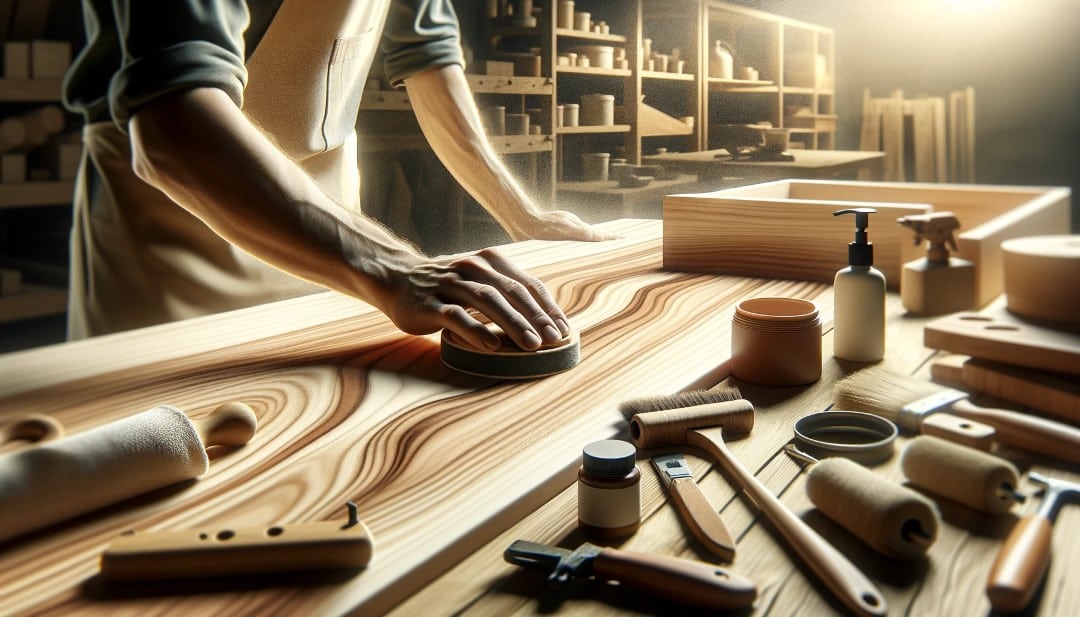
Working ash wood is usually pleasant if the tools are sharp and the board is dry. It cuts cleanly, glues well, bends well, and finishes beautifully, but dull cutters can lift splinters from the open grain.
Cutting and machining
Machining ash goes best with sharp carbide blades, light planer passes, and climb-cutting only where safe on routed edges. When ash tears out, the rough fibers feel like tiny lifted bristles, so back up crosscuts and watch grain direction at board edges.
Gluing and fastening
Ash glues well with common woodworking adhesives, and it holds screws strongly. Pre-drill near ends and edges, because ash can split with a sharp crack if a screw wedges into dry end grain.
Steam bending
Steam bending favors straight-grained, clear ash with controlled moisture and a solid bending form. Avoid grain runout, because a bent rail can fail along the grain line after it cools rather than during the bend.
Turning and carving
Turning ash produces strong handles, knobs, bowls, and spindles. Keep tools sharp and sand through the grits, because open pores can make a turned surface look polished in latewood bands but dull in the softer earlywood.
Clear finishes
Clear finish choices change ash’s color more than beginners expect. Water-based polyurethane keeps white ash paler, while oil-based polyurethane and penetrating oils add amber warmth that can turn creamy boards golden.
Staining ash wood
Staining ash wood is easier than staining maple because ash’s open pores accept pigment. Always test on offcuts from the same board batch, since heartwood bands can go darker and create striped results under strong brown or black stains.
Grain filling
Grain filling is optional for rustic pieces but useful for tabletops, cabinet doors, and polished furniture. A pro-level shortcut is to tint the filler slightly darker than the wood if you want the grain to pop, or match it closely if you want a calm modern surface.
Ash Wood Comparisons
Ash comparisons usually come down to hardness, grain texture, color, moisture resistance, and workability. Ash sits near oak in hardness, below hickory, above walnut, and far more open-grained than maple or cherry.
Ash vs oak
Ash vs oak is a close match for hardness: white ash is about 1,320 lbf, red oak about 1,290 lbf, and white oak about 1,360 lbf. Ash looks paler and cleaner, while oak has stronger medullary rays, especially quarter-sawn white oak; see this deeper guide to white oak wood.
Choose ash for shock resistance, pale modern furniture, and a bold grain without a classic oak look. Choose white oak for moisture resistance, traditional flooring, exterior-adjacent projects, or strong quarter-sawn ray fleck.
Ash vs maple
Ash vs maple depends on whether you want texture or smoothness. Ash has open grain and stains readily, while hard maple is harder at about 1,450 lbf and has a tighter, subtler surface; this maple wood profile explains the maple side in more detail.
Pick ash if visible grain is part of the design. Pick maple for butcher-block looks, gym-floor associations, tight pale surfaces, or projects where a smoother grain matters more than stain depth.
Ash vs hickory
Ash vs hickory is a weight and toughness trade-off. Hickory is much harder at about 1,820 lbf and takes heavy abuse, while ash is easier to machine, lighter in appearance, and more forgiving for many furniture builds; compare more details in this hickory wood guide.
Ash vs walnut
Ash vs walnut is mostly about color, hardness, and price tier. Walnut is darker, softer at about 1,010 lbf, and often bought for luxury furniture, while ash is paler, harder, and easier to stain into many design styles.
Ash vs cherry
Ash vs cherry separates bold open grain from warm fine grain. Cherry darkens with age and suits traditional cabinetry, while ash keeps a lighter look and stronger texture; this cherry wood guide covers that aging behavior further.
Buying, Cost, and Sustainability
Buying ash wood starts with the final use: furniture needs dry stable boards, flooring needs grade and finish clarity, firewood needs moisture proof, and guitar blanks need verified weight. Ash is usually a moderately priced domestic hardwood, but local supply can shift because emerald ash borer has changed harvesting and transport patterns.
Ash lumber pricing
Ash lumber pricing depends on species, grade, width, kiln drying, surfacing, figure, and local availability. Rough 4/4 boards usually cost less per board foot than S3S or S4S lumber, while clear wide boards, quarter-sawn stock, and swamp ash guitar blanks cost more because the usable yield is lower.
For furniture, ask for 6–8% moisture content, or roughly 6–10% for general interior woodworking. A cheap salvaged board that’s still wet can twist after milling, and the sweet woody smell during the first cut won’t save a tabletop that cups in a heated room.
Buying ash flooring
Buying ash flooring means comparing solid versus engineered construction, plank width, grade, finish type, installation method, acclimation rules, and warranty. Solid ash can usually be refinished more times, while engineered ash can handle wider planks and some below-grade uses if the manufacturer allows it.
Keep indoor humidity around 35–55% where possible, because ash still expands and contracts with seasonal moisture. A matte or wire-brushed finish hides wear better than gloss, and water-based polyurethane keeps the pale ash tone cleaner than oil-based coatings.
Buying ash furniture
Buying ash furniture calls for close inspection of joints, finish, grain direction, and color matching. On chairs, look under the seat and along legs for straight grain, tight glue lines, and no short-grain breaks near stretchers.
Ask whether the surface uses water-based finish, oil finish, hardwax oil, or lacquer. If you want a pale Scandinavian look, avoid heavy amber finishes; if you want warmth, oil can make ash look richer without hiding the grain.
Buying ash firewood
Buying ash firewood is about moisture, volume, and legal movement. Compare cord, face cord, bundle, or bag size, then test a freshly split face with a moisture meter rather than trusting the outside of an old split.
The best ash firewood feels lighter and drier than green splits, has checked ends, and gives a clear clack when knocked together. Avoid moving untreated firewood long distances because pests can travel in bark and cambium.
For reliable burning, kiln-dried ash is useful when you don’t have 6–12 months to season splits under cover with airflow.
Kiln-Dried Ash Firewood
- Kiln-dried for reliable burning
- 8 inch splits for easy stacking
- mild smoke for cooking and fire pits
- USA sourced hardwood
- generous bag for pizza ovens, BBQ, and more
Buy on Amazon
Craft blanks
Ash craft blanks cost more per board foot than rough lumber because they’re cut to size, surfaced, kiln-dried, and selected for small-project use. Check thickness, flatness, moisture content, and whether the piece is solid ash before using it for laser engraving, turning, trim, or practice joinery.
These ash blanks suit small craft, turning, trim, and laser projects when full-size lumber would create too much waste.

Ash Wood Craft Strips
- Smooth unfinished hardwood strips
- handy 1 half inch by 1 and a half inch by 12 inch size
- great for crafts and trim
- comes in a value 10 pack
- easy to cut, glue, and finish
Buy on Amazon

Ash Craft Planks
- Pure hardwood ash planks
- thin 1 quarter inch sheets for detailed projects
- ideal for laser engraving blanks
- unfinished surface for easy customization
- packed as an 8 pack
Buy on Amazon

Thin Ash Craft Planks
- Pure hardwood ash for crafts
- ultra thin 1 eighth inch sheets for fine detail work
- perfect for laser engraving and small projects
- unfinished for staining or painting
- comes in an 8 pack
Buy on Amazon
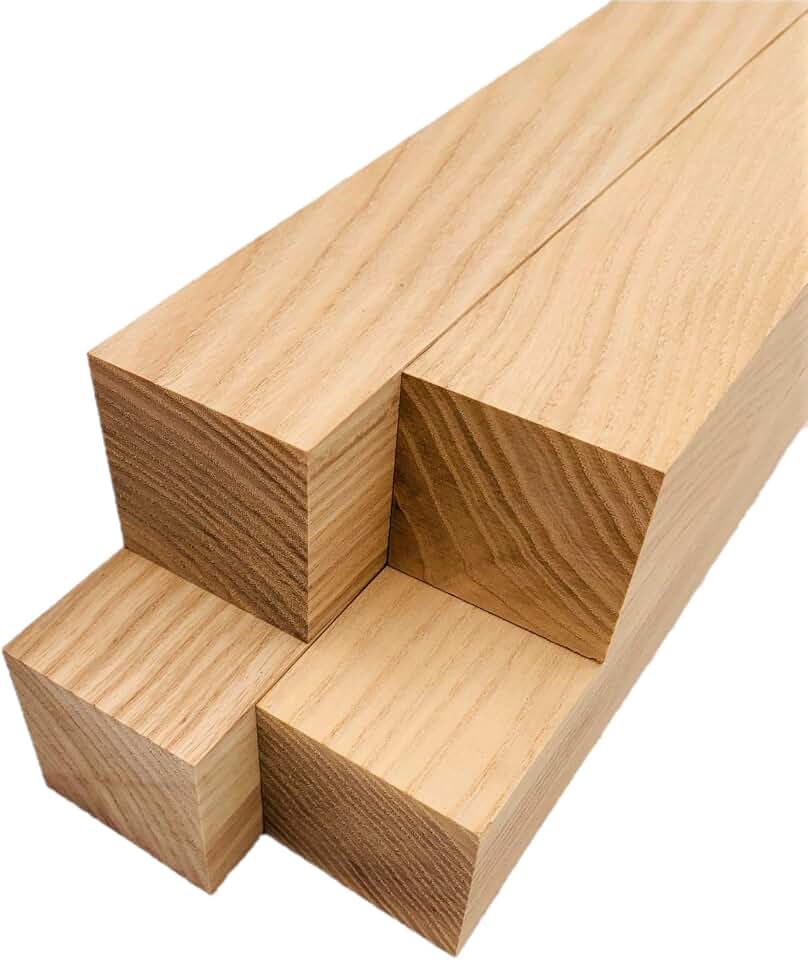
White Ash Turning Blanks
- Solid white ash lumber blanks
- square 2 inch by 2 inch by 12 inch size
- ideal for turning and woodworking
- includes 4 pieces per set
- strong stock for custom projects
Buy on Amazon
Emerald ash borer
Emerald ash borer, Agrilus planipennis, is an invasive beetle first detected in North America near Detroit in 2002. It has killed hundreds of millions of ash trees, affecting white ash, green ash, black ash, blue ash, lumber supply, and firewood movement, according to the USDA APHIS emerald ash borer program.
This pest creates a strange market: some regions have salvage ash available, while others have tighter supplies of clear, high-grade logs. Firewood rules also matter because larvae can move in untreated wood, so buy local or certified kiln-dried firewood when possible.
Salvaged ash sourcing
Salvaged ash can be a responsible choice for furniture, flooring, paneling, turning blanks, and firewood if it’s milled, dried, and transported correctly. Ask how long the tree stood dead, whether the boards were kiln-dried, and whether pest-treatment or transport rules apply.
Inspect salvaged boards for checking and staining, especially near the ends and under bark edges. Some insect galleries add character, but hidden punky zones can crumble under a chisel and ruin joinery; for unusual grain features, this guide to ash tree burl is a useful next read.
FAQs
Is Ash Wood Good Quality?
Yes, ash wood is good quality. It is strong, flexible, and has a clean, attractive grain that works well in many projects. It is a reliable choice for furniture, flooring, and tool handles because it balances durability with ease of working.
Is Ash Wood Better Than Oak?
Ash wood is not always better than oak, but it can be a better choice for certain uses. Ash is lighter in color and easier to bend, while oak is usually harder and more resistant to wear. The best option depends on the look and performance you want.
Is Ash Wood Good For Flooring?
Yes, ash wood is good for flooring. It is hard enough to handle everyday foot traffic and has a bright, modern appearance that many homeowners like. It can be a practical choice for living rooms, bedrooms, and other low-to-moderate traffic areas.
Is Ash Wood Good For Furniture?
Yes, ash wood is good for furniture. It is strong, easy to shape, and takes stains and finishes well. Many makers use it for tables, chairs, cabinets, and other pieces that need both strength and a nice natural look.
Is Ash Good Firewood?
Yes, ash is good firewood. It burns steadily, gives off good heat, and is easier to use than many other woods because it can still burn fairly well when not fully seasoned. It is a popular choice for fireplaces, wood stoves, and outdoor fires.
Affiliate Disclosure: Some links in this post are affiliate links. If you make a purchase through these links, we may earn a small commission at no extra cost to you. We only recommend products we genuinely believe in.