

Juniper wood is aromatic, knot-rich softwood from conifers in the genus Juniperus, commonly used for furniture, turning, fence posts, landscaping, and firewood. Its hardness, color, durability, dimensions, and availability vary by species, so buyers should verify the scientific name rather than rely on labels such as cedar or juniper.
Table of Contents
What Is Juniper Wood?
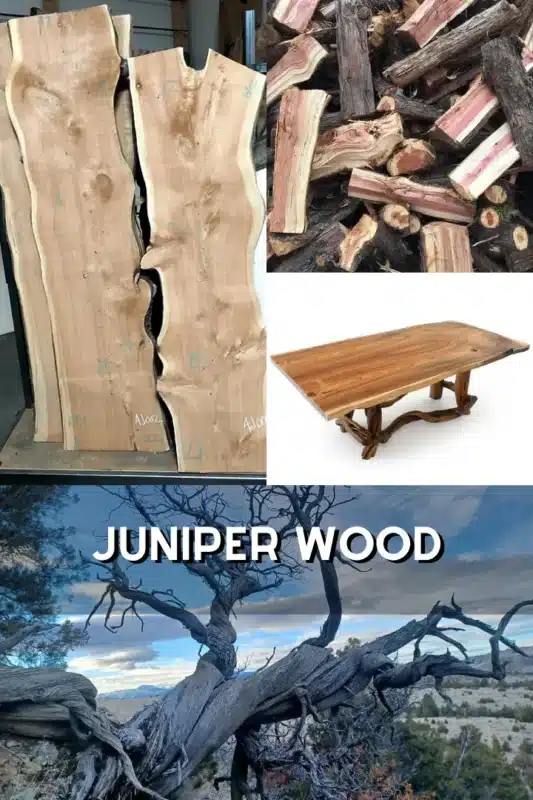
Juniper wood comes from trees and shrubs in the Juniperus genus within the cypress family, Cupressaceae. The name covers many species rather than one standardized lumber product, which explains why two boards labeled juniper lumber can differ sharply in weight, hardness, color, and usable width.
Is Juniper a Hardwood?
No. Juniper is a botanical softwood because it grows on a conifer, but softwood doesn’t mean weak or easy to dent. Alligator juniper averages about 1,160 pounds-force on the Janka scale, while western juniper measures near 620–630 pounds-force. See how these numbers compare on the wood hardness scale.
Color, Grain, and Knots
What does juniper wood look like? Expect creamy white or pale yellow sapwood surrounding tan, red-brown, muted purple, or pinkish heartwood. Fresh cuts can show vivid red streaks that become browner under light. The texture feels fine beneath a hand plane, while branch intersections leave hard, glassy knots and sudden grain reversals.
Straight grain occurs between branches, but wide boards often contain swirls, bark pockets, cracks, and dark knot halos. Those marks suit rustic work yet reduce clear yield. A slab that appears 20 inches wide may provide barely 14 stable inches after removing loose bark and voids.
Aroma and Extractives
Freshly sawn juniper releases a spicy resinous scent resembling cedar, dry herbs, and pencil shavings. Sawing warms the extractives, making the smell much stronger than it is on an old finished surface. Compounds such as cedrol and related terpenes contribute to the aroma and some heartwood decay resistance.
Finish reduces scent release by sealing the surface, and sunlight gradually softens both color and aroma. Don’t promise a permanent cedar-chest smell from a coated cabinet. Sanding an unfinished inner panel can briefly renew the fragrance, but it also creates irritating airborne wood dust.
Juniper vs Cedar
Is juniper a cedar? Botanically, no: true cedars belong to Cedrus. Eastern redcedar is really Juniperus virginiana, western redcedar is Thuja plicata, and both sit outside true cedar. Our guides to cedar wood and eastern redcedar explain these naming traps.
Western redcedar is lighter and readily available in standardized siding and decking profiles. Western juniper tends to be denser, knottier, and sold through regional mills. Compare the exact species, grade, dimensions, heartwood percentage, and structural documentation rather than choosing from a common name alone.
Major Juniper Wood Species

Commercially useful junipers include western juniper, alligator juniper, eastern redcedar, Ashe juniper, Utah juniper, and Rocky Mountain juniper. Each has a separate range and supply chain, making species identification the first step before selecting lumber or firewood.
Species Comparison Table
| Species | Typical character | Availability | Common uses |
|---|---|---|---|
| Western juniper J. occidentalis | Knotty, aromatic, moderately light | Regional, moderate | Boards, slabs, posts, decking |
| Alligator juniper J. deppeana | Dense, hard, often irregular | Limited and local | Blanks, crafts, firewood |
| Eastern redcedar J. virginiana | Purple-red, strongly aromatic | Broad eastern supply | Closets, chests, posts, turning |
| Ashe juniper J. ashei | Aromatic, small and knotty | Mostly local | Posts, crafts, firewood |
| Utah/Rocky Mountain juniper | Variable, usually small stock | Local western supply | Posts, crafts, firewood |
The accepted names and geographic records in Plants of the World Online help separate botanical species from regional trade names. A label such as enebro, bois de genévrier, genevrier bois, or juniper may describe the genus without identifying the exact wood species.
Western Juniper
Western juniper, Juniperus occidentalis, grows mainly across the interior Pacific Northwest and parts of the Great Basin. Typical trees reach 30–50 feet tall and 1–2 feet in diameter, though old specimens can be larger. Oregon has the most developed market for its lumber, decking, posts, slabs, and landscape timbers.
Its commercial appeal comes from aromatic heartwood, low published shrinkage, and decay resistance. Expect frequent knots and modest clear widths. Regional mills can supply useful runs, but matching color and grain across a large cabinet order requires extra sorting stock.
Alligator Juniper Wood
Alligator juniper wood comes from Juniperus deppeana, a southwestern species named for mature bark that forms blocky, reptile-like plates. It is heavier and harder than western juniper, but commercial lumber is scarce. Most buyers encounter firewood, turning blanks, carving blocks, or short rustic boards.
Density is useful for wear-prone craft pieces, yet it makes drying and shipping harder. Check legal harvest origin, species identity, internal cracks, and measured moisture before buying. A bark photograph helps identify the tree, but it doesn’t prove the identity of a detached wood blank.
Eastern Redcedar
Eastern redcedar has red-purple heartwood, pale sapwood, and the strong fragrance associated with cedar chests and closet lining. It is botanically a juniper and is widely sold as aromatic cedar. Its broader supply makes it easier to find in thin boards and blanks than many western species.
Ashe Juniper
Ashe juniper wood, from Juniperus ashei, is associated with Texas and nearby regions. Small trunks, branching, and local processing limit standardized lumber. It appears more often as fence posts, craft stock, rustic material, and firewood. Buyers should separate lumber claims from unrelated uses of juniper foliage or bayas de enebro.
Utah and Rocky Mountain Juniper
Utah juniper, J. osteosperma, and Rocky Mountain juniper, J. scopulorum, supply local posts, firewood, carvings, and small boards. Their properties shouldn’t be copied from western juniper data. Irregular trunks often create attractive figure, but also produce low straight-grained yield and expensive freight per usable board foot.
Juniper Wood Properties

Juniper wood properties range from moderately light and soft to dense and hard. Published figures are species averages, not promises for individual boards; moisture, growth rate, knots, and position inside the trunk can cause meaningful local variation.
Physical Properties Table
| Property | Western juniper | Alligator juniper | Eastern redcedar |
|---|---|---|---|
| Average dried weight | 33 lb/ft³ | 42 lb/ft³ | 33 lb/ft³ |
| Approximate Janka hardness | 620–630 lbf | 1,160 lbf | 900 lbf |
| Heartwood color | Tan to red-brown | Red-brown to muted brown | Red to purple-brown |
| Typical grain | Fine, straight to irregular | Fine, often irregular | Fine, commonly straight |
| Primary limitation | Knots and narrow clear yield | Scarcity and drying checks | Sapwood contrast and knots |
These reference averages align with individual species profiles published by The Wood Database. Use them for comparison, then request the seller’s moisture readings, dimensions, grade, and actual-piece photographs before making a project-level decision.
Hardness and Strength
Janka hardness measures dent resistance, not structural capacity. Western juniper can mark under chair legs or dropped tools, while alligator juniper better resists indentation. Neither number confirms bending strength, screw withdrawal, impact performance, or building-code acceptance. Load-bearing work needs recognized structural grading and engineering values.
Stability and Shrinkage
Published western juniper shrinkage is about 3.1% radial, 4.4% tangential, and 7.6% volumetric from green to oven-dry. Its tangential-to-radial ratio near 1.4 suggests balanced movement, but knot clusters and reaction wood can still pull a board into a twist or localized cup.
Those figures don’t represent routine room-to-room seasonal movement. Stable furniture still needs acclimation, expansion space, and joinery that lets wide panels move across the grain. Locking a broad top rigidly to its base often creates splits beside stubborn branch knots.
Rot and Weather Resistance
Juniper heartwood has natural extractives that can slow fungal decay, which supports its long use for posts and landscaping. Rot resistance isn’t waterproofing. Standing water, exposed end grain, soil contact, trapped debris, and repeated wet-dry cycles can still cause checking and decay.
Outdoor work lasts longer with drainage gaps, sloped upper surfaces, sealed end grain, airflow, and stainless or suitably coated fasteners. Never treat an ungraded board as an approved structural deck component based solely on its species. Compare other choices in our guide to the best outdoor furniture wood.
Heartwood vs Sapwood
Heartwood is more durable than pale sapwood because it contains more protective extractives. A post with a narrow heartwood core shouldn’t be treated like an all-heartwood post. Specify heartwood percentage for decay-sensitive work, and coat exposed sapwood while keeping the assembly dry and ventilated.
What Is Juniper Wood Good For?
Juniper wood is good for rustic furniture, cabinets, live-edge slabs, turning, carving, fence posts, paneling, landscaping, and properly detailed outdoor work. Its color and aroma are appealing, while knots, short clear lengths, and uncertain structural grading place practical limits on some projects.
Project Suitability Matrix
| Project | Suitability | Main condition |
|---|---|---|
| Rustic furniture | Very good | Allow for knots and movement |
| Live-edge slab | Very good | Verify dryness and stable edges |
| Turning or carving | Good | Screen blanks for radial cracks |
| Fence posts | Good | Specify heartwood and drainage |
| Flooring | Fair to good | Western juniper dents moderately easily |
| Structural framing | Conditional | Requires approved grade and design data |
| Cutting boards | Poor without verification | Species and contamination must be known |
Furniture and Cabinetry
Juniper suits shelves, benches, doors, table parts, cabinet fronts, and decorative panels. The strongest designs place knots where they add character without carrying concentrated loads. Use breadboard ends, figure-eight clips, or elongated screw holes so wide solid panels can move.
Slabs and Live Edges
Juniper slabs make expressive mantels, consoles, benches, and coffee tables. Inspect both faces and end grain for checks, insect galleries, soft decay, loose bark, and dark bark seams. A live edge that bends under thumb pressure isn’t structural; remove it or stabilize only sound surrounding wood.
Turning and Carving
The fine texture cuts cleanly with sharp tools, and red heartwood against cream sapwood creates strong visual contrast. Knots can strike a turning gouge with a hard click and throw small chips. Reduce speed, wear a face shield, and reject blanks with deep radial cracks near the mounting points.
Fencing and Landscaping
Heartwood-rich western juniper works well for posts, rails, raised-bed walls, and landscape edging. Keep horizontal surfaces from holding water, isolate wood from constantly wet masonry, and predrill near ends. See common layouts and service conditions in our guide to wood fence types.
Decking, Flooring, and Paneling
Western juniper can serve as decking or flooring where rustic knots and moderate denting are acceptable. Paneling is a lower-risk use because walls receive little impact. For floors, acclimate stock, reject loose knots, and use finish samples; pale sapwood and dark heartwood can absorb stain at different rates.
Working With Juniper Wood
Juniper machines well with sharp tools, but its knots, resin, bark pockets, and changing grain demand slower cuts than clear straight-grained lumber. Successful work begins with controlled drying and a layout based on usable wood, not nominal board dimensions.
Drying and Moisture Targets
Seal fresh log and slab ends soon after cutting, then dry thick material slowly with level stickers and restrained airflow. Aggressive schedules can create end checks, honeycombing, and splits around knots. Furniture entering conditioned rooms commonly needs 6–8% moisture; less-controlled spaces may settle near 9–12%.
Measure several locations and depths because the shell can be dry while the core remains wet. “Kiln-dried” describes a process, not a final moisture guarantee. Let a slab acclimate before final flattening, or a newly exposed wetter face may pull it out of flat.
Checks, Knots, and Voids
Cut past end checks before measuring project length; fine cracks often extend farther than their visible opening. Probe bark inclusions and crumbly areas with an awl. Epoxy can fill a clean decorative void, but it can’t turn loose bark, decay, or a split crossing a joint into reliable structure.
Cutting and Machining
Use sharp carbide blades, backer boards, and light router passes around branch intersections. Read grain immediately ahead of the cutter rather than across the whole board. Resin can leave a warm, tacky film on cutters; clean buildup before it increases heat and leaves scorched cut edges.
Fastening and Gluing
Predrill screws near ends, edges, and knots because brittle short grain splits with little warning. Use stainless steel or exterior-rated coated fasteners outdoors. Freshly machined surfaces usually glue well, but test oily-feeling heartwood and follow the adhesive maker’s moisture, open-time, and clamping limits for a sound bond.
Finishing Juniper
Clear oil, hard-wax oil, varnish, and penetrating exterior finishes bring out red-brown heartwood and creamy sapwood. Test an offcut because stain can exaggerate blotching around knots. End grain drinks finish quickly and often needs extra coats. Exterior clear films require maintenance and can’t permanently stop UV graying.
Dust and Shop Safety
Collect dust at the machine and wear eye protection plus a fitted particulate respirator during sanding or routing. Aromatic extractives can irritate skin and airways. Stop exposure if wheezing, swelling, rash, or breathing trouble develops, and seek medical care for persistent or severe respiratory symptoms.
Practical Notes From Real-World Use
A juniper slab often changes character after its first flattening pass. The planer exposes bright salmon-red streaks and releases a sharp pencil-box scent, but it may also reveal a damp core, concealed bark seam, or crack below an innocent-looking knot. Leave extra thickness for a second flattening after acclimation.
Layout usually saves more material than aggressive defect filling. Rotate templates around knots, place stable cracks beyond final cut lines, and buy 20–35% more gross volume for knotty boards. Highly irregular live-edge stock may lose 40% or more after flattening, trimming, and removing unsafe edge material.
Beginners often fasten a wide slab rigidly, trust a surface moisture reading, or pour resin over loose bark. Better practice uses slotted attachments, readings from freshly exposed inner wood, and complete bark removal wherever strength matters. These small changes prevent many expensive callbacks.
Can You Burn Juniper Wood?
Yes, you can burn clean, seasoned juniper wood in a suitable stove, fireplace, or fire pit. Juniper makes good firewood when it measures below 20% moisture on a freshly split face, though it may pop, spark, and produce a strong resinous aroma.
Firewood Heat and Aroma
Dry wood contains roughly 8,000–9,000 BTU per oven-dry pound, so heat per cord depends heavily on species density and moisture. Published charts often place western juniper in the mid-20-million-BTU range per full cord under set assumptions. Dense pieces burn longer, while small dry splits ignite quickly.
Moisture and Seasoning
Split a log, then press meter pins into the newly exposed center. Bark and outer-face readings can make wet fuel appear ready. Wood above 20% moisture gives less useful heat, smolders, and contributes more deposits. Stack splits off the soil with sun exposure, airflow, and a covered top.
Cords, Bundles, and BTUs
A full cord contains 128 stacked cubic feet, conventionally 4 feet by 4 feet by 8 feet, including air gaps. Face cords, racks, bundles, and pickup loads mean little without dimensions. Compare stack volume, species, moisture, log size, and delivered cost rather than relying on the seller’s unit name.
The USDA Wood Handbook explains how moisture and density affect wood fuel and other physical behavior. Small shipped bundles trade economy for convenience and commonly cost far more per unit of heat than a locally delivered full-cord equivalent.
Fireplace and Stove Safety
Use a spark screen because burning juniper wood can pop when resin pockets or trapped moisture heat up. Burn only untreated, unpainted, clean material. Follow appliance clearances, chimney inspection schedules, and local fire rules. Never burn moldy scraps, pressure-treated boards, glued panels, or wood with unknown coatings.
- Test the center of a freshly split log for moisture.
- Keep a fitted spark screen in front of open fires.
- Start with moderate loads until burn behavior is known.
- Maintain the flue and chimney on the appliance maker’s schedule.
- Store ashes in a covered metal container on a noncombustible surface.
Cooking and Smoking Caution
Don’t use unidentified juniper for cooking merely because it smells pleasant. Smoke can be strong and resinous, and landscape material may carry pesticides, coatings, mold, or contaminants. Choose wood sold for culinary use with a named species and traceable handling history. Decorative branches and firewood aren’t automatically food-use material.
Juniper Firewood Products
Packaged kiln-dried juniper suits fire pits, camping, or buyers without local storage. Compare package weight, log count, dimensions, moisture claims, and shipping. “Kiln-dried” doesn’t state the measured final percentage, and a light six-log box shouldn’t be compared directly with an 18-pound bundle.

Solo Stove Kiln-Dried Juniper Firewood
- Made from one hundred percent natural juniper wood
- Kiln-dried logs are ready to burn
- Aromatic wood adds a pleasant outdoor scent
- Sized for backyard fire pits and wood fires
- Includes six to eight logs per bundle
 Buy on Amazon

Billy Buckskin Juniper Firewood Bundle
- Seasoned juniper logs for reliable burning
- Includes fatwood starter sticks for easier lighting
- Generous eighteen-pound firewood bundle
- Works in fire pits fireplaces and wood stoves
- Aromatic choice for campfires and outdoor grilling
Buy on Amazon
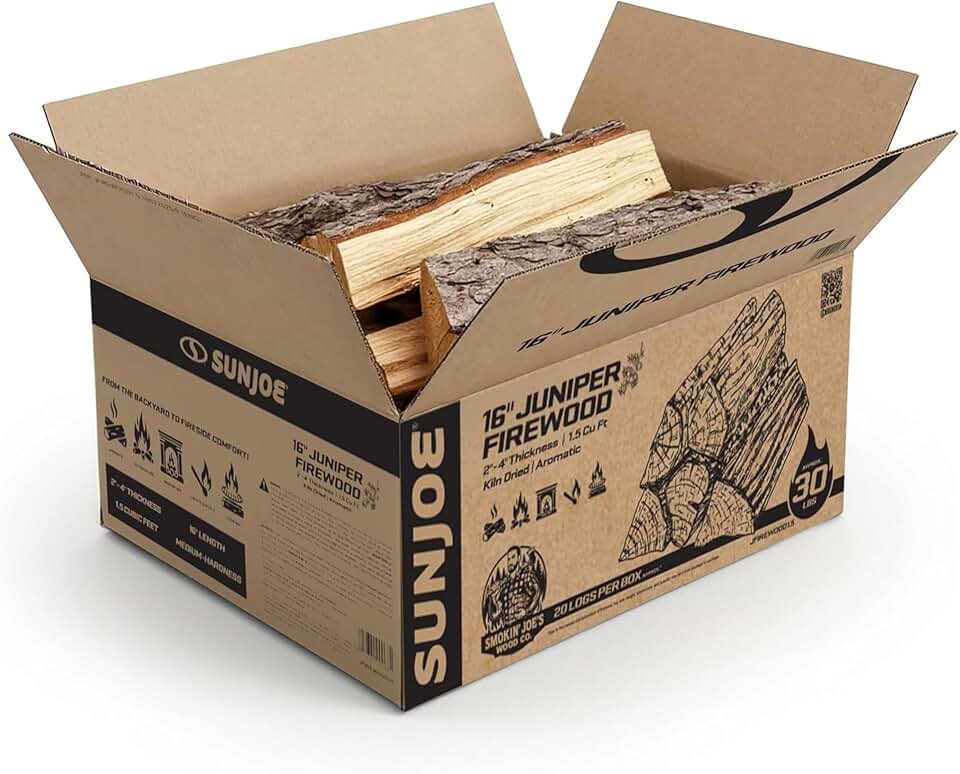
Smokin Joes Aromatic Juniper Logs
- Natural juniper firewood with a fragrant aroma
- Kiln-dried for convenient fire starting
- Includes twenty ready-to-burn logs
- Suitable for fireplaces stoves and campfires
- Great for outdoor fire pits and gatherings
Buy on Amazon
Juniper Wood for Sale
Juniper wood for sale appears as rough boards, surfaced lumber, live-edge slabs, posts, blanks, and firewood rather than one uniform commodity. The best listing identifies the species, dimensions, moisture, defects, processing, origin, and freight so you can calculate delivered usable cost.
Lumber and Product Formats
Common formats include rough-sawn boards, S2S or S4S lumber, slabs, mantel stock, bowl blanks, carving blocks, decking, posts, landscape timbers, and firewood. Confirm whether dimensions are nominal or actual. A rough 2-inch slab may finish near 1½ inches after drying and flattening, which can change joinery and stiffness.
Where to Buy Juniper
Look at regional sawmills, forestry-restoration suppliers, specialty lumber dealers, portable-mill operators, turning suppliers, arborists, local firewood dealers, and live-edge marketplaces. Western juniper is easiest to source near Oregon and neighboring states; alligator juniper wood is more likely through small southwestern sellers.
Seller and Listing Checklist
Ask for the following details before paying for juniper wood for sale:
- Scientific species name and harvest region
- Actual thickness, width, length, and board-foot method
- Green, air-dried, or kiln-dried condition
- Current moisture readings from several locations
- Rough, planed, jointed, or fully surfaced condition
- Heartwood percentage and visible sapwood
- Knots, checks, bark seams, decay, and insect evidence
- Photographs of the actual piece, including both faces and ends
- Packaging, freight, return policy, and damage procedure
Board-Foot Price Calculation
Calculate board feet as thickness in inches × width in inches × length in feet ÷ 12. A 2 × 10 × 8-foot board contains 13.33 board feet. At $12 per board foot, its wood value is $159.96 before surfacing, tax, packing, or freight.
Live-edge sellers may use average width rather than minimum width. Ask where and how often width was measured. A piece with a 17-inch average but a narrow 10-inch waist may contain enough volume on paper yet fail a design needing a continuous 15-inch usable surface.
Delivered Cost and Usable Yield
Suppose a 13.33-board-foot piece costs $160, freight is $90, and defect loss leaves 9 usable board feet. The delivered usable rate is ($160 + $90) ÷ 9, or $27.78 per usable board foot. That figure is more honest than the advertised $12 rate.
Include flattening loss, drying time, storage, tool wear, and returns in large purchases. Freight can exceed the wood price for heavy slabs, while small craft blanks remain economical to ship. Buying locally also lets you smell mustiness, feel soft decay, and sight along each board for bow and twist.
Buyer Warning Signs
Avoid listings that use stock photos, omit species, call wood “dry” without measurements, or hide the ends. Treat loose bark presented as permanent with suspicion. Structural and ground-contact guarantees need supporting grades or tests. Cheap slabs paired with vague freight terms often become the most expensive option.
Sustainable Sourcing Questions
Western juniper removal can support selected sagebrush restoration or fuels-reduction work, but cutting every juniper isn’t automatically beneficial. Old trees can provide habitat, carbon storage, cultural value, and structural diversity. Ask whether the wood came from a documented project and whether old-growth habitat was protected.
Request the scientific name, harvest location, landowner or program documentation, and any chain-of-custody record. A clear sourcing answer carries more weight than broad green marketing. Once species, moisture, defects, usable yield, and origin check out, juniper can provide distinctive material with strong practical value.
FAQs
What Is Juniper Wood Good For?
Juniper wood is good for rustic furniture, fence posts, carving, small woodworking projects, and decorative items. Its warm color, aromatic scent, and distinctive grain make it popular for natural-looking pieces. The durable heartwood also works well outdoors when it is properly prepared and maintained.
Is Juniper Wood A Hardwood Or Softwood?
Juniper is a softwood because it comes from a coniferous tree. However, juniper can feel relatively hard and dense compared with many common softwoods. Its density varies by species, growing conditions, and whether you are working with heartwood or sapwood.
Does Juniper Make Good Firewood?
Juniper makes good firewood when it has been properly seasoned and dried. It lights fairly easily, produces useful heat, and gives off a pleasant aromatic scent. Split it and allow adequate drying time, because damp wood creates more smoke and burns less efficiently.
Is Juniper Wood Naturally Rot-Resistant?
Juniper heartwood is naturally rot-resistant because it contains oils and extractives that discourage decay. This makes it a practical choice for outdoor projects such as posts, garden features, and rustic furniture. Sapwood is less durable, so seal exposed surfaces for longer service life.
What Is The Difference Between Western And Alligator Juniper Wood?
Western juniper comes from the Pacific Northwest, while alligator juniper grows mainly in the Southwestern United States and Mexico. Alligator juniper is named for its thick, checkered bark, whereas western juniper has more fibrous bark. Both woods are aromatic and durable, but color, grain, size, and local availability can differ.
Affiliate Disclosure: Some links in this post are affiliate links. If you make a purchase through these links, we may earn a small commission at no extra cost to you. We only recommend products we genuinely believe in.