
English Boxwood: Size, Planting, Hedge Spacing, Care, and Common Problems

English boxwood is a slow-growing broadleaf evergreen commonly identified as Buxus sempervirens ‘Suffruticosa’, though sellers sometimes apply the name to larger forms of the species. It grows best in draining soil with measured moisture, and its cultivar identity affects mature size, hedge spacing, disease risk, and long-term care.
Table of Contents
English Boxwood Identification and Facts
What Is English Boxwood?
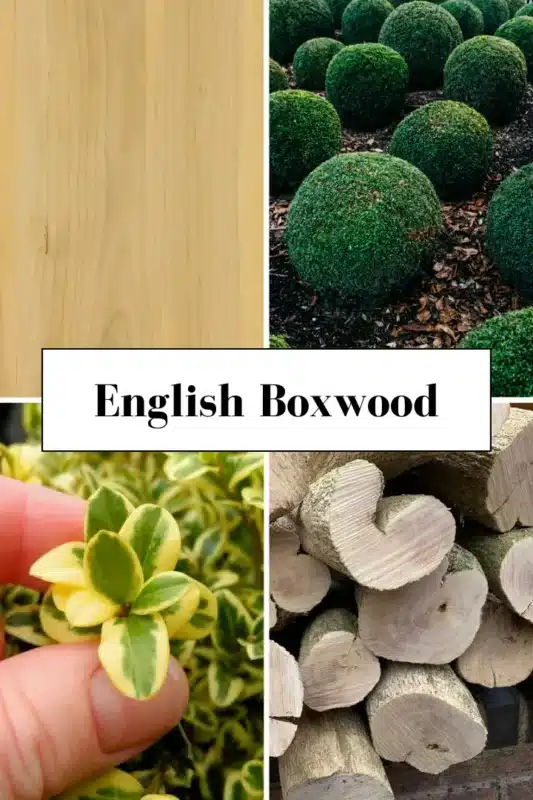
English boxwood is a dense evergreen shrub with small, opposite leaves, fine branching, and a naturally rounded form. In North American gardens, the name often means the compact cultivar Buxus sempervirens ‘Suffruticosa’, also called dwarf English boxwood.
The common name isn’t precise. A retailer may label the full species, a compact cultivar, or another selection as boxwood English. Check the botanical label before planning a low border, because an unnamed species plant can eventually become much taller than ‘Suffruticosa’.
Boxwood: Buxus sempervirens
Boxwood Buxus sempervirens, also called common or European boxwood, is the species from which many garden cultivars were selected. The plant belongs to the Buxaceae family and grows as a large shrub or small tree when left unclipped for decades. The NC State Extension Plant Toolbox records its evergreen habit, cultural needs, toxicity, and common pest issues.
Boxwood is technically a hardwood despite its small leaves and shrub-like habit. Readers comparing woody plant groups can see how it relates to other hardwood trees, though garden boxwood is valued far more for living structure than timber production.
English vs dwarf English boxwood. Sellers often use these names interchangeably, but the label should show Buxus sempervirens ‘Suffruticosa’ if you need the classic dwarf form. A label showing only the species doesn’t promise compact growth, uniform leaf size, or the expected mature dimensions.
Quick plant profile. The following figures describe ‘Suffruticosa’ rather than every form of common boxwood. Local climate, root conditions, age, and pruning can move actual results outside these ranges.
| Plant characteristic | Typical description |
|---|---|
| Botanical name | Buxus sempervirens ‘Suffruticosa’ |
| Plant type | Broadleaf evergreen shrub |
| Typical mature size | About 2–4 feet tall and wide; old specimens may grow larger |
| Growth rate | Often about 1–2 inches per year after establishment |
| Hardiness | Commonly USDA Zones 5–8 |
| Light | Full sun to partial shade, depending on climate |
| Soil | Moist, draining soil; prolonged saturation causes decline |
| Main uses | Low hedges, edging, containers, parterres, and small topiary |
Why mature sizes differ. Some size guides describe the species, while others describe ‘Suffruticosa’, a tightly clipped hedge, or a young nursery plant. Slow growth doesn’t mean permanently miniature growth. An old shrub can spread into a path if its projected width was ignored at planting.
Safety, odor, and wildlife. Boxwood foliage and bark contain alkaloids and shouldn’t be eaten by people, pets, horses, or livestock. Some people detect a sharp cat-urine-like smell when warm leaves are wet, bruised, or freshly cut. After shearing, that musky odor can cling to gloves and hang in still air beside a doorway.
Boxwood is considered deer resistant, not deer-proof. Hungry animals may sample it during food shortages. Keep clippings away from children and animals, and contact a veterinarian or poison service after suspected ingestion.
Where English Boxwood Grows Best
English boxwood grows best where roots receive oxygen, soil moisture remains fairly steady, and foliage escapes harsh heat or drying winter wind. Drainage usually matters more than rich soil or frequent feeding.
Sun and Shade
English boxwood tolerates full sun to partial shade, but afternoon shade helps in hot regions. Morning sun dries dew without exposing leaves to the strongest late-day heat. Dense shade produces looser branches and a patchy hedge surface.
Cold-climate placement needs a different calculation. Winter sun warms evergreen leaves while frozen roots can’t replace lost moisture, producing bronze or straw-colored patches. A site protected from northwestern wind often performs better than an exposed south-facing bed.
Soil and Drainage
Free drainage is the main soil requirement. Avoid compacted clay, low ground, downspout outlets, and planting holes that collect water like bowls. After rain, the soil should feel cool and crumbly rather than slick, sour-smelling, or wet enough to shine when squeezed.
Backfill mainly with soil removed from the hole. Filling one clay hole with loose compost can create a water-holding pocket around the root ball. A laboratory soil test is more reliable than adding lime automatically, since yellowing can come from damaged roots rather than soil acidity.
Climate and exposure. ‘Suffruticosa’ is commonly grown in USDA Zones 5–8, but winter survival varies with wind, snow cover, autumn moisture, and nursery provenance. Confirm local conditions through the USDA Plant Hardiness Zone Map and the plant’s cultivar label.
Keep shrubs away from road salt, roof runoff, heat-reflecting walls, and repeated snowplow piles. In cold sites, autumn watering, a broad mulch ring, and a wind barrier protect foliage more dependably than relying on a cosmetic anti-desiccant spray.
Hedges and formal gardens. A low boxwood hedge works beside terraces, rose beds, herb gardens, knot gardens, and paths. Its slow growth reduces trimming frequency, but gaps may remain visible for years. Allow air movement rather than forcing instant closure with overly tight spacing.
Foundations and containers. Leave room between boxwood and a wall for airflow, access, and mature spread. Containers need open drainage holes and enough soil volume to buffer temperature changes. Pot-grown roots face more winter cold than roots protected in the ground, and standing saucer water can kill them.
Topiary and edging. Fine foliage takes clean geometric shapes, including small balls and low borders. Clip conservatively because a cut pushed into bare old wood can remain obvious for several seasons. Keep plants farther from seating areas if you dislike their warm, pungent foliage odor.
Planting and Boxwood Hedge Spacing

Plant English boxwood in spring or early fall, setting the root flare at grade or slightly high. For a compact boxwood hedge, space plants about 12–24 inches on center after accounting for starting size, airflow, and the time allowed for gaps to close.
Best Planting Time
Spring planting gives roots a full season to establish and is the safer choice in colder areas. Early fall works where soil remains warm long enough for root growth. Don’t plant during hard drought, extreme heat, frozen conditions, or immediately before severe winter weather.
Depth and Root Preparation
Dig the hole about twice as wide as the root ball but no deeper. Expose the upper root flare and set it at soil level; raising it slightly helps on heavy ground. Loosen or cut circling roots so they grow into surrounding soil rather than continuing around the pot-shaped root mass.
Settle the backfill with water rather than stamping it down. Heavy foot pressure crushes pore spaces needed by roots. A common beginner error is burying the crown to hide exposed nursery soil, which leaves stems damp and roots short of oxygen.
Mulching and establishment watering. Apply 2–3 inches of organic mulch over the root zone while keeping it several inches from stems. Check beneath the mulch by hand. Water deeply when the root ball starts drying, then let surplus water drain instead of following a fixed daily schedule.
Boxwood hedge spacing. Use 12–18 inches on center for faster closure with small plants, or 18–24 inches for better airflow and lower plant cost. Close spacing raises competition and lets box plant disease spread quickly through touching foliage, so the fastest visual result can carry the highest maintenance risk.
Individual specimen spacing. Give separate rounded shrubs close to their expected mature width. A plant expected to reach 3 feet wide usually needs about 2.5–3 feet between centers if each mound should remain distinct. Also measure from paths, walls, windows, and utilities rather than from neighboring plants alone.
Hedge quantity formula. Divide hedge length by the on-center spacing to find the number of spaces, then add one plant when both endpoints receive a shrub. Convert every measurement to the same unit before calculating.
- Measure the planting line. A 10-foot hedge equals 120 inches.
- At 18-inch spacing, 120 ÷ 18 equals 6.67 spaces. Round up and allow about eight plants with both endpoints planted.
- At 24-inch spacing, 120 ÷ 24 equals five spaces, requiring about six plants.
- Add or reposition plants around gates, corners, curves, drains, and path openings.
Lay the unopened pots along the line before digging. This simple dry layout catches awkward endpoint gaps and curved sections that a calculator misses. It also lets you turn each plant’s fullest face toward the main viewing side.
English Boxwood Care and Propagation
English boxwood care centers on steady root-zone moisture, restrained feeding, an open canopy, and clean pruning tools. Named cultivars should be propagated from cuttings because seed-grown plants don’t reliably retain the dwarf parent’s traits.
Established Plant Watering
Established plants have shallow feeder roots and respond poorly to repeated drought followed by saturation. Water slowly enough to moisten the full root zone, then pause until the upper soil starts drying. Yellow leaves over wet soil call for drainage checks, not another irrigation cycle.
Fertilizer and Soil Testing
Test soil before feeding a weak shrub. Excess nitrogen fertilizer creates soft shoots, increases shearing work, and may worsen pest or disease pressure. Keep granules away from stems and shallow roots. High pH, salt, root rot, or winter injury can resemble nutrient shortage.
Mulch and root protection. Maintain a wide 2–3-inch layer, not a deep mound against the crown. Mulch limits fast moisture swings and protects surface roots from hoeing and mower damage. Pull it back if the lower stems feel constantly damp or bark begins softening.
Pruning and hedge shaping. Selectively remove crowded interior shoots so light and air reach the center. Surface-only shearing forms a tight green shell around bare, humid branches. Shape a formal hedge slightly wider at the base so its lower leaves receive adequate light.
Best pruning time. Complete heavier work from late winter through spring, adjusted for local freezes, then lightly shape after the spring flush. Avoid heavy late-season cuts that trigger tender growth. Don’t shear wet foliage where boxwood blight is a concern.
Tool sanitation. Brush soil, sap, and leaf pieces from blades before applying a disinfectant because debris shields pathogens. Clean tools between suspect plants. Bag material associated with confirmed blight and follow local disposal rules rather than adding it to a home compost pile.
Propagation from cuttings. Take semi-hardwood cuttings from healthy, disease-free stock. Place them in fresh, draining propagation medium and maintain humidity without keeping leaves continuously wet. Cuttings clone ‘Suffruticosa’, which produces the uniform growth needed for formal edging.
Growing from seed. Seeds can produce Buxus sempervirens, but seedlings vary in leaf size, habit, growth rate, and mature dimensions. Warm and cold stratification may be needed, and germination is slow. Seed isn’t a dependable route to a matching dwarf English boxwood hedge.
English Boxwood Problems and Diagnosis

English boxwood can fail from blight, saturated roots, insects, winter drying, salt, or poor planting depth. Diagnose a box hedge dying by checking moisture, leaf patterns, stem lesions, roots, and recent weather before applying water, fertilizer, or pesticides.
Boxwood Blight Causes
Boxwood blight is caused chiefly by Calonectria pseudonaviculata; warm, humid conditions and wet foliage support infection and movement. ‘Suffruticosa’ is highly susceptible. Rapid leaf drop, dark leaf lesions, and elongated black streaks on young stems need prompt diagnostic attention.
Fungicides protect healthy tissue but don’t cure infected branches. Purchase clean stock, isolate new plants when practical, avoid overhead irrigation, and stay out of wet plantings. The Clemson boxwood disease guide shows how blight symptoms differ from several pests and stress disorders.
Volutella Blight and Dieback
Volutella dieback, associated with Pseudonectria species, often attacks wounded, winter-damaged, or densely clipped branches. Look for straw-colored leaves, loose bark, branch death, and salmon-pink fruiting structures in humid weather. Laboratory diagnosis is worthwhile when rapid defoliation resembles boxwood blight.
Phytophthora root rot. Saturated soil encourages root decay, loss of vigor, yellow or bronze foliage, and wilting while the ground remains wet. Damaged roots may appear dark and weak. More water speeds decline; drainage correction and removal of badly affected plants provide better control than routine feeding.
Leafminer, psyllid, and mites. Boxwood leafminer larvae create blistered, yellow-brown patches that feel puffy when held to light. Psyllids cup new leaves into spoon shapes, while mites cause pale stippling. Match treatment timing to the pest’s life stage rather than spraying every discolored box bush.
Box tree moth. Cydalima perspectalis caterpillars leave webbing, green-black droppings, skeletonized leaves, and stripped shoots. Heavy populations can chew bark after foliage disappears. Distribution and transport restrictions change, so check USDA APHIS and state agriculture guidance before moving plants from an affected area.
Winter burn and salt. Bronze, tan, or brown foliage often appears on the sunny or windward side after frozen roots, dry wind, strong sun, or salt exposure. Wait for spring growth before cutting. Green tissue beneath lightly scratched bark suggests the branch may recover.
Yellow or brown leaves. A single symptom can have several causes. Inspect the distribution of damage and the condition of the soil before choosing a response.
| Pattern or symptom | Likely cause | Useful check or response |
|---|---|---|
| Yellowing with wet soil | Root stress or Phytophthora | Check drainage and root color; stop automatic watering |
| Dry, crisp margins with dry soil | Drought stress | Water deeply and widen the mulch ring |
| One exposed side turns bronze | Winter burn or salt | Wait for spring growth and review exposure |
| Puffy yellow-brown leaf areas | Boxwood leafminer | Hold leaves to light and identify larvae |
| Black stem streaks with leaf drop | Possible boxwood blight | Isolate the plant and seek diagnostic testing |
| Older interior leaves yellow slowly | Natural shedding or dense growth | Thin crowded shoots and remove trapped debris |
| Brown leaf edges near pavement | Salt or fertilizer burn | Review deicing and fertilizer placement |
Why box hedges fail. Common causes include planting too deeply, treating every yellow plant as dry, shearing only the outside, choosing the wrong cultivar, and replanting susceptible stock in a confirmed blight site. Poor identification can also place a large common box plant where a low border was expected.
Practical notes from use. The fastest field check is tactile: push a finger beneath the mulch rather than judging the dry surface. Healthy feeder roots feel firm and pale; decayed roots feel soft and may carry a stale, swamp-like odor. Split one suspect stem before removing an entire row.
Repeated tight clipping leaves a mat of brittle brown leaves inside the hedge. Open several small windows with hand pruners instead of cutting one large cavity. That approach improves airflow while keeping holes small enough for slow-growing foliage to cover.
English Boxwood Comparisons
Dwarf English boxwood offers fine foliage and slow, compact growth, while American, Wintergreen, Green Velvet, and Sprinter boxwoods fill different size and climate needs. Compare mature dimensions, growth rate, winter color, hardiness, blight response, and pruning load rather than choosing by common name.
Boxwood Comparison Criteria
A useful comparison starts with the botanical label and expected untrimmed size. Also assess winter exposure, summer heat, desired hedge height, disease history, and years available for closure. Fast growth lowers waiting time but creates more clipping and green waste.
English vs American Boxwood
American boxwood commonly means taller forms of Buxus sempervirens, often ‘Arborescens’. It grows larger and usually faster than ‘Suffruticosa’, making it better for screens and substantial foundation shrubs. English boxwood suits low edging, small mounds, and compact formal work.
English vs Wintergreen boxwood. Wintergreen is commonly Buxus sinica var. insularis ‘Wintergreen’. It grows faster and can hold better winter color in some climates. Choose it for a medium hedge where fill speed matters, but don’t buy it as a botanical match for English boxwood.
English vs Green Velvet. Green Velvet is a compact hybrid valued for a rounded habit and cold-climate performance. It commonly reaches usable garden size faster than dwarf English boxwood. Its coarser outline may be less suitable for very fine historic-style edging.
English vs Sprinter boxwood. Sprinter was selected for faster growth and quick massing. It can reduce the time needed to form a hedge, while traditional English boxwood offers slower extension growth and a finer formal texture. Faster plants usually need more frequent shaping.
| Type | Typical character | Good use | Main trade-off |
|---|---|---|---|
| Dwarf English | Very slow, fine-textured, compact | Low edging and small topiary | High blight susceptibility and slow gap closure |
| American | Taller and faster | Screens and large foundations | Too large for narrow borders |
| Wintergreen | Faster with useful winter color | Medium hedges | Different species background and texture |
| Green Velvet | Rounded hybrid with cold tolerance | Cold-climate mounds | Less traditional fine texture |
| Sprinter | Fast filling | Hedges and mass planting | More pruning |
Blight resistance considerations. ‘Suffruticosa’ is among the more susceptible choices, so it may be unsuitable for a site with confirmed disease. Boxwood blight resistant cultivars can still become infected; resistance means reduced disease, not immunity. In a contaminated bed, a non-boxwood substitute may carry less long-term risk.
Buying English Boxwood
Buy English boxwood by botanical name, inspect every plant for leaf drop, black stem lesions, webbing, blisters, and saturated soil, then compare the delivered cost rather than the displayed plant price alone. For dwarf stock, the label should read Buxus sempervirens ‘Suffruticosa’.
Confirm Cultivar Identity
Ask whether the plant was propagated from a cutting or seed. Cutting-propagated stock should retain the named cultivar’s traits, while seed-grown plants can vary. Confirm mature size, hardiness, pot volume, actual plant height, and whether measurements include the nursery container.
Inspect Plant Health
Look beneath the outer foliage, where sellers’ photos rarely show problems. Reject batches with unexplained defoliation, black streaks, salmon-colored growth, webbing, frass, or sour, saturated potting mix. A few older yellow interior leaves can be normal, but widespread matching symptoms across a batch suggest a shared problem.
Recommended live-plant option. This starter format may suit edging, containers, and small formal gardens where slower establishment is acceptable. Verify the cultivar, shipped plant dimensions, destination restrictions, delivery season, hardiness, and replacement terms before ordering.

Dwarf English Boxwood Starter
- Live dwarf English boxwood plant
- Compact growth suits smaller spaces
- Evergreen foliage provides year-round interest
- Ideal for edging containers and formal gardens
- Starter size is easy to establish
 Buy on Amazon
Pot size and pricing. A starter plant costs less to ship but needs more years to reach visual scale. Larger 3- or 5-gallon boxwood shrubs offer stronger immediate presence, yet they’re heavier, costlier, and sometimes more root-bound. Compare branch density and root quality rather than container volume alone.
Boxwood hedge cost. Multiply delivered plant cost by the calculated quantity, then include bed preparation, mulch, irrigation parts, and likely replacements. Divide the complete figure by hedge length for cost per linear foot. Wider spacing lowers the first bill but extends the period before closure.
Local versus online nurseries. Local stock can be inspected, may already be acclimated, and avoids parcel-shipping stress. Online ordering offers wider cultivar access. A plant arriving with loose soil, hot foliage, or a crushed pot needs immediate documentation before watering or repotting changes its condition.
Shipping and guarantees. Read exclusions for weather delays, dormant appearance, incorrect zones, and reporting windows. Photograph the sealed package, roots, stems, and shipping label on arrival. Keep the plant separate from established boxwoods during inspection rather than placing an unverified shipment directly into a mature hedge.
FAQs
How Big Does English Boxwood Get?
English boxwood typically grows 3 to 5 feet tall and wide at maturity. Its compact, rounded form makes it a popular choice for low hedges, borders, and formal gardens. Size can vary with pruning, soil quality, sunlight, and the specific cultivar planted.
How Fast Does Dwarf English Boxwood Grow?
Dwarf English boxwood grows slowly, usually adding about 1 to 2 inches per year. This gradual growth helps it keep a tidy shape and reduces how often it needs pruning. Give it well-drained soil, regular water during establishment, and partial to full sun for the best growth.
How Far Apart Should English Boxwoods Be Planted?
Plant English boxwoods about 2 to 3 feet apart for a hedge and 3 to 5 feet apart for individual specimens. Spacing depends on the mature width of the variety and how quickly you want plants to fill in. Good airflow between shrubs also helps reduce disease problems.
Why Is My English Boxwood Turning Yellow Or Brown?
English boxwood may turn yellow or brown because of winter burn, poor drainage, drought, pests, or disease. Check that the soil drains well and water deeply during dry periods, especially before winter. Brown leaves can also result from harsh wind or sun, so a sheltered location is helpful.
Is English Boxwood Susceptible To Boxwood Blight?
Yes, English boxwood is susceptible to boxwood blight, a fungal disease that causes leaf spots, rapid leaf drop, and stem dieback. Avoid overhead watering, sanitize pruning tools, and provide spacing for air circulation. If blight is confirmed, remove infected material promptly and avoid replanting susceptible boxwoods in the same area.
Affiliate Disclosure: Some links in this post are affiliate links. If you make a purchase through these links, we may earn a small commission at no extra cost to you. We only recommend products we genuinely believe in.