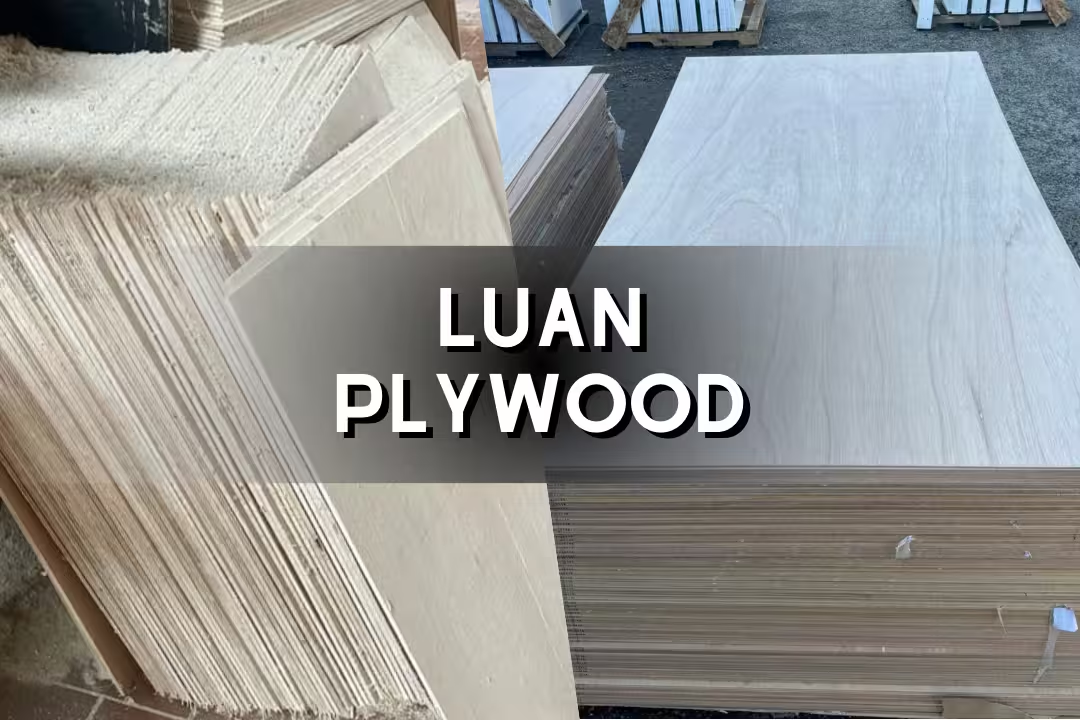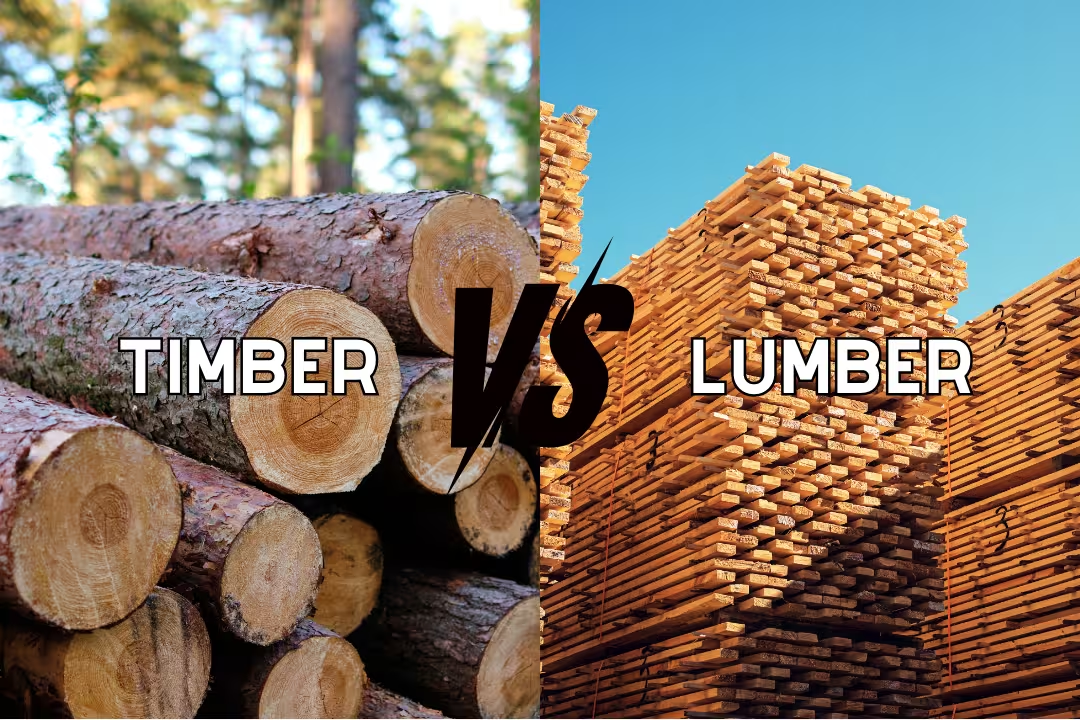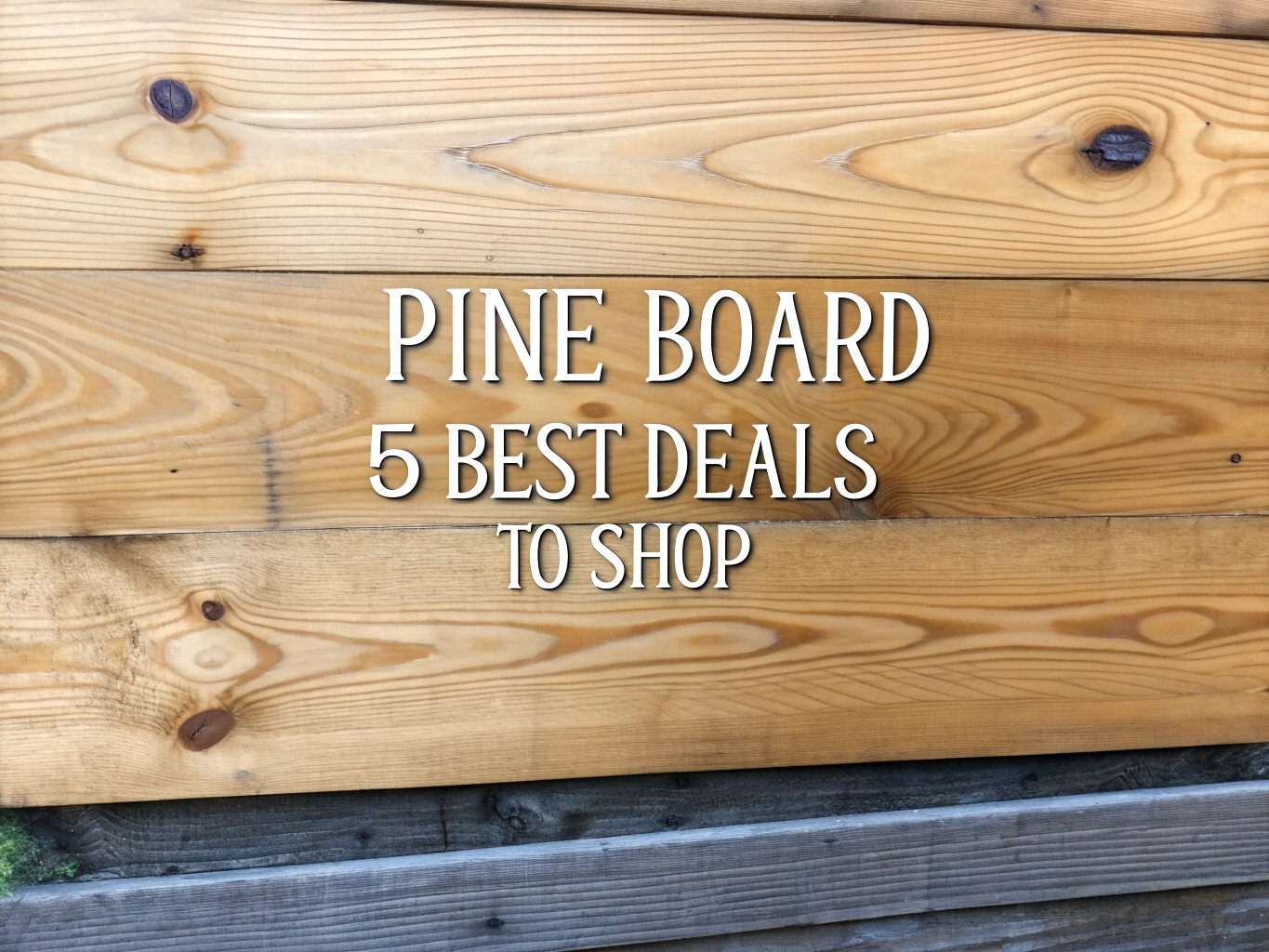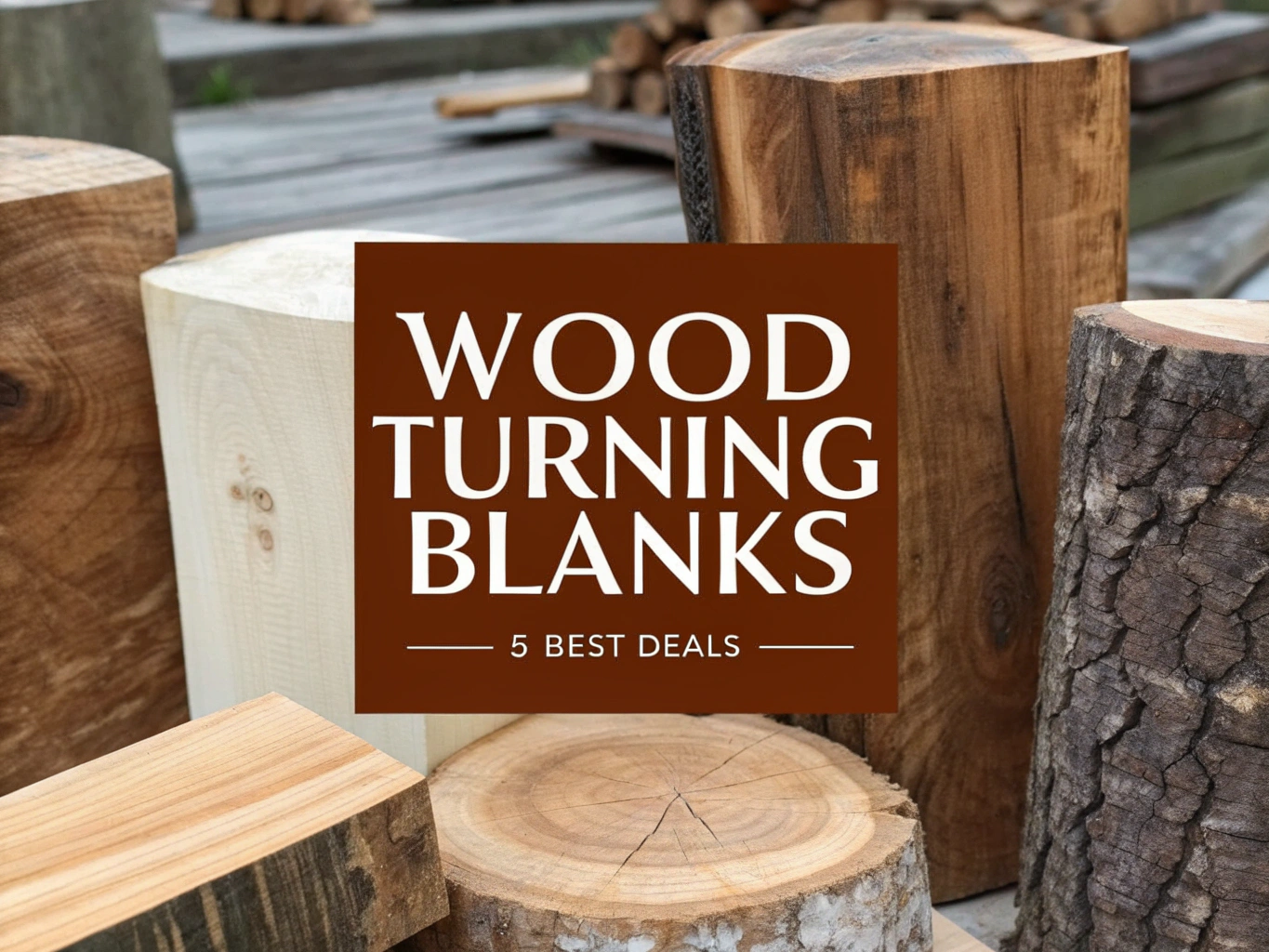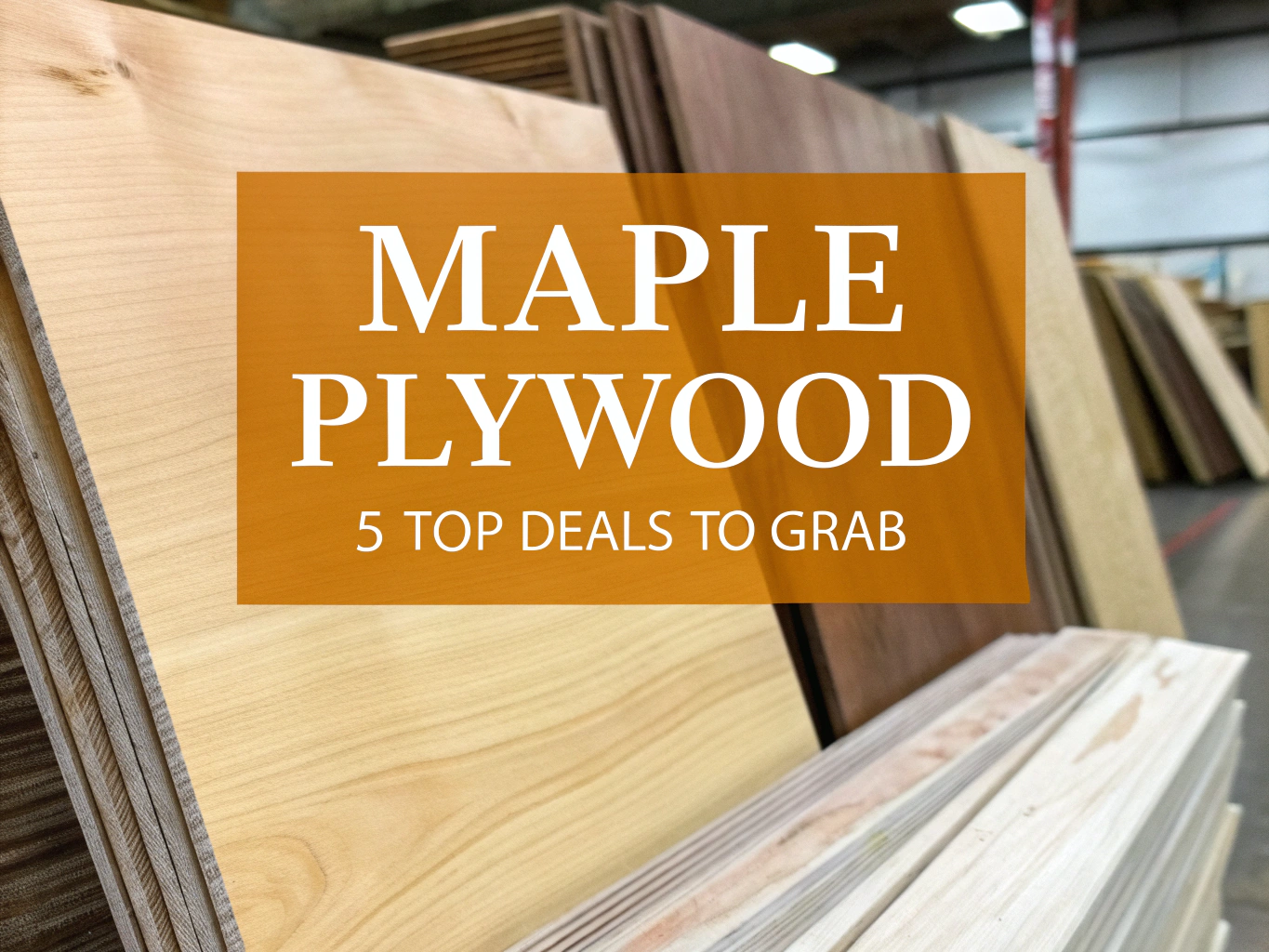


Pine or SPF lumber is usually the cheapest widely available solid wood in North America. Poplar is often the cheapest hardwood, OSB is usually the lowest-cost structural sheet, and unfinished pine is commonly the cheapest real wood flooring.
The lowest shelf price doesn’t always produce the lowest project cost. Compare grade, moisture, dimensions, waste, milling, delivery, finishing, installation, and expected service life before buying.
Table of Contents
What Is the Cheapest Wood?
The direct answer: pine and spruce-pine-fir, called SPF, are usually the cheapest types of solid wood at North American retailers. Local supply can make southern yellow pine, alder, Douglas fir, or another abundant species less expensive in a given region.
Quick Category Answers
| Category | Usually cheapest option | Price unit | Good uses | Main limitation |
|---|---|---|---|---|
| Common solid wood | Pine or SPF | Piece or board foot | Furniture, shelves, framing | Soft, knotty, sometimes wet |
| Common hardwood | Poplar | Board foot | Painted furniture and trim | Color varies under clear finish |
| Structural panel | OSB | 4×8 sheet | Walls, roofs, subfloors | Edges can swell after wetting |
| Smooth paint-grade panel | MDF or particleboard | 4×8 sheet | Doors, panels, interior trim | Heavy and moisture-sensitive |
| Real wood flooring | Unfinished pine | Square foot | Dry interior rooms | Dents and needs finishing |
| Wood-look flooring | Laminate | Square foot | Budget interior floors | Visible surface isn’t real wood |
Solid wood means lumber cut from a tree. MDF, particleboard, OSB, laminate, and many composite products contain wood material, but they aren’t solid boards.
Pine and SPF Lumber
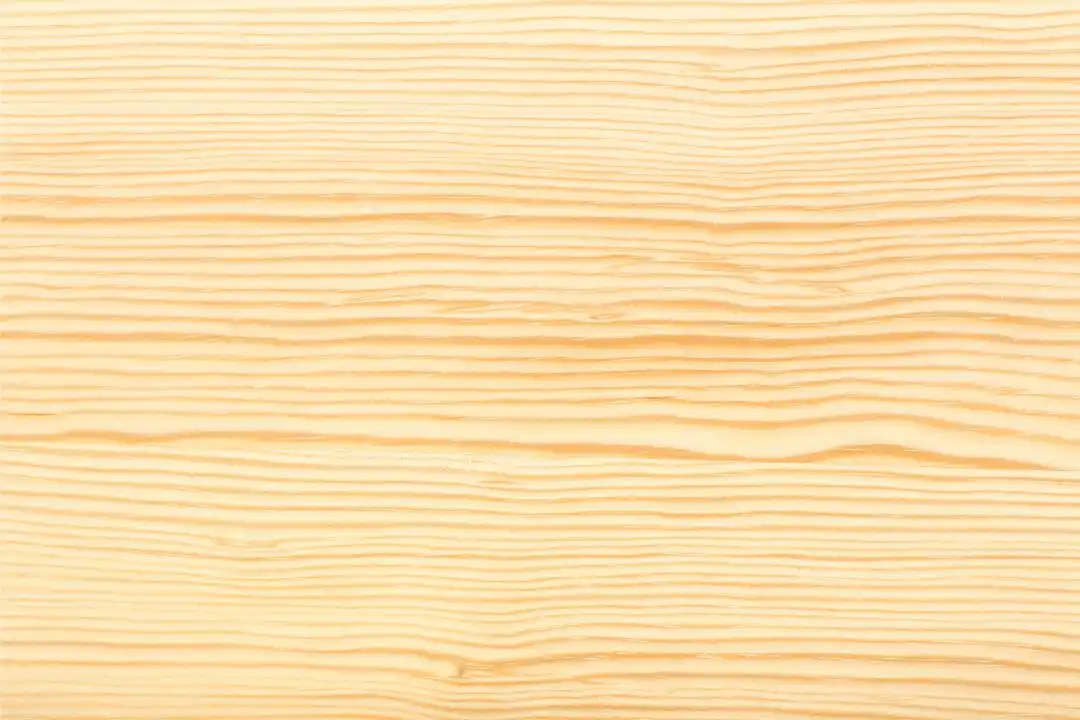
Pine boards are light, easy to cut, and readily available. Common boards suit shelves and painted furniture, while construction lumber works better for framing, shop fixtures, and utility builds. Clear, wide pine can cost far more than knotty stock, so pine isn’t automatically cheap in every grade.
SPF is a commercial group containing spruce, pine, or fir rather than one fixed species. Our guide to soft wood explains why botanical softwoods vary widely in density and performance.
Poplar and budget hardwoods: poplar frequently has the lowest board-foot price among widely stocked hardwoods. Alder, soft maple, rubberwood, birch, ash wood, and lower-grade red oak can beat it where regional supply or short-board discounts are strong.
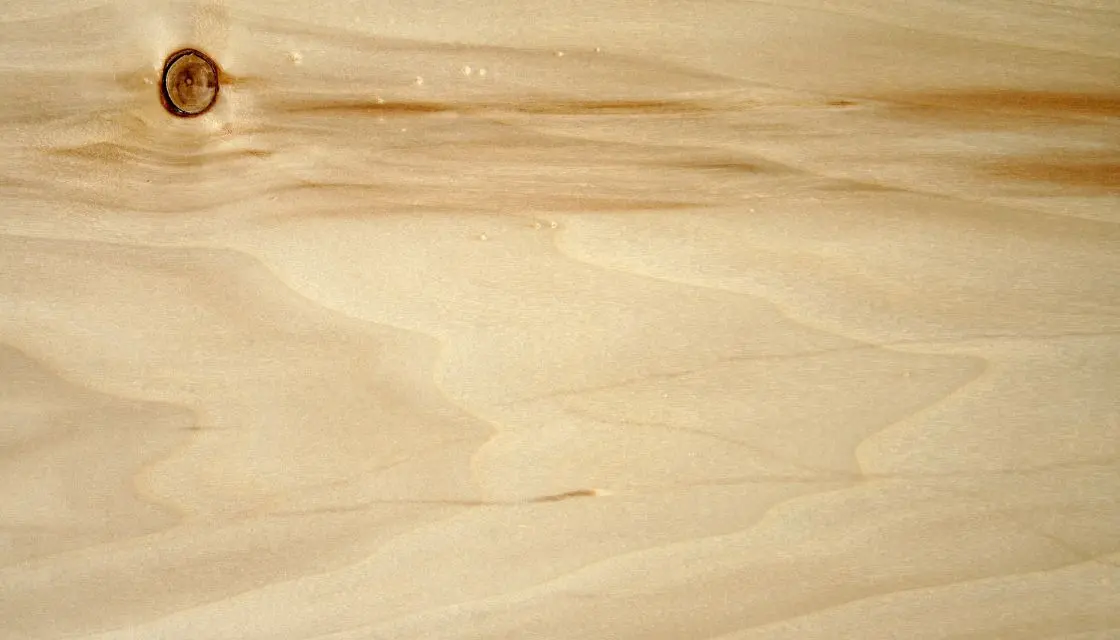
OSB and MDF panels: OSB is commonly the least expensive rated structural panel. MDF provides a smoother painted surface, but it is heavy, holds edge screws poorly, and can swell dramatically near water.
Pine and engineered flooring: unfinished pine often has the lowest material price among real wood floors. Entry-level engineered hardwood may produce a lower completed cost when its factory finish and floating installation remove site sanding and coating.
Real wood versus wood-look: engineered hardwood has a genuine wood wear layer. Laminate uses a printed image over a fiberboard core, while luxury vinyl plank uses a resilient synthetic construction. These products may look like oak or pine, but they shouldn’t be ranked as real wood.
Regional price differences: southern yellow pine tends to be economical in the southeastern United States, while alder can be competitive in the Pacific Northwest. B&Q wood prices in the UK, Swedish billigaste tryckimpregnerat virke searches, and imported rubberwood prices reflect separate supply chains and shouldn’t be compared without freight and currency adjustments.
Illustrative price benchmarks: the ranges below are January 2026 U.S. planning figures, not quotations. Species, grade, thickness, finish, retailer, ZIP code, and delivery can move a material outside these bands.
| Material | Illustrative U.S. retail range | Unit |
|---|---|---|
| Basic SPF 2×4×8 | $3–$7 | Piece |
| Pine woodworking lumber | $2–$6 | Board foot |
| Poplar | $4–$8 | Board foot |
| Red oak | $5–$10 | Board foot |
| OSB sheathing | $10–$25 | 4×8 sheet |
| Construction plywood | $20–$60+ | 4×8 sheet |
| MDF | $30–$60 | 4×8 sheet |
| Pine flooring | $3–$8 | Square foot |
| Engineered hardwood | $3–$12 | Square foot |
| Laminate | $1–$5 | Square foot |
Key takeaways: pine or SPF is usually the least expensive wood, poplar is a common budget hardwood, and OSB is the low-cost structural sheet. Compare identical units before ranking them.
Cheapest-by-category summary
Cheapest Wood for Woodworking Projects
Pine is usually best for low-cost rustic furniture and prototypes, while poplar is the better cheap wood for smooth painted furniture. Plywood often beats both for wide cabinet panels because it stays flatter and requires fewer glued joints.
Pine for Furniture
Pine works for tables, beds, benches, bookcases, and storage pieces when the design allows for its softness. The surface feels warm and slightly yielding under a fingernail; a dropped clamp can leave a deep crescent-shaped dent.
Select straight boards with tight knots and dry ends. Large dark knots may contain resin or loosen as the board moves. Read more about choosing a usable pine board before calculating a cut list.
Stain often turns patchy because earlywood and latewood absorb color at different rates. A washcoat, gel stain, or dye-and-sealer schedule reduces the striped, muddy patches beginners often get.
Poplar for Painted Projects
Poplar machines cleanly and has fewer resin problems than pine. It works well for face frames, moulding, drawer parts, furniture rails, and painted doors. Its cream, green, brown, and purple streaks can remain visible beneath pale translucent finishes.
Poplar edges can become fuzzy when tools are dull. A sharp cutter followed by light sanding gives a smooth, almost chalky surface that takes primer evenly. See the full poplar wood profile for grain and finishing details.
SPF for utility builds: graded SPF is economical for workbenches, garage storage, temporary fixtures, and prototypes. Inspect every piece for bow, crook, cup, twist, wane, and loose knots rather than ordering unseen boards for precision furniture.
Douglas fir and yellow pine: both provide a useful strength-to-cost ratio. Douglas fir often feels stiffer than lightweight pine, while southern yellow pine has hard latewood bands that resist denting but can tear during routing. Compare Douglas fir wood with yellow pine before selecting structural parts.
Cabinets and built-ins: use plywood for boxes, poplar for painted face frames, and MDF for dry, supported decorative panels. Particleboard can reduce material cost, but repeated hinge loading and sink leaks expose its weak screw holding and poor moisture tolerance.
Shelving and span needs: cheap material isn’t economical if it sags. Shorten the unsupported span, add a solid front edge, install a center support, or select thicker plywood. MDF shelves need more support than equal-thickness plywood under heavy books.
Project selection matrix: choose by use rather than species reputation.
| Project | Budget choice | Professional workaround |
|---|---|---|
| Painted table | Poplar frame with plywood top | Edge-band the plywood and prime end grain |
| Rustic bookcase | Pine | Add a front nosing and center support |
| Garage shelves | SPF frame with OSB deck | Seal cut panel edges in damp garages |
| Cabinet boxes | Construction-core or cabinet plywood | Use MDF only for dry decorative parts |
| Outdoor bench | Rated treated pine | Use treatment-compatible fasteners |
| Long clear trim | Poplar or finger-jointed pine | Compare cost after rejected defects |

Key takeaways: pine suits rustic furniture, poplar suits paint, and plywood suits broad stable surfaces. Dryness, straightness, span, and usable yield matter more than the species name alone.
Woodworking selection summary
Cheapest Hardwood Species Compared
Poplar is commonly the cheapest hardwood at U.S. hardwood dealers and home centers. Alder, soft maple, rubberwood, birch, ash, or lower-grade red oak may become the most affordable hardwood after regional availability and usable yield are included.
Poplar
Poplar has a Janka hardness near 540 pounds-force. It is harder than eastern white pine at about 380 pounds-force, yet much softer than red oak at about 1,290 pounds-force. The USDA Wood Handbook provides broader mechanical-property guidance.
Use poplar indoors for painted furniture, trim, frames, and cabinet components. It isn’t a good choice for exposed outdoor work or a clear finish requiring uniform heartwood color.
Alder
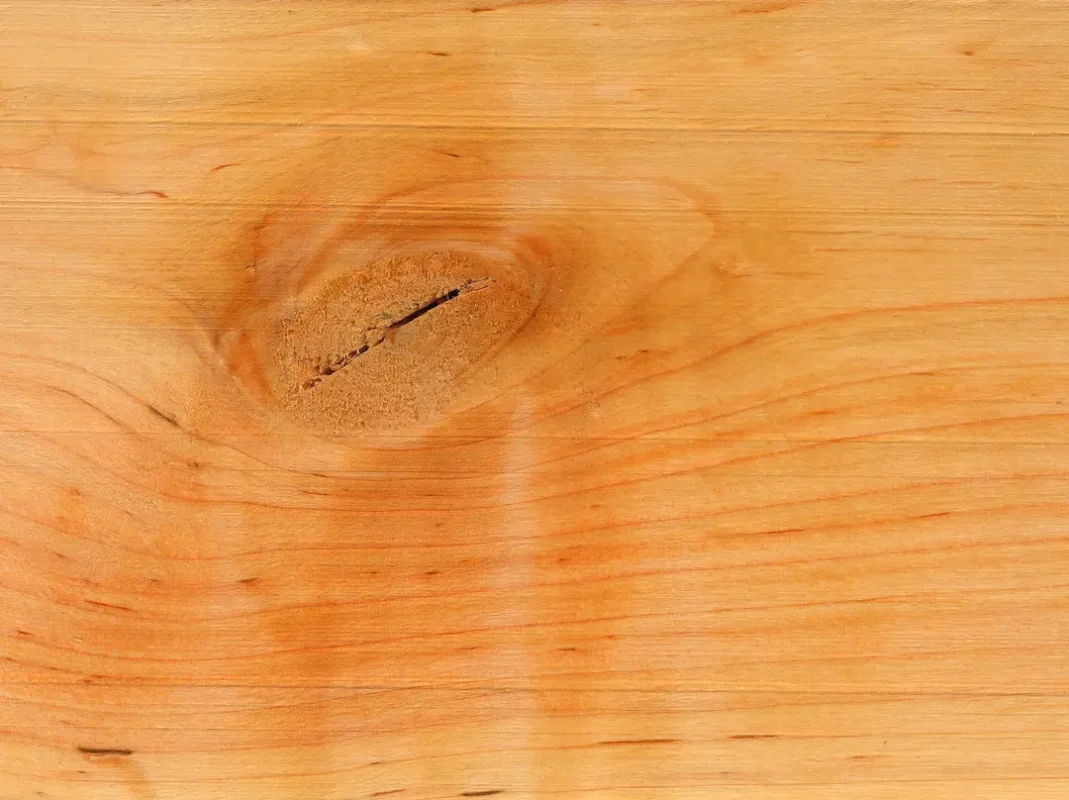
Alder can be economical in western North America. It machines easily and takes warm cherry-like stain, but its softness makes cabinet doors and table edges vulnerable to dents. Compare general alder wood with regionally important red alder.
Soft maple: this commercial group is usually harder than poplar and may be competitively priced near producing regions. Color variation and mineral streaks reduce price in lower appearance grades without making short components unusable.
Rubberwood: rubberwood comes from plantation-grown rubber trees after latex production declines. It is common in imported furniture panels and butcher-block products. Shipping can make rough rubberwood less economical than domestic poplar; see the rubberwood guide and its parawood naming context.
Ash and birch: ash is strong, shock-resistant, and visually similar to oak, but supply disruptions and local demand affect its price. Birch can offer a fine, pale surface for furniture and plywood. The birch wood guide covers its working traits.
Lower-grade red oak: Common-grade oak can be inexpensive when a project uses short pieces. Long table rails or clear door stiles may force you to discard too much material, turning a cheap board-foot price into an expensive finished component.
Regional hardwood availability: afara tree lumber may be competitively priced near West African supply, rubberwood near Southeast Asian production, and alder near Pacific Northwest mills. Freight often determines whether those species remain inexpensive after delivery.
Cost versus Janka hardness: Janka measures resistance to indentation from a steel ball. It doesn’t measure bending strength, screw holding, decay resistance, stability, or joint performance. Never select a structural member from Janka values alone.
| Hardwood | Relative budget position | Approximate Janka hardness | Best budget use |
|---|---|---|---|
| Poplar | Often lowest | 540 lbf | Painted furniture |
| Alder | Low in western markets | 590 lbf | Cabinets and doors |
| Soft maple | Low to moderate | About 700–950 lbf by species | Furniture and trim |
| Rubberwood | Low in manufactured panels | About 960 lbf | Tabletops and furniture |
| Ash | Region-dependent | About 1,320 lbf for white ash | Hard-wearing furniture |
| Red oak | Moderate; lower grades cost less | 1,290 lbf | Floors and furniture |
Plywood vs MDF vs OSB Costs

OSB usually costs least for structural sheathing, while particleboard often has the lowest substrate price for laminated furniture. MDF is the economical choice for a smooth painted face, and plywood gives the best broad balance of strength, lower weight, screw holding, and moisture tolerance.
OSB Structural Sheathing
OSB uses aligned wood strands bonded into structural panels. Rated sheets can serve as wall, roof, or subfloor sheathing when their span and exposure markings fit the assembly. APA’s OSB guidance explains panel construction and rated uses.
Protect cut edges from prolonged rain. A wet sheet develops a coarse raised edge and a musty wood-resin smell; repeated saturation can leave ridges that telegraph through thin flooring.
Construction Plywood
Construction plywood uses cross-laminated veneers and normally costs more than comparable OSB. It dries faster after brief wetting and often has lower edge swelling, though exposure ratings still govern where it can be used.
Cabinet-grade plywood: attractive face veneers, tighter cores, fewer voids, and consistent thickness raise the price. Hardwood plywood works well for cabinet boxes and shelves because it weighs less and holds fasteners better than MDF.
Paint-grade MDF: its flat, uniform face makes routed profiles and painted panels easy to finish. Standard MDF fails near leaks, and its fine powder hangs in the air and coats the tongue. Use extraction and a fitted respirator while cutting. Our MDF trim guide explains appropriate interior uses.
Budget particleboard: it works as a supported, laminated substrate. Bare edges crumble under repeated screw removal, and water can produce irreversible swelling. Confirmat screws, pilot holes, and hardware mounted away from edges improve reliability.
Strength and screw holding: plywood usually holds edge fasteners better than MDF or particleboard. OSB has useful structural capacity when installed by its rating. Panel thickness, fastener type, edge distance, and support spacing can reverse a casual comparison.
Moisture resistance: no common budget panel should sit in standing water. Exposure-rated plywood and OSB tolerate construction moisture better than standard MDF or particleboard, but ratings don’t make a panel permanently waterproof.
Appearance and finishing: MDF gives the smoothest paint surface, plywood can provide a real wood face, and OSB leaves visible strands. Seal MDF edges before painting and fill plywood voids before applying edge banding.
Panel health considerations: U.S. composite wood products fall under formaldehyde emission rules described by the EPA TSCA Title VI program. Emission compliance doesn’t remove the need for dust collection during machining.
Key takeaways: buy OSB for rated structural value, MDF for dry painted details, and plywood where stiffness and fastener holding matter. Don’t place standard MDF or particleboard beside a sink, shower, or wet slab.
Panel selection summary
How to Calculate Lumber Cost
Calculate wood cost with the seller’s pricing unit, then add waste, milling, delivery, hardware, and finishing. Board feet measure lumber volume, linear feet measure length, sheets measure panels, and square feet measure flooring coverage.
Board-Foot Formula
One board foot equals 144 cubic inches. Use: thickness in inches × width in inches × length in feet ÷ 12. A 1-inch × 6-inch × 8-foot board contains 4 board feet; at $5 per board foot, it costs $20 before waste and tax.
Sellers may calculate from rough dimensions rather than finished dimensions. A rough 1-inch board planed to 3/4 inch can still be billed as 4/4 lumber, so confirm the pricing basis before comparing it with a surfaced home-center board.
Linear-Foot Pricing
Linear-foot pricing applies to moulding, decking, trim, and some dimensioned boards. Multiply the required length by the unit price, then add cuts, end defects, pattern matching, and stock sold only in fixed lengths.
Per-piece comparisons: compare the same species group, grade, actual dimensions, length, treatment, and moisture condition. A cheaper eight-foot board may provide less usable material than a straight ten-foot board.
Nominal versus actual sizes: a nominal 2×4 commonly measures about 1.5 × 3.5 inches, and a nominal 1×6 about 0.75 × 5.5 inches. Use actual dimensions for volume and engineering calculations.
Sheet pricing: divide a sheet’s delivered price by its actual square footage, then account for the cutting layout. Two small sheets can cost more yet reduce waste, transportation trouble, and damage in a compact workshop.
Flooring square-foot pricing: order whole cartons. Multiply room area by 1.05 to 1.10 for a simple layout or 1.10 to 1.15 for diagonal installation, complex rooms, or boards with heavy appearance variation.
Waste allowances: rough hardwood doesn’t have one universal waste rate. Defects, board shape, required component length, grain matching, and planer loss can reduce yield to 50%–80%. Make a cutting map before buying lower grades.
Delivery and milling costs: add jointing, planing, ripping, straight-line cutting, packaging, oversize fees, lift-gate service, and minimum-order charges. Low online wood prices can become expensive after residential freight.
Total project formula: delivered material + waste + milling + fasteners or adhesive + finish + tools or rentals + labor + tax − reusable offcut value. Divide that total by the finished project quantity for a valid comparison.
| Example | Calculation | Result |
|---|---|---|
| Board feet | 1 × 6 × 8 ÷ 12 | 4 board feet |
| Board cost | 4 × $5 | $20 |
| Usable cost at 70% yield | $20 ÷ 0.70 | $28.57 equivalent usable cost |
| 300-square-foot floor at 10% waste | 300 × 1.10 | 330 square feet ordered |
How Wood Grade Changes True Cost
Lower-grade wood saves money only when its defects fit the cut list. Grade, surfacing, moisture, board length, and clear cutting yield can make a higher-priced board cheaper per usable foot.
Construction Lumber Grades
Construction grades address structural characteristics such as knots, slope of grain, splits, and wane. Select Structural, No. 1, No. 2, Stud, and utility designations aren’t appearance-only labels, and permitted uses differ by product and code.
Use grade stamps for load-bearing work. Ungraded sawmill or reclaimed boards may look strong but can’t automatically replace specified framing lumber. Our construction wood guide provides more selection context.
Hardwood Lumber Grades
Hardwood grades focus heavily on clear cutting yield. FAS stock suits long clear parts, while No. 1 Common or No. 2 Common may save money for drawers, small boxes, and short furniture components. The NHLA grading rules explain the formal system.
Flooring appearance grades: cabin, utility, tavern, character, select, and clear names can vary by seller. They often describe knots, color, and board length rather than a universal strength hierarchy. Request a written grade description and sample carton.
Rough versus surfaced lumber: rough boards may have a lower board-foot price but need a jointer, planer, saw, labor, and thickness allowance. S2S, S3S, and S4S material costs more because the supplier has completed part of that work.
Green versus kiln-dried: green lumber is cheaper near a sawmill, yet it can shrink, split, stain, and distort during drying. Furniture stock also needs storage time and stickers that allow air to move between courses.
Moisture content targets: about 6%–9% is common in many conditioned North American interiors, but the correct target follows the building’s seasonal equilibrium. Test the board core rather than trusting a dry-looking surface.
Defects and clear cuttings: knots, checks, pith, bark inclusions, twist, and end splits remove usable area. Place short components around defects on paper before buying; this step often proves whether Common-grade lumber is a bargain.
Cost per usable foot: divide delivered cost by usable quantity. If $100 of lumber yields 70%, its equivalent cost for a fully usable quantity is $142.86, before machining and finish.
Waste and yield calculations: keep wide, clear boards for long parts and use short offcuts for blocks, rails, or drawer components. Randomly crosscutting defects first can destroy combinations that would have produced better yield.
Key takeaways: grade describes permitted defects, not one universal quality scale. Buy lower grades for short parts and higher grades for long clear components, then compare cost per usable foot.
Grade and yield summary
Cheapest Wood Flooring Options
Unfinished pine is often the cheapest real solid wood flooring. Entry-level engineered hardwood can match its material price and may cost less after installation, while laminate and luxury vinyl plank are cheaper wood-look alternatives rather than real wood floors.
Cheapest Real Wood Flooring
Pine, cabin-grade oak, factory seconds, and thin-veneer engineered hardwood occupy the lower real-wood price bands. Compare finish, warranty, wear layer, board length, defects, return rights, and installation method before choosing.
Unfinished pine flooring: January 2026 planning prices often fall around $3–$8 per square foot for material. Sanding, sealer, finish coats, abrasives, and labor can erase the advantage over a factory-finished product.
Entry-Level Engineered Hardwood
Engineered hardwood uses a genuine wood veneer over a layered or composite core. Material may cost about $3–$12 per square foot, with wear-layer thickness and core construction driving much of the difference. Learn the basic categories of engineered wood.
Low-grade oak flooring: utility and character grades provide oak’s higher dent resistance at a lower price. Expect knots, sapwood, dark mineral streaks, short pieces, and more sorting.
Cabin and utility grades: carton yield can vary sharply. Open several cartons during layout and blend colors across the room. Installing one carton at a time creates visible bands that resemble separate batches.
Factory seconds: inspect finish defects, tongue damage, milling variation, and warranty exclusions. Buy all required stock at once because discontinued lots may be impossible to match after installation.
Laminate flooring: laminate commonly costs about $1–$5 per square foot for material. Its visible image layer isn’t wood veneer, though the core often contains wood fiber.
Luxury vinyl plank: LVP can resist surface spills and install quickly, but it is a resilient synthetic floor. Subfloor ridges can telegraph through thin products, and replacement may be the only cure for deep damage.
Bamboo clarification: bamboo is a grass, not timber from a tree. Strand construction, adhesives, density, finish, and factory quality vary, so a low price doesn’t predict stability or durability.
Material versus installed cost: flooring at $4 per square foot can become a $13-per-square-foot project after waste, underlayment, removal, repairs, labor, trim, and delivery.
| Floor type | January 2026 material planning range | Real wood surface? | Cost risk |
|---|---|---|---|
| Unfinished pine | $3–$8/sq. ft. | Yes | Site sanding and finishing |
| Engineered hardwood | $3–$12/sq. ft. | Yes | Thin wear layer |
| Solid hardwood | $5–$15+/sq. ft. | Yes | Preparation and movement |
| Laminate | $1–$5/sq. ft. | No | Water entry at joints |
| Luxury vinyl plank | $2–$7+/sq. ft. | No | Subfloor telegraphing |
Pine Flooring Cost and Performance
Pine flooring costs less than many hardwood floors, but it dents faster and often needs site finishing. It can serve for decades when kept dry and refinished before the wear reaches exposed fibers, yet no fixed lifespan applies to every room.
Pine Flooring Grades
Clear pine costs more because it contains fewer knots and defects. Knotty, cabin, and utility products reduce material price but increase sorting, visual variation, and waste.
Material price factors: species, width, thickness, end matching, profile accuracy, grade, moisture content, finish, and freight all matter. Wide eastern white pine and dense longleaf pine shouldn’t be treated as interchangeable products.
Finishing Requirements
Unfinished boards require sanding, sealing, and several finish coats. Seal knots or resin pockets before light-colored paint or finish. Fine amber beads that feel sticky under a fingertip can bleed through a coating when resin remains active.
Dents and wear: chair legs, pet claws, grit, and high heels mark pine sooner than oak. Wide felt pads, entry mats, and regular grit removal slow the compressed tracks that develop in traffic lanes.
Knots and resin: tight knots add character, while loose knots can fracture or fall out. Stabilize loose areas before finishing and avoid filling moving resin pockets with a brittle filler.
Seasonal movement: wide boards show larger dimensional change across their width. Test the flooring and subfloor with a moisture meter, leave the specified expansion space, and control indoor humidity.
Cleaning and maintenance: use a barely damp cloth or manufacturer-approved cleaner. Steam and standing water can drive moisture into seams, leaving raised edges or dark staining around fasteners.
Refinishing potential: thick solid pine can often be sanded several times, but each sanding removes material. Deep dents need local repair, filling, or acceptance as patina rather than aggressive whole-room sanding.
Expected service life: dry residential pine can remain functional for many decades. Entryways, kitchens, wet rooms, large dogs, thin boards, and delayed recoating shorten the interval between repairs.
Key takeaways: pine flooring is inexpensive, repairable, and visually warm, but it records dents and wear. Select it only if that changing surface suits the room and owner.
Pine flooring summary
Solid Hardwood vs Engineered Flooring Costs
Engineered hardwood can cost less to install because many products arrive prefinished and use floating or glue-down systems. Thick solid hardwood may deliver better long-term repairability, making it competitive over repeated refinishing cycles.
Material Prices
January 2026 planning ranges place engineered hardwood near $3–$12 per square foot and solid hardwood near $5–$15 or more. Species, grade, width, finish, plank length, core, and wear layer cause substantial overlap.
Installation methods: solid flooring is commonly nailed or stapled to a wood subfloor. Engineered products may float, glue, nail, or staple, but the approved method depends on the plank and site.
Subfloor preparation: neither floor hides a poor base. High spots, low areas, moisture, loose panels, adhesive residue, and weak concrete can add more cost than the difference between two flooring products.
Dimensional stability: engineered construction limits some cross-grain movement. It still expands, contracts, and can delaminate after severe or prolonged moisture exposure.
Wear-Layer Thickness
Wear layers matter: a very thin veneer may permit no practical sanding. Thicker veneers provide more repair options, but bevels, textured finishes, installation depth, and manufacturer limits affect whether refinishing is realistic.
Refinishing limits: solid flooring can’t be sanded below the tongue. Engineered flooring can’t be sanded through its veneer. Screening and recoating remove much less wood than full sanding and can extend both products’ service.
Moisture performance: engineered wood is often selected over concrete or in spaces with moderate humidity variation. It isn’t a cure for slab vapor, plumbing leaks, or uncontrolled crawl-space moisture.
Repairability: solid boards can often be patched and color-blended. Click flooring may allow plank replacement from the nearest wall, but discontinued colors and locking profiles can make matching difficult.
Lifecycle value: compare purchase, installation, recoating, repair, refinishing, and likely replacement. Cheap thin-veneer flooring can cost more over 20 years if damage forces full replacement.
Room cost example: a 300-square-foot room with 10% waste requires 330 square feet. At $4 per square foot, flooring costs $1,320; $198 underlayment, $1,485 installation, $600 preparation, and $300 trim and delivery produce a $3,903 pre-tax total, or $13.01 per room square foot.
Installation should follow product instructions and moisture testing practices such as those described in the NWFA technical guidelines.
Where to Buy Cheap Wood
Home centers are convenient for small quantities, but lumberyards, hardwood dealers, sawmills, clearance sellers, and reuse stores can offer a lower usable cost. Compare standardized dimensions, grade, condition, delivery, and return terms rather than the advertised board price.
Home Depot and Lowe’s
Home Depot and Lowe’s stock dimensional lumber, project boards, panels, and flooring. Wood prices at Home Depot can vary by store and ZIP code, so record the location, date, actual size, grade, treatment, and unit before comparing.
Inspect boards individually. Sight along each edge for bow and crook, place one end on the floor to reveal twist, and run a hand over the face for cup. Reject wet boards that feel unusually heavy or cool.
Menards and B&Q: Menards serves many Midwestern U.S. markets, while B&Q uses UK sizes, grades, and pricing. Convert dimensions and currency, then account for VAT or sales tax treatment before comparing.
Independent Lumberyards
Lumberyards may offer straighter framing stock, bulk pricing, delivery, and better grade choice. Ask whether prices are per piece, linear foot, thousand board feet, or another trade unit.
Local hardwood dealers: ask about Common grades, short boards, narrow stock, offcut bins, rough lumber, surfaced lumber, and milling fees. A dealer’s $6 rough board can exceed an $8 surfaced board after shop time and thickness loss.
Local sawmills: sawmills can provide inexpensive local species and full dimensions. Confirm whether lumber is green, air-dried, kiln-dried, graded, sterilized, and consistent enough for your machinery.
Online lumber sellers: online stock expands species choice but removes hands-on inspection. Add freight, oversize charges, minimum quantities, packaging, residential delivery, and rejected-board policies.
Flooring clearance channels: closeouts, discontinued colors, cabin grades, and factory seconds can reduce price. Buy spare cartons for future repairs, match lot numbers, and confirm whether opened cartons can be returned.
ReStores and marketplaces: Habitat for Humanity ReStore, Facebook Marketplace, Craigslist, and demolition sellers may carry low-cost stock. Examine coatings, fasteners, insects, rot, odor, and storage conditions before loading it.
Supplier price comparison: quote one defined basket, such as 50 usable board feet of kiln-dried S2S poplar delivered to one address. Asking each seller for “cheap wood” produces figures that can’t be compared.
Board inspection checklist:
- Confirm species or commercial species group.
- Read the grade, treatment, and panel stamps.
- Check bow, crook, cup, twist, checks, wane, and pith.
- Measure moisture for furniture and flooring.
- Look for loose knots, resin, mold, insects, and metal.
- Calculate clear usable yield from the cut list.
- Record delivery, milling, tax, and return conditions.
Reclaimed and Salvaged Wood Costs
Reclaimed wood isn’t automatically cheap. Free boards can cost more than new lumber after transport, de-nailing, cleaning, drying, milling, contamination checks, and yield loss. Premium architectural salvage can command a higher price than new wood.
Acquisition and Transport
Measure board lengths, vehicle capacity, loading time, fuel, rental costs, and disposal before collecting salvage. Long timbers may need permits or special handling that wipes out a zero-dollar acquisition price.
De-nailing and metal detection: scan both faces and edges with a detector. Broken nails hide beneath gray fibers and strike a planer knife with a sharp metallic crack, potentially damaging the cutter head and throwing fragments.
Cleaning and Milling
Remove surface grit before machining. Sand and mortar dull knives quickly. Brush or wash suitable bare wood, let it dry fully, and take a shallow sacrificial pass before final milling.
Contamination risks: old coatings may contain lead, while industrial boards can hold oil, pesticides, or unknown chemicals. Don’t sand, burn, or use questionable material around food or children without reliable testing and source history.
Insects and rot: fresh powder, exit holes, soft fibers, fungal strands, and a damp cellar odor signal risk. Isolate suspect boards from stored lumber and remove decayed sections rather than sealing over them.
Usable yield: a weathered 12-inch board may provide only a narrow clear strip after edges, splits, bolt holes, and rot are removed. Price salvage by finished yield, not gross dimensions.
Pallet wood safety: treatment stamps don’t disclose every previous cargo or spill. Avoid stained, oily, odorous, chemically treated, or unidentified pallets, particularly for indoor furniture, planters, toys, and food-contact projects.
Structural grading: age and large dimensions don’t prove structural capacity. Reused load-bearing lumber may require grading, testing, or engineering approval under local rules.
New versus reclaimed cost: use delivered purchase price + transport + labor + cleaning + metal detection + milling + replacement blades + disposal, divided by usable board feet. This calculation often favors new pine for utility work and reclaimed wood for appearance-led projects.
Cheap Wood Limitations and Failure Risks
The most expensive failures come from using wet lumber for furniture, untreated pine outdoors, MDF near water, or flooring over a damp subfloor. Material selection can’t compensate for unsuitable moisture, support, fastening, or installation.
Wet Lumber Furniture
Wet framing lumber can twist, shrink, split, and open joints after assembly. A heavy, cool 2× board may look straight in the store, then develop a corkscrew shape as one face dries faster.
Professional workaround: test moisture, stack boards with dry spacers, weight the stack, allow airflow, and mill in two stages. Remove only part of the material during the first pass, let stress settle, then mill to final size.
Warping and joint gaps: alternate growth-ring orientation where suitable, use dry stock, provide breadboard or slotted attachments where movement demands them, and don’t glue solid tabletops rigidly across the grain.
Untreated pine outdoors: ordinary interior pine can decay after persistent wetting. Use rated pressure-treated pine, a durable species, or a tested protection system, then detail the project for drainage and airflow.
Practical Notes From Real-World Use
MDF near moisture: painted MDF beside a sink often fails at an unnoticed cut edge. Water enters, the edge swells like compressed cardboard, and repainting can’t restore its original thickness. Use plywood or a moisture-rated product and seal every cutout.
Swollen OSB edges: sanding a small raised seam may work after the panel reaches safe moisture. Severe swelling needs panel repair; covering a damp ridge simply transfers the bump into the finished floor.
Moist subfloor failures: cupping, buckling, adhesive release, odor, and mold-related remediation can follow. Test wood and concrete, identify the water source, and meet the flooring maker’s limits before opening cartons.
Thin engineered veneers: aggressive sanding exposes the core. Ask for the measured wear-layer thickness and a written refinishing statement rather than accepting a vague “refinishable” claim.
Excessive flooring waste: opening only one carton at a time creates color bands and leaves defects until late in the job. Stage several cartons, sort boards by length and appearance, and reserve imperfect pieces for closets and wall cuts.
Unsafe dust exposure: MDF and hardwood sanding dust can remain airborne long after a cut. Use source extraction, clean with a HEPA vacuum, and wear suitable respiratory protection. The OSHA wood dust page outlines exposure hazards.
Treated-wood fasteners: some preservatives accelerate corrosion in unsuitable metal. Use fasteners and connectors approved for the treatment and exposure, and isolate incompatible metals where required.
Key takeaways: test moisture, protect panel edges, match fasteners to treatment, and inspect wear layers. A cheap material used in the wrong environment creates repair costs far above the initial saving.
Failure prevention summary
Cheapest Wood Myths and Buying Mistakes
Pine isn’t always cheapest, hardwood doesn’t always mean harder, and sticker price doesn’t measure finished value. Most buying mistakes come from comparing unlike grades, sizes, moisture conditions, and price units.
Pine Is Always Cheapest
Utility SPF may cost less than pine project boards, while local alder or lower-grade hardwood can beat clear pine. Wide, knot-free, old-growth, specialty, or furniture-grade pine can be expensive.
Hardwood means harder: hardwood describes broadleaf trees, while softwood describes conifers. Poplar and basswood are hardwoods but can be softer than dense southern yellow pine. Our bass wood guide covers this naming trap.
Janka Equals Strength
Janka measures denting, not bending strength, stiffness, decay resistance, fastener performance, or dimensional stability. Structural design needs species, grade, size, span, load, connection, and code data.
MDF is solid wood: MDF is a manufactured fiber panel. It provides a smooth face, but its weight, dust, water response, and fastening behavior differ from solid lumber.
Laminate is real wood: its visible decorative layer is usually a printed image. Engineered hardwood has a genuine wood veneer and belongs in the real-wood category.
Rough lumber costs less: its sticker price may be lower, but milling charges, tool ownership, labor, dust handling, and thickness loss change the comparison.
Free wood is free: hauling, cleaning, de-nailing, contamination checks, blade damage, drying, and disposal all carry costs. Free wood with 40% usable yield can be worse value than dry new lumber.
Sticker price determines value: divide the completed cost by usable output. Straight $7 stock can beat twisted $4 boards once rejects and labor are counted.
Futures equal retail prices: commodity contracts track defined wholesale products and delivery terms. A retailer’s individual board price includes processing, distribution, store costs, grade mix, inventory timing, and margin.
Acclimation takes fixed days: flooring is ready when measured moisture aligns with the installation site and manufacturer limits. Three days, one week, or two weeks can’t replace meter readings and a stable building.
Wood Price Trends and Buying Strategy
Buy from local supply, date-stamp every quote, and compare delivered usable cost rather than attempting to predict the market perfectly. Freight, mill capacity, housing activity, trade policy, species supply, and retailer inventory all move prices.
Local Supply and Freight
Low-value bulky lumber is sensitive to transport cost. Local loblolly pine may beat imported species in the South; read about loblolly pine and compare it with stocked spruce where northern supply chains dominate.
Commodity price cycles: framing lumber can change faster than specialty hardwood because housing starts, repair demand, mill outages, wildfire, weather, and rail or trucking constraints affect large commodity flows.
Housing and mill capacity: strong construction demand tightens common softwood supply, while mill closures can raise local prices despite weak demand. Hardwood prices also respond to kiln capacity and export markets.
Tariffs and trade: duties, customs rules, exchange rates, and shipping disruption affect imported panels, flooring, and species such as rubberwood. Compare the delivered product rather than assuming domestic or imported stock is always cheaper.
Date-Stamped Price Checks
Record every quote with supplier, city or ZIP code, date, species, grade, moisture condition, actual dimensions, surface condition, quantity, unit, tax, and delivery. This makes later Home Depot, Lowe’s, B&Q, sawmill, and lumberyard comparisons valid.
Sustainable local species: locally abundant, fast-growing wood may reduce freight and support shorter supply chains. Low price alone doesn’t prove responsible harvest or low environmental impact.
FSC and PEFC certification: use chain-of-custody claims rather than visual assumptions. The Forest Stewardship Council and PEFC explain their certification systems.
Modified wood economics: thermally modified or chemically modified pine costs more upfront but may reduce decay, movement, and maintenance in demanding exterior uses. Compare service-life cost against untreated pine that would fail early.
Engineered wood advances: improved veneers, cores, adhesives, and finishes can use smaller logs and wood residues efficiently. Performance still depends on product specifications rather than the broad engineered-wood label.
Waterproof flooring claims: read how the warranty defines standing water, time limits, perimeter sealing, subfloor moisture, plumbing leaks, and flood damage. A water-resistant surface doesn’t make the whole floor assembly waterproof.
Digital lumber marketplaces: online inventories make urban salvage, slabs, shorts, and mill overstock easier to find. The inability to inspect boards and high freight can offset the advertised saving.
Long-term cost planning: compare maintenance, repairability, refinishing, likely replacement, and spare-material availability over 5, 10, and 20 years. For floors, a thicker repairable product may cost less over time than the lowest-priced carton.
Final takeaway: pine or SPF is usually the cheapest solid wood, poplar is often the cheapest hardwood, OSB is the cheapest structural panel, and pine is commonly the cheapest wood flooring. The best purchase is the material with the lowest delivered cost per usable, durable unit.
Affordable wood buying principle
FAQs
Is Pine Always The Cheapest Wood?
No, pine is not always the cheapest wood, but it is often one of the most affordable solid-wood options. Prices vary by region, grade, board size, and whether the lumber is kiln-dried or treated. Construction-grade spruce or fir can sometimes cost less than pine.
What Is The Cheapest Hardwood For Furniture?
Poplar is usually the cheapest hardwood for furniture projects. It is easy to cut, paint, and sand, although its pale color and occasional green streaks make it less suitable for clear finishes. Birch, alder, and rubberwood can also be budget-friendly depending on local availability.
Is Plywood Cheaper Than Solid Wood?
Yes, plywood is usually cheaper than solid wood for large panels and simple furniture projects. It is sold in wide sheets, which reduces waste and makes cabinets, shelving, and subfloors faster to build. Hardwood-faced plywood may cost more, but it still avoids buying many individual solid boards.
What Is The Cheapest Real Wood Flooring?
Pine is often the cheapest real wood flooring because it grows quickly and is widely available. It provides a warm, natural look but is softer than oak or maple, so it can dent more easily. Choose a durable finish and expect some character marks in busy rooms.
What Cheap Wood Is Strong Enough For Building?
Spruce-pine-fir, commonly called SPF lumber, is an affordable wood that is strong enough for many building projects. It is widely used for wall studs, framing, joists, and basic outdoor structures when properly selected. Use pressure-treated lumber for ground contact or exposed exterior locations.
Affiliate Disclosure: Some links in this post are affiliate links. If you make a purchase through these links, we may earn a small commission at no extra cost to you. We only recommend products we genuinely believe in.