
Cedar Plywood Buying Guide: Types, Sizes, Uses, and Water Resistance

Table of Contents
Cedar plywood is usually a plywood panel with a real cedar face veneer bonded to a plywood, MDF, particleboard, or combination core. It can look, smell, and perform very differently depending on the cedar species, glue rating, core type, thickness, and finish.
Buyers usually compare aromatic cedar plywood, Spanish cedar plywood, Western red cedar plywood, and 4×8 cedar plywood sheets before choosing a panel for closets, cabinets, wall paneling, humidors, or protected exterior details.
What Is Cedar Plywood?
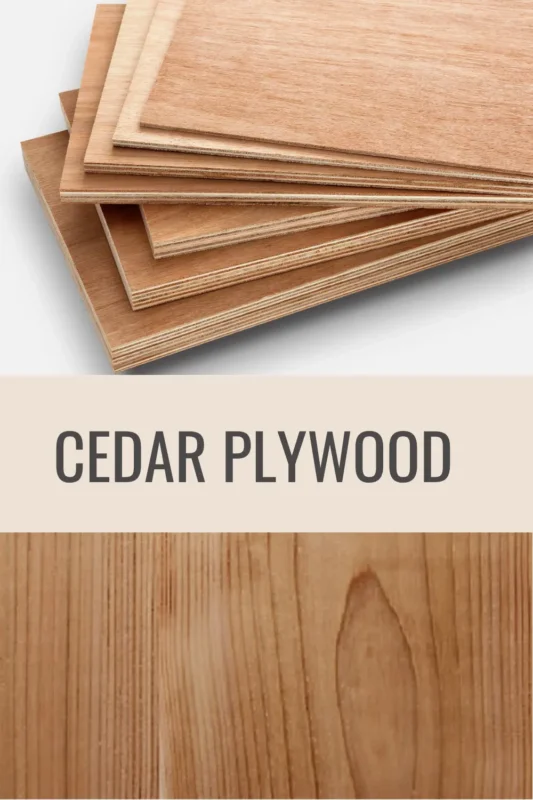
Cedar plywood is a sheet good, not a solid cedar board. Most panels use cedar on the face for appearance, scent, or specialty performance, while the inner core supplies thickness, flatness, and screw-holding strength.
The first thing I check is the edge because it tells the truth fast: a thin reddish face over pale inner plies feels different under a fingernail than solid cedar, and a raw MDF edge gives off a dry, dusty smell when cut. That edge check helps prevent the common mistake of buying cedar-faced plywood when the project needs solid cedar.
Cedar Veneer and Core
The cedar veneer is the visible layer, and the core may be veneer core, MDF core, particleboard core, combination core, or exterior-grade plywood. A veneer core panel feels lighter and grips screws better at the edge, while MDF core feels flatter and heavier but swells fast if water reaches it.
Thin cedar veneer works well for decorative walls, drawer liners, and cabinet panels, but it leaves little room for sanding. Beginners often level a panel with 80-grit paper and burn through the face in seconds; a safer workaround is to start around 180 grit, sand by hand near edges, and ask the supplier for the face veneer thickness before buying.
Cedar Species Names
The word cedar can point to several species. Aromatic cedar is usually Eastern red cedar, Spanish cedar is usually Cedrela odorata, and Western red cedar is usually Thuja plicata; none of those names mean the panel is a true Cedrus cedar.
Species matters because scent, color, weight, and moisture behavior vary. If you’re comparing cedar lumber with sheet goods, our guide to cedar wood gives useful context before you buy cedar plywood panels.
Sheets, Grades, Standards
A full 4×8 cedar plywood sheet measures 48 inches by 96 inches and covers 32 square feet before saw kerfs, trimming, mistakes, and grain matching. Common thicknesses include 1/8 inch, 1/4 inch, 1/2 inch, and 3/4 inch, with 3/8 cedar plywood showing up through specialty suppliers or regional stock lists.
Decorative hardwood plywood often uses face and back grade language such as A1, A2, B2, or similar supplier systems. Structural plywood standards differ from decorative panel standards, so check panel labels and supplier data sheets rather than assuming all cedar plywood meets the same rating; the APA plywood standards page explains PS 1 and PS 2 for structural panels.
Types of Cedar Plywood

The main types of cedar plywood differ by species and intended use. A closet panel, a humidor liner, and an exterior decorative panel may all carry a cedar name, yet each one needs a different core, glue, and finish plan.
Aromatic Cedar Plywood
Aromatic cedar plywood is usually made with Eastern red cedar, also sold as aromatic red cedar. The face often shows purple-red heartwood, cream-colored streaks, and knots, and the scent is sharp, resinous, and clean when freshly sanded.
This material works best in closets, wardrobes, drawer bottoms, blanket chests, shoe storage, and small storage cabinets. Leave the cedar face unfinished if scent matters because polyurethane, lacquer, and heavy film finishes trap the cedar aroma under a sealed layer.
The products below are useful when you need closet freshness without sourcing full cedar plywood sheets.

Fresh Cedar for Closets
- Natural cedar aroma helps freshen enclosed spaces
- simple bracket-free design for easy placement
- useful in closets, drawers, and storage bins
- helps protect clothing and linens from stale odors
- compact 2 pack for targeted coverage
 Buy on Amazon

Cedar Panels Value Pack
- Ten-piece pack gives you more coverage for home storage
- natural cedar scent helps keep spaces smelling clean
- great for closets, shelves, and drawers
- easy to place in many storage areas
- a practical way to add wood freshness
Buy on Amazon
A common beginner mistake is using aromatic cedar plywood like exterior siding. It may smell great in the shop, but rain can lift the veneer, swell the core, and leave raised bubbles that feel soft under a thumb press.
Spanish Cedar Plywood
Spanish cedar plywood usually uses Cedrela odorata veneer. It’s valued for humidors, cigar trays, dividers, specialty boxes, and cabinet interiors because it has a mild spicy scent, stable machining behavior, and a long history in cigar storage.
Use caution inside humidors because the cedar face is not the only material touching the enclosed air. Unknown glue, MDF, particleboard, or a strong factory finish can contaminate cigars, so I test offcuts in a closed jar for a few days and smell for glue, sour fiberboard, or chemical notes before final assembly.
Spanish cedar also needs sourcing attention because Cedrela odorata appears in CITES Appendices. Ask for responsible sourcing, FSC documentation when available, and the botanical name before ordering Spanish cedar veneer or plywood for a premium project.
Western Red Cedar Plywood
Western red cedar plywood uses Thuja plicata veneer or a Western red cedar face over another core. It usually has a warm reddish-brown color, low density, and a softer surface that dents more easily than maple or birch plywood.
It fits wall paneling, cabinet faces, decorative doors, and protected exterior accents when the panel construction supports that use. Natural decay resistance in cedar lumber doesn’t make every plywood core safe for weather, so verify the adhesive rating and seal all exposed edges.
If you’re choosing between Western red cedar plywood and boards, compare it with Western red cedar lumber behavior. The solid boards give stronger texture and better edge appearance, while plywood covers flat surfaces faster.
True Cedar Confusion
True cedars belong to the Cedrus genus, but many commercial cedar products use trade names rather than botanical names. Eastern red cedar is Juniperus virginiana, Western red cedar is Thuja plicata, and Spanish cedar is Cedrela odorata.
This naming confusion causes real buying problems. A customer may order cedar plywood for a humidor and receive aromatic cedar, or buy a cedar-look panel that has no useful scent; ask for species, veneer thickness, core type, and rating before paying freight.
4×8 Cedar Plywood Sizes and Availability
4×8 cedar plywood exists, but it’s less common than birch, oak, maple, pine, or sanded fir plywood. Specialty lumberyards, cabinet panel distributors, and hardwood plywood suppliers are better sources than basic retail shelves.
Full sheets need flat storage, careful handling, and wide transport. A damaged corner on a cedar sheet hurts more than a damaged construction panel because the exposed veneer is the value, not just the square footage.
4×8 Sheet Coverage
A standard cedar plywood 4×8 sheet covers 32 square feet before waste. For real projects, plan about 28 to 30 square feet of usable coverage after trimming factory edges, matching grain, cutting around outlets, and setting aside flawed areas.
Use the project layout before you order. For wall paneling, one seam in the wrong spot can make a room look patched; for cabinet doors, grain direction may force extra waste that a square-foot calculator won’t catch.
Common Thicknesses
| Thickness | Best Uses | Buying Caution |
|---|---|---|
| 1/8 in | Thin liners, backing, crafts, flexible panels | Easy to warp and easy to sand through |
| 1/4 in | Closets, drawer bottoms, wall panels, cabinet backs | Needs flat backing or close fastening |
| 3/8 in | Paneling, light casework, specialty stock | Availability varies by supplier |
| 1/2 in | Cabinet sides, built-ins, light furniture | Check screw holding and core quality |
| 3/4 in | Shelves, cabinet boxes, furniture panels | 3/4 in plywood price changes sharply by core and grade |
Thickness labels are often nominal, so measure samples with calipers before cutting dadoes or grooves. This matters in cabinetry because a panel sold as 3/4 inch may be slightly thinner, and that gap shows as a rattle when shelves slide into a tight case.
For broader sheet-size planning, compare the measurements in our plywood dimensions guide. It helps when you’re laying out closets, panels, and built-ins before buying cedar plywood sheets.
Local vs Online Buying
Local pickup is often smarter for 4×8 cedar plywood because freight can add cost and risk. Full panels must ship flat, corners crush easily, and veneer faces can get rubbed by straps or gritty packaging.
Online buying works better for small cedar sheets, veneer packs, craft panels, and humidor parts. These options don’t replace full 4×8 sheets, but they solve small jobs without freight, storage space, or a truck.
The products below fit small cedar projects, veneer work, laser cutting, and humidor parts better than full-sheet cabinet builds.

Glowforge Ready Cedar Sheets
- Premium cedar sheets with a smooth unfinished surface
- two sided design for flexible making and crafting
- MDF core adds stability for cleaner cuts and projects
- sized for laser work and DIY builds
- ideal for signs, inserts, and custom creations
Buy on Amazon

Spanish Cedar Veneer Pack
- Spanish cedar veneer adds a refined wood finish
- great for lining, crafting, and decorative builds
- lightweight material is easy to work with
- ideal for humidors and custom interior accents
- 12 square ft pack offers useful project coverage
Buy on Amazon

Spanish Cedar Planks for Humidors
- Solid Spanish cedar is ideal for cigar storage projects
- kiln dried wood helps provide stable performance
- sanded boards are ready for crafting and finishing
- great for humidors, trays, liners, and boxes
- compact 5 pack for DIY organization and upgrades
Buy on Amazon
Is Cedar Plywood Water Resistant?
Cedar plywood is water resistant only when the panel uses moisture-rated adhesive, a suitable core, sealed edges, and a protective finish. Cedar face veneer may resist decay better than some woods, but standard interior cedar plywood can still swell, warp, bubble, and delaminate when wet.
Moisture enters through edges, screw holes, cutouts, veneer checks, unfinished backs, and worn finish. The first sign is often a raised lip along the edge that feels fuzzy and swollen, followed by a hollow tap where the veneer starts lifting.
Short Answer
Not by default. If you ask, “is cedar plywood water resistant,” the accurate answer is that the whole panel system decides the rating, not the cedar face alone.
For damp spaces, ask for exterior-rated glue, a moisture-tolerant core, and clear installation instructions. If the supplier can’t answer those questions, treat the panel as interior decorative plywood.
Interior vs Exterior
Interior cedar plywood belongs in dry closets, cabinets, drawer liners, wardrobes, and wall panels. It shouldn’t sit against damp concrete, wet plaster, leaky walls, or areas with repeated condensation.
Exterior cedar plywood needs moisture-resistant adhesive and a finish plan. The USDA Wood Handbook explains how wood movement, moisture, decay, and density affect performance; those same principles apply when cedar is only the face veneer over a core.
Marine-Grade Options
Marine plywood is not the same as decorative cedar plywood. Marine-grade panels use higher-quality core construction with fewer voids and water-resistant adhesive, but a cedar face still needs proper sealing and maintenance.
For boats, wet benches, or splash-prone millwork, compare cedar-faced options with marine plywood. The safer build often uses marine plywood for structure and cedar lumber or veneer only where the design calls for that look.
Edge Sealing and Finish
Seal every edge before installation, including rips, crosscuts, screw holes, handle holes, shelf-pin holes, and scribe cuts. A tiny unsealed notch behind trim can wick moisture faster than the finished face.
For outdoor use, finish both faces when possible, pre-seal cutouts, use corrosion-resistant fasteners, keep panels off the ground, and allow ventilation behind the sheet. A pro workaround is to seal the edges twice before assembly, then touch up fastener holes after fitting because sawdust and handling often break the first coat.
Best Cedar Plywood Uses
Cedar plywood uses range from closet lining to cabinet panels, but the best choice depends on species and exposure. Match the plywood to the job instead of buying by the cedar name alone.
- Use aromatic cedar plywood where scent matters, such as closets, drawers, and wardrobes.
- Use Spanish cedar plywood, veneer, or solid boards for cigar storage only after checking odor and core safety.
- Use Western red cedar plywood for decorative walls, cabinet faces, and protected accent panels.
- Use exterior-rated cedar plywood only where moisture exposure has been planned for.
- Avoid unknown MDF-core cedar panels in humid, wet, or enclosed specialty storage.
Closets and Wardrobes
Cedar plywood for closets works best when the aromatic face stays exposed and unfinished. The scent is strongest in enclosed spaces where air movement is low, such as wardrobes, linen closets, and blanket storage.
Aroma fades as the surface oxidizes. Light sanding with fine paper brings back the sharp cedar smell, but don’t overdo it on thin veneer; the safer move is a gentle pass by hand rather than a power sander.
Cabinets and Furniture
Cabinet-grade cedar plywood can make attractive cabinet sides, door panels, shelves, and built-ins. Use veneer core for lighter weight and screw holding, or MDF core when you need a very flat veneered surface.
Cedar is softer than many hardwood faces, so it dents under belt buckles, vacuum handles, and dropped tools. For high-wear furniture, compare it with cabinet-grade plywood options such as maple, birch, and oak before choosing the final face veneer.
Wall Paneling
Cedar plywood wall panels install faster than individual boards and create a clean sheet look. Plan seams first because full-sheet joints can look intentional or clumsy depending on where they land.
Color variation is normal, and cedar can shift from pale tan to red-brown across the same wall. Dry-lay sheets before fastening so the strong grain, knots, and streaks don’t cluster in one awkward corner.
Humidors and Cigar Storage
Spanish cedar humidor parts need clean smell, stable moisture behavior, and safe interior surfaces. Solid Spanish cedar boards or Spanish cedar veneer over a known stable substrate often beat mystery plywood for the inside of a humidor.
Press a fresh-cut piece near your nose before assembly. Good Spanish cedar smells warm and lightly spicy; bad humidor stock smells like glue, cardboard, or solvent, and that odor can cling to cigars.
Outdoor and Wet Areas
Cedar plywood outdoor use calls for exterior-rated construction, edge sealing, finish maintenance, and smart drainage. Interior panels under rain will usually fail at the edge before the face looks bad.
Don’t place cedar plywood in direct ground contact or standing water. Use cedar lumber, treated exterior plywood, marine plywood, or another rated product when the panel will see regular wetting.
Grades, Cores, and Buying Checks
Cedar plywood grade affects waste, finish quality, and how much repair work you do before installation. A cheaper panel with patches, splits, and uneven color may cost more after trimming and sorting.
Ask for a sample whenever the face will stay visible. Run your fingertips across the veneer under side light; glue spots, ridges, and sanding waves show up faster by touch than by a quick glance.
Face and Back Grades
Face grade describes the visible side quality, while the back grade controls what you’ll tolerate on the hidden side. A-grade faces usually have fewer knots, cleaner grain, fewer patches, and better color consistency.
For wall panels and cabinet doors, pay for the better face because defects land where people look. For drawer bottoms or closet backs, a B face may be fine if the scent, thickness, and core meet the job.
Core Types
Veneer core cedar plywood is lighter, easier to carry, and often better at holding screws than MDF. MDF core is flatter and smoother under veneer, but it’s heavy and poor around moisture.
Particleboard core can save money, but it crumbles at abused fastener points and swells badly if water reaches it. Combination core balances flatness and strength, making it useful for cabinet panels where both face quality and screw performance matter.
Glue and Moisture Rating
Exterior glue, phenolic glue, Type I bond, Type II bond, and WBP language all point to moisture performance, but suppliers may use terms differently. Ask for the actual product data sheet, not just a sales phrase.
If moisture resistance is the main concern, compare cedar-faced panels with phenolic plywood. Phenolic-faced panels don’t give a cedar look, but they solve abuse and moisture problems that decorative cedar veneer can’t handle.
Compliance and Sourcing
Compliance labels matter for indoor air quality, commercial projects, and imported panels. Ask about CARB Phase 2, TSCA Title VI, ANSI/HPVA HP-1 for hardwood plywood, FSC or PEFC certification, and species documentation.
The U.S. EPA formaldehyde standards page explains TSCA Title VI requirements for composite wood products. This matters most with MDF-core and particleboard-core cedar panels used indoors.
Supplier Questions
Ask before buying because cedar plywood listings can be vague. Clear answers save freight returns, mismatched panels, and failed projects.
- What cedar species is the face veneer?
- What is the botanical name?
- Is the face real veneer or a printed cedar-look surface?
- What is the face veneer thickness?
- What core does the panel use?
- Is the adhesive interior, exterior, Type I, or Type II?
- Is it suitable for closets, humidors, or protected outdoor use?
- Is it CARB Phase 2 and TSCA Title VI compliant?
- Can the supplier provide a sample or photos of the actual lot?
- How are full sheets shipped and protected from corner damage?
Cedar Plywood Cost Factors
Cedar plywood cost depends on species, thickness, veneer grade, core type, sheet size, sourcing, certification, and freight. Decorative cedar plywood almost always costs more than common construction plywood because the face veneer carries most of the value.
Small craft sheets often look cheap at checkout, but the price per square foot can be high. Full 4×8 sheets give better coverage, yet freight, minimum orders, and damage risk can raise the real cost.
Price Drivers
Price drivers include cedar species, veneer cut, face grade, thickness, core, glue rating, certification, and availability. Spanish cedar plywood often costs more because demand is specialty-based and sourcing carries extra documentation concerns.
Aromatic cedar plywood is priced around closet and storage value, not structural strength. Western red cedar plywood varies by supplier because some panels use true decorative veneer while others are closer to siding-style or utility panels.
Cost Per Square Foot
Cost per square foot is easy to calculate for 4×8 cedar plywood: sheet price divided by 32. For example, a 4×8 sheet priced at $200 equals $6.25 per square foot before waste.
Add 10% waste for simple paneling and 15–20% for cabinet work, visible grain matching, or precision cuts. The more you care about matching color and grain, the more offcuts you’ll create.
Waste and Freight
Waste and freight can change the real price more than the sheet label. A beautiful face with one forklift scrape across the grain may be unusable for doors but fine for closet backs.
Inspect panels before pickup when possible. Look across the face in raking light, check corners, feel the edges for swelling, and reject sheets with veneer bubbles if the visible face matters.
Small Panels vs Sheets
Small cedar panels make sense for crafts, laser work, drawer inserts, boxes, and humidor parts. Full sheets make sense for walls, cabinets, closets, and built-ins where continuous grain and square footage matter.
Don’t compare a small online panel to a 4×8 sheet by total price alone. Compare thickness, real cedar surface, core, adhesive, finish, and square footage before calling one option cheaper.
Alternatives and Common Problems
Cedar plywood alternatives can solve problems that plywood creates. Boards, planks, veneer sheets, closet panels, and solid Spanish cedar each fit jobs where sheet goods may be too thin, too risky, or too flat-looking.
Most cedar plywood failures start with the wrong product for the exposure. The workaround is simple: match the material to the job first, then choose the best appearance grade inside that category.
Boards and Planks
Cedar boards are real cedar throughout, so edges, scratches, and sanding don’t reveal a different core. They move more with humidity, but they’re better for shelves, trim, sauna-style walls, closet lining, and humidor parts where solid wood value matters.
The products below are plank-style alternatives when you want a board look rather than flat cedar plywood sheets.

Western Red Cedar Wall Planks
- Real western red cedar brings warmth and character
- tongue and groove design supports a neat fitted look
- suitable for accent walls, saunas, and decor projects
- 3 ft boards help simplify installation
- covers 9.7 square ft for smaller wall updates
Buy on Amazon

Cedar Accent Wall Panels
- Stylish cedar planks create a warm accent wall look
- works for interior or exterior decor projects
- varied board lengths add a natural custom feel
- easy way to refresh plain spaces with wood texture
- covers 10.5 square ft for focused coverage
Buy on Amazon
Veneer and Panels
Cedar veneer sheets work well for repairs, boxes, humidor lining, and custom panels over a known substrate. They require careful adhesive choice, even pressure, and clean trimming, but they let you control the core better than premade plywood.
Pre-made cedar closet panels and tongue-and-groove liners are often easier for DIY closets than full plywood sheets. They smell stronger when made from solid aromatic cedar, and damaged boards can be replaced one at a time.
Delamination and Warping
Delamination happens when water reaches the glue line or core. Interior-grade cedar plywood used outdoors often peels first at the edges, then bubbles across the face as moisture spreads under the veneer.
Warping usually comes from uneven moisture, one-sided finishing, poor storage, or panels installed before acclimation. Store sheets flat, sticker them indoors, finish both faces when possible, and seal edges before fastening.
Sand-Through and Aroma Loss
Sand-through looks like a pale or dark patch where the cedar veneer disappears and the core shows through. It often happens near edges, corners, and factory seams where the veneer is already thin.
Aroma loss happens with oxidation, heavy finishing, and thin veneer. Refresh aromatic cedar with gentle hand sanding, skip film finishes on scent surfaces, and use solid cedar where strong long-term smell matters.
When to Avoid It
Avoid cedar plywood for structural framing, constant wet exposure, ground contact, shower walls, boat structure without marine-rated construction, and humidor interiors made from unknown cores. Use the rated material first, then add cedar as a decorative or functional surface if needed.
For heavy-duty cabinet boxes, Baltic birch or maple plywood may be more predictable than cedar-faced panels. If strength, screw holding, and flatness beat scent or cedar appearance, compare engineered options through our types of plywood guide.
Practical Notes From Real-World Use
Real-world handling changes how cedar plywood performs. A panel that looks flat on a warehouse rack can cup after one hot garage weekend if one face absorbs moisture and the other stays dry.
I like to let visible cedar plywood acclimate flat in the room before cutting, then label sheet faces with painter’s tape so the best grain lands on the most visible parts. Fresh-cut cedar has a crisp pencil-shaving smell, but burnt router edges smell bitter, so sharp blades and light passes make the finished panel cleaner.
The best workaround for beginners is to buy one extra small panel or sample before ordering full sheets. Test sanding, finish, odor, edge sealing, and fasteners on that piece; the sample tells you more than a product title ever will.
FAQs
Is Cedar Plywood Water Resistant?
Cedar plywood is naturally more moisture resistant than many softwoods, but it is not fully waterproof. It can handle occasional damp conditions better than standard plywood, especially when sealed.
Can You Buy 4X8 Cedar Plywood?
Yes, 4×8 cedar plywood is commonly available at many lumber yards and some home improvement stores. Availability can vary by region, so special ordering may be needed for certain cedar species.
What Is Aromatic Cedar Plywood Used For?
Aromatic cedar plywood is often used for closets, drawers, storage chests, and decorative panels. Its strong scent helps repel some insects, and it adds a warm, attractive look to interior projects.
Is Spanish Cedar Plywood Good For Humidors?
Yes, Spanish cedar plywood is a popular choice for humidors because it helps regulate moisture and holds up well in humid conditions. It also supports cigar storage by adding aroma and resisting warping better than many woods.
Can Cedar Plywood Be Used Outside?
Cedar plywood can be used outside if it is properly sealed and protected from direct weather. It is naturally durable, but outdoor exposure will still shorten its lifespan without paint, stain, or a quality exterior finish.
Affiliate Disclosure: Some links in this post are affiliate links. If you make a purchase through these links, we may earn a small commission at no extra cost to you. We only recommend products we genuinely believe in.