
Striped Maple: How to Identify and Grow Acer pensylvanicum
Striped maple, Acer pensylvanicum, is a small native maple recognized by green bark with narrow white stripes, broad three-lobed leaves, and a cool-forest growth habit. This guide covers identification, native range, ecology, planting, seed propagation, common problems, and safety.
Table of Contents
What Is Striped Maple?

Striped maple is a deciduous understory tree native to eastern North America. It usually grows beneath taller hardwoods rather than forming part of the main forest canopy.
Taxonomy and Spelling
The accepted scientific name is Acer pensylvanicum L., with one “n” in the first syllable of pensylvanicum. The frequent spelling Acer pennsylvanicum isn’t the accepted botanical form, despite the modern spelling of Pennsylvania.
The species belongs to Sapindaceae, the soapberry family. Older books may place maples in Aceraceae, so both family names appear in identification literature. The USDA PLANTS profile provides an authoritative taxonomic and distribution record.
Common Names Explained
Moosewood and moose maple refer to the twigs, buds, and leaves eaten by moose and deer. Goosefoot maple describes the webbed-foot outline of the leaf, while snakebark maple refers to the pale vertical lines running over green bark.
Size and Growth Rate: Typical striped maple height is 15–30 feet, with a spread near 10–20 feet. A tree may approach 40 feet on a sheltered, fertile forest site, but growth remains slow to moderate compared with large canopy maples.
Defining Characteristics: Young trunks feel smooth and cool under the fingers, almost like firm cucumber skin, while the pale lines look painted onto the green surface. Three-lobed leaves, hanging flower clusters, paired samaras, opposite branching, and a short or multi-stemmed form support the bark identification.
| Feature | Typical description |
|---|---|
| Scientific name | Acer pensylvanicum |
| Plant type | Small deciduous tree or large understory shrub |
| Mature size | 15–30 feet tall; occasionally near 40 feet |
| Bark | Smooth green bark with narrow pale vertical stripes |
| Leaves | Opposite, simple, broad, three-lobed, finely toothed |
| Light | Partial shade to full shade |
| Soil | Cool, moist, humus-rich, acidic, and well drained |
| Approximate hardiness | USDA Zones 3–7, subject to local conditions |
| Fall color | Clear yellow to yellow-orange |
Striped Maple Identification Guide

Accurate identification uses several traits together: striped green bark, opposite three-lobed leaves, drooping flowers, paired samaras, and an understory form. Bark provides the fastest clue, but old trunks may lose their vivid color and striping.
Bark and Stripes
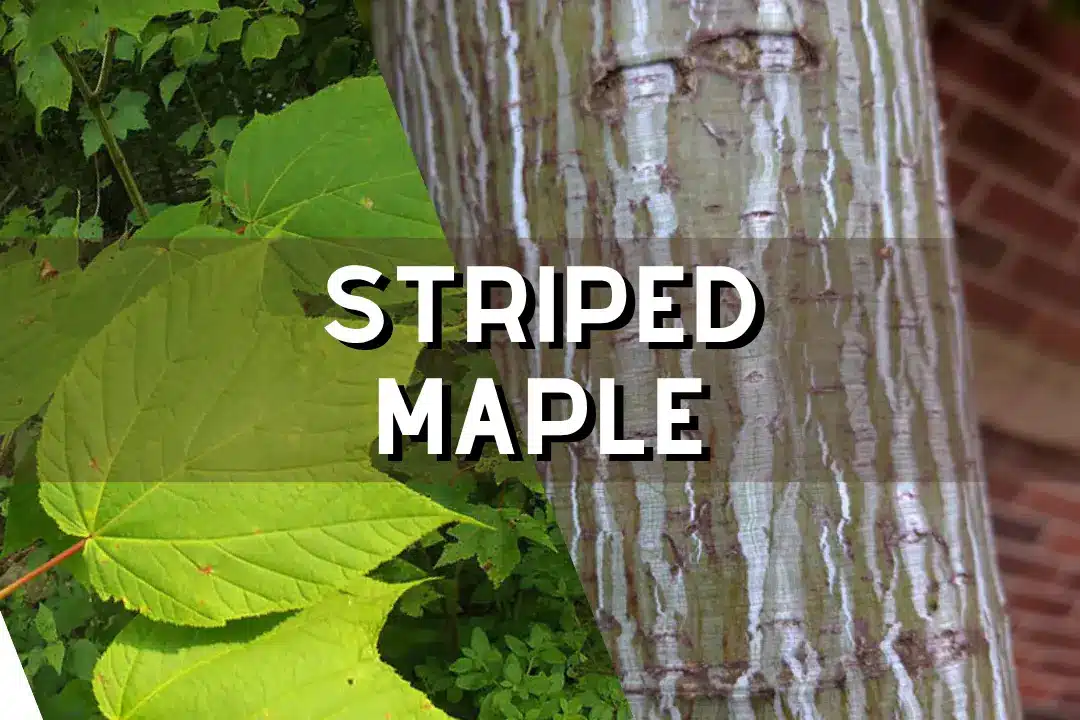
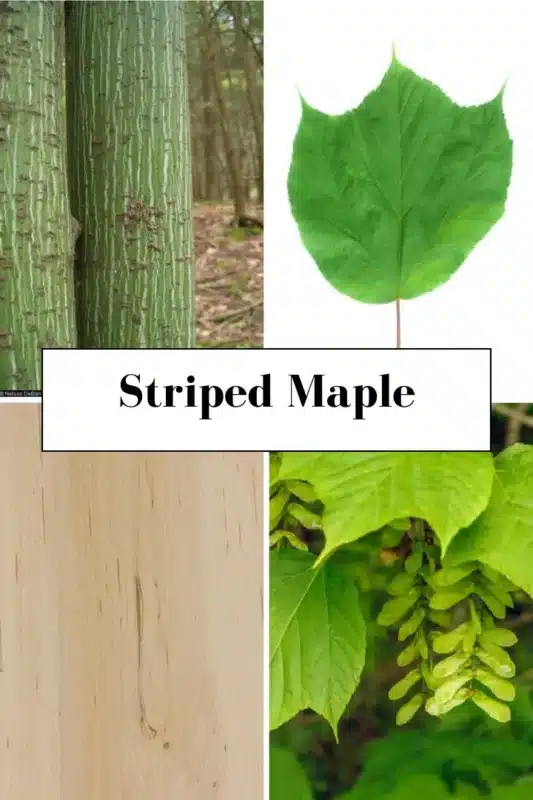
Young bark is smooth, green to greenish brown, and marked by narrow white, silver, or pale-green vertical lines. These are fixed longitudinal markings rather than loose strips of peeling bark.
Age changes the bark pattern. Older trunks become dull gray-brown or reddish brown, fine fissures appear, and the pale lines grow less distinct, so a mature tree shouldn’t be rejected solely because its trunk lacks bright contrast.
Three-Lobed Leaves
A striped maple leaf is usually 4–7 inches long and nearly as broad. It has three prominent lobes, a longer central lobe, sharp fine teeth, a rounded or shallowly heart-shaped base, and a paler underside.
Flowers and Samaras: Small yellow-green flowers hang in loose racemes during spring, often as the leaves open. Pollinated flowers form paired winged samaras that change from green to tan or brown later in the growing season.
Twigs and Buds: Slender twigs range from green to reddish brown. A striped maple bud is small, opposite its partner, and sometimes slightly stalked; opposite branching alone isn’t decisive because ashes, dogwoods, buckeyes, and other maples share it.
Spring and Summer: Look for newly opening three-lobed leaves and pendant flower clusters in spring. Summer foliage forms broad, layered plates in the understory, while striped bark remains visible beneath the leaves and developing samaras.
Fall and Winter: Fall leaves usually turn clear yellow rather than deep red. Winter identification depends on smooth greenish bark, pale vertical stripes, opposite twigs, small buds, and the tree’s position beneath a taller canopy.
Native Range, Habitat, and Ecology
The striped maple native range covers cool parts of eastern North America, from southeastern Canada and the Great Lakes through the Northeast and Appalachian Mountains. Southern populations concentrate at higher elevations, cool slopes, ravines, and sheltered headwaters.
Native Range
Distribution is patchy inside the mapped range. Forest cover, summer temperature, soil moisture, elevation, and browsing pressure explain why the tree can be plentiful in one valley and scarce on a nearby exposed slope.
It’s a native species, not an introduced invasive plant within its eastern North American range. Dense growth after logging, storms, or canopy decline reflects a native response to new light rather than biological invasion.
Forest Habitat
Cool moist woods provide the best habitat, including northern hardwood forests, Appalachian coves, shaded slopes, ravines, and stream-adjacent ground with moving soil water. The roots need moisture and air at the same time; stagnant soil can cause decline.
Canopy Associates: Sugar maple, American beech, yellow birch, eastern hemlock, and red spruce commonly grow above or near striped maple. Readers comparing regional species can use this guide to types of maple trees.
Wildlife Value: The tree supplies browse, low cover, foliage, buds, and occasional seeds rather than a large annual mast crop. Samaras may feed or be moved by birds and small mammals, while clustered stems add structure close to the forest floor.
- Moose and white-tailed deer browse shoots, buds, and foliage.
- Small mammals and birds may eat or move mature samaras.
- Low branches provide cover within the understory.
- Flowers support small spring insects.
- Leaf litter returns organic matter to woodland soil.
Browsing Effects: Repeated feeding removes the leader and produces a short, forked, shrub-like tree. A browsed specimen may stay below head height for years, flower poorly, and develop a form that doesn’t represent unrestricted growth.
Forest Dynamics: Striped maple tolerates shade but responds strongly when a canopy gap supplies extra light. Dense stems can compete with young timber species in managed forests, a forestry concern discussed in the USDA Forest Service species account.
Striped Maple Look-Alikes
The closest look-alikes are separated by bark, lobe number, flower direction, mature size, sap, and geographic origin. Never identify a maple from one damaged leaf, since browsing and shade can distort leaf shape.
Mountain Maple
Mountain maple, Acer spicatum, has coarsely toothed leaves, mostly unstriped bark, upright flower clusters, and a consistently shrubby form. Striped maple has drooping flower racemes and clear vertical bark lines; flower direction is the best spring distinction.
Sugar Maple
Sugar maple, Acer saccharum, becomes a large canopy tree with five main leaf lobes and gray bark that develops furrows and plates. Its trunk, timber, and syrup potential differ greatly from the smaller understory species; see the broader guide to maple wood.
Red Maple: Acer rubrum commonly reaches canopy height and grows across wetter and drier settings. Its three- or five-lobed leaves, twigs, flowers, petioles, and samaras often show red, while its trunk lacks persistent green-and-white striping.
Norway Maple: Acer platanoides has broad five-lobed leaves that release milky sap from a broken petiole. It becomes a large tree, lacks striped green bark, and is invasive in many North American regions; more traits appear in the Norway maple guide.
Korean Striped Maple: Acer tegmentosum is an Asian snakebark maple with similar pale lines on green bark. Check the scientific name on nursery plants and herbal products because “striped maple” can refer to different species in commerce.
| Species | Leaf or flower clue | Bark and mature form |
|---|---|---|
| Striped maple | Broad three-lobed leaf; drooping flowers | Green striped bark; small understory tree |
| Mountain maple | Coarse teeth; upright flower spike | No strong white striping; shrub-like |
| Sugar maple | Five main lobes; deeper sinuses | Gray plated bark; large canopy tree |
| Red maple | Three or five lobes; frequent red tones | Gray bark; medium to large tree |
| Norway maple | Five lobes; milky petiole sap | Gray furrowed bark; large tree |
| Korean striped maple | Snakebark maple traits | Striped bark; Asian origin |
Landscape Suitability and Care
Striped maple suits cool woodland gardens, shaded native plantings, and naturalized sites with moist, aerated soil. It performs poorly as a fast-growing lawn, parking-lot, roadside, or large shade tree.
Suitable Garden Settings
Good settings include north- or east-facing woodland edges, filtered shade beneath high branches, cool courtyards, and protected slopes. Its striped bark, broad foliage, and yellow autumn color suit informal planting better than clipped or highly formal designs.
Real-world field note: A suitable root zone feels cool and springy beneath leaf litter, and a squeezed soil handful holds together without dripping. Trees growing where afternoon sun heats bare soil often show crisp brown leaf edges before nearby canopy trees display stress.
Unsuitable Growing Conditions
Avoid exposed sites with reflected heat, compacted clay, road salt, hot wind, alkaline fill, permanent saturation, or dry sand without irrigation. Deep shade can sustain a tree, but its crown may remain sparse and growth may be barely measurable.
Light and Soil: Partial shade is the safest exposure. Use humus-rich, acidic to slightly acidic soil that drains after rain; test the soil before adding sulfur or other acidifying materials.
Planting and Spacing: Set the root flare level with the finished soil and allow roughly 10–20 feet of crown width. Dig a broad hole no deeper than the root ball, loosen circling roots, and avoid burying the trunk to make a small plant look stable.
Water and Mulch: Water slowly through the full root-ball depth during dry periods. Apply 2–3 inches of shredded leaves or organic mulch over the root zone, leaving several bare inches around the trunk to limit decay and rodent feeding.
Pruning and Form: Remove dead, broken, or rubbing branches with clean tools. Multi-stemmed growth is normal; forcing every plant into a single straight trunk can remove too much foliage and produce a thin, unnatural crown.
Practical rule: Match the cool forest floor rather than the open lawn. Shade without reliable soil moisture becomes dry shade, one of the most common reasons striped maple fails.
Woodland planting observation
Growing Striped Maple From Seed

Striped maple seed often needs warm and cold moist conditioning before it germinates. Empty samaras, old seed, dry storage, and incomplete dormancy treatment can make a sound method appear unsuccessful.
Ethical Seed Collection
Collect tan samaras shortly before natural dispersal and obtain permission on land you don’t own. Don’t collect from protected populations, parks, preserves, or sites where plant removal is prohibited.
Where collection is legal, gather small amounts from several parent trees rather than stripping one crown. Locally sourced seed carries genetic traits shaped by the regional climate, which can matter near the hot or cold edge of the species’ cultivation range.
Viability and Provenance
Check seed quality by opening a sample of samaras. A filled seed contains developed internal tissue; papery, hollow, moldy, or insect-damaged fruits won’t germinate regardless of stratification time.
Warm and Cold Stratification: Warm stratification holds moist seed at moderate temperatures, while cold stratification uses refrigerator-like conditions. Treatment lengths vary by seed lot, and natural outdoor sowing may take two seasonal cycles before seedlings emerge.
Keep the medium moist, not dripping. A sealed mixture that smells sour or feels slimy lacks air; add clean, barely damp medium and remove decayed seed rather than letting rot spread through the batch.
Sowing and Seedlings: Sow in a draining nursery mix and protect the container with rodent-resistant mesh. Give seedlings bright shade, steady moisture, and shelter from hot wind, then acclimate them in stages before planting outdoors.
Buying Seeds: Ask for the collection date, geographic origin, storage history, germination test, and treatment directions. A packet with many old or empty samaras offers poorer value than a smaller, documented lot.

Striped Maple Seed Pack
- Includes 20 striped maple seeds
- Acer pensylvanicum variety
- Great choice for woodland gardens
- Distinctive striped bark as trees mature
- A rewarding project for patient growers
 Buy on Amazon
Common Problems and Troubleshooting
Most striped maple problems begin with site stress rather than an aggressive pest. Diagnose moisture, drainage, planting depth, sun exposure, and browsing before applying fungicide or fertilizer.
Heat and Leaf Scorch
Brown leaf margins, curled tips, premature leaf drop, and sparse new growth point to heat or moisture stress. Afternoon shade, deep irrigation, and a wider mulched root zone help more than frequent light sprinkling.
Drought and Dry Shade
Dry shade occurs where tree roots compete for limited water beneath a canopy. Check moisture several inches below the surface and water slowly beyond the original root ball so new roots move into surrounding soil.
Waterlogged Soil: Wilting while the soil remains wet can signal oxygen-starved roots rather than drought. Raise or relocate the tree, correct blocked drainage, and keep the root flare above grade instead of watering again.
Browsing and Rodents: Deer leave ragged shoot ends and repeatedly remove the central leader. Use a wide physical barrier, keep mulch away from bark, and fit trunk guards loosely so they don’t trap water or girdle expanding stems.
Transplant Shock: Wild-dug trees lose many fine roots and often wilt despite careful watering. Nursery-grown stock establishes more reliably; plant it at its original depth and shade the root zone rather than cutting back a healthy crown heavily.
Pests and Diseases: Possible issues include leaf spots, anthracnose-like injury, cankers, root rot, and Verticillium wilt. Late-season spotting may be cosmetic, while expanding cankers, branch death, or repeated wilt call for diagnosis through a regional extension laboratory.
Germination Failure: Common causes include hollow samaras, old seed, complete drying, saturated stratification medium, insufficient seasonal conditioning, and rodents. Label pots with the sowing date and retain protected containers through another seasonal cycle before discarding them.
Uses, Safety, and Resources
Striped maple has ornamental, ecological, and educational value, but limited use for timber or syrup. Its small trunk and shade-grown form make sap collection inefficient, while unsupported edible or medicinal claims create avoidable risk.
Tapping and Syrup
Striped maple can produce sap, yet mature trunks are often too small for responsible tapping and yields aren’t practical for commercial striped maple syrup. Sugar maple remains the standard syrup tree because it develops a larger trunk and supplies suitable sap at useful scale.
Edibility and Medicinal Claims
Don’t assume all plant parts are edible because the species belongs to the maple genus. Reliable evidence for striped maple medicinal uses is limited, and products called Korean striped maple may contain Acer tegmentosum, not Acer pensylvanicum.
For suspected ingestion, contact Poison Control or a veterinarian rather than relying on a general maple description. Toxicity reports for red maple, Norway maple, or another species can’t automatically be assigned to striped maple.
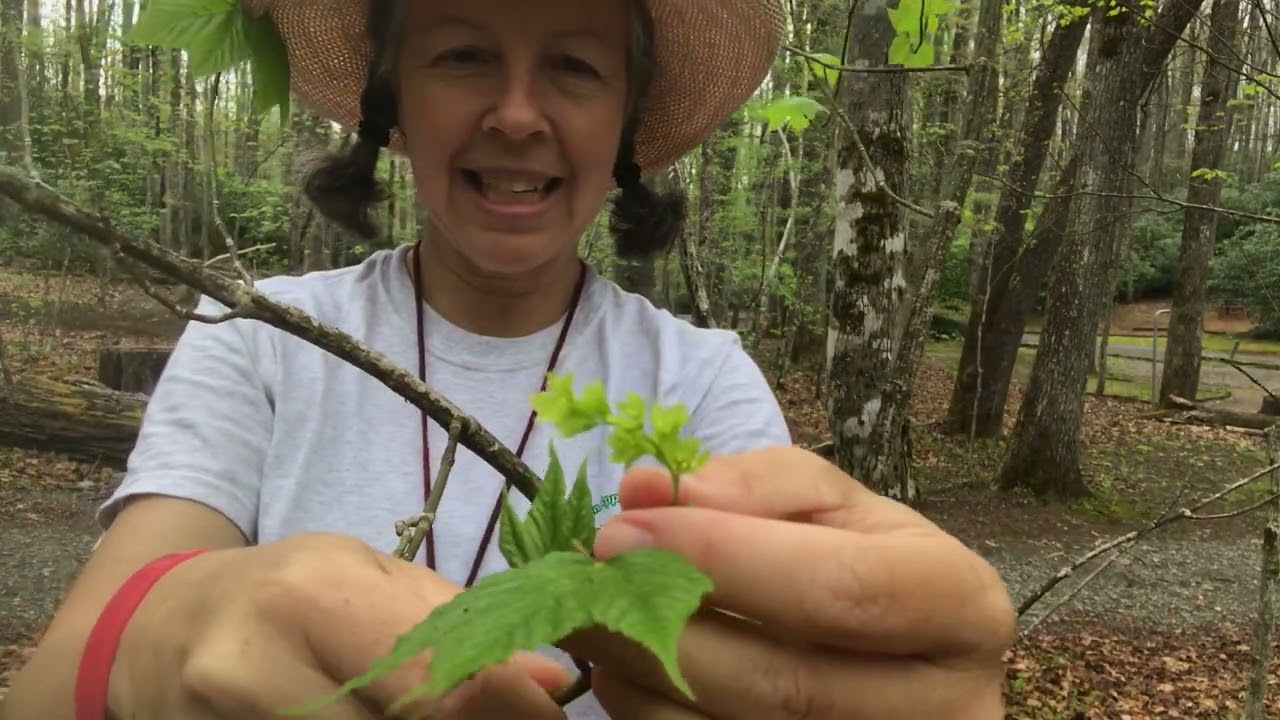
Verifying Plant Identity: Photograph the whole plant, young and old bark, both leaf surfaces, flowers, fruit, twig arrangement, and buds. Record location and habitat, then compare those features with a regional flora or authenticated herbarium specimen.
Identification References: A useful maple guide should show bark at several ages, leaf arrangement, flowers, samaras, winter buds, native ranges, and similar snakebark species. The NC State Extension Plant Toolbox offers photographs and cultivation details for cross-checking an identification.

Illustrated Maples Guide
- Illustrated resource focused on maples
- Helps identify different maple varieties
- Useful reference for gardeners
- Visual format supports easy learning
- Great addition to nature book collections
Buy on Amazon
FAQs
Is Striped Maple Rare Or Invasive?
Striped maple is neither rare nor invasive in its native eastern North American range. It is a common understory tree in cool, moist forests and can spread naturally by seed. Outside its native range, it is not generally considered an aggressive invasive species.
Can Striped Maple Grow In Full Sun?
Striped maple can grow in full sun, but it performs best in partial shade or filtered woodland light. Young trees may struggle with hot, dry exposure and can develop scorched leaves. Provide consistently moist, well-drained soil if planting it in a sunnier location.
Why Is Striped Maple Called Moosewood?
Striped maple is called moosewood because moose commonly browse its twigs, leaves, and bark. The name is especially common in northeastern forests where the tree is an important food source for wildlife. Its distinctive green-and-white striped bark also makes it easy to recognize.
How Is Striped Maple Different From Mountain Maple?
Striped maple has smooth green bark with pale vertical stripes, while mountain maple usually has plain reddish-brown or gray bark. Striped maple also tends to have larger leaves and grows as a small tree. Mountain maple is often a smaller, multi-stemmed shrub found in cooler woods.
How Long Do Striped Maple Seeds Take To Germinate?
Striped maple seeds usually germinate in spring after spending one winter in cold, moist conditions. Fresh seeds often need about 90 to 120 days of cold stratification before they will sprout. Once properly chilled and planted, germination may take several weeks as temperatures warm.
Affiliate Disclosure: Some links in this post are affiliate links. If you make a purchase through these links, we may earn a small commission at no extra cost to you. We only recommend products we genuinely believe in.