

Shittim wood is the biblical name for wood from an acacia-type tree, probably Vachellia seyal, Vachellia tortilis, or another regional species. Exodus prescribes it for the Ark of the Covenant, Tabernacle frames, tables, altars, crossbars, and carrying poles, but the exact tree remains uncertain.
Table of Contents
What Is Shittim Wood?
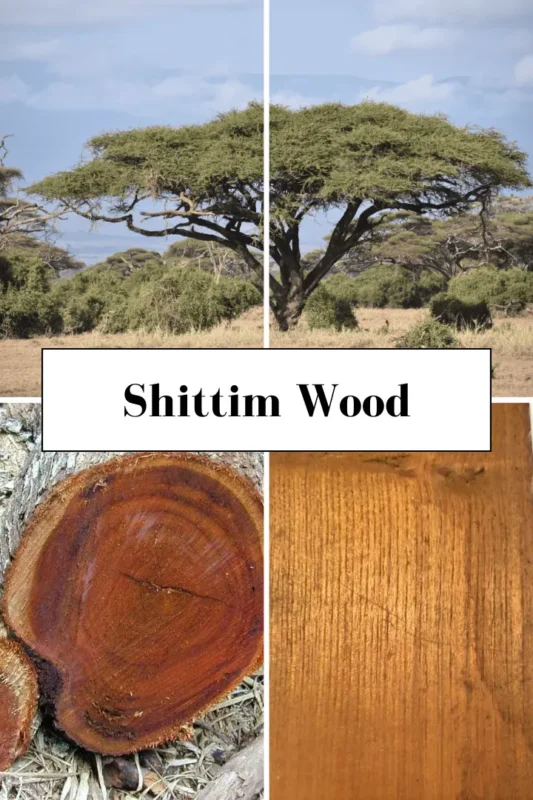
Shittim wood is a biblical hardwood identified broadly with acacia. Older English Bibles retain “shittim,” while many modern translations use “acacia wood.” Spellings such as shittam, shitim, shittum, shittem, and shittom usually reflect misspellings or variations of the same biblical term.
The Short Answer
If you’re asking what is shittim wood in Exodus, the safest answer is wood obtained from one or more thorny acacia species growing in northeastern Africa, Sinai, or nearby dry regions. Calling it acacia is sound; assigning it to one proven species isn’t.
Shittah, Shittim, and Acacia
Shittah is singular, while shittim is commonly explained as its plural form. The Hebrew word refers to acacia trees or their wood, depending on context. The King James Version uses “shittim wood”; translations such as the NIV and ESV commonly say “acacia wood.”
Shittim and Abel-shittim. Shittim also names a biblical location, and Abel-shittim means a place associated with acacias. A place called Shittim isn’t a timber species; its name probably reflects trees growing in that area.
Is it acacia wood? Broadly, yes. Yet “acacia” covers many trees with different densities, grain patterns, and native ranges. A modern plantation-grown acacia dining table can be genuine acacia without being the species that supplied biblical shittim wood. Our guide to acacia wood explains this wider commercial group.
Which Tree Produced Shittim Wood?
The exact shittim tree hasn’t been proven. Vachellia seyal and Vachellia tortilis are leading candidates because both belong to the acacia group and grow in dry regions connected with the biblical setting.
Vachellia Seyal
Vachellia seyal, formerly Acacia seyal, is often called red acacia. It grows across dry parts of Africa and into portions of the Middle East. Its distribution, usable wood, and long association with the name “shittim tree” make it a credible candidate, but those points don’t amount to certain identification.
Vachellia Tortilis
Vachellia tortilis, formerly Acacia tortilis, is the umbrella thorn. It survives intense heat, low rainfall, and poor soils. Its trunk and branches often twist, though, which raises a practical problem: obtaining the long, straight members described for the Tabernacle would require careful tree selection, jointed construction, or a broader interpretation of “boards.”
Taxonomy and older names. Botanical reclassification moved many African and Middle Eastern acacias into Vachellia. Retailers, seed sellers, and older books still use the former names. The accepted names and recorded synonyms can be checked through Kew’s Plants of the World Online.
| Traditional or older name | Current name | Common name | Biblical identification |
|---|---|---|---|
| Shittah or shittim | No single proven species | Biblical acacia | Broad material name |
| Acacia seyal | Vachellia seyal | Red acacia | Leading candidate |
| Acacia tortilis | Vachellia tortilis | Umbrella thorn | Leading candidate |
Why identification remains uncertain. Ancient common names don’t map cleanly to modern botanical classifications. Exodus supplies no leaves, flowers, seed pods, bark description, or preserved sample for testing. Several suitable acacia-type trees also grew across the relevant region, so “one or more regional acacias” remains the most defensible wording.
Shittim Wood Characteristics: Bible and Botany

The main shittim wood characteristics are inferred from candidate acacias, not listed as a technical specification in the Bible. These woods can be dense, strong, visually warm, and difficult to dry, but their properties change with species, tree age, growing site, and moisture level.
Strength and Density
Acacia-type timber can provide good structural strength for chests, tables, poles, and joined frames. Still, a Janka number copied from an Asian furniture species can’t describe V. seyal or V. tortilis. Density must be tied to the scientific name and test conditions; see how those variables affect the density of wood.
Durability and Insect Resistance
Some acacia heartwoods show useful natural durability, yet no wood is indestructible or completely insect-proof. Heartwood and pale sapwood can behave differently. Ground contact, repeated wetting, fungal exposure, and sapwood-boring insects can still damage an untreated piece.
Color, grain, and appearance. What does shittim wood look like? Candidate acacia woods may show tan, amber, reddish-brown, or deeper brown heartwood beside lighter sapwood. Grain can be interlocked, wavy, or irregular. Color and figure alone can’t authenticate it because mesquite, locust, and many tropical hardwoods can look similar.
Workability and drying. A sharp plane can leave dense acacia smooth and faintly lustrous, but reversing grain may tear into rough, fuzzy pockets. On a lathe, a dry blank cuts with a crisp hiss; an unchecked end can open into a sharp hairline split as pressure and heat build.
In real shop use, drying defects create more trouble than hardness. Beginners often turn a waxed blank without checking its center moisture, then watch a finished pen barrel shrink away from its metal fittings. Let sealed stock acclimate, remove material in stages, and use freshly sharpened cutters rather than forcing a dull edge.
Desert suitability. Candidate trees tolerate heat, seasonal drought, and poor soils through adaptations of the living tree. That doesn’t make sawn timber immune to water. It does make regional availability a sensible explanation for use in a portable sanctuary built within an arid setting.
Shittim Wood in the Bible
Shittim in the Bible appears most prominently throughout Exodus 25–38. The material forms wooden cores and structural parts for the Ark, table, altars, frames, crossbars, and poles; gold or bronze hides much of the wood in the completed furnishings.
Ark and Carrying Poles
Exodus 25:10–15 prescribes acacia wood for the Ark and its poles. The chest measures 2.5 cubits long by 1.5 cubits wide and high. With an 18-inch cubit, that equals roughly 45 by 27 by 27 inches, or 114 by 68.6 by 68.6 centimeters.
The Ark received gold overlay inside and outside, and its poles were also gold-covered. Exodus describes the mercy seat separately as pure gold. Treating the chest and mercy seat as one solid-gold object misses this construction distinction.
Bread of the Presence Table
Exodus 25:23–28 gives the table dimensions as 2 by 1 cubits and 1.5 cubits high. Using the same conventional cubit produces about 36 by 18 by 27 inches, or 91.4 by 45.7 by 68.6 centimeters. Gold covered both the table and its acacia carrying poles.
Tabernacle frames and crossbars. Exodus 26 assigns acacia wood to upright frames or boards and crossbars. Each primary member is described as 10 cubits long and 1.5 cubits wide—about 15 feet by 27 inches under the 18-inch conversion. Translation and reconstruction affect whether readers picture broad solid planks or framed structural members.
Bronze altar. Exodus 27:1–8 describes a hollow acacia structure five cubits square and three cubits high, approximately 7.5 by 7.5 by 4.5 feet. Bronze overlay and a bronze grating separated the wooden core from direct sacrificial use, so drawings of exposed timber beside the fire misread the stated design.
Incense altar. Exodus 30:1–5 specifies a one-cubit-square acacia altar standing two cubits high. That converts to about 18 by 18 by 36 inches. It had gold overlay, a gold molding, rings, and gold-covered acacia poles.
| Biblical object | Passage | Wood use | Metal covering |
|---|---|---|---|
| Ark and poles | Exodus 25:10–15 | Chest and carrying poles | Gold |
| Bread table | Exodus 25:23–28 | Table and poles | Gold |
| Tabernacle | Exodus 26:15–30 | Frames and crossbars | Gold on stated parts |
| Bronze altar | Exodus 27:1–8 | Hollow structure and poles | Bronze |
| Incense altar | Exodus 30:1–5 | Altar and poles | Gold |
Cubit dimensions and reconstructions. A cubit wasn’t one universal fixed length. The 18-inch or 45.7-centimeter conversion helps readers picture scale, but reconstructions using a longer royal cubit produce larger objects. Converted measurements should always be labeled approximate.

Why Was Shittim Wood Used?
Exodus commands the use of shittim wood but doesn’t state why it was chosen. Regional availability, useful strength, workable joinery, and compatibility with metal overlay are sound material inferences; symbolic explanations belong to later interpretation.
Practical Material Considerations
A portable sanctuary needed strong wooden cores that could hold rings, poles, tenons, and repeated assembly. Dense acacia can serve that role, yet weight creates a trade-off. Greater density improves wear resistance while making large furnishings harder to carry, especially after metal overlay is added.
Gold and Bronze Overlays
Gold covered objects associated with the sacred interior, while bronze covered the outer altar. These metal skins controlled the visible surface and offered some protection, though seams, fasteners, and movement between wood and metal would still matter in a physical reconstruction.
Text, inference, or tradition? Separating those categories prevents confident-sounding claims from outrunning the evidence. The following distinctions are useful when reading descriptions of shittim wood characteristics in Bible commentaries:
- Text: Exodus prescribes acacia or shittim wood for named objects.
- Inference: Regional supply and mechanical strength may have influenced selection.
- Tradition: Wood represents humanity while gold represents divinity.
- Unsupported claim: Shittim wood never rots and no insect can attack it.
Symbolic interpretations. Some Christian readings connect wood with Christ’s humanity, gold with divinity, and durable timber with incorruptibility. These can carry theological meaning within that tradition, but Exodus doesn’t explicitly assign those symbols. Jewish, Christian, historical, and material readings shouldn’t be blended into one claimed fact.
The strongest explanation distinguishes what Exodus says, what the material makes plausible, and what later readers see symbolically.
Editorial synthesis
Shittim Wood Today: Sales, Seeds, and Price
Candidate acacia trees still exist today, and small blanks or seeds are sometimes sold under the shittim name. A modern listing rarely proves that its material matches the exact ancient species, population, or harvest area.
Does It Still Exist?
Living Vachellia seyal, Vachellia tortilis, and related acacias survive across their native ranges. What doesn’t ordinarily exist is authenticated Tabernacle timber with a documented chain from an ancient Israelite source. Modern wood can match a proposed species without proving historical identity.
Modern Names and Authentication
Search both current and older names: Vachellia seyal, Acacia seyal, red acacia, Vachellia tortilis, and Acacia tortilis. “Shittim” on its own may function as a devotional product label rather than a verified botanical identification.
Shittim wood for sale. Buyers most often find pen blanks, small turning blocks, souvenir pieces, and seeds rather than standardized boards. Generic acacia flooring or furniture usually comes from other commercial species. Ask for the Latin name before treating any listing as a candidate biblical wood.
Seeds and growing considerations. Acacia-type seeds commonly have hard coats and may need species-specific scarification or hot-water treatment. Verify climate needs, frost tolerance, mature size, seed origin, and local restrictions. Dry-climate trees can become invasive outside their natural range, so check regional rules before planting.
Authenticity and sourcing checklist. A trustworthy seller should answer practical questions rather than repeating “wood of the Ark.” Before buying, request:
- The complete scientific species name and any synonym used.
- Country and region of harvest or seed collection.
- Legal harvest, export, or sustainability records where required.
- Exact dimensions rather than “standard pen blank.”
- Air-dried or kiln-dried condition and measured moisture content.
- Photos of every face and the end grain.
- Disclosure of checks, knots, bark, wormholes, and waxed ends.
- A return policy for splits hidden beneath sealing wax.
Shittim wood price. There’s no dependable universal price because the market lacks a standardized commodity grade. Compare price per blank for turning stock, per board foot for lumber, or per square foot for panels. Add shipping, import charges, wastage, and the usable volume lost to checks.
A short pen blank can appear inexpensive while carrying a very high board-foot cost. Species documentation and clean, dry stock justify some premium; a religious description without provenance doesn’t. Compare delivered usable volume, not the seller’s headline price.
Relevant craft listing. The product below is an example of how specialty turning stock is marketed. Its seller-supplied title isn’t independent proof of species or biblical origin, so confirm dimensions, moisture condition, scientific name, and harvest location before purchase.

Bethlehem Shittim Pen Blanks
- Made for custom pen turning
- Natural shittim wood character
- Ideal for woodcraft projects
- Easy size for pen makers
- Creates meaningful handmade gifts
 Buy on Amazon
Shittim Wood Furniture

Shittim wood furniture can refer to biblical furnishings made with acacia cores, but most modern “acacia furniture” isn’t authenticated shittim. Modern performance depends more on the exact species, drying quality, joinery, finish, and exposure than on the broad acacia label.
Biblical Furniture
The clearest example is the Bread of the Presence table in Exodus 25. The Ark can also be described physically as a portable sacred chest, though it wasn’t household storage. Both differed from modern solid-wood furniture because gold covered their wooden cores.
Modern Acacia Furniture
Commercial acacia furniture may use plantation-grown species from Asia, Australia, Africa, or the Americas. Those woods can offer warm color and strength, yet the shared common name doesn’t establish a link to V. seyal or V. tortilis. Compare it with other choices in our guide to outdoor furniture wood.
Species and marketing claims. Beginners often buy a table described only as “solid acacia” and assume every component uses one species. Manufacturers may combine finger-jointed strips, sapwood, heartwood, veneers, and engineered panels. Request a species declaration and construction details if botanical identity matters.
Care and maintenance. Keep indoor acacia away from standing water, heating vents, and sharp humidity swings. Wipe spills with a soft cloth rather than soaking the surface. Outdoor pieces need finish renewal based on exposure; sheltered furniture lasts longer than a piece left through wet winters and full summer sun.
Use food-safe finishes for cutting boards or serving pieces, and follow the finish maker’s curing instructions. Don’t assume cooking oil is a suitable treatment: some oils turn sticky or rancid. For tables, test cleaners beneath the top because alcohol and alkaline sprays can cloud or soften certain coatings.
FAQs
What Is Shittim Wood In Exodus?
Shittim wood in Exodus is the durable wood used to build sacred items for Israel’s tabernacle, including the ark of the covenant. It is generally understood to refer to acacia wood from the Sinai and desert regions. The wood was often overlaid with gold for important furnishings.
Is Shittim Wood The Same As Acacia Wood?
Yes, shittim wood is widely identified as acacia wood in most Bible translations and scholarly references. The Hebrew term likely describes one or more local acacia species rather than a single exact modern tree. Acacia was valued because it grows in dry areas and produces tough, dense timber.
What Does Shittim Wood Look Like?
Shittim wood likely looks like the wood of desert acacia trees, with a warm brown to reddish-brown color and a close, often irregular grain. The trees themselves are usually thorny, spreading, and small to medium in size. Finished acacia wood can appear rich and polished, especially when oiled or sealed.
Does Shittim Wood Still Exist Today?
Yes, the acacia trees commonly associated with shittim wood still exist today in the Middle East, Africa, and other dry climates. Several species may fit the biblical description, including Acacia tortilis and Acacia seyal. Modern acacia lumber is also sold worldwide for furniture, flooring, and decorative woodworking.
How Much Does Shittim Wood Cost?
Shittim wood does not have one fixed price because it is usually sold today as acacia wood and varies by species, grade, and location. Small boards and craft pieces may be affordable, while kiln-dried furniture-grade lumber costs more. Check local hardwood suppliers for current prices and availability.
Affiliate Disclosure: Some links in this post are affiliate links. If you make a purchase through these links, we may earn a small commission at no extra cost to you. We only recommend products we genuinely believe in.