
Medium Density Overlay Plywood Guide: Uses, Costs, and Buying Tips

Table of Contents
Medium density overlay plywood, or MDO plywood, is a plywood panel with a smooth resin-impregnated fiber overlay bonded to one or both faces. It’s used for painted outdoor signs, concrete forms, cabinets, exterior panels, and shop fixtures because it paints cleaner than standard plywood and handles moisture better than MDF when sealed.
What Medium Density Overlay Plywood Is
MDO definition
MDO plywood stands for medium density overlay plywood. The panel starts as plywood, then a resin-treated fiber sheet gets pressed onto the face so the surface feels smoother, flatter, and less grainy than regular construction plywood.
The overlay is the feature that makes MDO useful. Standard plywood can show face grain, checks, knots, patches, and open pores through paint, while MDO gives primer a more even base and cuts down on the “wood grain shadow” that often appears after a few wet-dry cycles outdoors.
In hand, a good MDO face feels firm and slightly paper-smooth, almost like a dense primed panel before primer goes on. When you cut it, the edge gives off the familiar dry plywood smell with a faint resin note, and the sawdust feels finer near the overlay than it does in the core.
APA describes overlaid plywood as plywood with resin-treated fiber surfaces used for signs, siding-like panels, concrete forms, and other applications that need a smoother working face; see APA overlaid panels for industry terminology.
MDO vs MDF confusion
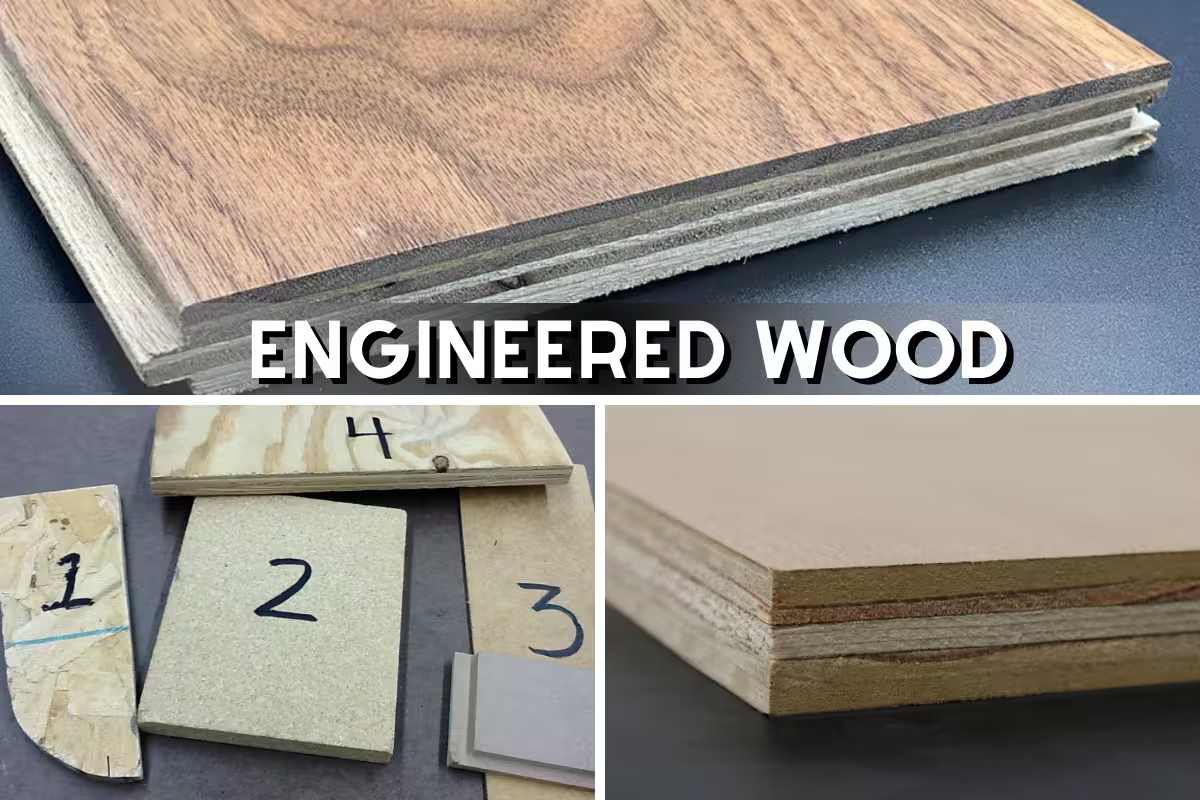
MDO isn’t MDF. MDO is plywood with veneer plies inside and a resin-impregnated overlay outside; MDF is medium density fiberboard, a compressed fiber panel with no plywood veneer core.
The confusion comes from the words “medium density.” In MDO, that phrase describes the overlay surface; in MDF, it describes the entire fiberboard panel, so the two materials act very differently around screws, water, edges, and long spans.
Beginner mistake: buying MDF for an outdoor painted sign because it feels smooth in the store. MDF edges swell fast outdoors, while exterior-rated MDO can work well outside if the edges, backs, cuts, and holes are sealed before installation.
Key facts
- MDO plywood has a plywood veneer core, not a fiberboard core.
- The face uses a resin-impregnated fiber overlay for a smoother paint surface.
- One-side and two-side MDO panels are both sold.
- Exterior-rated MDO still needs edge sealing for outdoor use.
- Best uses include outdoor signs, concrete forms, painted cabinets, soffits, and shop jigs.
- A 4×8 sheet covers 32 square feet.
The short rule is simple: choose MDO when you need paintable plywood with a smoother face than standard plywood and better damp-location toughness than MDF. Skip it when you need a clear wood-grain finish, permanent water exposure, or the lowest sheet price.
Common panel sizes
Most MDO sheets come in 4 ft x 8 ft panels, which gives 32 square feet of coverage. Some suppliers can order 4 ft x 10 ft, 4 ft x 12 ft, and specialty formats, but oversized sheets need better handling because long panels flex, dent corners, and chip edges more easily during loading.
Odd-size projects, such as a 6ft by 6ft plywood sign face, usually get cut from larger stock rather than bought as a square panel. Plan cuts so the factory edge becomes the most exposed edge, since it’s often cleaner and easier to seal than a rough field-cut edge.
For broader sizing, compare MDO against standard sheet formats in our guide to plywood dimensions. It helps when you’re laying out signs, soffits, cabinet sides, or CNC blanks from full 4×8 panels.
Common thicknesses
Common thicknesses include 3/8 in, 1/2 in, 5/8 in, 3/4 in, and sometimes 1 in through specialty suppliers. Some buyers also compare MDO with 7/16 plywood, but that thinner sheathing-style size usually isn’t the first pick for smooth painted signs or large unsupported panels.
For signs, 1/2 in works for smaller supported panels, while 3/4 in feels stiffer and safer for larger signs or panels mounted between posts. For concrete forms, 3/4 in is common, but the form design, stud spacing, wet concrete pressure, and panel rating matter more than thickness alone.
How MDO Plywood Is Made

Plywood veneer core
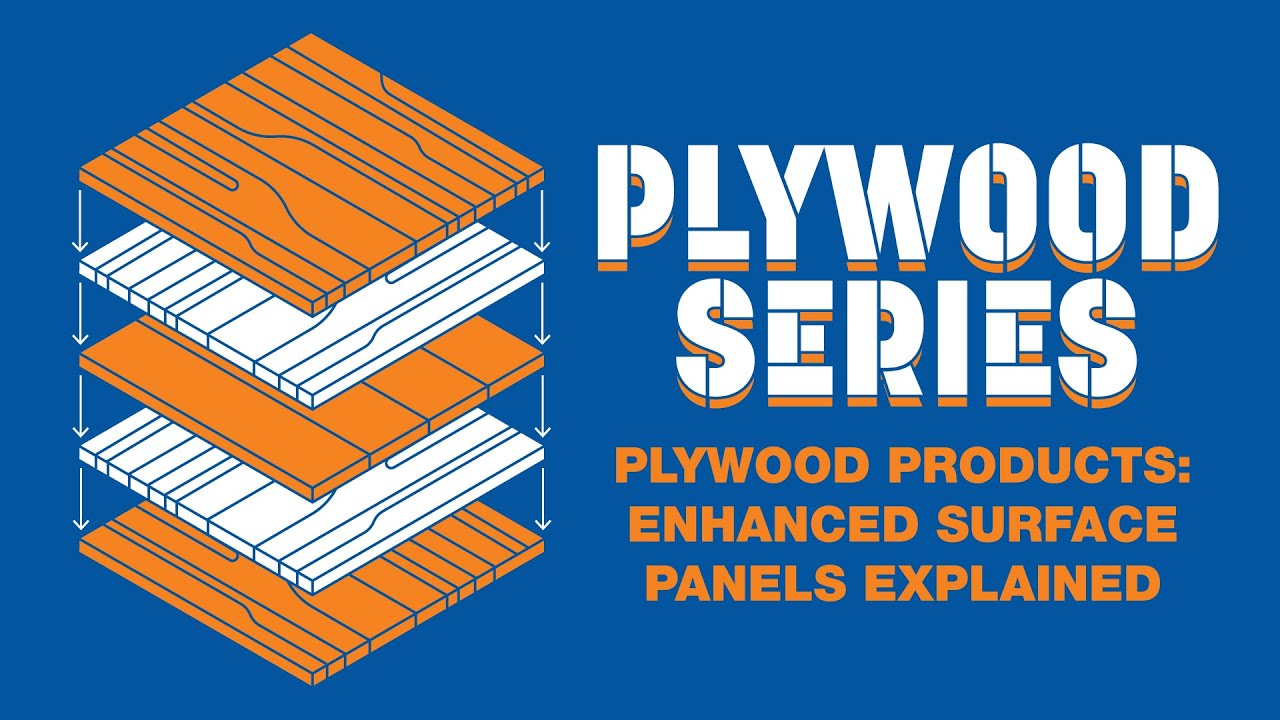
The core is built from thin wood veneers laid with alternating grain direction. This cross-laminated structure helps the sheet resist splitting, improves screw holding compared with MDF, and reduces the wide seasonal movement you’d see in solid boards.
Core species vary by manufacturer and region. Douglas-fir, western larch, Southern Pine, hardwood, and imported veneer cores all show up in the market, and each one changes weight, stiffness, fastener feel, and edge quality.
A clean edge tells you a lot. When the veneer stack has voids or crushed layers, screws can wander, routed edges fuzz, and paint can sink unevenly along exposed plies, so inspect the edge before buying for signs or cabinetry.
Resin overlay
The resin overlay is a fiber sheet impregnated with resin and bonded to the plywood under heat and pressure. It reduces surface checking, hides some veneer grain, and gives primer a more uniform grip than raw plywood face veneer.
Don’t oversand the face. Light scuffing can help paint, but aggressive sanding cuts through the overlay and leaves a patch that drinks primer differently; under glossy paint, that damaged spot can look like a dull bruise.
Exterior adhesive bond
Exterior bond refers to the glue line between plywood veneers. Many MDO panels use exterior-grade adhesive, but Exterior bond does not mean the panel is maintenance-free or waterproof at the edges.
Water enters through raw edges, screw holes, saw cuts, routed letters, unsealed backs, and damaged overlay. The face may look perfect while the edge swells, pushes paint open, and starts the failure from the perimeter inward.
One-sided vs two-sided
One-sided MDO has overlay on one face and costs less in many yards. It works well for wall panels, cabinet backs, one-face signs, and surfaces where only the visible side needs a smooth painted finish.
Two-sided MDO has overlay on both faces. Use it for double-sided signs, exposed partitions, panels handled from both sides, and jobs where balanced coating can help reduce cupping after weather cycles.
Standards, Grades, and Stamp Terms
APA and PS 1
Grade stamps matter because smooth plywood isn’t always real MDO. Look for manufacturer markings, thickness, exposure classification, overlay side count, grade, and standard references before using a panel for exterior signs, formwork, or structural assemblies.
PS 1 is a structural plywood product standard used for many plywood panels in North America. The PS 1-19 Structural Plywood document defines requirements tied to plywood manufacture, grading, bond performance, and related panel properties.
For grading basics, it helps to compare MDO stamp terms with standard veneer and exposure language in our guide to plywood grades. That background makes supplier labels much easier to read.
Exterior vs Exposure 1
Exterior panels use a bond meant for repeated wetting and drying, but the wood still needs coating, sealing, drainage, and routine inspection outdoors. Think of Exterior as a glue-bond classification, not a free pass to leave raw cuts exposed.
Exposure 1 panels can handle short construction moisture, such as jobsite rain before enclosure. They aren’t the same as finished exterior panels that can sit through years of sun, freeze-thaw cycles, and wind-driven rain without a full coating system.
Plyform panels
Plyform means the plywood is intended for concrete forming. MDO Plyform can give a smoother concrete face than rough sheathing, but the reuse count depends on release agent, stripping method, cleaning, storage, and how gently crews handle the corners.
Beginner mistake: using sign-grade MDO for concrete forms just because the face feels smooth. Concrete pressure, alkaline moisture, vibration, and stripping abuse punish panels, so ask for form-rated MDO or manufacturer guidance before pouring.
Structural I rating
Structural I indicates higher structural performance for specified uses. Don’t assume every MDO sheet carries that rating, because some panels are made for paint-grade faces, signage, or forms rather than engineered structural spans.
For load-bearing work, match the panel stamp and technical sheet to the design. If the panel becomes part of a roof, floor, shear wall, platform, or engineered sign frame, the rating matters more than the smooth overlay.
Buyer verification
- Confirm MDO wording, not just “paint-grade plywood.”
- Check the stamp for grade, thickness, exposure class, and standard references.
- Ask side count: one-sided or two-sided overlay.
- Match use: sign, form, cabinet, exterior panel, jig, or fixture.
- Inspect edges for voids, crushing, stains, and delamination.
- Request data if structural rating, emissions compliance, or form reuse matters.
The workaround for uncertain stock is simple: ask the yard for the manufacturer’s product sheet before you pay. If staff can’t identify overlay type, bond class, or intended use, treat the panel as unknown material and don’t spec it for outdoor signs or concrete forms.
Best Uses for MDO Plywood
Outdoor signs
Outdoor signs are one of the best-known MDO plywood uses. The smooth face takes primer and paint better than raw plywood, the core holds screws better than MDF, and the panel stays flatter than many solid boards when mounted with proper support.
For sign work, two-sided MDO is the safer pick when both faces are visible. Seal the edges before painting, seal every drilled hole before hardware goes in, and avoid sign designs that leave the top edge flat like a rain shelf.
Best plywood for outdoor signs often means exterior-rated MDO, not cheap sheathing. CDX can work for rough temporary boards, but the face grain, patches, and checks often show through paint after sun and rain hit the panel.
Concrete forms
MDO concrete forms can leave a smoother concrete surface than rough plywood when the panel is form-rated and treated with compatible release agent. The overlay resists some face wear, but careless stripping with pry bars can gouge it in one pour.
Reuse count varies widely. Clean panels while the concrete paste is still manageable, stack them flat, keep edges off wet ground, and never let dried concrete crust scrape across the face like sandpaper.
Cabinets and furniture
Paint-grade cabinets can benefit from MDO because the face needs less filling than standard plywood. It’s a practical choice for cabinet sides, painted shelving, utility furniture, shop cabinets, and built-ins where a painted finish matters more than decorative veneer.
The edges still show plywood plies, so plan banding, filler, solid edging, or a sealed painted edge. For refined cabinet interiors, compare MDO with cabinet-grade plywood, which may offer better veneer appearance and cleaner cores.
Exterior panels and soffits
Exterior MDO works for painted soffits, utility panels, agricultural panels, and smooth exterior inserts when the assembly sheds water. The best plywood for soffit work depends on ventilation, overhang exposure, fastening pattern, and paint schedule.
Don’t trap water behind MDO panels. Leave drainage paths, prime the back where exposure is possible, use compatible caulk at joints, and avoid mounting panels tight against masonry or damp framing with no air gap.
Shop jigs and CNC
Shop jigs benefit from MDO’s smooth face and plywood core. Router templates slide nicely, pencil marks show clearly, and the panel doesn’t fuzz as badly as MDF in humid shops if the edges are sealed.
For CNC work, MDO can make good fixtures, painted work panels, and repeat-use templates. If you need a harder slick surface for abrasion, compare it with phenolic panels or Baltic birch plywood for dense cores and cleaner machining.
Practical Notes From Real-World Use
Real shop use shows the same pattern again and again: the face usually outlasts the edge. A sign panel can look glossy and solid on the front while the bottom corner feels soft, swollen, and slightly spongy because water wicked through an unsealed saw cut.
The pro workaround is to seal twice before final paint: one coat to soak the edge, then a second coat after light sanding knocks down raised fibers. On routed letters or CNC pockets, brush sealer into the cut before paint because spray primer often bridges the surface and leaves dry wood inside the groove.
MDO Plywood Pros and Cons
Advantages
MDO advantages start with its paint surface. It reduces grain telegraphing, accepts primer evenly, holds fasteners better than MDF in many builds, and gives exterior projects a stronger core than fiberboard when the panel is properly rated and sealed.
- Smooth face for painted signs and panels.
- Plywood core for better screw holding than MDF.
- Exterior potential when the bond, coating, and sealing details match the job.
- Stable sheet format for cabinets, fixtures, soffits, and sign blanks.
- One-side options can reduce cost when only one face shows.
- Two-side options work better for double-sided signs and balanced finishing.
Disadvantages
MDO disadvantages show up at the edges, in the price, and in sourcing. It costs more than common sheathing, it isn’t meant for clear finishes, and raw edges can swell outdoors if the installer treats the overlay face as the only surface that needs protection.
- Higher cost than CDX or many standard plywood panels.
- Moisture risk at unsealed edges, cuts, and fastener holes.
- No decorative grain for clear-coated furniture work.
- Limited stock at some home centers and rural yards.
- Wrong-grade risk if sign-grade panels get used for forms or structural work.
- Handling weight can be tiring in 3/4 in 4×8 sheets.
Best-fit projects
Best-fit projects need a painted surface, sheet stability, and moderate moisture resistance. MDO fits exterior signs, painted cabinet parts, soffit panels, utility panels, stage scenery, templates, and selected concrete forms when the rating matches the use.
The decision often comes down to finish quality versus cost. If standard plywood needs heavy filling and sanding before paint, MDO can save labor and look better; if the project is hidden framing, the overlay gives no real benefit.
When to avoid MDO
Avoid MDO for permanent submersion, ground contact, unsealed outdoor edges, boat hulls without a qualified specification, and high-reuse concrete forming where HDO or phenolic film-faced plywood is the better tool.
Skip MDO for clear wood finishes too. The overlay is a functional paint surface, not a maple, birch, oak, or walnut veneer, so it won’t give the warmth or grain figure expected in clear-coated furniture.
MDO Plywood Comparisons
MDO vs MDF
MDO plywood vs MDF is the comparison that causes the most buying errors. MDO has plywood plies and a resin overlay; MDF is a uniform fiberboard panel that machines smoothly indoors but performs poorly in wet edges and unsupported exterior uses.
Choose MDO for exterior painted panels, outdoor signs, screw-mounted parts, and damp shops. Choose MDF for dry indoor painted trim, routed cabinet doors, low-cost prototypes, and surfaces that won’t see weather or repeated moisture.
For fiberboard alternatives, compare the core behavior with high-density fiberboard. It helps explain why fiber panels can feel smooth yet still fail differently from plywood around edges and fasteners.
MDO vs HDO
MDO vs HDO comes down to overlay density and resin content. HDO, or high density overlay plywood, usually has a harder, more resin-rich surface that resists abrasion and concrete-form wear better than MDO.
MDO paints more easily in many sign and panel jobs because its face isn’t as slick. HDO often wins for high-wear forms, industrial fixtures, and surfaces where release and abrasion resistance matter more than paint adhesion.
MDO vs marine plywood
MDO vs marine is about purpose. Marine plywood focuses on high-quality veneers and reduced core voids for marine and high-moisture uses, while MDO focuses on a smooth resin-treated face for painting and forming.
MDO isn’t waterproof marine plywood. For boat decks, hull parts, and repeated wetting, compare specifications carefully with marine plywood rather than swapping materials based on exterior paint alone.
MDO vs phenolic plywood
MDO vs phenolic depends on whether you plan to paint the face or work on it. MDO is more paint-friendly; phenolic film-faced plywood has a harder slick coating that resists wear, glue squeeze-out, and shop grime better.
Phenolic panels make sense for router tables, CNC fixtures, reusable work panels, and formwork where paint adhesion isn’t the goal. For a deeper comparison, see our guide to phenolic plywood.
Comparison table
| Panel | Core and face | Best use | Main caution |
|---|---|---|---|
| MDO plywood | Plywood core with resin-impregnated fiber overlay | Painted signs, cabinets, soffits, moderate forms | Edges and holes need sealing outdoors |
| MDF | Compressed fiberboard throughout | Dry indoor painted trim and furniture | Swells easily at wet edges |
| HDO plywood | Plywood core with harder high-resin overlay | High-wear forms and industrial surfaces | Can be less paint-friendly |
| Marine plywood | High-grade plywood core with stricter void limits | Boatbuilding and wet-service specifications | Costs more and may still need coating |
| Phenolic plywood | Plywood core with phenolic film face | Shop jigs, forms, slick work surfaces | Not a paint-first surface |
The quick pick is this: use MDO when paint quality drives the job, HDO or phenolic when wear and release matter, marine plywood when the specification calls for marine-grade core quality, and MDF when the work stays dry indoors.
Buying, Cost, and Availability
MDO plywood sheets
MDO plywood sheets are most often sold as 4×8 panels, with one-sided and two-sided options. A full sheet can be awkward to lift because the smooth face slides against gloves while the edge can still splinter, so bring a helper or ask the yard to rough-cut it for transport.
Before cutting, mark which face is the overlay side on one-sided stock. It’s easy to flip a panel during layout and cut cabinet parts or sign blanks with the best surface facing the wrong way.
Thickness and weight
MDO thickness should match span, mounting method, and exposure. A small sign fastened to a full backing frame can use thinner stock, while a large freestanding sign panel needs enough stiffness to resist wind movement and fastener stress.
A 3/4 in 4×8 plywood-based panel often weighs about 70–85 lb, depending on species, moisture content, and manufacturer. Check the product sheet for the exact number, and use our plywood weight guide when planning pickup, wall mounting, or overhead soffit work.
Typical price ranges
MDO plywood price varies by region, core, grade, thickness, overlay on one side or two sides, and whether the panel is sign-grade, Plyform, or specialty stock. As a practical retail range, 1/2 in 4×8 MDO often runs about $60–$110 per sheet, while 3/4 in 4×8 MDO often runs about $90–$170+ per sheet.
Two-sided panels usually cost more, but they can save finishing labor on double-sided signs and reduce the risk of coating imbalance. Specialty MDO, oversized panels, and form-rated panels can sit above the common ranges.
| Thickness | Common size | Typical range | Good fit |
|---|---|---|---|
| 1/2 in | 4 ft x 8 ft | $60–$110 | Small signs, panels, cabinet parts |
| 5/8 in | 4 ft x 8 ft | Often between 1/2 in and 3/4 in pricing | Stiffer painted panels where stocked |
| 3/4 in | 4 ft x 8 ft | $90–$170+ | Larger signs, forms, fixtures, cabinets |
| 1 in | Special order | Often premium priced | Heavy fixtures and specialty uses |
Price per square foot
Price per foot helps compare MDO plywood sheets against MDF, ACX, marine plywood, HDO, and phenolic panels. A 4×8 sheet has 32 square feet, so divide the sheet price by 32.
- $96 sheet ÷ 32 sq ft = $3.00 per sq ft.
- $128 sheet ÷ 32 sq ft = $4.00 per sq ft.
- $160 sheet ÷ 32 sq ft = $5.00 per sq ft.
This math prevents false bargains. A cheaper panel that needs two extra coats of primer, heavy filling, and early replacement can cost more than MDO by the time the sign or cabinet is finished.
Where to buy MDO
Where to buy MDO plywood depends on your area. Big-box stores may stock limited thicknesses, while lumberyards, sign suppliers, plywood distributors, concrete-form suppliers, and hardwood plywood dealers often have better access to one-sided, two-sided, and Plyform panels.
Search locally with terms like MDO plywood near me, MDO plywood suppliers, 4×8 MDO plywood, and MDO plywood sheets 4×8. Then call before driving, because online inventory often lumps MDO, MDF, and generic paint-grade plywood into confusing categories.
Buying checklist
- Panel identity: medium density overlay, MDO, or resin overlay plywood.
- Bond class: Exterior or other rating that fits the exposure.
- Standard reference: APA, PS 1, or supplier documentation where needed.
- Overlay count: one side or two sides.
- Use match: sign, soffit, cabinet, fixture, or Plyform concrete use.
- Thickness: match span, weight, fasteners, and handling limits.
- Surface condition: no dents, bubbles, scratches, or loose overlay.
- Edge condition: no crushed corners, wet stains, gaps, or open voids.
Pro tip: reject panels stored with wet edges on concrete floors. Moisture stains along the bottom edge are a warning sign, and that damp line can later swell under paint after the panel is installed.
Painting, Sealing, and Related Panels

Surface preparation
Surface prep starts with cleaning. Wipe dust, chalk, oil, and handling marks from the overlay, then scuff lightly if the primer maker calls for it; the goal is grip, not cutting through the overlay.
Use touch as a check. The face should feel clean and evenly dull, not slick, greasy, or furry; if your fingertips pick up powder after sanding, vacuum and tack the surface before primer.
Priming and painting
Best paint for plywood outside usually starts with the right primer. Use exterior acrylic primer, oil-based primer, or a sign primer that lists compatibility with MDO or overlaid plywood, then follow with exterior-rated acrylic latex or a sign-grade coating system.
Thin coats beat one heavy coat. Heavy paint can skin over while moisture stays trapped below, which leads to soft paint, poor adhesion, and early edge cracking after sun warms the panel.
Emissions rules can matter for indoor cabinet and furniture work, especially with composite panels and imported products. The EPA formaldehyde standards page explains TSCA Title VI requirements for regulated composite wood products.
Edge sealing
Edge sealing is the step beginners skip and pros never skip. Seal factory edges, saw cuts, routed pockets, drilled holes, screw countersinks, and the back face if the panel sees weather or damp air.
Two coats on edges are better than one rushed coat. The first coat often soaks in and raises fibers; after it dries, sand the edge smooth and apply a second coat so water can’t wick straight into the veneer core.
Good sealers include exterior primer, epoxy edge sealer, compatible exterior wood sealer, or a paintable polyurethane system. Don’t mix products blindly; some slick sealers can block primer adhesion if the topcoat system doesn’t match.
Fastening and installation
Exterior fasteners should resist corrosion. Stainless steel, hot-dipped galvanized, or exterior-rated coated screws help prevent rust stains that bleed brown lines through light paint around screw heads.
Pre-drill holes near edges and seal them before final mounting when possible. Countersink cleanly, avoid crushing the overlay, and fill over screw heads only after the sealer or primer has protected the raw wood in the hole.
Mount signs so water drains and air moves behind the panel. A small standoff can add years to an exterior MDO plywood sign because the back dries faster after rain instead of staying damp against posts or walls.
Failure prevention
Most failures start at a detail, not across the middle of the face. Watch bottom edges, top edges that catch water, fastener holes, cutouts, unprimed backs, and corners banged during transport.
- Back-prime exterior panels to reduce moisture imbalance.
- Cap top edges on signs where rain can sit.
- Use drainage behind wall-mounted panels and soffits.
- Seal hardware holes before brackets, hinges, or posts go on.
- Store flat with stickers indoors until finishing.
- Repair scratches before paint because damaged overlay absorbs unevenly.
A common mistake is painting only the front face because that’s the side people see. Moisture enters from the back, the panel cups slightly, and paint cracks at the edges even while the front coating still looks thick.
Related phenolic panels
Phenolic-coated birch panels below are related project panels for jigs, fixtures, CNC work, and phenolic plywood comparisons; they aren’t listed here as APA-rated MDO replacements.

Black Birch Phenolic Panel
- Phenolic coating adds a durable working surface
- birch core offers strong and stable support
- resists wear for demanding shop projects
- great for jigs, fixtures, and precision cuts
- compact 12 inch by 24 inch sheet fits many uses
 Buy on Amazon

Oversized Black Birch Panel
- Large 24 inch by 36 inch sheet for bigger builds
- 18 mm thickness adds strength and stability
- phenolic finish supports cleaner working conditions
- well suited for CNC, cabinetry, and fixtures
- reliable birch core for consistent results
Buy on Amazon

Black Birch Work Panel
- Compact 24 inch by 24 inch size fits many projects
- 18 mm thickness adds dependable stiffness
- phenolic surface helps with demanding shop use
- great for CNC, jigs, and custom parts
- strong birch core supports clean cuts
Buy on Amazon
Use phenolic when you want a slick, wear-resistant work face, not when you need a primer-friendly exterior sign board. Paint can struggle on slick phenolic film unless the manufacturer gives a coating method that proves adhesion.
Related birch panels
Birch project panels below suit crafts, CNC prototypes, small shelves, and indoor painted parts where exterior-rated MDO isn’t required.

Compact Birch Craft Boards
- Smooth B/BB grade finish for clean results
- sturdy baltic birch build for reliable strength
- great for laser cutting and CNC projects
- ideal size for crafts, shelves, and prototypes
- pack of 2 for small builds and test pieces
Buy on Amazon

Large Birch Project Panels
- Thick 18 mm panel for extra rigidity
- smooth surface works well for cutting and shaping
- B/BB grade for dependable project quality
- excellent for shelves, signs, and furniture parts
- oversized 24 inch by 24 inch format for bigger builds
Buy on Amazon

Birch Project Panel
- Balanced thickness for versatile workshop use
- birch construction offers dependable strength
- smooth panel works for cutting and assembly
- great for craft builds, signage, and prototypes
- 24 inch by 24 inch size is easy to manage
Buy on Amazon

Big Birch Craft Sheet
- B/BB grade surface supports clean project finishes
- 12 mm thickness gives solid everyday durability
- ideal for laser cutting and CNC work
- useful for shelves, models, and custom crafts
- single large sheet for flexible planning
Buy on Amazon
Pick birch for clean machining and indoor craft work, but don’t treat small birch craft sheets as exterior MDO plywood. If weather, concrete, or an APA-rated specification matters, buy the correct panel from a supplier that can document the rating.
FAQs
What Is Medium Density Overlay Plywood Used For?
Medium density overlay plywood is used for signs, concrete forms, cabinets, and other projects that need a smooth, durable surface. It is especially popular when you want better paint adhesion and a cleaner finish than standard plywood. Builders also use it for exterior applications where weather resistance matters.
Is MDO Plywood Waterproof?
No, MDO plywood is not fully waterproof. It is made to be more moisture resistant than standard plywood, but long-term water exposure can still damage it. For best results, seal the edges and exposed surfaces before using it outdoors.
What Is The Difference Between MDO And MDF?
MDO is plywood with a resin-coated paper overlay, while MDF is a dense engineered wood fiber board. MDO is stronger, more moisture resistant, and better for exterior or painted applications. MDF is smoother for indoor furniture and trim, but it does not handle moisture as well.
Can MDO Plywood Be Used Outside?
Yes, MDO plywood can be used outside when it is properly sealed and protected. It is commonly chosen for outdoor signs, fascia, and other exposed projects. However, keeping water out of the edges and joints is important for longer service life.
Does MDO Plywood Need To Be Sealed?
Yes, MDO plywood should be sealed, especially on cut edges and any exposed surfaces. Sealing helps protect it from moisture and extends its lifespan outdoors. If you plan to paint it, priming and sealing first will usually give you the best finish.
Affiliate Disclosure: Some links in this post are affiliate links. If you make a purchase through these links, we may earn a small commission at no extra cost to you. We only recommend products we genuinely believe in.