
Plywood Dimensions: Sheet Sizes, Actual Thicknesses, and Metric Conversions

Standard plywood dimensions are 4 ft × 8 ft, or 48 × 96 inches, with 32 square feet of gross face area. Sheet length, width, and actual thickness can vary with edge style, sanding, metric production, panel type, and manufacturing tolerance.
Table of Contents
Plywood Dimensions at a Glance
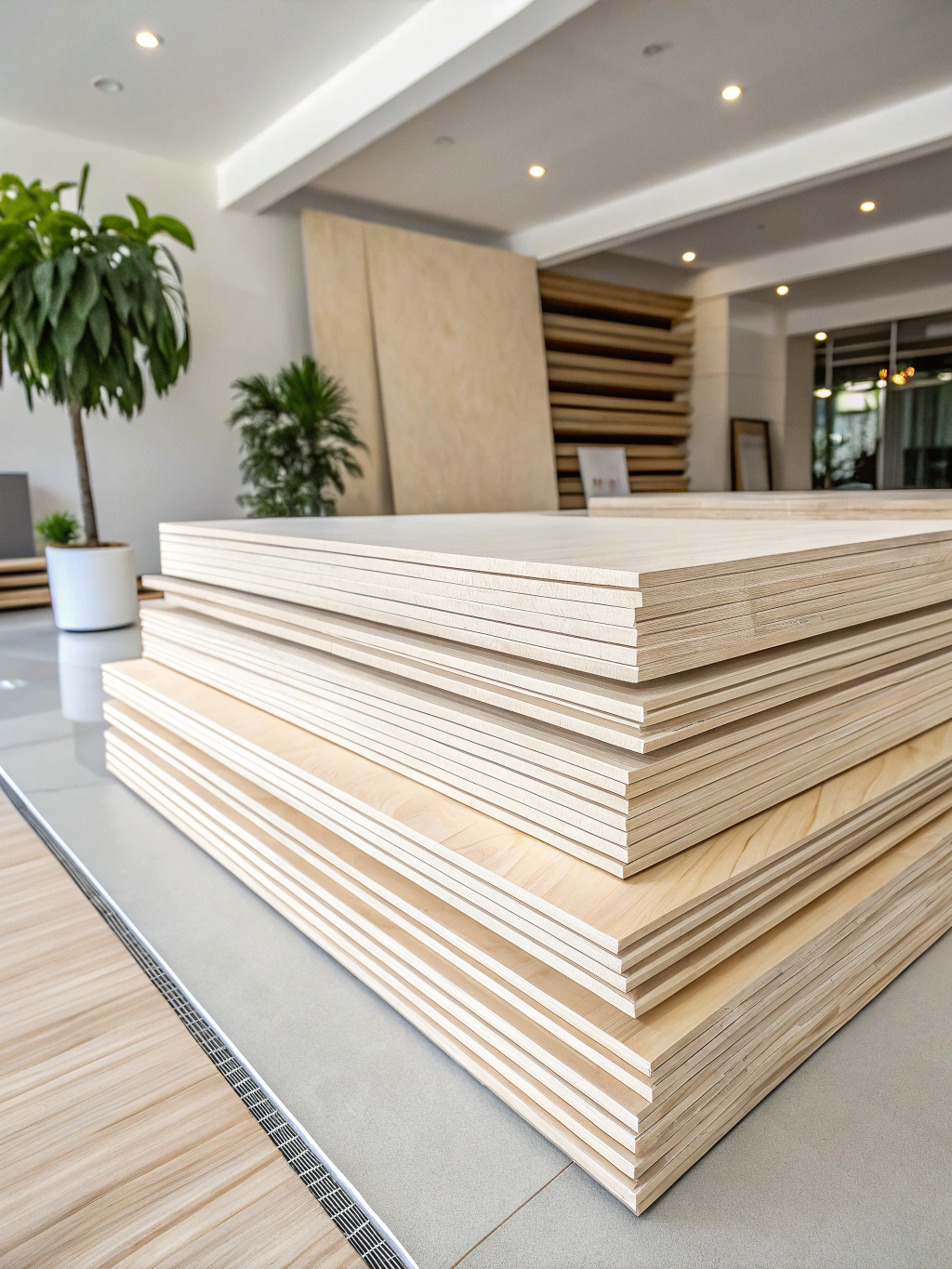
The familiar 4 × 8 ft panel dominates North American construction, yet sheet size varies across Baltic birch, marine, cabinet, craft, and industrial products. A size printed on a shelf label may describe the product class or installed coverage rather than its exact physical measurement.
4 × 8 ft Standard Sheet
A standard 4-by-8 plywood sheet measures about 48 × 96 inches, or 1,219 × 2,438 mm after rounding. Its face covers 32 sq ft, equal to roughly 2.97 m², before trimming, defects, saw kerfs, or tongue-and-groove engagement reduce usable coverage.
Many square-edge panels sit close to those measurements, but don’t build a cut list around an assumed perfect rectangle. Imported metric stock, damaged retail edges, moisture, and factory trimming can create small dimensional differences that become visible in cabinets or repeated parts.
Other Full-Sheet Sizes
| Listed sheet size | Dimensions in inches | Gross area | Common context |
|---|---|---|---|
| 4 × 8 ft | 48 × 96 in | 32 sq ft | Construction and cabinet stock |
| 4 × 9 ft | 48 × 108 in | 36 sq ft | Long wall or sheathing panels |
| 4 × 10 ft | 48 × 120 in | 40 sq ft | Selected structural and specialty stock |
| 5 × 5 ft | 60 × 60 in | 25 sq ft | Traditional Baltic birch format |
| 5 × 10 ft | 60 × 120 in | 50 sq ft | Marine and industrial supply |
| 4 × 12 ft | 48 × 144 in | 48 sq ft | Commercial and special-order work |
Oversized plywood sheets aren’t stocked at every lumberyard. A 5 × 10 or 4 × 12 ft panel may need freight delivery, extra unloading space, and handling equipment that costs more than the apparent material savings.
Small plywood sheets commonly measure 12 × 12, 12 × 18, 12 × 24, 24 × 24, 24 × 36, or 24 × 48 inches. These plywood project panels fit small vehicles and desktop tools, though their edges may show saw marks and may not be square enough for final assembly.
Gross coverage comes from multiplying listed length by width. Installed coverage may be lower where tongue-and-groove edges overlap, perimeter rows need trimming, or damaged corners prevent full use.
Plywood Thickness and Metric Charts
Plywood thickness labels are often nominal classifications, not exact finished measurements. A panel sold as 3/4 inch may measure 23/32 inch, 18 mm, or another manufacturer-defined thickness.
Nominal Thickness Chart
| Nominal thickness | Common actual example | Decimal inches | Approximate metric size | Typical uses |
|---|---|---|---|---|
| 1/8 in | 1/8 in or about 3 mm | 0.125 in | 3 mm | Models, skins, crafts |
| 1/4 in | 7/32 in | 0.219 in | 5.6–6 mm | Backs, drawer bottoms, templates |
| 3/8 in | 11/32 in | 0.344 in | 8.7–9 mm | Selected sheathing and panels |
| 1/2 in | 15/32 in | 0.469 in | 11.9–12 mm | Cabinet parts, boxes, sheathing |
| 5/8 in | 19/32 in | 0.594 in | 15.1 mm | Floors and structural panels |
| 3/4 in | 23/32 in | 0.719 in | 18.3 mm | Cabinets, shelves, furniture |
| 1 in | 31/32 in | 0.969 in | 24.6–25 mm | Heavy shelves and specialty work |
These figures are common examples, not guaranteed specifications. Unsanded structural plywood, sanded hardwood stock, pressure-treated panels, and imported products can each use different target dimensions and tolerances.
Sanding removes high fibers after pressing and can leave a panel below its trade-name thickness. Core compression, veneer thickness, adhesive spread, and final calibration also explain why thicknesses differ between mills and production batches.
Metric Thicknesses, Conversions, and Joinery
| Metric thickness | Decimal inches | Nearest familiar class |
|---|---|---|
| 3 mm | 0.118 in | 1/8-inch class |
| 4 mm | 0.157 in | Thin specialty panel |
| 6 mm | 0.236 in | 1/4-inch class |
| 9 mm | 0.354 in | 3/8-inch class |
| 12 mm | 0.472 in | 1/2-inch class |
| 15 mm | 0.591 in | 5/8-inch class |
| 18 mm | 0.709 in | 3/4-inch class |
| 21 mm | 0.827 in | Specialty thickness |
| 25 mm | 0.984 in | 1-inch class |
A metric panel isn’t an exact substitute for its nearest imperial label. For example, 18 mm equals 0.709 inch, making it 0.041 inch thinner than a true 0.750-inch panel.
That 0.041-inch gap feels loose when a cabinet side slips into a dado cut with a true 3/4-inch router bit. The joint can click sideways under finger pressure, and the dark glue line remains visible; the reliable fix is to measure with calipers and test the groove in scrap.
Common metric sheet sizes include 1,220 × 2,440 mm and 1,525 × 1,525 mm. A true 48 × 96-inch panel converts to 1,219.2 × 2,438.4 mm, so a genuinely metric panel can be slightly larger than an inch-based sheet.
Dimensions by Plywood Type
Plywood type affects available lengths, widths, thicknesses, core quality, and edge construction. The broader guide to types of plywood explains why two same-size panels can perform very differently.
Structural and Hardwood Cabinet Plywood
Structural plywood commonly comes in 4 × 8 ft sheets, with selected 4 × 9 and 4 × 10 ft products. Familiar nominal thicknesses include 1/4, 3/8, 1/2, 5/8, and 3/4 inch, but structural use also depends on grade, exposure classification, support spacing, strength axis, and span rating.
A stamp such as 32/16 isn’t a dimension. Under prescribed conditions, the first number relates to maximum roof support spacing and the second to subfloor support spacing; the APA Panel Design Specification provides technical design information, while approved plans and local code control the project.
Hardwood cabinet plywood is widely sold in 4 × 8 ft sheets and smaller panels, most often in 1/4-, 1/2-, and 3/4-inch classes. Face veneers may be maple, oak, birch, cherry, walnut, mahogany, or poplar, while the core may use veneer, MDF, lumber, or mixed construction.
Before routing dados, rabbets, shelf grooves, or drawer-bottom slots, measure the exact stock rather than relying on a rack sign. The cabinet-grade plywood guide covers face and core choices that affect machining.
Baltic Birch, Marine, Subfloor, and Specialty Plywood
Traditional Baltic birch dimensions are about 5 × 5 ft, or 1,525 × 1,525 mm. Common thicknesses include 3, 6, 9, 12, 15, 18, 21, and 24 or 25 mm, while some distributors stock rectangular full sheets and precut panels.
Baltic birch often shows many thin plies and relatively consistent exposed edges, but ordinary birch plywood isn’t automatically the same product. Check origin, grade, ply count, core voids, and actual dimensions against this Baltic birch guide.
Marine plywood often comes in 4 × 8 ft sheets, while 5 × 10 ft and other formats may be available from marine suppliers. Marine suitability rests on veneer quality, bond durability, core construction, and the named standard—not sheet dimensions or a vague “waterproof” claim.
One-inch marine-grade plywood may be sold as a nominal 1-inch class, a metric 25 mm panel, or another listed thickness. Confirm the data sheet before ordering; the marine plywood guide explains material distinctions.
Subfloor and underlayment panels commonly occupy the 4 × 8 ft class. Tongue-and-groove products can have physical dimensions that produce close to 4 × 8 ft nominal coverage only after adjoining edges engage.
Flexible, aircraft, fire-retardant, pressure-treated, overlaid, sign-grade, and concrete-form panels may retain familiar face dimensions while changing greatly in weight and performance. Bending plywood must also be ordered for the correct bending direction, across either the short or long dimension.
Choosing Plywood Dimensions by Project
Choose plywood dimensions from the finished part sizes, loads, support spacing, machining limits, and required face direction. Thickness alone doesn’t establish shelf strength, structural suitability, or machine compatibility.
Cabinets, Furniture, and Shelving
A 3/4-inch-class panel often suits cabinet boxes, shelves, and furniture components that need stiffness. Half-inch stock can work for smaller boxes and selected drawer parts, while 1/4-inch plywood commonly serves backs, drawer bottoms, skins, and templates.
Shelf sag depends on clear span, load, core construction, face-grain direction, edge reinforcement, and whether the shelf is fixed or adjustable. Solid-wood nosing, a doubled front edge, or a center support can make a larger practical difference than moving between two nearby thickness labels.
Long cabinet sides should follow the face grain where appearance matters, and long shelves gain more stiffness when the face grain runs along their span. Rotating every part for maximum yield can leave mismatched grain across adjacent doors or end panels.
Roofing, Subflooring, CNC, Crafts, and Span Ratings
Roofing and subfloor panels must match span ratings, support spacing, loads, grade, strength-axis direction, approved plans, and local code. Don’t treat 1/2 or 3/4 inch as a universal answer for floors or roofs.
CNC routers require stock that fits the machine bed and leaves room for clamps, screws, vacuum zones, or tabs. Enter measured thickness, actual sheet size, tool diameter, and edge margin into the CAM setup rather than copying the retailer’s rounded description.
Laser cutters often accept 12 × 12, 12 × 18, or 12 × 24-inch panels. Check the wood species, adhesive, ventilation requirements, veneer thickness, flatness, and machine maker’s material guidance; a “laser plywood” label doesn’t guarantee clean cuts on every machine.
Crafts, models, and signs often use sheets from roughly 1/16 to 1/4 inch thick. Basswood cuts with a soft, dry rasp beneath a knife, while multi-ply birch feels firmer and usually holds small tabs and corners better at a comparable thickness.
Coverage, Cut Lists, and Costs
A 4 × 8 ft sheet provides 32 sq ft of gross coverage, but cutoffs, defects, edge engagement, grain direction, and kerfs reduce usable area. Calculate with the physical SKU dimensions whenever the layout needs close tolerances.
Sheet Coverage Chart and Sheet-Count Formula
| Sheet size | Gross coverage | Metric area |
|---|---|---|
| 4 × 8 ft | 32 sq ft | 2.97 m² |
| 4 × 9 ft | 36 sq ft | 3.34 m² |
| 4 × 10 ft | 40 sq ft | 3.72 m² |
| 5 × 5 ft | 25 sq ft | 2.32 m² |
| 5 × 10 ft | 50 sq ft | 4.65 m² |
| 4 × 12 ft | 48 sq ft | 4.46 m² |
Use this formula: project area ÷ sheet area = theoretical sheet count. Round upward, then apply a waste factor suited to the layout rather than rounding before adding waste.
For 400 sq ft covered with 4 × 8 sheets, 400 ÷ 32 equals 12.5 panels. Applying 10% waste gives 400 × 1.10 ÷ 32 = 13.75, which means buying 14 full sheets.
- 5–10% waste: simple rectangles with reusable offcuts and few face defects.
- 10–15% waste: fitted cabinetry, staggered seams, grain matching, or several openings.
- 15% or more: diagonal layouts, selective veneer matching, warped stock, or strict defect rejection.
Kerf, Grain Direction, and Cost per Square Foot
A cut list must account for saw kerf. Four 12-inch strips total 48 inches, but three 1/8-inch kerfs remove 3/8 inch, so four complete 12-inch parts can’t come from a true 48-inch sheet.
Measure the blade’s real kerf by making a cut in scrap rather than relying on the package. Track-saw, table-saw, and thin-kerf blades remove different amounts, while blade runout can widen the finished cut path.
Grain direction can stop parts from being rotated to fill empty spaces in a cutting diagram. Mark face side, grain arrow, finished edge, and part number before cutting so an efficient-looking layout doesn’t create backward parts.
Calculate cost per square foot as panel price divided by gross area. An illustrative $40 4 × 8 sheet costs $1.25 per sq ft, while a $20 panel measuring 24 × 48 inches covers 8 sq ft and costs $2.50 per sq ft.
A better purchasing comparison is total delivered cost divided by usable project area. Include damaged edges, unusable veneer, delivery, cutting charges, tax, minimum quantities, and oversized freight fees in the usable-area calculation.
Full sheets usually provide a lower unit cost, while project panels can reduce checkout cost, waste, and transport trouble for one small build. A low listing for a 1-inch plywood 4 × 8 sheet can become expensive after freight and handling are added.
Plywood Weight and Transportation
A 4 × 8 plywood sheet can weigh roughly 20–80 lb across common thicknesses and constructions. Species, resin, overlays, treatment, moisture, core type, and actual thickness cause wide weight variation.
Weight by Thickness and Estimation Formula
| 4 × 8 ft thickness class | Planning weight range |
|---|---|
| 1/4 inch | 20–25 lb |
| 3/8 inch | 25–35 lb |
| 1/2 inch | 35–50 lb |
| 5/8 inch | 45–60 lb |
| 3/4 inch | 55–80 lb |
These are handling estimates, not shipping specifications. Dense hardwood, wet pressure-treated stock, marine panels, and overlaid plywood may fall outside these ranges; see the detailed plywood weight chart for more examples.
Estimate panel weight with length × width × thickness × density, using consistent units. A true 3/4-inch 4 × 8 ft panel has 2 cubic feet of volume because 4 × 8 × 0.0625 = 2.
At an assumed density of 34 lb per cubic foot, that panel weighs about 68 lb. Use the manufacturer’s published panel weight for lift planning, roof-rack loading, shipping, or any situation where weight limits matter.
Vehicle Access and Safe Panel Transport

Measure the smallest cargo opening, not only the interior floor. An eight-foot cargo bay doesn’t help if the hatch narrows below 48 inches wide or an interior wheel arch blocks the sheet.
- Check cargo-opening height and width.
- Measure usable interior length and width.
- Confirm roof-rack and tie-down ratings.
- Check doorways, stairs, corners, elevators, and shop access.
- Ask whether delivery is curbside or includes placement.
Never carry unsecured plywood on an unsuitable roof rack or in an open vehicle. Wind can lift the broad face like a sail, while a loose panel edge can flex, chatter, and tear through straps.
Retailers may offer rough panel cuts, often with a per-cut fee and limited tolerance. Leave each piece oversize for final trimming because a store panel saw can leave a slightly fuzzy edge or drift from cabinet-level accuracy.
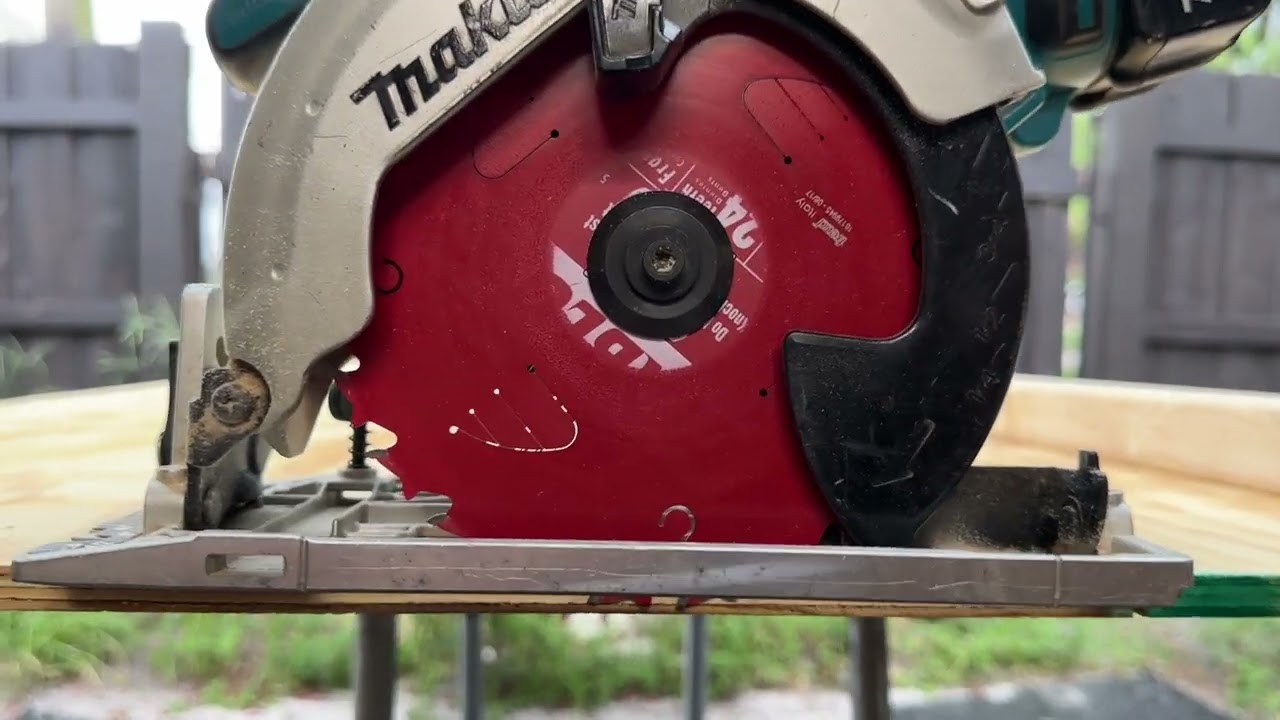
A track saw or guided circular saw can break sheets down on rigid foam placed over a flat floor. Support both sides of the cut so the offcut doesn’t fall, pinch the blade, or strip the face veneer near the final inches.
Measuring Plywood Before Purchase
Measure plywood before purchase when parts require close fits or full-sheet coverage. Check length, width, thickness, squareness, bow, twist, edge damage, moisture condition, grade stamp, and product data.
Length, Width, Thickness, Squareness, and Warp
Use a tape for overall dimensions and digital calipers for thickness. Take readings near several edges and within the field, avoiding crushed corners, because sanding and veneer variation can produce different measurements across one panel.
Check squareness by comparing both diagonals or placing a reliable square at each corner. Equal diagonals indicate a rectangular panel, while a difference warns that repeated crosscuts may need a fresh reference edge.
Sight along the sheet for bow and twist, then place a straightedge across suspect areas. A warped sheet may rock with a hollow knock on a flat cart; slight spring can clamp out, but a fixed twist often returns after machining.
Tongue-and-Groove, Moisture, Labels, and Verification
For tongue-and-groove material, confirm whether published dimensions describe physical size or installed coverage. Don’t force damp or swollen edges together; follow the panel maker’s spacing instructions and project documents for the required expansion space.
Store panels flat, evenly supported, and clear of ground moisture. Cabinet and finish plywood often benefits from acclimation in the work area, since a cold sheet brought into warm air can feel clammy and may develop temporary surface condensation.
Read the shelf label and panel stamp for grade, exposure classification, span rating, thickness, dimensions, and strength-axis marks. The US Department of Commerce publishes Voluntary Product Standards, including the framework used for structural wood-panel standards.
Practical notes from real-world use. Mark each measured thickness on painter’s tape attached to the sheet, then keep an offcut beside the router or saw. That small sample prevents a second batch from being machined with settings copied from a different panel.
- Match the SKU or grade stamp to the purchase order.
- Measure physical length and width.
- Take thickness readings at several points.
- Compare diagonal measurements for squareness.
- Inspect both faces, corners, edges, and core openings.
- Check bow and twist on a flat support.
- Confirm physical versus installed coverage.
- Verify grain or strength-axis direction.
- Review treatment, exposure, and structural ratings.
- Cut one test joint before processing the batch.
Small-Format Plywood Examples
Small-format panels trade a higher unit cost for easier storage, shipping, and machine access. Treat the following products as project-panel examples, not substitutes for graded construction sheathing.
Thin Basswood Sheets
A 12 × 12-inch basswood panel at 1/16 inch thick suits ornaments, painted models, layered artwork, and detailed knife or laser cuts. Its thin face bends easily and can curl after uneven paint application, so coat both faces lightly or hold it flat while drying.

Thin Basswood Craft Sheets
- Six-sheet pack for multiple projects
- 12 by 12 inch square panels
- Slim one-sixteenth inch profile
- Easy to cut for detailed crafts
- Ideal for painting and model making
 Buy on Amazon
One-Eighth-Inch Craft Panels
A 12 × 18-inch sheet offers more nesting room than square hobby stock while remaining manageable on many desktop work surfaces. Check the machine’s usable cutting area, since the stated bed size may include space that clamps or frames occupy, reducing the working envelope.

Large Basswood Plywood Sheets
- Twelve sheets for larger craft batches
- Generous 12 by 18 inch format
- One-eighth inch sheet thickness
- Made for laser-cutting projects
- Useful for signs models and DIY designs
Buy on Amazon
Quarter-inch Baltic birch. A 12 × 16-inch panel listed as quarter-inch or 6 mm stock illustrates why fractional descriptions need checking. Six millimetres equals about 0.236 inch, which is thinner than a true 0.250-inch panel.

Quarter-Inch Baltic Birch Pack
- Box includes 12 matching panels
- 12 by 16 inch working size
- Quarter-inch or 6 mm thickness
- B BB grade birch for dependable strength
- Works with laser CNC and wood burning
Buy on Amazon
Half-inch Baltic birch. A 24 × 36-inch panel provides enough area for small shelves, signs, CNC parts, and workshop fixtures without the handling burden of a 4 × 8 sheet. The listed 12 mm thickness equals about 0.472 inch, close to but not exactly 1/2 inch.

Large Half-Inch Baltic Birch Sheet
- Full 24 by 36 inch sheet size
- Half-inch or 12 mm thick plywood
- B BB grade Baltic birch construction
- Spacious format for shelves and larger builds
- Suitable for CNC routing and laser projects
Buy on Amazon
FAQs
What Are The Standard Dimensions Of Plywood?
Standard plywood sheets are typically sold in 4-by-8-foot sizes, although 4-by-4, 2-by-4, and longer panels are also available. Common nominal thicknesses include 1/4 inch, 1/2 inch, 5/8 inch, and 3/4 inch. Actual dimensions are often slightly smaller than the stated size.
Is Plywood Exactly 4 Feet By 8 Feet?
No, most plywood is not exactly 4 feet by 8 feet. A nominal 4-by-8 sheet commonly measures about 47 1/2 inches by 95 1/2 inches, allowing room for expansion and easier installation. Always measure the panel before planning precise cuts or layouts.
What Is The Actual Thickness Of 3/4-Inch Plywood?
The actual thickness of 3/4-inch plywood is usually 23/32 inch, or about 0.703 inch. This is slightly thinner than a full 3/4 inch because plywood is sold by nominal dimensions. Check the product label when matching panels, hardware, or cabinet openings.
Is 18 Mm Plywood The Same As 3/4 Inch?
18 mm plywood is close to, but not exactly the same as, 3/4-inch plywood. Eighteen millimeters equals about 0.709 inch, while 3/4 inch equals 19.05 mm. The difference is small, but it can matter for joinery, edge banding, and fitted construction projects.
How Many Square Feet Are In A Sheet Of Plywood?
A standard 4-by-8-foot sheet of plywood covers 32 square feet. Multiply the sheet length by its width to find the coverage of other panel sizes. For projects with cuts or mistakes, buying a little extra material helps reduce the risk of running short.
Affiliate Disclosure: Some links in this post are affiliate links. If you make a purchase through these links, we may earn a small commission at no extra cost to you. We only recommend products we genuinely believe in.