
Western Yellow Pine: Identification, Range, Uses, and Growing Guide

Western Yellow Pine: Alias, Identification, Range, Uses, and Growing Guide
Western yellow pine is a historical and regional name for ponderosa pine, commonly classified as Pinus ponderosa, a large evergreen native to western North America. A mature yellow pine tree often has long needles, prickly cones, and cinnamon-orange bark broken into broad plates, but reliable identification requires several traits rather than bark color or scent alone.
Table of Contents
What Is a Western Yellow Pine?

In ordinary use, western yellow pine and ponderosa pine mean the same tree. Older forestry reports, lumber references, crossword clues, and regional books often favor the former name, while modern botanical sources usually use ponderosa pine or Pinus ponderosa.
Western Yellow Pine Alias
The most likely answer to a western yellow pine alias question is “ponderosa.” That seven-letter answer commonly appears in crosswords, while “ponderosa pine” is the full common name used in field guides and forestry records.
Scientific Classification
The accepted classification is kingdom Plantae, order Pinales, family Pinaceae, genus Pinus, and species Pinus ponderosa Douglas ex C.Lawson. The Plants of the World Online database provides a useful reference point, though authorities may divide regional populations differently.
Common and Regional Names. Names include ponderosa pine, western yellow pine, western pine, bull pine, blackjack pine, Pacific ponderosa pine, and Rocky Mountain ponderosa pine. “Blackjack” often describes young trees with tight, dark bark rather than a separate species.
Yellow Pine Name Ambiguity. “Yellow pine” isn’t a globally precise botanical name. It can indicate ponderosa pine in western North America, another locally named tree, or the southeastern commercial group explained in our guide to yellow pine.
Taxonomic Differences. Genetic and geographic variation across the ponderosa pine complex has led botanists to describe varieties, subspecies, or separate species. For everyday identification, Pinus ponderosa remains the clearest primary name, but regional floras should guide technical survey work.
Historical and Cultural Importance. Indigenous nations developed distinct food, fuel, construction, medicinal, and ceremonial relationships with these forests; those practices shouldn’t be blended into one generic account. Later timber records used “western yellow pine” widely, and ponderosa pine became Montana’s state tree.
Western Yellow Pine Identification
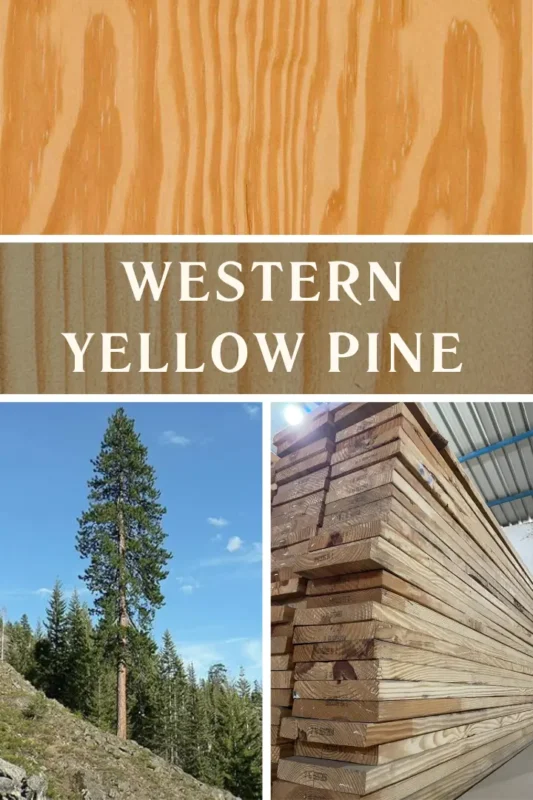
Identify a western yellow pine by combining its overall form, bark, needles, cones, buds, and location. Mature orange plates are distinctive, yet young trees can look dark and plain enough to mislead a beginner.
Identification at a Glance
| Feature | Typical western yellow pine trait | Identification limit |
|---|---|---|
| Scientific name | Pinus ponderosa | Regional taxonomic treatment varies |
| Needles | Usually two or three per fascicle | Count varies by population |
| Needle length | Commonly 4–10 inches | Site and population affect length |
| Cones | Usually 3–6 inches, with sharp outward prickles | Measure several mature cones |
| Young bark | Dark brown to nearly black | Lacks mature orange plates |
| Mature bark | Cinnamon-orange plates with dark furrows | Color changes with light and moisture |
| Height | Often 60–150 feet | Dry or exposed trees stay smaller |
| Native region | Western North America | Planted trees occur beyond native range |
Overall Tree Form
Young trees usually have a narrow conical crown. Mature forest trees shed lower limbs and develop long, clear trunks beneath irregular crowns, while open-grown trees keep lower branches longer and become much broader.
Young and Mature Bark. Saplings have dark, tight bark that can resemble lodgepole or Austrian black pine from a distance. Older bark breaks into broad orange, cinnamon, or reddish plates separated by black grooves; under a palm, the plates feel dry, warm, and slightly gritty.
Needles and Fascicles. The stiff, slender needles commonly measure 4–10 inches and grow in papery-based bundles called fascicles. Many western populations carry three needles per bundle, while some interior populations regularly carry two, so needle count can’t stand alone.
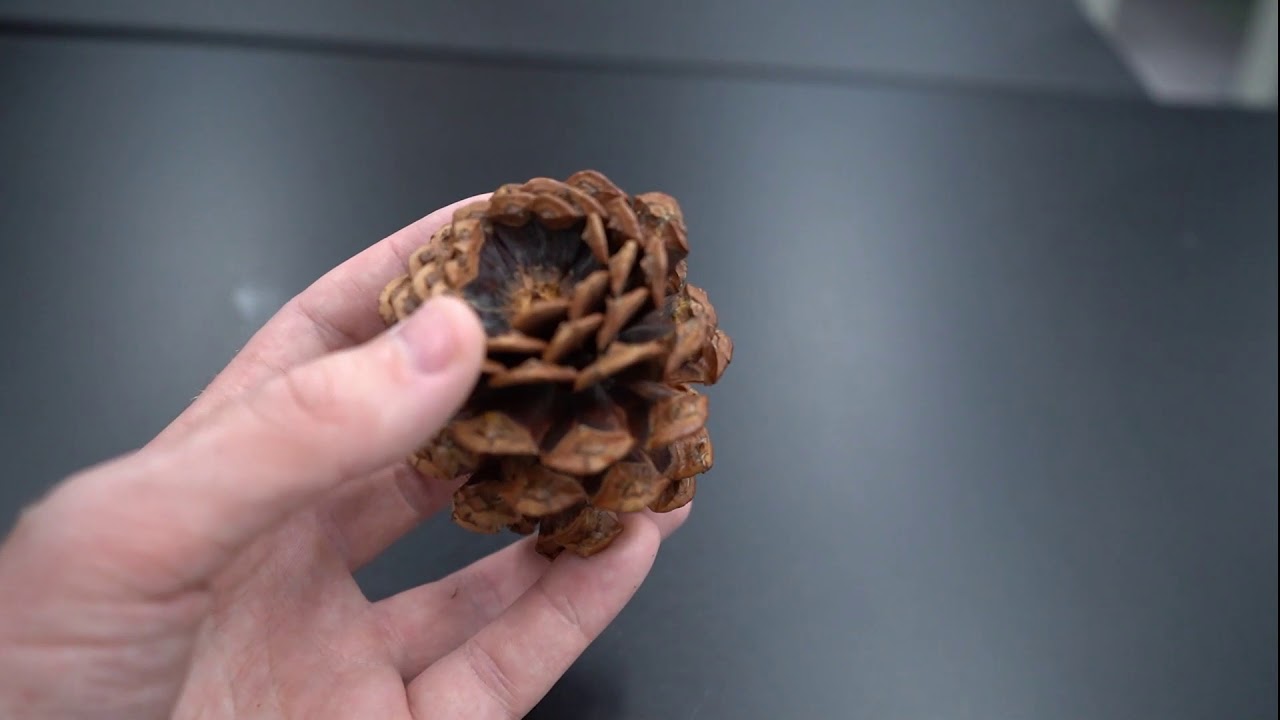
Cones and Prickles. Female cones are commonly 3–6 inches long and mature to brown. Run a finger lightly from base to tip and the outward-pointing prickles catch sharply; don’t squeeze an unknown cone, since the tips can puncture skin.
Buds, Twigs, and Seeds. Winter buds are reddish brown, resinous, and clustered near twig ends. Broken twigs release a sticky pine odor, while the small winged seeds travel by wind and also feed birds and rodents.
Bark Scent Limitations. Sun-warmed bark may smell like vanilla, caramel, butterscotch, warm resin, or almost nothing. Temperature, genetics, moisture, tree age, and the observer all affect perception, so scent should support identification rather than decide it.
Range, Habitat, Size, and Lifespan
The ponderosa pine complex occurs from southern Canada across much of the western United States and into northern Mexico. Elevation, size, and growth differ sharply by latitude, rainfall, soil depth, and regional population.
Native Range
Native populations occur through the Pacific Northwest, California, Rocky Mountains, Southwest, Black Hills, Great Basin margins, and scattered transition zones near the western Great Plains. The US Forest Service species account documents this broad distribution without implying equal abundance in every western state.
Elevation and Climate
The tree grows near relatively low elevations in some Pacific areas and close to 10,000 feet in parts of the Southwest. Typical conditions include cool or cold winters, warm dry summers, seasonal drought, and large day-to-night temperature swings.
Soil and Moisture. Deep, well-drained loam supports strong growth, but established trees also occupy sandy, gravelly, rocky, and volcanic ground. Saturated soil deprives roots of oxygen; its sour smell and sticky texture after several dry days signal a poor planting site.
Mature Height and Spread. Landscape trees commonly reach 60–100 feet, productive forest trees often reach 90–130 feet, and large old specimens can exceed 150 feet. Exceptional trees pass 200 feet, while an open crown may spread about 25–40 feet.
Growth Rate. A young tree on a suitable site may add 12–24 inches in a year. Shallow soil, drought, root competition, cold exposure, insects, and unsuitable seed origin can reduce growth to a fraction of that amount.
Typical Lifespan. Ponderosa pines often live for several centuries, with trees aged 300–600 years found in suitable settings and some individuals surviving past 700. Fire injury, beetles, lightning, wind, drought, and logging keep most trees from reaching extreme ages.
Similar Pines and Yellow Pine Groups
Jeffrey pine, lodgepole pine, sugar pine, and several commercial “yellow pine” groups can be confused with western yellow pine. The fastest accurate comparison uses needle bundles, cone prickles, bark, and geographic range together.
Jeffrey Pine
Jeffrey pine also has long needles, aromatic bark, and large orange plates. Its cones are usually larger and have inward-curving prickles that feel relatively gentle, leading to the field mnemonic “prickly ponderosa, gentle Jeffrey.”
Lodgepole Pine
Lodgepole pine usually carries two needles per bundle, but they are commonly only 1–3 inches long. Its smaller cones, thinner scaly bark, and slimmer trunk separate it from a mature ponderosa pine.
Sugar Pine. Sugar pine carries five needles per bundle and produces hanging cones often 10–20 inches long. Ponderosa pine has two or three needles per bundle and much shorter cones.
Southern Yellow Pine. This capitalized lumber term covers southeastern species such as longleaf, slash, loblolly, and shortleaf pine. These woods tend to be harder and denser than ponderosa pine, so their structural values and finishing behavior aren’t interchangeable.
Loblolly and Shortleaf Pine. Loblolly pine typically carries needles in twos or threes and grows in the southeastern United States. Shortleaf pine usually has shorter needles and small cones, with habitat providing another strong clue.
Douglas-Fir and Other Conifers. Douglas-fir has single needles attached directly to the twig and cones with three-pointed bracts, so it isn’t a true pine. In a ponderosa pine vs Douglas fir check, look for bundled needles first; our Douglas-fir wood guide covers the lumber differences.
| Tree or group | Needles | Cones or bark | Fastest distinction |
|---|---|---|---|
| Western yellow pine | Usually 2 or 3; 4–10 inches | Sharp outward cone prickles | Prickly cones and mature orange plates |
| Jeffrey pine | Usually 3; long | Larger cones with inward prickles | Cones feel less sharp |
| Lodgepole pine | 2; commonly 1–3 inches | Small cones, thinner bark | Much shorter needles |
| Sugar pine | 5 per bundle | Cones often 10–20 inches | Five needles and very long cones |
| Southern Yellow Pine | Varies by species | Commercial lumber group | Not one western species |
| Douglas-fir | Single needles | Cones have projecting bracts | No needle fascicles |
Ecology and Wildlife Value
Mature ponderosa pine can survive many low-severity surface fires, but it isn’t fireproof. Its forests also provide food, cavities, cover, deadwood, and links between dry grassland and cooler conifer communities.
Surface Fire Adaptations
Thick mature bark insulates the living cambium, while tall crowns and natural lower-branch loss reduce contact with surface flames. Many lower-elevation forests historically experienced recurring fires at intervals from several years to a few decades, with substantial local variation.
Fire Resistance Limits
Seedlings and saplings have thin bark and low branches, so relatively modest heat can kill them. Mature trees can also die after deep cambium heating, root injury, full crown scorch, or post-fire beetle attack.
Drought and Climate Stress. Water shortage reduces resin flow and weakens a tree’s defenses against bark beetles. Crowded stands compete heavily for moisture, and repeated hot droughts can cause mortality across sites where the species usually tolerates seasonal dryness.
Wildlife Food Sources. Squirrels, chipmunks, mice, and birds eat the winged seeds. Animals sometimes consume bark or inner tissue when preferred food is scarce, though feeding pressure varies from one forest to another.
Habitat and Snags. Large living trees support nests and roosts, while decaying trunks create cavities. A standing dead snag can be valuable habitat, but one leaning over a road, house, campsite, or trail requires a qualified risk assessment.
Forest Plant Relationships. Associates can include Douglas-fir, quaking aspen, Gambel oak, manzanita, bitterbrush, bunchgrasses, and sagebrush. Species composition changes with moisture and elevation; western larch may overlap in parts of the northern range.
- Leave safe downed logs where local fire and property rules permit.
- Retain wildlife snags only after checking their lean, decay, and target zone.
- Reduce ladder fuels without damaging the trunk or major roots.
- Avoid piling cut branches against the base of mature trees.
Growing a Western Yellow Pine

A western yellow pine grows best in full sun, freely draining soil, and a climate matched to its seed source. It’s a poor choice for small lots because mature height, crown spread, roots, falling branches, utilities, and wildfire spacing all require room.
Climate and Hardiness
References commonly place ponderosa pine around USDA zones 3–7, but a zone number alone can’t predict performance. A seedling from a cold interior source may react very differently from Pacific or southwestern stock under the same winter minimum.
Sun and Space
Provide at least six hours of direct sun and plan around a tree that may exceed 60 feet with a 25–40-foot crown. Keep it away from overhead lines, roofs, foundations, septic fields, and spaces governed by local defensible-space rules.
Soil and Drainage. Dig a test hole, fill it with water, and watch how the site drains after surrounding soil is already moist. Persistent standing water points to a poor location; adding rich soil to the hole won’t fix a saturated subsoil layer.
Planting a Seedling. Dig wider than the roots but no deeper than the root ball. Expose the first structural roots, set the root flare at or just above finished grade, loosen circling roots, backfill with native soil, and keep mulch several inches from the trunk.
- Choose a cool planting period while the seedling is dormant or lightly growing.
- Remove wrapping, wire, and containers without breaking the central root mass.
- Cut or redirect severe circling roots with clean tools.
- Set the root flare at grade and backfill without compacting the soil hard.
- Water slowly across the root ball and nearby soil.
- Add 2–3 inches of mulch, leaving the trunk exposed.
Growing From Seed. Many seed lots respond to roughly 30–60 days of cold, moist stratification, but supplier instructions and collection source take priority. Sow in an airy medium and protect the container from rodents, stagnant moisture, damping-off fungi, and intense midday heat.
Seed Provenance. Provenance means the location and climate where the parent trees grew. Local or regionally matched seed often handles seasonal cold, drought timing, and heat better than an undocumented bargain packet collected hundreds of miles away.
Establishment and Irrigation. Water deeply enough to wet the root ball and nearby soil, then allow some drying rather than applying a daily surface sprinkle. Soil beneath the mulch should feel cool and faintly damp, not slick, airless, or foul-smelling.
Common Planting Failures. Beginners often bury the root flare, leave circling roots untouched, overwater clay soil, or stop irrigation during the first hot summer. A smaller seedling with a straight, fibrous root system often establishes faster than a tall pot-bound tree.
Choosing Seeds and Seedlings. Compare collection location, germination test date, seedling age, container volume, root condition, shipping season, plant-health rules, and replacement terms. Packet price means little without seed count and tested germination; nursery price means little without inspecting roots.
Practical Notes From Real-World Use. Before planting, scrape away loose potting mix until the first major roots appear; nursery trees often sit one or two inches too deep in their containers. Correcting that hidden depth prevents a buried trunk base and makes the final planting level easier to judge.
Pests, Diseases, and Safety
Bark beetles, dwarf mistletoe, fungal diseases, root stress, and livestock toxicity are the main concerns. Brown needles alone don’t identify a cause, so inspect the whole tree, root zone, recent weather, and injury history.
Bark Beetles
Mountain pine beetle and western pine beetle can attack ponderosa pine. Look for pitch tubes, fine boring dust caught in bark crevices, fading crowns, woodpecker flaking, and winding galleries beneath loose bark; badly drought-stressed trees may produce little visible resin.
Dwarf Mistletoe
Parasitic Arceuthobium plants cause dense branch clusters called witches’ brooms, reduced growth, and weakened limbs. Heavy infections can shorten tree life and add flammable material low in the crown.
Fungal Diseases. Dothistroma needle blight, Elytroderma disease, western gall rust, and root or butt rots occur in parts of the range. Diagnosis from a photograph is risky because winter injury, drought, salts, herbicides, and damaged roots can produce similar browning.
Environmental Decline. Deep planting, compacted soil, construction cuts, saturated roots, drought, and trunk wounds commonly mimic pest damage. Check whether browning affects old or new needles, one side or the whole crown, and whether soil conditions changed before symptoms appeared.
Cattle Toxicity. Ponderosa pine needles can cause reproductive toxicity in pregnant cattle, particularly during late gestation. Isocupressic acid is linked to premature birth, weak calves, and retained placenta; the Utah State University Extension discusses this livestock risk.
Human Use Cautions. Don’t prepare bark, resin, needles, or tea without verified species identification and qualified safety advice. Plant surfaces may hold pesticide residue, mold, dust, animal waste, or chemicals from nearby roads and treated grounds.
| Symptom | Possible cause | Useful next step |
|---|---|---|
| Pitch tubes and boring dust | Bark beetles | Inspect trunk and call a local arborist |
| Dense witches’ brooms | Dwarf mistletoe | Assess infection level and branch safety |
| Lower crown browning | Drought, root stress, normal needle shed | Check soil moisture and needle age |
| Whole crown fading | Severe root failure or beetle attack | Arrange a timely on-site assessment |
| Soft soil and sour odor | Waterlogging or root decay | Stop routine watering and assess drainage |
Western Yellow Pine Wood Uses
Western yellow pine wood is light, relatively soft, straight-grained, and easy to machine. It suits interior trim, furniture, moulding, window parts, shelving, boxes, and other millwork, while exterior and structural applications depend on grade, treatment, detailing, and code requirements.
Wood Appearance
Sapwood is pale yellowish white, while heartwood ranges from light yellow-brown to reddish brown. Fresh cuts can smell resinous, and a sharp plane often leaves a smooth, slightly lustrous ribbon, though knots may tear around their edges.
Representative Properties
Average dried weight is often reported near 28 pounds per cubic foot, or about 450 kilograms per cubic meter. Representative Janka hardness is about 460 pounds-force, or roughly 2,050 newtons, placing it below many hardwoods and denser Southern Yellow Pine species.
Published figures vary with moisture, growth conditions, specimen selection, and test method. The USDA Wood Handbook explains why species averages can’t replace grade stamps, engineering values, or project specifications.
Millwork and Furniture. Ponderosa pine cuts, routs, sands, and paints easily, making it useful for moulding, cabinet parts, drawers, shelves, carvings, and furniture. Use sharp cutters and light passes near knots to limit crushed fibers and chipped grain.
Windows and Siding. Stable, clear stock can serve as window frame wood and siding pine after sound joinery, sealing, and finishing. Anyone learning pine board selection should reject wet, twisted pieces before making a window frame, since later movement can open joints.
Construction Uses. Ponderosa pine can be used for framing, sheathing, and general construction where the stamped grade and local code permit it. The species name by itself doesn’t confirm allowable loads; consult structural tables for approved construction wood.
Advantages and Limitations. The wood is lightweight, workable, and receptive to paint, but it dents under concentrated pressure and lacks strong natural decay resistance. A dropped clamp can leave a visible crescent-shaped bruise, so pad workbenches and support finished faces during assembly.
Grading and Exterior Use. Exterior boards need end-grain sealing, drainage gaps, compatible fasteners, a maintained coating, and treatment where exposure calls for it. Structural stock requires a recognized grade stamp; compare hardness through the wood hardness scale, but don’t use hardness as a substitute for strength data.
| Property or use | Representative description | Practical limit |
|---|---|---|
| Dried weight | About 28 lb/ft³ | Varies with moisture and growth |
| Janka hardness | About 460 lbf | Dents more readily than many hardwoods |
| Machining | Usually easy to cut and shape | Knots and resin pockets disrupt clean cuts |
| Interior millwork | Trim, moulding, cabinetry, window parts | Condition stock before precise joinery |
| Exterior work | Siding and components with protection | Low natural decay resistance |
| Structural use | Possible with approved graded lumber | Species averages don’t establish capacity |
FAQs
What Is The Alias For Western Yellow Pine?
Western yellow pine is a common alias for ponderosa pine, scientifically known as Pinus ponderosa. It is also called bull pine or blackjack pine in some regions. The name is often used in lumber markets and older forestry references.
Is Western Yellow Pine The Same As Ponderosa Pine?
Yes, western yellow pine generally refers to ponderosa pine. Both names describe the same widespread western North American tree species, Pinus ponderosa. Naming can vary by location, but ponderosa pine is the more commonly accepted modern name.
How Do You Identify A Western Yellow Pine Tree?
Western yellow pine can be identified by its long needles, usually growing in bundles of three, and its thick orange-brown bark. Mature trees often have deeply furrowed bark divided into large plates. Its woody cones are oval-shaped and have sharp, prickly scales.
Where Does Western Yellow Pine Grow?
Western yellow pine grows throughout much of western North America. Its range extends from southern Canada through the western United States and into northern Mexico. It commonly thrives in dry, sunny forests, foothills, and mountain areas with well-drained soil.
Is Western Yellow Pine The Same As Southern Yellow Pine?
No, western yellow pine is not the same as Southern Yellow Pine. Western yellow pine usually means ponderosa pine, while Southern Yellow Pine is a lumber term for several species grown in the southeastern United States. They differ in species, growing regions, and wood characteristics.
Affiliate Disclosure: Some links in this post are affiliate links. If you make a purchase through these links, we may earn a small commission at no extra cost to you. We only recommend products we genuinely believe in.