

Quaking aspen (Populus tremuloides) is a fast-growing North American deciduous tree recognized by pale bark, rounded leaves, flattened leaf stalks, and clear golden fall color. Its stems can reproduce from shared roots, so what looks like a forest may be one clonal organism containing thousands of trunks.
A quaking aspen tree suits cool, sunny sites with reliable soil moisture and ample room for spreading roots. This guide covers identification, ecology, planting, diseases, propagation, and the practical uses of aspen wood.
Table of Contents
Quaking Aspen at a Glance
Quaking aspen is native across much of North America, from Alaska and Canada to cool mountain habitats in Mexico. It grows quickly in open sunlight, often reaches 40–50 feet in yards, and commonly forms groves through root suckers.
Quick Facts Table
| Trait | Quaking aspen details |
|---|---|
| Scientific name | Populus tremuloides Michx. |
| Family | Salicaceae, the willow family |
| Plant type | Deciduous broadleaf tree |
| Typical landscape height | 40–50 feet |
| Favorable forest height | 60–80 feet or more |
| Typical canopy spread | 20–30 feet |
| Light | Full sun |
| Common hardiness range | USDA Zones 1–7, subject to local heat and moisture |
| Growth pattern | Fast growth with extensive root suckering |
| Fall color | Clear yellow to golden yellow |
| Native range | Alaska and Canada through much of the United States into mountain areas of Mexico |
| Primary reproduction | Root suckers and short-lived, wind-carried seeds |
Published dimensions vary because climate controls growth. The Arbor Day tree guide uses more than 24 inches per year as a fast-growth benchmark, but compacted soil, warm nights, or recurring drought can reduce aspen growth sharply.
Taxonomy and Common Names
The accepted scientific name is Populus tremuloides. Trembling aspen and American aspen refer to the same species, while “poplar” may refer to many members of Populus, including aspens and cottonwoods.
Scientific names prevent expensive nursery mistakes. A label reading only “white poplar” could indicate a different species; compare the botanical distinctions in this guide to white poplar before buying.
Size, Canopy, and Lifespan
How big do quaking aspens get? A practical yard estimate is 40–50 feet tall with a 20–30-foot crown, while productive forest sites may support stems exceeding 80 feet. These canopy trees often grow narrowly in dense stands because adjacent stems compete for light.
Individual trunks commonly persist for several decades, and favorable forest stems may reach roughly 50–100 years or more. The root clone lasts longer because new trunks replace dead ones, so stem age and clone age aren’t interchangeable.
Growth Rate and Fall Color
On a cool, moist, sunny site, young aspens can gain more than two feet in a strong growing season. That fast early growth doesn’t promise a durable lawn tree; heat stress and bark injury often shorten its useful life.
Autumn leaves usually turn bright yellow or warm gold. Connected stems often change color together, while an adjacent clone may turn days later or show a different shade, creating distinct blocks of color across a slope.
Quaking Aspen Identification

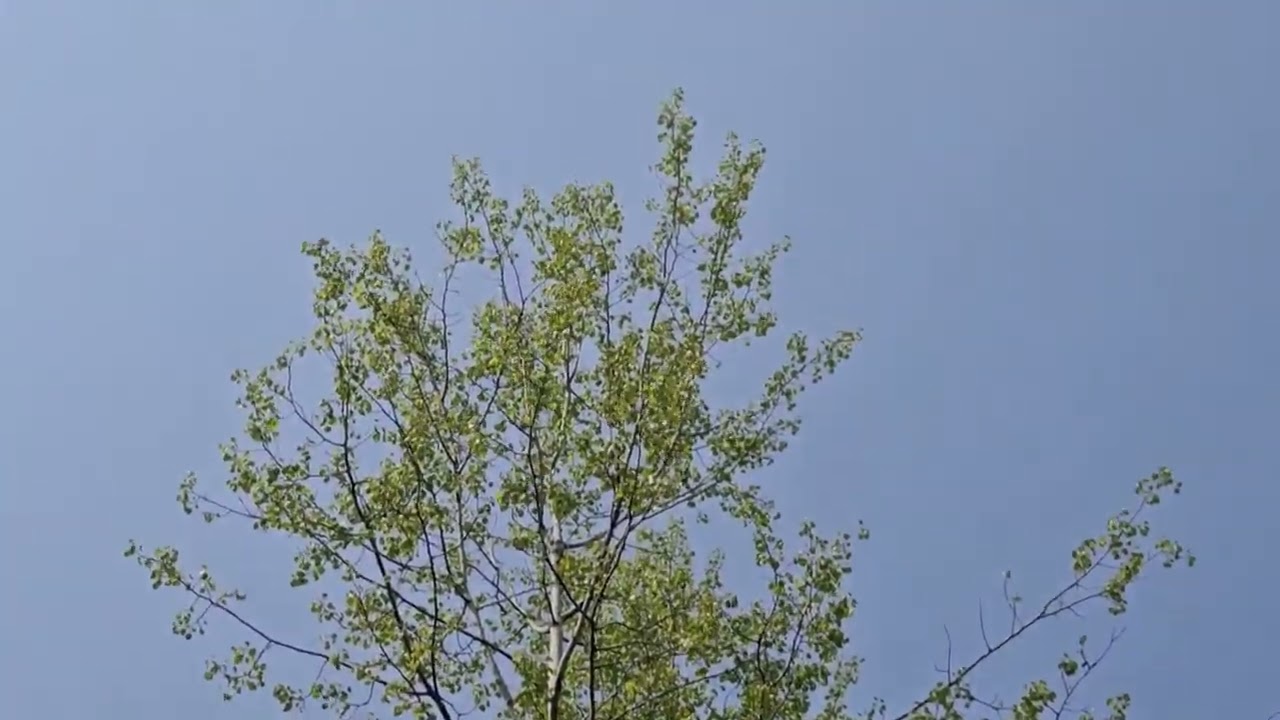
Identify a quaking aspen by combining its rounded, finely toothed leaves, flattened petioles, smooth pale bark, pointed buds, and hanging catkins. Pale bark alone isn’t reliable because birches and several other poplars can look similar from a distance.
Leaves and Flattened Petioles
A mature quaking aspen leaf is broadly rounded to oval, commonly 1.5–3 inches across, with small rounded teeth. Its upper surface feels smooth, while the paler underside catches light and produces a silver-green shimmer as the crown moves.
Vigorous sucker shoots may carry larger, less rounded leaves than upper branches. Beginners often reject a correct identification after examining one unusual shoot, so compare several mature leaves, bark, buds, and petioles.
Why Leaves Quake
Quaking aspen leaves shake because each blade hangs from a long petiole flattened from side to side. The thin stalk twists in light air currents, making the leaves flutter with a dry, papery rustle that can be heard before the breeze reaches nearby trees.
The motion may alter airflow, leaf temperature, light exposure, and gas exchange, but no single adaptive explanation has been settled. The direct mechanical cause remains the laterally flattened petiole.
Bark, Buds, and Catkins
Young bark is smooth, tight, and pale greenish white, cream, or gray-white, often marked by black branch scars. Pressing a clean surface feels cool and firm; older lower trunks become darker, thicker, and furrowed.
Twigs are slender, with pointed buds that may feel slightly resinous. Male and female flowers usually occur on separate trees or clones, making the species dioecious; both produce hanging catkins before full leaf emergence, but female catkins later release cottony seeds.
Aspen Versus Birch
Quaking aspen isn’t white birch. Aspen has rounded leaves, flattened stalks, and bark that doesn’t peel into broad paper sheets, while paper birch has more triangular leaves with sharper teeth and conspicuously peeling bark.
| Feature | Quaking aspen | Paper birch |
|---|---|---|
| Scientific name | Populus tremuloides | Betula papyrifera |
| Leaf shape | Rounded or broadly ovate | Ovate to triangular |
| Leaf margin | Fine, rounded teeth | Sharper, often double teeth |
| Petiole | Long and flattened sideways | Not strongly flattened |
| Bark | Smooth and pale; limited paper peeling | Peels into thin papery sheets |
| Family | Salicaceae | Betulaceae |
Young trees can still cause confusion, so don’t identify them from color alone. Our guide to birch wood also explains how birch differs after milling.
Bigtooth Aspen Comparison
Bigtooth aspen (Populus grandidentata) has larger, coarse leaf teeth that look easy to count without close inspection. New leaves may be woolly, while quaking aspen usually has finer rounded teeth and a wider continental range.
Both species sucker from roots and may form clones. See the full bigtooth aspen profile for differences in foliage, habitat, and wood.
European Aspen in Scotland
An aspen tree in Scotland is usually European aspen, Populus tremula, rather than North American P. tremuloides. Both have trembling leaves and clonal growth, so location and scientific name matter more than the common name.
Cottonwoods and Poplars
Aspens, cottonwoods, and true poplars all belong to Populus. Cottonwoods often have larger triangular leaves and favor river bottoms, while aspens typically have rounded leaves and occupy cool uplands, forest openings, and mountain slopes.
Common naming remains inconsistent in timber markets. Compare poplar wood, black cottonwood, and balsam poplar before selecting lumber by the word “poplar” alone.
Native Range, Habitat, and Ecology
Quaking aspen grows across a broader natural area than any other native North American tree, according to forestry references. Its range reflects exceptional cold tolerance, yet cold hardiness differs from the ability to withstand hot summers, dry soil, or warm nights.
North American Distribution
The species occurs from Alaska through Canada, the Great Lakes, New England, and the Rocky Mountains. Farther south, populations concentrate in high-elevation or cool locations and extend into mountain areas of Mexico.
The USDA Fire Effects Information System documents this broad range and the species’ varied ecological settings. A continental range map shouldn’t be treated as proof that every local yard can support it.
Climate, Sun, and Soil
Quaking aspen performs best in full sun, cool to moderate conditions, and aerated soil with dependable moisture. Deep loams often support the strongest growth, though the tree occupies varied soils across its range.
Standing water deprives roots of oxygen, while repeated drought weakens foliage and predisposes stems to cankers and borers. A cold winter zone rating can’t offset summer heat reflected from pavement or walls.
Associated Forest Communities
Aspen grows with lodgepole pine, Douglas-fir, Engelmann spruce, subalpine fir, white spruce, balsam fir, birches, willows, grasses, and meadow plants. These mixtures vary with latitude, elevation, soil moisture, disturbance, and local fire history.
Forest Succession
Quaking aspen is a shade-intolerant pioneer. It regenerates strongly in sunny openings after fire, cutting, or storm damage, then may decline as shade-tolerant conifers establish beneath its canopy.
This pattern isn’t fixed. Recurring disturbance, browsing, soil conditions, and moisture can preserve an aspen stand or prevent young suckers from replacing old stems. Light drives recruitment, but light alone doesn’t guarantee survival.
Fire Ecology
Aspen’s thin bark gives limited protection from intense fire, so flames often kill above-ground stems. Living roots may respond with dense sucker growth after canopy loss changes hormonal signals and sunlight reaches the ground.
Fire isn’t automatically beneficial. Deep soil heating can kill roots, and severe browsing can consume new stems before they escape the reach of deer or elk. Recovery depends on burn severity, moisture, root condition, season, and herbivore pressure.
Wildlife Value
Deer, elk, moose, hares, and rabbits browse aspen foliage, shoots, or bark. Beavers eat twigs and bark and use stems for construction, while woodpeckers excavate softened trunks that later provide nesting cavities for other birds.
- Young shoots provide nutritious browse.
- Dense groves offer cover and nesting structure.
- Flowers, foliage, and bark support insects eaten by birds.
- Decaying trunks provide cavity habitat.
- Beavers use branches for food and dam building.
Reproduction and Clonal Aspen Groves

Quaking aspen reproduces sexually through tiny wind-carried seeds and vegetatively through root suckers. Suckering dominates many established stands because a living root system can produce many replacement trunks after disturbance.
Seeds and Catkins
Male and female catkins usually grow on separate trees or clones and rely mainly on wind pollination. Female capsules release tiny seeds attached to silky hairs, but seed viability is brief under natural conditions.
Successful germination requires fresh seed, constant surface moisture, light, and exposed mineral soil or another receptive seedbed. Scattering stored seed across dry turf rarely works because the surface dries before delicate roots establish.
Root Suckers and Ramets
A root sucker develops from a bud on an existing root. Each visible trunk is a ramet, and cutting, burning, root injury, or increased sunlight can stimulate more ramets rather than stop growth.
Genets and Clonal Colonies
The complete genetically connected organism is a genet or clone. Neighboring stems may share leaf-out dates, fall color, and disease responses, but appearance alone can’t prove that an entire grove is one clonal colony.
Pando Clonal Colony
Pando is a male quaking aspen clone in Utah’s Fishlake National Forest. Frequently cited estimates describe about 106 acres, roughly 47,000 stems, and a collective mass near 6,000 metric tons, though counts vary by survey method.
The U.S. Forest Service Pando profile describes its connected growth. Claims that it’s the largest or oldest organism need qualification because organism boundaries and age are difficult to define for a renewing clone.
Pando’s exact age remains unknown. Browsing, poor recruitment, livestock pressure in some areas, disease, climate stress, and past management can all affect whether young stems survive to replace older trunks.
Stem and Clone Lifespans
An individual aspen stem may live 50–100 years on a favorable forest site, while stressed landscape stems may decline within a few decades. A clone can persist far longer by replacing trunks through continuing root growth.
Growing Quaking Aspen at Home
Quaking aspen grows well at home only where full sun, cool summers, reliable soil moisture, and room for root suckers occur together. It’s a poor fit for small beds, hot paved areas, or properties requiring low-maintenance boundaries.
Yard Suitability Checklist
Use this site test before buying. A “no” on summer climate or available root space carries more weight than a matching winter hardiness zone.
- Does the site receive at least six hours of direct sun?
- Are summers cool or moderate rather than persistently hot?
- Can the soil remain evenly moist without becoming waterlogged?
- Is there room for roots and shoots beyond the mature crown?
- Is the trunk protected from mowers and string trimmers?
- Is the tree well away from septic areas, paving, pools, retaining walls, and property lines?
- Can you accept repeated sucker removal or allow a natural grove?
Size and Spacing
Plan around a 40–50-foot tree with a 20–30-foot canopy, then reserve extra ground for roots and shoots. Canopy width alone understates the required area because suckers may emerge beyond the drip line.
Avoid narrow tree lawns and foundation beds. Roots don’t normally attack sound concrete, but they exploit moist openings, lift lightweight paving, and produce unwanted shoots around irrigation lines and garden edging.
Soil and Moisture
Use well-drained soil that retains some moisture and allows air to reach roots. A soil test gives better guidance than adding fertilizer automatically, since excess nitrogen can produce soft growth without correcting heat, drainage, or restricted root volume.
Planting Steps
- Confirm that local summer conditions suit quaking aspen.
- Locate the root flare at the trunk base.
- Dig no deeper than the root mass and two to three times wider where practical.
- Correct circling container roots before setting the tree.
- Place the root flare at or slightly above finished grade.
- Backfill mainly with the excavated native soil.
- Water slowly until the entire root mass is moist.
- Apply mulch over the root zone without touching the trunk.
- Stake only if the root ball remains unstable.
Planting too deeply is a common failure. If the trunk enters the soil like a telephone pole with no visible flare, remove excess media until the first structural roots sit near grade.
Watering, Mulching, and Pruning
Water deeply enough to moisten the root mass, then let the upper surface breathe rather than watering lightly every day. Check moisture by hand beneath the mulch; properly moist soil feels cool and crumbly, not dusty or slick.
Spread 2–3 inches of organic mulch across the root zone while leaving several inches clear around the bark. Remove dead, crossing, or infected branches with clean tools, and never top the crown.
Aspen Tree Pros and Cons
| Pros | Cons |
|---|---|
| Fast growth on suitable sites | Persistent root suckering |
| Fluttering foliage and pale bark | Thin bark is easily wounded |
| Bright golden fall color | Cankers and leaf diseases are common under stress |
| Wildlife food and cover | Poor performance in heat and drought |
| Can create a natural grove | Short-lived stems compared with many shade trees |
The best decision rule is simple: choose quaking aspen for a cool, open property where a grove is acceptable. Select another tree if the space is hot, dry, paved, confined, or must remain free of shoots.
Root Sucker Management
Remove young shoots while they’re small, but expect repeat growth. Cutting can trigger further sprouting, and shallow barriers seldom contain an extensive root system for long.
Don’t apply systemic herbicide casually to connected suckers. The chemical may move through shared tissue and injure the valued parent or neighboring stems in the same clone. Where roots cross property lines, use a qualified arborist and agree on access before treatment.
Practical Notes From Real-World Use
Field performance exposes problems that hardiness charts miss. Aspens planted beside dark paving often leaf out strongly, then develop scorched margins and sparse crowns after several hot summers because radiant heat and warm soil persist after sunset.
Lawn irrigation creates another trap: frequent spray wets bark and leaves but may penetrate only the upper inch of soil. A narrow probe or hand-dug inspection hole shows whether moisture reaches the active root zone.
Freshly cut suckers have pale, moist wood and may release several replacements around the cut during the next growth cycle. Where constant removal would cause frustration, the expert workaround is species substitution before planting, not permanent suppression afterward.
Quaking Aspen Problems
Common quaking aspen problems include cankers, bronze leaf disease, leaf spots, scales, borers, drought, heat, and bark injury. Several stresses often occur together, so a visible fungus may be the final damage agent rather than the original cause.
Cytospora Canker
Cytospora and related canker fungi commonly attack wounded, drought-stressed, or poorly adapted trees. Look for sunken bark, orange-brown discoloration, wet-looking areas, small fruiting bodies, and branch dieback.
Fungicide doesn’t restore a branch already girdled by canker. Reduce stress, prevent bark wounds, and prune infected branches back to sound tissue where the branch structure allows safe removal.
Hypoxylon Canker
Hypoxylon canker, associated with Entoleuca mammata, can create sunken lesions, peeling bark, mottled tissue, and rapid branch or stem death. Advanced infection may leave structurally weak wood that fails during wind or snow.
Bronze Leaf Disease
Bronze leaf disease, linked to Apioplagiostoma populi, turns leaves reddish brown, chocolate, or bronze, often while they remain attached. The pathogen can move into twigs and branches, making early diagnosis useful.
Prune beyond visibly affected tissue according to local extension guidance and sanitize tools between cuts. Leaf color alone doesn’t confirm the disease because drought, herbicide exposure, and root damage may produce similar symptoms.
Marssonina Leaf Spot
Marssonina leaf spot produces dark lesions, early yellowing, and premature leaf fall, especially in wet weather. Remove fallen leaves, improve airflow, and keep irrigation off the canopy when possible.
One late-season outbreak is often cosmetic, but repeated early defoliation drains stored energy. Trees already weakened by drought or cankers face the greatest decline risk.
Insects and Borers
Oystershell scale, aphids, leaf miners, tent-making caterpillars, defoliating beetles, and poplar borers may attack aspen. Borers frequently exploit stressed trees, so killing an insect without correcting drought or root restriction offers limited lasting benefit.
Heat, Drought, and Damage
Heat and drought cause scorched leaf margins, sparse foliage, premature color, and branch dieback. Compaction, deicing salt, waterlogging, deep planting, sunscald, and root trenching can create similar decline.
Thin bark tears easily under mower decks and string trimmer line. A fresh wound feels damp and shows green tissue beneath the pale surface, creating a direct opening for decay and canker fungi.
Diagnosis and Prevention
Begin diagnosis with the whole site rather than one leaf. Check planting depth, recent construction, irrigation coverage, soil drainage, trunk wounds, branch distribution, and whether symptoms occur on one stem or every stem in a clone.
| Symptom | Possible cause | Useful next check |
|---|---|---|
| Sunken dead bark | Cytospora or Hypoxylon canker | Inspect lesion margins and branch stability |
| Bronze leaves remain attached | Bronze leaf disease | Check twigs and obtain a laboratory diagnosis |
| Dark spots and early leaf drop | Marssonina leaf spot | Review wet weather and overhead irrigation |
| Holes, frass, or galleries | Borers | Assess drought, root damage, and insect identity |
| Scorched margins across the crown | Heat, drought, salts, or root loss | Measure soil moisture below the surface |
University diagnostic laboratories or certified arborists can separate diseases that look alike. Avoid broad pesticide treatment until the pest is identified, since cosmetic feeding, vascular damage, and climate stress need different responses.
Aspen Wood Properties and Uses
Aspen wood is a pale, lightweight hardwood with low density, modest hardness, straight grain, and poor natural decay resistance. It works well for pulp, composite panels, boxes, carvings, sauna components, and indoor utility products.
Wood Properties Table
| Property | Approximate quaking aspen value or description |
|---|---|
| Botanical category | Hardwood angiosperm |
| Color | Pale cream to nearly white sapwood; light brown heartwood |
| Air-dry density | About 26 pounds per cubic foot |
| Janka hardness | About 350 pounds-force |
| Specific gravity | Roughly 0.35–0.40, depending on test basis |
| Grain | Usually straight with a fine, even texture |
| Decay resistance | Low |
| Odor | Low or neutral when dry |
These values vary with moisture content, test standard, and growth site. The Wood Database quaking aspen profile reports physical data useful for comparison; review the broader density of wood guide before comparing numbers from different moisture conditions.
Hardness and Workability
Despite its botanical hardwood classification, aspen is physically soft. Its approximate 350-pound-force Janka rating places it well below oak or hard maple; see the wood hardness scale for context.
Sharp cutters leave a clean, pale surface, while dull blades lift fibers into a soft fuzzy nap that becomes obvious under fingertips. Light sanding between finish coats controls raised grain, but aggressive sanding can round crisp edges quickly.
Lumber and Commercial Uses
Commercial quaking aspen uses include pulp and paper, oriented strand board, crates, pallets, matches, excelsior, packing material, and hidden furniture components. Low weight reduces handling effort, while pale color suits products where visual neutrality matters.
Aspen isn’t a good untreated choice for soil contact or wet exterior structures because decay resistance is low. Buyers comparing pale species can review other light-colored wood options with better hardness or durability.
Household Uses
At home, aspen works for carvings, painted utility projects, lightweight boxes, sauna benches, turning blanks, and processed animal bedding. Its low heat conductivity makes sauna seating feel less searing against bare skin than dense materials.
The wood’s mild odor and taste can suit some food-contact items, but finish choice, sanitation, grain direction, and local product rules still matter. Don’t use bark remedies or “aspen bark benefits” claims as substitutes for medical care; landscaping bark may carry pesticides or contaminants.
Aspen Firewood
Properly seasoned aspen burns readily but produces less heat per cord than dense hardwoods because it contains less wood mass. It works best for kindling, mild-weather fires, or mixing with denser logs rather than long overnight heating.
Split pieces feel strikingly light once dry and ignite quickly, but they also burn down faster. Poorly seasoned rounds hiss, darken the firebox glass, and waste heat, so measure moisture in the freshly split face before burning.
Propagating and Buying Quaking Aspen
Live seedlings or locally sourced dormant saplings offer more dependable establishment than stored aspen seed. Whichever form you choose, verify Populus tremuloides, source region, plant condition, shipping rules, and room for future suckering.
Seeds Versus Nursery Stock
Seeds are light and useful for propagation projects, but their short viability and strict moisture needs create high uncertainty. Nursery stock removes the germination stage, though it can still fail after heat exposure, root drying, deep planting, or poor climate matching.
| Stock type | Main benefit | Main risk |
|---|---|---|
| Fresh seed | Genetic diversity and low shipping weight | Brief viability and demanding moisture control |
| Live seedling | Germination stage is complete | Small roots dry and overheat quickly |
| Bare-root sapling | Economical dormant shipping | Exposed roots can desiccate within minutes |
| Potted tree | Larger established root mass | Circling roots and shipping stress |
Stock and Planting Timing
Plant dormant bare-root material in early spring after workable soil returns but before active leaf growth. Container stock offers a wider window, yet cool spring or early autumn conditions reduce transplant stress compared with midsummer planting.
Regional provenance matters because stock adapted to cold mountains may struggle in warmer lowlands despite surviving winter temperatures. Ask where the parent material originated and whether the nursery has tested it under local summer conditions.
Bare-Root Saplings
Unpack bare-root saplings in shade and keep roots damp from opening through planting. Roots exposed to dry wind develop a dull, leathery surface quickly; wrap them in moist material while preparing the hole.

Quaking Aspen Bare Root Saplings
- Includes three bare root saplings
- Populus tremuloides native tree
- Dormant plants suited to outdoor planting
- Fast-growing shade tree potential
- Hardy deciduous landscaping choice
 Buy on Amazon
Before ordering, confirm shipment timing, dormant condition, actual plant height, source region, state restrictions, and the live-arrival policy. Listing photographs may show mature trees rather than the shipped bare-root size.
Live Seedlings
Live seedlings avoid the most uncertain germination stage but need immediate protection from drying, heat, and browsing. Acclimate plants gradually if they arrive from sheltered conditions rather than placing tender foliage straight into intense sun.

Quaking Aspen Seedling Pack
- Five live quaking aspen seedlings
- Native deciduous shade tree
- Known for pale bark and fluttering leaves
- Cold-hardy choice for suitable climates
- Useful for yards and wildlife plantings
Buy on Amazon
A live seedling can still be unsuitable for the property. Check regional provenance, summer heat tolerance, rooting volume, arrival condition, and whether long-term sucker growth is acceptable.
Seed-Growing Kits
A seed-growing kit works best as an educational project rather than the fastest route to a landscape tree. Ask for harvest timing, storage method, expected germination, and instructions for maintaining constant surface moisture.

Quaking Aspen Seed Grow Kit
- Seed kit for growing quaking aspen
- Grow Populus tremuloides from seed
- Hands-on option for tree gardeners
- Suitable for starting a native tree project
- Compact kit for gifting or learning
Buy on Amazon
Sow on a bright, moist surface rather than burying the fine seed deeply. A clear cover can slow moisture loss, but trapped heat and stagnant air may encourage fungal collapse, so monitor temperature and provide gentle ventilation.
Buyer Verification Checklist
Use this buyer verification checklist before paying for seeds, seedlings, or saplings. Product format matters less than correct identity, healthy stock, suitable provenance, and a workable planting site.
- Confirm the botanical name Populus tremuloides.
- Ask where the parent stock or seed originated.
- Check adaptation to local summer heat, not winter temperature alone.
- Verify height, caliper, age, and quantity at shipment.
- Confirm whether plants ship dormant, bare-root, potted, or actively growing.
- Review state agricultural and phytosanitary restrictions.
- Read the live-arrival and replacement terms.
- Ask how seed was harvested and stored.
- Inspect potted stock for circling or girdling roots.
- Choose the planting site before ordering.
- Don’t buy quaking aspen if permanent sucker suppression is required.
A correctly labeled, locally adapted plant still needs attentive establishment and sufficient space. Where those conditions exist, quaking aspen offers moving foliage, pale bark, wildlife habitat, fast growth, and clear golden fall color unlike most other yard trees.
FAQs
Why Do Quaking Aspen Leaves Shake?
Quaking aspen leaves shake because their flat leaf stems let even light breezes move them easily. This fluttering creates the tree’s familiar shimmering sound and appearance through the canopy. The flexible petioles also help leaves catch light and may reduce wind damage.
How Big Do Quaking Aspens Get?
Quaking aspens usually grow 40 to 60 feet tall, although mature trees can reach about 80 feet in favorable conditions. They commonly spread 20 to 30 feet wide. Growth is fastest in sunny sites with cool temperatures, adequate moisture, and well-drained soil.
Are Quaking Aspen Roots Invasive?
Quaking aspen roots can be invasive because they spread widely and produce suckers that form new shoots. These roots may appear in lawns, garden beds, and nearby open areas, especially after the parent tree is stressed or cut. Plant aspens away from foundations, pipes, and small landscaped spaces.
Is A Quaking Aspen Grove One Tree?
A quaking aspen grove can be one tree because many stems may grow from a single shared root system. These genetically identical stems are called clones and can cover large areas over time. A grove may also contain several separate clones, so not every aspen stand is a single organism.
Is Quaking Aspen A Good Yard Tree?
A quaking aspen can be a good yard tree in the right location, especially in cool climates with ample space. It offers fast growth, bright fall color, and attractive fluttering leaves. However, its suckering roots, short lifespan, and sensitivity to heat or drought can make it difficult for small or low-maintenance yards.
Affiliate Disclosure: Some links in this post are affiliate links. If you make a purchase through these links, we may earn a small commission at no extra cost to you. We only recommend products we genuinely believe in.