
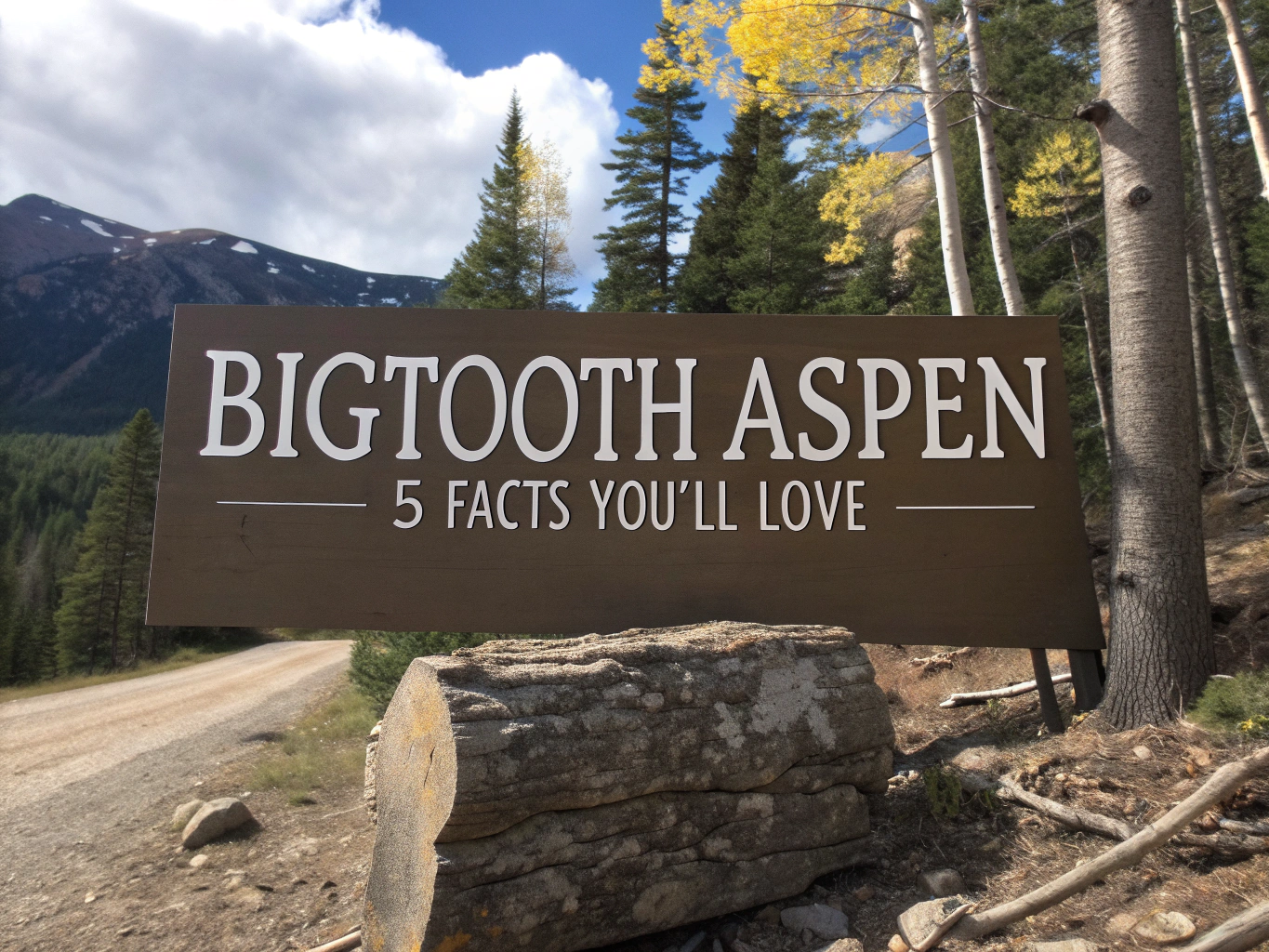
Bigtooth Aspen: Identification, Bark, Leaf, and Growing Guide

Bigtooth aspen is a fast-growing native deciduous tree of eastern and north-central North America, known scientifically as Populus grandidentata. You can identify it by its broad leaves with large rounded teeth, smooth gray-green young bark, trembling petioles, catkins, and yellow fall color.
What Is Bigtooth Aspen?
Bigtooth aspen is a medium to large aspen species in the poplar family, and it often appears early after fire, logging, storm gaps, or soil disturbance. The tree grows fast, needs strong sun, and plays a clear role in young forest habitat before longer-lived hardwoods such as maple, beech, and oak close the canopy.
The species name is supported by the USDA Plants Database, which lists Populus grandidentata as a native North American tree. In the field, the name makes sense as soon as you hold a leaf: the margin feels coarse and scalloped under your thumb, unlike the finer edge of quaking aspen.
Quick Facts Table
| Feature | Bigtooth Aspen Details |
|---|---|
| Scientific name | Populus grandidentata |
| Family | Salicaceae |
| Plant type | Deciduous tree |
| Native range | Eastern and north-central North America |
| Typical height | 50–80 feet, sometimes near 100 feet on strong sites |
| Typical spread | 20–40 feet |
| Leaf trait | Broad leaf with large rounded teeth |
| Bark trait | Smooth gray-green when young; darker and furrowed with age |
| Light need | Full sun |
| Growth habit | Fast-growing, shade-intolerant, often suckers from roots |
| Fall color | Yellow to golden-yellow |
| Main uses | Wildlife habitat, pulpwood, restoration, early successional cover |
Scientific Name
The scientific name of bigtooth aspen is Populus grandidentata, often written as Populus grandidentata Michx. The genus Populus includes aspens, poplars, and cottonwoods, so this tree sits close to species covered in our guide to poplar wood.
Common Names
Common names include bigtooth aspen, big-toothed aspen, large-toothed aspen, largetooth aspen, American aspen, and poplar. “Big tooth aspen tree” is a common search phrase, but the accepted spelling in most plant references is bigtooth aspen.
Tree Overview
A mature bigtooth aspen tree commonly reaches 50–80 feet tall with a straight trunk in forest stands. In open sites, the crown can widen and become uneven, while forest-grown trees tend to climb upward with slender branches and a narrower top.
Taxonomy and Meaning
Grandidentata means large-toothed, which points directly to the leaf margin rather than the bark, trunk size, or wood. This matters because beginners sometimes look for “big teeth” in the bark cracks, then miss the real clue sitting on the leaf edge.
How to Identify Bigtooth Aspen
Identify bigtooth aspen by combining leaf shape, bark age, twig texture, catkins, and site conditions. Leaf teeth give the fastest warm-season clue, while bark alone can mislead because young trunks look smooth and pale but older trunks turn darker, rougher, and more poplar-like.
- Check the leaf edge: large rounded teeth point to bigtooth aspen.
- Look at bark age: young bark is smooth gray-green; old bark is darker and furrowed.
- Watch the leaf movement: flattened petioles make leaves tremble in light wind.
- Study the site: sunny disturbed uplands fit better than deep shade or wet floodplain soil.
- Use more than one trait: bark, leaf, buds, and habitat together reduce mistakes.
Tree Shape
The tree shape is usually straight-trunked and medium to tall, especially in woods where light competition pushes the crown upward. On old field edges, I often see small groups rather than single trees, a sign that root suckers may be filling the open ground.
Bigtooth Aspen Bark
Bigtooth aspen bark starts smooth, gray-green, olive-gray, or pale gray, often with darker lenticels that look like short horizontal marks. Mature bark becomes gray-brown, rough, furrowed, and scaly near the base; when you run a hand over older bark, it feels dry and ridged instead of cool and slick like a young stem.
Bigtooth Aspen Leaf
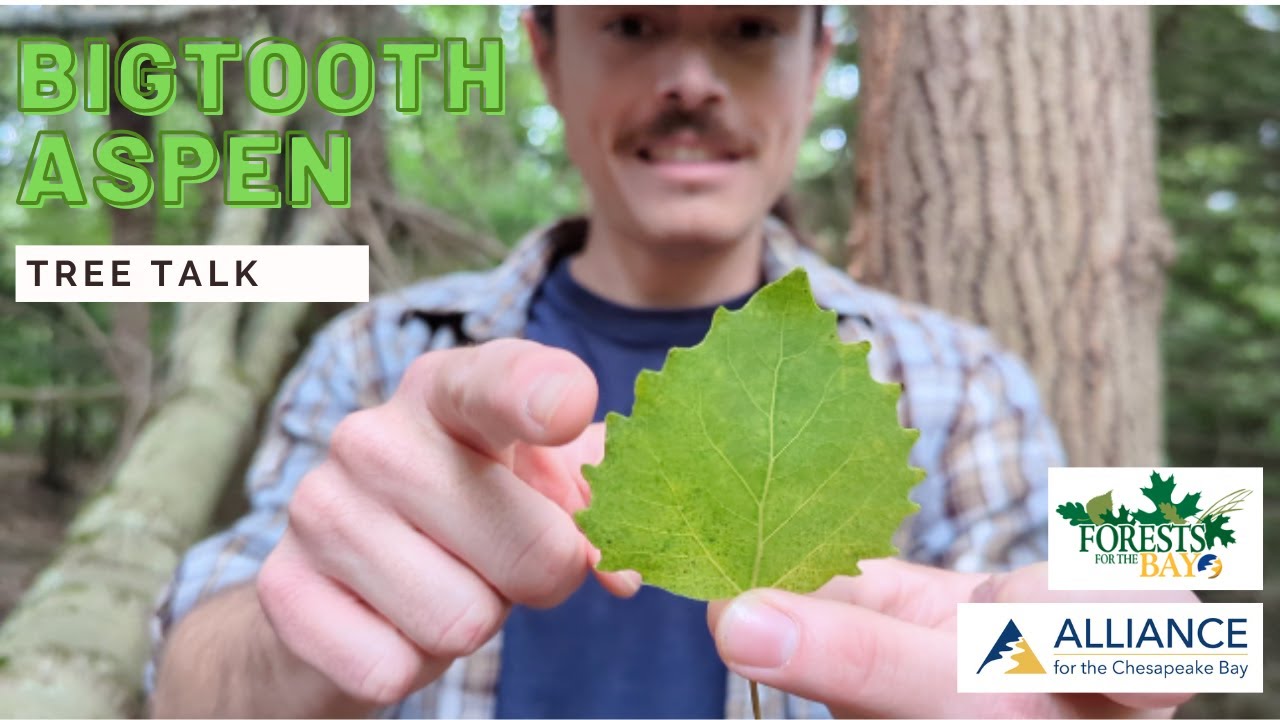
A bigtooth aspen leaf is simple, alternate, broadly oval to nearly round, and usually about 2–4 inches long. The large rounded teeth are fewer and wider than quaking aspen teeth, and fresh spring leaves can feel faintly fuzzy or woolly before they flatten and turn green.
Buds and Twigs
Buds and twigs help most in winter, when leaves are gone and bark can vary with age. Buds are alternate and may look slightly hairy compared with quaking aspen, while twigs stay fairly slender; beginners often skip a hand lens here, but a small lens makes bud texture much easier to judge.
Catkins and Seeds
Catkins appear before or as leaves emerge, with male and female flowers on separate trees. Female trees form capsules that release tiny cottony seeds, and those seeds drift like lint in spring air; they’re easy to see in sunlight but hard to collect cleanly because they cling to sleeves, fingers, and seed trays.
Seasonal ID Tips
Seasonal ID is easiest in mid-to-late spring and summer, once leaves expand and the coarse margin is clear. Fall adds yellow color, while winter requires bark, buds, site, and growth pattern; older trunks can fool people who expect every aspen to stay pale and smooth.
Visual practice helps because leaf movement, bark sheen, and crown form are easier to learn when you see the tree in motion rather than from a single still image.
Bigtooth Aspen vs Quaking Aspen
Bigtooth aspen differs from quaking aspen mainly by its larger, coarser, rounded leaf teeth. Both trees have trembling leaves and root-suckering habits, but quaking aspen has a much broader range and usually shows finer teeth along the leaf edge.
Comparison Table
| Feature | Bigtooth Aspen | Quaking Aspen |
|---|---|---|
| Scientific name | Populus grandidentata | Populus tremuloides |
| Leaf teeth | Large, coarse, rounded teeth | Small, fine, closely spaced teeth |
| Leaf size | Often 2–4 inches | Often 1.5–3 inches |
| Young leaves | Often silvery or woolly | Usually less woolly |
| Bark | Gray-green young; darker and furrowed with age | Pale greenish-white to white-gray, often smoother longer |
| Petiole | Flattened, leaves tremble | Flattened, leaves tremble strongly |
| Range | Eastern and north-central North America | Broad across northern and western North America |
| Best field clue | Large rounded leaf teeth | Many small fine leaf teeth |
Leaf Teeth Difference
The leaf teeth difference is the fastest way to separate the two aspens in leaf. Bigtooth aspen has fewer, larger, rounded teeth, while quaking aspen has many smaller teeth that make the margin look more finely serrated.
Bark Difference
The bark difference can help, but it’s less reliable than leaves because both trees change with age. Bigtooth aspen bark often becomes darker and rougher lower on the trunk, while quaking aspen tends to keep a paler, smoother look longer on many sites.
Range Difference
The range difference matters when you’re identifying aspens without leaves. Bigtooth aspen is mainly an eastern and north-central species, while quaking aspen reaches across much more of northern and western North America.
Shared Aspen Traits
Shared traits include flattened petioles, fluttering leaves, catkins, cottony seeds, fast early growth, and root suckering after disturbance. These similarities explain why a single trait rarely gives a safe ID, especially on young trees in mixed stands.
Common Lookalikes
Common lookalikes include cottonwoods, gray birch, American beech, and planted hybrid poplars. Birch can share pale bark, beech can share smooth gray trunks, and cottonwoods share the Populus genus, so use leaf margin, petiole shape, habitat, and bark texture together.
Where Bigtooth Aspen Grows
Bigtooth aspen grows across eastern and north-central North America, especially in sunny uplands, disturbed woods, clearcuts, old fields, and mixed hardwood forests. It prefers open light and well-drained soil more than wet bottomlands or dense shade.
The USFS Silvics Manual describes bigtooth aspen as a species of northeastern and north-central forests with strong early growth on suitable sites. In practical terms, it fits cool to moderate regions better than hot, compacted urban strips.
Native Range
The native range includes southeastern Canada, the northeastern United States, the Great Lakes region, the Upper Midwest, and parts of the Appalachian region. In Ohio and nearby states, people looking for fast growing trees may find bigtooth aspen in natural stands, but nursery stock can be less common than maple, birch, or ornamental poplars.
Typical Habitat
Typical habitat includes open woods, forest edges, burned areas, clearcuts, rocky uplands, sandy slopes, old fields, and young mixed hardwood stands. It often appears where sunlight hits bare or disturbed soil, then declines later as shade-tolerant trees overtop it.
Soil Conditions
Soil conditions matter more than many beginners expect because bigtooth aspen dislikes compaction and standing water. Moist, well-drained sandy loam or loam is best; heavy clay, sealed construction soil, and soggy low spots often produce weak growth and more disease pressure.
Light Requirements
Light requirements are simple: bigtooth aspen wants full sun. Seedlings and suckers weaken in shade, and shaded stems often become thin, stretched, and prone to breakage as taller hardwoods close in.
Regional Abundance
Regional abundance changes with disturbance history, soil, deer pressure, and forest age. A county can have plenty of bigtooth aspen along powerline cuts and young forest edges, while nearby mature woods may show almost none because the canopy has closed.
Growth, Reproduction, and Planting
Bigtooth aspen grows quickly in full sun, usually reproduces well from root suckers after disturbance, and can be planted on large naturalized sites. It is less suited to small formal yards because suckering, short life, cankers, and shallow spreading roots can become management problems.
Height and Spread
Height and spread usually fall near 50–80 feet tall and 20–40 feet wide, with some forest trees approaching 100 feet on favorable sites. Trunks commonly reach 1–2 feet in diameter, and open-grown crowns can look broader and less tidy than forest-grown crowns.
Growth Rate
Growth rate is fast during youth, especially on sunny, moist, well-drained soil. That fast growth is useful for restoration and shade, but the trade-off is softer wood and a shorter service life than oak, hard maple, or hickory.
Lifespan
Lifespan commonly runs about 50–100 years, with earlier decline on poor sites or where canker diseases enter wounded stems. If you plant it near a structure, plan for inspection as it ages rather than treating it like a long-lived legacy shade tree.
Root Suckering
Root suckering is a normal bigtooth aspen trait, not a defect. Cutting, fire, storm damage, trenching, or mower injury can trigger many new shoots, so place the tree where a small grove is acceptable rather than fighting suckers every season.
Growing From Seed
Growing from seed is possible, but the seed is tiny, short-lived, and easy to bury too deep. Use a moist surface-sown setup with light exposure and steady humidity; if the mix dries until it feels dusty between your fingers, germination often drops sharply.
Seed packs can help hobby growers start small trials, but use local ecotype stock for restoration plantings when possible.
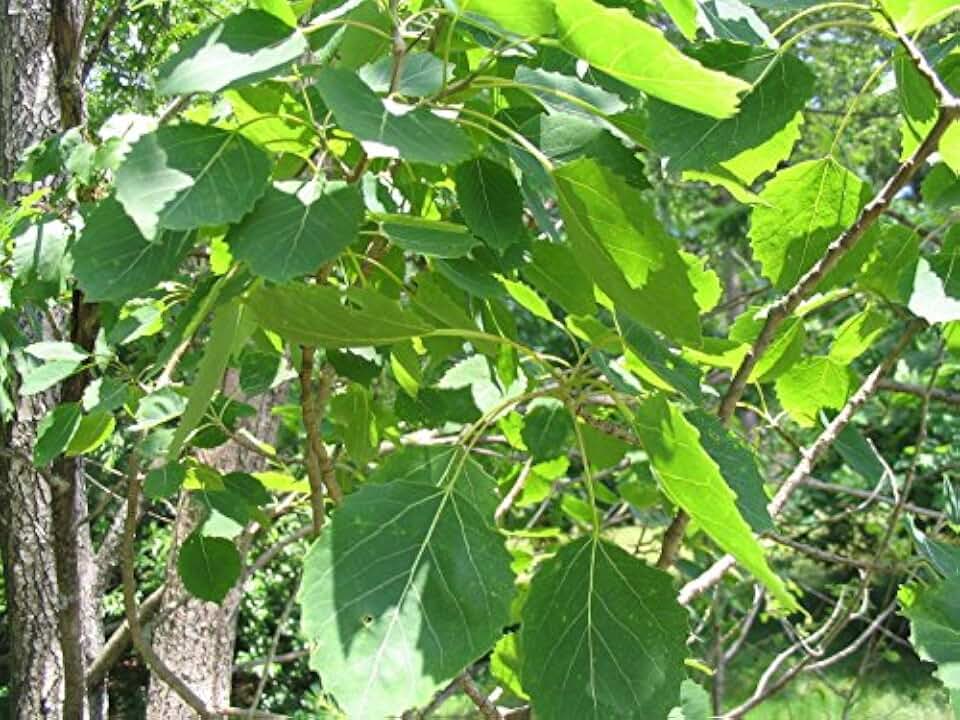
Bigtooth Aspen Seeds
- Great for home growers and hobby gardeners
- Easy way to start a native tree from seed
- Compact pack with many seeds for planting
- Suitable for outdoor beds or seed-starting trays
- Ideal for anyone wanting a fast-growing shade tree
 Buy on Amazon
Landscape Suitability
Landscape suitability is best on large properties, wildlife edges, restoration sites, and naturalized groves. Practical notes from real-world use: avoid planting beside sidewalks, septic fields, foundations, tight lawns, or formal beds, because root suckers and surface roots create constant cleanup and mowing conflicts.
Wildlife and Ecological Value
Bigtooth aspen supports early successional wildlife by producing browse, cover, insects, cavities in older stems, and young forest structure. It is especially valuable where land managers want sunny, regenerating forest rather than closed-canopy mature woods.
The USFS Fire Effects Information System notes the species’ role in disturbance-driven forests. That role explains why a messy-looking patch of suckers can be useful habitat, not just “brush.”
Mammals
Mammals use bigtooth aspen for browse, bark, twigs, and cover. White-tailed deer may browse young shoots heavily, beaver can cut stems near water, and northern areas may see use by moose where ranges overlap.
Birds
Birds benefit from aspen stands because young growth creates dense cover and older stems can form cavities. Ruffed grouse, woodpeckers, cavity nesters, and songbirds often use aspen-rich patches, especially where the stand has varied stem sizes.
Insects
Insects feed on leaves, buds, catkins, and wood, which then supports birds and other wildlife. Leaf feeding can look alarming in late summer, with ragged edges and speckled surfaces, but healthy trees often tolerate light to moderate damage.
Pioneer Forest Role
The pioneer forest role is one of bigtooth aspen’s greatest strengths. It captures open sunlight quickly, adds leaf litter, stabilizes disturbed soil, and creates conditions where later-successional trees can establish beneath or nearby.
Restoration Uses
Restoration uses include young forest creation, wildlife browse, disturbed-site recovery, and native edge planting. The main mistake is planting it like a specimen ornamental; it performs better when treated as a grove-forming native tree with room to move.
Pests, Diseases, and Problems
Bigtooth aspen problems often start with stress: drought, shade, trunk wounds, compacted soil, poor drainage, or heat outside its best range. Cankers, borers, leaf spots, and root issues become more serious when the tree is already weakened.
The University of Minnesota Extension describes Hypoxylon canker as a damaging disease of aspen. In practice, mower scars and string-trimmer cuts near the trunk are some of the easiest preventable entry points.
Canker Diseases
Canker diseases include Hypoxylon canker, Cytospora canker, and sooty bark canker. Watch for sunken bark, dead patches, cracked areas, branch dieback, and weak stems; once a trunk canker girdles a large part of the stem, there is no clean “spray fix.”
Leaf Diseases
Leaf diseases include Marssonina leaf spot and Melampsora leaf rust. A single spotted-leaf season rarely kills a vigorous tree, but repeated early defoliation can reduce energy reserves, especially on drought-stressed or shaded trees.
Insect Pests
Insect pests may include forest tent caterpillar, spongy moth, aspen leaf miner, bronze poplar borer, and leaf beetles. The professional workaround is to judge vigor first: a healthy tree can regrow after moderate defoliation, but a cankered or drought-stressed tree may need closer monitoring or removal near targets.
Root and Trunk Issues
Root and trunk issues include Armillaria root rot, decay in older stems, storm breakage, and injury from construction. Avoid grade changes over roots, and don’t pile mulch against the trunk; damp bark at the root collar often smells sour and invites decay problems.
Stress Prevention
Stress prevention starts with full sun, well-drained soil, enough space, and no trunk wounds. Water new plantings during dry spells, keep mulch wide but off the bark, and remove hazardous declining trees before brittle limbs become a safety issue.
Wood Uses and Further Resources
Bigtooth aspen wood is light-colored, lightweight, relatively soft, and useful for pulp, fiber products, crates, pallets, and similar low to moderate strength applications. It burns as firewood, but it burns faster and gives less heat than dense hardwoods such as oak, hickory, locust, or hard maple.
The USDA Wood Handbook gives technical context for wood properties and use categories. If you’re comparing pale, lightweight woods, our guide to light-colored wood gives useful material comparisons.
Wood Characteristics
Wood characteristics include pale color, low density, soft texture, and modest strength. Aspen boards can feel almost dry and papery in the hand compared with denser hardwoods, and the wood cuts easily but dents readily under pressure.
Forestry Uses
Forestry uses include pulpwood, paper, fiberboard, particleboard, oriented strand board, pallets, crates, boxes, and wildlife habitat management. Bigtooth aspen can regenerate strongly after cutting, so managers often use even-aged systems where young aspen habitat is desired.
Firewood Value
Firewood value is fair to low compared with dense hardwoods. It dries fairly quickly and can work for shoulder-season fires or kindling, but it pops, burns fast, and won’t hold coals like maple, ash, oak, or birch wood.
Buying Availability
Buying availability varies because bigtooth aspen is less common as an ornamental nursery tree than many shade trees. Look for seed packets, bare-root conservation seedlings, native plant nurseries, and forestry stock; don’t dig wild suckers without permission and local compliance.
Reference Guide
Reference material is useful if you want deeper forestry details, growth data, and wood-use context beyond field identification. A classic reprint can be handy for tree science readers, students, and anyone comparing bigtooth aspen with other aspens and poplars.

Bigtooth Aspen Guide
- Classic study of the bigtooth aspen species
- Covers growth habits and wood characteristics
- Useful for forestry students and researchers
- Trusted reprint of a detailed reference work
- Great for nature and tree science readers
Buy on Amazon
FAQs
What Is The Difference Between Bigtooth Aspen And Quaking Aspen?
Bigtooth aspen has larger, more sharply toothed leaves than quaking aspen. It also tends to grow a bit larger and is more common in warmer or drier sites, while quaking aspen is usually the more widespread species. Both are fast-growing poplars with similar pale bark and fluttering leaves.
What Does Bigtooth Aspen Bark Look Like?
Bigtooth aspen bark is smooth and greenish-white when the tree is young. As it matures, the bark becomes lighter gray-white and may develop dark markings or shallow roughness near the base. The bark stays fairly thin compared with many other hardwood trees.
How Tall Does A Bigtooth Aspen Tree Get?
Bigtooth aspen usually grows 50 to 80 feet tall, and some mature trees can reach around 100 feet in good conditions. Growth is often fastest when the tree has plenty of sun and moisture. Its narrow, upright form makes it stand out in open landscapes.
Does Bigtooth Aspen Spread By Roots?
Yes, bigtooth aspen can spread by root suckers. This means new stems may appear from the tree’s root system and form small groves over time. In the right setting, this is normal and can help the tree regenerate naturally after damage or cutting.
Is Bigtooth Aspen Good For Yards?
Bigtooth aspen can be a good yard tree if you have space and want a fast-growing native species. It works best in larger yards where root spread and leaf litter are not a problem. For small spaces, it may be less ideal because it can sucker and prefers room to grow.
Affiliate Disclosure: Some links in this post are affiliate links. If you make a purchase through these links, we may earn a small commission at no extra cost to you. We only recommend products we genuinely believe in.