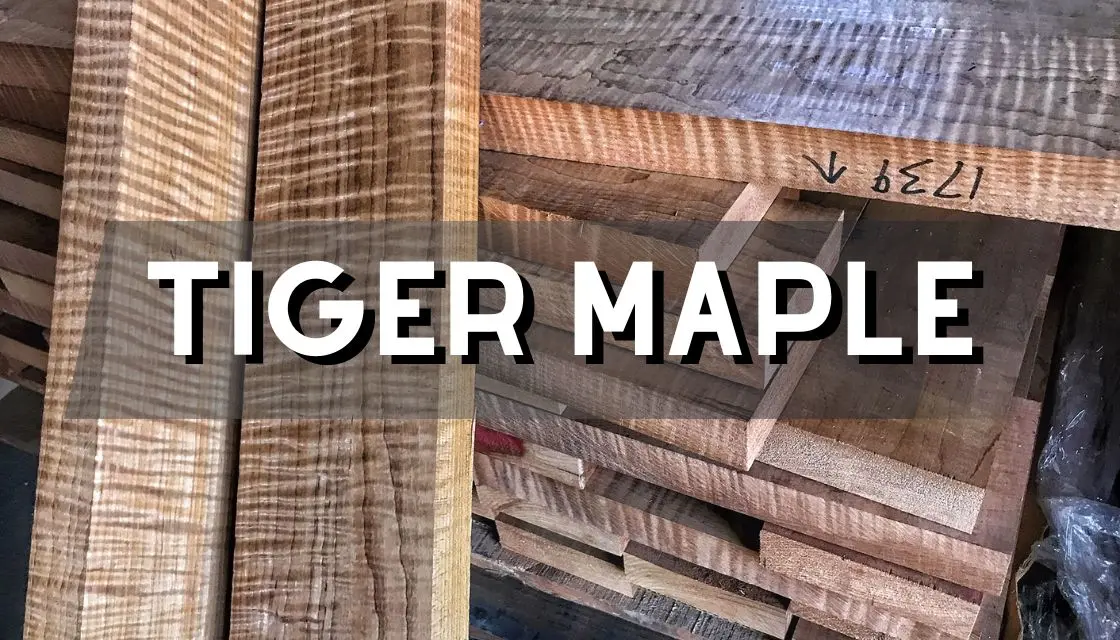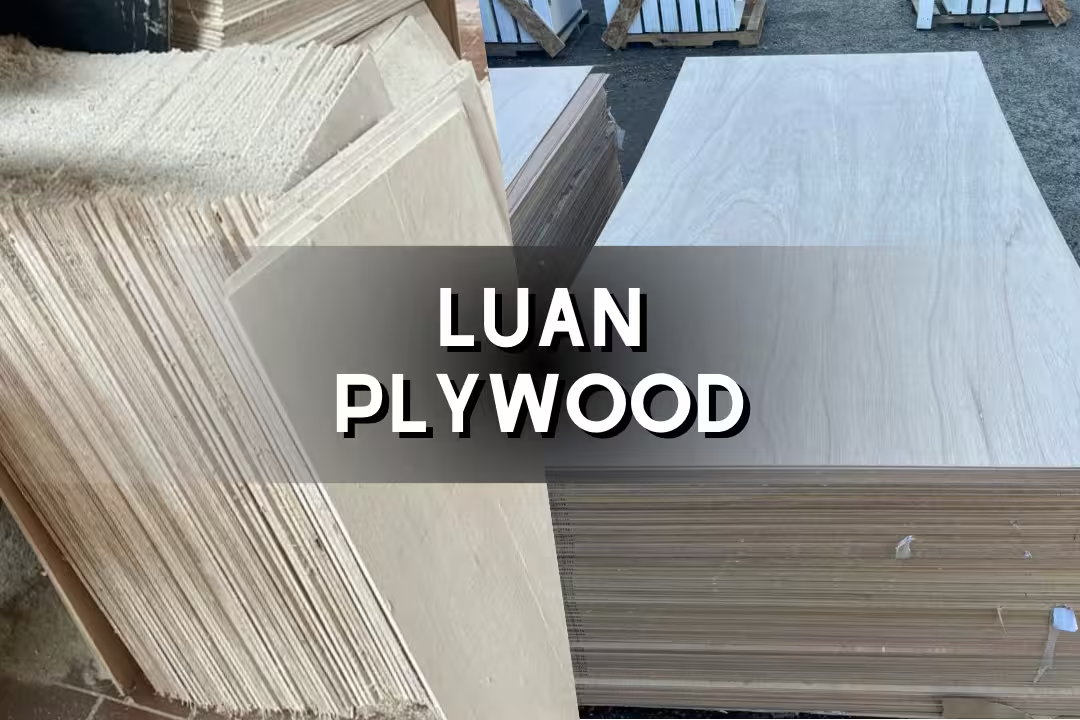


Linden wood is pale, fine-textured timber from trees in the Tilia genus; North American material is commonly called basswood, while European species are called lime or linden. This soft, lightweight hardwood carves cleanly but dents easily and has poor natural resistance to damp conditions.
Its best uses include carving, painted crafts, models, musical-instrument parts, veneer, and laser-rated sheets. Buyers should check the botanical species and panel construction because linden, basswood, and plywood don’t share one fixed set of properties.
Table of Contents
What Is Linden Wood?
What is linden wood? It is timber cut from deciduous, broadleaf trees in the Tilia genus. Its low hardness, fine grain, and subdued color make it easier to carve than oak, maple, or most furniture hardwoods.
Definition and Tilia Taxonomy
Tilia contains multiple accepted species rather than one universal timber type. Examples include American basswood, Tilia americana; small-leaved lime, Tilia cordata; and large-leaved lime, Tilia platyphyllos. The Kew Plants of the World Online database provides species-level taxonomy for checking scientific names.
Published density and strength figures must identify the species. A figure measured for American basswood can’t be assigned automatically to European lime, hybrids, or an unlabeled craft sheet.
Linden, Basswood, and Lime
Basswood is the standard North American lumber name, particularly for Tilia americana. Linden is a broader common name, while lime is widely used in Britain and Europe; the European lime tree is unrelated to citrus lime.
A merchant may use linden and basswood interchangeably, but technical purchases need a botanical name. Our separate basswood guide covers the North American commercial material in greater depth.
Name and Species Table
| Common name | Likely species or group | Region | Common commercial use |
|---|---|---|---|
| Linden | Multiple Tilia species | Europe and North America | Carving, crafts, interior parts |
| American basswood | Tilia americana | North America | Carving blanks, lumber, instrument bodies |
| Small-leaved lime | Tilia cordata | Europe and western Asia | Carving, turning, interior work |
| Large-leaved lime | Tilia platyphyllos | Europe | Carving and decorative work |
| European lime | European Tilia species or hybrids | Europe | Sculpture, carving, veneer |
| Linden plywood | Thin veneers; core species may differ | Varies | Laser projects, models, lightweight panels |
The table shows why trade names overlap. “Linden sheet” may mean solid-sawn stock, linden veneer, or plywood with a different core and adhesive system.
Hardwood or Softwood?
Linden is botanically a hardwood because it comes from a flowering broadleaf tree. Its low Janka rating makes it physically soft, but hardness doesn’t change its botanical classification.
American basswood measures about 410 pounds-force on the Janka scale, far below hard maple. The distinction between botanical class and measured hardness is explained further in our wood hardness scale.
Regional, Hindi, and German Names
Linden wood in Hindi may be written descriptively as “लिंडेन की लकड़ी,” since there isn’t one consistently applied Indian timber-market name for every Tilia species. Confirm the scientific name instead of buying from a translated label alone.
German uses Linde for the tree and Lindenholz for its wood. French listings use “bois de tilleul,” while “bois de tilleul prix” refers to price searches rather than a separate grade or species.
Linden Wood Properties and Identification

Linden is identified by its pale color, straight grain, uniform pores, low weight, and lack of dramatic growth-ring contrast. Exact density, strength, and movement vary with species, moisture, growth conditions, and board orientation.
Color, Grain, and Texture
Sapwood ranges from creamy white to pale yellow. Heartwood may show light tan or faint reddish-brown tones, yet the boundary often looks indistinct. Freshly planed linden feels smooth and almost waxy, with pores too small to dominate the face grain.
The diffuse-porous structure creates an even backdrop for paint, pyrography, and carved detail. Mineral streaks, oxidation, drying method, and light exposure can introduce gray, olive, or warm beige patches.
Density and Janka Hardness
American basswood averages about 26 pounds per cubic foot, or 415 kilograms per cubic metre, when dried. Its reported Janka hardness is about 410 lbf, or 1,820 newtons, making it easy to mark with clamps, fingernails, and dropped tools.
European linden can be somewhat denser. Figures from The Wood Database basswood profile describe Tilia americana, so they serve as reference values rather than guarantees for every board sold as linden.
Strength and Screw Holding
American basswood has a reported modulus of rupture near 8,700 psi and crushing strength near 4,730 psi. These modest values make thin projections vulnerable to impact, especially where grain runs across a carved finger, ear, peg, or decorative finial.
Screw threads can crush the soft fibers or strip after repeated removal. Drill pilot holes, keep fasteners away from edges, and use washers, hardwood plugs, or threaded inserts for joints that need regular disassembly.
Moisture and Shrinkage
Reference values for American basswood list about 6.6% radial shrinkage, 9.3% tangential shrinkage, and 15.8% volumetric shrinkage from green to oven-dry. Those full-shrinkage values aren’t the amount an indoor carving moves during every season.
Acclimate lumber before final sizing and check it with a calibrated moisture meter where close-fitting joints matter. Thin sheets should lie flat with support across the whole face; leaning them against a wall encourages bowing.
Workability and Durability
Linden cuts and glues easily, but dull edges compress fibers into a soft fuzzy ridge instead of severing them. A freshly honed knife leaves a clean, slightly lustrous cut that needs far less sanding.
The wood is classed as non-durable or perishable under decay exposure. Paint and sealers slow moisture entry, yet they don’t turn linden into rot-resistant exterior lumber.
American Basswood Property Table
| Property | American basswood reference | Practical meaning |
|---|---|---|
| Botanical name | Tilia americana | Data shouldn’t be assigned to every linden species |
| Average dried weight | 26 lb/ft³ or 415 kg/m³ | Light for a commercial hardwood |
| Specific gravity | About 0.32 basic; 0.42 at 12% MC | Low mass and modest fastener support |
| Janka hardness | 410 lbf or 1,820 N | Dents and edge crushing occur easily |
| Modulus of rupture | 8,700 psi or 60 MPa | Not preferred for high-load structures |
| Modulus of elasticity | 1.46 million psi or 10.1 GPa | Relatively flexible compared with hard maple |
| Crushing strength | 4,730 psi or 32.6 MPa | Hardware can compress surrounding fibers |
| Radial shrinkage | 6.6% | Movement across growth rings |
| Tangential shrinkage | 9.3% | Greater movement parallel to growth rings |
| Decay resistance | Non-durable to perishable | Poor choice for wet exterior exposure |
These are species reference values, not engineering guarantees for a retail blank. Grade, defects, grain direction, moisture, and test method can change actual performance.
Common Linden Wood Uses
Common linden wood uses include carving, models, toys, painted furniture parts, instrument bodies, veneer, and laser-cut crafts. Its strengths are low cutting resistance and uniform texture, while poor wear and decay resistance limit harder service.
Carving and Whittling
Linden is one of the easiest woods for figures, relief work, ornaments, and practice cuts. A sharp knife enters with gentle, steady resistance rather than the abrupt hard-soft changes felt in strongly ringed pine.
Clear stock holds moderate detail, but narrow cross-grain parts still snap easily. Rotate a figure so fingers, ears, tails, and tool handles follow the long grain wherever the design permits.
Linden Wood Furniture
Linden wood furniture works best for lightweight, painted, or carved interior pieces that receive limited impact. Drawer sides, decorative panels, headboards, moldings, and low-use cabinets suit it better than chair joints, worktops, or dining tables.
Wide tabletops dent under crockery and hardware unless protected. For painted furniture needing greater wear resistance, compare linden with poplar wood, which is usually harder and holds fasteners better.
Models, Toys, and Crafts
Model builders value linden for its low weight and clean-cut edges. It suits ornaments, prototypes, miniature structures, painted boxes, and toy parts, though thin corners bruise during transport.
Sand small components while they remain attached to larger stock when possible. This shop method prevents fingertips from rounding edges and gives the abrasive a stable surface.
Musical Instruments
Basswood appears in some electric-guitar and bass bodies because it is light, easy to machine, and accepts opaque finishes. Acoustic guitar listings may combine a linden body with a rosewood fingerboard or bridge, so each component should be read separately.
Wood species alone doesn’t guarantee an instrument’s tone. Body dimensions, bracing, pickups, hardware, neck joint, finish thickness, and the individual board all influence response and feel.
Veneer and Interior Components
Linden can become veneer, lightweight core stock, blinds, shutters, boxes, drawer components, and interior trim. Ask whether a panel is solid linden or veneer, since hidden glue lines change carving, bending, and cutting behavior.
A linden-faced panel may contain poplar or another core species. Face appearance alone doesn’t reveal voids, adhesive chemistry, core density, or screw-holding capacity.
Laser Cutting and Engraving
Pale, uniform linden creates clear engraving contrast and works well for signs, ornaments, layered art, and architectural models. Results depend on actual sheet construction, thickness, glue, moisture, focus, speed, air assist, and machine output.
A setting that cuts one supplier’s 3 mm panel may leave another partly joined or heavily charred. Note that 3 mm equals about 0.118 inch, while nominal sheets can measure above or below the label.
Firewood and Heating
Linden burns, but its low density gives less heat per stacked volume than denser firewoods such as oak or beech. Searches for “bois de tilleul chauffage,” “bois de chauffage tilleul avis,” or “Linde gutes Brennholz” concern this lower heat yield.
Dry splits ignite readily and can serve as kindling or shoulder-season fuel. Wet linden feels cool and slightly clammy, hisses in the stove, produces weaker heat, and increases smoke and deposit problems.
Carving, Finishing, and Project Tips
Successful linden projects depend on clear dry stock, sharp tools, light sanding pressure, and finish tests made on matching scrap. Most beginner failures come from compressed fibers, weak short grain, blotchy stain, or unsupported thin sheets.
Choosing Carving Blanks
Choose straight-grained blanks without knots, checks, end splits, or crushed corners. Leave extra material beyond the finished form, and check whether advertised dimensions are nominal or actual before laying out the design.
- Look across each end for hairline checks.
- Reject grain that exits through a narrow projection.
- Check all faces for knots and mineral streaks.
- Acclimate wrapped blanks before final cutting.
- Keep a small offcut for stain and finish tests.
A mixed pack offers practical sizes for testing grain direction and tool control before cutting a larger figure. Inspect every blank because even selected packs can contain color changes or small drying checks.

Basswood Whittling Block Variety Kit
- Nineteen-piece set offers plenty of carving blanks
- Three block sizes support small and larger projects
- Soft basswood cuts smoothly for easy whittling
- Unfinished surface is ready for paint or stain
- Great for beginner and experienced carvers
 Buy on Amazon
Tools and Carving Safety
Use a detail knife, roughing knife, gouges, V-tools, strop, and stable bench hook or clamp. Cut away from hands and the body, wear eye protection, and use suitable cut-resistant protection without relying on a glove to stop a hard thrust.
Practical notes from use: if a knife needs force, stop and strop it rather than pushing harder. Sharp steel makes a faint slicing sound and leaves a glossy cut; dull steel feels springy, crushes the surface, and can jump from the intended line.

Sanding Soft Fibers
Begin with the finest grit that removes the marks rather than starting aggressively. Use a firm sanding block, progress through moderate grit steps, clear dust between stages, and apply very light pressure near carved edges.
Excess sanding rounds detail and burnishes fibers, which can block stain absorption. Before a water-based finish, lightly dampen the surface, let raised fibers dry, and make one gentle pass with fine abrasive.
Staining Without Blotches
Linden can absorb penetrating stain unevenly, producing dark end grain and muddy patches. Test a conditioner, thin shellac washcoat, gel stain, dye, or toned clear coat on same-board scrap.
Conditioner isn’t a universal cure and can reduce final color depth. For carved work, a controlled dye coat followed by a tinted clear layer often gives more even color than flooding the surface with pigment stain.
Painting and Clear Finishes
Seal end grain and soft carved recesses before painting, then use a compatible primer. Thin coats preserve detail better than one heavy coat that pools in V-cuts and leaves rounded, plastic-looking edges.
Shellac, lacquer, varnish, oil, and water-based polyurethane can all work. Oil-based finishes warm the pale wood, while water-clear products retain a lighter tone but may raise fibers; follow the maker’s cure and use instructions.
Laser Material Safety
Use only material identified as laser-compatible. Never cut unknown coated, pressure-treated, painted, or adhesive-backed stock, and don’t process PVC or chlorine-bearing materials because fumes can harm people and corrode equipment.
Run ventilation and air assist, create a test grid, monitor flame continuously, and keep suitable fire-response equipment close. Plywood voids and glue pockets can cause a bright flare, sudden smoke, or an incomplete cut, so never leave the machine unattended.
Where Linden Wood Performs Poorly
Linden performs poorly outdoors, on floors, under concentrated hardware loads, and anywhere repeated impact is expected. Its soft fibers and low durability create dents, crushed joints, stripped screws, and decay risks that surface coatings can’t fully remove.
Outdoor and Wet Conditions
Unfinished linden shouldn’t contact soil, standing water, or persistently damp masonry. Exposed end grain absorbs moisture fastest, and trapped water beneath hardware can start decay while the visible face still looks sound.
Sealing every face and edge reduces short-term moisture exchange, but scratches and joints remain entry points. Select naturally durable timber for permanent exterior work rather than treating paint as waterproofing.
Flooring and Wear Surfaces
At roughly 410 lbf Janka hardness, American basswood dents too easily for most flooring, chopping surfaces, busy tabletops, or workbench tops. Chair legs, grit, dropped tools, and pet claws can leave deep visible impressions.
A hard film finish may resist scratches, yet it can’t stop the wood beneath from compressing. Use maple or another harder species where wear matters more than carving ease.
Structural and Hardware Loads
Linden isn’t a preferred choice for load-bearing framing, thin impact-loaded members, or joints that rely heavily on screw threads. Retail craft blanks also lack the grading needed for structural design values.
Move loads into larger glued surfaces, use through-bolts with washers, or install hardwood inserts. Predrill screws with a correctly sized pilot bit and avoid overtightening once the head contacts the surface.
Dents, Splits, and Warping
Unpadded clamps leave jaw marks, while screws placed near an edge can split the grain. Thin sheets warp after one face absorbs moisture or finish faster than the other, creating a shallow dish or twist.
Use cork or wood cauls under clamps, drill pilot holes, and store sheets flat. Coat both faces in the same work session where appearance and finish schedule permit.
Common Failure Prevention
Most failures can be reduced by matching the design to grain direction and softness. The following shop workarounds address the faults that appear most often.
- Support narrow projections with long grain.
- Use sharp cutters rather than added force.
- Pad clamps and protect finished edges.
- Predrill every screw near an edge.
- Test stains and laser settings on offcuts.
- Store thin stock flat with full support.
- Choose another species for damp or high-wear service.
Buying and Comparing Linden Wood
Buy linden by checking species, construction, moisture, actual dimensions, grade, and origin. Package price alone is misleading because carving blocks, rough lumber, solid sheets, veneer, and plywood use different units and include different machining costs.
Verify Species and Origin
Ask for the botanical name, country of origin, and whether the material is American basswood or European linden. “Natural linden” is a marketing description, not a complete species identification.
Origin can affect color, density, shipping impact, and legal documentation. Keep the supplier’s label with technical stock so offcuts don’t become unidentifiable later.
Solid Wood Versus Plywood
Solid thin stock has continuous grain and carves without glue lines. Plywood gains cross-grain stability, but internal voids, hard adhesive layers, and mixed-species cores can produce uneven cutting resistance and dark laser edges.
Check the edge rather than relying on the pale face. Distinct stacked layers identify plywood, while a single continuous grain pattern indicates solid-sawn material.
Dimensions, Grade, and Moisture
Confirm actual thickness, width, length, surfaced condition, flatness tolerance, grain direction, and moisture content. A labeled 3 mm sheet or 2-inch blank can differ from its stated size, which affects joints, templates, and machine settings.
Carving stock should prioritize straight clear grain over decorative color. Kiln-dried material still needs time to match the humidity of the room where it will be cut and used.
Board-Foot and Sheet Pricing
For solid lumber, calculate board feet as thickness in inches × width in inches × length in feet ÷ 12. Using all-inch dimensions, divide the result by 144. A 2 × 2 × 6-inch blank contains about 0.167 board foot.
Compare carving blanks by cubic inch, lumber by board foot, and sheets by square foot at a stated thickness. Add freight, minimum order, surfacing, defect selection, and packaging; these explain why “bois de tilleul prix” results can vary sharply.
Certifications and Sustainability
No sustainability claim applies equally to every Tilia product. Species, forest management, harvest location, transport distance, and chain of custody determine the material’s actual sourcing profile.
Ask for documentation such as FSC certification or PEFC chain-of-custody records rather than accepting vague “eco-friendly” labels. A certificate code should be traceable to the seller and product scope.
Linden Versus Basswood
Linden versus basswood is often a naming comparison rather than a comparison between unrelated woods. Basswood commonly means North American linden timber, particularly Tilia americana, while linden may cover several North American or European species.
Don’t assume two products have identical density because one says basswood and the other says linden. Check species, moisture, grade, and whether either item is plywood.
Alternatives Comparison Table
| Wood | Relative weight | Carving ease | Wear resistance | Grain visibility | Typical fit |
|---|---|---|---|---|---|
| Linden/basswood | Light | Very easy | Low | Subdued | Carving, models, painted crafts |
| Balsa | Very light | Very easy, but fragile | Very low | Low | Ultra-light models and cores |
| Pine | Light to medium | Variable by species | Low to moderate | Prominent rings | Joinery, furniture, general construction |
| Poplar | Medium-light | Easy | Moderate | Subdued | Painted furniture and millwork |
| Maple | Medium to heavy | Difficult by hand | High | Fine to figured | Floors, worktops, durable furniture |
Choose linden where easy shaping matters most, balsa where minimum weight rules, poplar for stronger painted components, and maple for wear surfaces. Our balsa wood guide explains why its very low density also brings greater fragility.
Linden Wood in Genshin Impact
Linden Wood in Genshin Impact is a Fontaine furnishing resource harvested from matching in-game trees. It is separate from real timber listings and is used mainly for Serenitea Pot furnishing blueprints and realm decoration.
Fontaine Locations and Tree ID
Linden trees appear in Fontaine, with clusters visible through the region’s mapped tree-resource markers. Identify the tree from its trunk, branching form, and foliage shown in the in-game archive or map icon rather than assuming every pale-barked tree gives the same resource.
Use the official HoYoLAB interactive map to check version-matched locations. Community screenshots can remain online after routes or labels have changed.
Farming Route and Harvesting
Strike a correct Linden Tree with a melee attack and collect its wood drops. Move through a loop of nearby trees rather than standing beside one trunk, using unlocked Teleport Waypoints to reduce travel time.
A practical route starts and ends near accessible waypoints and avoids cliffs, deep water, and long climbs. Route claims depend on unlocked regions, character movement, and game version, so short repeatable loops often beat a long theoretical route.
Serenitea Pot Uses
Linden Wood supports Fontaine-themed furnishing recipes in the Serenitea Pot system. Required quantities depend on the chosen blueprint, and later updates may add more recipes.
Check the furnishing creation screen before farming large amounts. This reveals the exact material shortage for blueprints already owned and prevents collecting wood that isn’t needed for the planned build.
Map and Version Checks
Confirm that a guide matches the installed game version and that Fontaine access requirements have been met. Interactive-map filters, waypoint availability, and new furnishing recipes can make an older farming image incomplete.
Before following a route, compare its markers with the live map and test the first two trees. If they drop another material, the guide has identified the wrong tree model or an outdated position.
Linden Woods Village
Linden Woods Village is a named-place or organization query, not a species of timber, lumber source, forest type, or Genshin Impact location. Searchers should verify the exact locality because similar community names can appear in different regions.
Named-Entity Clarification
The phrase may identify a residential community, property, development, or local organization. Don’t infer that the place sells linden lumber or stands within a natural linden forest merely because the name contains “Woods.”
Add a city, state, postal code, or organization type to the search. That small detail separates the intended named entity from unrelated directories, businesses, and similarly named properties.
Verify Current Local Details
Verify the official spelling, street address, property type, eligibility rules, ownership or leasing terms, accessibility, transportation, contact details, and availability through the organization’s own site or a confirmed business profile.
Directory listings can retain old phone numbers, amenities, rates, and admission rules. Contact the organization directly before relying on time-sensitive local details, particularly pricing, vacancies, residency limits, or application requirements.
FAQs
Is Linden Wood The Same As Basswood?
Yes, linden wood and basswood usually refer to wood from closely related trees in the Tilia genus. The name varies by region, with basswood used more often in North America and linden used commonly in Europe. Both have similar pale color, soft texture, and easy workability.
Is Linden Wood A Hardwood Or Softwood?
Linden wood is technically a hardwood because it comes from a deciduous broadleaf tree. However, it is softer and lighter than many common hardwoods, such as oak or maple. Its low density makes it easy to cut, sand, carve, and shape with basic hand tools.
Is Linden Wood Good For Carving And Furniture?
Yes, linden wood is excellent for carving and is suitable for lightweight indoor furniture. Its fine, even grain allows beginners to create detailed shapes with less risk of splitting or chipping. For furniture, it works best for decorative pieces, drawers, frames, and parts that will not receive heavy wear.
Can Linden Wood Be Used Outdoors?
Linden wood is not recommended for outdoor use unless it receives strong protective treatment and regular maintenance. It has limited natural resistance to moisture, insects, and decay, so exposed pieces can deteriorate quickly. Choose naturally durable wood, such as cedar or teak, for most exterior projects.
Where Can You Find Linden Wood In Genshin Impact?
You can find Linden Wood by attacking linden trees in Mondstadt, especially around the city and nearby grassy areas. Look for trees with pale trunks and light green, rounded foliage, then strike them with any weapon. Each tree provides wood that can be used to craft Serenitea Pot furnishings.
Affiliate Disclosure: Some links in this post are affiliate links. If you make a purchase through these links, we may earn a small commission at no extra cost to you. We only recommend products we genuinely believe in.