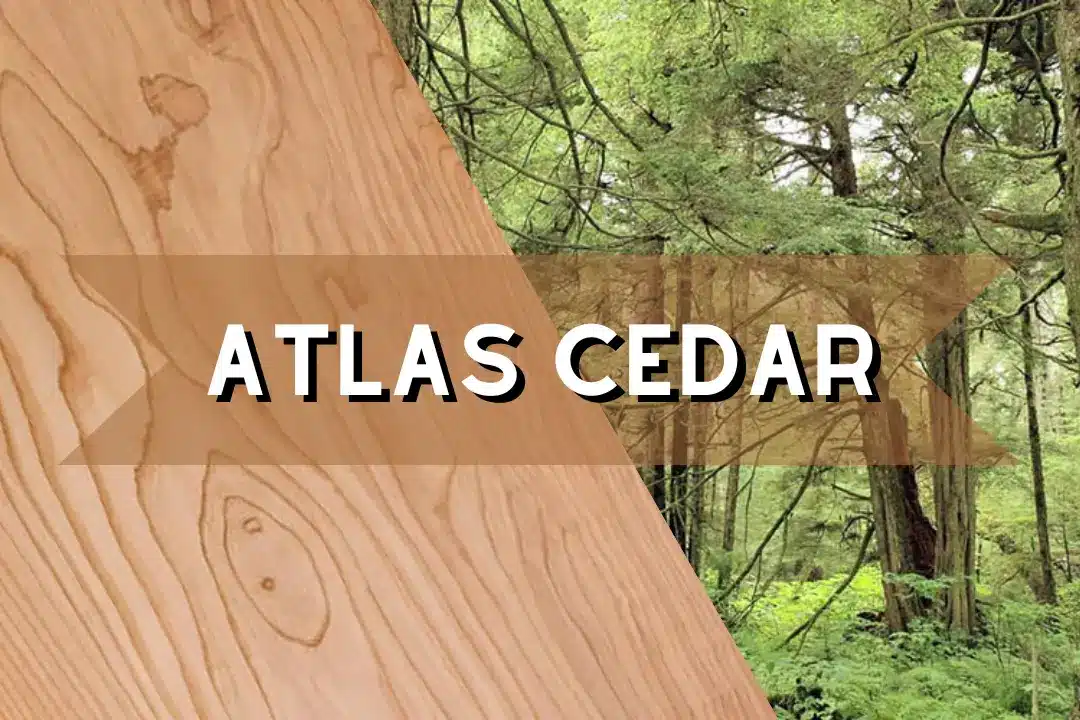
Atlas Cedar Guide: Identification, Care, Wood, and Conservation

Atlas cedar, Cedrus atlantica, is a large evergreen conifer in the Pinaceae family, native to mountain forests in Morocco and Algeria. This true cedar has stiff blue-green needles, upright cones, aromatic wood, and a crown that changes from pyramidal to broad and open with age.
Table of Contents
What Is an Atlas Cedar?

An Atlas cedar is a North African member of the genus Cedrus, which contains the true cedars. Its botanical traits differ from junipers, thujas, and other trees that carry “cedar” in their common names.
Species at a Glance, Taxonomy, and Alternate Names
The accepted scientific name is commonly written Cedrus atlantica (Endl.) Manetti ex Carrière. It belongs to Plantae, the gymnosperms, order Pinales, family Pinaceae, and genus Cedrus. Kew Science provides current taxonomic records and accepted-name data.
Some authorities treat the tree as Cedrus libani subsp. atlantica, placing it within the broader Lebanon cedar complex. That treatment reflects the close genetic and structural relationship between North African and eastern Mediterranean cedar populations rather than a claim that their native ranges are identical.
- Common names include Atlas cedar, Moroccan cedar, Algerian cedar, North African cedar, and Atlas Mountains cedar.
- The species is evergreen, monoecious, wind-pollinated, and capable of producing both pollen and seed cones on one tree.
- Typical garden specimens reach 40–60 feet, while favorable wild sites can support trees near 100–130 feet.
- Foliage ranges from dark green through blue-green to a waxy silver-blue.
True Cedar Status, Name, and Mountain Origin
Atlas cedar is a true cedar because it belongs to Cedrus. Eastern red cedar is a juniper, while western redcedar is a thuja; readers comparing these names can see how cedar wood types span unrelated botanical groups.
The name “Atlas” and the specific epithet atlantica refer to the Atlas Mountains. Wild populations occupy separate mountain systems rather than one continuous forest belt across North Africa.
Atlas Cedar Identification and Growth
Identify Atlas cedar by its stiff needle clusters, upright barrel-shaped cones, and branches that become broad and layered. A young tree looks conical, while an old specimen often develops an irregular, open crown with heavy horizontal limbs.
Shape, Branching, Needles, Cones, and Bark
Young trees usually carry a central leader and a pyramidal outline. With age, the branching becomes layered, the crown widens, and exposed specimens may develop an uneven or flattened top. Seed-grown trees vary, so shape alone can’t confirm identification.
The sharply pointed needles usually measure about 10–25 millimetres, or 0.4–1 inch. Individual needles appear along long shoots, while short shoots carry dense rosettes that commonly contain 20–45 needles. The foliage feels firm and prickly when rolled between a finger and thumb rather than soft or feathery.
Atlas cedar color ranges from deep green to glaucous blue. The blue cast comes from a waxy surface that scatters light, so it looks brightest in clear sun and duller after rain darkens the needles. Blue foliage doesn’t by itself prove that a tree is the cultivar ‘Glauca’.
Seed cones stand upright on branches and commonly measure 5–8 centimetres long by 3–5 centimetres wide. They mature over roughly two growing seasons, then break apart while attached. Finding scales and winged seeds below the tree is more typical than finding a complete ripe cone.
Young bark is comparatively smooth and gray. Older trunks develop deep, dark fissures with thick ridges that feel coarse and hard beneath the hand. Small male cones release clouds of pollen in autumn, another useful clue when foliage and branch form leave doubt.
Size, Growth Form, Reproduction, and Seeds
A standard garden tree commonly reaches 40–60 feet tall and 30–40 feet wide. Mature forest trees on productive, sheltered sites may approach 30–40 metres, or about 100–130 feet. Wind, shallow mountain soil, drought, and exposure can keep wild trees much shorter.
Established young specimens may add about 12–24 inches yearly under favorable conditions, making the species a moderate grower. Soil oxygen, root volume, summer moisture, cultivar, and temperature all alter that figure. Dwarf and weeping forms shouldn’t be assigned the species rate.
Atlas cedar is monoecious, with separate male and female structures on the same plant. After autumn pollination, female cones mature slowly and release winged seeds as their scales separate. Seedlings vary in color, habit, and vigor, which matters when propagating ornamental selections.
Native Range, Ecology, and Conservation

Wild Atlas cedar grows in Morocco and Algeria, mainly in cool montane habitats between about 1,300 and 2,600 metres. Morocco holds the largest remaining Atlas cedar forests, while Algerian stands are smaller and more fragmented.
Morocco, Algeria, Elevation, and Forest Ecology
Important populations occur in the Middle Atlas, High Atlas, Rif Mountains, and Tell Atlas. Elevation limits shift with slope, rainfall, soil depth, and exposure, so one fixed altitude can’t describe every stand.
Native sites combine cold or snowy winters, seasonally wet weather, and dry Mediterranean summers. This cycle explains why an established tree can withstand dry periods yet decline in airless, saturated soil. Drought tolerance develops after roots occupy a large volume of ground.
Atlas cedar forests mix with holm oak, Algerian oak, pines, junipers, shrubs, and montane grasses. They provide cover and food-web support for wildlife such as the Barbary macaque. Their roots also help hold mountain soil and regulate watershed runoff.
Endangered Status, Threats, Restoration, and Regeneration
Cedrus atlantica is classified as Endangered in its native range by the IUCN Red List. The category concerns extinction risk in wild populations; widespread planting in parks doesn’t remove that risk.
Major pressures include hotter droughts, wildfire, wood collection, forest fragmentation, grazing, pests, disease, and weak seedling recruitment. Estimates near 130,000 hectares for Moroccan cedar forest vary by survey date and by whether researchers count mixed or degraded stands.
Seedlings are especially vulnerable where livestock repeatedly browse fresh growth. A stand may retain large old trees yet lack younger age classes, creating a hidden regeneration failure that becomes visible only as mature trees die.
Useful restoration work includes controlling grazing, protecting mature seed trees, reducing fire risk, and using locally suitable genetic material. Planting ornamental cedars abroad can preserve horticultural forms, but it can’t replace the genetic diversity and ecological relationships found in native forests.
Growing Atlas Cedar in Gardens

Atlas cedar suits a large, sunny site with fast-draining soil and enough space for a 30–40-foot crown. Full-size forms perform poorly in small courtyards, foundation beds, low wet ground, or sites beneath utility wires.
Sun, Hardiness, Soil, Water, and Planting Depth
Give the tree at least six hours of sun each day. Shade encourages thinner growth and can mute the silver-blue coating of glaucous cultivars. A hot reflected site beside paving may still cause needle scorch when root volume is restricted.
The species is often listed for USDA Zones 6–9, but zone numbers describe winter cold rather than summer humidity, drainage, or heat load. The NC State Extension profile gives horticultural ranges and site guidance. Local soil conditions often decide success within an acceptable zone.
Loam, sandy loam, and well-structured clay can work if water moves through them. Avoid low points, compacted construction fill, and lawns receiving daily irrigation. A simple field test is to fill a trial hole with water; water that remains into the next day signals a drainage problem.
- Locate the first structural roots and remove excess potting mix above them.
- Dig a hole two to three times wider than the root ball but no deeper.
- Set the root flare at or slightly above the finished grade.
- Backfill mainly with loosened native soil rather than rich material confined to the hole.
- Water deeply, then let excess moisture drain before watering again.
- Spread mulch across the root zone while leaving the trunk and flare exposed.
Newly planted trees need regular water through their first dry seasons. Push a finger or soil probe several inches below the mulch before irrigating; the surface may feel dusty while the root ball remains cool and damp. Deep, spaced watering promotes better rooting than frequent surface sprinkling.
Spacing, Root Volume, Pruning, and Practical Field Notes
Plan from the mature dimensions, not the narrow nursery outline. Keep a standard specimen away from buildings, overhead lines, drains, and paving that can’t tolerate root movement or falling branches. Pruning can correct structure, but it can’t make a full-size cedar small for decades.
Preserve one central leader on upright forms and remove competing leaders while branches are still modest in diameter. Cut broken, dead, or poorly attached limbs at the branch collar. Avoid topping and deep cuts into bare old wood because new growth may be sparse and uneven.
In practical planting work, the most frequent hidden defect is potting mix piled over the original flare. Scraping it away often reveals a trunk several inches below the container surface and circling roots pressed tightly against the wall. Correcting those roots before planting prevents a slow structural decline.
Another common mistake is enriching only the hole in heavy clay. The loose center accepts water while the surrounding clay releases it slowly, creating a buried basin around the roots. Widening the planting area and grading runoff away works better than creating a soft soil pocket.
Browning, Pests, and Garden Failures

Atlas cedar browning can result from normal needle turnover, drought, saturated roots, deep planting, mites, freeze damage, or disease. The location and pattern of brown foliage reveal more than color alone.
Needle Shedding, Water Stress, and Planting Errors
Older interior needles naturally yellow and drop while healthy tips remain green or blue. This seasonal shedding tends to occur across the inner canopy. Browning that starts at fresh shoot tips, spreads down individual branches, or affects the whole crown deserves a closer inspection.
Drought-stressed foliage becomes dull, dry, and brittle, sometimes browning first at the tips. Waterlogged trees can look similar because damaged roots can’t move enough water into the crown. Check moisture beneath the surface before adding water; guessing from foliage alone often worsens root stress.
A buried flare keeps lower trunk tissue damp and may encourage girdling roots. Mulch touching the bark creates a cool, wet collar that stays spongy after the surrounding surface dries. Pull soil and mulch back until the upper structural roots are clearly visible.
Restricted root space compounds heat and drought beside roads, walls, and parking areas. Lawn irrigation creates the opposite problem by keeping deeper soil continuously wet. A cedar surrounded by thirsty turf often receives a watering schedule that suits grass but not oxygen-sensitive conifer roots.
Mites, Sap Feeders, Diseases, and Diagnosis
Spider mites cause fine stippling, bronzing, and premature needle drop, especially during hot, dusty weather. Tap a suspect branch over white paper and watch for tiny moving specks. Webbing supports the diagnosis, but heavy webbing isn’t present in every early mite infestation.
Scale insects and aphids may occur on shoots and needles. Examine stems for fixed shell-like covers, sticky honeydew, or clustered soft-bodied insects before spraying. Broad treatment without identification can kill predatory insects that naturally keep sap feeders controlled.
Persistent wetness can support root and crown diseases associated with organisms such as Phytophthora or Armillaria. Warning signs include weak annual growth, progressive thinning, root discoloration, decay, or resin near the crown. These symptoms overlap with environmental injury, so laboratory confirmation may be needed.
- Check whether browning affects old interior needles or new outer shoots.
- Measure soil moisture in both the original root ball and surrounding ground.
- Expose the flare and inspect for circling roots, decay, or trunk injury.
- Review recent freezes, heatwaves, irrigation changes, grading, and construction.
- Look for mites, scale covers, lesions, resin, fungal growth, or damaged roots.
- Compare affected and healthy sides for differences in sun, wind, water, or soil depth.
Blue Atlas Cedar and Other Cultivars
Blue Atlas cedar is usually Cedrus atlantica ‘Glauca’, a selected form of the species rather than a separate species. Cultivars differ in color, shape, and rate, so dimensions for a standard Atlas cedar shouldn’t be applied to every named selection.
‘Glauca’, ‘Glauca Pendula’, ‘Horstmann’, and Fastigiate Forms
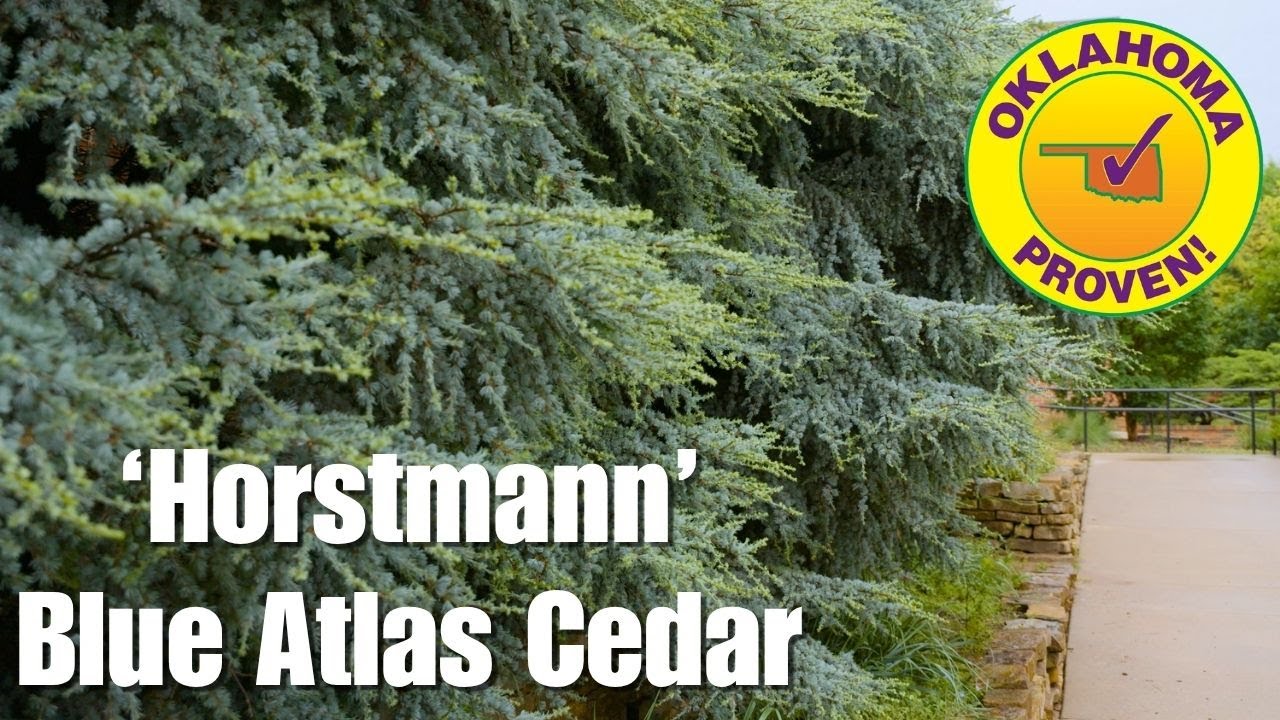
‘Glauca’ carries strongly glaucous foliage that appears silver-blue to blue-gray in direct light. It can still become a large tree. Shade, dust, and wet needles make the blue cedar color look less intense, but genetics establish the plant’s basic color potential.
‘Glauca Pendula’ has blue foliage and strongly weeping branches. It has no single dependable height because the final form follows its training: a vertically staked leader creates height, while an unstaked plant may trail and spread close to the ground. Its mature footprint can be wider than expected.
‘Horstmann’ is a compact, irregular blue form suited to less generous sites than the species. “Dwarf” in conifer descriptions often means slower annual growth rather than permanent shrub size. Check a ten-year estimate and expected mature spread before choosing any compact cultivar.
Fastigiate selections grow with a narrower, more upright crown. They reduce branch spread but still need adequate soil volume and vertical clearance. Narrow form doesn’t mean narrow roots, and a columnar cedar shouldn’t be squeezed into a tiny paved opening.
Training Weeping Forms, Grafting, and Propagation
Train a young weeping cedar by fastening one flexible shoot loosely to a solid stake. The leader should bend naturally without rubbing against a tight tie. Once the desired height and sufficient stem strength develop, reduce support gradually and let side branches cascade freely.
Named cultivars are commonly grafted because seed doesn’t reproduce their traits reliably. Seedlings from ‘Glauca’ may emerge green, blue-green, or blue and may lack the parent’s habit. A plant sold under a cultivar name should represent clonally propagated material.
Fresh seed commonly receives cool, moist stratification before sowing, though duration varies with source and storage history. Graft unions need inspection when buying or planting because swelling, cracking, or mismatched growth can affect long-term structure. Don’t bury the graft union beneath soil or mulch.
Atlas Cedar Versus Other Cedars
Atlas cedar differs from other true cedars mainly in its North African origin, stiff short needles, and comparatively upright or horizontal branch tips. All true cedars share needle-bearing short shoots and upright cones that disintegrate at maturity.
True Cedar Comparison Table
| Common name | Scientific name | Native range | Needles and branch tips | Typical garden size | Best identification clue |
|---|---|---|---|---|---|
| Atlas cedar | Cedrus atlantica | Morocco and Algeria | Stiff, usually 10–25 mm; tips mostly level or slightly rising | 40–60 ft tall, 30–40 ft wide | Blue-green foliage with broad layered branches |
| Deodar cedar | Cedrus deodara | Western Himalayas | Longer, softer-looking needles; strongly drooping leader and tips | 40–70 ft tall, often wider with age | Graceful pendulous shoot tips |
| Cedar of Lebanon | Cedrus libani | Eastern Mediterranean | Stiff needles; branches become broad and level | 40–70 ft tall with a broad crown | Massive tiered crown on mature trees |
| Cyprus cedar | Cedrus brevifolia | Cyprus | Very short, stiff needles | Usually smaller and slower than large forms | Exceptionally short foliage |
Atlas Versus Deodar, Lebanon, Cyprus, and False Cedars
Compared with deodar cedar, Atlas cedar has shorter, stiffer needles and less pronounced drooping at the leader and branch tips. Deodar’s flexible tips hang visibly, giving its silhouette a softer outline. The supplied mountain-tree photograph above shows why crown shape should be checked alongside needle texture.
Atlas and Lebanon cedars can both develop wide, tiered crowns. Their taxonomic boundary remains debated, and some authorities treat Atlas cedar as a Lebanon cedar subspecies. Native origin, foliage measurements, and provenance provide stronger evidence than mature shape alone. More background appears in the guide to cedar of Lebanon.
Cyprus cedar is confined naturally to Cyprus and tends to carry especially short needles. Some classifications also place it in the wider Cedrus libani group. Taxonomic treatment may vary, but its restricted origin remains a clear geographic distinction.
Eastern red cedar belongs to Juniperus, while western redcedar and northern white cedar belong to Thuja. Their scale-like or awl-like foliage and berry-like or small woody cones separate them from Cedrus. Compare the wood and botany of eastern red cedar and western redcedar.
Atlas Cedar Wood, Uses, and Oil
Atlas cedar wood is an aromatic softwood with a pale sapwood, warmer brown heartwood, and usually straight grain. Its historic uses include construction, joinery, carving, storage work, and oil production, while living trees remain valued for ornamental and ecological roles.
Wood Color, Grain, Types, and Industrial Uses
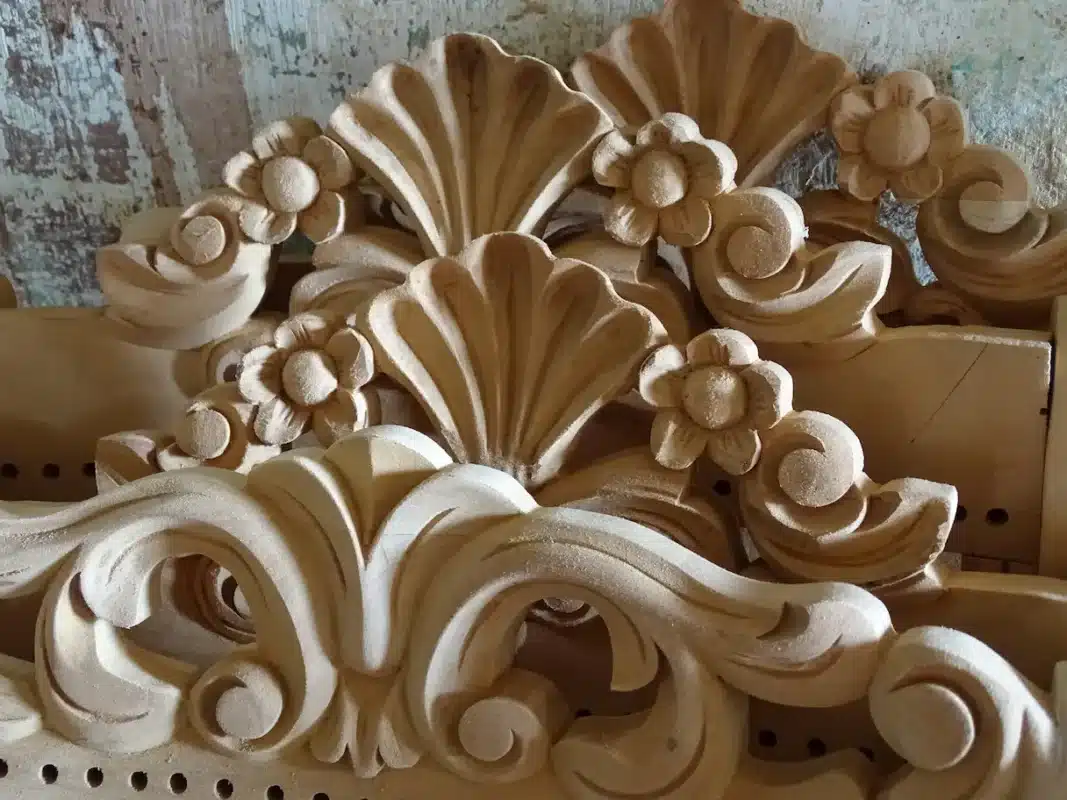
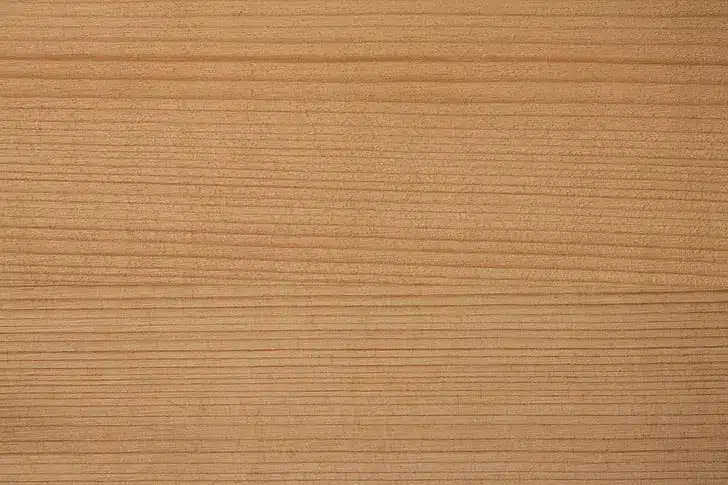
Freshly cut Atlas cedar can show pale cream sapwood around yellow-brown to reddish-brown heartwood. The surface gives off a dry, resinous scent when planed, and fine shavings feel light and slightly brittle between the fingers. Exposure and finish deepen the warm brown color.
Atlas cedar wood grain is commonly straight, though knots and branch development can disturb it. Growth rings may create alternating pale and dark bands on flat-sawn boards. The texture is usually medium rather than glass-smooth, so sharp tools and staged sanding help avoid fuzzy earlywood fibers.
“Atlas wood types” may refer to sapwood and heartwood, quarter-sawn and flat-sawn boards, veneer, plantation-grown timber, reclaimed stock, or material graded by appearance. Blue Atlas cedar wood isn’t a separate timber species; “blue” describes foliage, not a reliably blue board. Likewise, African cedar wood may refer to several unrelated species.
Historic Atlas cedar industrial uses include building work, joinery, furniture components, carving, storage chests, and distillation feedstock. Mechanical properties vary with growth conditions, moisture content, grain, and defects, so aromatic scent shouldn’t be treated as proof of uniform durability or structural performance.
Wild conservation status makes origin and chain of custody important. Legally sourced plantation, managed, salvaged, or reclaimed material differs from timber removed from declining native stands. Beginners also confuse Atlas cedar with American cedar wood, especially aromatic Juniperus virginiana, which has different color, odor, and working behavior.
For woodworking, test a finish on an offcut because natural oils and resin can alter adhesion or curing. Wipe resinous surfaces just before gluing, use sharp cutters to limit torn grain, and collect dust at the tool. Aromatic dust can still cause airway or skin irritation.
Ornamental, Cultural, Ecological Value, and Cedarwood Oil
Garden use centers on large specimen trees, park plantings, blue-foliaged accents, and trained weeping forms. Mature branches cast dense, cool shade and create a strong horizontal silhouette. Standard trees need generous space; repeated reduction cuts spoil the architecture and leave awkward bare sections.
In North Africa, Atlas cedar forests hold cultural value while supporting wildlife, soil retention, water regulation, and local livelihoods. Their value can’t be reduced to timber yield. Protecting old stands and successful natural regeneration retains functions that an isolated ornamental tree can’t reproduce.
Atlas cedarwood oil usually comes from the wood of Cedrus atlantica. Oils sold simply as cedarwood may instead come from Juniperus virginiana, Juniperus ashei, or other cypress-family trees, so the botanical source matters.
Commonly reported constituents include alpha-, beta-, and gamma-himachalene and several atlantones, with proportions changing by wood source and distillation method. Laboratory findings shouldn’t be converted into claims that the oil treats disease, restores hair, cures skin problems, or repels every insect. Clinical evidence remains limited.
Concentrated essential oil can irritate skin, eyes, or airways and may cause sensitization. Don’t swallow it, apply it undiluted, or use it around children and pets without qualified safety guidance. The Poison Control essential-oil guide explains exposure risks and first-response steps. Source verification and dilution are safer than relying on a common product name.
FAQs
Is Atlas Cedar A True Cedar?
Yes, Atlas cedar is a true cedar species in the Cedrus genus. Its botanical name is Cedrus atlantica, and it is native to the Atlas Mountains of Morocco and Algeria. Like Lebanon cedar and deodar cedar, it has aromatic wood, evergreen needles, and distinctive upright cones. Garden varieties may differ in color or shape, but they remain true cedars.
How Tall Does An Atlas Cedar Grow?
Atlas cedar typically grows 40 to 60 feet tall in home landscapes, with a spread of 30 to 40 feet. In ideal conditions and over many decades, a mature tree can reach 100 feet or more. Growth is moderate when the tree receives full sun, well-drained soil, and enough space. Dwarf or weeping cultivars stay substantially smaller.
Is Atlas Cedar The Same As Blue Atlas Cedar?
No, Atlas cedar and blue Atlas cedar are not exactly the same, although they are closely related. Atlas cedar usually refers to Cedrus atlantica, which has green to gray-green needles. Blue Atlas cedar is commonly Cedrus atlantica ‘Glauca’, a selected cultivar prized for its silvery blue foliage. Both need similar sunny, well-drained growing conditions.
Why Is My Atlas Cedar Turning Brown?
Atlas cedar usually turns brown because of water stress, poor drainage, transplant shock, pests, disease, or winter injury. Check soil moisture before watering, since roots suffer in both dry and constantly wet soil. Browning on older inner needles can be normal seasonal shedding, but brown branch tips or widespread decline may indicate root problems, spider mites, or canker.
Why Are Atlas Cedar Forests Endangered?
Atlas cedar forests are endangered mainly because of habitat loss, overgrazing, drought, wildfire, and climate change. These pressures reduce natural regeneration and weaken trees, especially in the species’ native North African mountain ranges. Logging and land conversion have also damaged some stands. Protecting mature forests, limiting grazing, and restoring seedlings help conserve Cedrus atlantica.
Affiliate Disclosure: Some links in this post are affiliate links. If you make a purchase through these links, we may earn a small commission at no extra cost to you. We only recommend products we genuinely believe in.