
Table of Contents
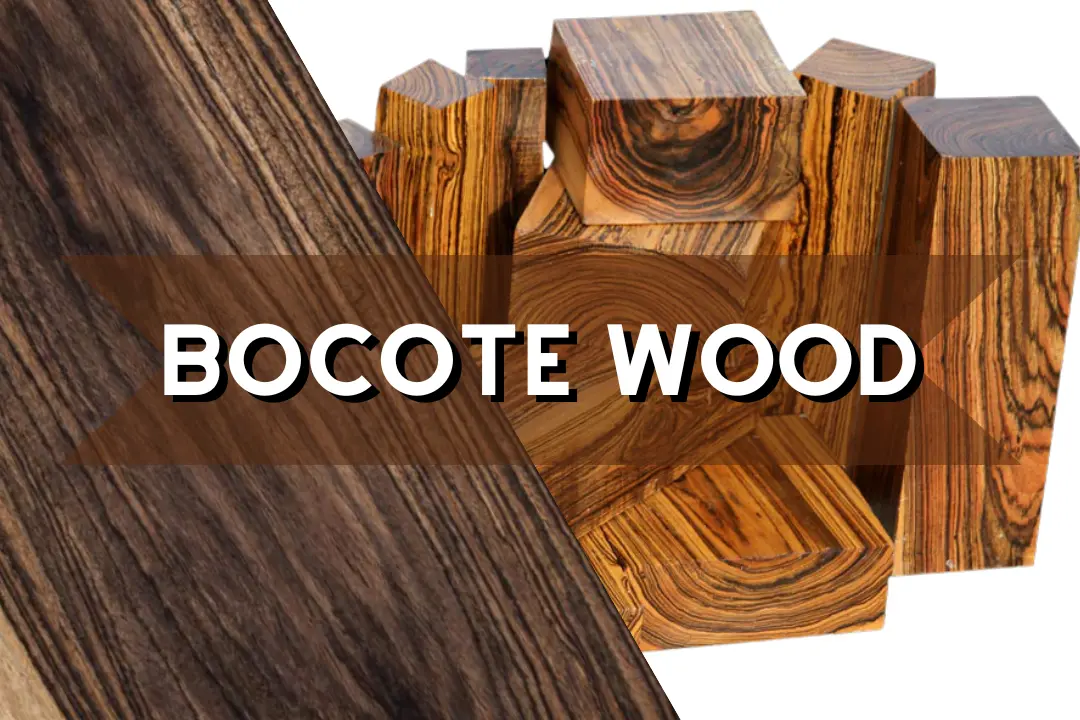
Bocote wood is a dense tropical hardwood from the Cordia genus, valued for golden-brown color, dark dramatic striping, and strong performance in small premium projects. It’s used for knife handles, turning blanks, furniture accents, instruments, and decorative work where grain matters.
What Is Bocote Wood?
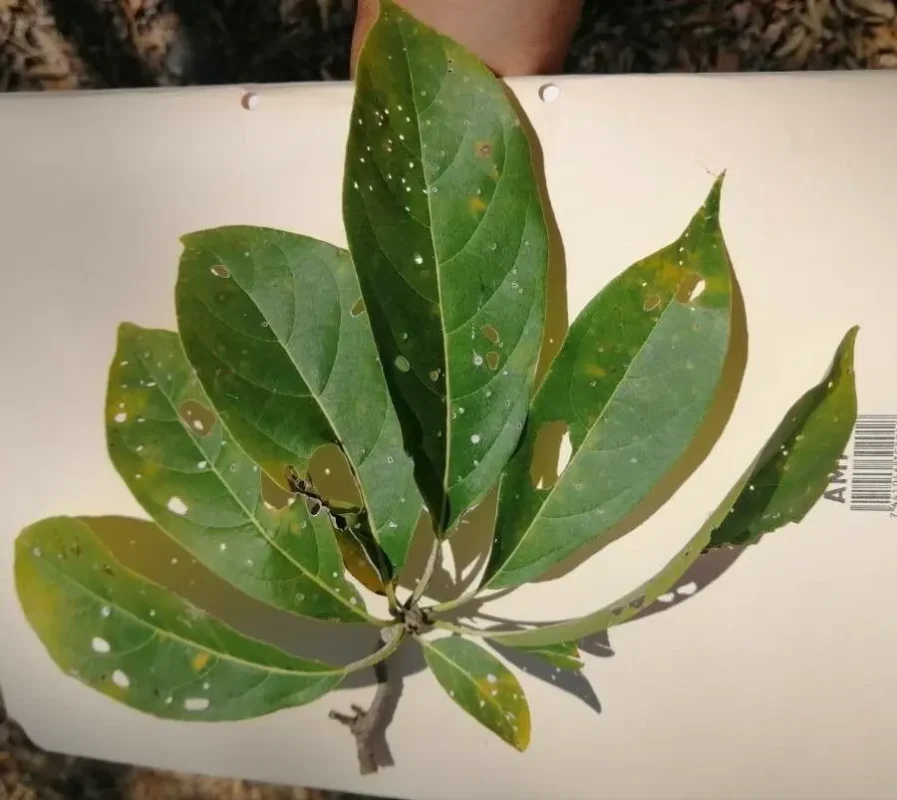
Bocote wood is a trade name for decorative hardwoods in the Cordia group, most often linked with Mexico, Central America, and parts of South America. It belongs to the Boraginaceae family, and suppliers may sell related Cordia species under the same commercial name, so species labels matter when you’re buying premium stock.
Names and Species
Common names include bocote, Mexican bocote, Rio Grande bocote, and sometimes barcino, depending on the supplier and region. Related searches and labels such as bacote, bocate, baleeira, baleira, baleeira planta, arbol de ciricote, and кордия can point to Cordia woods, but they don’t always mean the same board in a lumber rack.
Species names often associated with bocote include Cordia elaeagnoides, Cordia gerascanthus, and other Cordia spp. The Plants of the World Online database is useful for checking accepted plant names, but lumber labels still depend on how exporters, mills, and retailers classify the wood.
Origin and Family
Bocote origin is usually listed as Mexico, Central America, or South America, with Mexican bocote wood being the name many buyers recognize first. The tree is part of Boraginaceae, a family that includes many Cordia species with dense, colorful, and sometimes oily wood.
Supplier caution matters because “bocote” is a market name, not a single guaranteed botanical label. If you’re ordering instrument sets, knife scales, or furniture-grade lumber, ask for country of origin, drying method, and species when the seller can provide it.
Bocote Quick Facts
Quick facts help compare bocote wood with other exotic hardwoods before you buy. The figures below reflect commonly published species data and typical shop behavior, but individual boards can vary by species, growing conditions, and moisture content.
| Attribute | Bocote Wood Fact |
|---|---|
| Common name | Bocote, Mexican bocote |
| Botanical group | Cordia spp. |
| Family | Boraginaceae |
| Region | Mexico, Central America, South America |
| Wood type | Dense tropical hardwood |
| Average dried weight | About 53 lb/ft³ / 855 kg/m³ |
| Janka hardness | About 2,010 lbf / 8,950 N |
| Color | Golden brown, yellowish brown, olive brown, medium brown |
| Grain | Dark brown to black streaks; straight, wavy, interlocked, or irregular |
| Durability | Often rated durable to very durable |
| Common uses | Knife scales, turning blanks, furniture accents, instruments, decorative boxes, inlays |
| Workability | Machines well but can tear out; oily surface may complicate gluing |
| Food safety | Use caution; depends on finish, use case, and sensitization risk |
| Price category | Premium exotic hardwood |
| Common buying formats | Boards, blanks, knife scales, turning blocks, pen blanks |
Mexican Bocote Wood
Mexican bocote is the version many makers picture first: warm brown color, bold black lines, and high-contrast figure that almost looks drawn with ink. In hand, a freshly surfaced piece feels heavy for its size, and the dust often has a dry, slightly spicy scent that reminds you this isn’t maple or walnut.
Buying tip: don’t judge Mexican bocote wood only by the first face shown in a listing. Ask for both faces and the end grain, because some boards have one dramatic side and one quieter side, which matters for bookmatched knife scales and visible furniture panels.
Bocote Wood Appearance
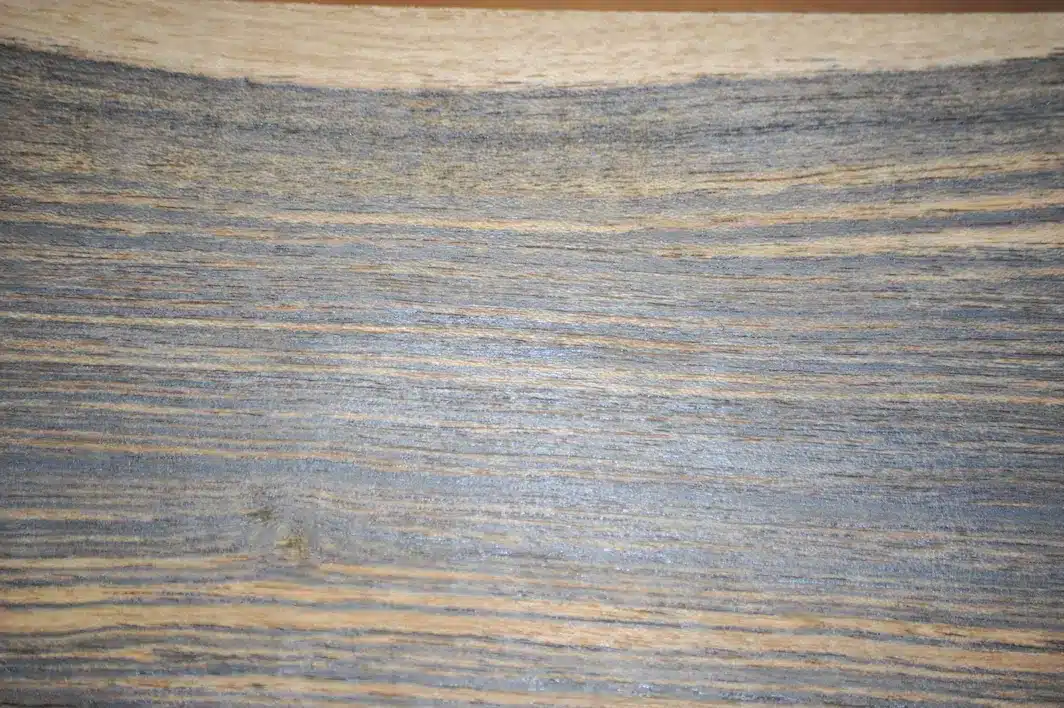
Bocote appearance is the main reason people pay premium prices for it. The wood often shows a golden to olive-brown base with dark brown or nearly black lines that run, swirl, loop, and stack across the surface.
Color and Grain
Bocote color ranges from yellowish brown and tan to golden brown, olive brown, and medium brown. Its darker striping can look zebra-like on straight-grained boards, while wavy pieces can resemble marble, rosewood, or ziricote with sweeping bands and irregular curves.
Grain direction changes how the wood behaves. Straight-grained bocote planes more cleanly, while interlocked or wild grain can lift and tear, leaving a rough patch that catches a fingernail after one pass through a planer.
Heartwood and Sapwood
Heartwood contrast gives bocote its value, since the darker lines usually live in the richer central wood. Sapwood is paler, creamier, and less dramatic, which can look attractive as an edge detail but lowers value when a buyer expects full dark figure.
Beginner mistake: buying a small blank without checking sapwood percentage. For knife handles, pistol grips, or pen blanks, a pale sapwood corner can land right where the eye goes first after shaping.
Aging and Darkening
Color change happens as bocote oxidizes and receives UV exposure. Freshly cut boards can look brighter and more golden, while older finished pieces often settle into deeper brown tones with slightly softer contrast.
Finish effect can be dramatic. A clear oil or wipe-on poly usually makes the dark streaks look deeper, but heavy oiling can muddy the golden background if the piece already has a dark base.
Image Ideas
Image SEO matters for bocote because searchers often want to see the grain before they read the specs. Use close images of raw boards, end grain, sanded blanks, bookmatched knife scales, and finished pieces beside calmer woods such as walnut, maple, or zebra wood.
- Board face: show the full length so buyers can see stripe direction and defects.
- End grain: reveal checks, wax, moisture clues, and growth-ring orientation.
- Finished sample: show the same piece after oil, shellac, lacquer, or CA glue.
- Scale pair: show both knife scales together to prove the match.
- Comparison shot: place bocote beside walnut, maple, rosewood, or zebrawood for color context.
Bocote Wood Properties

Bocote properties place it in the hard, dense, premium hardwood category. Published data from The Wood Database lists bocote at about 2,010 lbf Janka hardness and about 53 lb/ft³ average dried weight, which explains why it feels solid in small blanks.
Bocote Janka Hardness
Bocote hardness is about 2,010 lbf, making it harder than hard maple, white oak, black walnut, and cherry. That hardness helps knife scales and tool handles resist dents, but it also means dull cutters, burning drill bits, and cracked screw holes if you rush the work.
Searchers comparing “bocote janka hardness” or “bocote hardness” usually want a fast answer: bocote is hard enough for demanding small parts, but it’s not in the extreme group with ipe or lignum vitae. For a broader comparison, see this wood hardness scale.
Density and Strength
Bocote density is about 53 lb/ft³, or 855 kg/m³, with specific gravity often reported around 0.74 to 0.95 depending on sample and moisture content. Strength figures commonly cited include modulus of rupture near 17,230 psi, elastic modulus near 1,767,000 psi, and crushing strength near 9,680 psi.
Practical impact shows up fast in the shop. A small bocote block lands on the bench with a sharper, heavier knock than walnut, and thin offcuts feel stiff instead of papery when flexed by hand.
Shrinkage and Stability
Movement data for bocote is fairly manageable for a dense tropical wood: radial shrinkage about 4.0%, tangential shrinkage about 6.6%, volumetric shrinkage about 10.6%, and a T/R ratio near 1.7. Lower T/R ratios tend to mean more predictable movement than woods with a larger gap between tangential and radial shrinkage.
Real constraint: small bocote wood blanks may look dry on the outside while holding moisture inside, especially if the ends are waxed. Let blanks acclimate before turning, flattening, or bonding them to metal tangs, because trapped movement can open glue lines later.
Durability Rating
Bocote durability is often rated durable to very durable for heartwood decay resistance. That doesn’t make it the right choice for decking or outdoor furniture, because cost, availability, checking, and finish upkeep usually push it into indoor decorative and handled-item work.
Use judgment with outdoor exposure. Bocote can survive moisture better than many softer woods, but repeated wet-dry cycles around pins, screws, and end grain can still create tiny cracks that collect dirt and feel rough under the thumb.
Hardness Comparisons
Hardness comparisons help place bocote in a real buying context. It’s much harder than common furniture woods, yet easier to machine than some very hard tropical species if the tools are sharp.
| Wood | Approximate Janka Hardness | Practical Meaning |
|---|---|---|
| Cherry | 950 lbf | Softer, easier to dent, easier to machine |
| Black walnut | 1,010 lbf | Good furniture wood, less dense than bocote |
| White oak | 1,360 lbf | Durable domestic option, still softer than bocote |
| Hard maple | 1,450 lbf | Common cutting-board wood, noticeably softer than bocote |
| Bocote | 2,010 lbf | Hard, dense, excellent for handles and decorative small parts |
| Ipe | 3,510 lbf | Much harder, often used outdoors; see ipe wood |
Bocote Wood Uses

Bocote wood uses center on high-visibility parts where a small amount of wood creates a premium look. It’s most practical for knife handles, turning blanks, musical instruments, furniture accents, boxes, inlays, and luxury small objects.
Knife Handles
Knife handles are one of the best uses for bocote because the wood is dense, decorative, and able to polish to a smooth hand feel. Bookmatched bocote knife scales look especially clean because both sides of the handle echo each other instead of looking like two random scraps.
Handle mistake: gluing oily bocote directly to a tang without fresh surface prep. Sand or flatten the bonding face, wipe it, let the solvent flash off, then bond soon after with a glue system proven on scrap.
Turning Blanks
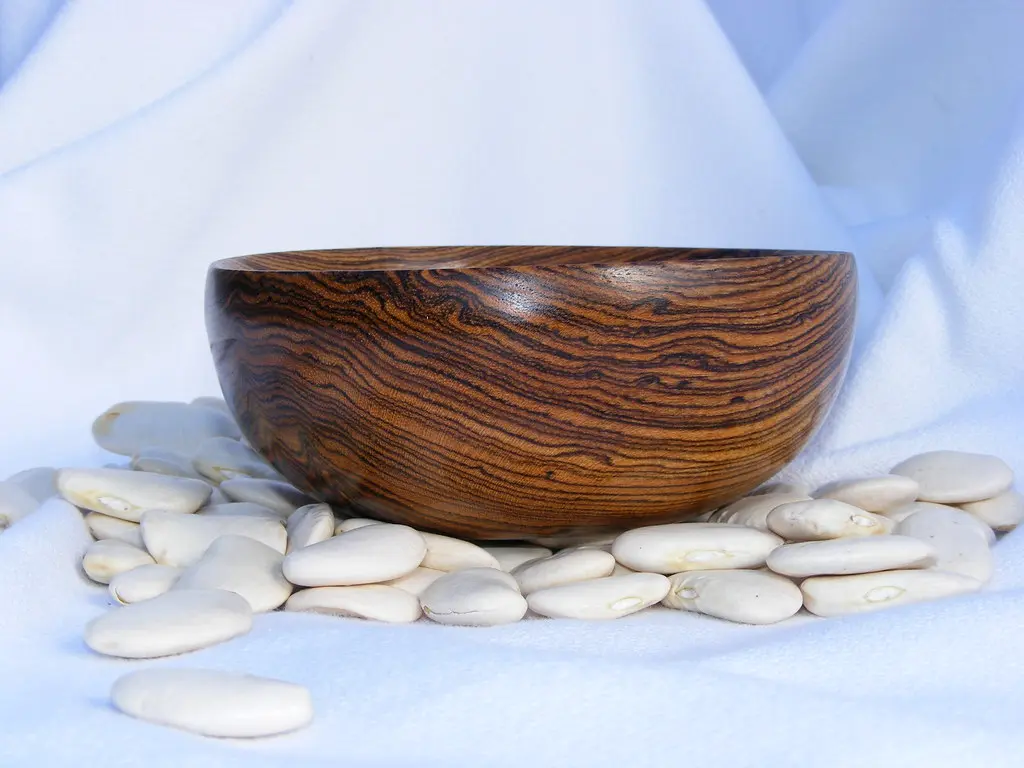
Bocote turning blanks work well for pens, bottle stoppers, handles, game calls, finials, tool handles, small bowls, and decorative knobs. The shavings can come off in tight curls with sharp tools, but dull edges leave fuzzy torn patches that take extra sanding to remove.
Turning tip: take lighter cuts on highly figured bocote and use a shear scrape near the final diameter. The surface can become glassy and warm under fine sanding, which is one reason turners like it for small handled objects.
Furniture Accents
Bocote furniture usually works best as an accent rather than a full build. Drawer fronts, cabinet pulls, inlay strips, panels, edge details, small tabletops, and jewelry cabinets show off the grain without requiring large clear boards.
Design pairing matters because bocote is visually loud. It pairs well with walnut for a dark premium look, maple for contrast, white oak for warmth, and dark woods like wenge or ebony when you want a dramatic edge; for deeper dark-wood comparisons, see ebony wood.
Musical Instruments
Instrument makers use bocote for guitar backs and sides, ukulele sets, bridges, decorative veneers, and occasional fingerboard-style parts. Its density and figure make it attractive, but tonal claims vary by build, thickness, bracing, and the maker’s final voicing.
Luthier caution: buy matched sets from sellers who understand musical instrument stock. Random boards can have lovely figure but poor quartering, hidden stress, or inconsistent thickness that creates more waste than savings.
Luxury Small Objects
Small objects often give the best value from bocote. Jewelry boxes, watch parts, fountain pens, cue sticks, pistol grips, walking cane handles, desk accessories, inlays, and decorative lids can use short pieces with intense figure.
Best wood choices for knife handles, axe handle accents, and small tool parts depend on grip, shock, moisture, and repair needs. Bocote is excellent for visual handle scales, but straight-grained hickory, ash, or similar woods remain better for full impact axe handles.
Bocote Wood Price Guide
Bocote wood price is usually premium because it’s imported, dense, visually striking, and often sold in short, high-value pieces. Small blanks may look costly per inch, but suppliers cut around defects, preserve strong figure, and pay more to ship heavy stock.
Price by Format
Format changes the price more than many first-time buyers expect. A knife scale pair, a turning blank, and a board foot of bocote lumber may all land near the same checkout total but represent very different amounts of usable wood.
| Buying Format | Common Price Range | Best Use | Main Risk |
|---|---|---|---|
| Small craft blanks | $8 to $40+ per piece | Pens, inlays, handles, small boxes | Hidden checks or undersized stock |
| Knife scale pairs | $15 to $60+ per pair | Knife handles and restorations | Poor matching or unstable moisture |
| Turning blanks | $15 to $80+ per blank | Stoppers, bowls, knobs, tool handles | End cracks under wax |
| Bocote boards/lumber | $30 to $80+ per board foot | Furniture accents, panels, custom milling | Warp, sapwood, shipping cost |
| Instrument-grade sets | Often higher than standard stock | Guitars, ukuleles, luthier work | Grade claims without clear photos |
Bocote Lumber Pricing
Bocote lumber is often harder to compare than domestic hardwood because many sellers price by the piece instead of by board foot. Two boards at the same price can differ sharply once you account for thickness, width, length, defects, sapwood, and surfaced size.
Rough lumber can lose more material than expected during flattening, especially if the board is cupped or has checks near both ends. When a listing says “rough size,” assume you’ll remove material from every face before final use.
Board Foot Formula
Board feet = thickness in inches × width in inches × length in inches ÷ 144. A bocote board measuring 1 inch × 6 inches × 24 inches equals 1 × 6 × 24 ÷ 144, or 1 board foot.
Price check: if a 1-board-foot bocote board costs $45, compare that against a $45 pair of knife scales by calculating how much finished material you’ll get after waste. The scale pair may still make sense if it’s bookmatched, flat, dry, and close to final size.
Why Bocote Costs More
Cost drivers include import handling, dramatic figure, drying losses, limited wide boards, premium bookmatching, instrument grading, stabilization, and shipping weight. Dense woods also cost more to process because they wear blades and generate more waste when suppliers cut around cracks.
Figure premium is real. A plain but usable bocote block may cost far less than a smaller piece with black looping lines, because the figured piece sells faster to knife makers, turners, and luthiers.
Buyer Cost Traps
Cost traps include shipping fees, wet stock, wax hiding cracks, nominal dimensions, poor photos, and resin-stabilized blanks sold without resin details. A cheap blank can become expensive if half of it disappears into end trimming and flattening.
- Ask for moisture: especially on turning blanks and thick handle blocks.
- Check dimensions: rough, surfaced, and nominal sizes are not the same.
- Look for end checks: wax can hide cracks that travel inward.
- Confirm matching: bookmatched means more than two pieces from the same species.
- Compare landed cost: include shipping before judging a deal.
Bocote Blanks, Lumber, and Scales

Bocote wood blanks make sense when you need a small, high-impact piece instead of a large board. They reduce milling time and waste, but they still need careful inspection for cracks, moisture, grain direction, and sapwood.
When Blanks Make Sense
Blanks work best for knife handles, pen turning, bottle stoppers, tool handles, small boxes, jewelry, pistol grips, inlays, and decorative accents. If your final part is small, a good blank can beat lumber because you pay for ready-to-use figure rather than waste.
Choose lumber instead when you need matched drawer fronts, wider panels, or freedom to orient grain across several parts. Bocote lumber gives more layout control, but it asks for more milling skill and more tolerance for waste.
Buying Checklist
Buying checklist discipline saves money with bocote. Before ordering, confirm size, moisture, surfaced condition, waxed ends, grain orientation, sapwood, cracks, stabilization, bookmatching, and whether the photo shows the exact piece you’ll receive.
- Knife scales: check thickness, flatness, pair matching, and oversize allowance.
- Turning blocks: ask about wax, drying age, cracks, and pith location.
- Lumber boards: confirm board feet, rough thickness, width, length, and defect zones.
- Instrument sets: request tap tone, cut orientation, matching, and moisture details where offered.
- Craft blanks: avoid pieces that are barely larger than your final part.
Stabilized vs Unstabilized
Stabilized bocote has resin added under vacuum or pressure to improve consistency, moisture resistance, and machining in small parts. It costs more, but it can reduce swelling, shrinkage, and checking in knife handles that see sweaty hands, wet counters, or frequent washing.
Unstabilized bocote still works well for many handles and turnings if it’s dry, sound, and sealed. The risk rises when the piece is thin, cross-grain, exposed to water, or glued to metal with no room for wood movement.
Relevant Bocote Products
Product options below fit buyers comparing bocote handle blanks, bocote lumber boards, matched knife scales, turning blocks, and stabilized scales.

Bocote Handle Blanks Set
- Dense exotic hardwood for durable projects
- rich bocote grain adds a premium look
- ideal for knife handles and small crafts
- easy to shape for custom woodworking
- includes two matching pieces for convenience
 Buy on Amazon

Bocote Lumber Board
- Solid bocote wood with striking natural pattern
- versatile size for craft and shop use
- strong hardwood suited to fine woodworking
- great for handles, accents, and small builds
- ready for cutting, shaping, and finishing
Buy on Amazon

Matched Bocote Knife Scales
- Bookmatched pair creates a balanced mirrored look
- natural bocote grain adds bold style
- sized for custom knife handle builds
- solid wood feels strong and dependable
- perfect for DIY makers and restorations
Buy on Amazon

Bocote Turning Block
- Chunky bocote blank for turning and shaping
- dense hardwood offers reliable strength
- beautiful grain elevates finished pieces
- suited for handles, tools, and decorative work
- compact size is easy to manage
Buy on Amazon

Stabilized Bocote Scales
- Stabilized wood helps improve durability and stability
- natural bocote grain gives a refined finish
- matched pair is ready for custom knives
- gift packed for a polished presentation
- ideal for makers who want standout handles
Buy on Amazon
Is Bocote Wood Food Safe?
Short answer: bocote wood is not automatically food safe just because it’s a natural hardwood. Food safety depends on the exact wood, whether it’s untreated, the finish used, the contact type, and whether the user reacts to wood extractives.
Short Answer
Bocote caution is wise for cutting boards, utensils, wet bowls, and children’s food-contact items. The wood contains natural oils and extractives, and some pieces are stabilized, dyed, filled, or treated in ways that may not be rated for food contact.
Food-contact rules depend on the full material system, not the species alone. The FDA food-contact substances page explains the broader context for materials that contact food, which is useful when evaluating finishes, resins, and adhesives.
Food-Adjacent Uses
Food-adjacent uses are more reasonable than full food-prep surfaces. Bocote can work for knife handles, decorative serving-board accents, sealed charcuterie-board trim, dry serving pieces, and handles that don’t sit in wet food.
Decision guide: a sealed bocote knife handle is usually a practical use; a bocote accent strip on a serving board may be acceptable if finished properly; a full bocote cutting board is not the first pick for most kitchens. For established board woods, compare maple, walnut, cherry, beech, and teak wood.
Risky Food Uses
Risky uses include spoons, salad bowls, cutting boards, wet serving trays, baby items, and any surface that receives knife cuts. Knife marks can open pores, expose unfinished wood, trap residue, and create cleaning problems.
Stabilized warning: stabilized bocote scales are handle-safe only if the resin and finish suit the job. Don’t assume a resin-filled blank is food safe unless the maker or manufacturer clearly rates the resin system for food contact after curing.
Food-Safe Finishes
Finish choices for food-contact wood often include pure mineral oil, beeswax/mineral oil blends, walnut oil with allergy concerns addressed, pure tung oil after full cure, and dewaxed shellac for select uses. The label and cure time matter more than marketing phrases like “natural.”
Common mistake: applying a finish that feels dry on the surface but hasn’t fully cured inside the pores. Bocote’s density and oils can slow curing, so test on offcuts before finishing a serving piece.
Better Cutting Board Woods
Better choices for cutting boards include hard maple, walnut, cherry, beech, and teak because they have longer use histories in kitchen woodworking. Bocote’s price, extractives, hardness, and sourcing uncertainty make it better for accents than primary cutting surfaces.
Edge case: a decorative bocote strip can look beautiful in a serving board, but place it away from the main cutting zone. Keep the surface sealed, avoid dishwasher exposure, and repair finish wear before raw wood becomes exposed.
Working, Finishing, and Sourcing
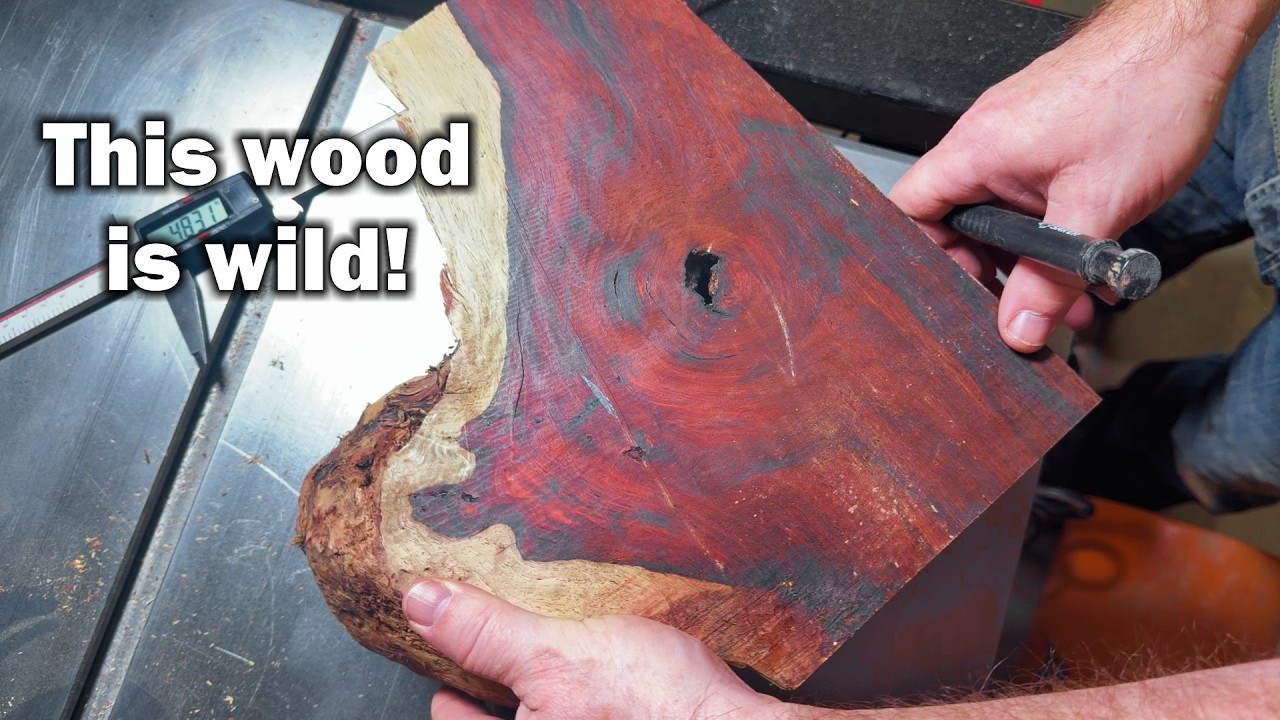
Working bocote is rewarding because the wood sands and polishes beautifully, but it punishes dull tools, careless glue prep, and poor dust control. The clip below gives useful visual context for handling dense figured wood before you cut into expensive stock.
Cutting and Machining
Sharp carbide tools make bocote much easier to machine. Straight-grained boards cut cleanly, while interlocked sections can tear out, burn, or chatter if the feed rate is too aggressive.
Practical notes from real shop use: bocote tells on bad edges quickly. A dull planer knife leaves raised, fuzzy streaks that look pale and rough under raking light, while a sharp scraper turns the same patch into a slick surface that almost feels waxed.
Sanding and Polishing
Sanding progression usually starts around 120 or 150 grit after milling, then moves through 180, 220, 320, and 400 or higher for handles, pens, and decorative pieces. Dense oily dust can clog paper, so change abrasives before heat builds and darkens the surface.
Polished bocote can feel smooth and slightly glassy before finish. Wipe away dust between grits, because packed dark dust in pores can smear into lighter bands and make the figure look dirty.
Gluing and Fastening
Gluing bocote takes surface prep because natural oils can weaken bonds. Flatten the surfaces, wipe with acetone or denatured alcohol, let the surface dry, and glue soon after using epoxy, polyurethane glue, or a tested PVA system.
Fastener prep prevents splits. Pre-drill pilot holes, countersink screws, keep hardware away from thin edges, and use sharp bits because bocote can burn if the bit rubs instead of cuts.
Finish Options
Bocote finish options include oil/varnish blends, Danish oil, tung-oil-based finishes, wipe-on polyurethane, lacquer, shellac, CA glue for pens and small turnings, and wax as a final polish on decorative pieces. Clear finishes deepen the dark lines and make the golden base look richer.
Failure signs include tacky oil, cloudy CA glue, blotchy sheen, and glossy finishes that highlight tiny checks. Use thin coats, clean the surface before finishing, allow full cure time, and test the finish on an offcut from the same board.
Dust and Toxicity
Bocote dust can irritate skin, eyes, nose, throat, and the respiratory system in sensitive people. Use dust collection, eye protection, and a well-fitted respirator; the CDC respirator guidance is a useful reference for choosing respiratory protection.
Sensitizer risk grows with repeated exposure. If your forearms itch after sanding or your throat feels scratchy, stop, clean up with vacuum and damp wiping, wash exposed skin, and avoid blowing dust around the shop with compressed air.
Sustainability and Legality
Sourcing bocote takes care because it’s a tropical hardwood sold under a trade name that can cover multiple Cordia species. Ask for country of origin, botanical name if available, FSC documentation where offered, import records for commercial shipments, and reclaimed or salvaged source details when possible.
Trade context differs from many Dalbergia rosewoods, but rules can change by species, country, and product type. Check documentation before international shipping, especially for guitars, knife handles, and finished goods that cross borders; compare related trade-sensitive woods such as Brazilian rosewood.
Similar Wood Alternatives
Similar woods include ziricote, zebrawood, rosewood-like species, walnut, pau ferro, cocobolo, and wenge, but each behaves differently. Bocote gives bold golden-brown striping; ziricote often has darker spiderweb figure; zebrawood has straighter stripes; walnut is calmer and easier to source for large furniture.
Best substitute depends on the job. Use walnut for large furniture, zebrawood for striped panels, pau ferro for dense handle stock, wenge for dark accents, and rose wood only after checking trade, sourcing, and project requirements.
FAQs
What Is Bocote Wood Used For?
Bocote wood is used for decorative woodworking, furniture, turning, and small specialty items. Its striking grain makes it popular for knife handles, instrument parts, boxes, and accent pieces.
Is Bocote Wood Expensive?
Yes, bocote wood is usually considered a premium hardwood and costs more than common domestic species. The price depends on board quality, size, and whether it is sold as lumber, turning blanks, or finished stock.
How Hard Is Bocote Wood?
Bocote wood is very hard and dense, which makes it durable and wear-resistant. It can be a little challenging to cut and machine, but it finishes smoothly with sharp tools.
Is Bocote Wood Food Safe?
Bocote wood is generally safe for occasional food contact when properly finished, but it is not the first choice for all kitchen uses. People with sensitive skin should wear protection when sanding or handling dust, and a food-safe finish is recommended for utensils or serving items.
Is Bocote Good For Knife Handles?
Yes, bocote is a great choice for knife handles because it is dense, stable, and highly attractive. It also takes a good polish, giving handles a smooth, durable finish with a premium look.
Affiliate Disclosure: Some links in this post are affiliate links. If you make a purchase through these links, we may earn a small commission at no extra cost to you. We only recommend products we genuinely believe in.