
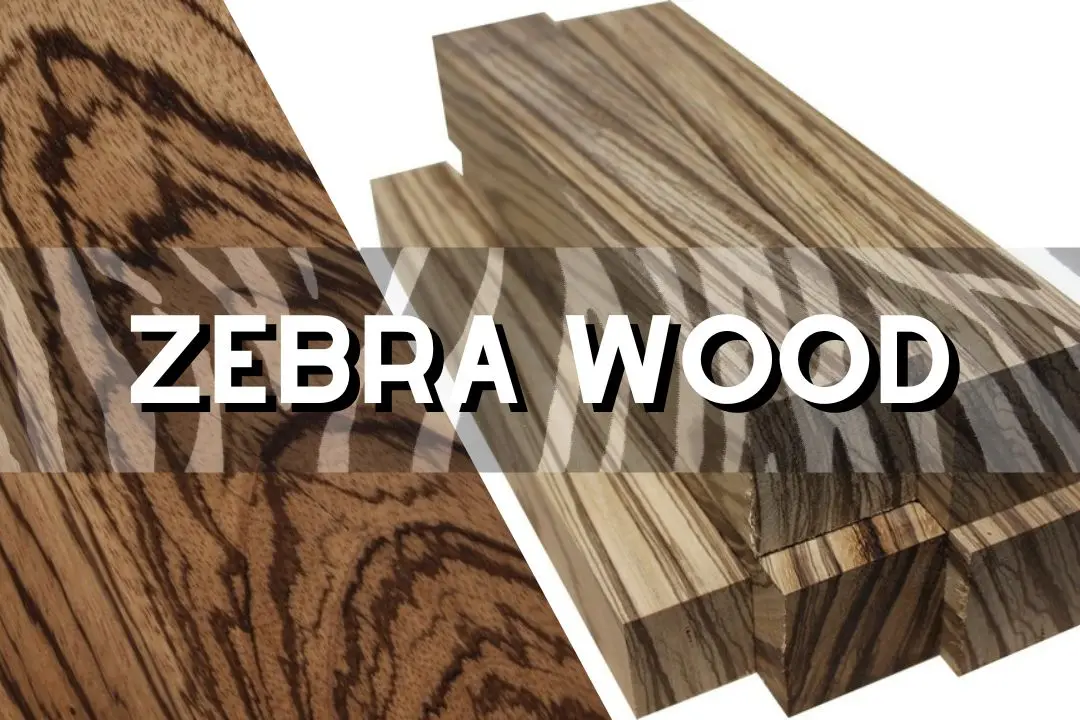
Zebra Wood Guide: Properties, Uses, Price, and Buying Advice

Table of Contents
Zebra wood, also called zebrawood or zebrano wood, is a real exotic African hardwood known for golden-brown color and dark zebra-like stripes. The main commercial species is Microberlinia brazzavillensis, a dense decorative hardwood used for veneer, furniture, guitars, knife handles, pens, and accent woodworking.
This guide explains what zebra wood is, how it behaves in the shop, what it costs, where it works well, and where beginners often get poor results from tearout, open pores, dust, or unstable boards.
What Is Zebra Wood?
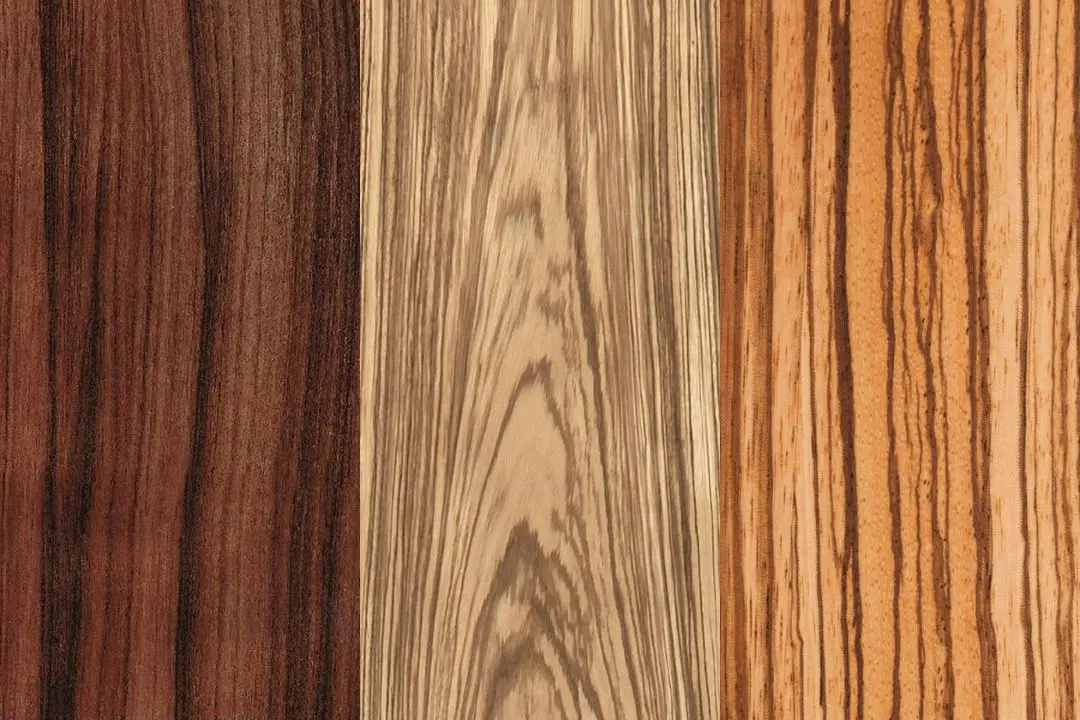
Zebrawood and zebrano are common trade names for the same striped hardwood sold in lumber, veneer, turning blanks, and craft stock. In French listings you may also see bois de zèbre or bois zebrano, while some suppliers use names such as zingana, Allen ele, or African zebrawood.
Zebrawood and Zebrano
The name describes the look, not a single universal label used by every seller. True African zebrawood usually means Microberlinia, but “red zebrawood,” “tigerwood,” and other striped trade names can refer to different species, so check the botanical name before you buy.
Scientific Name
The main species in the commercial market is Microberlinia brazzavillensis, with Microberlinia bisulcata also associated with zebrawood. Both belong to the Fabaceae family, also called Leguminosae, which includes many dense tropical hardwoods.
The African zebrawood tree grows in tropical forests of West and Central Africa, including Cameroon, Gabon, Equatorial Guinea, and the Republic of the Congo. The imported material usually reaches shops as rough lumber, surfaced boards, zebra wood veneer, guitar sets, knife scales, or pen blanks.
Origin and trade names matter because online listings sometimes show dramatic photos from one board and ship a flatter-looking piece from another batch. Ask for actual board photos if stripe direction, color, or bookmatching will affect your project.
| Quick Fact | Zebra Wood Detail |
|---|---|
| Common names | Zebra wood, zebrawood, zebrano, African zebrawood |
| Scientific name | Microberlinia brazzavillensis |
| Related species | Microberlinia bisulcata |
| Origin | West and Central Africa |
| Color | Golden tan to brown with dark brown streaks |
| Janka hardness | About 1,830 lbf / 8,160 N |
| Average dried weight | About 50 lb/ft³ / 805 kg/m³ |
| Texture | Coarse, open-pored |
| Workability | Moderate to difficult because of interlocked grain |
| Common uses | Veneer, furniture accents, guitars, knife scales, pens, cabinetry |
Appearance and Wood Properties

Zebra wood grain is the reason people buy this species: pale tan, honey, or golden-brown background color crossed by dark brown to nearly black streaks. Freshly planed boards can look dry and chalky, but a wipe of mineral spirits makes the stripes jump out with a warm, almost oily depth.
Color and Grain
The strongest pattern usually appears in quartersawn zebrawood, where the dark bands run in long, bold lines. Flat-sawn boards can still look beautiful, but the pattern often spreads into wider waves, cathedral shapes, or broken bands that look less like classic zebra stripes.
Designers use this striped wood carefully because a large uninterrupted surface can feel busy beside figured floors, stone counters, or heavy-grained cabinets. Pair it with quieter woods such as walnut, maple, or mahogany, and use our wood grain pattern guide if you’re comparing stripe, curl, ray fleck, and cathedral figure.
Hardness and Density
Zebra wood hardness is about 1,830 lbf on the Janka scale, which makes it harder than black walnut, hard maple, and many oak boards. Technical figures for density, shrinkage, and strength are commonly listed by The Wood Database, and those numbers match the shop feel: the board feels heavy, stiff, and resistant under a sharp cutter.
Strength and movement both matter. Zebrawood has good bending and crushing strength for decorative hardwood work, but it also has meaningful shrinkage, so wide solid panels need acclimation, floating construction, and room to expand across the grain.
Durability limits surprise many beginners. The heartwood is often described as durable and termite resistant, but zebrawood isn’t waterproof; outdoor use still needs drainage, finish maintenance, sealed end grain, and no trapped moisture against concrete or soil.
Pros, Cons, and Uses
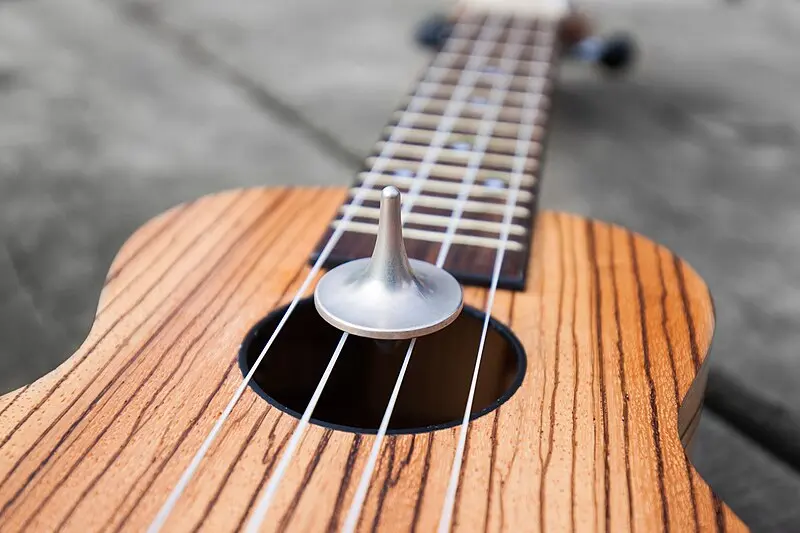
Zebrawood pros start with visual impact. One narrow strip can make a drawer pull, guitar back, knife handle, box lid, or cabinet door look custom without adding carving, dye, or inlay work.
Zebrawood cons show up during building: it costs more than common domestic hardwoods, it can tear out badly under planer knives, it has coarse pores, and the dust can irritate your skin, eyes, or throat. The surface can feel slightly ridged after sanding if the pores remain open under your fingertips.
- Veneer for panels, cabinets, speakers, and luxury interiors
- Furniture accents such as drawer fronts, table aprons, pulls, and inlays
- Guitars, ukuleles, drum shells, and decorative instrument faces
- Knife scales, especially when bookmatched or stabilized
- Pen blanks, bottle stoppers, boxes, ornaments, and turned handles
- Flooring accents where cost, sourcing, and visual busyness are acceptable
Furniture and Veneer
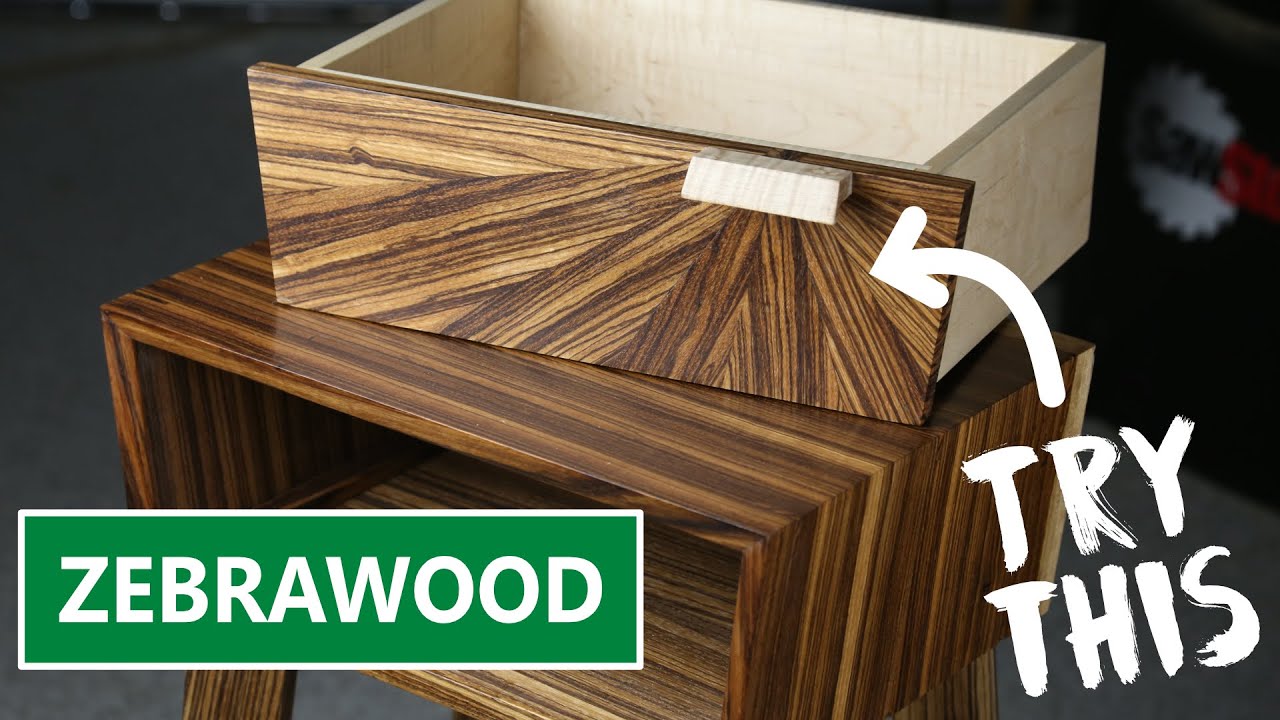
Zebrawood furniture works best when the striped surface acts as a focal point rather than covering every visible face. For large table tops, cabinet doors, and wall panels, zebrawood veneer over a stable substrate often gives better movement control and better grain matching than thick solid boards.
Zebrawood flooring can look dramatic, but it isn’t a casual choice for a full room. The hardness helps, yet the cost, sourcing concerns, stripe intensity, and seasonal movement make it better suited to borders, inserts, stairs, or specialty rooms than budget flooring.
Guitars and Instruments
Zebrawood guitar sets attract builders because the backs and sides look bold under clear finish. Tone depends on cut, drying, bracing, thicknessing, and builder choices, so don’t judge the instrument by the wood species alone.
Knife scales and pens are safer entry points than large furniture because the stock is small, affordable per piece, and easy to orient for stripe direction. Use stabilized zebrawood for wet-use knife handles when possible, and seal unstabilized pieces well so water doesn’t sit in the pores.
Projects needing caution include large solid tabletops, full cutting boards, outdoor furniture, and beginner hand-tool projects. A narrow accent strip in a cutting board is easier to justify than making the whole board from an imported open-pored exotic hardwood.
Working With Zebrawood

Working zebrawood rewards sharp tools and punishes rushed setup. Carbide saw blades, fresh jointer knives, helical planer heads, shallow cuts, and careful feed direction reduce chipping along the dark grain bands.
Cutting and Milling
Cutting feels dense and slightly abrasive, and the blade sound is sharper than it is with walnut or cherry. I like to leave extra width, joint one clean reference edge, then take light passes because a single deep pass can rip out a streak that won’t sand away cleanly.
Tool wear isn’t extreme like some silica-heavy woods, but zebrawood still dulls edges faster than softer domestic hardwoods. If your planer starts leaving fuzzy stripes or little craters, stop and switch to a scraper, fresh knives, or a drum sander before the board loses too much thickness.
Planing Tearout
Zebrawood tearout happens because the grain often reverses direction inside the same board. The professional workaround is to combine shallow machine passes with card scraping, high-angle hand planing, or sanding, instead of trying to force one perfect planer pass.
Sanding and gluing need clean pores. Sand through 120, 150, 180, and 220 grit without skipping, vacuum the pores, wipe with a compatible solvent if the finish system allows it, and glue freshly jointed surfaces with even pressure rather than crushing the joint dry.
The odor during cutting can be sour, dusty, and slightly peppery, especially at the router table. Use dust collection before the smell fills the room, because that fine brown powder sticks to sweat and can make your wrists and forearms itch.
Failure prevention starts before the first cut: acclimate the boards, mark grain direction, rough-cut oversize, save offcuts for finish tests, and avoid rigid cross-grain joints. For more context on density and dent resistance, compare zebrawood with other species on our wood hardness scale.
Practical Notes From Real-World Use

Real projects fail less from zebrawood being “too hard” and more from ignoring grain direction, moisture, and finish prep. The board can look perfect under shop lights, then show washboard pores and pale sanding scratches once the first oil coat hits the surface.
- Buy extra material because stripe matching creates more waste than plain woods.
- Mark show faces before milling so the best stripe orientation doesn’t end up inside a joint.
- Scrape late in the process when a planer leaves chipped dark lines.
- Test finish on offcuts from the same board because amber finishes can make the base color too orange.
- Use restraint in design; zebrawood looks stronger beside quiet woods than beside several loud species.
Best Finish for Zebrawood
The best finish for zebrawood depends on the project, but most pieces need careful sanding, pore cleaning, and either pore filling or enough film build to level the open grain. Oil warms the color, while lacquer and polyurethane protect high-use surfaces better.
Surface Preparation
Surface preparation decides whether zebrawood looks polished or rough. Sand evenly to 180 or 220 grit, inspect under raking light, and remove dust from the pores with vacuum and compressed air set low enough that it doesn’t blast dust back into your face.
Pore filling helps glossy furniture, guitar bodies, boxes, and knife handles look smooth. Clear filler keeps the natural look, dark filler increases contrast, and tinted filler can muddy the golden background if you leave residue on the surface too long.
Oil Finishes
Oil finishes such as Danish oil, tung oil blends, and wiping varnish make the dark zebrano wood streaks look richer. The trade-off is lower surface build, so tabletops, counters, and handled objects often need a stronger topcoat or regular maintenance.
Lacquer and polyurethane create a tougher film on cabinets, desk parts, and decorative panels. Spray lacquer looks crisp on veneer, while wipe-on polyurethane suits small-shop work where dust control and overspray are harder to manage.
Finishing mistakes include skipping grits, applying finish over dust-filled pores, using too much amber topcoat, and forgetting to test on scrap. A scrap test saves the main piece when the finish turns the pale stripes darker than the design needs.
Price and Buying Guide
Zebra wood price usually sits in the premium exotic hardwood range. Retail zebrawood lumber often appears around $25–$45+ per board foot, with wide, thick, quartersawn, highly striped, kiln-dried, or surfaced boards costing more.
Zebra Wood Price
Price per board foot doesn’t tell the whole story. Small zebrawood boards, knife scales, pen blanks, and craft pieces cost more by volume because the seller cuts, surfaces, sorts, photographs, packages, and ships smaller material for hobby projects.
Lumber versus veneer is the biggest buying decision for furniture. Solid zebra wood lumber makes sense for edges, legs, handles, small boxes, and accents; zebra wood veneer makes more sense for large cabinet faces, bookmatched panels, and stable modern furniture.
Blanks and scales offer an easy way to use real zebrawood without buying a full board. Pen blanks, knife scales, and small craft boards let you test sanding, pore filling, and finish color before committing to a larger build.
Buying Checklist
- Confirm species: look for Microberlinia brazzavillensis or a clear seller description.
- Check dimensions: read thickness, width, length, and whether the board is rough or surfaced.
- Ask for photos: actual-board images beat sample grain photos.
- Check drying: kiln-dried stock is safer for indoor furniture than unknown wet stock.
- Inspect defects: watch for end splits, checks, bow, twist, and brittle corners.
- Plan waste: buy extra for stripe matching, tearout removal, and test pieces.
- Review sourcing: avoid suspiciously cheap imported stock with no origin details.
Project materials below fit small builds, practice cuts, accents, pens, scales, and comparison work before buying larger zebrawood boards.
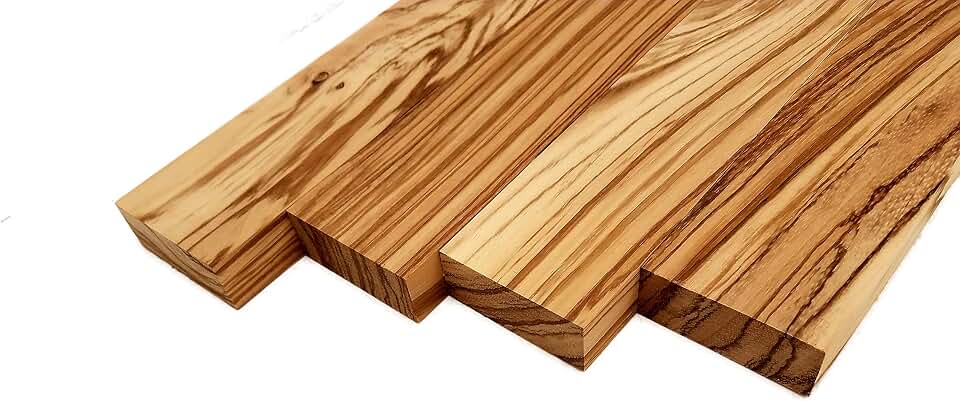
Zebrawood Lumber Pack
- Rich zebrawood grain adds striking visual appeal
- pre-cut boards save prep time
- solid hardwood works well for small projects
- ideal for crafting, turning, and accents
- convenient 4-piece set for multiple uses
 Buy on Amazon

Zebrawood Craft Board
- Solid zebrawood with a distinctive natural pattern
- unfinished surface is ready for customization
- sized for crafts, scroll saw work, and engraving
- easy to shape for small woodworking projects
- single board offers flexible project use
Buy on Amazon

Exotic Wood Variety Set
- Includes a mix of purpleheart, zebrawood, padauk, and okoume
- compact boards are great for small builds
- hardwood stock suits crafting and woodworking
- useful for cutting boards, inlays, and repairs
- assorted species offer color and grain variety
Buy on Amazon
Long Exotic Wood Set
- Features a mixed selection of premium exotic hardwoods
- longer boards give extra flexibility for projects
- great for woodworking, crafting, and practice pieces
- bold colors and grain patterns create standout results
- handy 8-pack for varied uses
Buy on Amazon

Exotic Wood Board Kit
- Includes four popular hardwood species for variety
- larger boards are great for many project types
- strong wood stock supports woodworking and DIY builds
- great for testing stains, finishes, and designs
- assorted colors add visual interest to finished pieces
Buy on Amazon
Knife and pen stock is useful when you want the striped look in a compact project without paying for wide lumber.

Zebrawood Knife Scales
- Distinct zebrawood grain gives knives a custom look
- ideal for handle making and small-scale builds
- hardwood material offers natural beauty and character
- easy to shape for DIY knife projects
- great choice for makers and collectors
Buy on Amazon
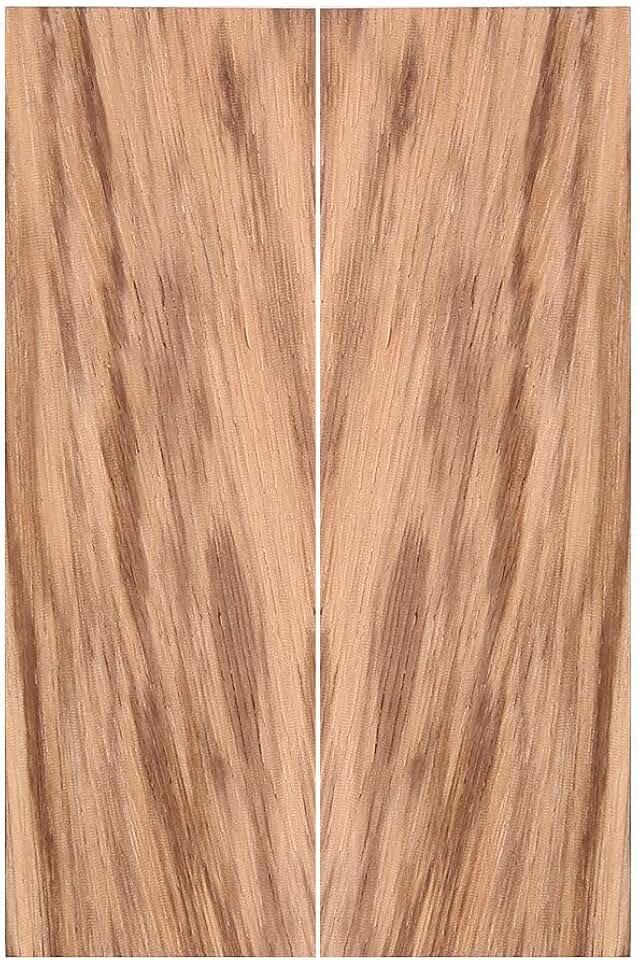
Bookmatched Zebrawood Scales
- Bookmatched pair creates a matching visual effect
- natural zebrawood adds rich grain and contrast
- sized for custom knife handles and small crafts
- good for DIY makers seeking a premium look
- ready for shaping, sanding, and finishing
Buy on Amazon

Zebrawood Pen Blanks
- Five-piece set is perfect for pen turning projects
- zebrawood grain delivers a striking finished look
- consistent blanks help streamline crafting
- great for gifts, practice, or production work
- hardwood stock is ready for turning and finishing
Buy on Amazon

Exotic Pen Blank Set
- Ten hardwood blanks provide lots of turning options
- mix of species adds color and grain variety
- great for pens, small crafts, and practice pieces
- uniform size supports easier shaping and finishing
- ideal starter set for hobby woodturners
Buy on Amazon
Sustainability and Safety
Zebrawood sustainability deserves attention because the main commercial species, Microberlinia brazzavillensis, is listed as Vulnerable by the IUCN Red List. CITES listing status can change by species and shipment rules, so international buyers should still verify import requirements before ordering.
IUCN and CITES
Responsible sourcing means buying from suppliers that document country of origin, legal harvest, chain of custody, and FSC certification where available. Veneer can be a smart choice because it spreads the dramatic look across a larger surface while using far less solid tropical hardwood.
Anonymous bargains carry risk. If a listing offers unusually cheap African zebra wood with vague species names, no drying details, and only generic photos, the savings can disappear through cracks, movement, poor stripe orientation, or uncertain legality.
Dust Toxicity
Zebrawood dust can irritate the eyes, skin, and respiratory system, especially during sanding and routing. Use dust collection, a well-fitted respirator, eye protection, and long sleeves if the dust makes your skin feel prickly or hot.
Food contact is different from breathing dust during machining. If you use zebrawood for a cutting board accent, choose well-dried stock, sand thoroughly, clean the surface, and finish with food-safe mineral oil or board wax; maple, walnut, and cherry remain more familiar main-surface choices for cutting boards.
Cutting board cautions include open pores, imported sourcing, possible sensitization while making the board, and movement if thin strips aren’t balanced in the glue-up. A narrow decorative strip is usually wiser than a full zebrawood cutting surface.
Zebrawood Alternatives
Zebrawood alternatives help when the price, sustainability concerns, or workability don’t fit the project. Choose the substitute by goal: dark contrast, striped figure, lower cost, easier machining, or better food-contact familiarity.
Zebrawood vs Wenge
Zebrawood vs wenge is a contrast decision. Zebrawood gives golden color with dark stripes, while wenge wood gives a darker brown to nearly black look with coarse texture and a splintery feel.
Wenge works better when you want a subdued luxury edge, dark lines, or a shadow-like accent. Zebrawood works better when the design needs bright movement and visible striping from across the room.
Zebrawood vs Walnut and Maple
Walnut feels calmer, machines more easily, and suits classic furniture better than zebrawood. Zebrawood is harder, heavier, louder visually, and better as a statement accent than a quiet background wood.
Maple wins for clean utility, cutting boards, work surfaces, and pale modern furniture. Zebrawood wins for contrast, stripe, and decorative drama, but its open pores and price make it less practical for everyday kitchen boards.
Bocote and goncalo alves give bold alternatives with warmer, swirling, or tiger-like figure. Padauk, purpleheart, engineered veneer, and zebrawood veneer can also fill the role when the project needs color, stripe, or lower cost; compare more species in our types of hardwood guide.
Lower-cost alternatives include domestic walnut for dark contrast, maple for pale utility, oak for durability, and veneer for the zebra look without the cost or movement risk of solid stock. For the closest striped effect, buy quality zebrawood veneer or a verified striped species rather than a vague “zebra-look” board.
FAQs
What Is Zebra Wood Used For?
Zebra wood is used for furniture, decorative veneers, cabinetry, musical instruments, and specialty woodworking projects. Its bold striped grain makes it popular when a dramatic, high-end look is wanted. It is also used for small items like boxes, handles, and accent pieces.
Is Zebra Wood The Same As Zebrano Wood?
Yes, zebra wood and zebrano wood usually refer to the same wood. Zebrano is the name more commonly used in trade for the species Microberlinia brazzavillensis. In everyday use, both names are often used interchangeably.
Is Zebra Wood Expensive?
Yes, zebra wood is generally considered expensive compared with many common hardwoods. The cost comes from its striking appearance, limited supply, and the difficulty of working with it. Small projects may be affordable, but larger pieces can get costly.
What Is The Best Finish For Zebrawood?
The best finish for zebrawood is usually a clear finish that highlights the grain, such as oil, polyurethane, or lacquer. A wiping oil can bring out the contrast, while a durable topcoat adds protection for furniture. Test the finish on a scrap piece first, since the wood can absorb products unevenly.
Is Zebrawood Safe For Cutting Boards?
Zebrawood is not the best choice for cutting boards. It is a dense hardwood, but it is often used more for appearance than food-safe utility, and some woodworkers prefer more stable, less oily species. If you do use it, make sure the finish is food-safe and the board is well sealed.
Affiliate Disclosure: Some links in this post are affiliate links. If you make a purchase through these links, we may earn a small commission at no extra cost to you. We only recommend products we genuinely believe in.





Can Zebra wood be used for gun stocks? Will the hardness lead to cracking? Walnut is the usual stock material but I’m looking at a rifle with what appears to be Zebra Wood.
Thanks for your thoughts.
Tim
Hi Tim,
Great question! Zebra wood can indeed be used for gun stocks, and it’s an interesting choice because of its unique grain patterns and striking appearance. It’s not as commonly used as walnut, which is favored for its balance of hardness and workability, but zebra wood can still make an impressive stock.
In terms of hardness, zebra wood is quite strong and durable, but it’s also a bit more prone to cracking compared to walnut, especially if it isn’t properly seasoned or if it experiences significant environmental changes. If you’re considering a rifle with a zebra wood stock, you might want to ensure that it’s well-maintained and sealed to protect against moisture and temperature fluctuations.
Hope that helps, and good luck with your rifle!