What Is the Lightest Wood? A Guide to Balsa and Alternatives

Balsa is the lightest wood sold widely for commercial use, with oven-dry density commonly ranging from 100 to 250 kg/m³. This lightweight hardwood suits models and composite cores, but paulownia, basswood, cedar, or spruce often perform better where dent resistance, fasteners, weather exposure, or structural stiffness matter.
Table of Contents
Balsa: The Lightest Commercial Wood
Direct Answer
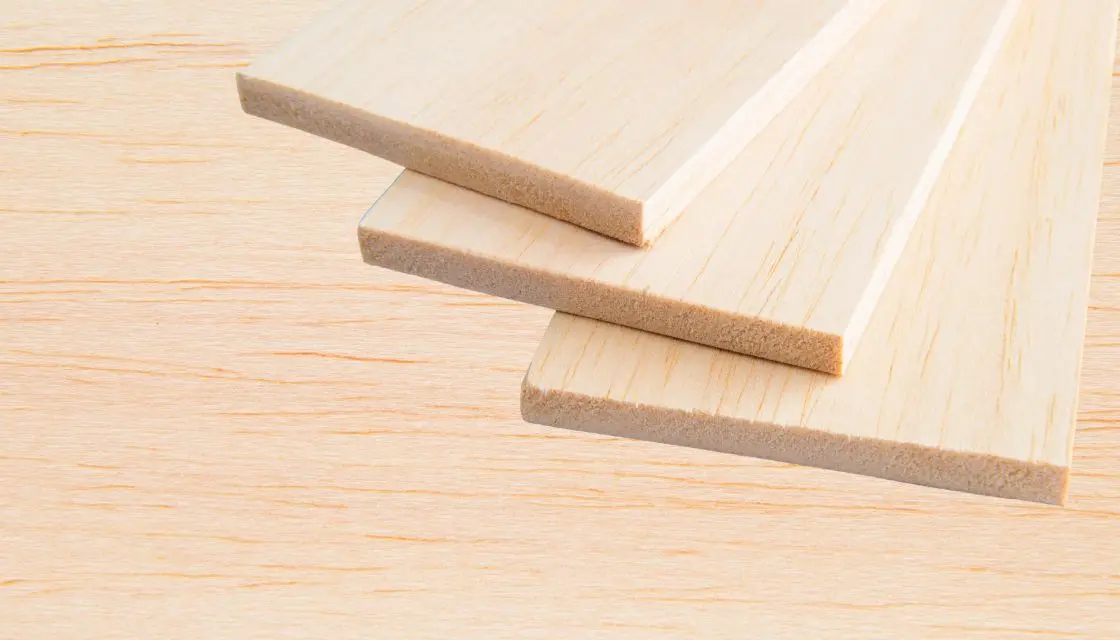
Balsa, or Ochroma pyramidale, is widely recognized as the lightest commercially available timber. A typical dry board averages about 150–160 kg/m³, or 9–10 lb/ft³, though individual pieces can fall well above or below that figure. Detailed properties appear in this guide to balsa wood.
Density Range and Weight
Dry balsa density commonly spans 100–250 kg/m³, equal to roughly 6–16 lb/ft³. At 160 kg/m³, one board foot weighs about 0.83 lb or 0.38 kg. Published figures must be read with their moisture condition because green balsa carries far more water than kiln-dried model stock.
Botanical Classification
Balsa is a hardwood in botanical terms because it grows on a flowering broadleaf tree in the Malvaceae family. That classification doesn’t describe physical hardness: its Janka hardness is only about 70 lbf, and a thumbnail can leave a smooth-edged dent with little pressure. The Balsa Wood Database profile lists representative density and mechanical values.
Origin and Supply
Tropical American forests are balsa’s native habitat, while Ecuador supplies a large share of commercial material. The tree colonizes disturbed sites and may reach harvestable dimensions in about five to seven years. Retail stock appears as strips, blocks, thin sheets, model-aircraft grades, and end-grain composite panels.
What “Lightest Wood” Really Means
Lightest means lowest density, not the smallest total board weight. Fair comparisons use equal volumes measured at comparable moisture levels and account for natural differences between trees and boards.
Density Versus Total Weight
Density equals mass divided by volume. A small oak block may weigh less than a large balsa panel, yet oak remains denser. Wood references use kg/m³ or lb/ft³; 1 lb/ft³ equals about 16.02 kg/m³. Our guide to wood density explains the wider comparison method.
Moisture Content
Water adds mass without adding dry wood substance. Moisture content equals [(wet weight − oven-dry weight) ÷ oven-dry weight] × 100. Oven-dry, air-dry, 12% moisture, and green density figures aren’t interchangeable, so an unlabeled number can produce a misleading ranking.
Specimen Density Variation
Species ranges overlap because density changes with growth rate, tree age, trunk position, climate, grain, and commercial grade. Two same-size balsa sheets can feel startlingly different in the hand: one lifts like stiff paper while the other has the solid pull of a thin pine board. Weight-sensitive builders sort the actual stock rather than trust its color.
Wood and Plant Materials
Botanical categories matter in lightest-wood lists. Bamboo is a grass, cork is bark, and palms are monocots with a structure unlike conventional timber. These materials may be light and useful, but they shouldn’t silently replace solid wood in a density ranking.
Cork, Bamboo, and Composites
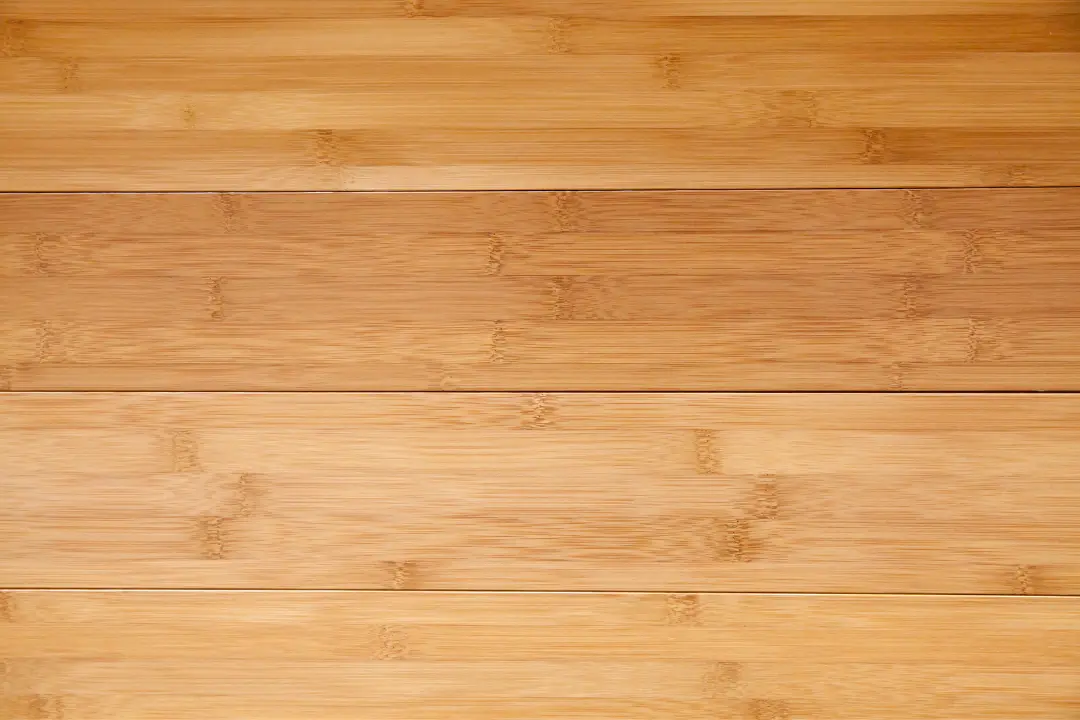
Engineered panels differ from natural boards. Cork may measure roughly 120–240 kg/m³, while honeycomb and foam-core panels can weigh less than solid balsa. Laminated bamboo is usually much denser because compressed strips and adhesive form the finished sheet. Compare complete panel construction rather than raw core density alone.
Why Balsa Wood Is So Light
Balsa contains abundant air within large cells surrounded by thin walls. Less solid cell-wall material occupies each cubic meter, which cuts density while retaining enough internal structure for models, insulation, and sandwich cores.
Cellular Structure
Large thin-walled cells create buoyancy, thermal insulation, sound absorption, and useful energy absorption. The same open structure drinks in thin resin and finish through exposed end grain. Sealing the surface before heavy coating can reduce finish uptake, though the sealer’s own mass must enter the weight calculation.
Rapid Tree Growth
Fast juvenile growth produces wide rings and a low proportion of dense cell wall. Older, slower-grown material often weighs more. Harvest age alone can’t predict density, since soil, rainfall, tree position, and processing all affect the final board.
Strength-to-Weight Ratio
Relative strength is useful in wing ribs and sandwich panels, where geometry spreads loads across a large area. Average-density balsa may show bending strength near 2,800 psi, but variation is wide. Engineering work requires grade-specific test data rather than a general species average; the USDA Wood Handbook explains how moisture, grain, and density affect wood properties.
Hardness and Stiffness
Low density has costs. Balsa’s surface crushes under narrow clamps, screw heads, and sharp corners, while a representative elastic modulus near 0.5 million psi leaves it much less stiff than structural spruce. Higher-density grades gain strength and stiffness but surrender part of the weight advantage.
Lightweight Wood Types Compared
Balsa leads on density, but paulownia, cedar, obeche, basswood, and Sitka spruce offer better performance under handling, weather, or structural loads. The ranges below are dry approximations, not fixed guarantees for every board.
Density Comparison Chart
| Wood | Approximate dry density | Approximate lb/ft³ | Janka hardness | Practical distinction |
|---|---|---|---|---|
| Balsa | 100–250 kg/m³ | 6–16 | About 70 lbf | Lowest-density common timber; dents easily |
| Paulownia | 250–310 kg/m³ | 16–19 | About 300 lbf | Light furniture-sized boards |
| Western red cedar | 350–390 kg/m³ | 22–24 | About 350 lbf | Natural outdoor durability |
| Obeche | 350–430 kg/m³ | 22–27 | About 430 lbf | Workable tropical hardwood |
| Basswood | 370–420 kg/m³ | 23–26 | About 410 lbf | Clean carving and fine detail |
| Sitka spruce | 400–450 kg/m³ | 25–28 | About 510 lbf | High structural efficiency |
Moisture and grade can move individual samples outside these approximate ranges. A low number doesn’t identify the strongest lightweight wood; stiffness, compression, fastener capacity, and durability must match the job.
Board-Foot Weight
One board foot contains 144 cubic inches, or about 0.00236 m³. Using representative densities, a board foot weighs about 0.83 lb for balsa, 1.46 lb for paulownia, 1.93 lb for western red cedar, 2.16 lb for basswood, and 2.21 lb for Sitka spruce. Glue, coating, and hardware come later.
Balsa vs Paulownia
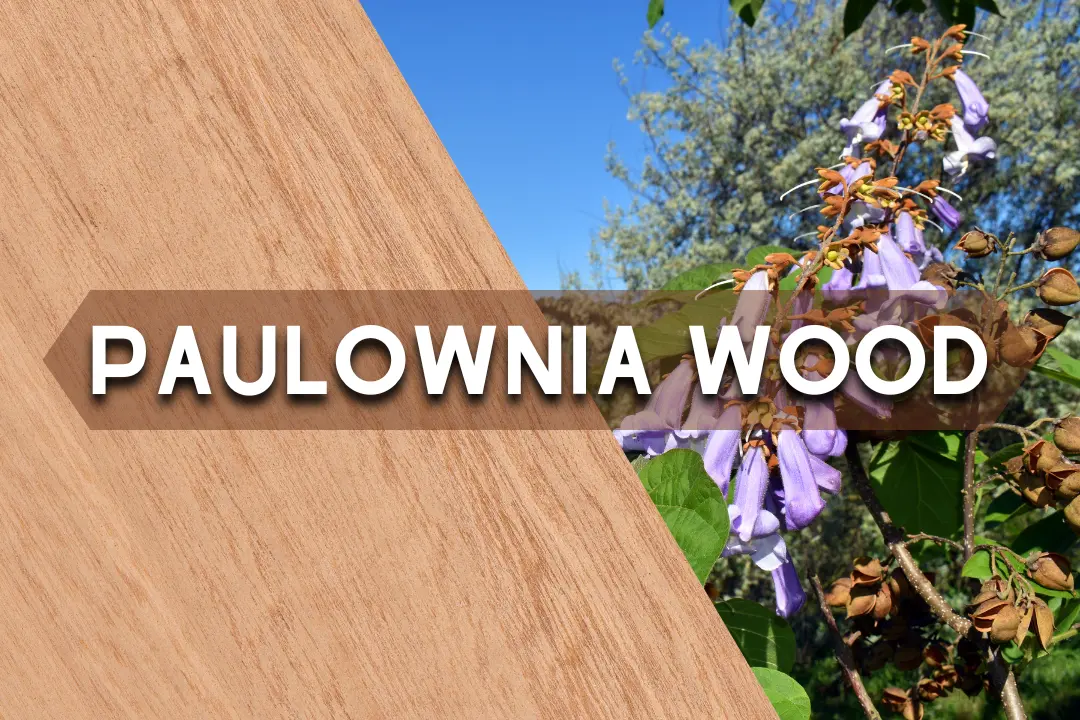
Balsa is normally lighter, while paulownia is harder, holds fasteners better, and survives routine furniture handling more successfully. Paulownia at roughly 250–310 kg/m³ works for drawers, cabinets, instruments, and portable furniture. See the full profile of paulownia wood before selecting boards.
Balsa vs Basswood
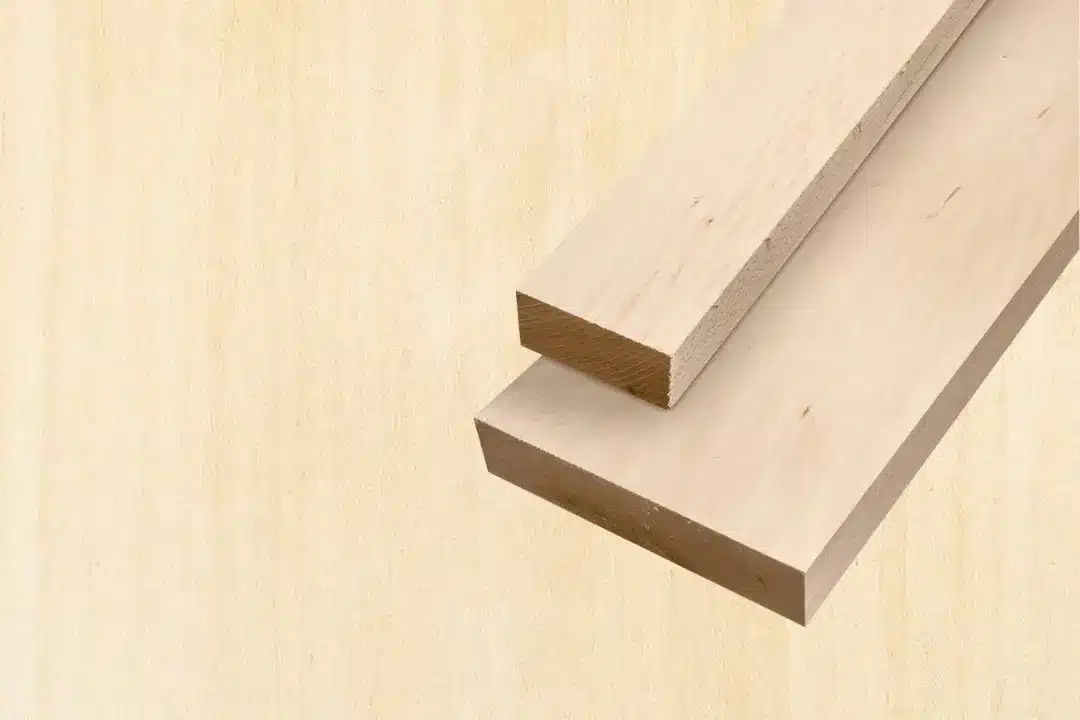
Basswood cuts more cleanly and keeps fine carved edges that soft balsa tends to crush. Balsa wins for minimum-weight gliders and fillers; basswood wins for relief carving, laser work, patterns, and objects handled often. Learn more about basswood grain and uses.
Cedar, Obeche, and Spruce
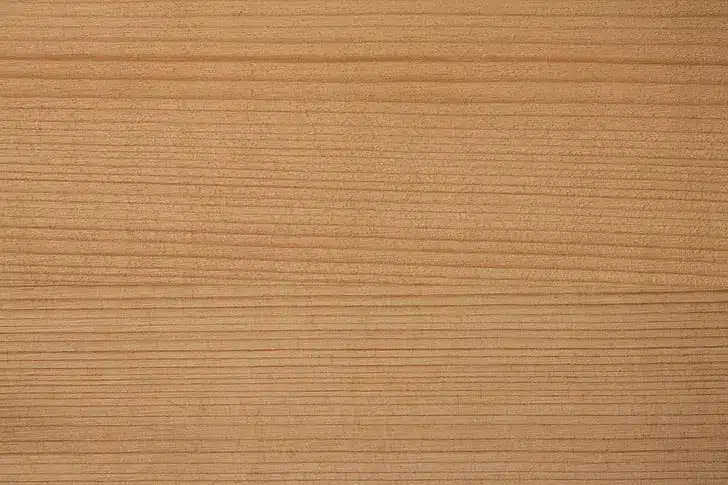
Each solves a different problem. Western red cedar brings decay resistance, obeche offers smooth machining at moderate weight, and Sitka spruce supplies far greater stiffness for spars and framing. Balsa shouldn’t replace western red cedar outside merely because it weighs less.
Balsa vs Cork
Cork can be comparable to some balsa grades, with products often falling near 120–240 kg/m³. Cork comes from the bark of cork oak, not sawn trunk wood. Its resilience suits seals, insulation, flooring, and vibration control, while balsa works better as a shaped timber or load-spreading core.
Best Lightweight Wood by Project
The best lightweight wood depends on the load, exposure, surface wear, and joining method. Balsa serves models and composite cores; basswood favors detailed crafts, paulownia suits light furniture, cedar handles weather, and spruce carries structural loads.
Models and Gliders

Use graded balsa for wing ribs, fuselage frames, fillers, and lightly loaded skins. Place denser stock at leading edges, landing-gear mounts, and concentrated joints. Weigh corresponding left and right wing pieces to prevent a persistent roll caused by unequal panel mass.

Balsa Strips for Building
- Eighty unfinished balsa strips
- Lightweight wood for model structures
- Uniform quarter inch square profile
- Ideal for airplane frames
- Useful for STEM bridge projects
 Buy on Amazon
Crafts and Laser Cutting
Balsa suits simple crafts, architectural models, ornaments, and prototypes. Basswood gives cleaner engraved lines and sharper small tabs. A dull knife compresses balsa before separating it, leaving a fuzzy, sunken edge; use a fresh blade and several light passes rather than one forceful cut.

Basswood Blanks Value Pack
- Twenty eight thin basswood sheets
- Compact 4 by 6 inch size
- Unfinished for custom decoration
- Suitable for wood burning art
- Ready for laser engraving
Buy on Amazon
Furniture and Cabinetry
Choose paulownia first for portable cabinets, drawer parts, display furniture, and decorative panels. Balsa dents under elbows and strips around screws. Paulownia still needs broad joints, pilot holes, and restrained clamping because it is softer than maple, oak, or standard cabinet plywood.
Marine Composite Cores
End-grain balsa works inside sandwich panels because its cells stand through the panel thickness and resist compression better than flat sheet. Fiberglass skins carry tension while the core separates them. All holes need sealed, load-spreading inserts; a leaking screw can admit water far beyond the visible puncture.
Outdoor Projects
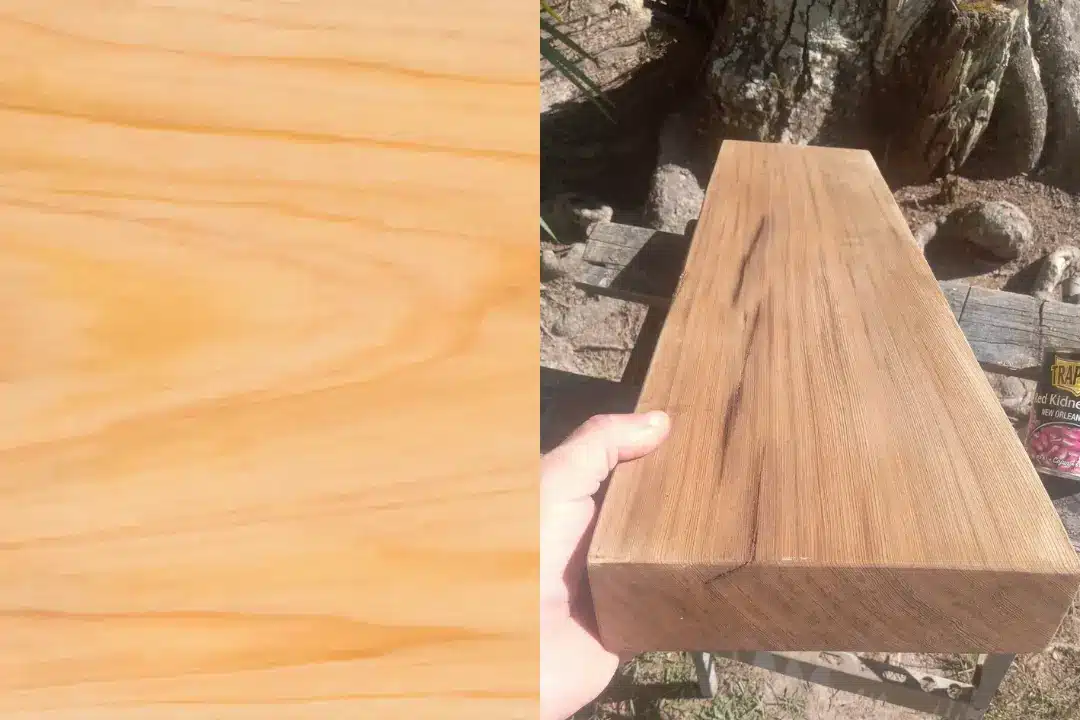
Cedar or cypress wins where rain, soil moisture, and seasonal movement affect the work. Balsa lacks dependable natural decay resistance, and paint won’t protect a cracked joint or exposed end grain forever. Use balsa outdoors only in fully enclosed, well-sealed components that can be inspected.
Structural Uses
Sitka spruce is stronger and stiffer than balsa for spars, frames, aircraft members, and boat components. Building structures require published allowable design values for bending, compression, connections, and moisture conditions. Craft balsa has no place in load-bearing house construction.
Practical Notes From Real-World Use
Weight-sort before cutting. When several balsa sheets are fanned across a bench, low-density pieces feel warm, dry, and almost hollow, while dense sheets settle more firmly into the palm. Mark each piece’s mass and planned location in pencil before parts become too small to identify.
- Use wide cork-faced cauls so clamps don’t leave grooves.
- Cut across the grain with several shallow knife passes.
- Reserve hard balsa for joints, edges, and local loads.
- Coat paired faces in the same session to reduce curling.
- Test glue and finish on weighed scrap to measure added mass.
Adhesive can erase savings. Very soft balsa absorbs thin epoxy with a darkened, wet-looking edge and may gain more finished weight than expected. A controlled seal coat, thicker resin formulation, or denser core can produce a lighter completed panel by limiting resin uptake.
Balsa Limitations and Failure Risks
Balsa fails locally first through dents, crushed fibers, stripped fasteners, moisture entry, or warped thin sheets. Most failures come from treating it like ordinary lumber rather than spreading loads and controlling moisture.
Crushing and Dents
Point loads cause damage. Clamp jaws, bolt heads, fingertips, and dropped tools can collapse the cells before the whole part appears stressed. Place cauls under clamps and use plywood, hardwood, or high-density balsa inserts beneath fittings.
Fastener Holding
Screws strip easily because their threads crush the surrounding fibers. Beginners often solve looseness with a larger screw, which removes more weak material. Use bonded inserts, through-bolts with broad washers, or glued joints with generous surface area instead.
Water Absorption and Rot
End grain absorbs quickly through unsealed cuts, failed bedding, cracks, and drilled holes. Wet core gains weight and may lose adhesion before external damage becomes obvious. Marine penetrations need over-drilling, removal of nearby core, resin backfilling, and redrilling through the cured plug according to the panel specification.
Inconsistent Density
Dimensions don’t predict mass. Matching sheets by appearance alone can unbalance a model or place weak stock at a highly loaded joint. Record weight, volume, grain direction, and intended component; supplier density grades are preferable for repeat production.
Thin-Sheet Warping
Uneven moisture curls sheets when glue, paint, or humidity reaches one face first. Store stock flat between clean boards and apply coatings to both faces in balanced amounts. Pinning a freshly coated sheet flat may hide stress that returns after release, so let both sides equalize.
Cutting, Sanding, Laser Safety
Fine dust feels chalky in the nose and throat, while laser-cut balsa chars quickly and produces smoke. Use extraction, eye protection, and suitable respiratory protection for extended sanding. Never leave a laser operating unattended; the OSHA wood dust guidance covers exposure and control methods.
How to Choose Lightweight Wood
Start with performance needs, then compare boards at equal moisture levels and calculate finished assembly weight. The lowest-density sheet isn’t a bargain if it requires heavy skins, oversized joints, or frequent replacement.
Define Project Requirements
Rank the main demands: minimum mass, stiffness, bending strength, dent resistance, screw holding, weather resistance, surface detail, and cost. Balsa leads where low density dominates. Spruce may be the light but strong wood for a beam, while paulownia can be the better lightweight wood for furniture.
Compare Equal Moisture Levels
Acclimate before weighing boards used for aircraft balance or repeatable production. Compare readings at the same moisture content with a calibrated meter. A damp lightweight board can appear denser than a dry heavier species, reversing the apparent result.
Calculate Board Density
Measure, weigh, divide. Find volume from length × width × thickness, weigh the piece, and divide mass by volume. A scale reading to 0.1 gram helps with thin model sheets. Measure actual thickness rather than relying on a nominal package label.
- Measure all dimensions in one unit system.
- Calculate the board’s cubic volume.
- Weigh it on an accurate scale.
- Divide mass by volume.
- Label the board with density, grain, and planned use.
Include Finished-System Weight
Count every added material: glue, resin, fiberglass, paint, filler, hardware, and protective skins. Weigh a sample before and after finishing. This small trial reveals whether porous balsa absorbs enough coating to cancel its advantage over denser wood.
Match Grain and Grade
Grain controls behavior. Long-grain strips resist bending along their length, quarter-grain sheets hold flatter, and end-grain blocks handle through-thickness compression in cores. Put denser grades around fittings and reserve soft sheets for lightly loaded ribs, fillers, or skins.
Cost, Availability, and Sustainability
Low density doesn’t mean low cost. Processing, grading, fragile shipping, source traceability, and usable yield often matter more than raw timber volume, while long service life may justify choosing a slightly heavier species.
Material Formats and Pricing
Compare equal formats using cost per sheet, square foot, board foot, or usable part. Precision-sanded 1/16-inch craft sheets cost more per unit of wood than rough boards because they require slicing, thickness control, sorting, and protective packaging.

Balsa Sheets for Models
- Five lightweight balsa boards
- Thin one sixteenth inch profile
- Sized for airplane and boat models
- Useful for school projects
- Can be cut or laser worked
Buy on Amazon
Density Grades
Graded stock costs more because matched weight, straight grain, consistent thickness, and mechanical properties require sorting. Unspecified craft balsa may work for ornaments but is a poor choice for precision aircraft or engineered cores where strength and balance depend on density.
Shipping and Damage
Fragility raises delivered cost. Long thin sheets arrive with crushed corners, grain splits, dents, or permanent bows when packaging lacks rigid support. Buying locally lets you sight along each sheet, feel its stiffness, and compare weights before paying.
Responsible Sourcing
Fast growth isn’t proof of responsible forestry. Land conversion, harvesting practices, labor conditions, transport distance, log waste, and supply-chain records shape the material’s impact. A longer-lived cedar or spruce component may consume fewer resources than repeatedly replacing exposed balsa.
Certification and Traceability
Ask for documented origin, density grade, supplier chain of custody, and panel quality records. FSC-certified material may offer stronger sourcing evidence where available. The Forest Stewardship Council explains certification and chain-of-custody systems used across forest-product supply chains.
Efficient Material Use
Plan cuts before assembly. Nest ribs and craft parts closely, keep straight offcuts for braces, and use softer scraps as fillers or test pieces. Protect remaining sheets between flat boards; avoiding one snapped or curled panel often saves more material than chasing a marginally lighter grade.
FAQs
What Is The Lightest Wood In The World?
Balsa is widely considered the lightest commercially available wood in the world. Its extremely low density makes it easy to cut, shape, and carry, while its cellular structure still provides useful stiffness. It is commonly used for model airplanes, crafts, flotation devices, and lightweight core materials.
Is Balsa A Hardwood Or A Softwood?
Balsa is a hardwood, even though it is much softer and lighter than many softwoods. Wood is classified botanically: hardwoods come from flowering broadleaf trees, while softwoods come from cone-bearing trees. Balsa grows quickly and has large cells, which give it its unusually soft texture.
Is Paulownia Lighter Than Balsa?
No, paulownia is generally heavier than balsa wood. Paulownia is still exceptionally lightweight and often weighs less than cedar, pine, or plywood, but balsa usually has a lower density. Paulownia can be a better choice when you need lightweight wood with greater durability and resistance to dents.
What Wood Is Lightweight But Still Strong?
Balsa has one of the best strength-to-weight ratios of any wood. It is very light but can provide impressive stiffness when used in the right direction or as part of a laminated structure. Paulownia, cedar, and spruce are also popular lightweight choices for projects needing more toughness.
What Is The Best Lightweight Wood For Crafts?
Balsa is the best lightweight wood for most crafts because it is easy to cut, sand, glue, and paint. It works especially well for models, miniature builds, school projects, and decorative pieces. Choose basswood instead if you need a slightly stronger surface with cleaner detail carving.
Affiliate Disclosure: Some links in this post are affiliate links. If you make a purchase through these links, we may earn a small commission at no extra cost to you. We only recommend products we genuinely believe in.