
White Willow Guide: Identification, Uses, Bark Safety, and Ohio

White willow, or Salix alba, is a fast-growing deciduous tree with narrow leaves that look silvery underneath. This guide covers identification, Ohio planting, wood uses, salicin research, bark safety, supplements, and the separate meaning of “willow wood Ohio.”
Table of Contents
What Is White Willow?
White willow is Salix alba, a large willow species native to Eurasia and northern Africa. Its pale leaf undersides, preference for wet ground, and salicin-containing bark distinguish it, though frequent hybridization can blur field identification.
Definition and Taxonomy
The accepted white willow scientific name is Salix alba L. It belongs to the genus Salix and family Salicaceae, which also includes poplars, aspens, and cottonwoods. These trees share lightweight wood, wind-dispersed seeds, and a preference for open or moist sites.
White willow is technically a hardwood tree because it is a flowering broadleaf, yet its timber is softer than many woods sold as softwood. That botanical distinction becomes clearer in our guide to hardwood trees.
Native and Introduced Range
The native range includes Europe, western and central Asia, and parts of northern Africa. The Plants of the World Online database recognizes Salix alba as an accepted species with a broad Eurasian distribution.
People introduced the tree to North America, Australia, and other temperate regions for shade, erosion control, basket material, and ornamental planting. It has since become naturalized beyond cultivation, particularly beside waterways and in disturbed wetlands.
Riparian habitat. White willow grows best beside rivers, ponds, reservoirs, ditches, and floodplain channels. Fresh sediment offers the exposed, damp surface its short-lived seeds need, while broken twigs may root after lodging in wet mud.
This growth pattern explains why a planted tree can spread farther than expected. Floodwater carries seeds and branch fragments downstream, where they establish on open banks before slower-growing vegetation fills the space.
Name origin. The Latin word alba means white. It refers mainly to fine, silky hairs on the leaves—most visible on their undersides—not to white bark. Turn a leaf in sunlight and the surface can flash from dull green to a cool, silvery gray.
White Willow Identification and Lookalikes

Identify white willow by combining leaf, twig, crown, and habitat traits. A pale leaf underside alone isn’t conclusive because white willow crosses readily with related species.
Size and Crown
A mature white willow commonly reaches 50–80 feet tall with a crown about 35–50 feet across. Productive floodplain sites can support larger specimens, while compacted or seasonally dry ground produces smaller, less balanced trees.
The crown usually looks broad, irregular, and lightly open rather than uniformly rounded. Major limbs rise or spread before their fine branchlets bend downward. Fast extension growth often produces long shoots, narrow attachment angles, and a visibly coarse framework inside the crown.
Leaves
White willow leaves are alternate, narrow, lance-shaped, and commonly 2–4 inches long. Their edges have fine teeth. The upper surface ranges from gray-green to medium green, while silky hairs make the lower surface distinctly paler.
Fresh leaves feel slightly soft beneath the fingertips rather than glossy and slick. Older leaves can lose some hair, so examine healthy leaves from several mature shoots instead of relying on one weathered specimen near the ground.
Bark and twigs. Young bark starts relatively smooth, then becomes gray-brown and deeply fissured. Slender twigs may be yellow, olive, or brown. Scraped bark can smell green and faintly bitter, but scent isn’t a safe identification test or permission to taste it.
Catkins and seeds. White willow is usually dioecious, meaning male and female catkins grow on separate trees. Catkins appear near leaf emergence. Female catkins release tiny seeds attached to cottony hairs, sometimes covering damp ground with a thin layer resembling windblown lint.
Hybrid identification. White willow crosses with crack willow and willows linked to the weeping-willow group. A hybrid may combine a pale underside with broad leaves, brittle twig bases, or strongly drooping branches. For survey, herbarium, or management work, compare mature leaves, buds, twigs, catkins, and local botanical keys.
The following video offers a visual reference to accompany leaf, bark, and growth-form observations. Treat video identification as a starting point, since regional hybrids may not match a textbook specimen.

Weeping willow comparison. Classic weeping willows have long, strongly pendulous branchlets that may hang close to the ground. White willow has a broader, less dramatic crown. Many nursery trees sold as weeping willows are hybrids, so crown shape doesn’t always settle the species.
Black willow comparison. Black willow, Salix nigra, is native to much of eastern North America, including Ohio. Its narrow leaves usually lack the consistently white-silky underside associated with white willow. Black willow often develops dark, deeply ridged bark and multiple irregular trunks.
Crack willow comparison. Crack willow is associated with Salix fragilis and the taxonomically difficult Salix alba–fragilis group. Its twigs tend to snap cleanly at the base with an audible click. Intermediate hybrids make that break test useful but not conclusive.
Pussy willow comparison. “Pussy willow” describes several willows grown for soft, furry spring catkins. Most have a shrub or small-tree form and broader leaves. White willow becomes a full-sized tree and doesn’t display the same large ornamental catkins commonly cut for indoor arrangements.
| Willow | Typical form | Useful field clue | Ohio status |
|---|---|---|---|
| White willow | Large, broad-crowned tree | Narrow leaves with silky, pale undersides | Introduced |
| Weeping willow | Large tree with hanging branchlets | Strongly pendulous outer crown | Introduced or hybrid |
| Black willow | Irregular tree, often multi-trunked | Native tree without a consistently white-silky leaf underside | Native |
| Crack willow | Large riverside tree | Twigs detach readily at their bases | Introduced complex |
| Pussy willow | Shrub or small tree | Large, soft catkins in early spring | Varies by species |
Growing White Willow in Ohio
White willow isn’t native to Ohio, though naturalized trees occur beside rivers, reservoirs, ditches, and disturbed wetlands. Its fast growth suits large wet sites, but weak limbs, aggressive moisture-seeking roots, and nonnative spread limit its garden value.
Ohio Native Status
Salix alba arrived from Eurasia and shouldn’t be presented as an Ohio native. Legal or invasive classifications can change by location, so check the current plant lists and management material from the Ohio Department of Natural Resources before planting near a natural waterway.
A naturalized plant can reproduce without cultivation without being prohibited statewide. Those terms aren’t interchangeable. Watershed groups, parks, counties, and restoration projects may apply stricter planting rules than private gardens.
Ohio Identification
Ohio willow identification commonly involves separating white willow from black willow, peachleaf willow, crack-willow hybrids, and planted weeping forms. Examine branches from the sunny outer crown because shaded sucker leaves may be unusually wide or soft.
Soil and moisture. White willow prefers full sun and moist to wet soil, including clay, silt, and periodically flooded ground. It tolerates low oxygen around its roots better than many shade trees. Dry, compacted lawn soil often produces sparse foliage, dead twigs, and uneven growth.
Don’t plant one simply because part of a yard stays damp after rain. Standing water from compacted construction soil differs from an aerated floodplain. Digging a test hole after rain reveals whether water drains within a day or remains stagnant and sour-smelling.
Garden uses. A white willow can provide quick shade, screen a distant view, and occupy a broad wet area where smaller trees struggle. Its mature size makes it a poor match for narrow lots, streets, patios, and spaces beneath utility lines.
Practical Notes From Real-World Use. Young trees can look controlled for several seasons, then send out long, top-heavy limbs after their roots reach steady moisture. Begin structural pruning early, keep one dominant framework where possible, and don’t leave major corrections until thick limbs overhang a roof.
Ecological value. Early catkins provide pollen and nectar, foliage feeds insects and caterpillars, and roots hold wet soil. These benefits don’t automatically make white willow suitable for restoration. A native willow usually provides similar bank protection without adding a Eurasian species to a sensitive corridor.
Roots and infrastructure. Keep large willows away from sewer laterals, septic systems, drain tiles, pavement, and foundations with moisture defects. Roots don’t routinely pierce sound pipe walls; they exploit leaking joints, cracks, loose connections, and damp backfill surrounding damaged lines.
A beginner’s common mistake is choosing distance from the trunk’s present size. Plan around the mature root zone and crown instead. Utility maps may omit old clay drains, so inspect unexplained wet strips before planting.
Branch strength. Fast growth creates comparatively weak wood, included bark, and heavy ends on long limbs. Snow, ice, or wind can split these attachments. Place the tree where fallen branches won’t hit buildings, parked vehicles, play areas, or busy paths.
Native Ohio alternatives. Match the tree to the site rather than replacing one willow with another by name alone. Black willow suits large floodplains, while pussy-willow species and other native shrubs fit smaller wet margins.
- Black willow (Salix nigra): best for large, sunny streambanks and floodplains.
- Peachleaf willow (Salix amygdaloides): a native option for moist open ground within its local range.
- Native pussy willows: better where a shrub form and early catkins are wanted.
- Black alder alternatives: verify native status because European black alder is introduced; compare species through our black alder guide.
White Willow Wood Properties and Uses

White willow wood is light, soft, easy to shape, and poor at resisting decay. Those traits suit carving, boxes, light utility items, and specialized uses, but they limit flooring, structural work, exposed furniture, and long-lasting outdoor projects.
Density and Hardness
Air-dry density commonly falls near 400–450 kg/m³, with variation caused by tree growth, moisture, and the measured sample. A commonly cited Janka hardness is about 570 lbf, far below hard maple, hickory, or white oak.
Its low density places willow among relatively lightweight woods. Technical values should always include moisture conditions because green willow can feel surprisingly heavy from the water held in its cells.
Workability and Drying
Sharp hand tools cut willow with little resistance, but dull edges compress the fibers and leave a woolly, fuzzy surface. A freshly planed board feels smooth in one direction and slightly furry when rubbed against the grain. Light final cuts and a sharp scraper produce cleaner results than heavy sanding alone.
Green logs contain substantial moisture and can check, cup, twist, or develop fungal staining. Seal end grain soon after cutting, stack boards with evenly spaced stickers, add top weight, and protect the stack from direct sun while preserving airflow.
Durability limitations. White willow has low natural decay resistance. Outdoor pieces need drainage, surface protection, and separation from soil, yet protective finishes won’t turn it into durable fence-post or ground-contact timber. Soft surfaces also dent under chair legs, clamps, and careless handling.
Carving and utility uses. The wood works well for carved forms, prototypes, boxes, crates, turned objects, charcoal, pulp, and low-wear components. Thin edges bruise easily, so broad shapes hold up better than delicate points or crisp decorative details.
Willow resembles some pale poplar material in weight and appearance, but the names shouldn’t be exchanged. Our poplar wood guide explains related finishing and machining trade-offs.
Basketry and cricket bats. Flexible young willow rods have long served basket makers, though commercial basket material often comes from shrub willows such as Salix viminalis and Salix purpurea. Large white willow branches aren’t automatically good weaving stock.
Traditional cricket bats use cricket-bat willow, commonly classified as Salix alba var. caerulea. Straight grain, controlled density, clean growth, and skilled drying matter. A random white willow log rarely meets bat-grade requirements merely because it shares the species name.
Ohio wood sourcing. Someone searching for willow wood Ohio may want lumber, carving blanks, logs, or a sawmill. Ask for the scientific species, board moisture, drying method, harvest location, and storage history before buying.
Urban willow logs can hide nails, fence wire, screws, or stones swallowed by decades of trunk growth. Scan valuable logs with a metal detector before milling. Riparian material also tends to contain tension wood, staining, embedded grit, and irregular grain.
| Property | Practical effect | Workshop response |
|---|---|---|
| Low density | Easy to lift and cut | Useful for large, low-wear objects |
| About 570 lbf Janka hardness | Dents and bruises easily | Use padded clamps and careful handling |
| Fuzzy fibers | Machined surfaces may feel woolly | Sharpen cutters and finish with light passes |
| High green moisture | Checking and distortion during drying | Seal ends, sticker evenly, and dry slowly |
| Low decay resistance | Short service life in wet outdoor use | Keep above soil and choose another wood for structural exposure |
Wood values vary by specimen, but broader comparisons of density, moisture, and mechanical testing are available through the USDA Wood Handbook.
White Willow Bark and Salicin
White willow bark contains salicin and related salicylate glycosides, but it doesn’t contain aspirin itself. The body processes salicin into salicylic acid through several steps, while aspirin is acetylsalicylic acid with different dosing and pharmacological behavior.
Bark Compounds
Along with salicin, the bark contains related salicylates, tannins, flavonoids, and polyphenols. Concentrations change with species, cultivar, age, season, plant part, storage conditions, and extraction method. Two equal scoops of unstandardized bark powder may supply different amounts.
Salicin Versus Aspirin
Salicin is a glycoside converted to salicyl alcohol and then salicylic acid. Aspirin is acetylsalicylic acid and directly produces irreversible effects on platelet cyclooxygenase. Calling willow bark “natural aspirin” hides meaningful differences in chemistry, absorption, dose consistency, evidence, and risk.
Traditional uses. Willow preparations have a long history in remedies for fever, headache, joint discomfort, and muscle pain. Historical use doesn’t prove that an old tea delivered a predictable dose or performed like a modern standardized extract.
Salicin benefits and evidence. Some older clinical trials tested standardized willow-bark extracts for chronic low-back pain and osteoarthritis. Frequently discussed preparations delivered about 120 mg or 240 mg of salicin daily, but those figures describe study products rather than a universal white willow bark dosage.
One randomized trial indexed in PubMed examined standardized willow-bark extract for low-back pain. Its results can’t be transferred automatically to raw powder, homemade tea, tincture, or a capsule whose salicin content isn’t declared.
Research limitations. Trials have often used modest groups, short follow-up periods, and product-specific extracts. Back pain, osteoarthritis, fever, and acute injury aren’t interchangeable conditions. Evidence for one doesn’t establish broad claims about the body’s natural pain killers or everyday wellness.
The body produces its own pain-modulating chemicals, including endorphins, endocannabinoids, and enkephalins. Salicin isn’t one of these compounds; it is an externally consumed plant chemical that the body metabolizes after ingestion.
Wild harvesting risks. Removing a continuous ring of bark severs nutrient transport and can kill the tree. Even partial stripping opens tissue to decay and insects. Bark gathered beside roads, industrial areas, sprayed rights-of-way, or polluted waterways may carry contaminants.
Wild bark also creates an authentication problem. Similar willows and hybrids don’t contain identical chemical profiles. Buying identified material from a traceable supplier avoids tree damage, but it still doesn’t remove allergy, interaction, or product-quality risks.
White Willow Bark Safety
White willow bark isn’t safe for everyone. People with aspirin allergy, bleeding disorders, ulcers, kidney disease, salicylate-sensitive asthma, or interacting medication should avoid self-treatment and speak with a qualified clinician.
Aspirin Allergy
Anyone who has developed hives, wheezing, facial swelling, nasal symptoms, or anaphylaxis after aspirin or another salicylate may also react to willow bark. A plant source doesn’t make the allergy risk disappear.
Trouble breathing, throat swelling, faintness, or rapid facial swelling requires urgent medical help. Don’t test a suspected aspirin allergy with a small home dose of white willow.
Bleeding and Drug Interactions
Potential interactions include aspirin, warfarin, apixaban, rivaroxaban, clopidogrel, heparin, ibuprofen, naproxen, and other NSAIDs. Combining these products may raise the chance of bruising, stomach irritation, or bleeding.
Other herbs and supplements may also affect clotting. A pharmacist can review the full combination, including occasional pain relievers that people often forget to list with daily prescriptions.
Medical conditions. People with active ulcers, bleeding disorders, kidney disease, significant liver disease, or asthma triggered by aspirin or NSAIDs need medical review. Surgery creates another concern; the clinician managing the procedure should decide whether and when a product must be stopped.
Pregnancy and breastfeeding. Reliable safety data are lacking, and salicylate exposure raises added concerns during pregnancy. Pregnant or breastfeeding people should avoid white willow products without direct advice from a clinician familiar with their health and medication.
Children and teenagers. Don’t give salicylate-containing willow products to children or teenagers, particularly during viral illness, without medical direction. Salicylates are associated with concern about Reye syndrome, a rare but serious condition affecting the brain and liver.
Side effects. Reported problems can include nausea, stomach discomfort, heartburn, rash, ringing in the ears, increased bruising, and bleeding. Black stool, vomiting blood, sudden weakness, severe rash, breathing difficulty, or persistent tinnitus needs immediate medical assessment.
The National Center for Complementary and Integrative Health advises caution around willow bark safety, drug interactions, pregnancy, and use in children.
Medical advice disclaimer. This information is educational and doesn’t diagnose, treat, or replace individual medical care. Don’t replace prescribed pain medicine, aspirin, anticoagulants, or other treatment with white willow bark without guidance from the clinician responsible for that care.
Evaluating White Willow Supplements
Evaluate a white willow supplement by checking the species, plant part, form, salicin declaration, serving size, testing, and warnings. Total bark milligrams alone don’t reveal clinical potency.
Powder Versus Extract
Bark powder is ground plant material with naturally variable salicin content. An extract concentrates selected compounds through a stated process. A 4:1 or 10:1 ratio describes the relationship between starting material and extract, but it doesn’t prove a precise salicin dose.
Extract ratios from different manufacturers can’t be compared reliably without knowing the solvent, manufacturing method, native extract content, and marker-compound level. A smaller standardized extract may contain more declared salicin than a heavier serving of plain powder.
Standardized Salicin Content
A standardized product declares a percentage or amount of salicin per serving. For example, 500 mg of extract standardized to 15% salicin would mathematically supply 75 mg of salicin, provided the label and testing are accurate.
Don’t infer that a listed amount matches a clinical trial. Researchers may use a defined proprietary extract with a chemical profile that differs from retail products carrying the same salicin number.
Serving size. Read how many capsules produce the stated amount. A front label may advertise 1,200 mg while the Supplement Facts panel defines that quantity as three capsules. Also check whether the number refers to raw bark, an extract, or a “herb equivalent.”
Price and potency. Compare cost per labeled serving, capsules per serving, total servings, extract type, declared salicin, and testing. “Maximum strength” has little meaning when the manufacturer doesn’t define an extract or active-compound level.
If two products state salicin content, cost per declared milligram can expose a difference hidden by bottle size. That calculation measures label value, not effectiveness or safety, and shouldn’t be used to select the highest dose.
Testing and authentication. Look for Salix alba, the bark as plant part, a lot number, expiration date, contaminant screening, and independent testing. Authentication matters because powdered bark can’t be identified visually once it reaches a capsule.
- Scientific name: Salix alba
- Plant part: bark
- Powder or extract
- Extract ratio, where used
- Salicin percentage or milligrams
- Capsules or milliliters per serving
- Total servings per container
- Allergen and medication warnings
- Lot number and expiration date
- Independent identity and contaminant testing
Label example. The following capsule product lists 400 mg of white willow bark per capsule. That bark weight shouldn’t be read as 400 mg of salicin or assumed equivalent to standardized extracts used in research; verify the live label, serving directions, and warnings before purchase.
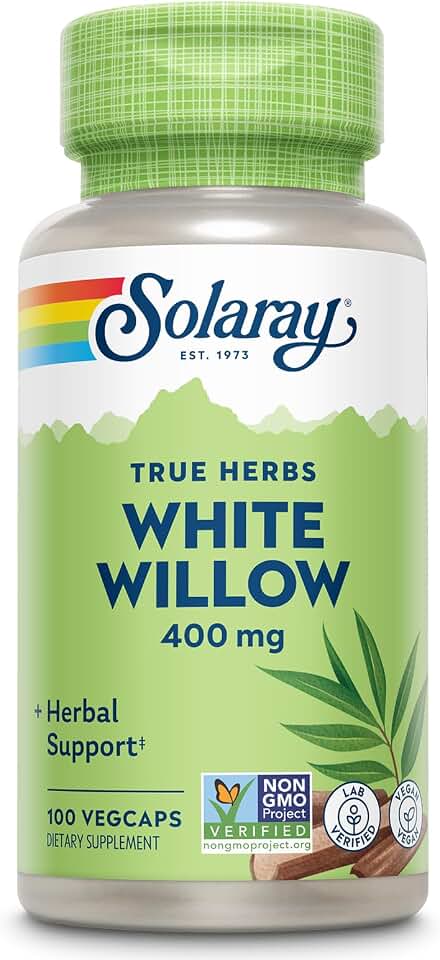
Solaray White Willow Bark Wellness Support
- Provides 400 mg of white willow bark per capsule
- Plant-based vegan capsule formula
- Made with non-GMO ingredients
- Convenient 100-capsule supply
- Herbal option for everyday wellness routines
 Buy on Amazon
What Does “Willow Wood Ohio” Mean?
The phrase “willow wood Ohio” may refer to willow lumber, tree services, or WillowWood, a prosthetics company historically known as Ohio Willow Wood. The business is unrelated to Salix alba, bark supplements, or timber sales.
Willow Lumber Intent
Woodworkers may use the query to find local sawmills, carving blanks, slabs, logs, or dried willow boards. Confirm the species because sellers may label black willow, white willow, hybrid willow, or unrelated pale lumber simply as “willow.”
Ask whether boards are green, air-dried, kiln-dried, or freshly milled. Indoor projects need moisture readings from several spots, including the board’s center after a test cut, rather than a single surface measurement.
Tree Service Intent
Property owners may be looking for an Ohio arborist to identify, prune, or remove a willow. Use an insured tree service familiar with mature willows, since weak unions and suspended broken limbs can make climbing and rigging hazardous.
Before requesting removal, record leaf undersides, buds, bark, crown form, and site conditions. Wood chips and logs can support reuse, but material from diseased trees, contaminated sites, or trunks containing metal needs separate handling.
WillowWood Prosthetics. WillowWood is an Ohio-based prosthetics brand associated with lower-limb liners, suspension systems, prosthetic feet, and related components. A search using the words separately may lead to botanical or lumber results instead of the company.
Ohio Willow Wood. The company was historically known as Ohio Willow Wood and is based in Mount Sterling, Ohio. That name reflects a business identity, not white willow wood, an Ohio tree species, or a supplier of medicinal bark.
FAQs
Is White Willow Native To Ohio?
White willow is not native to Ohio; it is an introduced Eurasian tree that can grow and naturalize in parts of the state. It is often planted near wet ground, streams, and ponds. Native Ohio willows include several other Salix species, so local identification is useful before planting or harvesting.
How Can You Identify A White Willow Tree?
You can identify a white willow by its long, narrow leaves with noticeably pale, silky undersides. The tree usually has a broad, rounded crown, gray-brown furrowed bark, and yellowish spring catkins. It commonly grows in moist soil near water, although cultivated and hybrid willows can make identification less certain.
What Is The Difference Between White Willow And Weeping Willow?
White willow is a generally upright or spreading tree with narrow leaves that look silvery beneath. Weeping willow has long, strongly drooping branches that create its familiar curtain-like shape. White willow is Salix alba, while weeping willow is usually Salix babylonica or a related hybrid; both prefer consistently moist sites.
Does White Willow Bark Contain Aspirin?
White willow bark contains salicin, a plant compound related to the active pathway associated with aspirin. It does not contain aspirin itself, which is acetylsalicylic acid made through a chemical process. The body converts salicin differently and more slowly, so white willow products should not be treated as equivalent to a standard aspirin dose.
Can You Take White Willow Bark With Ibuprofen?
You should generally avoid taking white willow bark with ibuprofen unless a clinician says it is appropriate. Both can affect pain and inflammation and may increase the risk of stomach irritation, bleeding, or kidney problems. Ask a pharmacist or doctor first, especially if you use blood thinners, have ulcers, or have kidney disease.
Affiliate Disclosure: Some links in this post are affiliate links. If you make a purchase through these links, we may earn a small commission at no extra cost to you. We only recommend products we genuinely believe in.