


A water oak tree is a fast-growing southeastern native oak, scientifically named Quercus nigra, with variable leaves, small acorns, and a broad shade crown. It grows well on moist ground but needs ample space, early structural pruning, and periodic checks for weak unions or decay.
Water oak can be valuable on large naturalized sites, yet it’s often a poor choice beside homes, utility lines, pools, or busy roads. This guide explains identification, Florida performance, planting, care, storm risk, and how it compares with similar oaks.
Table of Contents
Water Oak Tree Quick Facts
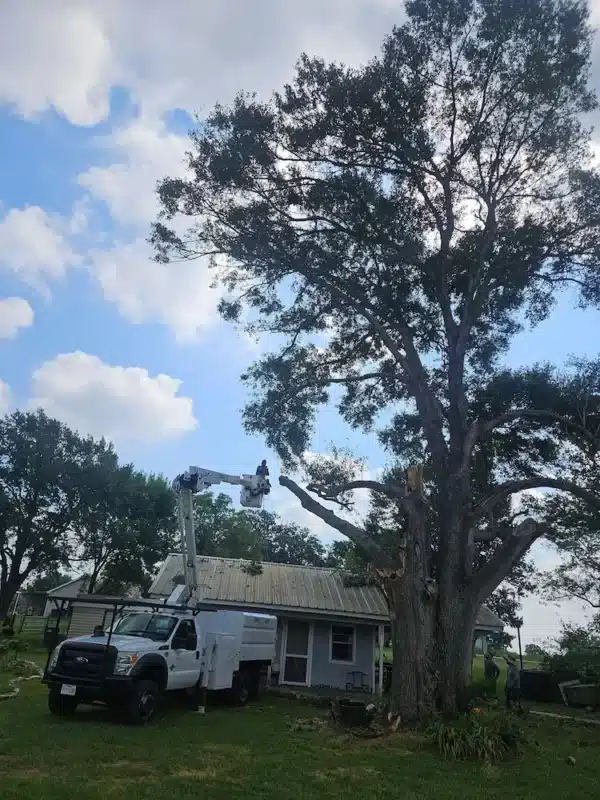
A mature water oak commonly reaches 50–80 feet tall and 40–70 feet wide. Young trees grow fast on moist, productive soil, but rapid extension can produce long limbs and competing trunks if pruning starts too late.
Botanical Identity
Water oak Quercus nigra belongs to the Fagaceae family and the red oak group, often classified as section Lobatae. Red-group traits include tiny bristles at leaf tips and acorns that need two growing seasons to mature.
Size, Growth, and Lifespan
Open-grown trees develop a rounded crown with wide lateral limbs, while woodland specimens tend to carry a longer trunk beneath a narrower crown. Published dimensions vary by soil, competition, climate, and storm history; the NC State Plant Toolbox provides a useful botanical profile.
People asking how fast water oaks grow should expect fast juvenile growth, not a fixed number of feet per year. Root volume, rainfall, heat, soil oxygen, and competition can make two trees planted together grow at very different rates.
Water oak is relatively short-lived for an oak. Many site references give a useful life of roughly 30–80 years, though protected woodland trees may live longer and urban trees injured by roots, pruning, or storms may decline sooner.
Leaves and Seasonal Behavior
The simple, alternate leaves are commonly 2–4 inches long. Their shape ranges from an unlobed spoon to a shallow three-lobed blade, and vigorous shoots can carry leaves so irregular that they look as if they came from another oak.
Fall color is usually yellow-brown rather than bright red. Trees in colder areas shed earlier, while those in the Deep South can hold dull green leaves into winter and drop them shortly before spring buds open.
Flowers, Acorns, and Bark
Spring flowers include hanging male catkins and much smaller female flowers on the same tree. The nearly round acorns are often about ½ inch wide and rest in shallow, saucer-like cups.
Young bark feels fairly smooth and gray beneath the fingertips. Age turns it dark and rough, with scaly ridges that catch on gloves; bark alone still can’t separate water oak reliably from every related red oak.
Light, Soil, and Climate
Full sun produces the strongest crown, though saplings tolerate partial shade. Water oak accepts clay, loam, and sand where roots receive oxygen, with the best growth often occurring in acidic moist soil.
Periodic flooding suits the species better than permanent stagnant water. Horticultural references commonly place it in USDA Zones 6–9, with warmer-zone performance varying by local heat, salt exposure, soil, and available moisture.
How to Identify a Water Oak

Identify water oak by combining several features: variable leaves, clustered terminal buds, tiny round acorns, dark scaly bark, and a broad crown. A single fallen leaf gives weak evidence because leaf shape changes across one tree.
Water Oak Tree Leaves
Water oak tree leaves usually have a narrow base and a wider, spoon-shaped outer end. Many develop three shallow lobes near the tip, while others remain smooth-edged apart from a few small bristle points.
For field identification, collect several sun leaves from one attached branch and inspect both surfaces. The upper face feels smooth; the paler underside may carry small tufts of hair where major veins meet.

Buds and Twigs
Slender twigs end in clusters of small brown or reddish-brown buds, a standard oak trait. Water oak buds are commonly pointed to ovoid, but twig color and bud size shift with age and growing conditions.
Acorns and Red Oak Traits
Small rounded acorns sit in shallow cups covering only their bases. Like other members of the red oak group, water oak develops acorns across two seasons rather than one.
Missing acorns don’t rule out the species. Squirrels, deer, ducks, and other wildlife can clear ripe nuts quickly, leaving only cups, immature fruit, or fragments beneath the crown.
Bark and Mature Form
Mature bark becomes dark gray or nearly black, broken into rough plates and low ridges. An open-grown tree often has a wide rounded crown with low limbs, while close forest competition creates a straighter trunk.
Identification Checklist
- Native or planted within the southeastern United States.
- Alternate leaves with spoon-shaped, unlobed, or shallow three-lobed blades.
- Tiny bristle tips on at least some leaves.
- Clusters of small terminal buds on slender twigs.
- Small round acorns seated in shallow cups.
- Dark, scaly bark on mature trunks.
- Broad crown and frequent association with moist ground.
A beginner’s common mistake is matching one leaf to one online photograph. Use three or more traits, since water oak can hybridize with related species and may closely resemble laurel oak.
Native Range, Habitat, and Wildlife Value
Water oak is native across much of the Atlantic and Gulf Coastal Plains and the lower Mississippi Valley. It favors moist lowlands but also colonizes roadsides, old fields, and disturbed urban ground.
Geographic Distribution
The native range extends from parts of Delaware, Maryland, and Virginia through the Carolinas, Georgia, and Florida, then west through the Gulf states into eastern Texas and nearby inland areas. The USDA PLANTS profile supplies mapped distribution records.
Bottomlands and Wet Sites
Natural sites include floodplains, stream margins, low terraces, moist flats, wet woods, and swamp edges. The name doesn’t mean the roots need constant standing water; prolonged saturation can remove soil oxygen and kill fine roots, especially after planting.
Wildlife and Food-Web Benefits
Among the benefits of oak trees, acorn production is the most visible. Water oak feeds squirrels, deer, turkey, ducks, and small mammals, while its leaves host insects eaten by nesting birds.
The benefits of oak leaves continue after they fall. Leaf litter softens rain impact, shelters small organisms, returns nutrients to the soil, and forms a dry, papery layer that gives off an earthy smell after rain.
Water Oak Tree in Florida
A water oak tree Florida residents encounter is usually a native tree, especially in northern and central counties. The long warm season supports fast growth, extended leaf retention, and heavy limbs that deserve close attention before hurricane season.
Florida Range and Climate
Water oak occurs in hammocks, moist flatwoods, bottomlands, stream corridors, roadsides, and residential areas. Performance varies near hot coastal extremes where salt exposure, sandy soil, wind, and limited freshwater can create chronic root stress.
Semi-Evergreen Leaf Retention
Florida trees may remain leafy through much of winter, then shed shortly before new growth appears. This semi-evergreen behavior is normal; summer browning, premature drop, and thinning at branch tips point more strongly to drought, construction injury, or disease.
Hurricane and Storm Risk
Fast growth can create twin leaders, narrow unions, included bark, and long lateral limbs. After wind removes neighboring trees, a formerly sheltered water oak receives loads it didn’t develop under, raising the chance of branch or root failure.
A tree that survived earlier hurricanes isn’t automatically safe. Cracks can lengthen, roots can decay, and old wounds can hide soft brown wood that feels spongy beneath a probing tool; large defects call for professional assessment rather than climbing or cutting.
Florida Site Suitability
Good sites include acreage, parks, habitat plantings, and moist open ground away from structures. Small lots, narrow street strips, septic fields, overhead wires, pools, and hurricane-exposed positions close to bedrooms are poor planting sites.
Local Removal Rules
Florida tree-removal rules can differ by municipality, county, development agreement, and homeowners’ association. Check permit requirements, protected-tree definitions, boundary ownership, and replacement obligations before cutting begins.
State law can affect local regulation, yet it doesn’t settle every ownership or hazardous-tree dispute. Written confirmation from the local authority and a documented arborist report can prevent fines, neighbor conflicts, or an incomplete removal permit.
Problems, Hazards, and Arborist Assessment
A water oak isn’t automatically dangerous, but weak unions, decay, dead limbs, and damaged roots can make it hazardous where people or property sit within reach. Risk depends on the defect, the chance of failure, and the target below it.
Structural Weakness and Failure
Codominant trunks often press bark between their stems instead of forming a strong wood connection. That seam may look tight for years, then open with a sharp crack during wind as the two heavy crowns bend apart.
Decay and Wound Damage
Large pruning cuts, mower wounds, torn limbs, lightning scars, and cavities expose wood to decay organisms. A hollow trunk doesn’t prove immediate failure; the location of decay, remaining sound shell, crown weight, and nearby targets shape the real risk level.
Root-Zone and Construction Damage
Trenching, parking, grade changes, concrete work, and heavy equipment can injure roots far beyond the trunk. Decline may appear months or years later, and cutting large roots can reduce stability before the canopy shows obvious symptoms.
Water oak roots spread widely and may lift nearby paving or enter an already damaged pipe. Calling them invasive misses the practical issue: limited soil space, faulty infrastructure, and poor placement create most conflicts.
Oak Wilt, Cankers, and Pests
As a red-group oak, water oak can contract oak wilt where Bretziella fagacearum occurs. Regional prevalence and pruning guidance differ, so sudden bronzing, wilting, or leaf loss needs local diagnosis rather than an assumption based on photographs.
Biscogniauxia canker, root rot, wood decay, scales, aphids, caterpillars, borers, and leaf galls may occur. Many galls are cosmetic; routine broad-spectrum spraying can kill beneficial insects without fixing the tree’s underlying heat or root stress.
Mistletoe and Site Stress
Southern water oaks often carry mistletoe, which adds branch weight and draws water from the host. Cutting only the visible green growth leaves embedded tissue behind, so suppression may require removing the infected branch at a suitable union.
Warning Signs for Inspection
- A new or widening crack between major stems.
- Large dead limbs or suspended broken branches.
- Mushrooms or fungal conks near the trunk or major roots.
- Fresh soil lifting on one side of the root plate.
- A sudden lean or newly exposed roots.
- Large cavities, open seams, or loose bark paired with dieback.
- Recent trenching, paving, grading, or heavy equipment traffic.
- Limbs over bedrooms, roads, play areas, or neighboring property.
Keep people away from a tree showing active root-plate movement, fresh splitting, or hanging limbs. Don’t stand beneath it to photograph the defect during wind or attempt a DIY aerial inspection.
Retention Versus Removal
Retention may work when defects are limited, targets can be moved, and pruning can reduce load without stripping the crown. Removal becomes more defensible after severe root loss, advanced decay at a key union, progressive decline, or defects above occupied structures.
Photographs rarely show internal wood condition, root anchorage, or movement under load. Ask for a site-based risk assessment rather than accepting a removal verdict drawn from a distant image.
Choosing a Certified Arborist
Verify credentials through the ISA Find an Arborist tool. For a high-value tree, ask whether the assessor holds Tree Risk Assessment Qualification and whether the proposed work follows ANSI A300 practices.
Request proof of insurance, a written scope, disposal details, and an explanation of each defect. Avoid contractors recommending topping, lion-tailing, or immediate removal without describing condition and targets.
Planting and Caring for Water Oaks

Plant water oak only where its mature canopy and root system have ample room. Good establishment depends more on root quality, correct depth, and soil moisture than on fertilizer or staking.
Site and Nursery Stock
Allow for a crown that may spread 40–70 feet, plus removal access decades later. Examine overhead wires, buildings, retaining walls, pavement, drainage, and places where falling limbs could cause severe damage.
Select a tree with one dominant leader, evenly spaced branches, intact bark, and a visible root flare. Reject buried trunks, narrow twin leaders, loose root balls, major wounds, and thick roots circling the container wall.
Planting Depth and Root Flare
Remove soil from the root-ball surface until the first major roots become visible. Set that flare at or slightly above finished grade, then dig the hole about two to three times the root-ball width without making it deeper.
A buried trunk often stays damp and may develop girdling roots. Beginners commonly match the soil line to the container’s top, yet nurseries can place several inches of media above the actual structural roots.
Mulching and Establishment Watering
Apply 2–3 inches of mulch over a broad ring, leaving several inches of bare space around the trunk. A correct ring smells woody and feels cool underneath; a wet mulch volcano pressed against bark encourages decay and hides the flare.
Water the root ball and nearby soil deeply, then check moisture several inches down before watering again. Daily shallow sprinkling wets the surface, while constant saturation drives air from the pores needed by new roots.
Planting Products and Checks
These planting options can supply live trees and slow-release irrigation, but buyers still need to verify mature-site clearance, root condition, shipment timing, agricultural restrictions, and seller guarantees.

Water Oak Shade Tree Trio
- Includes three live Water Oak plants
- Fast-growing tree for generous shade
- Adaptable choice for landscape planting
- Broad canopy adds natural outdoor beauty
- Quercus nigra offers classic native appeal
 Buy on Amazon

Deep Root Tree Watering Bag
- Nineteen gallon capacity supports thorough watering
- Slow-release design helps reduce runoff
- Dual fill pipes make refilling convenient
- Delivers water closer to tree roots
- Suitable for trees plants and garden areas
Buy on Amazon
Practical field checks matter more than the container label. A one-gallon or three-gallon description states approximate container capacity, not tree height, root quality, or whether the trunk has a sound leader.
After planting, pull a watering bag aside during inspections so the trunk and flare stay visible. Push a finger or narrow soil probe below the mulch; cool, slightly damp soil feels right, while slick mud signals excess water and dusty soil calls for irrigation.
Watering and Fertilization
Established trees handle temporary wet periods and moderate drought, but prolonged extremes can cause scorch, twig dieback, and premature leaf drop. Deep irrigation at wider intervals usually develops a better root pattern than frequent surface watering.
Don’t fertilize by schedule. Test the soil and inspect drainage, planting depth, and roots first, since excess nitrogen can trigger soft rapid shoots without correcting the actual problem.
Structural Pruning
Begin while branches are small enough to cut cleanly. Keep one dominant leader, space permanent branches, and shorten competing stems gradually; early cuts leave smaller wounds and cost far less than repairing a mature codominant crown.
Never top a water oak or cut flush against the trunk. Large-tree pruning requires qualified crews, and pruning seasons may be restricted where oak wilt is active.
Root-Zone Protection
Keep vehicles, stored materials, trenches, and deep fill away from the rooting area. During construction, install a visible exclusion fence before equipment arrives; placing it after compaction leaves the most damaging work already done.
Is a Water Oak a Good Tree?
Yes, a water oak can be a good tree on large, moist, naturalized sites where fast shade and wildlife value matter. It’s a weaker choice for confined yards or positions where a mature limb could strike a home, road, pool, or utility.
Benefits and Drawbacks
| Benefits | Drawbacks |
|---|---|
| Fast juvenile growth and early shade | Shorter typical life than many long-lived oaks |
| Native food and cover for wildlife | Codominant stems and heavy limbs can develop |
| Tolerates moist soil and periodic flooding | Large size conflicts with small lots and wires |
| Accepts several soil textures | Wounds and root damage can lead to decay |
| Useful for restoration and naturalized acreage | Leaf, twig, and acorn litter can be substantial |
The best oak tree to plant depends on available soil, mature clearance, climate, and tolerance for maintenance. Water oak wins on speed and wet-site adaptation, while slower species may offer stronger structure or a longer service life.
Ideal and Poor Sites
Ideal locations include parks, stream buffers, broad lawns, wet woodland edges, and habitat restoration areas inside the native range. Poor locations include small yards, alkaline compacted soil, narrow planting strips, and sites below overhead wires.
Water Oak vs Laurel Oak
Water oak and laurel oak both grow quickly in southeastern wet sites and can carry narrow, variable leaves. Water oak more often shows a spoon-shaped blade or three shallow terminal lobes, yet hybrids and atypical foliage can blur the distinction.
Water Oak vs Willow Oak
Willow oak, Quercus phellos, has long, slender, usually unlobed leaves resembling willow foliage. Water oak leaves tend to be broader near the tip and more likely to carry shallow lobes, though both produce small second-season acorns.
Water Oak vs Live Oak
Southern live oak, Quercus virginiana, has thicker leathery leaves, a more consistently leafy winter canopy, and greater potential longevity on a suitable site. Water oak usually grows faster early, carries thinner variable foliage, and has a shorter typical service life.
Water Oak vs Southern Red Oak
Southern red oak, Quercus falcata, commonly bears deeply cut leaves with curved or sickle-shaped terminal lobes and favors drier uplands. Water oak has smaller, shallower lobes or spoon-shaped leaves and occurs more often on wet lowland sites.
Buying and Ownership Costs
Purchase cost changes with trunk caliper, tree height, container capacity, root quality, shipping distance, season, and local availability. Compare trees by root flare, leader structure, and root condition rather than choosing the largest top growth for the lowest price.
Lifetime cost can include delivery, planting, irrigation, structural pruning, inspections, storm cleanup, removal, and stump grinding. For a site beside a building, the cheaper sapling may create a higher ownership cost than a slower, longer-lived oak placed at a safer distance.
FAQs
What Do Water Oak Tree Leaves Look Like?
Water oak leaves are usually smooth, glossy green, and shaped like a spoon or spatula with a broader tip. Their shape can vary on the same tree, with some leaves having shallow lobes. In fall, leaves often turn yellow or brown before dropping.
How Fast Do Water Oaks Grow?
Water oaks grow quickly, often adding 2 to 3 feet of height per year in good conditions. Young trees establish fastest in moist, well-drained soil with plenty of sunlight. Their rapid growth makes them useful for shade, but they may have a shorter lifespan than some oaks.
How Big Do Water Oak Trees Get?
Water oak trees commonly reach 50 to 80 feet tall with a spread of 40 to 60 feet. Mature trees develop a broad, rounded canopy that provides substantial shade. Size depends on soil, moisture, available space, and local growing conditions.
Are Water Oaks Good Trees For Florida Yards?
Water oaks can be good Florida yard trees because they grow fast and provide broad shade. However, they are relatively short-lived and can develop weak branches as they age. Plant them away from homes, power lines, and driveways, and arrange regular pruning inspections.
How Can You Tell A Water Oak From A Live Oak?
Water oaks usually have thinner, more variable spoon-shaped leaves, while live oaks have thicker, oval leaves with smooth edges. Live oaks are generally evergreen or nearly evergreen in warm climates. Water oaks also grow faster and typically have a less sprawling form than mature live oaks.
Affiliate Disclosure: Some links in this post are affiliate links. If you make a purchase through these links, we may earn a small commission at no extra cost to you. We only recommend products we genuinely believe in.