
Silver Leaf Maple Guide: Tree Identification, Care, and Coin Facts

Silver leaf maple usually means silver maple, Acer saccharinum, a fast-growing North American deciduous tree with deeply cut leaves and pale silver undersides. It produces shade quickly, yet brittle branches, broad surface roots, and a mature height of roughly 50–80 feet make site selection and early pruning especially important.
Table of Contents
Silver Leaf Maple Meaning and Facts
Silver leaf maple is an informal name for silver maple rather than a separate species. The standard botanical name is Acer saccharinum, and the tree belongs to the Sapindaceae family.
Silver Maple Terminology
Silver maple is also called soft maple, white maple, river maple, water maple, or swamp maple. “Silverleaf maple” appears in nursery listings, but major botanical references use silver maple.
The name describes the pale leaf underside, which flashes almost white when wind turns the foliage. It doesn’t refer to silver-leaf disease, variegated maple foliage, maple jewelry, or the Canadian bullion coin discussed later.
Botanical Profile
| Trait | Silver maple facts |
|---|---|
| Scientific name | Acer saccharinum L. |
| Plant type | Large deciduous shade tree |
| Family | Sapindaceae |
| Common hardiness range | USDA Zones 3–9 |
| Typical mature height | 50–80 feet |
| Typical spread | 35–60 feet |
| Leaf arrangement | Opposite |
| Growth rate | Often more than 24 inches per favorable year |
| Flowers | Small clusters before leaf-out |
| Fruit | Paired samaras maturing in spring |
| Primary benefit | Fast shade and tolerance of wet ground |
| Primary drawback | Weak branch structure and vigorous roots |
Older books may place maples in Aceraceae, while modern classification places them in Sapindaceae. Readers comparing this species with other types of maple trees should use scientific names because common names vary by region.
Native Range and Habitat
Silver maple is native to eastern and central North America, including southeastern Canada. The USDA PLANTS profile documents its distribution across much of this broad range.
Natural stands favor floodplains and streambanks, wet bottomlands, lake margins, and deep alluvial soil. The roots tolerate periodic flooding better than those of many conventional yard trees, but permanent submersion can still deprive them of oxygen.
Native status doesn’t mean the tree fits every property. Abundant seedlings can become weedy in damp ground, and regions outside its native range may classify or manage it differently.
How to Identify a Silver Maple

Identify a silver maple by its opposite branching, deeply divided leaves, silver-white lower leaf surfaces, gray shaggy bark, and large paired seeds that fall in spring. Windy weather offers the quickest clue because the crown flickers green and chalky silver.
- Look for opposite leaves and twigs.
- Check for five narrow lobes divided by deep sinuses.
- Turn over a leaf and confirm its pale silver underside.
- Inspect older bark for loose, narrow gray strips.
- Look for paired winged samaras during spring.
Leaves and Silver Undersides
A silver maple leaf usually measures 3–6 inches across and has five pointed lobes. Its sinuses cut far toward the leaf base, leaving narrower lobes than those seen on red or sugar maple.
The upper surface feels lightly textured and looks medium green, while the underside appears gray-white and soft. A turned leaf creates a sharp visual contrast rather than the muted color shift found on many red maples.
Bark and Trunk
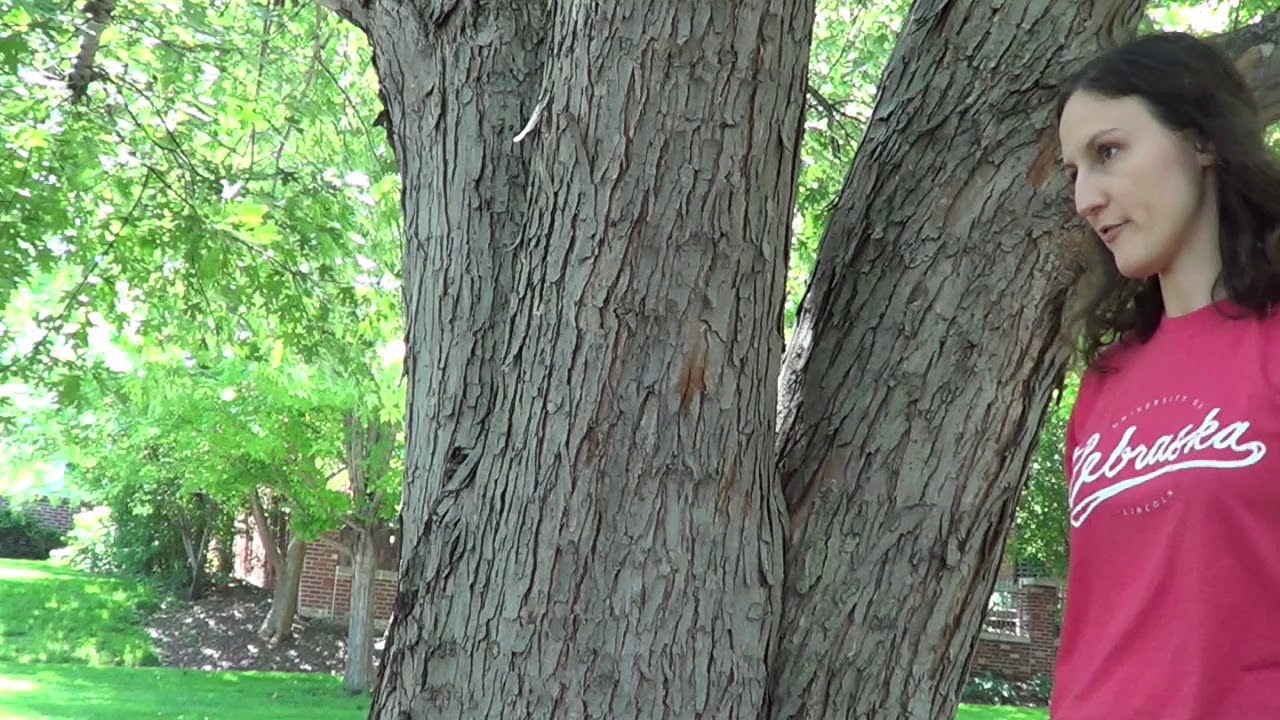
Young silver maple bark is smooth and gray. With age, it forms narrow furrows and long, loose strips that give a mature trunk a shaggy appearance.
Many untrained trees divide into multiple upright leaders. Tight V-shaped unions can trap bark between stems, creating a seam that feels ridged under the fingers and may open during wind, snow, or ice loading.
Flowers and Spring Samaras
Small red, yellow, or greenish flowers appear before the leaves, sometimes while winter still feels raw and the surrounding branches remain bare. Individual trees may carry mostly male flowers, mostly female flowers, or a mixture.
Female flowers develop into large paired samaras. Unlike maple seeds that fall in autumn, silver maple samaras mature during spring and often germinate soon after landing on moist soil.
Twigs, Buds, and Branching
Twigs and buds occur in opposite pairs. The buds tend to be rounded or blunt, reddish brown, and clustered near twig tips.
A broken twig may release an unpleasant odor. Young shoots can feel long and flexible, but their fast extension produces wide spacing between buds and encourages end-heavy branch growth.
Growth Rate, Size, and Lifespan
Silver maple grows quickly and commonly reaches 50–80 feet tall with a 35–60-foot crown. A healthy specimen may live for a century, yet branch defects and root-zone damage often shorten its safe service life beside homes.
Silver Leaf Maple Growth Rate
A young, established silver leaf maple can add more than 24 inches of height in a favorable growing season. The Arbor Day Foundation classifies silver maple as a fast grower in its silver maple tree guide.
Moist soil, full sun, adequate root volume, and a long growing season support faster growth. Drought, compacted soil, buried roots, transplant stress, and alkaline ground can cut that rate sharply.
Speed carries a structural trade-off: long shoots become heavy before strong branch attachments form. Shortening a competing leader while it is thumb-thick is simpler and less damaging than removing it after it becomes a major trunk.
Mature Height and Spread
For anyone asking how tall a maple tree grows, this species commonly reaches 50–80 feet, though old trees on rich bottomland can exceed that range. Its open, irregular crown often spreads 35–60 feet.
Those dimensions rule out narrow planting strips, spaces beneath wires, and many small yards. Planting a six-foot sapling five feet from a driveway may look harmless, but the mature trunk, roots, and crown won’t remain within that original footprint.
Biological and Landscape Lifespan
A silver maple can survive 100 years or longer on a favorable site. Biological survival differs from safe landscape lifespan, since a living tree may contain a cracked union, hollow trunk, or decayed limb.
Repeated topping, trenching, mower wounds, and large pruning cuts shorten useful life. Green leaves show that water still reaches the crown; they don’t confirm that the supporting wood remains sound.
Planting, Care, and Tree Selection
Plant silver maple only where its full mature size, surface roots, and possible branch fall won’t conflict with buildings or busy areas. Set the root flare at soil level, water deeply during establishment, mulch correctly, and train one main leader while branches remain small.
Best and Worst Sites
| Site | Suitability | Main reason |
|---|---|---|
| Large, moist naturalized area | Good | Ample soil and canopy space |
| Locally appropriate floodplain planting | Potentially good | Periodic-flood tolerance |
| Small urban yard | Poor | Mature size and branch-fall exposure |
| Under utility wires | Poor | Fast vertical growth |
| Beside a sidewalk or patio | High-conflict site | Broad surface-root system |
| Near a house or playground | High-risk site | Weak unions and heavy limbs |
| Dry site without irrigation | Poor during establishment | Young roots can dry quickly |
Full sun and deep, moist soil produce the best growth. A wet-site reputation doesn’t mean the roots thrive in stagnant water year-round; periodic flooding and permanent waterlogging create different soil conditions.
Planting and Root Flare
Dig a hole two to three times wider than the root ball but no deeper than the roots. Find the first major roots and position their flare at or slightly above the finished soil grade.
Remove plastic, synthetic rope, and the container. Correct circling roots while they’re small, since thick roots wrapped around the trunk can constrict it years later; a tall tree in a tiny pot deserves close inspection before planting.
Backfill mostly with the excavated soil rather than creating a rich amended pocket. A soft pocket surrounded by dense clay can retain water like a basin and discourage roots from growing into the wider site.
Watering and Mulching
Soak the root ball and nearby soil after planting. During establishment, check moisture by pushing a finger several inches into the soil; it should feel cool and damp, not dusty or slick with standing water.
Apply 2–3 inches of organic mulch over a broad area and leave several inches bare around the trunk. Mulch piled against bark traps moisture, hides gnawing animals, and can cause roots to form above the proper grade.
Structural Pruning
Train a young tree around one dominant leader where its form permits. Shorten competing upright stems, retain well-spaced scaffold branches, and make each cut just outside the branch collar.
Never top a silver maple. Topping leaves large wounds and triggers clusters of fast sprouts whose attachments are weaker than the original branches; those upright shoots can become heavy failure points within a few years.
Buying a Live Tree
Confirm the label says Acer saccharinum, then compare root quality, trunk caliper, shipping season, live-arrival terms, and agricultural restrictions. Extra height has little value if the tree arrives root-bound, wounded, or topped.
Inspect delivered plants for a visible root flare, moist roots, firm buds, intact bark, and a main leader. Reject specimens with severe trunk wounds, blackened roots, active cankers, or multiple tight leaders emerging from one point.
These live silver maple options provide several starting sizes for properties with enough long-term growing space.

Silver Maple Live Tree
- Live Silver Maple plant in a quart pot
- Arrives 12 to 18 inches tall
- Fast-growing tree for future shade
- Great for yards and landscape projects
- Deciduous foliage offers seasonal interest
 Buy on Amazon

Native Silver Maple Shade Tree
- Live Acer saccharinum tree in a quart pot
- Arrives 10 to 16 inches tall
- Fast-growing native shade tree
- Well suited to spacious yard plantings
- Offers attractive deciduous foliage
Buy on Amazon

Young Silver Maple Tree
- Live Silver Maple tree for outdoor planting
- Approximately 18 to 24 inches tall
- One to two year old young tree
- Fast-growing variety for future shade
- Adds classic maple beauty to landscapes
Buy on Amazon
Benefits, Risks, and Common Problems
Silver maple offers fast shade, flood tolerance, and wildlife habitat, but weak wood and broad roots can create costly conflicts. Most severe problems begin with poor placement, competing trunks, topping, construction damage, or neglected defects rather than leaf blemishes.
Silver Maple Pros and Cons
- Pro: Forms a broad shade canopy quickly.
- Pro: Handles periodic flooding and moist soils.
- Pro: Supports nesting, cover, and seed-eating wildlife.
- Con: Develops brittle, end-heavy limbs.
- Con: Often forms weak codominant stems.
- Con: Surface roots interfere with paving and mowing.
- Con: Produces abundant spring seeds and volunteers.
- Con: Older specimens may require expensive inspections and pruning.
Fast growth is useful on a broad wet property where falling branches won’t hit valuable targets. It becomes a poor bargain beside a roof, parked vehicle, pool, or narrow sidewalk.
Weak Wood and Storm Damage
Silver maple forms comparatively low-strength wood, long limbs, and frequent codominant trunks. Included bark between two stems blocks the interlocking wood needed for a strong union.
The common failure chain is fast shoot extension, narrow attachment, increasing end weight, then wind or ice loading. A splitting union often makes a dry crack followed by a heavy tearing sound as fibers peel from the trunk.
Storm-damaged stubs and large flush cuts expose wood to decay. Compare these properties with broader maple wood characteristics before treating every maple species as structurally interchangeable.
Surface Roots and Infrastructure
Silver maple roots spread broadly through the upper soil, where oxygen and rainwater are most available. Questions about how deep maple tree roots grow need a site-based answer: many absorbing roots occupy the upper 12–18 inches, while structural roots can extend deeper where soil permits.
Visible roots may lift thin paving, catch mower blades, and outcompete turf. They don’t normally crush intact foundations or sound pipes, but they can enter leaking joints where water and nutrients already escape.
Never cut major roots casually to flatten a sidewalk. Removing a large root near the trunk can reduce anchorage and leave a standing tree less resistant to wind; rerouting pavement is often safer than root severance.
Structural Hazard Assessment
Inspect large trees after major storms and at intervals suited to their condition and exposure. Warning signs include fresh cracks, hanging limbs, mushrooms near the base, cavities, separating trunks, dead branches, and newly raised soil around roots.
Risk depends on both failure likelihood and the target below. A defective limb over unused woodland presents a different concern from the same limb over a bedroom, driveway, or playground.
Keep people away from a fresh split and contact a qualified arborist. Trees near conductors require utility-trained crews; homeowners shouldn’t use ladders, saws, or poles near overhead lines.
Diseases and Soil Problems
Anthracnose can cause irregular brown lesions and early leaf loss during cool, wet springs. Tar spot creates black raised patches that look alarming but are often cosmetic rather than life-threatening.
Verticillium wilt, bacterial leaf scorch, drought, root injury, herbicide exposure, and waterlogged soil can all cause browning or dieback. Leaf appearance alone rarely separates these causes, so examine symptom distribution, recent site work, soil moisture, and vascular staining.
Pale leaves with darker green veins may indicate chlorosis in alkaline or poorly aerated soil. Test soil pH and drainage before adding fertilizer, since extra nutrients won’t repair decayed wood or damaged roots.
Insects, Mites, and Galls
Cottony maple scale, aphids, borers, caterpillars, and maple bladder gall mites may feed on silver maple. Small red or green bladder galls feel like hard beads on the leaf but seldom justify spraying a healthy mature tree.
Beginners often treat every spot or gall with a broad insecticide. Identify the pest first, because many injuries are cosmetic and unnecessary treatment can kill beneficial insects without improving tree health.
Lessons Learned in Practice
The most troublesome silver maples aren’t always the largest; they’re often trees planted in restricted soil spaces and left with two equal trunks. Early correction uses small cuts that close readily, while delayed work leaves large wounds and shifts more weight at once.
After paving or trenching, decline may appear several seasons later rather than immediately. Roots can lose function below ground while the crown spends stored energy, which explains why fresh green leaves don’t clear a damaged tree of structural concern.
For surface roots, widen the mulch ring rather than burying roots beneath deep topsoil. Added soil reduces oxygen, and repeated mower impacts create open wounds with rough, damp edges where decay organisms can enter.
Silver Maple Versus Similar Maples
Silver maple differs from similar maples through its deep leaf sinuses, pale undersides, spring-ripening seeds, wet-site preference, and fast but structurally weak growth. Use several traits together because leaf shape varies among seedlings and hybrids.
| Maple | Leaf clue | Seed timing or trait | Typical distinction |
|---|---|---|---|
| Silver maple | Deep sinuses; silver underside | Large spring samaras | Fast growth; weak wood |
| Sugar maple | Broader lobes; shallower cuts | Autumn samaras | Rich fall color; sweeter sap |
| Red maple | Shallower sinuses | Spring samaras | Red buds and more reliable red fall color |
| Norway maple | Broad, dense leaf | Wide-spreading samaras | Milky petiole sap |
| Freeman maple | Traits overlap both parents | Hybrid variability | Silver and red maple hybrid |
Silver vs. Sugar Maple
Silver maple has narrower lobes, much deeper sinuses, and a pale underside. Sugar maple, Acer saccharum, has broader leaf lobes, stronger wood, richer autumn color, and sap with a higher average sugar concentration.
Site preference also separates them. Silver maple favors moist lowlands, while sugar maple performs best in better-drained upland soils and can struggle in repeatedly flooded ground.
Silver vs. Red Maple
Red maple, Acer rubrum, usually has shallower leaf cuts and less dramatic silver coloring below. Its buds, flowers, petioles, and seeds often show red tones.
Both species can release samaras in spring, so seed timing alone isn’t decisive. Red maple usually stays more compact and produces more dependable red fall color, though seedlings vary.
Silver vs. Norway Maple
Norway maple, Acer platanoides, carries broad leaves with relatively shallow divisions. Break a leaf stalk and it usually releases milky white sap; a silver maple petiole doesn’t.
Norway maple is introduced in North America and restricted in some jurisdictions, while silver maple is native across a broad part of the continent. See the full Norwegian maple guide for more identification details.
Silver vs. Freeman Maple
Freeman maple, Acer × freemanii, is a silver-red maple hybrid. Named cultivars may offer a more controlled form and stronger autumn color while retaining part of silver maple’s growth rate.
Autumn Blaze is a familiar Freeman cultivar, but a deeply cut leaf doesn’t prove that identity. Nursery labels, cultivar records, samara production, and several structural traits provide better evidence than one leaf.
Syrup, Wildlife, and Ecological Value
Silver maple can produce syrup, feed wildlife, and support wet-site plantings. Its sap usually contains less sugar than sugar maple sap, while its early flowers, spring seeds, large crown, and eventual cavities offer food and shelter.
Silver Maple Syrup
Silver maple sap is edible and can be boiled into syrup. Sap near 2% sugar may require roughly 40 gallons to produce one gallon of syrup, but actual yield changes with sap concentration and evaporation efficiency.
Silver maple often flowers and breaks bud early, which can shorten the collection window. Tap only healthy trees of suitable diameter, use food-safe equipment, and stop collecting when warm weather gives sap an off flavor.
Beginners sometimes assume all maple sap performs like sugar maple sap. Lower sugar concentration means more hauling, longer boiling, more fuel, and thicker steam that leaves the air sweet and the equipment sticky.
Wildlife Habitat
Squirrels, small mammals, and some birds eat the spring samaras. Mature crowns provide nesting cover, while cavities in older trunks may shelter birds and mammals.
Early flowers can supply pollen when fewer large trees are blooming. That benefit doesn’t remove the need for species diversity, since a stand dominated by one tree type is more exposed to shared pests and severe weather.
Landscape and Restoration Uses
Silver maple can suit stream corridors, spacious naturalized properties, and floodplain restoration where it is locally native and ecologically appropriate. Its quick canopy can shade water and stabilize vegetated ground alongside other suitable native species.
Avoid single-species planting. Mixed native communities spread structural and biological risk, provide varied food sources, and prevent one pest or storm pattern from affecting every tree in the same way.
Canadian Silver Maple Leaf Coin Guide

The Canadian Silver Maple Leaf is a one-troy-ounce bullion coin issued by the Royal Canadian Mint, not a reference to Acer saccharinum. The standard coin contains 99.99% pure silver, carries a CAD $5 face value, and normally trades according to silver value plus a dealer premium.
Tree Versus Coin
“Silver leaf maple” usually signals the tree, while “Canadian Silver Maple Leaf,” “1 oz,” “bullion,” or “coin value” signals the coin. The coin’s reverse displays a Canadian maple leaf design rather than a botanical identification plate for silver maple.
Coin Specifications and Design
| Specification | Standard bullion issue |
|---|---|
| Issuer | Royal Canadian Mint |
| First issued | 1988 |
| Metal | Silver |
| Purity | 99.99% silver |
| Fine silver content | One troy ounce |
| Weight | Approximately 31.103 grams |
| Face value | CAD $5 |
| Diameter | Approximately 38 millimeters |
| Edge | Reeded |
| Reverse | Canadian maple leaf |
| Obverse | Monarch applicable to issue year |
The Royal Canadian Mint lists the official metal content and design details. Elizabeth II appears through 2023 issues, while Charles III appears on newer issues beginning in 2024.
Proofs, privy-mark pieces, colored coins, commemoratives, and special releases can have different finishes or collector premiums. Don’t apply the standard bullion specifications or valuation assumptions blindly to every maple-leaf-themed Canadian coin.
Security and Authentication
Modern issues use precision radial lines and a micro-engraved maple-leaf mark containing year numerals. Participating dealers may use Bullion DNA equipment to compare registered security characteristics.
Check weight with a calibrated scale and measure diameter and thickness with calipers. Compare lettering, relief, edge reeds, radial lines, and the security mark with official details for that year, since earlier coins lack some modern features.
Silver isn’t attracted to an ordinary magnet, but a magnet test alone can’t prove authenticity. Better checks include electrical conductivity, specific gravity, a precious-metal analyzer, or professional verification from a reputable dealer or grading service.
Value and Melt Formula
Approximate melt value = one troy ounce × live silver spot price.
Standard bullion calculation
The retail price usually includes melt value, dealer premium, shipping, payment fees, and applicable tax. Resale proceeds may be lower than the original retail cost because dealers maintain a bid-ask spread.
The CAD $5 denomination is legal-tender face value, not the usual bullion market value. Year, condition, packaging, privy marks, mintage, and collector demand may change the premium above metal value.
For example, if spot silver were CAD $45 per troy ounce, approximate melt value would be CAD $45 before premiums and fees. Use a live quote at the moment of purchase rather than relying on an old article price.
Milk Spots and Storage
Some Silver Maple Leaf coins develop white cloudy marks called milk spots. These marks don’t change the stated silver weight, but they can reduce visual appeal and the premium offered for a high-condition piece.
MINTSHIELD surface treatment reduces spotting on applicable modern issues but doesn’t promise spotless coins. Store pieces in inert capsules or holders, keep them dry, and avoid soft PVC flips that may leave residue.
Don’t polish or clean a spotted coin. Abrasive cloths leave fine hairlines that flash under angled light, while chemical dipping can alter the surface and reduce collector value.
Coin Buying Checklist
- Confirm whether the listing contains one coin or a multi-coin lot.
- Check whether the date is fixed or randomly selected.
- Verify one-troy-ounce weight and .9999 stated purity.
- Compare total delivered cost per ounce.
- Read bullion return and cancellation rules.
- Check packaging, condition, and milk-spot disclosures.
- Compare the seller with established bullion dealers.
- Authenticate valuable purchases independently.
A random-year lot may contain mixed dates and common issues. A seller-created certificate of authenticity doesn’t prove Royal Canadian Mint certification, add silver content, or guarantee a collector premium.
These Canadian Silver Maple Leaf lots offer five-coin and ten-coin formats for buyers comparing delivered cost per ounce.

10 Silver Maple Leaf Coins
- Ten one-ounce Canadian Silver Maple Leaf coins
- Brilliant Uncirculated condition
- Random years from 1988 to present
- Includes certificates of authenticity
- Popular choice for silver collectors
Buy on Amazon
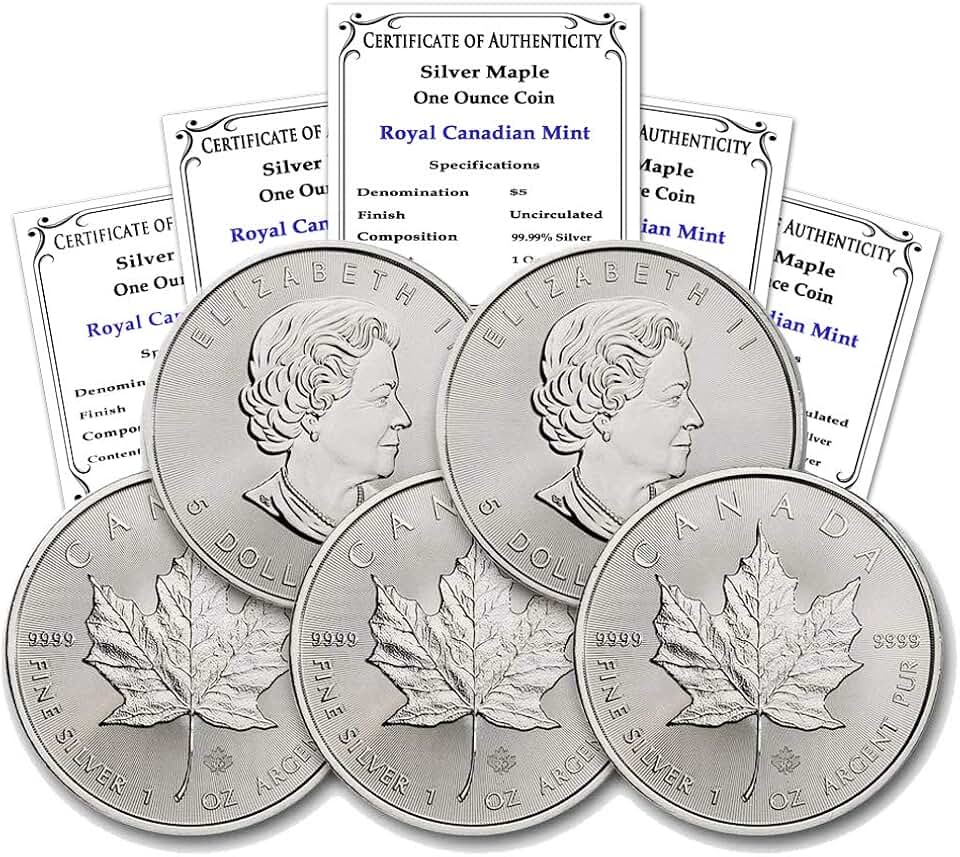
5 Silver Maple Leaf Coins
- Five one-ounce Canadian Silver Maple Leaf coins
- Brilliant Uncirculated condition
- Random years from 1988 to present
- Includes certificates of authenticity
- Compact option for collectors
Buy on Amazon
FAQs
Is Silver Leaf Maple The Same As Silver Maple?
Yes, silver leaf maple is another common name for the silver maple tree, Acer saccharinum. The name refers to the silvery underside of its leaves, which becomes noticeable when wind moves through the canopy. It is a fast-growing native maple commonly planted for shade.
How Can I Identify A Silver Maple Tree?
You can identify a silver maple by its deeply cut, five-lobed leaves with bright silver-white undersides. Its leaves often look pale or shimmering in the wind, and its bark becomes gray and shaggy as the tree matures. Silver maples also produce paired winged seeds in spring.
How Fast And Tall Does A Silver Maple Grow?
A silver maple can grow about 3 to 5 feet per year in good conditions and may reach 50 to 80 feet tall. Some mature trees grow even taller with a broad, spreading crown. Growth is fastest in moist, fertile soil with full sun or partial shade.
How Deep And Invasive Are Silver Maple Roots?
Silver maple roots are usually shallow, wide-spreading, and potentially invasive near buildings, sidewalks, and pipes. Most feeder roots stay within the upper few feet of soil, but they can extend well beyond the tree canopy. Plant silver maples far from structures and underground utilities whenever possible.
How Much Is A Canadian Silver Maple Leaf Coin Worth?
A Canadian Silver Maple Leaf coin is worth at least the current value of its silver content, plus any dealer premium. Most modern one-ounce coins contain one troy ounce of .9999 fine silver, so their price changes daily with the silver market. Rare dates, graded coins, and special editions may be worth more to collectors.
Affiliate Disclosure: Some links in this post are affiliate links. If you make a purchase through these links, we may earn a small commission at no extra cost to you. We only recommend products we genuinely believe in.