
Wych Elm Guide: Identification, Habitat, Uses and Name Meaning

Wych elm, or Ulmus glabra, is a large deciduous tree identified by broad, sandpaper-rough leaves with uneven bases and papery fruits whose seeds sit near the centre. This guide explains its identification, habitat, wildlife value, timber, Dutch elm disease, name, and links to the Bella in the Wych Elm mystery.
Table of Contents
What Is a Wych Elm?
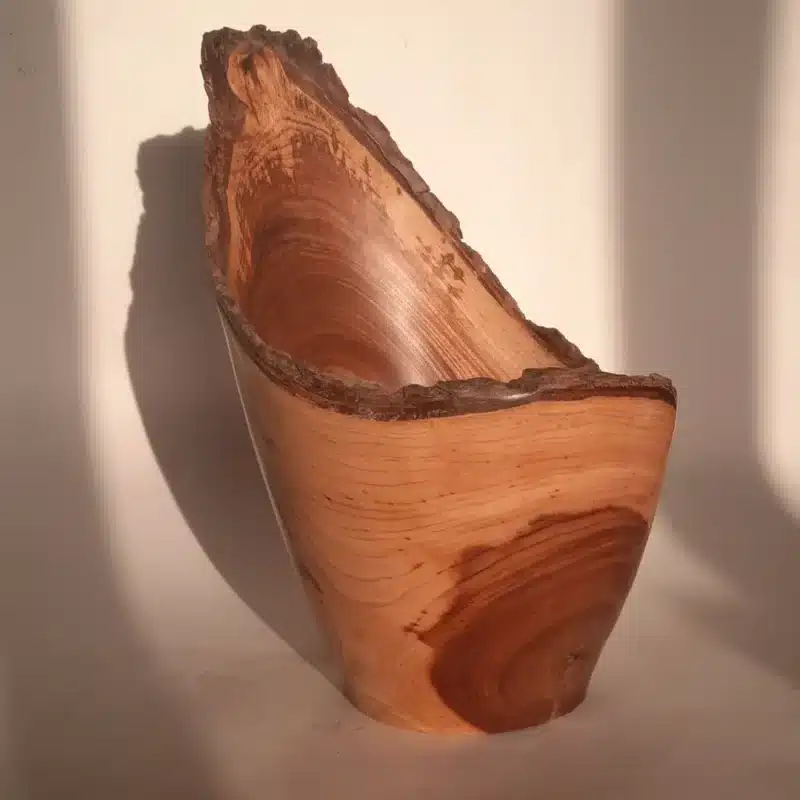
A wych elm is a native European elm that grows into a broad-crowned woodland tree. Britain’s wild populations are strongest in cooler northern and western districts, where fertile, moist ground supports seedling growth.
Taxonomy and Key Facts
The accepted scientific name is Ulmus glabra Huds. It belongs to the genus Ulmus and elm family, Ulmaceae. The Kew Plants of the World Online records its native distribution across Europe and into western Asia.
Wych elm is deciduous, wind-pollinated and primarily regenerated from seed. Its key field marks are very rough leaves, short leaf stalks, strongly unequal leaf bases and rounded samaras with a central seed.
Height, Lifespan, Name and Pronunciation
Mature height commonly falls between 25 and 35 metres. Exceptional trees on deep, moist and sheltered soil may approach 40 metres, while exposed upland specimens remain shorter and develop uneven crowns.
An undisturbed tree can live for several centuries, with estimates sometimes reaching about 400 years. Dutch elm disease means relatively few modern trees attain that age, so height alone says little about a specimen’s potential lifespan.
Wych means flexible, not witch. The name is linked to Old English wice, referring to pliability, probably in the wood or young stems. Pronounce wych like “witch”: one syllable, rhyming with “switch.” Searches such as “elm wych” or “tree wych” refer to the same species.
How to Identify Wych Elm

Identify wych elm by combining at least three traits: a broad rough leaf, a markedly uneven leaf base and a rounded samara with its seed near the centre. One fallen leaf isn’t enough because hybrids, crown position and growing conditions alter leaf size.
Identification Feature Table
| Feature | Typical appearance | Reliability |
|---|---|---|
| Shape and mature size | Broad or spreading crown; commonly 25–35 metres | Low without closer features |
| Leaves | Broad, 7–16 cm, sharply toothed, rough above and unequal at the base | High when several leaves agree |
| Flowers | Small reddish-purple clusters appearing before leaves | Useful in late winter and early spring |
| Seeds and samaras | Rounded papery wing with seed close to its centre | One of the strongest features |
| Bark | Smooth grey-brown when young; fissured and ridged with age | Moderate on mature trees |
| Twigs and buds | Stout twigs with dark, pointed, sometimes hairy buds | Useful with other evidence |
Shape and mature size: An open-grown tree often carries a wide, rounded crown with heavy lower branches. Woodland trees compete for light, producing straighter trunks, narrower crowns and branches beginning higher above the ground.
Leaves: The upper surface feels like fine sandpaper dragged across a fingertip. Larger leaves can carry two extra points below the main tip, creating an almost three-pointed profile. The underside is paler and hairy along its veins.
Flowers: Small reddish-brown or purple clusters open before the leaves, often during February or March in Britain. They lack showy petals, so beginners frequently walk past them or mistake the clusters for opening buds.
Seeds and samaras: Pale green samaras mature during May and June before drying tan. Hold one against the light and the seed appears close to the middle of the papery wing rather than pressed against its notched edge.
Bark, twigs and buds: Young bark is fairly smooth and grey-brown. Older trunks develop dark vertical ridges and intersecting fissures that feel firm and blocky beneath the palm. Young twigs may be hairy, while buds are dark and sharply pointed.
Seasonal Identification Cues and Field Notes
- Winter: Inspect pointed buds, hairy twigs, crown structure and fissured bark.
- Early spring: Look for reddish flower clusters before leaves open.
- Late spring: Check green samaras and newly expanded rough leaves.
- Summer: Compare several leaves for width, short stalks and unequal bases.
- Autumn: Use leaf structure rather than yellow colour, which several broadleaved trees share.
Field experience insight: Select attached leaves from a low branch, not loose material beneath the crown. In mixed woodland, wind carries leaves several metres, and one convincing elm leaf may have fallen below hazel, sycamore or ash.
Rub the leaf gently from tip to base. A fresh wych elm leaf produces a dry abrasive drag, while insect-chewed tissue feels irregular rather than evenly coarse. Wear gloves if your skin reacts to plant hairs, and never break branches solely for identification.
The Woodland Trust wych elm guide provides useful visual references, but photographs can flatten texture and distort scale. Confirm an identification at the tree rather than relying on one close-up image.
Wych Elm Versus Similar Trees
Wych elm differs from other elms through a combination of features, not one perfect marker. Natural hybrids and planted cultivars can display intermediate leaves, so a confident identification may require samaras and evidence of root suckering.
English Elm and Field Elm
English elm, Ulmus procera, often has smaller leaves and historically spread widely through root suckers. Wych elm reproduces more readily from seed, so isolated seedlings away from an old root system fit wych elm better, though they don’t prove it.
Field elm, Ulmus minor, has highly variable but often smaller leaves with longer stalks. Its samara seed usually lies nearer the notched edge. Field elm also suckers freely, producing lines or patches of genetically connected stems.
Dutch Elm Hybrids, Hazel and Common Mistakes
Dutch elm hybrids involving Ulmus glabra and Ulmus minor can combine broad wych-like leaves with elongated shapes or off-centre seeds. A single photograph may support “elm” but still fail to establish the species.
Hazel confusion is common because hazel has broad, toothed and softly hairy leaves. Hazel usually forms a multi-stemmed shrub, has a more heart-shaped leaf base and produces hanging catkins followed by nuts, never papery samaras.
Beginners often use bark colour, assume every uneven leaf is wych elm or confuse insect damage with rough texture. The practical workaround is to check five attached leaves, examine both surfaces, note the growth form and return during samara season.
North American species differ again. For comparison, winged elm develops corky ridges along many twigs, a feature that wych elm lacks.
Habitat, Reproduction and Wildlife
Wych elm grows best in cool, moist woodland with fertile, reasonably drained soil. It flowers before leaf emergence, releases wind-carried samaras in spring and supplies food or shelter to numerous woodland organisms.
Geographic Distribution, Habitat and Growing Conditions
The species is native across much of Europe and reaches western Asia. In Britain, northern and western areas hold many of its characteristic habitats, including Scotland, northern England, Wales, ravines and moist upland woods.
Typical sites include stream valleys, rocky slopes, hedgerows, old parkland and mixed deciduous woodland. Moist, base-rich ground often supports strong growth, but standing water can starve roots of oxygen and damage young plants.
Full sun or partial shade can work where roots have access to moisture. Compacted ground, prolonged drought and exposed planting sites restrict establishment. A sapling placed beside paving or buildings also creates a future space problem because its crown and roots can become extensive.
Pollination, Regeneration, Wildlife and Woodland Role
Wych elm flowers contain male and female structures and rely on wind pollination. Flowering before leaf emergence lets pollen move through the crown with less obstruction. The papery samaras then carry seeds beyond the parent tree.
Seeds remain viable for a relatively short period and often germinate soon after dispersal on moist, open soil. Unlike English elm, wych elm doesn’t depend mainly on widespread suckering, making healthy seed-producing trees valuable sources of genetic diversity.
Elm foliage supports specialist insects, including larvae of the white-letter hairstreak, Satyrium w-album. Butterfly Conservation describes the species’ close dependence on elms in its white-letter hairstreak profile.
Samaras feed birds and small mammals, while fissured bark carries mosses, lichens and invertebrates. Cavities in old trunks can shelter bats and nesting birds. Fallen elm wood supports fungi and deadwood insects, so safe standing or fallen sections are best retained away from paths and buildings.
Within mixed woodland, wych elm adds canopy layers, early flowers and spring seed. Tree removal may be needed where dead branches threaten people, but clearing every diseased stem removes habitat and reduces the amount of decaying wood available to specialist organisms.
Dutch Elm Disease and Conservation
Wych elm is susceptible to Dutch elm disease, a vascular wilt spread mainly by elm bark beetles. Young trees remain common in some places because they can grow for years before reaching the stem size that breeding beetles prefer.
Cause, Infection Cycle, Symptoms and Diagnosis
The modern destructive form is principally linked to Ophiostoma novo-ulmi. Elm bark beetles, including Scolytus species, carry fungal spores from infected wood and introduce them while feeding around healthy twigs or branches.
The fungus enters the water-conducting xylem. The tree reacts by blocking vessels, but those defensive plugs also restrict water movement. Leaves wilt, yellow and turn brown as the affected crown loses its water supply.
Common signs include one-sided flagging, curled leaves clinging to dead twigs, progressive branch loss and brown streaks beneath the bark. Drought, damaged roots and other vascular problems can look similar, so diagnosis should combine crown symptoms, sapwood staining and local disease history.
Forest Research guidance explains the disease and vector relationship. Cutting into a living branch can injure the tree, so suspected public, protected or mature specimens need assessment by a qualified tree specialist.
Young Tree Survival, Management and Conservation
Why young elms survive: Seedlings and narrow stems may remain below the size commonly selected by breeding bark beetles. As trunks thicken, beetle activity and infection risk rise, creating repeated cycles of regeneration followed by premature death.
Management and biosecurity: Don’t move freshly cut elm logs, branches or firewood before checking local plant-health rules. Beetles can breed beneath intact bark. Clean cutting tools between trees and obtain advice before pruning or felling a large elm.
Fungicide injection isn’t a simple woodland cure. Treatments may require repeated professional application, can be restricted by local rules and are rarely practical across large populations. Removing infected material also fails if beetle-breeding wood remains nearby.
Conservation priorities include protecting safe mature trees, recording long-lived survivors, retaining genetic diversity, supporting seedlings and maintaining moist woodland habitat. Where planting is suitable, source stock carefully and never assume an ordinary Ulmus glabra sapling is disease-resistant.
Resistance versus survival: A mature elm may have escaped infection, received fewer beetle visits or tolerated limited disease. Only controlled testing can support a resistance claim. Calling every surviving tree resistant risks propagating stock that fails once exposed.
Wych Elm Wood and Uses

Wych elm wood has interlocking grain that resists splitting and gives the timber a tough, fibrous character. That same grain can tear during machining, so sharp tools and restrained feed rates produce cleaner surfaces.
Timber Properties and Traditional Uses
Freshly cut elm can feel heavy and damp, with a muted earthy smell. Colour varies from pale sapwood to richer brown heartwood, while the wood grain pattern may show sweeping, irregular lines rather than a uniform stripe.
Interlocked fibres made elm useful for chair seats, wheel hubs, tool handles, agricultural implements, boat parts, coffins and early water pipes. Continuous submersion can preserve elm surprisingly well, but repeated wet-and-dry cycles encourage decay. It isn’t universally rot-proof timber.
Modern Timber Use
Mature native logs are less consistently available following Dutch elm disease. Furniture makers, turners and restorers still use salvaged boards for their lively figure and resistance to splitting. More background appears in this guide to elm wood.
Elm’s interlocking fibres can lift ahead of a planer blade, leaving fuzzy hollows that catch under the fingertips. Taking a lighter cut, skewing the tool and using a sharp scraper reduces grain tear-out. Dust extraction and eye protection remain necessary during machining.
Salvaged logs need inspection for embedded metal, internal cracks and beetle galleries. Timber movement can also carry bark beetles, so remove or transport bark-covered material only under applicable local guidance. Disease-killed wood may still be usable once it has been handled and dried safely.
Other Meanings of Wych Elm
“Wych elm” can refer to the Bella mystery or to a Tana French novel, not just Ulmus glabra. These cultural meanings explain search terms involving Hagley Wood, elm tree folklore, a hanging tree or “Who put Bella in the Wych Elm?”
Bella in the Wych Elm and the Hagley Wood Discovery
Bella in the Wych Elm is the name given to an unresolved British identity and death case. On 18 April 1943, four boys found human remains inside a hollow wych elm in Hagley Wood, Worcestershire.
Investigators identified the remains as those of a woman. Accounts state that the body had been placed inside the hollow while relatively fresh, since rigor mortis would have made insertion difficult later. A hand was reportedly recovered separately nearby, and fabric was associated with the mouth area.
The victim has never been conclusively identified. Later graffiti asked some version of “Who put Bella” in the wych elm, sometimes adding Hagley Wood. Recorded spelling, dates and wording vary between retellings.
The graffiti made “Bella” the victim’s familiar name, but it doesn’t prove she used that name in life. This distinction matters because repeated folklore can begin to look like evidence after decades of retelling.
Evidence, Theories, Tana French and Further Reading
Evidence versus theories: Proposed explanations include domestic violence, criminal activity, wartime espionage, German intelligence links and ritual killing. None has produced a publicly accepted identification or definitive account of the woman’s death.
The separate hand and unusual tree location encouraged occult interpretations and broader elm tree folklore. Those details don’t establish witchcraft, ritual activity or a connection to a hanging tree. Documented forensic findings must remain separate from witness recollections, later claims and internet speculation.
The graffiti popularised the name Bella, but it didn’t establish the unidentified woman’s real identity.
Evidence-based case distinction
Tana French’s novel: The Witch Elm is a 2018 psychological crime novel involving Toby Hennessy and a skull discovered in an elm at a family property. Some editions use the title The Wych Elm.
The novel is fiction, not a factual reconstruction of the Hagley Wood case. Readers searching for The Wych Elm may mean French’s book rather than the tree species or the unidentified woman.
Further reading: The following books examine the Bella case and its unresolved questions. Treat them as secondary accounts rather than primary police or forensic records.

Bella in the Wych Elm
- Explores a chilling unsolved mystery
- Revisits the infamous Wych Elm case
- Examines clues theories and context
- Thoughtful reading for true crime fans
- A haunting look at a historic crime
 Buy on Amazon

Bella in the Wych Elm Revisited
- Detailed revisit of a notorious crime scene
- Focuses on the enduring Bella mystery
- Explores evidence and unanswered questions
- Engaging for crime history readers
- A focused addition to true crime shelves
Buy on Amazon
FAQs
What Is A Wych Elm And How Do You Identify It?
A wych elm is a native European elm tree recognized by its broad, rough leaves and distinctive winged seeds. It typically has a short trunk, spreading branches, and large leaves with uneven bases and toothed edges. In spring, it produces reddish-purple flowers before the leaves emerge. Mature bark becomes grey and deeply fissured.
Why Is It Called A Wych Elm?
It is called a wych elm because wych comes from an old word meaning flexible or bending, referring to its pliable wood. The name does not mean the tree is associated with witches. Historically, its tough, bendable timber was used for furniture, wheel hubs, and other practical woodwork.
Where Do Wych Elm Trees Grow?
Wych elm trees grow naturally across much of Europe and western Asia, especially in cool, moist woodland and sheltered valleys. In Britain, they are most common in northern and western areas, including upland regions. They tolerate shade when young and often grow in mixed broadleaf woods, hedgerows, and rocky slopes.
Is Wych Elm Affected By Dutch Elm Disease?
Yes, wych elm is affected by Dutch elm disease, although some individual trees can show more resistance than other elm species. The disease is spread mainly by bark beetles carrying a harmful fungus. It has greatly reduced mature elms in many areas, but younger trees can still survive and regrow.
Who Was Bella In The Wych Elm?
Bella in the Wych Elm was the unidentified woman whose body was found inside a wych elm in Hagley Wood, England, in 1943. Her identity and the circumstances of her death were never conclusively established. The case became famous after graffiti asking Who put Bella in the Wych Elm? appeared locally.
Affiliate Disclosure: Some links in this post are affiliate links. If you make a purchase through these links, we may earn a small commission at no extra cost to you. We only recommend products we genuinely believe in.