
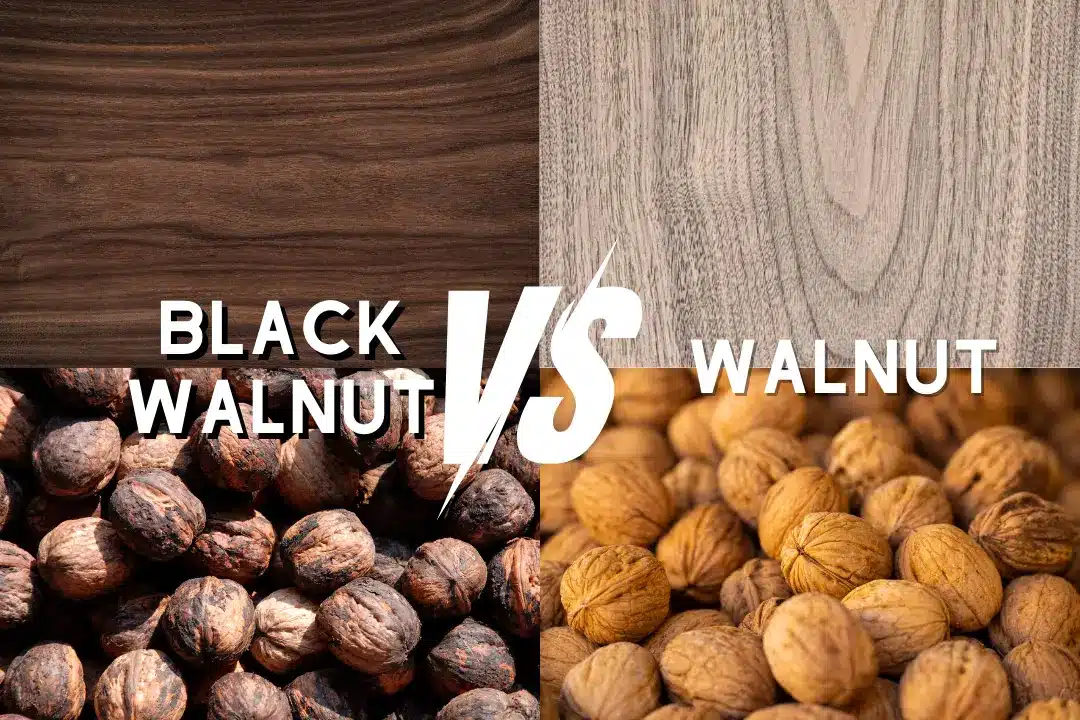

Black walnuts are different from regular grocery-store walnuts: black walnut is Juglans nigra, while the milder supermarket walnut is usually English or Persian walnut, Juglans regia. Black walnuts taste earthier and contain more protein, while English walnuts have thinner shells, lower prices, and about three times more ALA omega-3.
Table of Contents
Black Walnut vs Walnut: Quick Answer

In food discussions, regular walnut usually means English walnut. In North American woodworking, “walnut” commonly means American black walnut, so the correct comparison depends on whether you’re discussing kernels, trees, or lumber.
At-a-Glance Comparison Table
| Feature | Black walnut | English walnut |
|---|---|---|
| Scientific name | Juglans nigra | Juglans regia |
| Other names | American or eastern black walnut | Persian or common walnut |
| Typical food-market role | Specialty nut | Regular grocery walnut |
| Flavor | Earthy, aromatic, savory, sometimes bitter | Mild, buttery, slightly sweet |
| Shell | Very thick and deeply ridged | Thinner and easier to crack |
| Protein per ounce | About 6.8 g | About 4.3 g |
| Calories per ounce | About 176 | About 185 |
| ALA per ounce | About 0.76 g | About 2.57 g |
| Approximate kernel yield | Near 8% | Commonly 40–50% |
| Availability | Limited and often regional | Widely available |
| Main lumber meaning in North America | Usually sold simply as “walnut” | Identified as English walnut |
Names and Species
Both nuts belong to the genus Juglans, but they’re separate species. Black walnut, J. nigra, is native to eastern North America; English walnut, J. regia, has roots across parts of Asia and southeastern Europe and didn’t originate in England.
Food vs Lumber Terms. Grocery packages labeled merely “walnuts” almost always contain English walnuts because their shells crack easily and release large halves. Lumber dealers use “walnut” for black walnut, the dark North American hardwood covered in this guide to walnut wood.
Regular, Dark, and Black Walnut. “Regular walnut” is a market description, not a botanical name. Dark walnut may mean dark-stained English walnut furniture, naturally dark black-walnut heartwood, or kernels with darkened skins; color alone doesn’t identify the species.
English Walnut vs Black Walnut Nutrition
Black walnuts provide more protein and slightly fewer calories per ounce. English walnuts contain more total fat and roughly 3.4 times the ALA omega-3, making neither species the winner in every nutritional category.
One-Ounce Nutrition Table
| Nutrient | Black walnuts | English walnuts |
|---|---|---|
| Calories | About 176 | About 185 |
| Protein | About 6.8 g | About 4.3 g |
| Total fat | About 16.8 g | About 18.5 g |
| Carbohydrate | About 2.7 g | About 3.9 g |
| Fiber | About 1.9 g | About 1.9 g |
| ALA omega-3 | About 0.76 g | About 2.57 g |
These are rounded conversions from 100-gram entries in USDA FoodData Central, using 28.35 grams per ounce. Cultivar and storage can cause small differences, so package labels remain the best source for a purchased product.
Protein and Calories
Black walnuts supply about 2.5 extra grams of protein per ounce, close to 58% more than English walnuts. Both remain calorie-dense nuts rather than direct replacements for concentrated protein foods such as eggs, fish, dairy, meat, or legumes.
ALA Omega-3 Comparison. English walnuts provide about 2.57 grams of alpha-linolenic acid per ounce versus 0.76 gram in black walnuts. ALA is a plant omega-3, and the body converts only part of it into the EPA and DHA associated with marine foods.
Which Is Healthier? Choose black walnuts for more protein and intense flavor from a smaller portion. Choose English walnuts for substantially more ALA and a larger body of human dietary research; results from English-walnut studies can’t automatically be assigned to black walnuts.
Taste, Cooking, and Substitution

Black walnuts have a bold earthy flavor that can dominate mild recipes, while English walnuts taste buttery, creamy, and gently tannic. They perform similarly as solid ingredients, but they aren’t flavor-identical substitutes.
Flavor and Texture
A fresh black walnut smells woody and musky, with a savory edge that lingers after chewing. Its irregular kernel pieces feel firm and craggy, while an English walnut breaks more softly and leaves a mild oily coating across the tongue.
First-time tasters sometimes describe black walnut as medicinal. That reaction often reflects its natural aromatic compounds rather than spoilage, particularly when the kernel remains dry and crisp and lacks sour or chemical odors.
Best Culinary Uses
Black walnuts suit chocolate cookies, maple cake, pumpkin bread, brownies, ice cream, stuffing, grain dishes, aged cheese, and coffee desserts. English walnuts work better in delicate recipes such as baklava, Waldorf salad, granola, traditional pesto, carrot cake, and candied nuts.
Recipe Substitution Ratios. Start with 25% black walnuts and 75% English walnuts in shortbread, fruit bread, salads, or pesto. A 50:50 blend creates an obvious black-walnut character, while full replacement works best beside chocolate, molasses, maple, caramel, coffee, or warm spices.
Toasting and Storage. Spread kernels in one layer and toast at 325–350°F for roughly 5–10 minutes, checking after five. Their aroma changes from quiet and woody to sharp and roasted within moments; pull the tray once fragrant because small black-walnut pieces scorch fast.
After opening, refrigerate walnuts in an airtight container or freeze them for longer storage. Their abundant unsaturated fats oxidize readily, particularly beside heat, light, and air, so an open pantry bag can develop stale flavors sooner than expected.
Bitterness vs Rancidity. Mild bitterness from the papery skin is normal. Discard kernels that smell like paint, solvent, old cooking oil, or sour dough, or that feel damp, rubbery, or unusually soft; cooking won’t repair rancid fat or make moldy nuts safe.
Practical Notes From Real-World Use. Chop black walnuts slightly finer than English walnuts so their flavor spreads without creating harsh pockets. In pale cake batter, a few large pieces can taste aggressive, while smaller fragments give each bite a balanced nutty edge.
Shells, Processing, Price, and Availability
Black walnuts cost more because they combine a thick chambered shell, low edible yield, difficult cracking, and limited regional supply. English walnuts release far more kernel from each pound and fit established orchard-processing systems.
Hull and Shell Differences
A black walnut grows inside a green outer hull surrounding a deeply ridged, almost stone-like shell. The internal partitions grip the kernel tightly, which explains why shelled black walnuts commonly arrive as small irregular pieces rather than perfect halves.
English walnuts also grow inside a fleshy outer covering, but their mature shells are thinner and less deeply divided. A hand nutcracker can often release intact halves; the same tool may bend, slip, or pinch fingers against a black walnut.
Green Hull Terminology
Green walnut hull describes the immature outer tissue of a walnut fruit; it doesn’t automatically mean black walnut. “Black walnut hull” identifies the species, while green hull identifies the growth stage, so green walnut hull vs black walnut hull isn’t a clean either-or comparison.
Kernel Yield: 8% vs 40–50%. One hundred pounds of in-shell black walnuts may return only about eight pounds of kernels. English walnut kernel percentages commonly reach 40–50%, though moisture, cultivar, maturity, grading, and processing change both figures.
Backyard Harvesting Challenges. Fresh hull juice stains skin, clothing, tools, driveways, and concrete a deep brown. Wear thick gloves, remove hulls outdoors, wash the shells, cure them with moving air, and use a cracker built for black walnuts rather than a light tabletop model.
Floating nuts are often screened out because they may be poorly filled or insect-damaged, but flotation isn’t a safety test. Reject any kernel with mold, insect tunneling, a foul odor, or wet interior tissue, and dry the remaining nuts before sealed storage.

Why Black Walnuts Cost More. Collectors must handle heavy hulls and shells, processors need specialized cracking machinery, and kernels frequently break during extraction. Shipping whole nuts is inefficient because roughly 92% of the in-shell black-walnut weight may be discarded during processing.
Comparing Retail Value. Divide package price by edible ounces and compare shelled kernels with shelled kernels. Standard English-walnut pieces often occupy a lower price tier than shelled black walnuts, but package size, piece grade, shipping, harvest conditions, and certification can shift the result.
Product Forms and Availability. English walnuts appear as halves, pieces, chopped kernels, flavored snacks, and in-shell nuts. Black walnuts are more commonly sold as recipe-ready pieces or specialty packages; don’t confuse edible kernels with green-hull powders or dietary supplements.
Black Walnut Tasting Option. An eight-ounce bag offers enough kernels for direct tasting and a small recipe without committing to bulk quantities. Compare one raw piece of each species first, then test a 25% substitution in familiar cookies or banana bread.
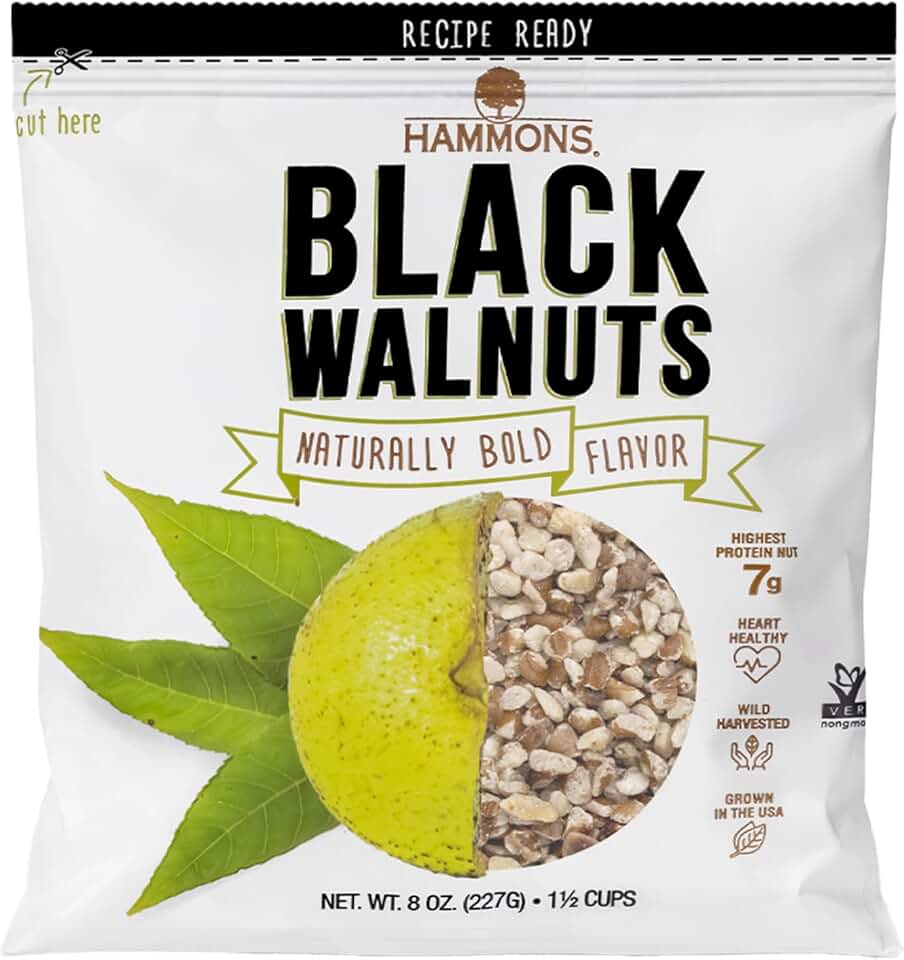
Hammons Black Walnuts Snack Bag
- Compact 8-ounce bag for first-time tasting
- Wild-harvested black walnut kernels
- Strong savory flavor compared with English walnuts
- Non-GMO and gluten-free
- Ready for snacking or recipe testing
 Buy on Amazon
Which Walnut Should You Choose?
Choose black walnuts for intense aromatic flavor and more protein; choose English walnuts for versatility, higher ALA, intact halves, and easier buying. Blend them when you want black-walnut character without letting it take over the dish.
Choose Black Walnuts
- For chocolate, maple, molasses, coffee, caramel, aged cheese, and strongly spiced recipes.
- When roughly 6.8 grams of protein per ounce suits your dietary goal.
- For recipes written around their earthy, savory character.
- When fragmented pieces won’t harm presentation.
- If you’re willing to pay more for a specialty, often wild-harvested nut.
Choose English Walnuts
- For snacking, salads, pesto, granola, baklava, and mild baked goods.
- When you want about 2.57 grams of ALA per ounce.
- For decorative halves and clean cake garnishes.
- When buying large quantities on a tighter budget.
- For a mild walnut that won’t hide fruit, herbs, or gentle spices.
Blend Both Varieties. Use 25% black and 75% English walnuts for a subtle aromatic note. Move to equal portions for cookies, brownies, pumpkin bread, or savory stuffing where stronger ingredients can hold their own beside black walnut.
Black Walnut vs English Walnut Trees

Black walnut trees typically have more numerous, narrower leaflets and dark furrowed mature bark; English walnut trees usually have fewer, broader leaflets and smoother young bark. Fruit, leaves, bark, and graft position should be checked together because no single trait identifies every specimen.
Black Walnut Identification
Juglans nigra commonly grows 50–75 feet tall and may exceed that range on good sites. Its compound leaves often carry 15–23 narrow leaflets, with a small or absent terminal leaflet, while mature bark forms dark intersecting ridges.
English Walnut Identification
Juglans regia often bears five to nine broader leaflets with a prominent terminal leaflet. Young trunks look lighter and smoother than black walnut, and the mature fruit’s husk separates more readily from the familiar thin shell.
Rootstocks and Hybrids. Orchard growers may graft English-walnut cultivars onto Northern California black walnut or Paradox hybrid rootstock. Shoots and bark below the graft can look different from the fruiting canopy, so inspect the swollen graft union before naming the entire tree.
Juglone and Gardens. Walnut roots, hulls, buds, bark, and leaves contain varying amounts of juglone-related compounds. Poor plant growth beneath a walnut can also come from shade, dry soil, dense roots, or nutrient competition, so it isn’t proof of chemical injury by itself.
Keep fresh hulls away from sensitive beds and place demanding vegetables beyond major root zones where practical. Raised beds with root barriers can reduce competition, but online sensitivity lists vary and shouldn’t replace observation of local soil conditions.
Black Walnut Wood vs Walnut Wood
In North American lumber sales, walnut usually means black walnut, not English walnut. Both species produce useful hardwood, yet their supply, log form, color, figure, and typical commercial uses differ.
Meaning of Walnut Lumber
A board labeled “walnut” is commonly Juglans nigra, with brown heartwood and pale sapwood. Dealers identify orchard-grown English walnut separately, while Claro walnut may refer to Northern California black walnut or related hybrid material.
Black Walnut Wood
Black walnut heartwood ranges from medium brown to dark chocolate, sometimes with gray, purple, or reddish streaks. Freshly cut boards give off a faint sweet, earthy scent, and sharp tools leave a smooth satin surface across straight grain.
Its Janka hardness is commonly listed near 1,010 pounds-force, which balances dent resistance with pleasant machining. Furniture makers value it for cabinetry, tables, veneer, gunstocks, and turning; see the broader black walnut wood guide for grain and finishing details.
English Walnut Wood. English walnut is used for furniture, carving, veneer, and turned work, with Janka hardness commonly reported near 1,220 pounds-force. Retired orchard trees often produce short logs, knots, graft figure, and irregular grain rather than long clear boards.
Darker color doesn’t mean a board is harder. Compare species through the wood hardness scale, and judge each board for defects, grain direction, moisture, and intended use before buying.
Safety, Allergies, Pets, and Supplements
Edible walnut kernels, moldy nuts, green-hull supplements, hard shells, and black-walnut shavings present different safety risks. Treating them as one exposure leads to poor advice, especially for allergic people, dogs, and horses.
Tree-Nut Allergies
Both species are tree nuts, and someone allergic to one shouldn’t assume the other is safe. Cross-reactions can occur between walnut species and related nuts such as pecans; breathing trouble, widespread hives, swelling, faintness, or dizziness needs emergency medical care.
Dogs and Moldy Nuts
Moldy walnuts may contain tremorgenic mycotoxins linked with vomiting, poor coordination, tremors, and seizures in dogs. Whole shells add choking, broken-tooth, and intestinal-blockage hazards, while fatty kernels can upset digestion; contact a veterinarian after a suspected exposure.
Black Walnut Horse Bedding. Never use black-walnut wood shavings for horse bedding. Veterinary reports associate bedding containing about 20% black-walnut shavings with acute laminitis, limb swelling, stronger digital pulses, reluctance to move, fever, and colic-like signs.
This horse risk concerns wood-shaving exposure, not the ordinary comparison between edible kernels. Remove contaminated bedding at once and obtain veterinary help if a horse develops sudden hoof pain or swelling after contact.
Hull Supplement Claims. Green black-walnut hull extracts aren’t nutritionally equivalent to eating kernels. Strong clinical evidence doesn’t support claims that these products remove parasites, treat cancer, clear fungal infections, or “detox” the body, and concentrated extracts may cause side effects or medication interactions.
FAQs
Are Black Walnuts Different From Regular Walnuts?
Yes, black walnuts are different from the regular English walnuts most stores sell. They have a thicker, harder shell and a bold, earthy flavor that can taste stronger or more bitter. Black walnuts also have a firmer texture and are usually harvested from native North American trees.
Are Black Walnuts Healthier Than English Walnuts?
Black walnuts are nutritious, but they are not automatically healthier than English walnuts. Both provide healthy fats, protein, fiber, and important minerals. Black walnuts may contain slightly different antioxidant compounds, while English walnuts are especially well known for their omega-3 fat content.
Can Black Walnuts Replace Regular Walnuts In Baking?
Yes, black walnuts can replace regular walnuts in baking, but their flavor will be much stronger. Use them in the same amount for cookies, breads, and brownies, or start with half the amount if you prefer a milder result. They work best in recipes that pair well with rich, earthy flavors.
Why Are Black Walnuts More Expensive?
Black walnuts are more expensive because their hard shells are difficult and labor-intensive to remove. The trees also produce nuts that require specialized harvesting and processing equipment. Since they are less commonly grown and sold than English walnuts, their smaller supply can further raise the price.
Is Black Walnut Wood The Same As Walnut Wood?
Black walnut wood is a type of walnut wood, but it is not the same as every wood sold simply as walnut. In North America, furniture-grade walnut usually refers to black walnut because of its dark color and attractive grain. Other walnut species can vary in color, hardness, and appearance.
Affiliate Disclosure: Some links in this post are affiliate links. If you make a purchase through these links, we may earn a small commission at no extra cost to you. We only recommend products we genuinely believe in.