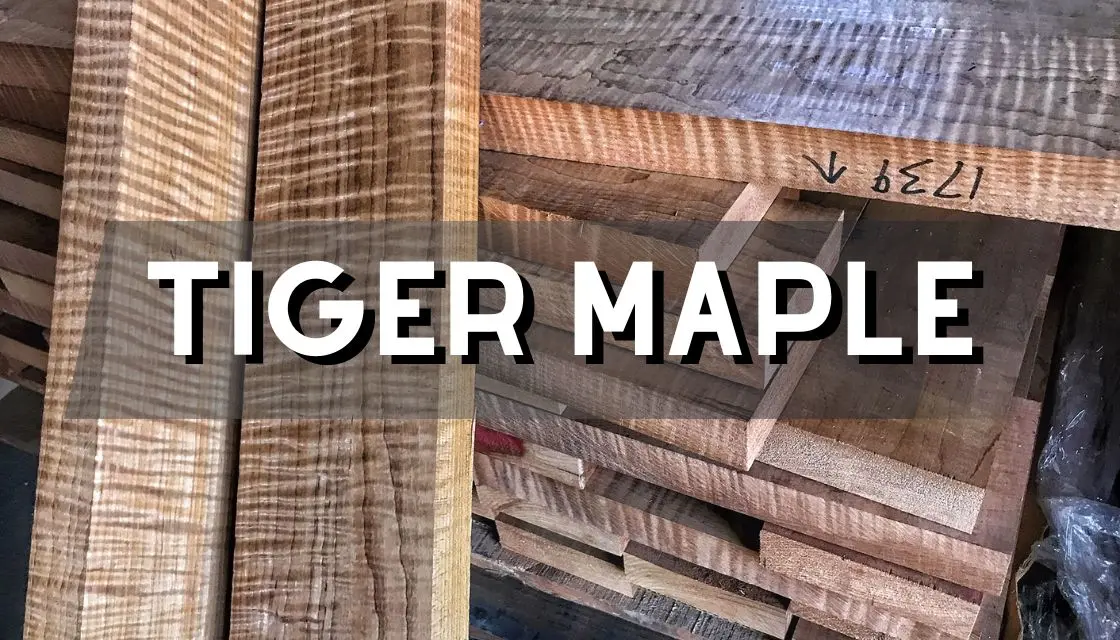


Spalted wood is wood visibly altered by fungi, creating dark zone lines, pale bleaching, colored pigments, or a mix of all three. It isn’t a species or a strength grade: lightly affected wood may remain workable, while advanced fungal decay leaves weak, crumbly fibers.
Table of Contents
What Is Spalted Wood?
Direct Definition
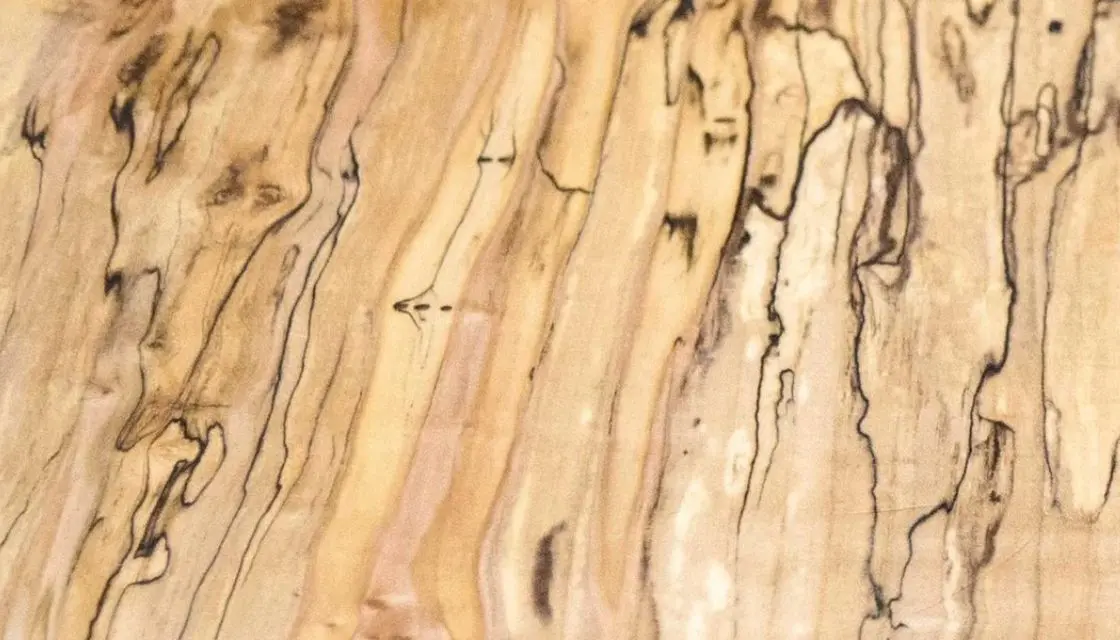
Wood spalting is the visible color or texture change produced as fungi colonize wood. Common signs include black boundary lines, cream-colored bleaching, blue-green staining, and pink, red, yellow, or brown pigmentation.
The term describes a fungal condition, not a tree species. Maple, beech, birch, sycamore, tamarind, poplar, ash, and many other woods can become spalted when moisture, oxygen, temperature, and time favor fungal growth.
Essential Facts
- Dark lines are usually fungal boundaries rather than normal grain.
- Many decay fungi struggle to remain active below roughly 20% wood moisture content.
- Fiber saturation commonly occurs near 25–30%, though wood species vary.
- Indoor project stock often finishes drying near 6–10%, depending on local humidity.
- Drying slows or stops active decay but cannot rebuild fibers already consumed.
- Visible spalting doesn’t reveal the wood’s remaining strength.
Spalted material is sometimes grouped with wood grain patterns, yet fungal lines aren’t grain. Grain follows the tree’s cellular structure; zone lines cross that structure and can curve, branch, or enclose irregular patches.
Spalting versus rot: fungal activity can produce both, but attractive spalting isn’t automatically severe rot. A board with sharp black lines may still feel firm, while a lightly marked pale area may be badly weakened by white-rot decay.
The practical test is fiber integrity. If the wood resists an awl, produces clean shavings, and holds an edge, it may suit decorative work; if it crushes under a fingernail or breaks across the grain, treat it as rotten.
How Wood Spalting Develops
Spalting develops when fungi colonize damp, oxygenated wood and interact with its lignin, cellulose, hemicellulose, and other compounds. Pattern speed varies with species, fungal strain, temperature, moisture distribution, and blank thickness, so no fixed calendar works for every piece.
Moisture, Oxygen, and Time
Fungi need accessible moisture, food, oxygen, and suitable temperatures. Logs touching damp soil, thick blanks stored without airflow, and boards exposed to repeated rain stay favorable longer than stickered lumber protected beneath a roof.
Most decay fungi become restricted as wood falls below about 20% moisture content. Conditions become more favorable near fiber saturation, often around 25–30%; the USDA Wood Handbook explains why moisture movement and fiber saturation vary among species and board dimensions.
Thick stock creates a common trap: the outside feels dry and cool while the center remains wet enough for decay. Pin meters also read only between their probes, so check several faces and use insulated pins when measuring beneath a dry surface.
Fungal Competition
Competing colonies can form dark barriers as they defend resources or meet another fungus. These melanized boundaries may snake through a board like ink lines, sometimes enclosing pale islands that give the surface a marbled wood appearance.
Zone-line spalting usually appears black or dark brown. Dense networks look dramatic in bowls, veneers, boxes, and handles, but the number of lines doesn’t measure decay; assess the surrounding fibers instead.
White-rot bleaching occurs as fungi break down lignin and may consume structural carbohydrates. Early areas look cream or chalk-white; advanced areas feel unnaturally light, fuzzy, or soft and can leave dust rather than curled shavings.
Fungal pigmentation can create blue-green, pink, red, or yellow color. Chlorociboria species are associated with blue-green xylindein, while Scytalidium cuboideum produces pink-to-red hues; Oregon State University’s Spalted Wood resources cover this specialized research area.
Color alone can’t identify a fungal species. Mineral staining, iron reactions, sap discoloration, and pigments from several organisms may look similar without microscopy or laboratory analysis.
Combined spalting effects often show dark borders, pale decay, and colored staining in one piece. These blanks offer high visual contrast but cut inconsistently: a gouge may pass from crisp wood into a soft pocket within a few millimeters.
Spalting versus weathering: gray surface fibers caused by sunlight and rain don’t prove fungal alteration. Look for color below a fresh cut, intersecting boundary lines, localized bleaching, or density changes rather than relying on a weathered face.
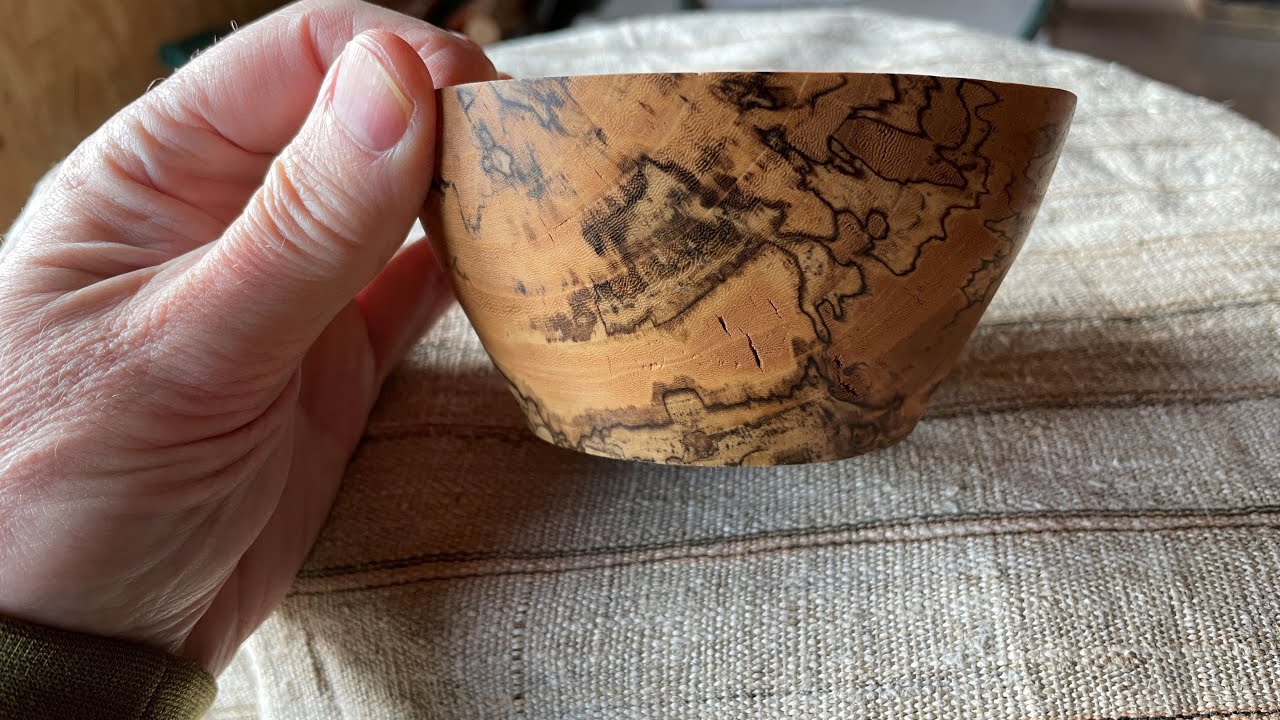
Visual identification gallery: the photographs here show the creamy background and winding black lines often associated with spalted maple. Face grain reveals broad patterns, while end grain helps show whether discoloration penetrates deeply or sits near the surface.
Spalted Woods and Maple
Many woods can spalt, but pale hardwoods display fungal lines with the strongest contrast. Maple is especially recognizable because black boundaries stand sharply against its white, cream, or light-tan background.
Common Spalted Species
| Wood | Common appearance | Practical use | Main concern |
|---|---|---|---|
| Maple | Black lines on cream wood | Bowls, panels, boxes | Hidden soft centers |
| Beech | Strong lines and pale bleaching | Veneer, turning, accents | Advanced white rot |
| Birch | Fine dark lines on light wood | Boxes and small turnings | Warping and end checks |
| Sycamore | Zone lines with ray figure | Panels and bowls | Interlocked-grain tear-out |
| Poplar or aspen | Clear lines on pale stock | Decorative carving | Low starting hardness |
| Elm or hackberry | Bold, irregular boundaries | Turning and accents | Difficult interlocked grain |
| Tamarind | Cream, brown, and black contrast | Bowls and vessels | Checks hidden by wax |
| Ash, oak, or walnut | Variable lines and bleaching | Scales and furniture details | Open pores or weak pockets |
Species guides for birch wood and beech wood help separate natural pore, ray, and grain features from fungal markings. A correct species name matters because density, movement, and machining behavior remain different after spalting.
Spalted Maple Identification
Spalted maple commonly has thin black lines crossing a pale background, often with cream or tan patches. Those lines don’t follow annual rings consistently, which separates them from ordinary grain, and they may encircle fungal territories in closed shapes.
Maple can also contain mineral streaks, ambrosia beetle staining, curl, and birdseye figure. Compare unfamiliar stock with ambrosia maple: ambrosia marks often track beetle galleries, while fungal zone lines form broader, branching boundaries.
Hard versus soft maple can’t be decided from the word “spalted.” Hard maple usually refers to sugar maple, while the soft-maple group includes red, silver, and bigleaf maple; sellers may not know which species produced a salvaged log.
Maple hardness baselines describe sound specimens, not decayed areas. Published Janka values commonly place hard maple near 1,450 lbf, red maple near 950 lbf, bigleaf maple near 850 lbf, and silver maple near 700 lbf.
| Maple type | Approximate sound-wood Janka hardness | Effect of spalting |
|---|---|---|
| Hard maple | 1,450 lbf | Local decay can erase much of the baseline advantage |
| Red maple | 950 lbf | Soft pockets may bruise or dish during sanding |
| Bigleaf maple | 850 lbf | Check figured sections for tear-out and weakness |
| Silver maple | 700 lbf | Heavy spalting may become fragile sooner |
These figures, comparable with species data from The Wood Database, don’t predict a spalted board’s present strength. A single board may contain firm 1-inch zones beside material that dents under light thumb pressure.
Natural maple spalting often starts after a tree falls, a branch breaks, or a log remains damp after cutting. Sapwood may change first because it holds accessible nutrients and moisture, though fungal growth can extend farther when cracks expose the interior.
Controlled maple spalting uses fresh or rewetted untreated wood, moisture, oxygen, warmth, and fungal access. Inspect test cuts regularly rather than waiting a fixed number of weeks; attractive surface lines can appear while the middle continues losing strength.
Stop development by drying the wood to a level that no longer supports active decay. Guidance on kiln-dried wood explains how controlled heat and airflow differ from leaving a damp blank in a warm enclosure.
Maple failure points include split end grain, weak pith, hidden central decay, bark inclusions, and soft areas beside hard figure. Seal fresh ends early, cut away pith where possible, and leave rough-turned bowl walls thick enough for later correction.
Assessing Soundness, Strength, and Uses

Usable spalted wood must be judged by dryness, fiber strength, and project demands rather than pattern alone. Zone lines can exist in sound material, while barely visible white rot may make a board unsafe for stressed parts.
Soundness Comparison
| Condition | Shop signs | Likely uses | Decision |
|---|---|---|---|
| Sound | Resists fingernail pressure; makes clean shavings; holds crisp edges | Panels, supported furniture surfaces, boxes, bowls | Use after normal inspection and drying |
| Borderline | Isolated soft pockets; uneven sanding; minor crumbling | Small decorative pieces or stabilized blanks | Remove or consolidate weak areas |
| Unusable | Crushes by hand; breaks easily; sheds powder; contains broad voids | No safety-dependent application | Reject or retain only a sound fragment |
An unusually light blank can signal lost density, but weight alone isn’t proof. Species, growth rate, moisture, and sapwood percentage also change weight, so compare pieces of similar size from the same board or log.
Practical Assessment Tests
- Press a fingernail into several inconspicuous areas.
- Probe suspect end grain with an awl and compare the resistance with sound wood.
- Make a fresh crosscut to expose hidden pockets and interior voids.
- Plane or carve a test area and inspect whether it forms shavings or powder.
- Measure moisture on multiple faces and at more than one depth.
- Test a screw in waste stock if the project depends on fastener holding.
- Reject material that fractures across the grain with little force.
Practical notes from real-world use: sound areas produce a clean slicing sound and warm, curled shavings. Punky sections feel dull through the tool, smell mustier, and release pale crumbs that cling to the bench and fingertips like dry flour.
Soft sections also sand below firm wood, leaving a shallow dish that becomes visible under raking light. Use a hard sanding block on flat parts and stop often to inspect the reflection rather than judging smoothness by touch alone.
Mechanical limitations include lower bending strength, impact resistance, compression strength, screw holding, and edge durability. Strength loss is irregular, so applying one percentage reduction to every spalted board would create false confidence.
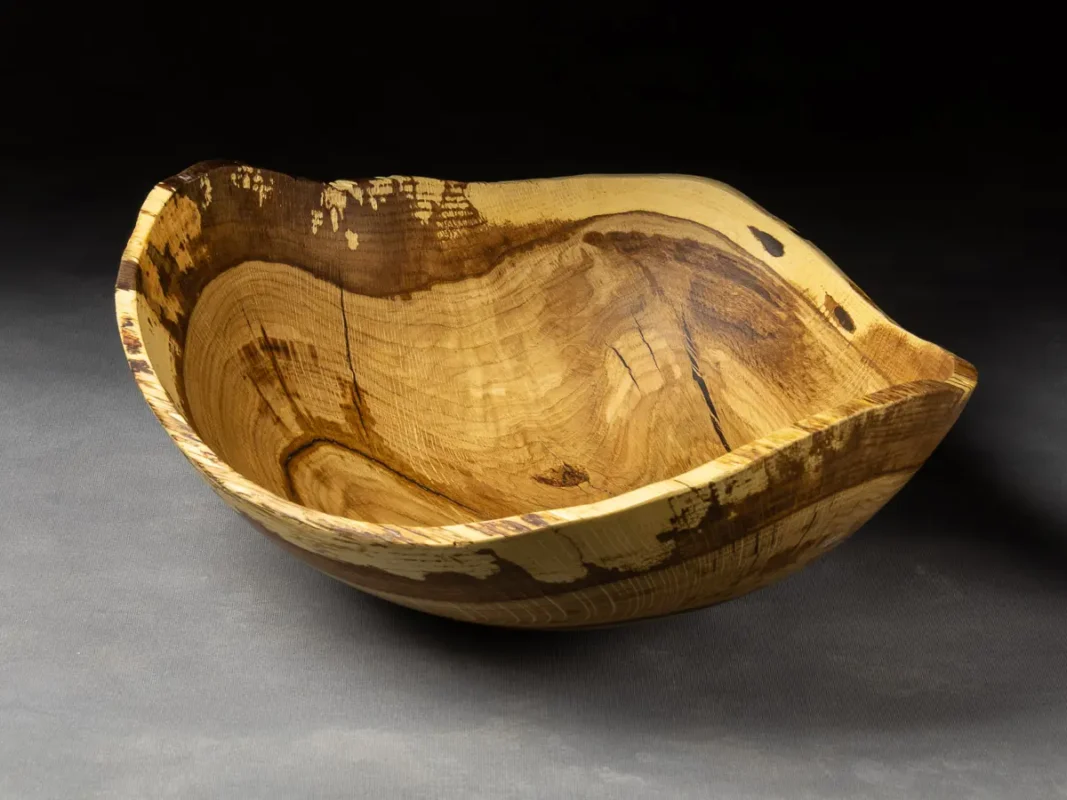
Suitable decorative uses include bowls, boxes, veneer, wall panels, jewelry, pens, drawer fronts, cabinet panels, lamp bases, stabilized knife scales, and non-structural inlays. Match the use to the weakest area, not the hardest area.
Uses to avoid include structural framing, stair treads, ladders, chair legs, load-bearing chair joints, climbing equipment, impact tool handles, and unsupported shelves. Surface resin can make degraded fibers feel hard without restoring dependable strength deep inside.
Furniture suitability depends on placement. Dry, firm stock works well in drawer fronts, supported tabletops, doors, panels, and accents; use sound straight-grained wood for tenons, legs, rails, and other stressed members.
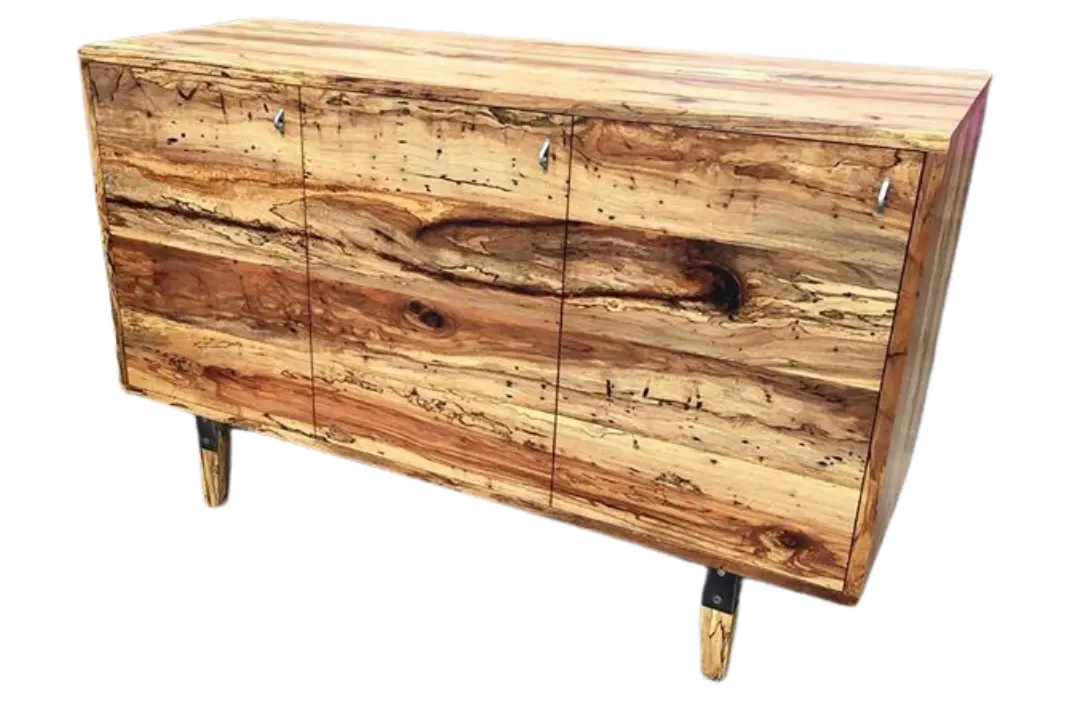
Cutting board concerns include soft pockets, cracks, open voids, unknown fungal history, and resin compatibility. Repeated knife cuts and washing can expose weak fibers beneath a film finish, so choose sound food-contact stock with a known treatment history instead.
Is Spalted Wood Dangerous?
Finished spalted wood isn’t automatically dangerous, but machining it can release wood dust, spores, fungal fragments, and decay products. Weak turning stock creates a second hazard because cracks or soft pockets may let a spinning workpiece break apart.
Wood Dust and Spores
All fine wood dust can irritate the skin, eyes, nose, and lungs. Spalted stock adds biological fragments and pigments whose effects vary, so avoid treating a pleasant earthy smell or dry appearance as evidence of safety.
Stop working if you develop wheezing, persistent coughing, rash, eye swelling, or breathing difficulty. People with asthma, allergies, or reduced immune function should use stricter controls and seek medical advice for symptoms rather than testing their tolerance repeatedly.
Respirators and Extraction
A properly fitted, NIOSH-approved N95 respirator filters at least 95% of airborne particles under its test conditions. It doesn’t protect against solvent or resin vapors; NIOSH’s respirator guidance explains selection, fit, and limitations.
Capture dust at the saw, sander, router, or lathe using source extraction. Respirators form the final layer rather than a substitute for collection, and facial hair crossing the seal can prevent a tight fit.
Safe shop controls include eye protection, covered cuts, ventilation, a fine-particle or HEPA-filtered vacuum, and clean work clothing. Don’t blast dust with compressed air; it turns settled debris into an invisible cloud that remains suspended near breathing height.
Turning failure hazards deserve equal attention. Inspect waxed blanks for checks, remove loose bark, orient defects away from thin walls, stand outside the lathe’s firing line during startup, and stop when a crack widens or the sound changes.
A bowl wall crossing a soft pocket may suddenly feel rubbery or hollow under a gouge. Reduce speed, use very light cuts, reinforce the area where suitable, or abandon the form rather than relying on the tailstock to contain a failing blank.
Drying isn’t sterilization. Removing moisture stops or greatly slows fungal activity, while kiln heat can kill many living organisms under a suitable schedule. Dust, spores, pigments, and degraded fibers may remain after drying, so shop controls still apply.
Drying, Stabilizing, and Finishing
Dry before stabilization and bring indoor stock close to its service moisture level before final machining. Stabilizers reinforce suitable weak fibers, but they can’t make every rotten piece safe or correct deep internal checks.
Moisture Targets
Indoor furniture and craft stock commonly reaches 6–10% moisture content, depending on climate and seasonal indoor humidity. A board intended for a humid coastal room may settle higher than one kept in a heated inland home.
Measure several areas after the piece has acclimated. Thick turning blanks can show a dry shell around a wet core, while waxed ends may conceal moisture that later causes movement, glue failure, or poor resin penetration.
Drying Methods and Risks
Seal fresh end grain, stack boards on dry stickers, and protect them from soil, wet concrete, direct rain, and harsh sunlight. The main drying risks are end checking, warping, honeycombing, surface mold, case hardening, and continued internal decay.
For green bowls, rough-turn the shape with extra wall thickness and weigh it periodically. A stable weight over repeated readings indicates moisture loss has slowed, though the blank still needs time to reach equilibrium with the shop.
Cyanoacrylate consolidation works best on small soft spots, fragile corners, and shallow end-grain damage. Thin CA wicks fast and can become hot while curing; it also creates hard patches that sand more slowly than untreated wood.
Penetrating epoxy can bridge cracks and reinforce localized porous areas. Warm, dry wood accepts low-viscosity resin more readily, but excess epoxy may leave glossy islands, block stain, or weaken a later glue joint if bonding surfaces aren’t prepared.
Vacuum resin stabilization suits small dry blanks such as knife scales, pen blanks, jewelry stock, and handles. Vacuum removes trapped air before resin enters the pores, after which the resin is cured according to its specified process.
Successful stabilization can increase density, reduce uneven absorption, and support fragile fibers. The treated stock cuts more like a wood-resin composite, producing fine chips and extra heat, so use sharp tools and avoid overheating thin edges.
Cutting and turning require sharp edges, light cuts, and frequent inspection. Back up weak fibers on crosscuts, use a high-tooth-count blade where suitable, and avoid forcing stock past a blade when density changes alter feed resistance.
For more on blank selection and grain direction, see wood turning blanks. Thick wax coatings can hide checks, so scrape small inspection windows before mounting valuable stock.
Sanding and gluing expose density differences. Use a firm block on flat surfaces, progress through normal grit steps, remove powdery fibers before bonding, and test adhesives on stabilized offcuts because cured resin may reduce glue penetration.
Finish selection changes contrast. Dewaxed shellac, wiping varnish, lacquer, and waterborne clear coats can preserve pale areas; penetrating oils often deepen tan tones and may reduce the visual separation between cream wood and black lines.
A thin shellac washcoat helps equalize absorption before another compatible finish. Test on scrap because sound wood, bleached fibers, hardened CA patches, and stabilized sections may each reflect light and absorb finish differently.
Common project failures include bowl walls breaking at soft pockets, screws stripping, thick blanks cracking, stain turning blotchy, soft areas sanding low, and resin failing to penetrate wet wood. Fix the material problem before applying finish; a glossy coat won’t hide a depression or stabilize deep decay.
Buying and Pricing Spalted Wood
Spalted wood prices depend on species, dimensions, pattern, dryness, stabilization, defects, and usable yield. A cheap blank with a large rotten center can cost more per finished cubic inch than a higher-priced sound blank.
Common Product Forms
- Rough-sawn boards and live-edge slabs.
- Wax-sealed bowl and vessel blanks.
- Pen, bottle-stopper, and jewelry blanks.
- Stabilized knife or tool-handle scales.
- Craft blocks and carving stock.
- Veneer, panels, and finished furniture.
Boards are often sold by the board foot, while turning blanks, matched scales, and craft blocks are priced per piece. Exact-piece photographs carry more buying value than representative images because every pattern, crack, and soft pocket differs.
Board-Foot Calculation
One board foot equals 144 cubic inches. Calculate it as thickness in inches × width in inches × length in feet ÷ 12; a 2-inch × 8-inch × 6-foot board contains 8 board feet.
Price and value factors include species, pattern contrast, dimensions, surfacing, drying method, measured moisture, stabilization, cracks, voids, bark, shipping weight, and provenance. Highly patterned solid wood has little practical value if the intended profile lies inside a decayed area.
Use a usable-volume calculation for blanks: delivered cost ÷ estimated usable cubic inches. A $60 blank yielding 300 cubic inches costs $0.20 per usable cubic inch; after removing half for cracks and decay, that rate doubles to $0.40.
Include resin, drying loss, tool wear, and disposal in the estimate. Stabilized material often costs more upfront but can provide better yield for small handles and jewelry where one hidden void could ruin the full project.
Seller questions should cover the exact piece, actual dimensions, species confidence, moisture reading, drying method, stabilization, wax coating, checks, inclusions, soft pockets, return terms, and intended use. Ask whether dimensions include bark, wax, or surfaces that must be removed.
Is spalted wood expensive? It can command a premium when it combines rare species, sharp patterning, large sound dimensions, dry stock, and good yield. Severe decay lowers working value, regardless of how dramatic the photographed face looks.
Spalted Wood References and Materials
Educational references help connect visible patterns with fungal biology and safe material selection. Books are most useful when paired with physical testing because no photograph can reveal hidden softness, internal moisture, or screw-holding ability.
Educational References
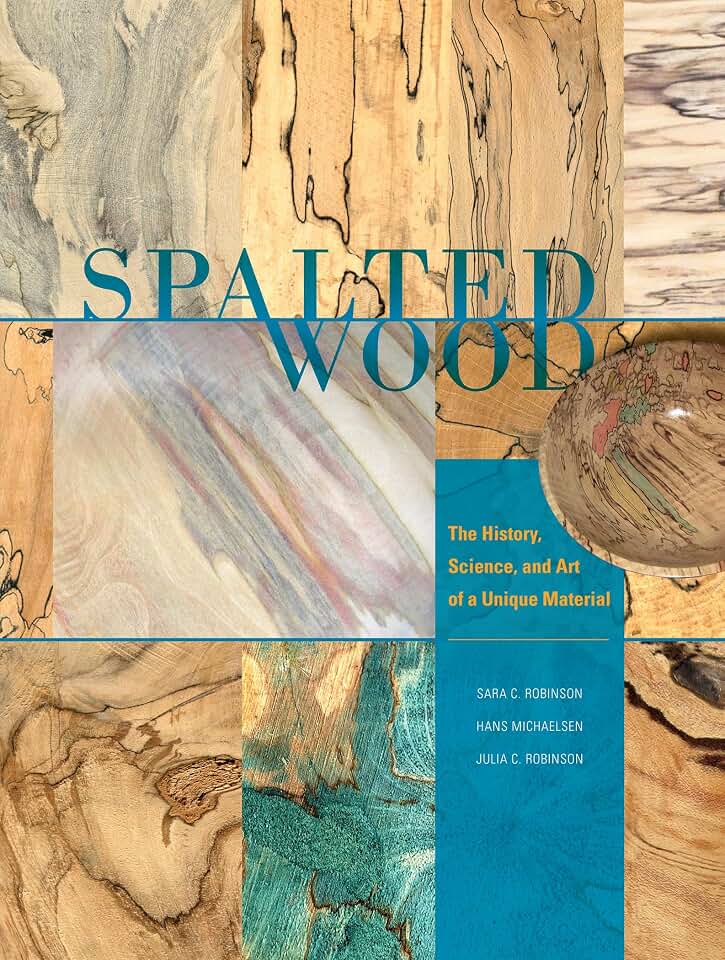
The Story of Spalted Wood
- Explores the history of spalted wood
- Explains the science behind fungal patterns
- Connects material knowledge with woodworking art
- Features the visual character of spalting
- Useful reference for woodworkers and collectors
 Buy on Amazon

Spalting 101 Fungi Guide
- Introduces wood coloring with fungi
- Explains the basics of controlled spalting
- Helps readers understand fungal effects
- Focuses on decorative wood patterns
- Practical guide for curious woodworkers
Buy on Amazon
Turning Material
Turning material should provide enough extra thickness to remove checks, wax, and out-of-round surfaces. Confirm whether the listing shows the exact blank and whether its stated measurements are minimum actual dimensions.

Spalted Tamarind Bowl Blank
- Exotic tamarind blank for lathe turning
- Natural spalting creates one of a kind grain
- Sized for bowl and vessel projects
- Solid wood stock for decorative work
- Great material for showcasing bold figure
Buy on Amazon
Stabilized handle material reduces density differences in small components and can improve edge durability. It still needs inspection around screw holes, pins, and thin corners, where hidden voids or brittle resin-rich areas may start cracks.

Stabilized Spalted Ash Handle Scales
- Matched pair of spalted ash scales
- Stabilized wood supports handle making
- Natural grain gives each pair individual character
- Designed for knife making projects
- Gift packed for makers and collectors
Buy on Amazon
Maple craft material works best for jewelry, ornaments, inlays, and other small decorative pieces where weak sections can be removed. Let a new blank acclimate before final sizing, then cut one end to inspect its internal condition.

Spalted Maple Craft Wood Blank
- Unfinished wood block for creative projects
- Spalted maple pattern adds natural style
- Suitable for jewelry and small crafts
- Easy starting material for DIY makers
- Useful for gifts and decorative details
Buy on Amazon
The safest buying rule is to value usable sound wood, not surface drama alone. Inspect, dry, test, and stabilize where suitable, then reserve questionable fibers for low-stress decorative work rather than joints or components whose failure could cause injury.
FAQs
Is Spalted Wood The Same As Rotten Wood?
Spalted wood is not the same as rotten wood. Spalting is decorative coloring and line patterns created by fungi during an early stage of decay. Wood can remain solid and usable when dried at the right time, while rotten wood has lost strength and crumbles or feels soft.
Is Spalted Wood Dangerous To Cut Or Sand?
Spalted wood can be hazardous to cut or sand because fungal spores and fine dust may irritate your lungs. Work outdoors or use good dust collection, and wear a properly fitted N95 or P100 respirator. Avoid working wood that is visibly moldy, soft, or actively decaying.
What Causes The Black Lines In Spalted Wood?
The black lines in spalted wood are usually zone lines formed when different fungi compete for territory. The fungi create dark barriers that help separate their colonies. These natural lines are especially prized by woodworkers because they can produce dramatic, one-of-a-kind patterns.
Can Spalted Wood Be Used For Furniture?
Spalted wood can be used for furniture if it is dry, stable, and still structurally sound. It works especially well for tabletops, cabinet panels, boxes, and decorative accents. For load-bearing parts, avoid soft or punky areas and reinforce weak sections with epoxy when appropriate.
How Much Is Spalted Wood Worth?
Spalted wood is worth more than plain wood when its patterns are attractive, the piece is sound, and the species is desirable. Prices vary by size, dryness, figure, and local demand. Small turning blanks may sell modestly, while exceptional slabs and matched boards can command premium prices.
Affiliate Disclosure: Some links in this post are affiliate links. If you make a purchase through these links, we may earn a small commission at no extra cost to you. We only recommend products we genuinely believe in.