Ambrosia Maple Guide: Wood Characteristics, Uses, and Buying Tips

Table of Contents
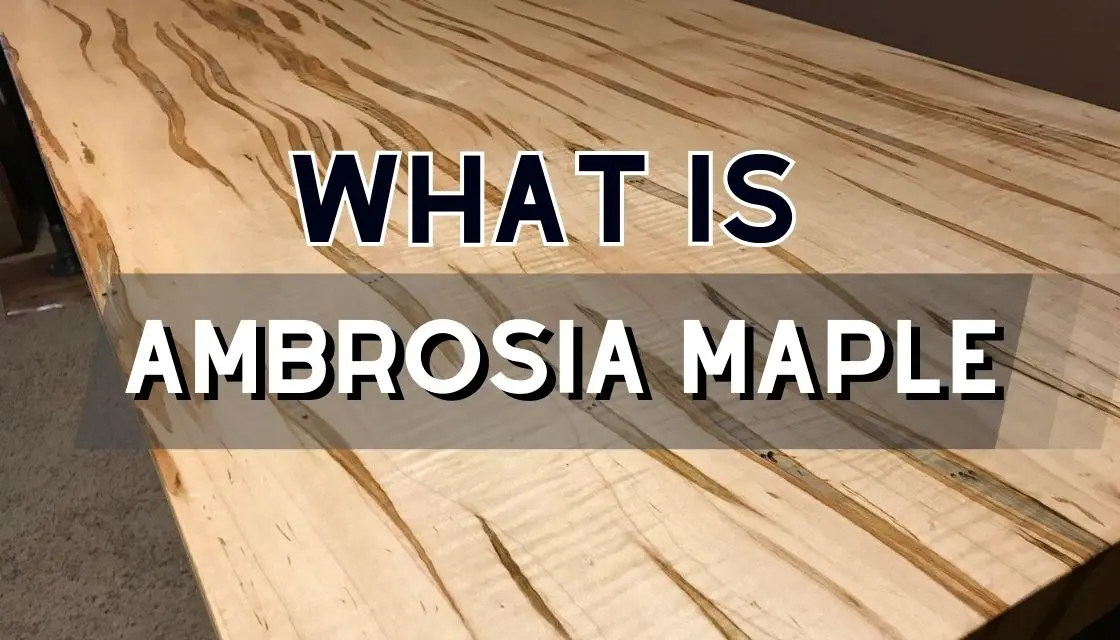
Ambrosia maple is maple wood marked by gray, brown, blue-green, or black streaks and small beetle holes caused by ambrosia beetles and their fungi. It’s not a separate maple species; it’s usually soft maple or another maple with natural beetle-related figure.
SEO title: Ambrosia Maple Wood Guide: Meaning, Uses, Lumber Buying Tips, and Finishing
Meta description: Learn what ambrosia maple is, what causes the streaks, how ambrosia maple wood performs, where to use it, and how to buy and finish ambrosia maple lumber.
What Is Ambrosia Maple?
Direct Definition
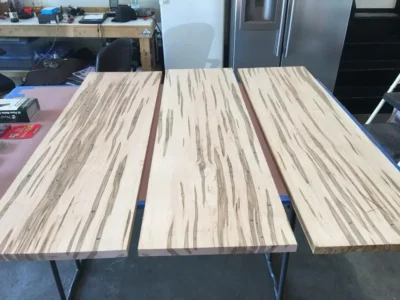
What is ambrosia maple? It’s maple lumber with natural streaks, pinholes, and irregular figure created when ambrosia beetles bore into the wood and carry fungi into the galleries. The color isn’t paint, dye, or a sawmill trick; it forms inside the log while the wood is still wet enough for beetle and fungal activity.
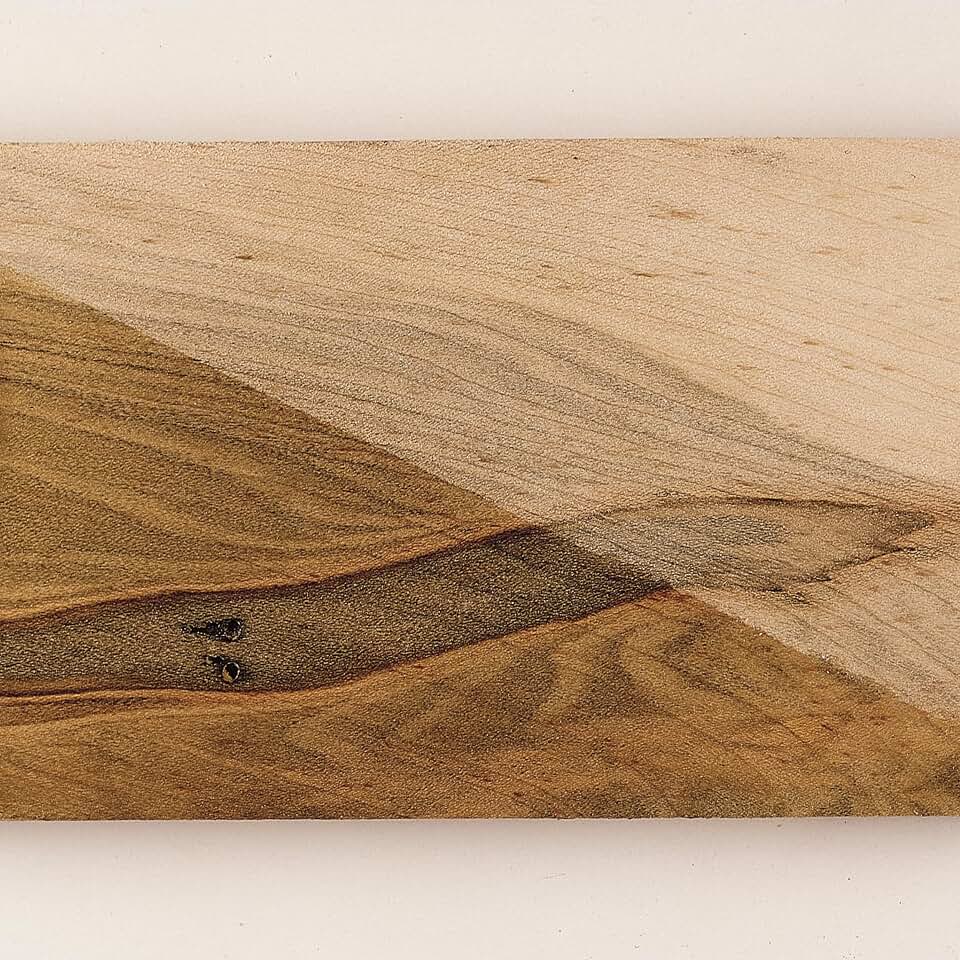
Ambrosia maple wood usually has a pale cream or light tan maple background with smoky gray, brown, blue-gray, olive, or black trails. On freshly planed boards, the surface feels slick and cool under the palm, while the dark pinholes catch a fingernail just enough to remind you they’re real openings in the wood.
Not a Species
Not a species: ambrosia maple is a figure or condition, not a botanical name. The host tree may be red maple, silver maple, bigleaf maple, sugar maple, or another maple, so the hardness, weight, and strength come from the underlying maple species rather than from the ambrosia streaking.
Ambrosia maple tree: people often use that phrase to mean a maple tree or maple log with beetle staining. If you want to compare likely host species, the types of maple trees guide gives useful background on common maples before they become lumber.
Beetles and fungus: ambrosia beetles tunnel into stressed, storm-damaged, recently cut, dead, or dying wood and introduce symbiotic fungi that they feed on. Clemson Cooperative Extension explains that ambrosia beetles are fungus farmers, which is why the colored trails often radiate from the small galleries.
Ambrosia color: in wood, “ambrosia” isn’t one fixed color. It usually means a pale maple base with gray, brown, blue-gray, greenish, or black streaking, so two boards from the same log can look calm on one face and dramatic on the other.
Appearance and Wood Properties
Color and Grain
Color and grain make ambrosia maple easy to spot: light maple sapwood carries smoky trails, dark pinholes, and flame-like markings that rarely repeat in a predictable pattern. The grain is usually fine and closed like other maple, so it sands smooth, but the beetle galleries can interrupt a glassy finish if you leave them open.
Board selection matters because the best figure sits where the eye lands: drawer fronts, table aprons, box lids, cabinet doors, and charcuterie boards. A common beginner mistake is buying a random pack, then discovering the bold streaks land in waste cuts instead of show faces; mark project parts with chalk before crosscutting.
Beetle Holes
Beetle holes are usually small, dark pinholes or short galleries on the board face. They add character, but they can trap sanding dust, stain, glue squeeze-out, cutting board residue, or finish, so blow them out with compressed air or a vacuum before the first coat.
Hardness by species: ambrosia maple is not automatically hard maple. According to data compiled in the USDA Wood Handbook, maple properties vary by species, which explains why one ambrosia board may plane like soft maple while another feels dense and stubborn under a sharp iron.
| Host maple | Typical Janka hardness | Practical meaning |
|---|---|---|
| Silver maple | About 700 lbf | Softer, easier to machine, less ideal for heavy wear |
| Bigleaf maple | About 850 lbf | Moderate hardness, good for furniture and turning |
| Red maple | About 950 lbf | Common soft maple source with balanced workability |
| Hard maple / sugar maple | About 1,450 lbf | Dense, wear-resistant, more prone to burning with dull tools |
Density and movement: soft maple often weighs around 30–38 lb/ft³ when dry, while hard maple is closer to 44 lb/ft³. Heavier ambrosia maple lumber may be denser species, wetter stock, or thicker cut, so let boards acclimate before final milling and avoid sealing only one face.
Durability limits: maple is not naturally high in rot resistance, and ambrosia figure doesn’t change that. Use ambrosia maple indoors for furniture, cabinets, shelves, boxes, turnings, and boards; skip ground contact, shower benches, outdoor tables, and damp locations without serious sealing and maintenance.
- Pros: dramatic natural figure, smooth texture, good machining, strong visual identity, and a lower cost than many exotic decorative hardwoods.
- Cons: variable appearance, open holes, stain blotching, possible hidden voids, shipping cost on long boards, and weaker areas if the log had decay.
- Best workaround: buy 15–25% extra stock for visible projects so you can place the strongest figure on show faces and cut around defects.
Ambrosia Maple Comparisons
Soft Maple
Soft maple is the most common commercial source for ambrosia maple lumber, especially red maple and silver maple. It cuts with less resistance than hard maple, feels less brittle at the router table, and works well for cabinet panels, shelves, small tables, drawer fronts, and decorative boxes.
Buying tip: ask the seller if the stock is soft maple or hard maple, because the label “ambrosia maple” tells you how it looks, not how hard it is. For a deeper species-level baseline, compare it with the main maple wood guide before choosing stock for wear surfaces.
Hard Maple
Hard maple ambrosia boards exist, but they’re less common than ambrosia soft maple in many retail bins. They suit tabletops, benches, and high-wear furniture better, but the denser wood burns faster under a dull blade and can make routers hum with a sharper, hotter pitch.
Spalted maple: ambrosia maple and spalted maple both involve fungi, but they aren’t the same. Ambrosia maple centers on beetle galleries with streaks around pinholes, while spalted maple often shows black zone lines and can turn punky if fungal decay goes too far.
Wormy maple: sellers may use this broader term for maple with insect holes, tracks, or character marks. Some wormy maple is true ambrosia figure, but some is just insect-marked maple, so rely on clear photos and defect notes rather than the name alone.
Curly maple: curl comes from distorted grain that reflects light in bands, while ambrosia figure comes from beetles and staining. A board can be both curly and ambrosia, and that mix can look stunning under clear finish, especially near raking light; compare the effect with curly maple if figure type affects your design.
| Wood label | Cause of figure | Main risk | Best use |
|---|---|---|---|
| Ambrosia maple | Beetle galleries and fungal staining | Open holes and hidden voids | Furniture, cabinets, turnings, serving boards |
| Spalted maple | Fungal color and zone lines | Punky or soft areas | Decorative panels, stabilized turnings, art pieces |
| Wormy maple | General insect marking | Unclear defect level | Rustic furniture, boxes, accents |
| Curly maple | Grain distortion and light reflection | Tearout in reversing grain | Fine furniture, instruments, drawer fronts |
Common Uses and Cutting Boards

Furniture Projects
Furniture projects are one of the best matches for ambrosia maple because the streaks give plain forms movement without needing heavy carving or color. I like it on coffee table tops, nightstands, benches, shelves, desks, and drawer fronts where a clear coat makes the gray trails look deeper, almost like smoke under glass.
Beginner mistake: using heavily holed boards for legs, chair parts, or narrow rails without checking grain direction and hidden galleries. Keep the wildest figure in panels and choose cleaner, straighter stock for load-bearing parts, especially on chairs and benches.
Cabinetry and Millwork
Cabinetry and millwork benefit from ambrosia maple when the figure is balanced across doors, drawer fronts, floating shelves, mantels, and wall panels. Bookmatch or sequence boards when possible, because random streak density can make one cabinet door look loud and the next look blank.
Turning and crafts: bowl blanks, pens, handles, bottle stoppers, jewelry boxes, coasters, inlays, small signs, keepsake boxes, CNC blanks, and laser-engraved pieces all work well if the stock is dry and sound. Turning blanks can reveal hidden galleries mid-cut, so keep a face shield on and listen for the hollow click that tells you a void opened under the gouge.
Kitchen boards: ambrosia maple can work for cutting boards, end grain cutting boards, charcuterie boards, serving trays, cheese boards, knife blocks, and utensil blanks, but open beetle holes need special care. The FDA Food Code stresses smooth, cleanable food-contact surfaces, so fill or seal holes on any board that will touch food.
Cutting board reality: maple’s fine texture is a strength, but ambrosia holes can hold moisture and food residue if left open. For daily chopping, choose tight, sound boards with minimal holes; for a showy ambrosia maple charcuterie board, use food-grade mineral oil, a beeswax and mineral oil blend, or a fully cured food-safe conditioner.
Specialty uses: ambrosia maple can appear in guitar backs, ukulele sets, drum accents, decorative veneers, handle scales, and small panels. Ambrosia maple plywood is less common than solid lumber or veneer panels, so confirm whether a seller means true veneer-faced plywood, thin craft panels, or solid project boards.
Buying Ambrosia Maple Lumber
Lumber Forms
Lumber forms include rough-sawn boards, S2S, S3S, S4S, turning blanks, bowl blanks, craft packs, project boards, live-edge slabs, veneer, and bookmatched sets. Rough boards cost less per board foot, but they hide defects until surfacing; S3S and S4S save shop time but leave less thickness for flattening.
- Rough-sawn: best value if you own a jointer, planer, and moisture meter.
- S2S: surfaced two sides, useful when you still want control over edges.
- S3S: surfaced two sides with one straight-line ripped edge, easier for small shops.
- S4S: surfaced four sides, convenient but less forgiving if the board moves after shipping.
- Slabs: dramatic for tables, but drying checks and shipping costs need extra attention.
Common Thicknesses
Common thicknesses follow hardwood lumber sizing: 4/4 rough stock is about 1 inch thick and often finishes near 13/16 inch, 5/4 is about 1.25 inches, 6/4 is about 1.5 inches, and 8/4 is about 2 inches. Use thicker stock for legs, slabs, turnings, and heavy table parts, but plan for longer drying and higher movement risk.
Board foot formula: thickness in inches × width in inches × length in feet ÷ 12. A 4/4 board that is 8 inches wide and 6 feet long equals 1 × 8 × 6 ÷ 12, or 4 board feet.
Moisture content: indoor ambrosia maple lumber should usually be kiln dried around 6–8% MC for furniture and cabinet work. If the board feels unusually cold and heavy for its size, check it with a meter, then let it rest in your shop before final milling.
Pricing factors: standard ambrosia maple boards often fall around $7–$14 per board foot, while wide, thick, live-edge, or highly figured stock often lands around $12–$30+ per board foot. Exact-board photos, surfacing, long lengths, kiln drying, color contrast, and freight shipping can change the total more than the base board-foot price.
Seller questions: ask whether the lumber is kiln dried, what the moisture content is, whether it’s soft maple or hard maple, how it’s surfaced, and whether the exact boards are pictured. Ask if holes are open, filled, or stabilized, and request notes on checks, cracks, punky areas, bark inclusions, cup, twist, and bow.
Buying checklist: confirm species if possible, target MC, rough and surfaced dimensions, board feet, figure quality, defect level, seller terms, surfacing fees, shipping cost, return policy, and whether the price is per board foot, per piece, per slab, or per pack. A small moisture meter and a straightedge often save more money than chasing the cheapest board.
Project Stock Options
Craft Packs
Craft packs make sense for small boxes, coasters, ornaments, cutting board accents, inlays, and test pieces because you can work around defects without buying long lumber. The trade-off is that pack photos may show sample figure, not the exact boards, so check size, thickness, drying, and return terms.
Project Boards
Project boards are useful when you need predictable sizes for shelves, small furniture parts, serving boards, or drawer fronts. If you plan to glue panels, buy boards from the same pack or seller batch so the cream base color and ambrosia streak density don’t clash.
Turning blanks: compact blocks work well for pens, handles, bottle stoppers, lidded boxes, and small bowls, but beetle galleries can open as the blank becomes round. Seal end grain on blanks you store, and reject pieces with soft, crumbly patches for thin-walled turning.
Furniture stock: choose longer, wider, kiln-dried boards with clear photos when you’re building tables, cabinets, or panels. For visible glue-ups, lay out the boards on the floor first; the sweet, dry maple smell and pale streaked faces make it easy to see which pieces belong side by side before you cut.
Small-stock options can help you test color, figure, and finish before buying full-size ambrosia maple lumber.

Exotic Maple Craft Pack
- Beautiful ambrosia maple with striking natural figure
- pre-cut boards sized for easy woodworking and crafting
- ideal for cutting boards, small projects, and custom builds
- smooth, versatile wood ready for shaping and finishing
- handy 4 pack for multiple projects or backups
 Buy on Amazon

Long Ambrosia Maple Board
- Solid ambrosia maple with bold natural character
- long 48 inch length for larger woodworking needs
- 3 quarter inch thick stock for dependable shaping
- great for furniture parts, accents, and custom builds
- ready for sawing, planing, and finishing
Buy on Amazon

Ambrosia Maple Project Pack
- Handy 3 square foot pack for flexible projects
- attractive ambrosia maple grain adds visual interest
- great for small furniture, inlays, and crafts
- easy way to stock up on matching wood
- suitable for cutting, shaping, and finishing
Buy on Amazon
Compact Maple Block
- Single solid ambrosia maple piece for small builds
- compact 2 inch by 6 inch by 6 inch size
- ideal for turning, carving, and accent work
- distinctive grain gives each piece a unique look
- convenient choice for custom woodworking projects
Buy on Amazon
Working With Ambrosia Maple Wood
Sawing and Milling
Sawing and milling ambrosia maple feels much like working the host maple species, but the holes and figure add surprises. Use sharp blades, steady feed pressure, and light cuts because maple burns easily; the smell turns from clean, faintly sweet wood dust to a hot caramel scorch when the blade slows or dulls.
Layout first: inspect both faces before ripping narrow parts because galleries may run below the surface. Mark checks, punky spots, and strong figure with chalk, then cut show parts first and secondary parts from the plainer areas.
Practical Notes From Real-World Use
Planing tips: tearout often appears around beetle tracks, curl, or grain reversals, so take light passes and skew the board slightly if your machine allows it. A helical head helps, but a sharp card scraper often fixes small torn patches faster than sending a figured board through the planer again.
Routing edges: use sharp carbide bits, make a shallow climb-cut pass on fragile edges when safe, then finish with a normal pass. Beetle holes near an edge can chip, so rout test cuts on offcuts from the same board instead of trusting plain maple settings.
Sanding grits: move through 120, 150, 180, and 220 for most clear finishes, stopping around 180–220 for oil finishes. Don’t pack sanding dust into pinholes; vacuum first, blow out holes second, and wipe with a clean cloth before finish.
Gluing joints: PVA works well on clean, flat ambrosia maple joints, while epoxy or CA glue suits void filling and small pinhole stabilization. Clamp for even pressure, but don’t crush softer or punky edges in an attempt to close a bad joint.
Fastening hardware: pre-drill and countersink screws, especially near board ends and narrow rails. Maple can split sharply, and a screw driven dry into dense hard-maple ambrosia stock can snap or leave a raised pucker around the head.
Finishing and Troubleshooting
Clear Finishes
Clear finishes usually look best on ambrosia maple because they preserve the natural contrast instead of muddying it. Water-based polyurethane keeps the maple pale, oil-based polyurethane adds warmth, shellac adds a quick amber glow, lacquer builds fast, and hardwax oil leaves a soft, hand-rubbed feel.
Finish test: always coat an offcut from the same board because ambrosia streaks can shift color under oil. A clear coat can turn gray trails deeper and warmer, while dark stain can flatten the figure until the board looks dirty rather than dramatic.
Staining Maple
Staining maple is risky because dense, closed-grain areas absorb stain unevenly and create blotches. If you want dark stained ambrosia maple, use a pre-stain conditioner, dye, or gel stain, and test the full schedule from sanding through topcoat before touching the project.
Filling beetle holes: clear epoxy keeps the natural look, black epoxy gives strong contrast, tinted epoxy can match streaks, and thin CA glue works for tiny pinholes. Warm the wood slightly and fill in thin lifts to reduce bubbles, then level after full cure instead of sanding gummy filler.
Finish failures: common problems include finish pooling in holes, dust trapped in pinholes, blotchy stain, cloudy epoxy, raised grain after water-based finishes, and uneven sheen around filled voids. The pro fix is simple but slow: clean holes before finishing, seal end grain, test on offcuts, and level filled areas before the final coat.
Active insects: properly kiln-dried ambrosia maple lumber should not contain live beetles, but fresh powder, new holes, or frass means you should isolate the board and call the seller before storing it near other lumber. Don’t bring suspect green slabs into a finished shop without heat treatment or a clear drying history.
Voids and decay: ambrosia figure is not the same as rot, but logs attacked by beetles may also include soft, punky, or crumbly areas. Use sound stock for furniture structure and cutting boards; save stabilized softer pieces for decorative turnings, resin work, or low-stress accents.
Movement and checking: ambrosia maple still moves like maple, so panels need room to expand and slabs need careful drying. Seal both faces evenly, leave expansion gaps in frames and tabletops, and don’t final-mill thick stock the day it arrives after shipping.
FAQs
What Is Ambrosia Maple Wood?
Ambrosia maple wood is maple that has been marked by a natural beetle and fungus process, creating unique streaks and color variation. It is popular for furniture, turning projects, and decorative pieces because of its one-of-a-kind look.
Is Ambrosia Maple A Type Of Tree?
No, ambrosia maple is not a type of tree. It is regular maple wood that has been naturally transformed by the ambrosia beetle and the stain fungi it carries.
Is Ambrosia Maple Good For Cutting Boards?
Yes, ambrosia maple can be good for cutting boards if it is properly dried and finished with a food-safe product. It is a hardwood, but it may be less durable than harder options like hard maple for heavy daily use.
What Causes The Streaks In Ambrosia Maple?
The streaks are caused by ambrosia beetles introducing fungi into the wood. The fungus changes the color of the maple, creating the distinct gray, brown, or black lines that make ambrosia maple so distinctive.
Does Kiln-Dried Ambrosia Maple Still Have Bugs?
No, kiln-dried ambrosia maple should not still have live bugs. The drying process kills insects and helps stabilize the wood, making it safer and more suitable for woodworking projects.
Affiliate Disclosure: Some links in this post are affiliate links. If you make a purchase through these links, we may earn a small commission at no extra cost to you. We only recommend products we genuinely believe in.