
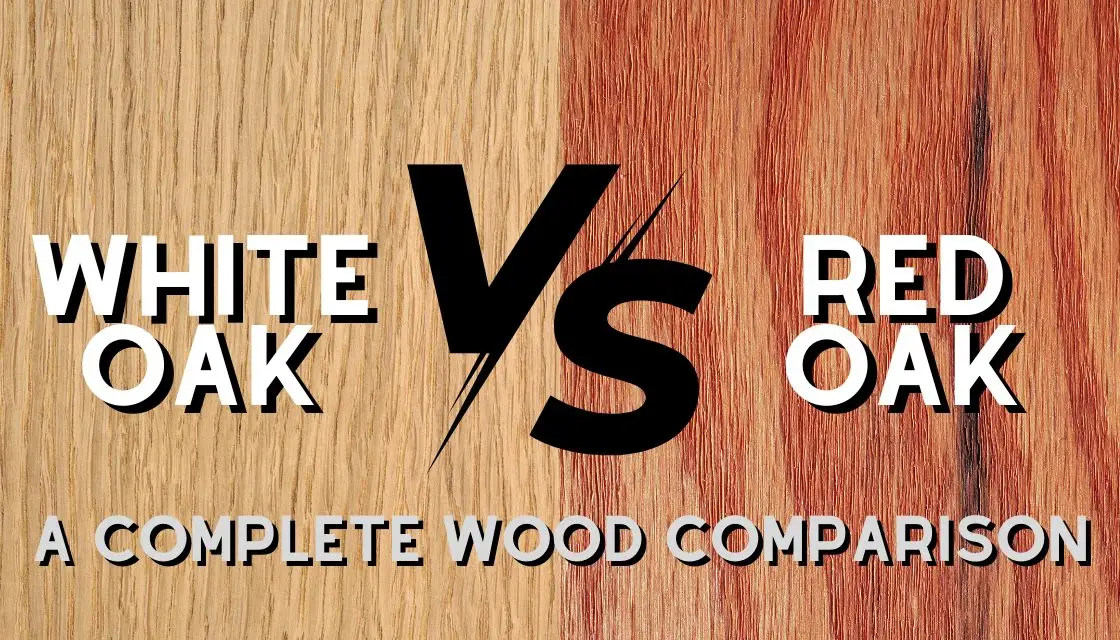

White oak is slightly harder, denser, less permeable, and better suited to damp or exterior settings, while red oak usually offers warmer color, stronger cathedral grain, and a lower material cost. Both perform well indoors, so the right choice depends more on cut, grade, construction, finish, and moisture control than the small hardness difference.
Table of Contents
Red Oak vs White Oak: Quick Comparison
At-a-Glance Verdict
Choose red oak for dry indoor work where warm undertones, bold grain, easy availability, and budget matter. Choose white oak for neutral color, riftsawn or quartersawn figure, modestly greater dent resistance, and projects where lower permeability or heartwood decay resistance has practical value.
White oak isn’t universally better. A stable engineered red oak floor can perform better than poorly dried solid white oak, while select red oak may cost more than character-grade white oak. In practical use, specification beats species: board width, moisture content, sawing angle, finish, and installation quality often decide the result.
Comparison Table
| Characteristic | Red oak | White oak |
|---|---|---|
| Reference species | Northern red oak, Quercus rubra | White oak, Quercus alba |
| Commercial meaning | A group containing several related species | A group containing several related species |
| Reference Janka hardness | About 1,290 lbf | About 1,350–1,360 lbf |
| Average dried density | About 44 lb/ft³ or 705 kg/m³ | About 47 lb/ft³ or 755 kg/m³ |
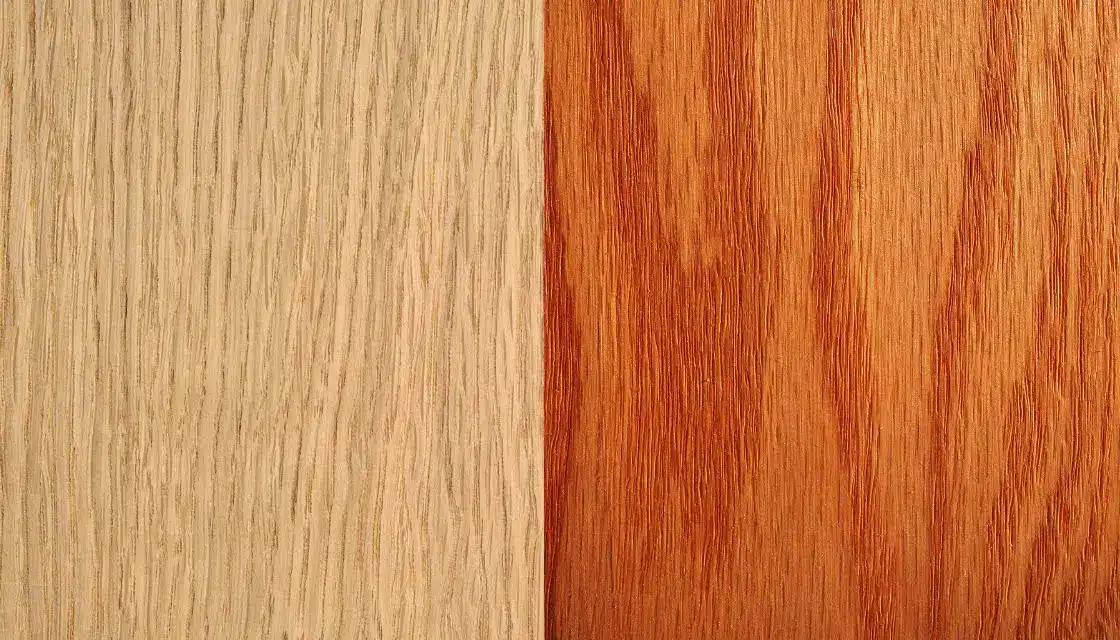
| Common color | Pink, salmon, reddish tan, warm brown | Tan, neutral brown, gray, or olive |
| Pores | Usually open and readily visible | Commonly obstructed by tyloses |
| Plainsawn grain | Bold cathedral patterns | Often calmer, with substantial board variation |
| Quartersawn figure | Visible ray fleck | Longer, more prominent ray fleck |
| Decay resistance | Poor natural resistance | Better in sound heartwood; sapwood differs |
| Staining | Strong pigment uptake and grain contrast | Neutral colors; tannins support reactive effects |
| Usual cost position | Often lower | Often higher, especially rift or quarter sawn |
| Best fit | Indoor floors, furniture, trim, cabinets | Indoor work, protected exterior joinery, barrels, boats |
These are reference figures, not guarantees for every board. Lumber sold under either commercial group may come from related oak species with different weight, hardness, color, and drying behavior.
Species, Appearance, and Identification
Commercial Oak Groups
Red oak and white oak are both botanical groups, not single uniform products. Northern red oak wood, Quercus rubra, supplies the common red-oak benchmark; white oak wood, Quercus alba, supplies the usual white-oak reference.
A supplier may mix compatible species within a commercial group, particularly in flooring and dimension stock. For exact color matching, ask for the botanical species, source region, grade, and color-sorting rules rather than relying on “red” or “white” alone.
Color and Undertones
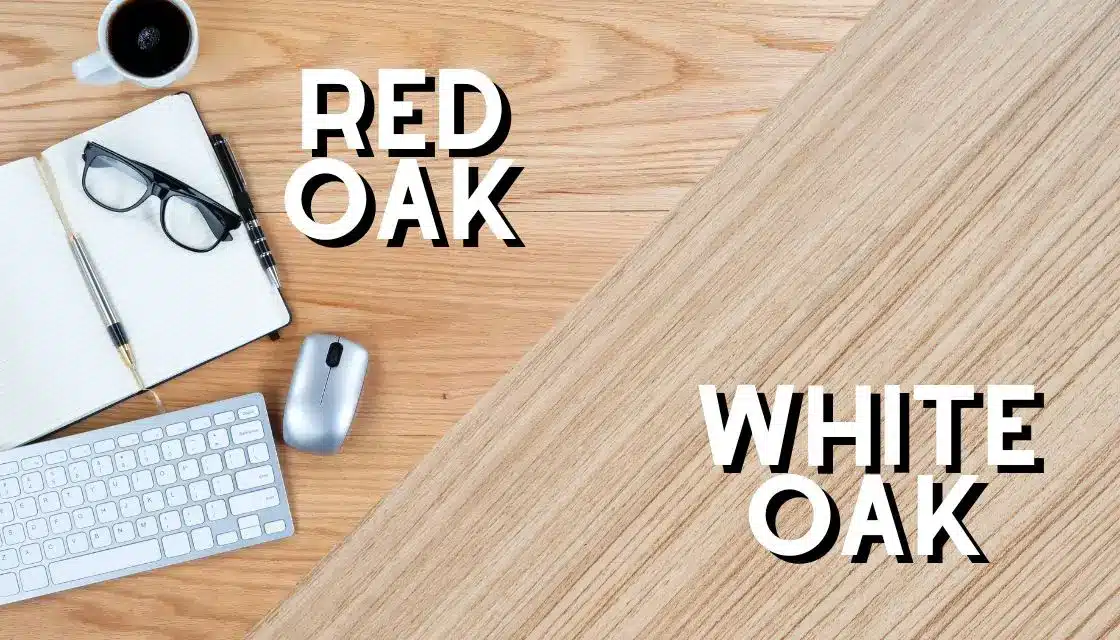
Red oak often shows pink, peach, or salmon undertones, while white oak tends to look tan, gray-brown, or slightly olive. Still, color overlaps: some red oak is pale brown, and some white oak carries a pink cast.
Age and finish make identification harder. Oil-based topcoats add a honey-amber cast, ultraviolet light shifts exposed areas, and old stain can hide the natural colors of wood. Never order repair boards from a phone photograph alone.
Plainsawn Cathedral Grain
Plainsawn red oak commonly shows large flame-shaped cathedrals bordered by coarse earlywood pores. Running a fingertip across an unfinished board reveals a slightly ridged texture, especially after stain raises contrast between porous spring growth and denser latewood.
Plainsawn white oak can also form cathedrals, so pattern alone doesn’t prove species. It often looks quieter, but an individual white oak board may have stronger movement than a straight-grained red oak board.
Riftsawn Straight Grain
Riftsawn stock presents narrow, nearly parallel growth lines with little ray fleck. Rift cut white oak is popular for contemporary cabinet fronts because adjacent doors can carry a calm, continuous vertical grain.
This appearance costs more because the sawyer sacrifices yield to control ring angle. Veneered doors can provide better grain matching than solid frames, but edge treatment must hide or complement the veneer core.
Quartersawn Ray Fleck
Quarter-sawn oak exposes medullary rays as ribbons, flakes, or shimmering patches. White oak usually produces longer and more conspicuous ray fleck, closely linked with Mission, Craftsman, and Arts and Crafts furniture.
The flecks change brightness as you move past the surface, much like satin turning in light. Red oak can show attractive rays too, so ray size should support other identification clues rather than serve as the sole test.
End-Grain Pores
A freshly cut or finely sanded end grain provides the strongest workshop clue. Red oak vessels often appear as open pinholes; white oak vessels commonly contain tyloses that look plugged under a hand lens or macro camera.
Finished flooring may offer no exposed end grain, and dust or filler can block pores. Cut only a hidden sample if the piece can spare it; damaging an installed floor to identify species creates a larger repair than the diagnosis warrants.
Multiple Identification Clues
Combine several observations before naming an unknown oak. Use the following identification sequence:
- Expose clean end grain and inspect vessel openings.
- Compare ray length on a radial or quartersawn face.
- Study grain orientation rather than one cathedral.
- Treat pink, tan, gray, and olive color as supporting evidence.
- Check invoices, floor registers, hidden edges, or supplier records.
For valuable restoration work, laboratory wood anatomy is safer than a chemical spot test. Stain, metal contamination, old coatings, and mixed-species repairs can produce false visual clues.
Hardness, Moisture, and Dimensional Stability

Janka Hardness and Density
Northern red oak measures about 1,290 lbf on the Janka scale, while white oak is commonly listed near 1,350–1,360 lbf. That puts white oak only about 5% ahead, a smaller difference than many sales comparisons imply.
Average dried density is roughly 44 lb/ft³ for northern red oak and 47 lb/ft³ for white oak. These values and species-dependent mechanical data are documented in the USDA Wood Handbook; readers can also compare how Janka testing works in the wood hardness scale guide.
Dents Versus Scratches
The Janka test measures resistance to indentation from a steel ball. It doesn’t measure finish scratching, grit abrasion, decay, or seasonal movement. A dropped cast-iron pan can dent either oak, while sand trapped under shoes leaves fine gray scratches across both finishes.
Pet claws often mark the coating before they crush the wood fibers. Keep nails trimmed, use walk-off mats, lift furniture rather than dragging it, and remove gritty dust with a soft vacuum head.
Tyloses and Permeability
Tyloses are bladder-like structures that obstruct many vessels in white oak. They reduce liquid movement along the grain, which explains why suitable white-oak heartwood works for tight cooperage. Red oak’s open tubes can carry liquid surprisingly far through a board.
Heartwood Versus Sapwood
The familiar white-oak durability claim applies mainly to sound heartwood. Pale sapwood near the bark lacks the same decay resistance, so an exterior order should limit sapwood rather than accept a species label as proof of durability.
Rot and Water Resistance
White-oak heartwood resists decay better than red oak and is the safer choice for protected exterior joinery. Neither is waterproof. Standing water, unsealed end grain, soil contact, and failed joints can defeat natural resistance.
Red oak is a poor choice for repeated outdoor wetting because water and fungi can exploit its open vessels. A thick surface coating won’t correct water entering through screw holes, checks, underside faces, or cut ends.
Shrinkage and Movement
Representative green-to-oven-dry shrinkage for northern red oak is about 4.0% radial, 8.6% tangential, and 13.7% volumetric. White oak references are about 5.6%, 10.5%, and 16.3%. These are laboratory extremes, not predicted movement in a conditioned room.
Both woods expand as moisture rises and contract as it falls. Flatsawn boards move most across their width; quartersawn stock usually shows less width change. Poor site control can leave either species cupped, crowned, gapped, or checked.
Cut and Board Width
A wide board undergoes more absolute movement than a narrow board at the same moisture change. Two-inch-thick oak planks and broad slabs also dry slowly, so a dry shell can conceal a wetter core that later checks or twists.
Ask sellers of 1×6, 1×12, 2×10, or 2×12 hardwood lumber whether dimensions are nominal, rough, or surfaced. Searching for “2×10 oak lumber near me” doesn’t reveal final thickness, grade, species group, moisture content, or usable length.
Red Oak vs White Oak Flooring
Interior Style
Red oak flooring suits traditional rooms, warm stains, and visible cathedral grain. White oak flooring supports pale natural finishes, neutral interiors, straight-grained layouts, and Craftsman designs.
A clear waterborne finish preserves a paler, cooler look. Oil-based polyurethane adds amber warmth, which can make red oak look more orange and white oak more golden. The completed finish can matter more than the raw-board color.
Wear and Pet Damage
White oak’s small hardness advantage may reduce some dents, but neither floor is pet-proof. Finish chemistry, coat thickness, dust control, furniture pads, and nail care exert a larger influence on visible wear than a roughly 5% hardness gap.
Solid Versus Engineered
Solid oak can often be sanded several times, limited by the wood above the tongue. Engineered oak offers better dimensional control, but refinishing capacity depends on the wear-layer thickness, core design, adhesive, and installation method.
Don’t credit species for a construction difference. Engineered white oak over concrete and solid red oak over plywood aren’t equal test cases; each system reacts differently to vapor, heat, and subfloor movement.
Acclimation and Moisture Testing
Acclimation ends when measured flooring moisture matches the building’s expected service conditions—not after a fixed number of days. Open cartons only as directed, run heating or cooling at normal settings, and test multiple boards from separate bundles.
A beginner often checks one board near the doorway and misses a damp subfloor bay or wet bundle. Record meter species settings, room location, subfloor readings, and board readings so later movement can be traced to actual data.
Subfloor Moisture Thresholds
Common NWFA technical guidance limits the wood-flooring-to-wood-subfloor moisture difference to about 4 percentage points for solid strip flooring under 3 inches wide and about 2 points for solid plank flooring 3 inches or wider.
The flooring maker’s instructions control if they set tighter limits. Concrete requires the approved test method and moisture-control system; a pin meter reading used for lumber doesn’t substitute for the specified concrete test.
Flooring Choice
Choose red oak to match an existing red-oak floor, obtain strong grain contrast, or control material cost. Choose white oak for neutral styling, ray figure, or a modest hardness gain. A 2 1/4-inch unfinished red oak floor remains practical because replacement strips and matching profiles are widely available.
Mixing the species can work as an intentional border or pattern, but repairs rarely disappear. Pore structure, pink undertones, stain uptake, and aging remain visible after sanding, especially in bright side light.
Cabinets, Furniture, and Exterior Uses

Cabinets
Riftsawn white oak cabinets provide controlled vertical lines, while plainsawn red oak creates a traditional cathedral pattern. Specify veneer sequence, grain direction, door cut, and color range so adjacent fronts don’t look randomly assembled.
Quarter-inch red oak plywood in 4×8 sheets and 1/2-inch red oak plywood work for panels and cabinet parts, but face veneer can be paper-thin. Aggressive sanding may expose glue or core material, leaving an unrepairable pale patch.
Furniture
Both species suit tables, chairs, shelves, and case goods. Red oak offers broad supply and expressive grain; quartersawn white oak provides the long rays associated with Mission furniture. Review other furniture wood types if lower weight or finer pores matter.
A solid oak tabletop feels cool and hard at first touch, then warms under the hand. Sharp corners remain vulnerable to crushing, so ease exposed edges slightly rather than trusting species hardness to prevent damage.

Stairs and Millwork
Red and white oak both make durable stair treads, handrails, doors, and interior trim. Matching an existing installation matters more than choosing the harder species because different pores and rays become obvious across joined nosings and landing strips.
Exterior Projects
Choose properly graded white-oak heartwood over red oak for protected exterior doors, draining outdoor furniture, and architectural joinery. Keep joints from trapping water, seal exposed end grain, and allow air circulation. The outdoor furniture wood guide covers other naturally durable options.
A common beginner mistake is coating red oak on every visible face while leaving screw holes and underside ends exposed. Water enters those points, producing dark staining, softened fibers, and peeling finish from behind.
Barrel and Boat Uses
Coopers use suitable white oak because tyloses restrict leakage and the heartwood contributes useful flavor compounds. Boat parts also benefit from lower permeability and decay resistance. This history doesn’t make every white oak board suitable; grain runout, sapwood, checks, and fastener reactions still matter.
Machining Considerations
Both oaks machine cleanly with sharp carbide edges but can tear where grain reverses around cathedrals. Reduce the final planer cut, route in staged passes, and use a climb-cut pass only with safe tool control. Predrill near board ends to limit splitting.
White oak’s tannins corrode ordinary steel under damp conditions and can leave black halos. Use appropriate corrosion-resistant fasteners for wet service, remove metal dust, and keep steel wool away from waterborne finishing work.
Staining and Finishing Differences
Red Oak Staining
Red oak’s open earlywood pores absorb pigment readily and produce strong grain contrast. Dark brown stain can reduce visible pink, but pale gray or white finishes often leave a warm undertone. Grain filler is needed for a glass-smooth, closed-pore surface.
White Oak Staining
White oak accepts natural brown, gray, smoked, and reactive finishes well. Its tannin level varies between boards, so reactive products can shift from soft brown to charcoal. That variation may suit a rustic floor but disrupt matched cabinet doors.
Tannins and Iron Stains
Moisture plus iron contamination can turn white oak blue-black. Sources include steel wool fragments, grinder dust, rusty fasteners, and iron-bearing water. Sanding may spread the stain deeper; remove the contamination source before attempting a compatible wood treatment.
Topcoat Color Changes
Oil-based coatings usually add amber color and deepen grain contrast. Clear waterborne coatings maintain a lighter tone but may make coarse pores appear sharper. Hardwax oil leaves a low-build, tactile surface where fingertips can still feel the open oak grain.
Multi-Board Finish Testing
Test the full schedule on several boards from the delivered batch. Sand to the planned final grit, repeat any water-pop step, time stain wiping, and apply the real topcoat. View the sample beside walls and cabinets during daylight and at night.
- Use at least three boards with different grain and color.
- Include both heartwood and permitted sapwood.
- Label sanding grit, stain dwell time, and coat count.
- Check the sample under the room’s installed lighting.
- Approve the complete panel, not one attractive corner.
This multi-board test catches pink undertones, tannin variation, pore contrast, and topcoat ambering before hundreds of square feet are finished. A tiny retail swatch can’t show batch variation.
Red Oak vs White Oak Cost
Typical Price Difference
Red oak is often less expensive in North America because sawmills and flooring plants process it in large volumes. White oak frequently carries a premium, yet there is no fixed percentage: region, grade, dimensions, cut, and design demand can reverse the price difference.
For a useful red oak vs white oak cost comparison, request same-day quotes from suppliers serving the same delivery area. Comparing a premium wide-plank white oak floor with commodity strip red oak measures product class, not species price.
Price-Driving Specifications
The largest premiums often come from long lengths, wide boards, select color, low sapwood allowance, riftsawn or quartersawn cutting, and thick engineered wear layers. Low-yield cuts cost more because more of each log becomes lower-value stock.
Matching Quote Criteria
Compare quotes using identical criteria:
- Species or named commercial group
- Grade and permitted color variation
- Rough or finished thickness and width
- Length distribution and short-board limits
- Plainsawn, riftsawn, or quartersawn cut
- Solid, engineered, plywood, or veneer construction
- Moisture range and conditioning
- Factory finish, site finish, or unfinished material
- Delivery, installation, and project waste
Waste allowance depends on room shape, pattern, grade, and installer requirements. Herringbone, diagonal layouts, and strict color selection create more offcuts than straightforward runs in a rectangular room.
Availability and Dimensions
Standard red oak strip flooring and common cabinet plywood are usually easy to source. White oak availability becomes tighter for clear 1×12 boards, matching 1×6 boards, long stair parts, and wide rift stock. A listed 1×6 may finish near 3/4 by 5 1/2 inches, while rough stock uses different conventions.
Two-inch oak slabs and 2×12 hardwood lumber need careful moisture verification through their thickness. Ask for surfaced dimensions, average and minimum length, grade deductions, and whether quoted footage is measured before or after surfacing. These details prevent a seemingly cheap order from producing too little usable wood.
Choosing Red Oak or White Oak
Choose Red Oak
Choose red oak for dry indoor flooring, furniture, stairs, or trim when you want warm color, bold cathedral grain, strong stain contrast, or economical regional supply. It is also the sound choice for matching an existing red-oak installation.
Choose White Oak
Choose white oak for neutral finishes, straight rift grain, quartersawn ray fleck, slightly greater hardness, or projects benefiting from lower permeability. For exterior work, specify sound white-oak heartwood, drainage, protected end grain, and a maintenance plan.
Project Decision Table
| Project | Usual choice | Reason or limitation |
|---|---|---|
| Dry interior flooring | Either | Style, supply, construction, and finish decide |
| Kitchen flooring | Either; white oak has an edge | Spills still require quick cleanup and sound finishing |
| Homes with dogs | Either | White oak is slightly harder; finish and grit control matter more |
| Modern cabinets | Riftsawn white oak | Straight, consistent visual lines |
| Traditional cabinets | Plainsawn red oak | Strong cathedral figure and warm stain response |
| Mission furniture | Quartersawn white oak | Prominent ray fleck |
| Interior stairs | Either | Match connected flooring and trim |
| Exposed outdoor project | White-oak heartwood | Better decay resistance; still needs drainage and care |
| Barrel or selected boat part | White oak | Tyloses reduce permeability |
| Existing floor repair | Match species and cut | Color alone won’t hide different pores or rays |
Real-world selection improves when samples are placed at the job site rather than judged under showroom lights. Side lighting exposes sanding waves and pore contrast, while warm evening lamps can turn a neutral stain noticeably yellow or orange.
Order Specification Checklist
Write the material requirements into the quote and purchase order. A dependable oak specification includes:
- Botanical species or accepted commercial group
- Grade and sapwood allowance
- Color range and matching rules
- Sawing orientation
- Finished thickness, width, and length distribution
- Moisture-content range
- Solid, engineered, plywood, or veneer construction
- Wear-layer thickness where applicable
- Sanding sequence and complete finish system
- Quantity, overage, delivery conditions, and replacement terms
Beginners often approve “white oak, select” without defining cut or color. That order may legally include plainsawn cathedrals, pale sapwood, olive heartwood, and short pieces that look nothing like the showroom’s riftsawn display.
Physical Sample Approval
Approve a multi-board physical sample made from the actual production batch whenever appearance matters. Mark the back, record the finish schedule, and keep one signed sample on site so installers and finishers share the same visual standard.
Red oak can be stained closer to white oak, but its open pores, cathedral grain, and pink base may remain visible. White oak can be warmed to resemble red oak, yet longer rays and different aging still prevent a seamless match. For floors, cabinets, and furniture, sample approval is the safest final decision.
FAQs
Is White Oak Better Than Red Oak?
White oak is usually better for moisture-prone areas because its closed grain resists water more effectively. It also has a slightly darker, more neutral tone and a smoother appearance. Red oak is a good choice when you want warmer color, more visible grain, and a lower price.
Which Is Harder Red Oak Or White Oak?
White oak is harder than red oak. White oak has a Janka hardness rating of about 1,360, while red oak rates around 1,290. The difference is modest, but white oak can provide slightly better resistance to dents and wear in high-traffic areas.
How Much More Does White Oak Cost Than Red Oak?
White oak commonly costs about 10% to 30% more than red oak. The exact difference depends on your location, board grade, cut, width, and current lumber availability. Installation, finishing, and shipping costs can also affect the final price of a flooring or woodworking project.
Which Oak Is Better For Hardwood Flooring?
White oak is generally the better choice for hardwood flooring in busy homes or spaces with occasional humidity. Its higher hardness and tighter grain improve dent and moisture resistance. Red oak remains durable, easier to find, and often less expensive, making it practical for many dry interior rooms.
How Can You Tell Red Oak From White Oak?
You can tell red oak from white oak by examining the end grain and color. White oak has pores commonly blocked by tyloses, while red oak pores look more open. White oak often appears olive or gray-brown, whereas red oak usually shows warmer pink or reddish undertones.
Affiliate Disclosure: Some links in this post are affiliate links. If you make a purchase through these links, we may earn a small commission at no extra cost to you. We only recommend products we genuinely believe in.

