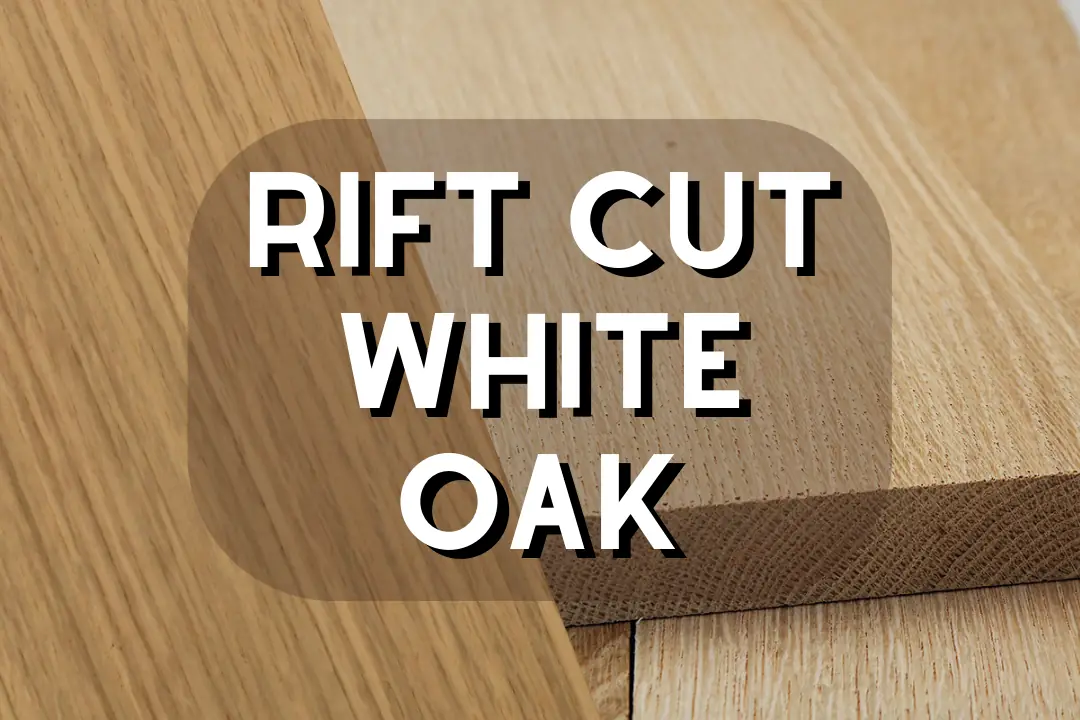

Rift cut white oak is white oak sliced or sawn at an angle to its growth rings, producing straight linear grain with less cathedral pattern and ray fleck than plain- or quarter-sawn oak. The term usually describes veneer, while solid boards are more often called rift-sawn white oak.
Its quiet grain works well across cabinets, furniture, flooring, and architectural panels, but successful results depend on material format, moisture, matching, substrate, and finish—not the word “rift” alone.
Table of Contents
What Is Rift Cut White Oak?
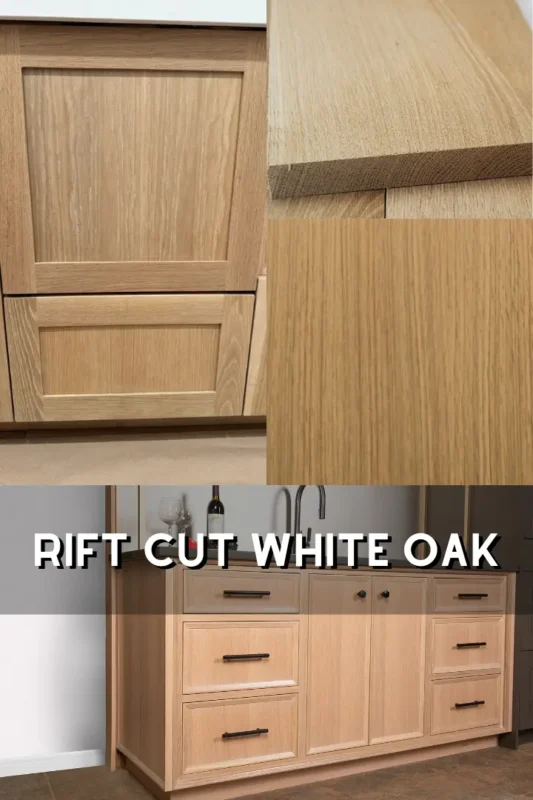
Rift cut white oak has a predominantly straight grain created by exposing growth rings at a diagonal rather than nearly parallel or perpendicular to the face. It usually looks calm and narrow-lined from a distance, then reveals open pores and small ray marks when viewed closely.
Rift Cut vs Rift Sawn
Rift cut commonly refers to veneer sliced from a prepared log section or flitch. Rift sawn more often identifies solid white oak wood boards sorted or sawn for diagonal growth-ring orientation.
Suppliers don’t use these labels consistently. A flooring package marked “rift and quartered” can contain both linear rift faces and ray-flecked quartered faces, while a veneer listing may use “rift sawn” for a sliced face. Ask for a sample and written description of the actual material.
How Straight Grain Forms
Solid rift boards commonly show growth rings at roughly 30–60 degrees to the face, though mills use different boundaries. This diagonal intersection turns the circular rings into narrow, nearly parallel face lines and suppresses broad cathedral arches.
Color, Rays, and Variation. White oak ranges from pale beige and biscuit brown to medium brown, sometimes with olive, gray, or mineral streaks. Medullary rays remain present, but rift orientation usually exposes less of their broad surface than quarter sawing. Small flakes can still appear; genuine rift material isn’t visually sterile.
White Oak Identity. American white oak is associated with Quercus alba, yet commercial white oak can contain several species from the white-oak group. It is ring porous, so dragging a fingernail lightly across unfinished stock reveals a faint ribbed texture where the large earlywood pores cross the surface.
Grain Photos and Diagrams. In photographs, identify rift grain by long parallel lines, quartered grain by straight lines plus reflective flakes, and plain grain by pointed arches. Viewing the same sample from two angles helps: ray figure can flash silvery under side light and fade when the board is turned.
Rift, Quarter, and Plain-Sawn Oak Compared

Rift, quarter, and plain sawing expose the same tree from different growth-ring angles. The result changes grain appearance, yield, movement, available width, and price.
Three-Way Comparison Table
| Feature | Rift cut or sawn | Quarter sawn | Plain or flat sawn |
|---|---|---|---|
| Common ring angle | About 30–60° | About 60–90° | About 0–30° |
| Face pattern | Straight, narrow lines | Straight with ray figure | Cathedral arches |
| Ray fleck | Low to moderate | Often prominent | Usually limited |
| Solid-lumber yield | Low | Below plain sawn | Highest |
| Typical price | Premium | Premium | Usually lower |
| Board width | Often narrower | Often narrower | Wide stock is easier to find |
| Common use | Modern cabinets and panels | Mission and Craftsman work | General furniture and trim |
Rift vs Quarter Sawn
The practical difference in quarter sawn vs rift sawn oak is ray exposure. Quarter-sawn faces intersect radial medullary rays broadly, producing ribbons or flakes; rift faces intersect them less directly, creating quieter lines. See the separate quarter-sawn oak guide for a deeper comparison.
Plain and Live Sawn. Plain-sawn oak has familiar cathedral grain and makes efficient use of the log. Live sawn white oak is cut straight through the log, so one wide board can move from plain figure near its center to rift and quartered figure near its edges.
Growth-Ring Angles. Angle ranges are conventions rather than universal grading laws. A wide face can cross more than one orientation, which explains why a rift-looking center sometimes develops flakes or arches along an edge. Approve full-size samples when strict linear grain matters.
Yield and Price Differences. Plain sawing produces more broad boards with fewer handling steps. Traditional rift sawing requires repeated log rotation and creates smaller wedges, while commercial mills may saw more efficiently and sort afterward. Either method raises cost through reduced yield and added selection.
White Oak Properties and Performance
White oak is hard, heavy, and relatively decay resistant, but grain orientation doesn’t stop movement. Moisture control and suitable construction matter more than the cut label alone.
Hardness and Density
American white oak has a reported Janka hardness near 1,360 pounds-force and an average dried weight around 47 pounds per cubic foot. These values vary by tree and moisture level. Janka testing measures dent resistance, not scratch resistance or complete structural strength, as shown in The Wood Database white oak profile.
Shrinkage and Stability
Common green-to-oven-dry shrinkage figures are about 5.6% radial, 10.5% tangential, and 16.3% volumetric. Those figures describe extreme laboratory endpoints, not expected indoor seasonal change. Rift and quartered orientations mainly redirect movement and make cupping less obvious.
Moisture and Acclimation. Interior white oak lumber commonly reaches 6–9% moisture content, depending on regional climate and conditioned indoor humidity. Test several boards with a calibrated meter, including pieces from the middle of a wrapped bundle. Acclimation is complete when readings approach the service environment, not after an arbitrary week.
The USDA Wood Handbook explains how relative humidity drives moisture exchange. A beginner mistake is measuring only the board surface immediately after delivery; a pin meter with insulated probes can reveal a wetter core.
Water and Decay Resistance. Tyloses often obstruct vessels in white oak heartwood, reducing liquid passage and helping explain its use for barrels and outdoor work. That feature doesn’t make boards, glue lines, veneer backings, or MDF cores waterproof. Sapwood also offers less natural durability than heartwood.
Tannins and Iron Stains. Moist iron can react with oak tannins and leave blue-black marks that resemble ink soaking into the pores. Avoid steel wool, wet steel benches, and ordinary fasteners on exposed work. Use stainless or suitably corrosion-resistant hardware, then remove fresh marks with a tested oxalic-acid treatment before finishing.
Lumber, Veneer, and Panel Formats
Rift white oak is sold as solid boards, veneer, plywood, and factory-laminated panels. These formats can look similar after installation, but they differ greatly in edge treatment, movement, fastening, and refinishing limits.
Solid White Oak Boards
Solid white oak boards suit legs, rails, stiles, trim, flooring, carved parts, and edges exposed to impact. Orders should state rough or finished thickness, minimum width and length, moisture range, grade, sapwood allowance, and whether every visible face must be rift.
Rough 4/4 stock rarely finishes at a full inch after flattening. Review sawmill lumber dimensions before setting final component sizes, and buy thicker stock when bowed or twisted boards need heavy surfacing.
Rift White Oak Veneer
Rift white oak veneer covers broad surfaces while preserving a continuous linear face. It uses less decorative hardwood than solid construction and permits sequence matching across doors, yet its thin face limits sanding and requires a stable substrate.
Plywood and Panel Cores. “White oak plywood” may mean a white oak face over veneer core, MDF, particleboard, or combination core. MDF feels dense and glass-flat under the palm but adds weight and swells after water exposure. Veneer core is lighter and often holds screws better, though voids and face waviness vary.
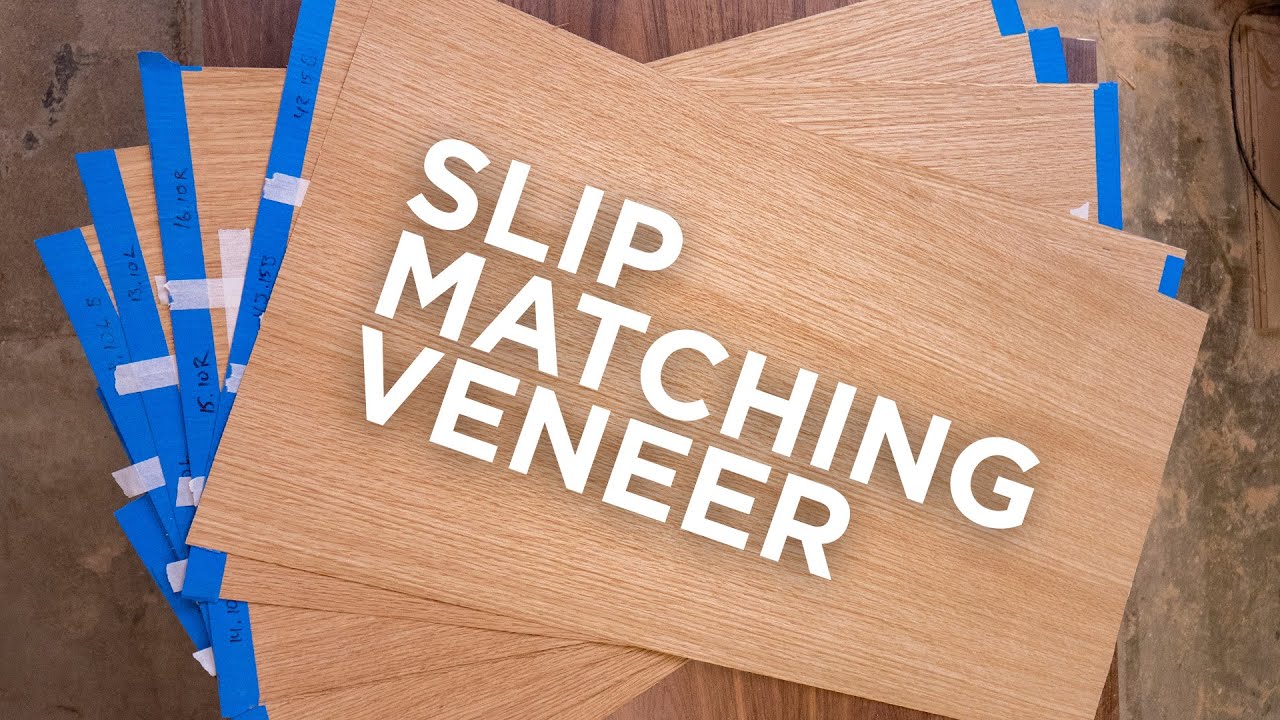
Book and Slip Matching. Book matching flips alternate leaves like pages, producing mirrored grain and occasional light-dark “barber pole” effects. Slip matching lays consecutive leaves in the same orientation and usually gives rift oak a more even look across contemporary doors.
Sequence and Blueprint Matching. Sequence matching keeps veneer leaves in cutting order across adjacent parts. Blueprint matching plans an entire elevation around available flitches. Both require numbered shop drawings, replacement material, and careful allowance for trimming; ordering random sheets rarely recreates the same flow.
Best Uses for Rift and Quartered White Oak
The best uses for rift and quartered white oak depend on the desired figure. Choose rift grain for calm continuity and quarter-sawn oak for visible ray fleck, historical character, or deliberate surface movement under changing light.
Rift White Oak Cabinets
Rift white oak cabinets suit slab doors, tall appliance panels, islands, and long wall runs where straight vertical grain makes separate parts read as one composition. Specify grain direction for doors, fillers, toe kicks, and finished ends rather than leaving those choices to the cutting room.
Keep a few matched leaves or finished door blanks for repairs. Years later, a random replacement can look striped beside the original bank, especially after pale finishes accentuate color differences. More construction examples appear in the white oak cabinets guide.
Quarter-Sawn Oak Cabinets
Quarter-sawn oak cabinets fit Mission, Craftsman, Arts and Crafts, and contemporary rooms that use ray fleck as a feature. The flecks catch light like short satin ribbons, so panels can appear brighter or darker as a person walks past them.
Furniture and Oak Beds. Rift stock suits table legs, drawer fronts, desks, shelving, and an oak bed with long matching rails. Use solid edging where corners receive wear, while allowing solid tops and wide headboards to move across the grain.
Wall Panels and Millwork. Veneer works well for ceiling panels, built-ins, reception desks, and doors where solid boards would move or become prohibitively heavy. Plan seams around openings and maintain matched leaves across visible elevations.
Rift White Oak Flooring. Rift and quartered flooring tends to show less visible cupping than broad flat-sawn boards, but subfloor moisture, indoor humidity, board width, and fastening remain decisive. Ask what percentage is truly rift if you want a uniform line pattern; mixed bundles can include strong quartered flakes.
Installation and finish choices are covered further in the white oak flooring guide.
Exterior Use Limits. Solid heartwood can perform outdoors with drainage, protected end grain, suitable joinery, corrosion-resistant fasteners, and maintained finishes. Standard paper-backed veneer, MDF-core panels, and pressure-sensitive sheets should stay indoors unless their manufacturers explicitly rate the full assembly for exterior exposure.
Buying and Specifying Rift White Oak
A useful purchase specification identifies material type, species group, cut, grade, dimensions, moisture, color tolerance, and matching method. The words rift white oak alone leave too many visual and technical decisions unresolved.
Lumber and Veneer Grades
Hardwood grades such as FAS describe expected clear-cutting yield, not perfect grain or uniform color. The NHLA grading rules help buyers interpret FAS, Select, and Common grades, but all-rift appearance, sapwood limits, and color matching must be written separately.
Veneer terms such as “A-grade” aren’t fully consistent between sellers. Request permitted knots, mineral streaks, splits, patches, face thickness, backing thickness, and confirmation that photographs show the exact sheet or a representative flitch.
Stain-Grade Rift White Oak
Stain-grade rift stock still needs limits for sapwood, mineral, pin knots, color range, and grain deviation. Proprietary labels such as “artist series” or “stain grad” don’t replace a sample. Ask whether the grade anticipates opaque, medium, or pale transparent finishes.
All-Rift vs Mixed Stock. An all-rift order limits quartered flakes and flat-sawn arches, which increases sorting loss. Mixed rift-and-quarter stock costs less and performs well in flooring or frames, but it won’t create a uniformly quiet bank of doors.
Dimensions and Moisture Specs. State thickness before or after surfacing, minimum usable width, minimum clear length, and acceptable moisture range. If parts will be machined from S4S lumber, confirm actual finished measurements and straightness tolerances.
Board Feet and Overage. Calculate rough lumber with: thickness in inches × width in inches × length in feet ÷ 12. A 1 × 8-inch × 10-foot board equals 6.67 board feet. Start with 15–30% overage, then increase it for strict color, grain, or long-clear-part selection.
Price and Quote Factors. Compare at least three quotes using identical thickness, grade, moisture, width, surfacing, grain selection, packaging, and freight terms. Rift lumber carries a yield premium; veneer prices respond more to sheet size, face quality, flitch consistency, backing, and matching.
Sustainability Certifications. Domestic origin doesn’t prove certified forestry. If FSC or PEFC chain of custody matters, require the claim and certificate code on both the quotation and invoice. Confirm that the requested claim covers the actual product rather than a supplier’s broader inventory.
Supplier Inspection Checklist. Inspect both faces and both ends under neutral lighting. End grain reveals ring orientation; raking light exposes cup, glue contamination, dents, and veneer ripples that overhead showroom lighting can hide.
- Confirm solid lumber, real veneer, plywood, or printed imitation.
- Ask whether every visible piece is rift or the package is mixed.
- Record moisture readings from several boards.
- Check sapwood, mineral streaks, bow, cup, twist, and end checks.
- Verify veneer grain direction, sequence, matching, and exact dimensions.
- Request recommended substrate, adhesive, pressure, and storage conditions.
- Compare delivered cost per usable part, not advertised unit price alone.
Finishing and Installation
Rift white oak finishes best when samples reproduce the actual sanding, stain, sealer, and topcoat schedule. During installation, flat substrates and balanced construction prevent more failures than extra adhesive or aggressive clamping.
Clear Finishes and Stains
Waterborne finishes usually preserve a paler beige tone, while oil-based products add amber warmth. Hardwax oils create a lower-build, touchable surface where the pores remain easy to feel. Test samples from the project stock because pale finishes expose log-to-log color shifts rather than hiding them.
Reactive Treatments. Ammonia fuming and reactive stains darken oak through tannin chemistry. Results vary across heartwood, sapwood, and different trees. Use ventilation, suitable protective equipment, and sealed sample records; never assume two veneer flitches will react to the same brown.
Sanding Wood and Veneer
Sand solid wood progressively with the grain and stop before the surface becomes burnished. Veneer needs a lighter touch because its decorative face may be thinner than expected. Pencil witness marks can show where sanding has occurred without requiring heavy pressure.
Substrate and Adhesive Selection. Use flat, dry, dust-free substrates and an adhesive approved for the selected backing. Veneer PVA and cold-press glue suit many shop applications; contact adhesive and pressure-sensitive backing have narrower surface and service limits. Follow the product instructions for spread rate, open time, pressure, and temperature.
Balanced Panel Construction. Veneering one face changes moisture and stress on one side of the panel, which can produce bow. Apply a compatible backer to the reverse face and keep press cycles similar. Large architectural panels should be treated as complete engineered assemblies.
Cutting and Edge Treatment. Support veneer fully and use a sharp veneer saw, knife, fine-tooth blade, or guided router suited to the backing. A dull blade leaves pale torn fibers and crunchy edge chips. Finish edges with solid lipping or coordinated real-wood banding, then test color because face and edge may come from different logs.
Common Failure Prevention. Bubbles often come from uneven adhesive transfer, trapped moisture, or weak rolling pressure. Open seams point to poorly conditioned sheets or movement after bonding. Telegraphing reveals substrate defects, while black stains suggest iron contamination.
Practical Notes From Real-World Use. Dry-fit and number every leaf before opening adhesive. On a large sheet, lower the veneer from one end while a helper holds the free portion in a soft arc; dropping it flat can trap a long air ridge that feels like a cord beneath the face.
Beginners often sand bubbles instead of repairing the bond, which can expose paper backing before the raised area disappears. Warm or inject the adhesive only where its manufacturer permits, press the area flat, and place a smooth caul over the repair.
Optional Rift White Oak Veneer Products
These optional products are real-wood veneer formats, not solid white oak lumber. Verify dimensions, grain direction, backing, adhesive instructions, return terms, and exterior limitations against the seller’s active listing before ordering.
Paper-Backed Large Sheets
Paper-backed sheets suit large furniture and cabinet panels when you already have a flat substrate, compatible adhesive, trimming tools, and a reliable pressure method. A single broad sheet removes seams but becomes harder to align; mark a centerline and make a dry positioning trial before spreading glue.

Rift White Oak Veneer 48 x 96 inch
- Wide rift-cut white oak face
- A-grade veneer quality
- Paper-backed 10 mil sheet
- Non-glued application flexibility
- Great for large furniture panels
 Buy on Amazon

Extra Large Rift Oak Veneer Sheet
- Rift-cut white oak face
- Extra-large 48 x 120 inch sheet
- A-grade veneer quality
- Paper-backed 10 mil construction
- Ideal for broad panel projects
Buy on Amazon
Peel-and-Stick Veneer
Peel-and-stick veneer works best on small, smooth, sealed, stable surfaces. It won’t correct swollen particleboard, loose laminate, grease, deep scratches, or moisture damage. Apply firm, overlapping roller passes because finger pressure leaves narrow unbonded channels.
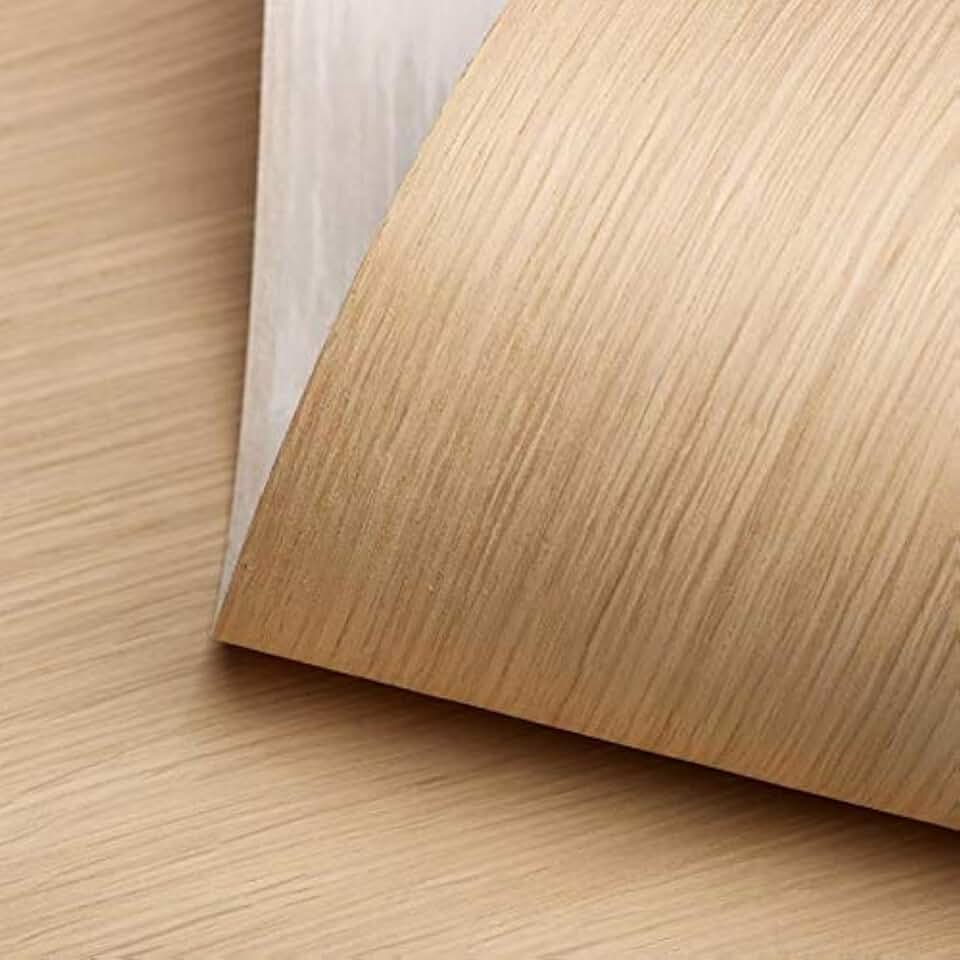
Peel and Stick Rift Oak Veneer
- Rift-cut white oak veneer
- A-grade wood face
- Self-adhesive 3M backing
- Quick peel and stick installation
- Refreshes furniture and cabinetry
Buy on Amazon
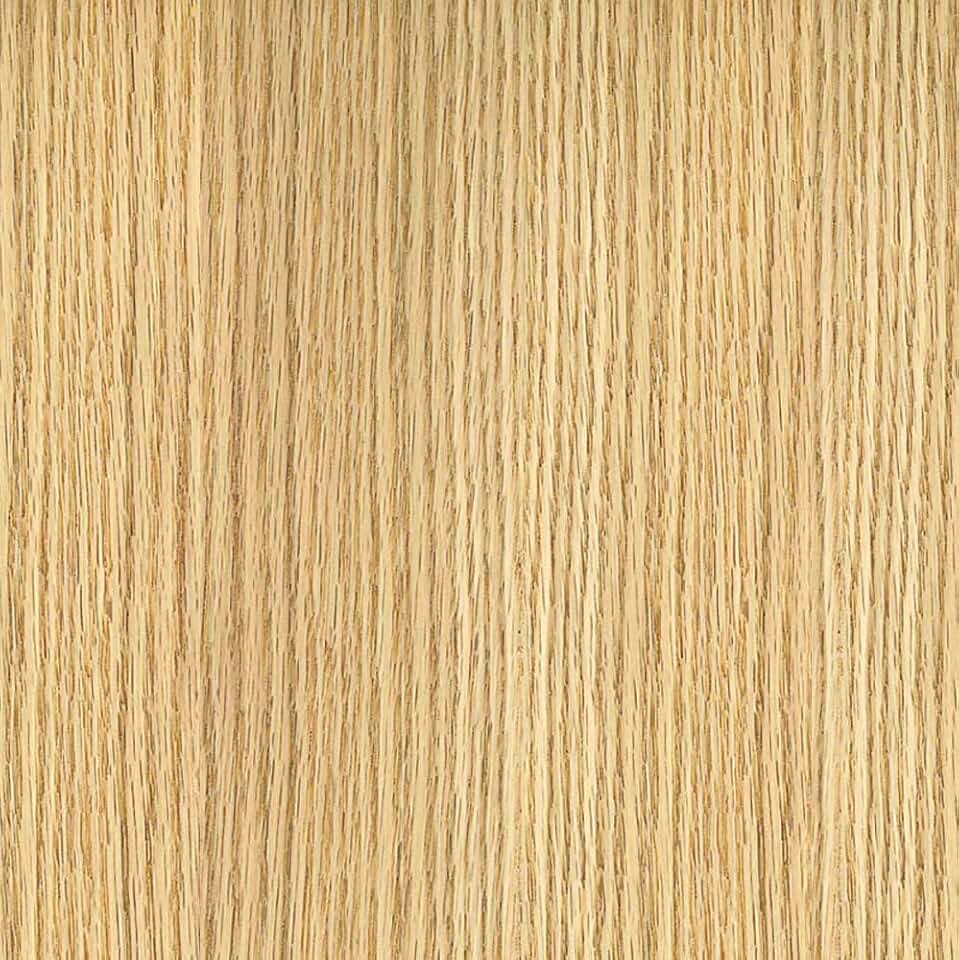
Compact Peel and Stick Rift Oak Veneer
- Rift-cut white oak appearance
- Handy 24 x 48 inch size
- 3M self-adhesive backing
- Smooth A-grade veneer face
- Great for DIY repairs and cabinetry
Buy on Amazon
Matching Edge Treatment. Real white oak edge banding covers exposed plywood or MDF edges. Apply controlled heat, press while the glue cools, and trim with the cutter referenced to the face rather than the softer edge. Test the finished color before banding the full project.

White Oak Iron-On Edge Banding
- Real white oak veneer tape
- Pre-glued hot melt adhesive
- Easy iron-on application
- Smooth sanded finish
- Covers plywood and cabinet edges
Buy on Amazon
FAQs
What Is The Difference Between Rift Cut And Quarter-Sawn White Oak?
Rift-cut white oak has straight, consistent grain, while quarter-sawn white oak often shows more visible ray-fleck patterns. Both cuts come from boards sawn near the log’s center, which improves stability. Rift cutting creates less usable lumber, making it a popular choice for a clean, uniform appearance.
Is Rift Cut White Oak Solid Wood Or Veneer?
Rift-cut white oak can be either solid wood or veneer. The term describes how the oak log is cut, not the material’s thickness or construction. Solid rift-cut boards are used for furniture and flooring, while rift-cut veneer is commonly applied to plywood, cabinets, and panels.
Why Is Rift-Sawn White Oak More Expensive?
Rift-sawn white oak costs more because cutting it creates more waste and yields fewer usable boards from each log. Its straight, even grain also requires careful milling and is in high demand for premium cabinetry and furniture. The added cost reflects both lower yield and its distinctive appearance.
Is Rift White Oak More Stable Than Plain-Sawn Oak?
Yes, rift white oak is generally more stable than plain-sawn oak. Its grain runs more vertically through the board, helping it expand and contract less as humidity changes. This makes it a strong option for cabinet doors, wide panels, flooring, and furniture exposed to seasonal conditions.
Can Rift Cut White Oak Be Stained Or Refinished?
Yes, rift-cut white oak can be stained, sealed, and refinished successfully. Its straight grain accepts many finishes well, although a wood conditioner or test sample can help prevent uneven color. When refinishing solid wood, light sanding can remove old finish before applying a new stain or topcoat.
Affiliate Disclosure: Some links in this post are affiliate links. If you make a purchase through these links, we may earn a small commission at no extra cost to you. We only recommend products we genuinely believe in.