

Sourwood Tree Guide: Identification, Care, and Landscape Uses

Table of Contents
A sourwood tree is a small to medium native deciduous tree, botanically known as Oxydendrum arboreum, valued for white summer flowers, red fall foliage, and nectar that helps produce prized sourwood honey. It grows best in acidic, well-drained soil, where its roots can stay cool, moist, and undisturbed.
This guide answers what sourwood looks like, where it grows, how to care for it, why beginners lose young trees, and what to check before buying a live sourwood starter tree or seedling.
Sourwood Tree at a Glance

The sourwood tree is a native ornamental hardwood with a narrow form, glossy leaves, drooping white flowers, and fiery fall color. It’s best for yards with acidic soil, steady moisture, and space for a naturally irregular crown.
Botanical identity
Oxydendrum arboreum belongs to the Ericaceae, or heath family, which also includes azaleas, rhododendrons, blueberries, and mountain laurel. That family link explains why sourwood wants acidic woodland soil instead of lime-treated lawn soil.
The sourwood tree is also called sorrel tree, sourwood sorrel tree, and lily-of-the-valley tree. The “sour” and “sorrel” names refer to the tangy leaf taste, but don’t sample leaves from sprayed roadsides or nursery stock because chemical residue can linger on the surface.
Key facts and figures
Most sourwood facts matter because this tree is site-sensitive; it can look graceful in the right soil and weak in the wrong one. NC State Extension lists sourwood as a deciduous tree in the heath family with summer flowers, red fall color, and a native range across much of the eastern United States.
| Feature | Sourwood tree details |
|---|---|
| Scientific name | Oxydendrum arboreum |
| Common names | Sourwood tree, sorrel tree, sourwood sorrel tree, lily-of-the-valley tree |
| Family | Ericaceae, the heath family |
| Plant type | Deciduous native ornamental tree |
| Common yard height | 20 to 30 feet |
| Possible height in ideal woodland sites | 30 to 60 feet |
| Common spread | 10 to 25 feet |
| USDA zones | Often listed for Zones 5 to 9 |
| Bloom time | Early to midsummer, often June to July |
| Soil pH target | About 4.5 to 6.5 |
Seasonal ornamental value
Sourwood earns its space through three-season interest: glossy green leaves in spring, white drooping flower clusters in summer, and crimson to burgundy foliage in fall. On humid summer mornings, the flower clusters can carry a faint sweet scent, and the dangling blooms move lightly when bees work the panicles.
Fall color often improves with more sun, but only if the tree has enough water. In dry, hot, reflected-heat sites, the same sun that deepens red leaves can also cause brown edges and early drop.
USDA zones and range
Sourwood is usually grown in USDA Zones 5 to 9, with its strongest natural identity tied to eastern and southeastern U.S. forests. Zone fit matters, but soil fit matters more; a tree in Zone 7 can still struggle badly in alkaline clay.
In cooler parts of its range, full sun often works well. In hotter areas, morning sun with light afternoon shade gives better leaf quality and less scorch.
What Does a Sourwood Tree Look Like?
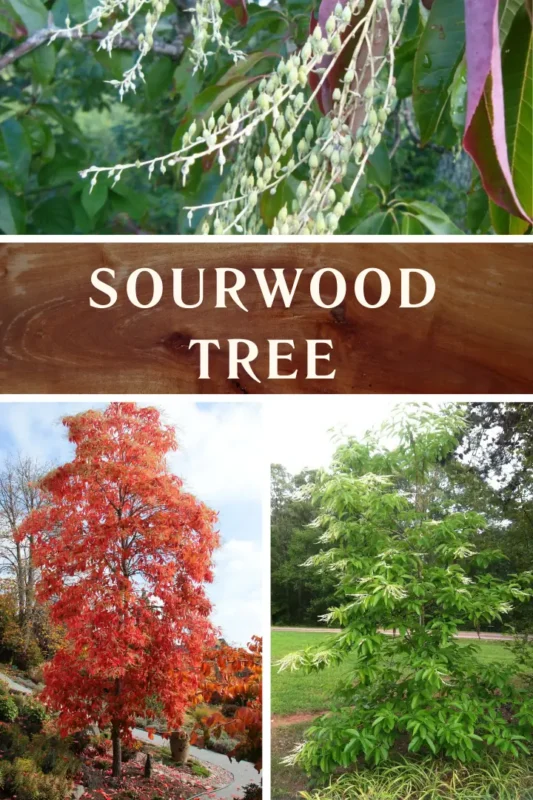
A sourwood tree looks like a slender native tree with glossy alternate leaves, drooping white bell-like flower clusters, gray-brown bark, and red to purple-red fall foliage. In home yards, it often reaches 20 to 30 feet with a narrow, graceful outline.
Shape and habit
Young sourwood trees often grow with a pyramidal or oval shape, then loosen into a more open, irregular form with age. The trunk can lean slightly, and the branch pattern rarely looks as symmetrical as a nursery-grown maple.
That natural irregularity is a feature, not a flaw. If you want a clipped, formal tree beside a straight walkway, sourwood may feel too woodland-like; if you want a relaxed native accent, its uneven crown looks right.
Leaves and fall color
Sourwood leaves are simple and alternate, usually elliptic to oblong, glossy green, and often 4 to 8 inches long. The leaf surface feels smooth and slightly leathery between the fingers, while the edge may show fine teeth.
Fall color can be scarlet, crimson, burgundy, orange-red, or purple-red. Trees in dry shade can fade to dull red, while trees in moist acidic soil with decent light often color deeply from the outside twigs inward.
Flowers and fruit
Sourwood flowers appear in early to midsummer, often after dogwood, redbud, and serviceberry have finished. The white to creamy white flowers are small, urn-shaped, and arranged along drooping panicles that can reach about 4 to 10 inches.
After bloom, the tree forms small dry capsules that can persist into fall or winter. They don’t create heavy litter, which makes sourwood cleaner than many fruiting ornamentals.
Bark and capsules
Young bark is smooth and grayish, then turns gray-brown, ridged, furrowed, or lightly blocky with age. The bark won’t grab attention like sycamore bark, but it helps identify older trees after leaf drop.
Seed capsules give the winter crown a fine-textured look. They’re small enough that cleanup rarely becomes a problem unless the tree hangs over a patio where every bit of dry plant matter shows.
Image alt text ideas
Good image alt text should name the visible sourwood feature, not just repeat the keyword. This helps readers using screen readers and gives search engines clearer visual context.
- sourwood tree with white summer flowers
- Oxydendrum arboreum red fall foliage
- sourwood tree leaves close up
- sourwood sorrel tree bark
- sourwood tree seed capsules in fall
- young sourwood tree in acidic woodland garden
Names, Native Range, and Best Sites
The sourwood tree is an eastern U.S. native that grows best in acidic, moist, well-drained soil with organic matter. It often fails where soil is alkaline, compacted, waterlogged, or heated by nearby pavement.
Sourwood sorrel tree
Sourwood sorrel tree, sourwood tree, and sorrel tree usually mean the same plant: Oxydendrum arboreum. The name connects to the sour, tangy taste of the leaves, not to garden sorrel grown as an edible green.
That naming confusion matters when buying online. Some listings use sorrel tree casually, so check the scientific name before you order a live plant.
Oxydendrum arboreum classification
Oxydendrum arboreum is the only species in the genus Oxydendrum. Its family, Ericaceae, explains its shared soil preferences with azaleas, blueberries, pieris, and rhododendrons.
For wood-focused readers comparing native hardwoods, sourwood sits within the broader group of hardwood trees, but it’s planted more for flowers and fall color than timber. Its wood is dense enough to be real hardwood, yet the tree’s small size limits lumber use.
Eastern native range
Sourwood is native across much of the eastern and southeastern United States, with a strong link to Appalachian forests, slopes, ridges, and acidic woodland edges. The USDA PLANTS Database maps Oxydendrum arboreum across many eastern states.
Its natural sites often have leaf litter, drainage, and cool root zones. If your yard has compacted fill soil or limestone gravel, the tree may sit alive for years without growing well.
Best growing conditions
Sourwood grows best in acidic soil with a pH near 4.5 to 6.5, steady moisture, good drainage, and organic matter. Morning sun and afternoon shade often create the best balance in hot regions.
A good site smells like leaf mold and pine bark after rain, drains within a reasonable time, and doesn’t bake against concrete. Roots should stay cool under mulch, not trapped in sticky wet clay.
Poor planting locations
Most sourwood failures come from wrong-site planting, not mysterious disease. Beginners often plant one in a pretty open lawn without checking pH, drainage, reflected heat, or sprinkler patterns.
- Alkaline soil near concrete, mortar, or limestone gravel
- Compacted clay that stays slick and wet after rain
- Low spots with standing water
- Lawns treated with lime
- Hot strips beside driveways, sidewalks, or south-facing walls
- Sites where mower or string trimmer damage is likely
A pro workaround is to plant on a slight berm only if drainage is marginal, then mulch widely with pine bark or shredded leaves. Don’t create a tiny amended “bathtub” in clay, because water can collect around the root ball.
Size, Growth Rate, and Landscape Value
Sourwood is a small to medium tree, not a fast-growing shade tree. Its value comes from native character, white summer flowers, red fall color, and pollinator support rather than quick canopy coverage.
Mature tree size
In yards, sourwood commonly reaches 20 to 30 feet tall with a spread of about 10 to 25 feet. In ideal forest conditions, older trees may reach 30 to 60 feet, but that upper size shouldn’t guide tight residential planting.
Because the crown can become irregular with age, leave more space than the young tree appears to need. A skinny starter tree can eventually lean, widen, and cast light shade in unexpected directions.
Growth rate expectations
Sourwood has a slow to moderate growth rate, with young trees often spending their first years building roots. Top growth may look modest until the root system settles into cool, acidic soil.
In compacted, dry, alkaline, or wet soil, annual growth can be very limited. Don’t push weak growth with heavy nitrogen; fix the site problem first or the tree will produce soft shoots that scorch easily.
Landscape spacing
Give a sourwood tree 15 to 25 feet of useful space where possible. Keep it away from foundations, overhead wires, septic fields, and narrow pavement pockets that trap heat.
For small front yards, sourwood works best as a specimen tree in a mulched bed rather than a turf island. If grass grows right to the trunk, mower injury and shallow watering become more likely.
Pros and limitations
The main pros are summer flowers, red fall foliage, native value, bee appeal, and low fruit mess. The main limits are acidic soil needs, transplant sensitivity, slower growth, and poor performance in compacted urban soil.
Practical note from real-world use: when a young sourwood is planted well, the root zone stays cool and springy under mulch, the leaves hold a clean green sheen through summer, and the fall color starts early on the outer twigs. When it’s planted too deep or too wet, the soil smells sour, the leaves yellow, and the canopy thins from the tips back.
Bees and sourwood honey
Sourwood flowers are a nectar source for bees, and sourwood honey is especially valued in Appalachian areas. Beekeepers prize raw sourwood honey for its light color, floral aroma, and clean sweet taste that doesn’t taste sharply sour despite the name.
The best sourwood honey usually comes from areas with enough blooming trees during a good nectar flow. Yard trees help pollinators, but one tree alone won’t create a sourwood honey crop.
Similar native trees
Sourwood often gets compared with black gum, flowering dogwood, and eastern redbud. Black gum brings strong red fall color, dogwood brings spring bloom and overlapping dogwood growing zones, and redbud adapts to more yard soils.
Choose sourwood over those trees if you have acidic soil, want white summer flowers, and like a narrow native tree. Choose dogwood, redbud, or another type of wood-forming native if your soil is less acidic or your site is more exposed.
Sourwood Tree Care
Sourwood tree care centers on soil acidity, drainage, moisture, and root protection. If those four needs are met, the tree usually needs less intervention than many flowering ornamentals.
Light needs
Sourwood grows in full sun to partial shade. Full sun can improve bloom and fall color, while partial shade protects leaves from scorch in hot climates.
The best compromise in warmer zones is often morning sun with light afternoon shade. Deep shade can reduce flowering and leave fall color muted.
Acidic soil pH
Sourwood prefers soil pH around 4.5 to 6.5. Above that range, iron and other nutrients become less available, so leaves can turn yellow with green veins.
Test soil before planting, especially near concrete, old mortar, limestone gravel, or lawns that receive lime. Fertilizer can’t fully solve alkaline soil; a better site or raised acidic planting area is safer.
Watering and mulch
New sourwood trees need even moisture through establishment, but they dislike soggy soil. Deep watering is better than frequent shallow splashing because it draws roots outward and downward.
Apply 2 to 3 inches of pine bark, shredded leaves, leaf mold, or pine needles over the root zone. Keep mulch several inches away from the trunk so bark doesn’t stay damp and soft.
Fertilizing guidance
Sourwood rarely needs heavy fertilizer. If growth is weak, test soil first; yellow leaves may signal high pH, root stress, or drainage trouble rather than simple nutrient shortage.
If feeding is needed, use a product labeled for acid-loving plants and apply lightly. Too much nitrogen can force tender growth that wilts, browns, or attracts sap-feeding insects.
Pruning basics
Prune sourwood lightly and selectively. Remove dead, broken, crossing, or diseased branches, but keep the tree’s natural shape because heavy cutting spoils its character.
Late winter or early spring usually works well for structural pruning. Avoid stripping lower limbs too early; those branches help young trunks thicken and reduce sunscald risk.
How to Plant a Sourwood Tree

Plant a sourwood tree by choosing a small healthy starter, setting it at the correct depth, watering deeply, and protecting the root zone with mulch. Small container-grown trees usually establish better than large field-dug specimens.
Choosing a starter tree
Pick a young container-grown sourwood with healthy leaves, intact bark, and a moist but not waterlogged root ball. Confirm the label says Oxydendrum arboreum, especially if the listing uses sorrel tree or sourwood sorrel tree.
Check visible roots if you can. A few circling roots can be corrected, but a tight woody root spiral often signals long-term instability and poor establishment.
Best planting time
The best planting windows are early spring before heat arrives or fall where winters are moderate. Avoid summer planting during drought because sourwood roots resent heat and disturbance.
If a shipped plant arrives dormant, don’t panic. Dormant sourwood seedlings may look like bare sticks, but the stems should remain firm and flexible, not shriveled or brittle.
Planting steps
Planting depth matters more than many beginners expect. A sourwood planted too deep may decline slowly because the root flare stays buried and damp.
- Water the container before planting so the root ball is evenly moist.
- Dig a hole two to three times wider than the root ball and no deeper than the root ball height.
- Find the root flare and set it at or slightly above surrounding soil grade.
- Loosen only severe circling roots; don’t shred the whole root ball.
- Backfill with native soil, firming lightly to remove large air pockets.
- Water deeply until the soil settles around the roots.
- Add 2 to 3 inches of mulch, keeping it away from the trunk.
- Stake only if the tree rocks, then remove stakes once stable.
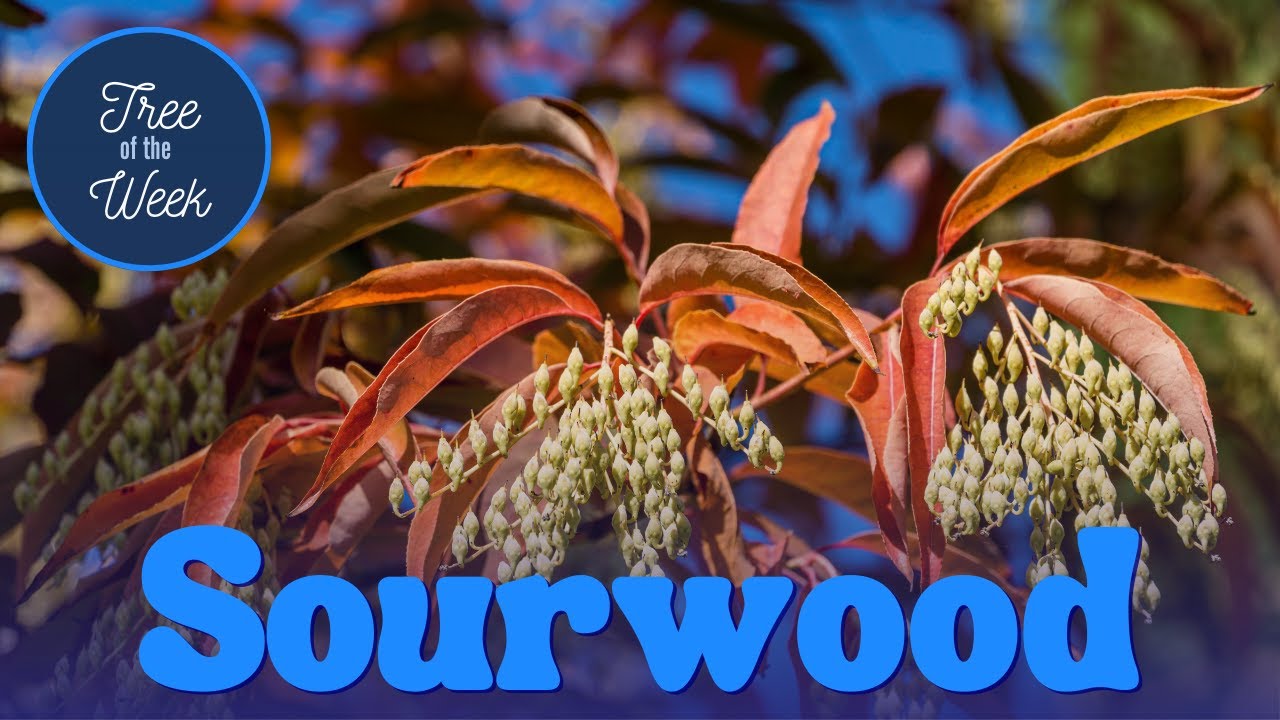
The video below fits this step because planting success depends on correct root placement, watering, and mulch habits more than fertilizer.
Establishment tips
During the first growing season, keep soil evenly moist but never swampy. Push a finger into the soil near the root ball; it should feel cool and damp, not dusty or sticky-wet.
Expand the mulch ring as the tree grows and keep grass away from the trunk. Turf competes for water, and string trimmers can cut bark in a single careless pass.
Transplanting cautions
Sourwood is difficult to transplant once established because it can develop a deep or sensitive root system. Larger field-grown trees lose more fine roots during digging, which raises the chance of dieback.
The pro workaround is simple: plant a smaller tree in the right place the first time. Don’t plan to move it later after the crown gets larger.
Common Sourwood Tree Problems
Most sourwood tree problems trace back to soil pH, drainage, drought, or transplant shock. Pest and disease issues are usually secondary when the tree is already stressed.
Chlorosis and yellow leaves
Yellow sourwood leaves with green veins often point to chlorosis from alkaline soil. High pH locks up nutrients, so the tree can’t use iron well even when iron exists in the soil.
The fix starts with a soil test, not random fertilizer. Avoid lime, use organic mulch, and consider acid-forming amendments only when a test confirms they fit the site.
Root rot
Root rot develops when sourwood roots sit in poorly drained soil. Warning signs include wilting in wet soil, sparse leaves, twig dieback, and a sour smell around the root zone.
Overwatering heavy clay is a common beginner mistake. Water by soil feel, not calendar habit, and plant high enough that the root flare remains visible and dry.
Leaf scorch
Leaf scorch shows as brown leaf edges, curling, or early leaf drop during heat or drought. It’s common near pavement, walls, and open windy sites.
Mulch widely, water deeply during dry spells, and avoid hot reflected-heat pockets. In warmer regions, afternoon shade often prevents the worst scorch without sacrificing all bloom.
Transplant shock
Transplant shock can cause wilting, leaf drop, dieback, and slow growth after planting. Sourwood reacts badly when roots dry out, tear, or sit too deep after transplanting.
Keep the root ball shaded and moist during planting. If roots are circling, correct the worst ones, but don’t aggressively break apart the entire sensitive root mass.
Pests and diseases
Sourwood is not usually a high-pest tree, but stressed plants may show leaf spots, cankers, twig dieback, scale insects, or root-related decline. Healthy placement prevents most serious trouble.
If problems appear, inspect the site first: soil moisture, planting depth, pH, mulch against the trunk, and trunk wounds. Sprays won’t save a tree planted in the wrong soil.
Buying Sourwood Trees
Buy a sourwood tree only after confirming your site has acidic, well-drained soil and enough room for a 20- to 30-foot tree. Smaller seedlings and starter trees often establish better than larger specimens.
Before you buy
Before buying, confirm the scientific name, plant size, hardiness zone, container size, shipping season, dormancy status, and live-arrival policy. Don’t buy based on flower photos alone; young shipped trees may take time to bloom.
Also check whether your state allows shipment. Live plant sellers may restrict orders because of state nursery rules, pest quarantines, or seasonal weather limits.
Nursery availability
Sourwood is less common at nurseries than dogwood, redbud, maple, or crape myrtle. That limited supply reflects slower growth and transplant sensitivity, not lack of ornamental value.
If local nurseries don’t stock it, ask about spring ordering from native plant growers. Local stock can be valuable because it may already match your regional climate.
Shipping considerations
Shipped sourwood seedlings may arrive dormant, leafless, or lightly trimmed. That’s normal during cool-season shipping, but stems should remain firm and roots should not be dry like straw.
Open the box right away, check moisture, and plant or heel in the tree quickly. A live tree can decline fast if it sits in a warm garage for several days.
Live plant options
These live sourwood tree options can work for buyers who already have a suitable acidic site and want starter-size plants rather than large transplant-sensitive stock.

Sourwood Starter Tree
- Live sourwood tree in a quart pot
- stands about 10-16 inch tall
- prized for white blooms and fiery fall color
- compact starter size is easy to plant
- a charming native tree for home landscapes
 Buy on Amazon

Sourwood Seedling Pair
- Two live sourwood seedlings ready for planting
- known for elegant white flowers and rich red leaves
- may ship dormant for seasonal growing
- native tree suited for yard planting
- ideal for long-term ornamental beauty
Buy on Amazon

Sourwood Tree Trio
- Three live sourwood trees for easy planting
- native ornamental tree with bright white summer blooms
- delivers vivid red fall foliage
- hardy choice for landscape accents
- great for adding seasonal color and curb appeal
Buy on Amazon
Read each listing for actual shipped height, pot size, dormancy notes, and replacement terms. A 10-inch live starter can be a better long-term choice than a larger stressed tree if you plant it correctly.
Container versus bare root
Container-grown sourwood trees usually offer better root protection during shipping and planting. They cost more to ship, but the root ball stays together, which reduces handling stress.
Bare-root sourwood can work when dormant and fresh, but roots must stay cool and moist. If you’re new to planting sensitive native trees, container stock is often the safer format.
For broader comparisons of native wood traits, fall color, and tree structure, see our guides to colors of wood and wood density. Sourwood’s main value in a yard is ornamental, but it still belongs in the larger story of native hardwood diversity.
FAQs
What Does A Sourwood Tree Look Like?
A sourwood tree is a small to medium-sized deciduous tree with glossy green leaves, drooping white flower clusters, and reddish fall color. Its bark is gray and deeply furrowed, which gives older trees a rough, attractive look. In summer, the tree may also show dangling seed capsules after flowering.
How Big Does A Sourwood Tree Get?
A sourwood tree usually grows 20 to 30 feet tall, though some mature trees can reach around 40 feet. It typically has a narrow, oval shape with a spread of about 15 to 20 feet. In the right conditions, it grows slowly but becomes a graceful landscape tree.
Is Sourwood The Same As Sorrel Tree?
Yes, sourwood and sorrel tree are common names for the same tree, Oxydendrum arboreum. The names are often used interchangeably in gardening and forestry. Some people also call it lily-of-the-valley tree because of its flower shape.
Where Do Sourwood Trees Grow Best?
Sourwood trees grow best in well-drained, acidic soil with full sun to partial shade. They are most at home in the southeastern United States, especially in woodland edges and mountain areas. Good drainage is important because they do not like soggy roots.
Are Sourwood Trees Hard To Grow?
Sourwood trees are not extremely hard to grow, but they do need the right conditions to thrive. They prefer acidic soil, steady moisture, and minimal root disturbance after planting. Once established, they are fairly low-maintenance, though they dislike drought and alkaline soil.
Affiliate Disclosure: Some links in this post are affiliate links. If you make a purchase through these links, we may earn a small commission at no extra cost to you. We only recommend products we genuinely believe in.