Canary Wood Guide: Properties, Uses, Cutting Board Safety, and Buying Tips

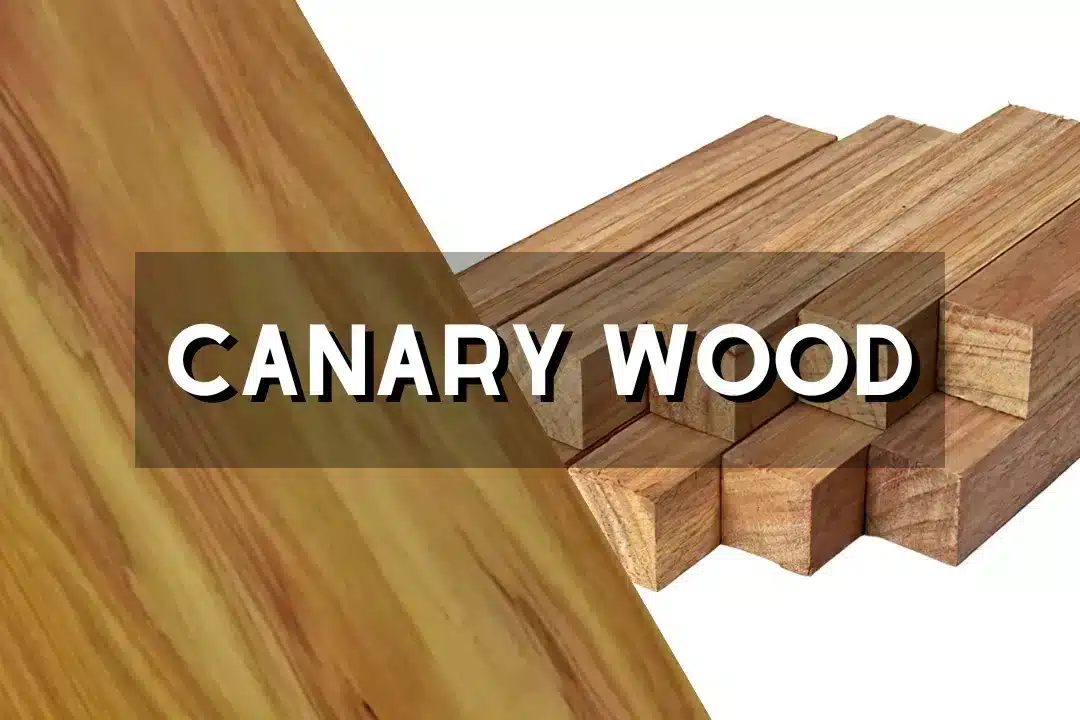
Canary wood, also called canarywood, is a colorful South American hardwood from the Centrolobium group, known for yellow, orange, red, brown, and occasional purple streaks. It’s hard, decorative, and useful for furniture accents, turning, knife scales, serving boards, and careful cutting-board builds.
Best quick take: canary wood is real hardwood, but a canary wood cutting board needs more care than maple, walnut, or cherry because hardness, grain, extractives, and user sensitivity all matter.
Table of Contents
Quick Answers

What is canary wood? Canary wood is an exotic hardwood, usually linked to Centrolobium species, with bold natural color bands. Freshly surfaced boards can feel dense and cool in the hand, and oil often makes the yellow and orange grain look deeper within seconds.
| Question | Direct Answer |
|---|---|
| What Is Canary Wood? | Canary wood is a colorful tropical hardwood also sold as canarywood, tarara, or arariba. |
| Is Canary Wood Hardwood? | Yes. It’s a hardwood with a Janka hardness around 1,520 lbf. |
| Cutting Board Suitability | It can work for decorative and light-use boards, but maple, walnut, and cherry are safer defaults for daily chopping. |
| Canary White Wood | This usually means pale canarywood, sapwood, fresh-surfaced stock, or seller naming rather than a separate standard species. |
Hardness matters, but it doesn’t answer every project question. Canarywood is slightly harder than hard maple, so it resists dents well, yet it can be less forgiving on knife edges and harder on beginner tools.
What Is Canary Wood?

Canary wood is a decorative hardwood used when the wood itself needs to carry the design. It’s closer to the colorful exotic woods in our types of hardwood guide than to plain utility lumber sold for framing or hidden parts.
Names and Origin
Common names include canarywood, canary wood, tarara, and arariba. Lumber usually comes from Central and South America, with sources often associated with Panama, Brazil, and nearby tropical regions.
The name comes from its bright yellow base color, but the best boards rarely stay plain yellow. A single board may show orange, cinnamon-brown, red, olive, or violet lines that look almost painted into the grain.
Canary Wood Tree and Centrolobium Species
Botanically, canarywood is usually grouped under Centrolobium species rather than one neat retail species name. That matters because density, color, pore size, and durability can vary by exact species, growing region, and how the log was sawn.
Common lumber forms include rough boards, S2S stock, S4S craft boards, turning blanks, knife scales, thin planks, and small project packs. Beginners often buy short surfaced boards first because they can see the grain and avoid heavy milling before the first cut.
Canary Wood Properties
Canarywood hardness is about 1,520 lbf on the Janka scale, which places it just above hard maple and well above walnut and cherry. The technical figures below align with published species data from The Wood Database.
| Property | Canarywood Figure | Shop Meaning |
|---|---|---|
| Botanical grouping | Usually Centrolobium spp. | Exact board behavior can vary by source. |
| Wood type | Hardwood | Dense broadleaf lumber, not softwood. |
| Average dried weight | Approx. 52 lb/ft³ / 830 kg/m³ | Feels heavy for its size. |
| Specific gravity | Approx. 0.67 basic / 0.83 at 12% MC | Needs sharp cutters and firm workholding. |
| Janka hardness | Approx. 1,520 lbf / 6,750 N | Dent-resistant, a bit harder than maple. |
| Modulus of rupture | Approx. 18,400 psi / 126.9 MPa | Strong enough for many furniture parts. |
| Elastic modulus | Approx. 2,329,000 psi / 16.06 GPa | Stiff stock when properly dried. |
| Crushing strength | Approx. 9,490 psi / 65.4 MPa | Good resistance under compression. |
| Radial shrinkage | Approx. 3.7% | Moderate seasonal movement. |
| Tangential shrinkage | Approx. 6.3% | Flat-sawn boards can cup if rushed. |
| Volumetric shrinkage | Approx. 10.2% | Acclimation before glue-up helps. |
| T/R ratio | Approx. 1.7 | Stable design still matters. |
Hardness comparison: cherry is around 950 lbf, black walnut around 1,010 lbf, hard maple around 1,450 lbf, canarywood around 1,520 lbf, and purpleheart around 2,520 lbf. For a wider species ranking, see our wood hardness scale.
Density and weight show up fast at the bench. A canarywood offcut has a compact, almost stone-like heft, and thin strips don’t feel flimsy the way softer craft woods can.
Shrinkage and movement are manageable when the stock is dry, but wide flat-sawn boards can move after aggressive milling. The pro workaround is to rough cut oversize, let the board rest overnight, then take the final pass after the wood has shown its stress.
Durability basics are good for indoor furniture, handles, boxes, and decorative parts. For wet outdoor settings, don’t treat it like teak or ipe; ask the supplier about the exact species and use a finish plan that expects sun fading and moisture cycling.
Appearance and Canary White Wood
Canarywood color ranges from pale yellow and cream to orange, red-brown, chocolate, and occasional purple streaking. That dramatic board-to-board variation is the reason actual-board photos matter more here than generic stock images.
Grain and texture are usually medium, with straight, irregular, or interlocked grain. Sanded to 220 grit, the surface can feel slick and warm under your fingertips, but interlocked spots may stay slightly fuzzy until scraped clean.
- Color range: golden yellow, orange, red, brown, olive, and purple streaks can appear in the same board.
- Board variation: one canarywood board may look bright and striped, while another looks pale and quiet.
- Pale sapwood meaning: canary white wood usually points to sapwood, fresh milling, lighting, or seller naming.
- Actual-board photos: request photos of both faces and both ends before buying stock for a matched project.
Canary white wood isn’t usually a separate mainstream species category. If a seller uses that phrase, ask whether the piece is heartwood, sapwood, mixed stock, or a different light-colored wood being confused with canarywood.
Finish changes color right away. Mineral oil can turn a pale yellow board into a richer amber surface, and clear film finishes may deepen red-brown streaks; test scrap before building a set that needs matching tone. For more color behavior across species, see our colors of wood guide.
Canary Wood Cutting Boards

Canary wood cutting board projects can work, but canarywood isn’t the safest default for every kitchen board. It’s best for serving boards, charcuterie boards, accent strips, and light-use boards made by someone who can control grain, glue lines, finish, and maintenance.
Best board uses include cheese boards, bread boards, display boards, and decorative edge-grain builds. For heavy daily chopping, hard maple is still the safer standard because it has a long track record, tight grain, and predictable food-contact behavior.
Hardness and knives create the main trade-off. Canarywood’s 1,520 lbf Janka rating resists dents, but repeated chopping on harder wood can make knives feel like they’re tapping a firmer surface, with a sharper click than walnut or cherry.
Edge grain is easier to build and works well for serving boards. End grain is kinder to knives but harder to execute because every block must be dry, square, and stable; face grain shows the prettiest figure but suits serving better than chopping.
Food-safe finishes for cutting boards include food-grade mineral oil, mineral oil and beeswax blends, or fully cured food-contact finishes used exactly as the maker directs. White mineral oil is recognized for food uses under 21 CFR 172.878, which is why it’s common in board care.
Glue and maintenance decide whether a board lasts. Use tight joints, waterproof board-safe glue such as Titebond III or an equivalent, full cure time, hand washing only, no soaking, no dishwasher, and fresh oil whenever the surface looks dry or chalky.
Safer wood alternatives are hard maple, black walnut, and cherry for everyday boards, especially for beginners or customer work where allergies are unknown. Canarywood still earns a place as an accent strip when the design needs a flash of yellow-orange contrast.
Workability, Safety, and Durability
Canarywood workability is good with sharp tools, but dense stock and occasional interlocked grain punish dull blades. A fresh rip cut gives off fine yellow dust, and the surface can smell dry and slightly peppery near the saw.
Cutting, Machining, and Planing Tearout
Cutting and machining usually go well on the table saw, bandsaw, router, drill press, and lathe. Feed steadily, keep bits clean, and use backing boards because dense canarywood can chip at exit holes.
Planing tearout appears where the grain reverses or curls. Take light passes, skew a handplane, use a sharp high-angle setup, or move stubborn boards to a drum sander or card scraper instead of chasing deeper tearout with heavier cuts.
Sanding, Gluing, Finish Color Shift, and Dust Irritation
Sanding and gluing are straightforward if surfaces are fresh and dust-free. Stop around 180 to 220 grit for oil-finished boards; sanding too high can burnish dense wood and slow oil absorption.
Finish color shift can be dramatic, so test finish on scrap from the same board. Oil deepens yellow and red tones, while some clear coats make pale sapwood look warmer and less white.
Dust irritation is a real shop risk. Wood dust can irritate eyes, skin, and airways, and the NIOSH wood dust guidance supports using dust collection, eye protection, and a proper respirator during sanding and machining.
Outdoor use caveats are simple: use it protected, sealed, and away from ground contact unless your supplier verifies durability for the exact stock. Sunlight can mute bright color, and water trapped in joints can stain or split the wood over time.
Uses and Wood Comparisons
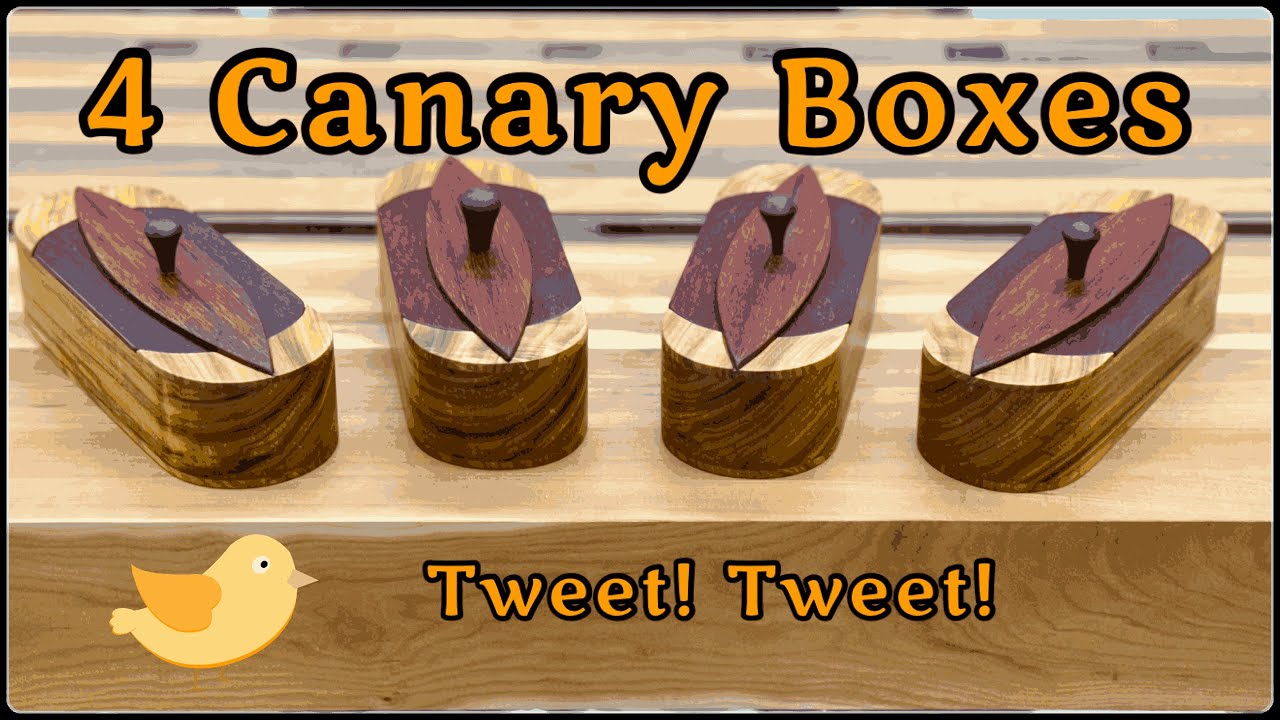
Canary wood projects work best when the color is visible: furniture accents, serving boards, knife scales, turning blanks, boxes, craft parts, drawer fronts, inlay strips, and small panels. It’s too pretty to bury inside a cabinet carcass.
Furniture accents are one of its strongest roles. Canarywood furniture parts pair well with darker woods because one small panel or rail can add color without making the whole piece visually loud.
Serving boards are often a better fit than heavy chopping boards. The broad face shows off the grain, and the board spends more time holding bread, cheese, or fruit than taking repeated knife blows.
Knife scales look warm and distinctive after shaping. For hard-use knives, stabilized scales or careful sealing help reduce moisture movement around pins and tangs.
Turning blanks can produce pens, bottle stoppers, small bowls, knobs, and handles with strong striped color once rounded. Keep tools sharp because dense end grain can feel grabby when a gouge loses its edge.
Boxes and crafts benefit from thin, high-color pieces. A small lid, pull, or band can stretch expensive stock farther and reduce waste while still showing the wood’s character.
| Comparison | Best Choice | Why It Matters |
|---|---|---|
| Canarywood vs Hard Maple | Maple for daily cutting; canarywood for decorative contrast | Maple is proven for boards; canarywood adds color and is slightly harder. |
| Canarywood vs Walnut | Walnut for knife-friendliness; canarywood for brightness | Walnut is softer and darker; canarywood is denser and louder visually. |
| Canarywood vs Cherry | Cherry for classic warm boards; canarywood for bold parts | Cherry works easily and darkens with age; canarywood starts vivid. |
| Canarywood vs Purpleheart | Canarywood for easier exotic work; purpleheart for extreme hardness | Purpleheart is much harder and tougher on tools. |
Maple comparison: hard maple remains the everyday cutting-board benchmark, while canarywood is the visual accent. If you want a board that gets chopped on all week, maple wins; if you want a serving board people notice, canarywood has the advantage.
Walnut and cherry are more conservative food-contact choices, with walnut offering a darker look and cherry giving a softer reddish tone. For related species behavior, see our black walnut wood guide.
Purpleheart comparison: purpleheart is far harder at about 2,520 lbf, so it’s tougher on tools and knives. Canarywood gives exotic color without moving into that extreme hardness range; see our padauk wood guide for another bright accent-wood comparison.
Buying Canarywood Lumber
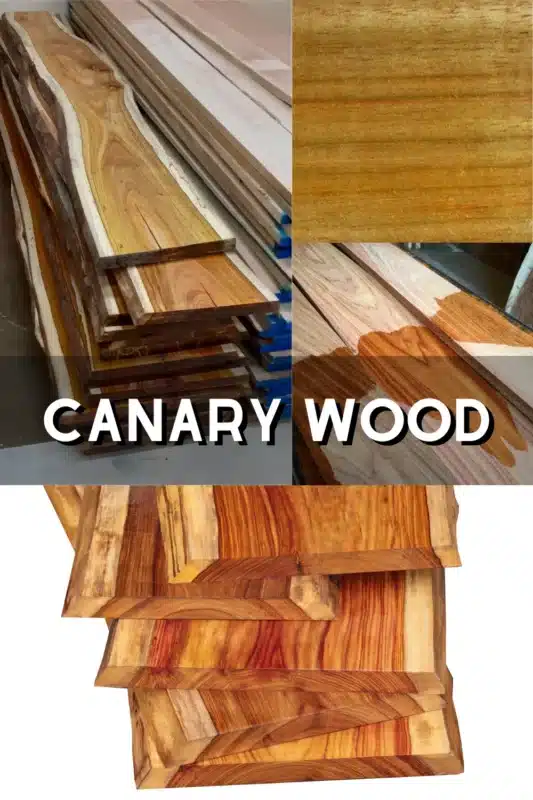
Buying canarywood lumber is mostly about controlling surprises: surfacing, moisture, color, defects, price factors, sourcing, and project size. Small surfaced craft boards cost more per board foot than rough lumber because the seller has already milled, sorted, photographed, packed, and shipped short usable pieces.
Surfacing and sizes need clear confirmation before ordering. Rough lumber gives more milling room, S2S shows both faces, S3S adds one straight edge, and S4S arrives closest to ready-to-use but leaves less thickness for flattening mistakes.
Moisture content should match the project. For indoor furniture, boards should be kiln-dried and acclimated in your shop before final milling; for glue-ups, let newly delivered boards rest so hidden stress can show before you lock pieces together.
Color and defects deserve actual photos. Check both faces for sapwood percentage, end checks, cracks, bow, cup, twist, wormholes, bark inclusions, and grain runout before choosing stock for a canary wood cutting board or matched furniture part.
Pricing factors include thickness, width, length, surfacing level, figure, color intensity, defect level, small-board sorting, and shipping weight. Wide, colorful, flat, defect-free boards cost more because fewer pieces from a log meet all those conditions at once.
Sustainability checks matter because canarywood is tropical hardwood. Ask about country of origin, legal harvest documentation, chain-of-custody claims, FSC availability, and shipment rules; the CITES site is a useful place to check trade context for regulated species and related tropical hardwood concerns.
- For cutting boards: choose straight, dry, defect-free boards with tight grain and enough thickness for flattening.
- For knife handles: buy knife scales instead of breaking down larger boards; use stabilized material for wet-duty knives.
- For turning: choose turning blanks sized for your lathe swing and final shape.
- For furniture accents: request actual-board photos so color and streaking match the design.
- For boxes and crafts: use smaller high-color pieces to reduce waste and keep costs controlled.
Stock selection notes from real use: don’t judge a board only by the top face. Flip it, sight down the edge, tap questionable cracks with a fingernail, and reject pieces that sound loose or show dark checks running into the end grain.
Project stock examples below show common canarywood boards, planks, knife scales, and turning blanks that fit small shop builds, accents, and craft work.

Canary Wood Boards, 4-Pack
- Rich canary wood grain with warm color
- pre-cut boards sized for easy project planning
- ideal for small woodworking and craft builds
- smooth lumber ready for shaping and finishing
- a versatile choice for custom pieces
 Buy on Amazon
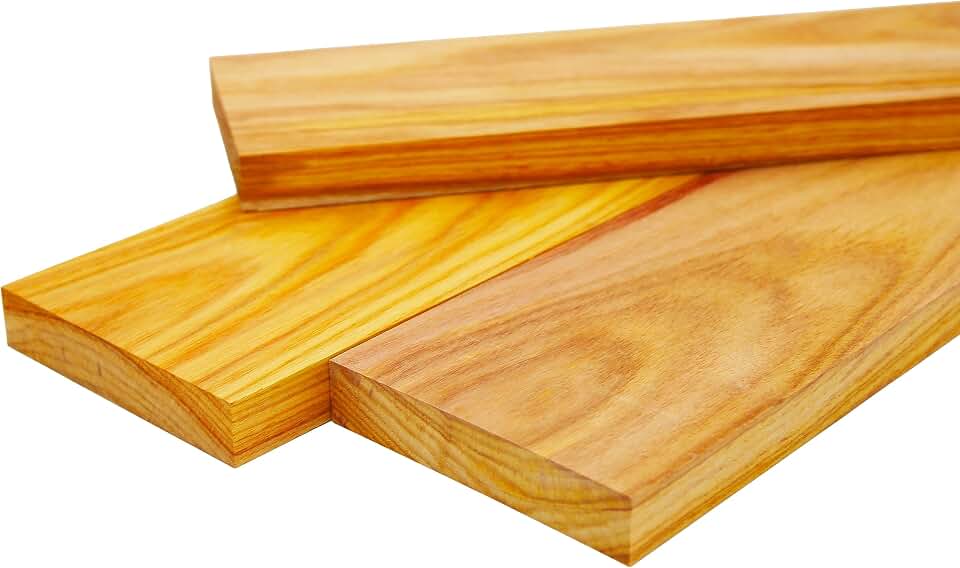
Wide Canary Wood Boards
- Distinctive canary wood character in a handy size
- two boards for matched project work
- great for furniture accents and hobby builds
- easy to cut, shape, and finish
- adds a bold natural look to any design
Buy on Amazon
Long Canary Wood Boards
- Eye-catching canary wood color and grain
- longer length supports bigger project layouts
- useful for shelves, trim, and custom woodworking
- consistent boards make planning simpler
- smooth stock suited for finishing work
Buy on Amazon

Canary Wood Planks, 2-Pack
- Natural canary wood with vivid grain variation
- compact boards for smaller builds and repairs
- ideal for boxes, handles, and accents
- easy to work with common shop tools
- finishes beautifully for a polished look
Buy on Amazon
Extra Long Canary Boards
- Extra long boards for larger woodworking ideas
- striking canary wood pattern adds visual impact
- useful for tabletops, rails, and custom projects
- ready for cutting, shaping, and sanding
- helps reduce seams in longer builds
Buy on Amazon
Canary Wood Boards, 24 Inch
- Balanced size for a wide range of projects
- beautiful canary wood grain with warm tones
- great for craft work and home shop builds
- easy to dimension to your needs
- reliable stock for decorative accents
Buy on Amazon

Canary Wood Knife Scales
- Sized for knife handle projects and custom builds
- rich canary wood color stands out fast
- strong natural material with a premium feel
- easy to shape for a comfortable grip
- great for makers who want a unique finish
Buy on Amazon
Canary Wood Boards, 36 Inch
- Longer boards for more flexible project planning
- attractive canary wood grain with warm contrast
- suited for furniture parts and custom trim
- smooth stock ready for shop work
- ideal when you need extra length to work with
Buy on Amazon

Surfaced Canarywood Board
- Surfaced on all four sides for convenience
- slim board size works well for detailed projects
- natural canarywood color adds a premium touch
- ready for precision cutting and shaping
- great for inlays, small parts, and fine woodworking
Buy on Amazon
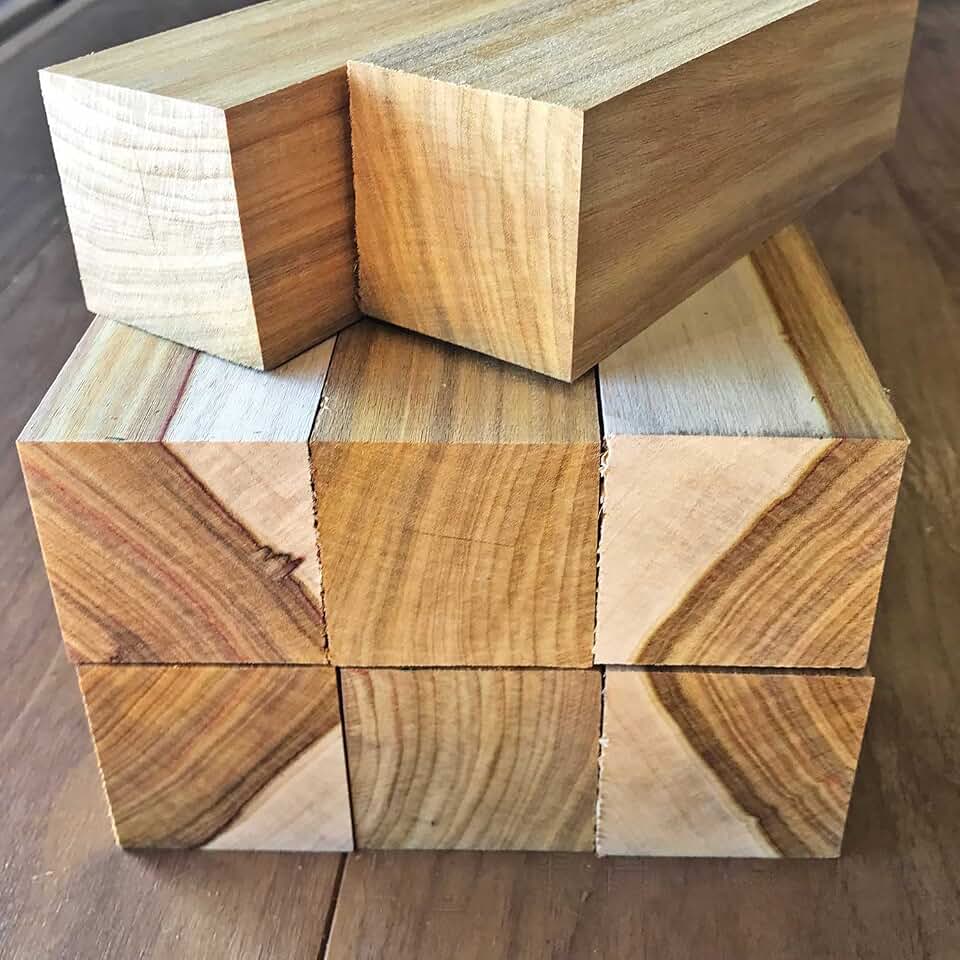
Canarywood Turning Blank
- Solid blank made for turning and shaping
- compact size fits many lathe projects
- rich canarywood grain creates standout results
- great for pens, handles, and small turnings
- easy to finish for a smooth polished look
Buy on Amazon
Practical field note: the biggest beginner mistake is ordering by color alone. Match the stock to the job first, then chase figure; a stunning twisted board can waste more time than a plainer straight board that stays flat, glues cleanly, and finishes without surprises.
FAQs
What Is Canary Wood Used For?
Canary wood is used for furniture, decorative projects, turned items, and small woodworking pieces. Its bright color and bold grain make it a popular choice when appearance matters as much as durability.
Is Canary Wood A Hardwood?
Yes, canary wood is a hardwood. It comes from a broadleaf tree and is generally dense, durable, and strong enough for many woodworking applications.
Is Canary Wood Good For Cutting Boards?
Canary wood can be used for cutting boards, but it is not usually the first choice. It is dense and attractive, yet some woodworkers prefer more stable, well-known food-safe woods like maple or walnut for everyday kitchen use.
What Does Canary White Wood Mean?
Canary white wood usually refers to the lighter-colored sapwood of canary wood. It is not a separate species, but rather the pale portion of the wood compared with the brighter yellow or orange heartwood.
Is Canarywood Toxic Or Food Safe?
Canarywood is generally considered safe for occasional food contact, but it can cause irritation or allergic reactions in some people. If you plan to use it for utensils or cutting boards, finish it carefully and avoid prolonged skin or dust exposure.
Affiliate Disclosure: Some links in this post are affiliate links. If you make a purchase through these links, we may earn a small commission at no extra cost to you. We only recommend products we genuinely believe in.