
Table of Contents
Olive wood is the dense, hard, decorative wood of the olive tree, Olea europaea, known for golden-brown color, dark streaked grain, and use in cutting boards, utensils, bowls, furniture accents, and small craft items. It’s beautiful and strong, but it needs hand washing, careful drying, and regular oiling to prevent cracking.
Quick answer: olive wood is good for serving boards, charcuterie boards, spoons, spatulas, bowls, and light prep, while maple or walnut often feels kinder to knives during heavy chopping. The grain looks warm and glossy under oil, and a finished piece feels heavy, smooth, and slightly waxy in the hand.
What Is Olive Wood?
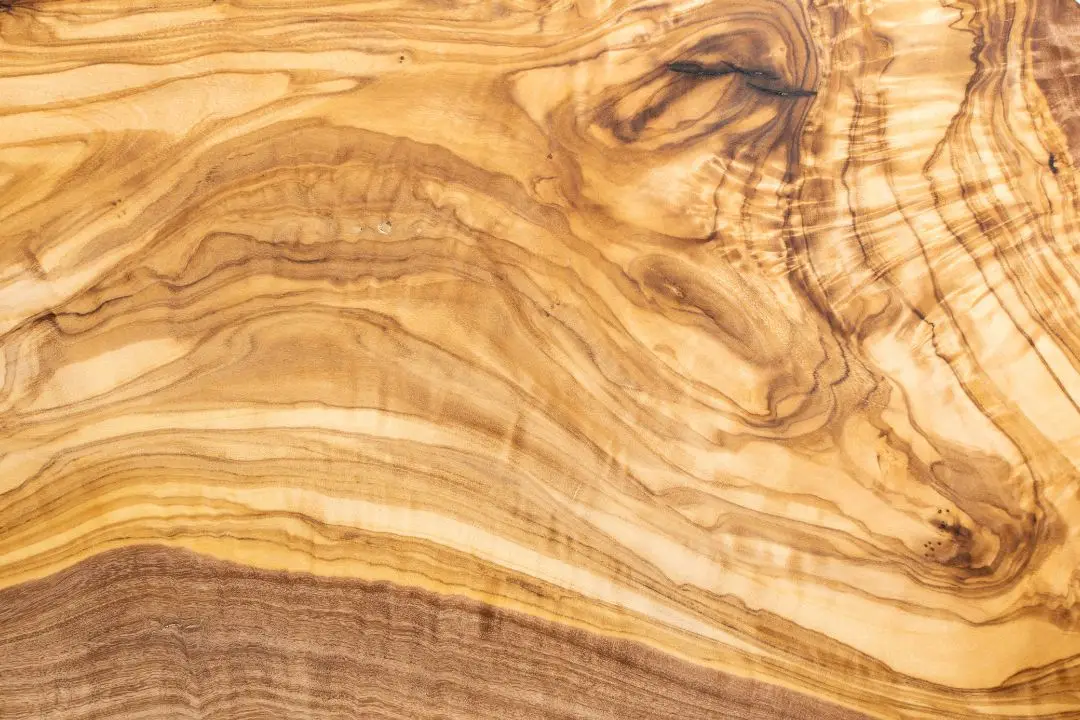
Olive wood comes from the olive tree, a fruit-bearing hardwood species grown mainly for olives and oil rather than lumber. That changes how the material reaches the shop: pieces are often short, curved, knotty, and full of dramatic figure instead of wide, straight boards.
Quick Definition
What is olive wood? It’s a dense, fine-textured hardwood with creamy sapwood, golden-brown heartwood, and dark brown to black streaks. It’s valued for kitchenware, serving pieces, woodturning, and decorative furniture details because each piece carries a different natural pattern.
Olea Europaea Origin
Olea europaea is the botanical name for the olive tree, and its agricultural history is tied closely to Mediterranean climates. The USDA PLANTS Database lists Olea europaea as the accepted plant profile, which helps separate true olive wood from lookalike stained hardwoods.
Mediterranean Growing Regions
Mediterranean olive wood often comes from Spain, Italy, Greece, Tunisia, Turkey, Israel, Palestine, and nearby olive-growing areas. Climate matters because slow growth and dry seasons help create tight texture, strong contrast, and the dense feel people expect from quality olive wood kitchenware.
Olive Tree Lifespan
Olive trees can live for hundreds of years, and some old orchard trees survive far longer when protected from disease, frost, and poor pruning. A long life doesn’t mean a large trunk, though; many trees grow twisted forms that produce smaller slabs, blanks, and branch sections.
Heartwood and Sapwood
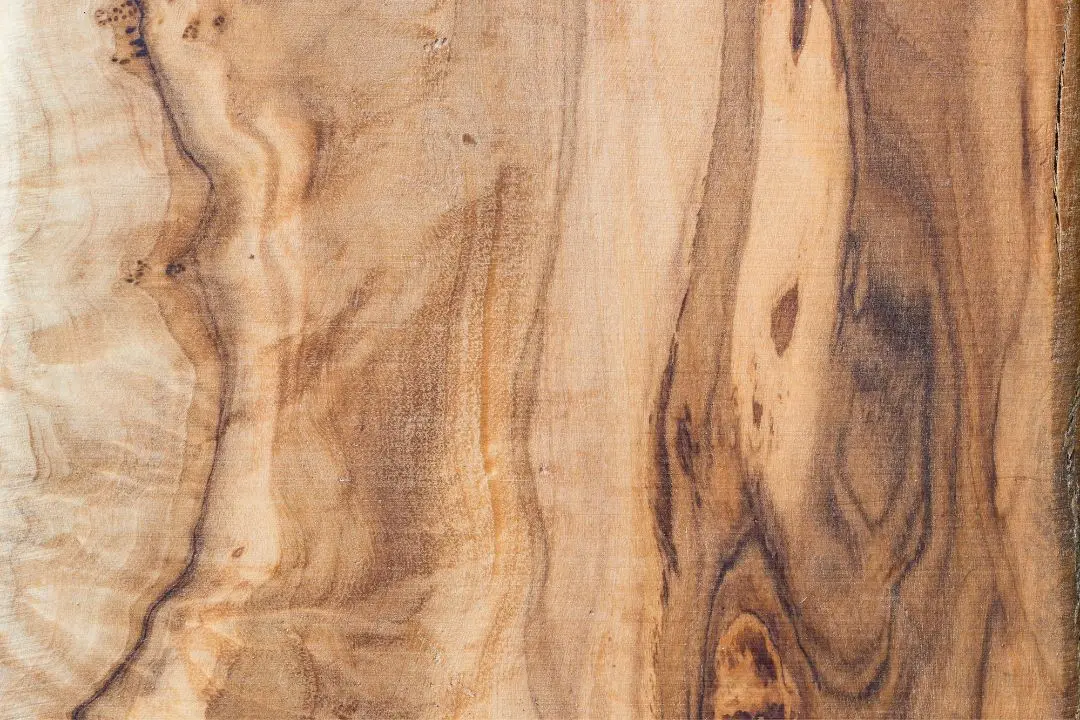
Heartwood is where olive wood gets its honey, tan, brown, gray, and near-black streaks, while sapwood tends to look paler and creamier. Makers often keep both in one board because the contrast creates the signature striped look, but the color break can also hide tiny checks that buyers should inspect before purchase.
Natural Oils
Natural oils give olive wood a smooth, slightly rich feel after sanding, and fresh-cut pieces can carry a faint earthy, fruity scent. Those oils help the wood resist brief moisture contact, but they don’t make it waterproof; soaking still swells the fibers and can open cracks along the grain.
Olive Wood Grain and Properties
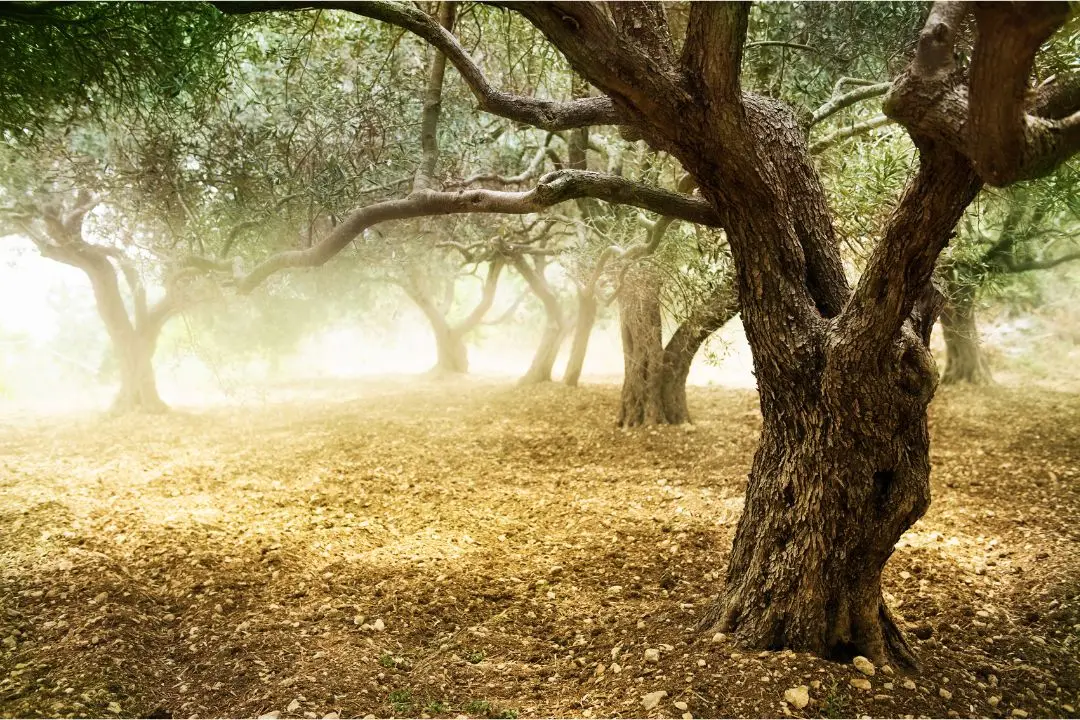
Olive wood grain is highly variable, with straight, wavy, curly, interlocked, and irregular figure often appearing in the same piece. This visual movement is why olive wood is common in premium serving boards and craft blanks, and it pairs well with deeper guides on wood grain patterns.
Color and Figure
Color variation runs from creamy yellow and golden tan to chocolate brown, gray-green, and black. When mineral oil hits the surface, the pale areas warm up fast, the dark streaks sharpen, and the board often looks as if the grain has more depth than it did dry.
Dark Olive Wood
Dark olive wood usually refers to pieces with heavy heartwood streaking rather than a separate species. Beginners often mistake the black lines for burns or stain, but true dark figure follows the growth pattern and continues through the edge or end of the piece.
Live Edge Character
Live edge olive wood keeps the natural outer curve of the branch or trunk, which works well for charcuterie and table presentation. Check bark-adjacent areas closely because loose bark pockets can trap crumbs, and a maker should sand those transitions smooth enough that they don’t feel sharp under your fingertips.
Janka Hardness: 2,700 lbf
Olive wood hardness is about 2,700 lbf on the Janka scale, far above hard maple at about 1,450 lbf and black walnut at about 1,010 lbf. The Wood Database olive wood profile reports the key hardness, density, and shrinkage figures commonly used by woodworkers.
Dried Weight: 62 lb/ft³
Dried weight averages about 62 lb/ft³, or roughly 990 kg/m³, so a small olive wood cutting board can feel surprisingly weighty. That density gives spoons and boards a premium hand feel, but it also means dropped pieces can chip tile, dent softer counters, or bruise a corner.
Shrinkage and Movement
Wood movement is a real issue with olive wood: radial shrinkage is about 5.4%, tangential shrinkage about 8.8%, volumetric shrinkage about 14.7%, and the T/R ratio sits near 1.6. That means a poorly dried board may cup, twist, or crack after washing, especially if one face dries faster than the other.
| Property | Olive Wood Reference Value | Practical Meaning |
|---|---|---|
| Janka hardness | About 2,700 lbf | Very durable, but firmer under knife edges |
| Average dried weight | About 62 lb/ft³ / 990 kg/m³ | Heavy, dense feel in boards and utensils |
| Radial shrinkage | About 5.4% | Moderate movement across growth rings |
| Tangential shrinkage | About 8.8% | Higher cup risk if drying is uneven |
| Volumetric shrinkage | About 14.7% | Needs careful drying and storage |
| T/R ratio | About 1.6 | Reasonable stability when seasoned well |
Durability and Workability
Durability is one of olive wood’s strengths, yet the same density can make sanding, routing, and turning slower. Sharp tools matter because dull edges burnish the surface, leave fuzzy tear-out around wild grain, and create a faint hot-wood smell before the cut looks clean.
Olive Wood Pros and Cons

Olive wood pros include rich figure, high density, natural color, and excellent table appeal. Its cons are equally practical: higher price, smaller sizes, hand-wash care, cracking risk, and a harder cutting feel than maple or walnut.
Key Benefits
Benefits of olive wood show up fastest in serving pieces, spoons, bowls, and display boards. The surface sands to a silky feel, the grain needs no stain, and the heavy body gives small kitchen pieces a steady, substantial feel on the table.
- Beautiful natural grain: every board, spoon, or blank has a different pattern.
- High hardness: about 2,700 lbf Janka supports long wear in light prep and serving use.
- Premium appearance: golden color and dark streaks suit rustic, Mediterranean, and modern kitchens.
- Food-contact potential: safe for kitchen use when sanded, finished, cleaned, and maintained correctly.
- Gift value: unique figure makes even simple utensils feel handmade and personal.
Main Disadvantages
Olive wood disadvantages come mostly from cost, movement, and care demands. A dishwasher cycle can leave the wood pale, rough, and split, while repeated dry storage near a stove can crack utensil handles lengthwise.
Knife-Friendliness Limits
Knife feel on olive wood is firm and crisp, with less cushion than end-grain maple or walnut. For cheese, bread, fruit, herbs, and serving, that firmness is fine; for daily chopping with a thin Japanese edge, a softer board from our best cutting board woods guide may feel better.
Maintenance Requirements
Maintenance means hand washing, towel drying, air drying upright, and oiling when the surface looks dull or dry. If the wood feels raspy after washing, that’s usually raised grain from water exposure, and a light hand sanding plus mineral oil can bring back the smooth touch.
Not Ideal For
Not ideal uses include dishwasher-dependent households, heavy cleaver work, wet sink storage, and buyers needing large uniform boards at low cost. It’s also a poor match for anyone who dislikes oiling wood, because dry olive wood fades from glossy gold to a chalky tan and may start checking at the ends.
Olive Wood Cutting Boards
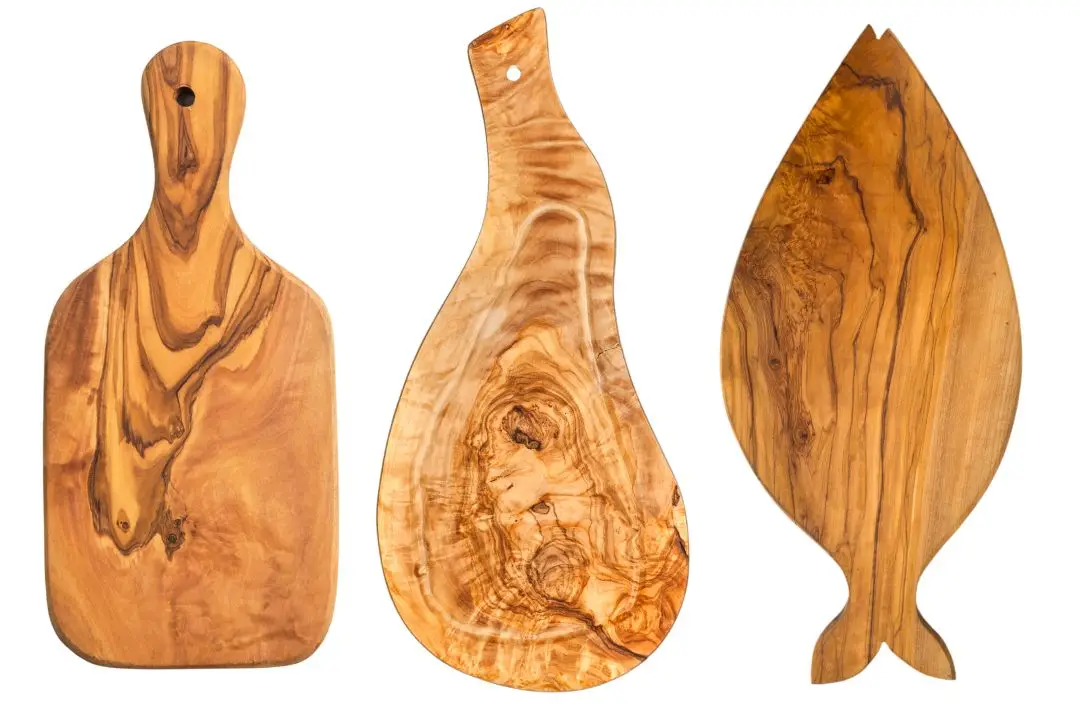
An olive wood cutting board is best viewed as a hybrid prep-and-serving board rather than a butcher-block workhorse. It handles light cutting well, looks excellent on a table, and needs more careful cleaning than plastic or bamboo.
Best Board Uses
Best uses include cheese, bread, fruit, herbs, citrus, pastries, and dry snacks. The board’s dense surface resists quick dents, and the warm grain looks especially good under soft kitchen light beside olives, nuts, cured meats, and crusty bread.
Serving and Charcuterie Boards
Charcuterie boards are one of olive wood’s strongest uses because the grain becomes part of the presentation. If you’re comparing the best wood for charcuterie boards, olive wood ranks high for looks, while maple and walnut may win for larger platter sizes and lower cost.

Rustic Olive Wood Board
- Naturally beautiful grain
- ideal for cutting, cheese, and charcuterie
- handcrafted from olive wood
- durable surface for everyday use
- adds a warm artisan touch to the table
 Buy on Amazon
Light Prep Tasks
Light prep means slicing apples, chopping herbs, cutting sandwiches, trimming cheese, or portioning bread. Avoid pounding garlic with the side of a knife or chopping bones, since impact can mark the face and stress small cracks near knots.
Serving vs Chopping
Serving boards prioritize beauty, shape, and live-edge character, while chopping boards prioritize thickness, stability, and knife feel. Many olive wood boards sold online lean decorative, so check whether the surface is flat, thick enough, and finished with a food-safe oil before treating it as a daily prep board.
Face, Edge, End Grain

End grain is usually gentler on knives because the blade passes between fiber ends instead of scraping across long fibers. Most olive wood boards are face-grain slabs or live-edge pieces because trunks are smaller and irregular, so expect beauty first and butcher-block performance second.
Live Edge Boards
Live-edge boards should feel smooth around the rim, with no bark flakes, splinters, or sticky filler. Run a fingertip around the edge before use; if it snags a towel, it can also catch food residue and should be sanded lightly before oiling.
Monthly Oiling Guideline
Monthly oiling is a practical guideline for frequently used olive wood boards, though dry kitchens may need care sooner. Oil when the board looks faded, feels rough, absorbs water fast, or loses the deep amber glow that appears after conditioning.

Olive Wood Cutting Board
- Sized for cutting and serving
- beautiful natural grain adds style
- handy for kitchen prep and presentation
- durable wooden build for everyday use
- compact shape fits easily on counters
Buy on Amazon
Olive Wood Utensils and Serveware
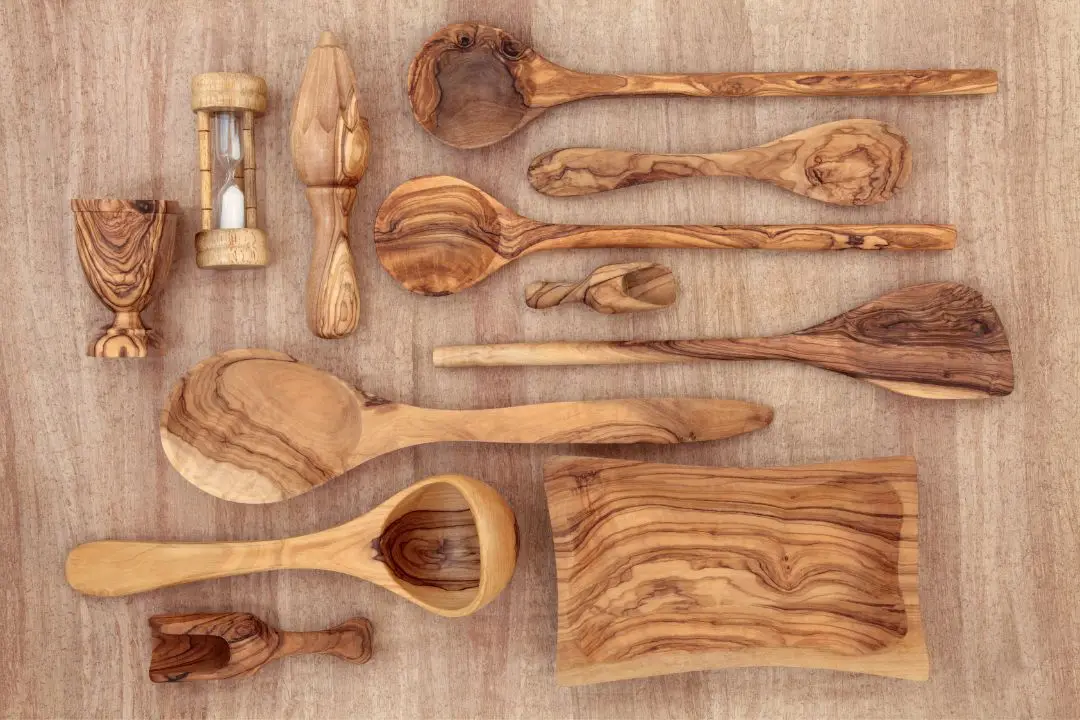
Olive wood utensils are useful for cooks who want natural tools that won’t scrape nonstick, ceramic, or enameled cookware like metal can. They feel warm in the hand, stay cooler than steel near a pan, and develop a satin feel when kept oiled.
Spoons and Spatulas
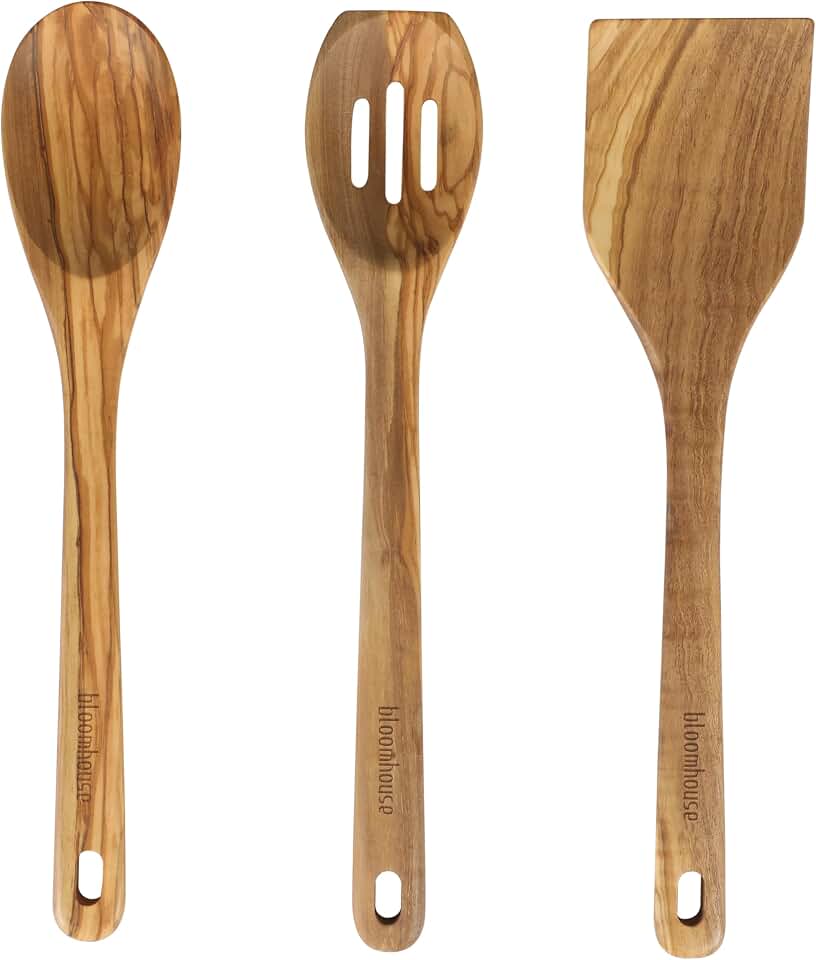
Wooden spoons, spatulas, turners, ladles, and slotted spoons are the most common olive wood utensils. Look for thin, rounded lips on spoon bowls and smooth handle transitions; square shoulders feel uncomfortable during long stirring, especially with sticky risotto or thick sauce.
Olive Wood Utensil Set
- Includes turner, spoon, and slotted spoon
- extra-large handles for comfortable cooking
- durable olive wood built for daily use
- gentle on cookware surfaces
- adds a refined natural look to the kitchen
Buy on Amazon
Nonstick Cookware Use
Nonstick cookware benefits from wood utensils because wood is less likely to gouge coatings than metal. Olive wood is firm, so don’t stab or scrape aggressively at stuck food; use the broad face of the spoon or spatula and let heat or liquid loosen residue first.
Heat Exposure Risks
Heat exposure cracks handles faster than many owners expect. Don’t leave an olive wood spoon resting in a boiling pot, lying across a burner edge, or standing in hot tomato sauce, because one side dries while the other absorbs moisture and the handle may split.
Bowls and Mortars
Olive wood bowls work well for dry snacks, olives, nuts, salts, herbs, and small servings. Mortars are useful for herbs, garlic, and spices, but avoid crushing wet, acidic mixtures for long periods because acids and moisture can dull the finish and leave odors in the grain.
Dips and Condiments
Dipping bowls are great for olive oil, tapenade, mustard, nuts, and tapas portions, provided you wipe them clean soon after use. Strongly colored sauces can sit in pores and dark streaks, so wash promptly and dry until the bowl no longer feels cool or damp.

Rustic Dipping Bowl
- Perfect for oils, dips, and condiments
- compact size for snacks and tapas
- handcrafted olive wood with natural character
- sturdy and attractive for serving
- brings rustic charm to any table
Buy on Amazon
Olive Wood Kitchenware
Olive wood kitchenware suits cooks who enjoy hand-finished tools and don’t mind simple care. If you’re comparing natural tools, pair this material with related reading on hardwood species such as hardwood types to judge density, grain, and daily-use trade-offs.
Olive Wood Care and Food Safety
Olive wood care is simple: hand wash with mild soap, rinse quickly, dry immediately, and condition with food-grade mineral oil or beeswax. Never soak it, never use the dishwasher, and keep raw-meat boards separate from ready-to-eat foods.
Hand Washing Steps
Hand washing should be quick and controlled, not a long sink soak. Use warm water, mild dish soap, and a soft sponge, then dry with a towel until the surface loses that cold, wet feel.
- Scrape off food: remove crumbs, cheese, or sticky sauce before adding water.
- Wash quickly: use warm water and mild soap with a sponge or cloth.
- Rinse briefly: don’t let water pool on the board or spoon.
- Towel dry: wipe all faces, edges, handles, and grooves.
- Air dry upright: let boards dry evenly on both faces before storing.
No Dishwasher
No dishwasher is the rule that prevents most failures. Dishwasher heat, detergent, and long wet cycles can fade the color, raise the grain, warp boards, and split utensil handles until they feel rough and chalky.
No Soaking
No soaking matters because olive wood absorbs water through end grain and small checks. A board left in a sink can swell on one face, dry unevenly, and form a shallow cup that rocks on the counter.
Best Oil: Mineral Oil
Mineral oil is the safest routine oil for olive wood kitchen items because it’s food-grade, stable, and doesn’t turn rancid. Apply a thin coat, let it soak in, then wipe off all excess so the surface feels smooth rather than greasy.
Beeswax Board Conditioner
Beeswax conditioner adds a light protective layer over mineral oil, which helps serving boards resist brief contact with cheese oils and fruit juice. Warm the conditioner slightly in your hands, rub it with the grain, wait, then buff until the board feels satin-smooth.
Oils to Avoid
Avoid cooking oils such as olive oil, vegetable oil, corn oil, and seed oils for board care because they can oxidize and smell stale. This is the mistake beginners make most often: the wood looks rich on day one, then a sour, waxy odor develops after storage.
Cutting Board Hygiene
Cutting board hygiene depends on fast cleaning, full drying, and avoiding deep, dirty knife grooves. The USDA cutting board safety guidance recommends separate boards for raw meat, poultry, seafood, and ready-to-eat foods to reduce cross-contamination.
Separate Raw-Meat Boards
Separate boards are the cleanest home setup: use one board for raw proteins and another for bread, produce, cheese, and cooked food. In commercial kitchens, dishwasher-safe plastic often makes more sense, while home users can keep wood safe with prompt washing and full drying.
Olive Wood vs Other Woods
Olive wood is harder, heavier, and more visually dramatic than many common board woods, but it isn’t always the best choice for heavy chopping. The right comparison depends on whether you value knife feel, cost, board size, grain, or low maintenance most.
Olive vs Maple
Olive vs maple comes down to beauty and hardness against knife comfort and availability. Olive wood is about 2,700 lbf Janka, while hard maple is about 1,450 lbf, so maple usually feels softer and quieter under repeated chopping.
Olive vs Walnut
Olive vs walnut is an even bigger difference in knife feel because black walnut sits near 1,010 lbf Janka. Walnut dents sooner but treats edges gently, while olive wood resists dents and gives a firmer, sharper tap when a blade meets the board.
Olive vs Acacia
Olive vs acacia depends on species, construction, and budget because acacia hardness varies across different woods sold under that name. Acacia boards are often larger and cheaper, while olive wood usually offers stronger figure and a more artisan look; see our acacia wood guide for a fuller material profile.
Olive vs Bamboo
Olive vs bamboo is a hardwood-versus-grass comparison. Bamboo boards are widely available and often affordable, but some constructions feel hard and glassy under knives, while olive wood offers a heavier, warmer, more natural-looking surface.
Hardness Comparison
| Material | Approximate Hardness | Kitchen Feel |
|---|---|---|
| Olive wood | 2,700 lbf Janka | Very firm, dense, durable, decorative |
| Hard maple | 1,450 lbf Janka | Balanced durability and knife feel |
| Black walnut | 1,010 lbf Janka | Softer, quieter, kinder to knives |
| Acacia | Varies by species | Often affordable, with mixed hardness |
| Bamboo | Varies by construction | Can feel hard, light, and uniform |
Knife Feel Comparison
Knife feel is where olive wood divides opinions. It gives a clean, solid contact and resists scars, but cooks who chop for long sessions may prefer the softer, muted feedback of maple or walnut.
Buying Olive Wood Products
Buying olive wood is about matching the piece to the use: serving, light cutting, cooking, turning, or furniture detail. The best pieces feel smooth, look well dried, show no open cracks, and clearly state a food-safe finish when sold for kitchen use.
Board Buying Checklist
Board checklist items include thickness, flatness, finish, crack quality, and intended use. A pretty board that rocks on the counter or shows open checks near the end grain will frustrate daily users, no matter how striking the figure looks online.
- Check thickness: thicker boards usually resist movement better than thin decorative slabs.
- Inspect cracks: avoid open checks, loose knots, and poorly filled splits.
- Confirm finish: kitchen boards should mention food-safe oil, wax, or conditioner.
- Look for flatness: a board should sit steady without rocking.
- Match the use: choose live edge for serving, thicker flat boards for light prep.
Utensil Buying Checklist
Utensil checklist points are handle comfort, smooth edges, balanced weight, and useful spoon depth. A good olive wood spoon should glide through sauce without rough grain dragging against the pan, and the handle should feel rounded rather than boxy.
Food-Safe Finish Claims
Food-safe finish claims matter for cutting boards, spoons, bowls, and mortars. Look for mineral oil, beeswax, or a stated food-contact finish, and avoid mystery varnishes on surfaces that will touch knives or wet food.
Kiln-Dried Wood
Kiln-dried wood is usually safer for stable kitchen goods than rushed, air-dried stock with trapped moisture. End checks, curved faces, and fresh-looking cracks can signal that the wood moved after shaping, which may continue after you wash it.
Price Ranges
Price ranges vary because olive trees grow slowly, trunks are irregular, and high-figure pieces waste more material during shaping. Small utensils often run about $8–$25 each, utensil sets about $20–$80+, small boards about $20–$50, medium or large boards about $50–$150+, and premium handmade live-edge boards often reach $100–$250+.
Sustainable Sourcing
Sustainable sourcing should mean orchard pruning, reclaimed olive wood, maintenance cuttings, or older non-productive trees rather than vague green claims. Ask for clear origin notes when possible, because “eco-friendly” without sourcing details tells you little about how the wood was harvested.
Olive Wood Furniture
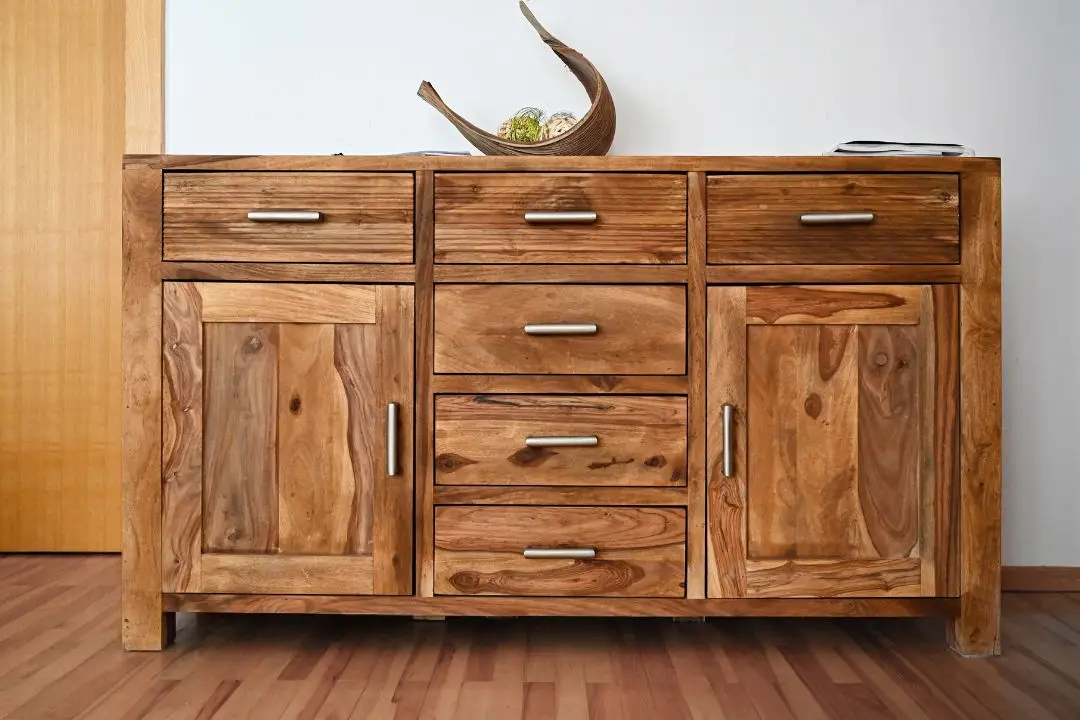
Olive wood furniture gets search interest because the grain is dramatic, but full-size furniture is less common than small kitchenware. Most pieces use olive wood as slabs, inlays, drawer pulls, turned legs, table accents, or veneer-like decorative panels; for broader comparisons, see our guide to wood for furniture.
Pen and Craft Blanks
Craft blanks made from olive wood are popular for pens, knife scales, small handles, ornaments, crosses, rosaries, and keepsakes. Pen blanks often cost about $2–$10+ per blank, with higher prices for strong figure, larger dimensions, dry stock, and documented origin.
Bethlehem and Holy Land
Bethlehem olive wood and Holy Land olive wood carry symbolic and provenance value for religious gifts and turning projects. Because origin claims raise the price, buy from sellers that explain sourcing and include documentation rather than relying only on a product title.

Bethlehem Olive Wood Blanks
- 10-pack for pen turning projects
- authentic wood from the Holy Land
- each blank measures 5 x three quarters x three quarters inch
- compatible with 7mm and larger pen kits
- includes certificates for added confidence
Buy on Amazon
Certificates of Authenticity
Certificates help when buying Bethlehem or Holy Land blanks, but they don’t replace inspection for dryness, cracks, and square dimensions. A certified blank that’s wet or checked can still fail on the lathe, so let questionable stock acclimate before turning and cut test passes lightly.
Practical Notes From Real-World Use
Real-world use shows that olive wood rewards careful owners and punishes rushed cleaning. The first warning sign is tactile: a once-slick board starts feeling dry, grainy, and thirsty under your palm, then the color fades and small end checks may appear.
Common mistakes include using olive oil as a conditioner, leaving spoons in hot pans, drying boards flat on wet counters, and cutting raw chicken on a decorative serving board. The best workaround is boring but reliable: mineral oil after the wood dries fully, upright storage, and a separate plastic or plain wood board for raw proteins.
Professional habit: oil both faces and all edges, not just the pretty top. If one side stays dry while the other gets conditioned, moisture balance changes, and thin boards can start to cup like a shallow dish.
Final take: olive wood is strong, dense, and beautiful, but it’s best for people who treat kitchen wood as a maintained material rather than a dishwasher-safe tool. Choose it for serving, light prep, utensils, bowls, furniture accents, and craft blanks when you want dramatic grain and don’t mind simple hand care.
FAQs
Is Olive Wood Good For Cutting Boards?
Yes, olive wood is good for cutting boards because it is hard, durable, and naturally attractive. It can handle regular kitchen use well, especially for light to medium chopping. For best results, avoid soaking it or using it for very heavy daily chopping.
Is Olive Wood Food Safe?
Yes, olive wood is food safe when it is properly cleaned and finished with a food-safe oil. Its dense grain helps resist moisture and odors, which makes it a popular choice for kitchen items. Just make sure it is not treated with unsafe varnishes or chemicals.
Can Olive Wood Go In The Dishwasher?
No, olive wood should not go in the dishwasher. The high heat and long exposure to water can cause cracking, warping, or splitting. Wash it by hand with mild soap and dry it right away.
What Oil Should I Use On Olive Wood?
Use food-safe mineral oil or a butcher block conditioner made for kitchen wood items. These help keep olive wood from drying out and make the grain look richer. Avoid cooking oils like olive oil, since they can turn sticky or rancid over time.
Why Is Olive Wood So Expensive?
Olive wood is expensive because it is dense, beautiful, and often sourced from slow-growing trees. Much of it comes from pruned or retired trees, which limits supply. Its unique grain patterns and strong durability also add to its value.
Affiliate Disclosure: Some links in this post are affiliate links. If you make a purchase through these links, we may earn a small commission at no extra cost to you. We only recommend products we genuinely believe in.