Black MDF Buying Guide: Types, Uses, and Black Wood Comparison

Table of Contents
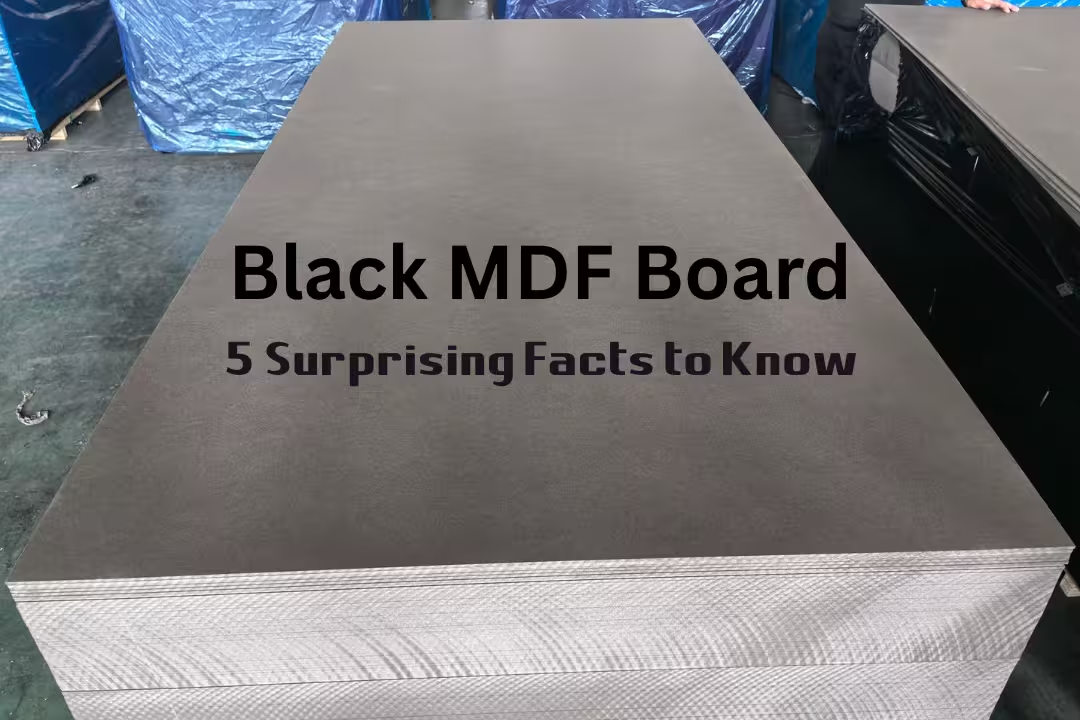
Black MDF is medium-density fiberboard made with a black face, black coating, black melamine layer, or black-dyed core. It’s a smooth black engineered wood panel used for furniture, cabinetry, laser cutting, signs, wall panels, and craft projects, but the edge color and moisture limits change by product type.
A good black MDF board feels dense and chalk-smooth under your palm, and fresh-cut edges leave a fine dark dust on your fingers. The main mistake beginners make is buying a black-faced sheet and expecting the core to be black after cutting, routing, or drilling.
What Is Black MDF?

Black MDF basics
Black MDF basics start with MDF itself: a panel made from refined wood fibers, resin binder, wax, and additives pressed into a flat sheet. That makes it part of the broader engineered wood family rather than solid black wood, so it has no grain, knots, or seasonal movement like natural lumber.
Medium-density fiberboard is usually smoother than plywood and easier to paint, rout, engrave, and edge-band. The trade-off is moisture sensitivity and weaker screw holding in edges, so it works best as a panel material, not as a structural substitute for hardwood or plywood.
How MDF gets black
Black color can come from a melamine face, painted finish, paper or foil layer, laminate, or pigment mixed into the fibers. Through-dyed black MDF keeps a dark edge after machining, while black melamine MDF often reveals a brown core as soon as the saw tooth breaks through the face.
Common sizes
Common sheet sizes include 2440 × 1220 mm and 4 × 8 ft, with some suppliers selling 3050 × 1220 mm panels or black MDF cut to size. Full sheets are heavy and easy to dent at the corners, so a cut-to-size order can save transport trouble and reduce waste.
Common thicknesses
Common thicknesses include 3 mm, 6 mm, 9 mm, 12 mm, 15 mm, 18 mm, and 25 mm. Thin sheets suit laser cutting and craft blanks, while 18 mm black MDF panels are common for cabinets, wardrobes, desks, and shelves with proper support.
Black fiberboard terms
Black fiberboard may describe black MDF, black HDF, black hardboard, colored MDF, black core MDF, or decorative fiberboard panels. Check the product data sheet because density, resin type, coating, fire rating, and emissions class affect how the board cuts, smells, sands, and performs indoors; the USDA Wood Handbook describes MDF as a fiber-based composite panel made under heat and pressure.
Types of Black MDF

Black melamine MDF
Black melamine MDF has a black resin-impregnated decorative surface bonded to an MDF core, usually on one or both faces. It’s popular for cabinet interiors, wardrobes, office furniture, shelving, and retail fixtures because it wipes clean without paint.
Watch the edges on melamine-faced boards because cuts often show a brown core and chips stand out against the black face. Use a sharp fine-tooth carbide blade, support the panel fully, and edge-band exposed sides with black ABS or PVC edging for a cleaner result.
Through-dyed black MDF
Through-dyed black MDF has pigment distributed through the fibers, so routed grooves, chamfers, and laser-cut edges stay dark. It costs more than surface-only black MDF, but it saves hours of edge painting on signs, speaker boxes, carved MDF board panels, and CNC profiles.
Batch variation can happen with dyed MDF, especially between brands such as Valchromat-style or Forescolor-style boards. If several panels meet in one visible installation, buy enough from the same batch and clear-coat a sample first because sealer can deepen the black tone.
Black painted MDF
Black painted MDF is standard MDF that has been primed and painted black. It works well for DIY furniture, display plinths, speaker boxes, décor, and painted panels, but scratches and routed edges may reveal the lighter substrate below.
Paper-faced MDF
Paper-faced MDF uses a black decorative paper, foil, or film over the fiberboard core. It’s useful for low-wear displays and decorative backs, but the surface can scuff, peel, or bruise if it’s used like laminate or melamine.
Moisture-resistant MDF
Moisture-resistant MDF handles humid interiors better than standard MDF, but it isn’t waterproof. Use it for kitchens, laundry rooms, and bathroom furniture only when faces, screw holes, and edges are sealed against swelling.
Fire-rated MDF
Fire-rated MDF is made or treated to meet a stated fire classification for commercial interiors, wall linings, shopfitting, and public buildings. Don’t rely on color as proof of rating; ask for certified documents and match them to local code requirements.
| Type | Core Color | Surface | Best For | Watch Out For |
|---|---|---|---|---|
| Black melamine MDF | Usually brown MDF core | Black melamine | Cabinets, shelves, wardrobes | Chipped edges, visible brown core |
| Through-dyed black MDF | Black or dark throughout | Raw or sealed fiber surface | CNC, routing, exposed edges | Higher cost and batch variation |
| Black painted MDF | Usually brown core | Painted finish | DIY, furniture, décor | Scratches show substrate |
| Black paper-faced MDF | Usually brown core | Decorative paper or foil | Displays, light-use panels | Surface durability varies |
| Black MR MDF | Varies by product | Raw, painted, or faced | Humid interiors | Still needs sealed edges |
Best Uses for Black MDF

Furniture and cabinetry
Furniture panels are one of the best uses for black MDF because the flat face takes paint, laminate, veneer, and melamine well. Use 18 mm for cabinet carcasses, wardrobes, desks, and shelves, then add pilot holes, glue, and mechanical support where loads matter.
Cabinet doors made from MDF stay flatter than many solid-wood doors, especially in slab or shaker styles. The beginner error is skipping edge sealing; raw MDF edges drink primer fast, feel furry after the first coat, and need sanding sealer or high-build primer before the final black finish.
Laser cutting and crafts
Laser cutting works best with thin black MDF sheets around 3 mm to 6 mm, clean composition data, and good extraction. MDF smoke has a hot, resin-sweet smell that lingers on the machine bed, so test power, speed, masking, and air assist before cutting a full batch.
Craft boards are useful for signs, nameplates, ornaments, templates, model parts, and painted plaques. Pick laser-ready black MDF for clean engraving and avoid unknown coated panels, especially anything that may contain PVC.

Black MDF Craft Boards
- Smooth surface for clean laser results
- easy to cut, engrave, and paint
- sturdy MDF for DIY projects
- great for signs, decor, and models
- consistent black finish for a polished look
 Buy on Amazon

Classic Black MDF Panels
- Unfinished surface works well for custom finishes
- ideal for laser engraving and wood burning
- cuts cleanly for craft and model work
- solid board for signs and displays
- black color gives projects a sleek look
Buy on Amazon
CNC routing and carving
CNC routing suits black MDF because the board is uniform, flat, and predictable under a sharp carbide bit. Through-dyed material is best for carved lettering, flutes, chamfers, and slat profiles because the routed edge stays dark instead of exposing brown fiber.
Signs and displays
Signs and displays benefit from black MDF’s matte surface, clean edges, and low visual noise. It’s a smart pick for menu boards, point-of-sale displays, presentation panels, exhibition stands, and temporary retail fixtures that stay indoors.

TruFlat Black Plywood Sheets
- Double-sided smooth finish looks polished
- MDF core adds stability and consistency
- great for laser cutting and engraving
- works well for painting and sublimation
- handy case pack for larger projects
Buy on Amazon

Black Plywood Craft Sheets
- Pre-painted surface saves prep time
- thin sheets are great for laser cutting
- ideal for engraving, crafts, and model making
- black finish adds a clean modern style
- pack of six offers room for many projects
Buy on Amazon
Wall panels and interiors
Wall panels made with black MDF create a flat, modern backdrop for media walls, offices, studios, and feature walls. Slatted black wood panels may use MDF, veneer, felt, or composite cores, so treat acoustic claims carefully because backing material and air gaps affect sound absorption.
Black slat panels suit decorative walls, studio backdrops, and living spaces where texture matters more than structural strength.
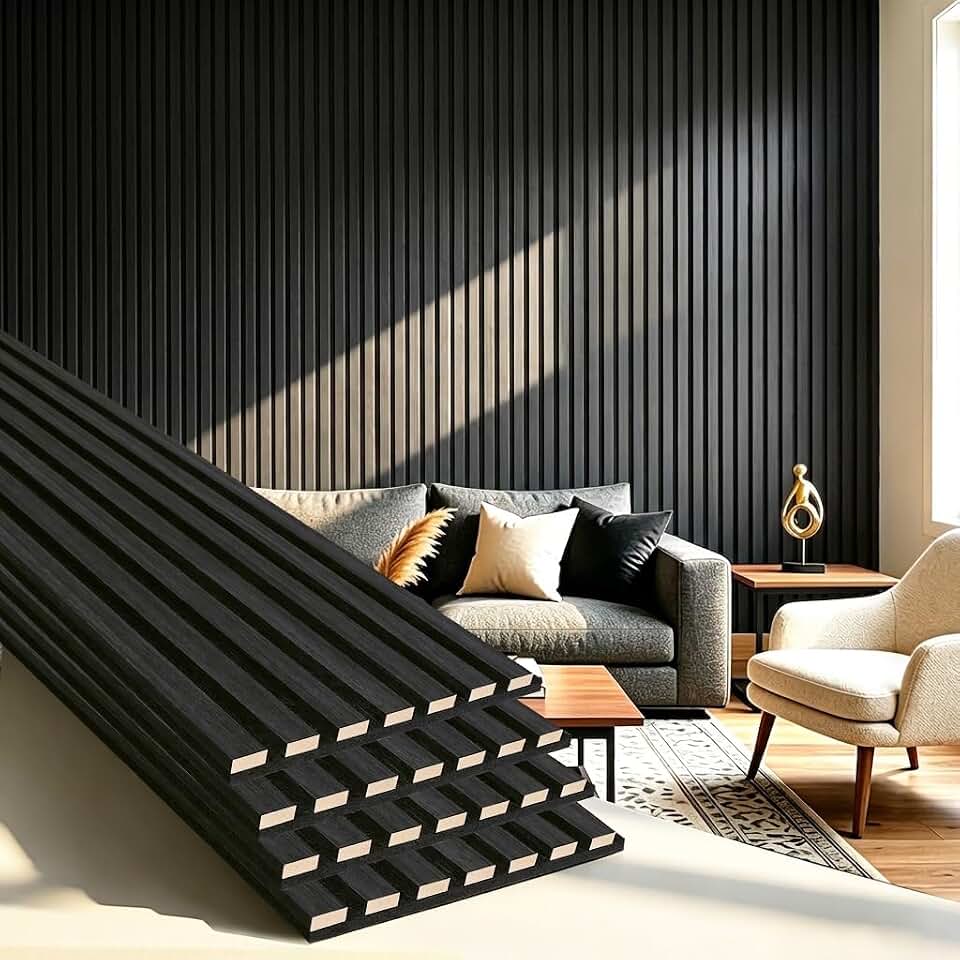
Black Wood Slat Panels
- Stylish 3D slat design adds texture
- helps reduce noise in busy rooms
- great for offices, studios, and living spaces
- matte black finish creates a sleek look
- large panels make wall upgrades easier
Buy on Amazon
How to Choose Black MDF
Core and edge color
Core color should be your first buying check. If the edge will show, buy through-dyed black MDF; if the edge will be hidden inside a cabinet or covered with edge banding, black melamine MDF can cost less and still look sharp.
Surface finish
Surface finish changes the whole project: matte hides glare, satin suits furniture, gloss shows fingerprints, textured black hides handling marks, and raw dyed MDF works well for CNC. For paint, test adhesion because melamine needs sanding and a bonding primer.
Thickness guide
Thickness choice controls stiffness, weight, screw holding, and cut quality. Thin black MDF bends and breaks at corners, while thick MDF can overload wall fixings, shelves, and delivery limits if you don’t plan supports.
| Thickness | Best Uses |
|---|---|
| 3 mm | Laser cutting, craft shapes, overlays |
| 6 mm | Signs, model making, craft boards |
| 9 mm | Lightweight panels, displays, backs |
| 12 mm | Wall panels, cabinet backs, decorative elements |
| 15 mm | Furniture parts, shelving with support |
| 18 mm | Cabinets, desks, wardrobes, stronger shelves |
| 25 mm | Heavy-duty panels, thick shelving, work surfaces |
Sheet size
Sheet size affects waste and handling. A full 2440 × 1220 mm sheet gives better yield for cabinets, but smaller black MDF sheets are easier for craft cutters, desktop lasers, and home workshops with limited bench space.
Density and weight
Density and weight matter more than many buyers expect. Common MDF density often sits around 600–800 kg/m³, and an 18 mm 2440 × 1220 mm sheet can weigh roughly 30–45 kg, so check lifting access, shelf spans, and wall anchors before ordering; our density of wood guide helps compare material weights.
Price and availability
Black MDF board price changes with thickness, sheet size, finish, core color, grade, delivery weight, and cutting service. Through-dyed MDF usually costs more than black melamine MDF, while small craft packs cost more per square foot than full sheets but waste less in small projects.
Cut-to-size options
Cut-to-size panels cost more per piece, but they can be cheaper than buying a full sheet, renting transport, dulling blades, and storing leftovers. Ask suppliers for tolerance, edge finish, grain direction if faced, and whether labels will mark the finished face.
- Ask if the core is black before ordering exposed-edge parts.
- Confirm single-sided or double-sided black melamine for shelves and cabinets.
- Check emissions class for bedrooms, schools, and commercial interiors.
- Order samples before mixing black panels from different suppliers.
- Plan delivery weight before buying full 18 mm or 25 mm sheets.
Cutting, Sealing, and Safety
Sawing and machining
Sawing black MDF calls for sharp carbide tooling, full support, and dust collection. Use a track saw, table saw, circular saw, jigsaw, router, or CNC router based on the cut, and use a scoring pass on melamine where chipping would ruin the face.
Laser compatibility
Laser compatibility depends on thickness, resin, glue system, finish, and coating. Plain laser-ready MDF is common, but unknown foil, PVC-coated, or heavily laminated panels can create unsafe fumes, so only cut material with a known composition and good extraction.
Edge finishing
Edge finishing is where black MDF projects either look professional or homemade. Seal raw edges with sanding sealer, shellac-based primer, MDF primer, lacquer, polyurethane, or edge banding, then sand lightly until the surface loses its furry feel.
Moisture limits
Standard MDF is not waterproof and swells fastest at cut edges, routed grooves, screw holes, and damaged faces. Use moisture-resistant MDF for humid interiors, but use PVC, acrylic, exterior plywood, or another water-safe panel for outdoor signs and wet rooms.
Emissions standards
Emissions standards matter because many MDF boards use formaldehyde-based resins. For indoor furniture, ask for CARB Phase 2, EPA TSCA Title VI, E1, E0, NAF, or ULEF documentation, and seal cut edges to reduce raw exposed fiber; the EPA formaldehyde standards explain U.S. composite wood product rules.
Fasteners and joinery
Fasteners in MDF need pilot holes, coarse threads, and controlled torque. Face screws hold better than edge screws, so use confirmat screws, dowels, biscuits, glue blocks, pocket holes with care, or mechanical brackets for higher-load joints.
Dust extraction
MDF dust is very fine and hangs in the air after cutting or sanding. Use extraction at the tool, a fitted respirator, cleanup vacuum, and airflow control because dry MDF powder feels silky on the bench but is unpleasant in your throat and lungs.
Black MDF vs Black Wood
What black wood means
Black wood can mean natural dark species, black-stained wood, charred wood, painted wood, black plywood, black MDF, or black wood wall panels. Searchers also use terms like black wenge, ebony, African blackwood, bog oak, ebonized oak, stained pine, and charred cedar.
Natural dark species
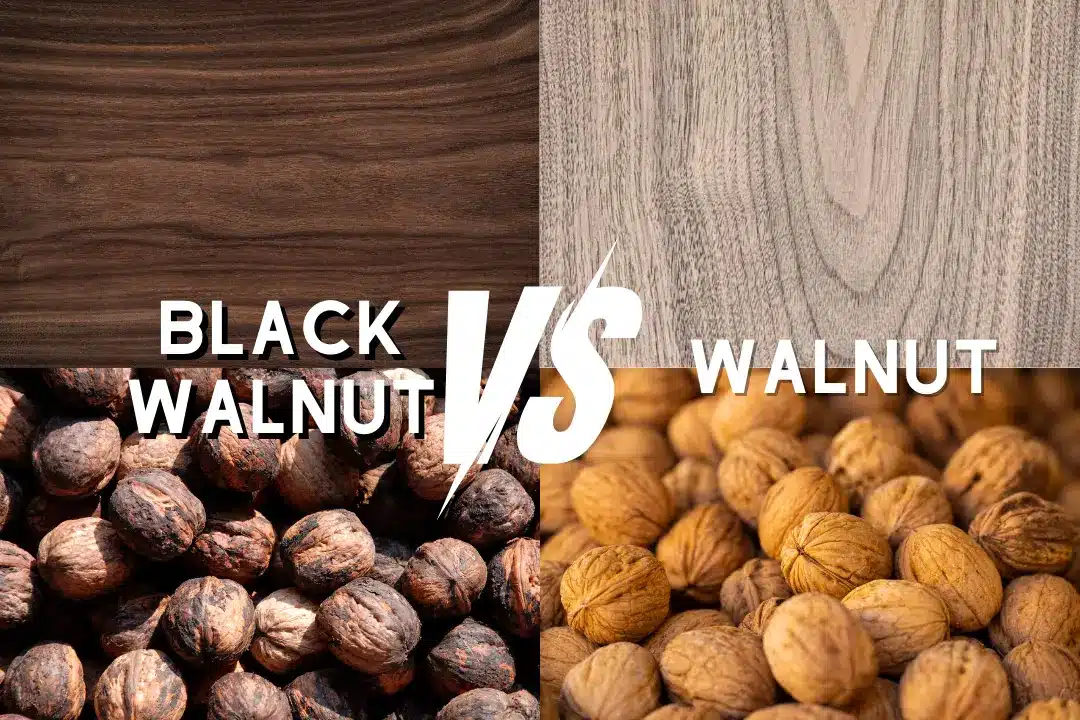
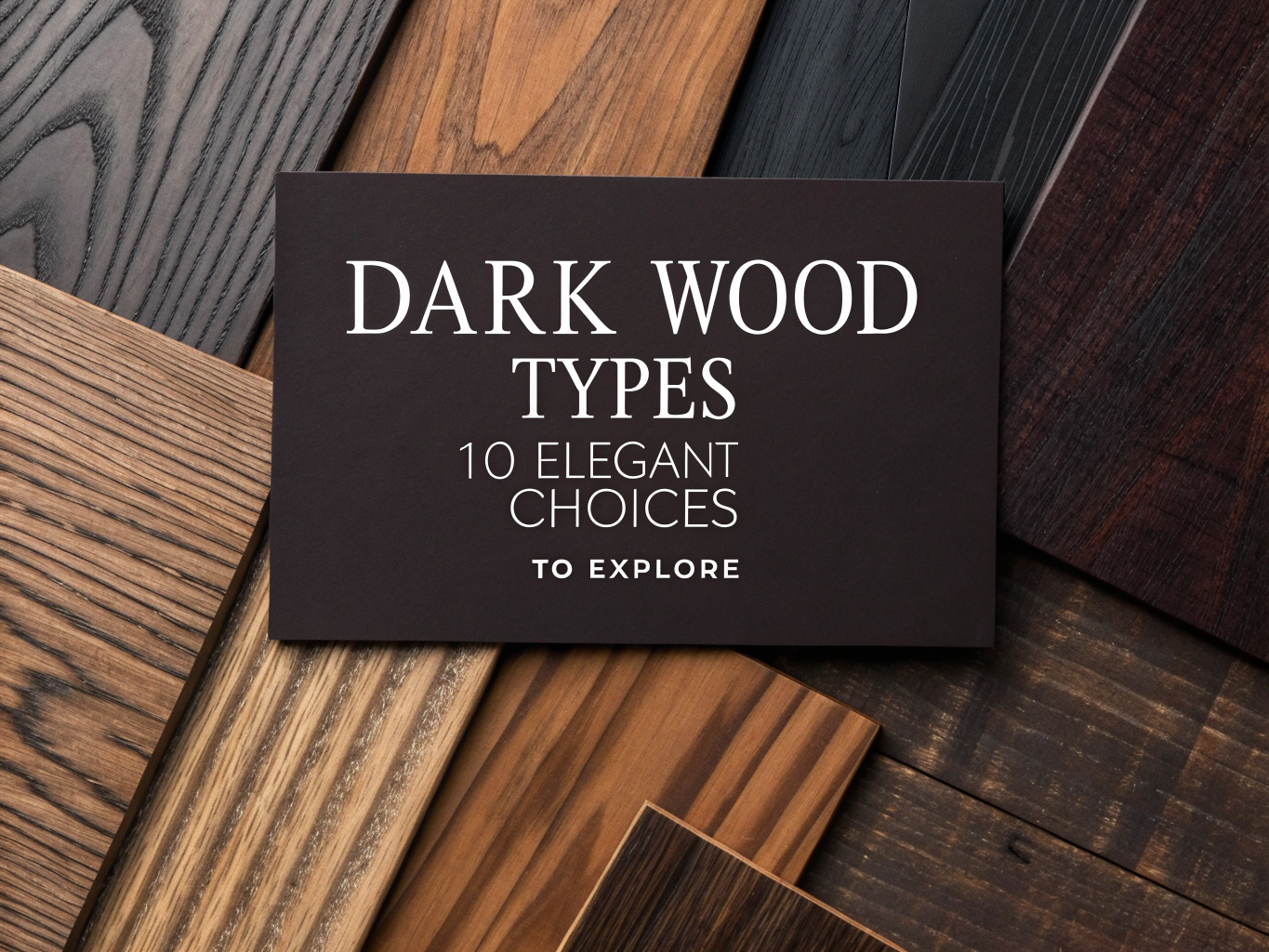
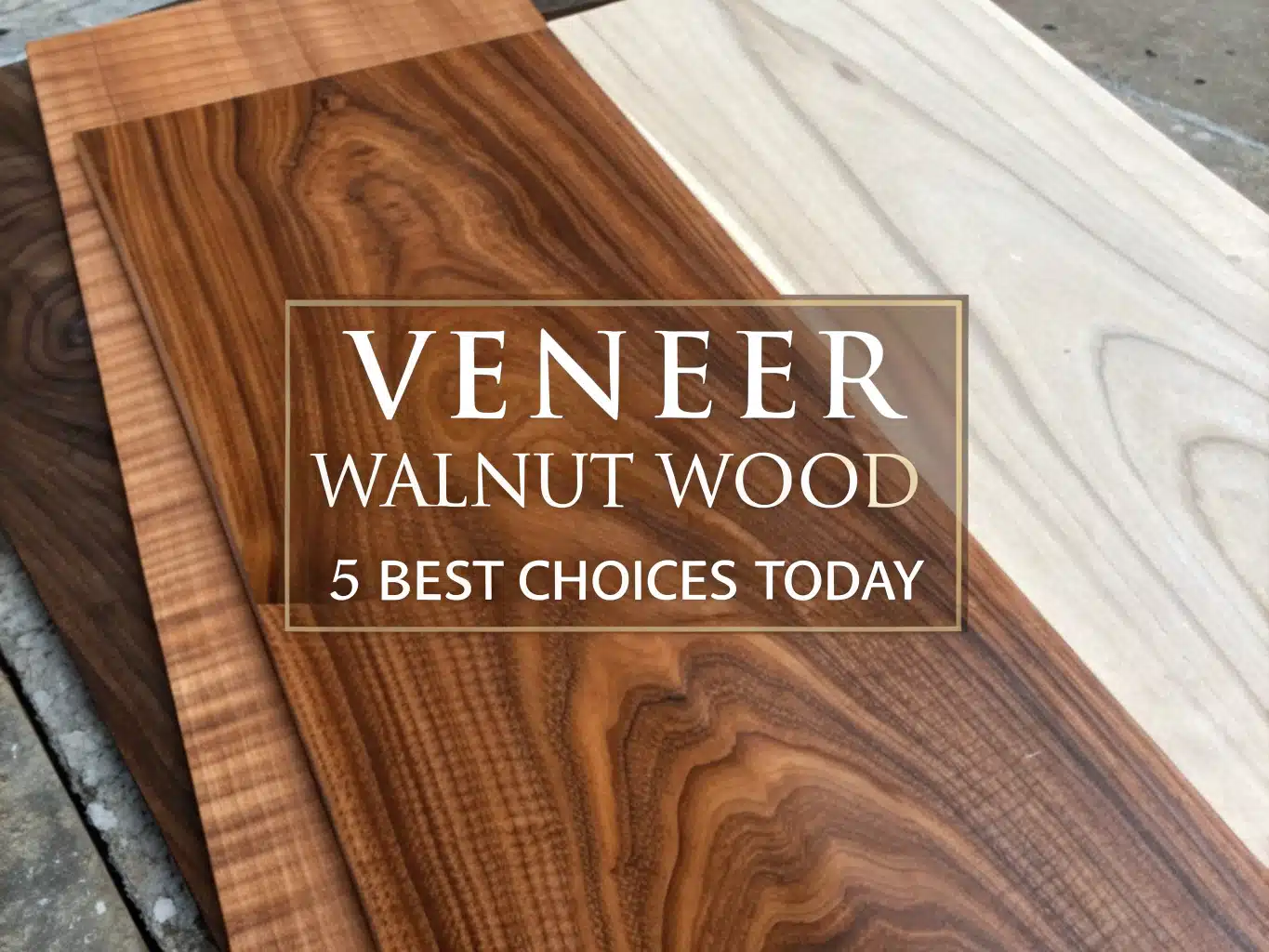
Natural dark woods give grain, pores, color streaks, and tactile texture that black MDF can’t copy. Ebony and African blackwood can feel glassy and heavy, wenge can have coarse open pores, and black walnut often reads as dark brown rather than true black; see our guide to dark wood types for species-level comparisons.
Black MDF advantages
Black MDF advantages include a smooth face, stable sheet format, predictable machining, lower cost than rare black hardwood, and easy paint or vinyl application. It’s better for flat cabinet faces, signs, display panels, laser craft sheets, and furniture parts that don’t need visible natural grain.
Black wood advantages
Black wood advantages include stronger edges, real grain, better screw holding, and a premium feel on touch points like table edges, chair parts, handles, trim, and exposed joinery. If people will grip, knock, or closely inspect the piece, black-stained hardwood often ages better than painted MDF.
Black plywood comparison
Black plywood sits between MDF and solid black wood. It offers better structural strength and screw holding than MDF, while MDF gives a smoother painted face; compare panel construction in our types of plywood guide before choosing shelves or load-bearing panels.
Best material by project
Best material depends on the job: choose black MDF for smooth indoor panels, black wood for exposed grain and touch points, black plywood for stronger frames, and plastic sheet for moisture exposure. A black wood board may look richer, but it won’t always be flatter or easier to finish than MDF.
| Criteria | Black MDF | Black Wood |
|---|---|---|
| Look | Smooth and uniform | Natural grain and variation |
| Cost | Usually lower | Often higher |
| Workability | Easy to machine | Depends on species |
| Moisture resistance | Poor unless sealed or MR grade | Species and finish dependent |
| Strength | Good for panels, not structural | Better for structural furniture parts |
| Best use | Panels, signs, furniture faces | Premium furniture, trim, exposed edges |
Black MDF Alternatives
Black acrylic
Black acrylic gives a clean glossy or matte plastic surface for premium signs, tabletop pieces, and moisture-prone displays. It won’t swell like MDF, but it can crack if drilled too aggressively, so use plastic bits, low pressure, and backing support.
Black PVC
Black PVC is better than standard MDF for outdoor signs, utility panels, and damp display areas. It cuts easily and resists water, but it doesn’t have the same wood-like weight, paint behavior, or screw-holding feel as MDF.
Phenolic birch panel
Phenolic birch panel gives a tougher coated surface over a birch plywood core, which suits workshop furniture, jigs, drawers, and hard-wear panels. It’s heavier-duty than black MDF in many shop settings; learn more in our phenolic plywood guide.

Large Black Foam Boards
- Extra-large sheets for posters and displays
- lightweight foam core is easy to handle
- smooth black surface suits painting and mounting
- ideal for school, office, and craft use
- thick construction helps projects hold shape
Buy on Amazon

Black ABS Plastic Sheet
- Rigid sheet is tough and dependable
- waterproof material suits indoor and outdoor use
- easy to cut for signs and custom pieces
- smooth black surface works for DIY projects
- versatile thermoplastic for hobby and shop use
Buy on Amazon

Black Acrylic Sheet Pack
- Clear-cut black acrylic look for modern projects
- sturdy sheet works for signs and tabletop use
- easy to shape for crafts and invitations
- smooth surface gives a premium finish
- pack of four supports multiple builds
Buy on Amazon

Black PVC Project Sheet
- Rigid PVC is strong and easy to work with
- waterproof design suits outdoor use
- ideal for signs, displays, and crafts
- smooth surface supports clean finishing
- compact size fits many hobby projects
Buy on Amazon

Black Phenolic Birch Panel
- Thick panel delivers strong support
- phenolic coating adds durability and protection
- birch plywood core offers reliable stability
- great for workshop and custom builds
- black finish gives projects a professional edge
Buy on Amazon
| Project | Recommended Material |
|---|---|
| Laser-cut craft signs | Thin black MDF or laser-ready black MDF |
| Cabinet interiors | Black melamine MDF |
| Exposed routed edges | Through-dyed black MDF |
| Outdoor sign | Black PVC, acrylic, ABS, or exterior-rated panel |
| Premium glossy sign | Black acrylic |
| Temporary display | Black foam board |
| Heavy-duty workshop panel | Phenolic birch panel |
| Real grain furniture | Black wood or black-stained hardwood |
Common Problems and Fixes
Practical Notes From Real-World Use
Practical use shows that black MDF fails most often at edges, holes, long spans, and unknown coatings. Before a full build, cut a small sample, rout one edge, drill one screw hole, wipe it with a damp cloth, and test the exact finish you plan to use.
Swollen edges
Swollen edges come from water or humidity reaching raw fiber. The fix is boring but reliable: seal every cut edge, screw hole, and routed profile with primer, lacquer, polyurethane, or edge banding before the panel goes near kitchens, bathrooms, windows, or damp walls.
Chipped melamine
Chipped melamine usually comes from a dull blade, poor support, no scoring, or cutting from the wrong face. Use a sharp fine-tooth blade, masking tape, sacrificial backing, and a shallow first pass to keep the black surface from breaking away in tiny white-edged flakes.
Brown core showing
Brown core appears when black-faced MDF gets routed, chamfered, drilled, or laser cut. Buy through-dyed black MDF for exposed profiles, or hide the edge with black paint, touch-up marker, veneer edging, ABS banding, or a small shadow gap in the design.
Laser smoke residue
Laser residue leaves a gray-brown film around engraved details and cut lines. Use masking film, air assist, extraction, lower power tests, and post-cut cleaning with a soft cloth; never laser cut unknown coated black sheet because harmful gases and sticky deposits can damage the machine.
Sagging shelves
Sagging shelves happen when MDF spans too far for the load. Use thicker MDF, reduce the span, add a front lipping strip, install rear and side battens, or switch to plywood for heavy books, tools, aquariums, or long unsupported shelves.
Poor painted edges
Poor painted edges look dull, rough, or patchy because raw MDF absorbs finish faster than the face. Sand the edge, apply sanding sealer or high-build primer, sand again, then apply finish coats; rushing this step is the fastest way to make black MDF furniture look cheap.
Quick answer: choose through-dyed black MDF when exposed edges matter, black melamine MDF when wipeable cabinet surfaces matter, and a plastic or exterior-rated panel when water exposure matters.
Glamor Wood material note
Black-Faced MDF vs Black Laminate MDF
Black faced MDF is an umbrella term for MDF with one or two black decorative faces. The face may be melamine, high-pressure laminate, paper, foil, paint, or another factory-applied coating, while the MDF core underneath may remain brown. It is not automatically the same as black core MDF.
Black laminate MDF usually means an MDF substrate bonded to high-pressure laminate, although some sellers also call melamine-faced MDF “laminated.” HPL is generally thicker and more resistant to wear and impact than decorative paper or melamine, making it useful for desks, counters, retail fixtures, and other frequently handled surfaces.
Before ordering a black MDF panel, confirm the face material, whether both sides are finished, and what appears after cutting. A matte black MDF face reduces glare and fingerprints, but it does not make the board waterproof. Exposed brown edges still need black edge banding, paint, or a matching trim.
If dent resistance matters more than easy routing or painting, compare the substrate with high-density fiberboard and its differences from MDF. HDF is denser and harder, but it is also heavier and may be less widely available with a black decorative face.
FAQs
Is Black Mdf Black All The Way Through?
No, black MDF is usually not black all the way through. It typically has a dark-colored outer layer or dye, while the core may be lighter brown or gray.
If you cut, sand, or route it, the lighter core can show through at the edges. This is normal and can be hidden with edge paint, veneer tape, or a black finish.
Is Black Mdf The Same As Black Wood?
No, black MDF is not the same as black wood. MDF is an engineered fiberboard made from wood fibers, wax, and resin, while black wood refers to naturally dark hardwoods or stained timber.
Black MDF is more uniform and easier to machine, but it does not have the grain, strength, or natural look of real black wood.
Can You Laser Cut Black Mdf Safely?
Yes, black MDF can often be laser cut safely, but only with proper ventilation and machine settings. MDF produces smoke and fine dust, and the resin content can create stronger fumes than solid wood.
Always test a small piece first, use an exhaust system, and follow your laser cutter’s material guidelines before cutting a full project.
Is Black Mdf Waterproof Or Moisture Resistant?
No, black MDF is not waterproof, and it is only mildly moisture resistant unless it is specially treated. Standard MDF can swell, weaken, or break down when exposed to water.
If you need use in damp areas, choose a moisture-resistant MDF and seal all edges and cut surfaces carefully.
What Thickness Of Black Mdf Should I Use?
The best thickness of black MDF depends on your project, but 12mm to 18mm is common for furniture and shelving. Thinner sheets work well for decorative panels, while thicker boards give better strength and rigidity.
For heavier loads or larger spans, choose a thicker board and support it properly to prevent sagging.
Affiliate Disclosure: Some links in this post are affiliate links. If you make a purchase through these links, we may earn a small commission at no extra cost to you. We only recommend products we genuinely believe in.