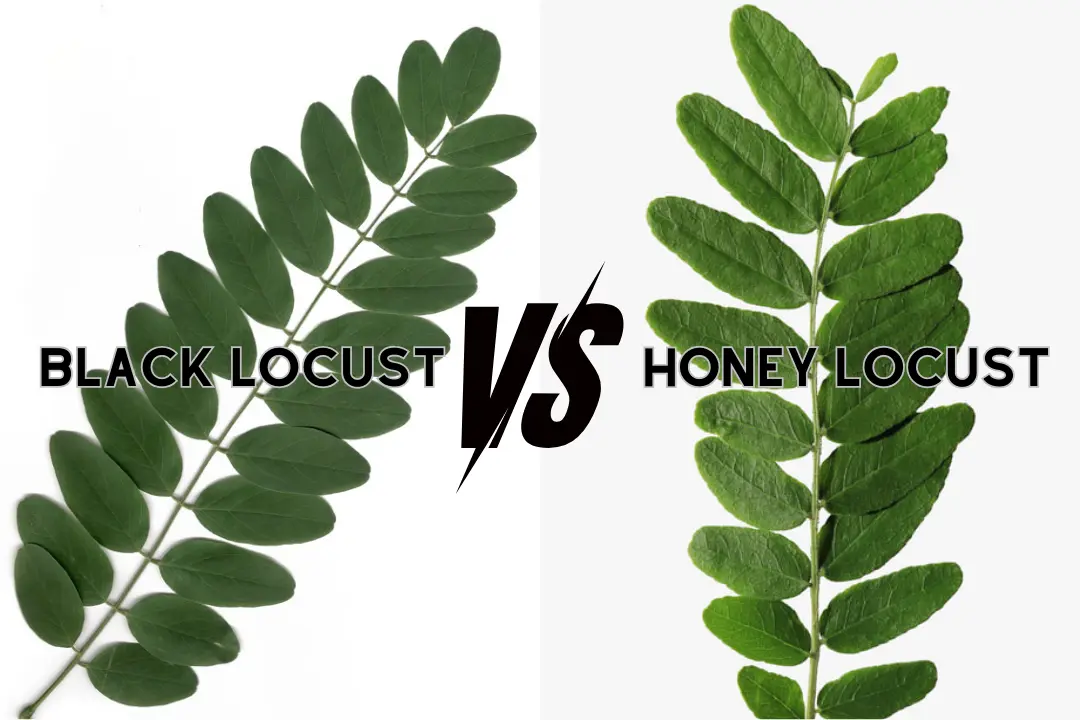

Honey locust vs black locust comes down to four strong clues: honey locust has tiny leaflets, long pods, greenish flowers, and sometimes huge branched thorns, while black locust has larger oval leaflets, short pods, fragrant white flowers, and small paired twig spines. Thornless honey locust cultivars and older spineless black locust branches make multi-trait identification safer than relying on thorns alone.
Table of Contents
Honey Locust vs Black Locust: Quick Difference
At-a-Glance Answer
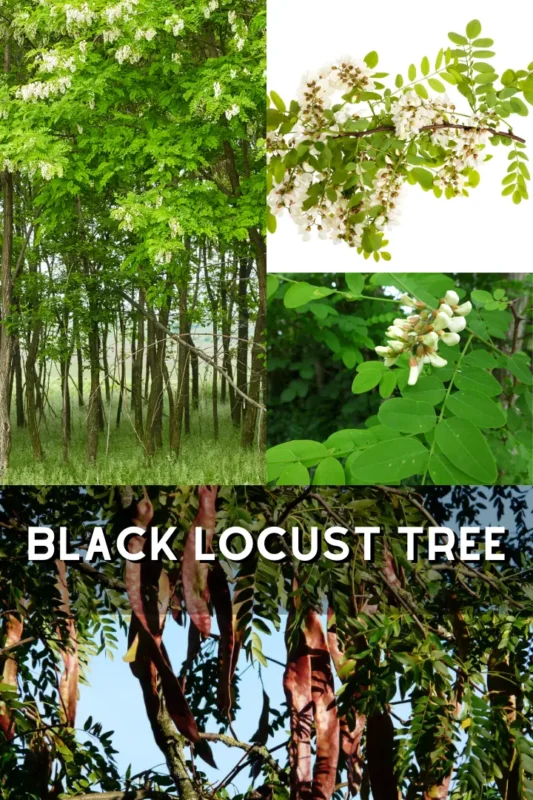
A wild honey locust is easiest to recognize by branched trunk thorns, finely divided foliage, and pods that may reach 7–18 inches. A black locust is marked by aromatic white flower racemes, once-pinnate leaves with broad oval leaflets, 2–4-inch pods, and shoots rising from spreading roots.
Side-by-Side Comparison Table
| Trait | Honey locust | Black locust |
|---|---|---|
| Scientific name | Gleditsia triacanthos | Robinia pseudoacacia |
| Typical height | 60–80 feet | 40–70 feet |
| Leaves | Once- or twice-pinnate; many small leaflets | Once-pinnate; usually 7–19 broad leaflets |
| Sharp structures | Long, woody, often branched thorns on wild trees | Short paired stipular spines on young twigs |
| Flowers | Small and greenish | White, fragrant, and pea-like |
| Pods | Usually 7–18 inches; thick, curved, or twisted | Usually 2–4 inches; thin, flat, and brown |
| Spread | Mostly seed, with some sprouting | Strong root suckering and stump sprouting |
| Nitrogen fixation | Not a dependable fixer | Forms nitrogen-fixing nodules |
| Main hazard | Deep punctures from wild-tree thorns | Toxic bark, leaves, and seeds |
| Wood | Hard, dense, shock resistant | Hard, strong, highly decay resistant |
Most Reliable Clues. Pods and flowers give the fastest answer: long twisted pods favor honey locust, while short flat pods and hanging white blooms favor black locust. Confirm the result with leaflet size, bark, and whether nearby stems form a colony.
Botany, Size, and Growth
Both trees belong to Fabaceae, but they occupy different genera and behave differently. Site quality changes their final dimensions, yet honey locust commonly develops the broader, more open crown.
Species and Genera
Honey locust is Gleditsia triacanthos; black locust is Robinia pseudoacacia. They aren’t varieties of one species and aren’t known to hybridize with each other, despite their shared legume-family traits.
Name Origins
The “honey” name refers to the sweet pod pulp, while triacanthos refers to three-parted thorns. Black locust’s pseudoacacia means “false acacia”; “black” may refer to its dark bark or heartwood.
Mature Size. Honey locust commonly reaches 60–80 feet with a 30–70-foot spread. Black locust often reaches 40–70 feet, though strong sites can produce trees near 80 feet.
Growth and Lifespan. Both establish fast in full sun. Black locust stems can decline sooner than many large hardwoods, but the connected roots may keep sending up replacements long after the original trunk dies.
Hardiness and Tolerances. Both are commonly grown in USDA zones 3–8. Honey locust handles road salt, heat, alkaline ground, and compaction, while black locust performs strongly on dry banks, spoil ground, and eroded sites.
Honey Locust vs Black Locust Identification
For dependable identification, compare leaves, flowers, pods, and sharp structures together. A single clue can fail when a tree is young, pruned, out of season, or a thornless cultivar.
Leaves and Leaflets

Honey locust leaves may be once-pinnate or twice-pinnate, sometimes on the same tree, creating a fine texture that feels light and feathery between the fingers. Black locust leaves are once-pinnate with roughly 7–19 larger, rounded leaflets and usually a terminal leaflet.
Thorns and Spines

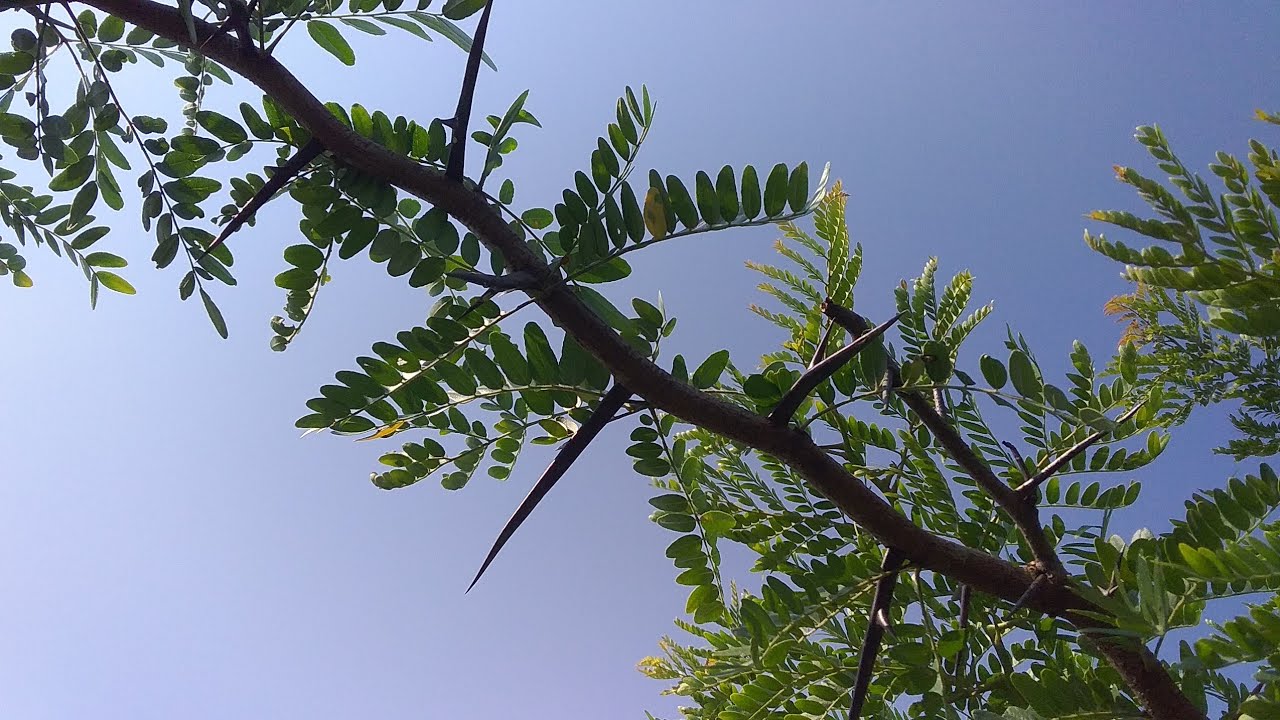
Wild honey locust grows stiff woody thorns on twigs, limbs, and trunks; branched clusters can measure 3–8 inches or longer. Black locust carries paired stipular spines at young leaf nodes, often short enough to hide under foliage.
Flowers. Black locust produces hanging 4–8-inch clusters of white pea-like flowers in late spring. Their sweet perfume can fill the air several yards away, while honey locust’s small greenish blooms are easy to miss.
Seed Pods. Honey locust seed pods are long, leathery, and sometimes twisted, often rattling heavily when dry. Black locust pods are short, papery, flat, and shaped more like narrow brown envelopes.
Bark and Trunk. Mature honey locust bark breaks into gray-brown ridges or plates, with trunk thorns on wild forms. Black locust develops dark, deeply furrowed bark with interlacing, rope-like ridges; compare it with this fuller black locust tree guide.
Tree Form and Canopy. Honey locust usually forms a broad canopy that casts dappled light. Black locust often has an irregular crown, crooked limbs, and multiple neighboring trunks produced by root suckers.
Common Identification Mistakes. Beginners often label any thorny trunk as black locust or any spineless locust as black locust. Large branched trunk thorns favor wild honey locust, while a spineless city tree may simply be a thornless honey cultivar.
Recommended Comparison Images. Photograph the entire leaf, twig nodes, flower cluster, pod beside a ruler, mature bark, and whole canopy. A sharp close-up of the leaf attachment carries more value than an isolated leaflet.
Identification by Season
Spring flowers and autumn pods provide the best seasonal evidence. Winter identification needs several clues because thornless cultivars and mature black locust limbs may lack obvious sharp structures.
Spring Identification
Look and smell for black locust’s white racemes; they carry a rich, sweet scent and arrive during a brief late-spring window. Honey locust produces greenish flower clusters alongside smaller, finer leaflets.
Summer Identification
Compare complete leaves and developing pods during summer. Twice-divided foliage points strongly to honey locust, while broad oval black locust tree leaves remain once-pinnate.
Fall Identification. Pod length becomes the cleanest separator after ripening. Yellow leaf color offers little help because both species can turn yellow before dropping their foliage.
Winter Identification. Long persistent pods and branched trunk thorns indicate wild honey locust. Short pods, deeply corded bark, and a group of similar stems favor black locust.
Thornless Tree Clues. On a cultivated honey locust, look for tiny leaflets, an airy crown, long pods if present, and twigs lacking paired stipular spines. Podless selections require extra attention to foliage and branching.
Range, Ecology, and Spread
Honey locust is native mainly to central North America, while black locust’s accepted native range centers on parts of the Appalachians and Ozarks. Both have moved far beyond those areas, but black locust spreads more aggressively through roots.
Native Ranges
Honey locust naturally occurs in floodplains, valleys, bottomlands, and open woods across central regions. Historic erosion-control, timber, and ornamental planting spread black locust widely, obscuring some range boundaries documented by the USDA Fire Effects Information System.
Naturalization and Invasiveness
Neither species is invasive everywhere. Black locust can form dense clones outside its native area, while honey locust may invade pastures or grasslands where animals spread pod-borne seeds.
Root Systems and Suckering. Black locust sends shoots from lateral roots, sometimes several yards from the parent trunk. Honey locust has a broad competitive root system and may sprout, but seedling production is often the larger management issue.
Removal Challenges. Cutting black locust can trigger a flush of shoots from injured roots and the stump. Treating each new stem as a separate seedling wastes work; map the colony, protect desirable plants, and plan repeated follow-up under local control rules.
Nitrogen Fixation. Black locust forms nodules with symbiotic bacteria that convert atmospheric nitrogen into usable compounds. Honey locust is considered non-nodulating and shouldn’t be sold or planted as a dependable nitrogen-fixing tree.
Wildlife and Pollinators. Bees visit black locust’s nectar-rich flowers, while mammals eat and disperse honey locust pods. Pollinator use doesn’t cancel the ecological damage a dense black locust colony can cause in nutrient-poor native habitat.
Regional Status Checks. Check state, provincial, or national invasive-species lists before planting or moving seed. Legal status, native boundaries, and accepted control methods vary sharply by location.
Toxicity, Edibility, and Hazards
Black locust has a documented chemical poisoning risk, while wild honey locust presents a serious puncture hazard. Similar pods and common names don’t mean the trees share the same safety profile.
Black Locust Toxicity
Black locust bark, leaves, and seeds contain toxic lectins associated with nausea, weakness, abdominal distress, diarrhea, and serious animal illness. The NC State Extension profile lists toxicity concerns for people, pets, and livestock.
Honey Locust Pod Safety
The pulp around mature honey locust seeds has a history of food use and can feel sticky and taste mildly sweet. That record isn’t a blanket declaration that every tree part, unknown cultivar, or roadside pod is safe.
Livestock and Prunings. Never leave black locust branches where horses, cattle, goats, pets, or children can reach them. Freshly cut leafy shoots may look more appealing than attached foliage, which raises exposure risk after pruning.
Thorn Injuries. Wild honey locust thorns can pierce gloves, footwear, tires, and soft tissue. A puncture often feels like a sudden nail prick, followed by deep aching if the thorn enters near a joint.
- Wear puncture-resistant gloves, eye protection, boots, and thick sleeves.
- Inspect the trunk overhead before standing beneath cut limbs.
- Move thorny debris with tools rather than carrying it against your body.
- Keep black locust prunings away from animals and feed storage.
- Seek medical, veterinary, poison-control, or arborist help after suspected poisoning or a deep contaminated puncture.
Safe Handling. Dry thorns remain sharp, and brush piles can hide them for years. Cut long thorn-bearing limbs into controllable sections and place them in rigid containers accepted by the local disposal service.
Professional Guidance. Don’t induce vomiting or improvise poisoning treatment. Contact a veterinarian, poison-control center, medical clinician, or qualified tree-care provider based on whether the concern involves ingestion, injury, or removal.
Landscaping and Site Suitability
Thornless honey locust is usually the better urban shade tree; black locust fits larger rural or managed sites where suckers can be contained. The choice depends on space and maintenance, not growth speed alone.
Honey Locust Landscaping
Honey locust creates filtered shade that lets more grass and low planting survive than a dense-canopied tree would. Its tiny fallen leaflets often slip between turf blades, reducing the heavy, wet leaf mats created by broad leaves.
Thornless Honey Cultivars
Common selections include ‘Skyline’, ‘Shademaster’, ‘Sunburst’, ‘Imperial’, and ‘Northern Acclaim’. Cultivar traits vary in cold tolerance, crown shape, foliage color, mature size, and pod production.
Cultivars and Pod Production. “Thornless” doesn’t automatically mean podless, and sales labels may simplify reproductive traits. Confirm the named cultivar and inspect mature examples growing in the same climate before placing one beside a patio or parking area.
Black Locust Landscaping. Fragrant flowers and fast growth are attractive, but suckers, storm breakage, toxic debris, and local invasive status limit its use in confined beds. Avoid planting it beside paving, vegetable beds, small lawns, or property boundaries.
Urban Shade. Thornless honey locust tolerates salt spray, reflected heat, and compacted ground better than many shade trees. Repeated planting across one neighborhood can raise shared pest and disease exposure, so species diversity still matters.
Poor and Disturbed Soils. Black locust establishes quickly on dry banks and infertile ground partly through nitrogen fixation. That benefit can become a liability where roots enter nearby native plant communities or unstable infrastructure.
Site Selection Trade-Offs. Place honey locust far enough from paths that an overlooked thorny rootstock or seedling can’t threaten foot traffic. Reserve black locust for sites where crews can monitor suckers beyond the original planting hole.
Field Experience Insights. The first black locust shoots often appear after mowing, trenching, or stump cutting rather than before it. Flag new shoots early and trace their pattern; a straight or radiating line frequently reveals the injured parent root and prevents piecemeal treatment.
Wood, Firewood, and Practical Uses
Black locust has the practical advantage for outdoor structures and usually a small heat-output advantage as firewood. Honey locust remains a hard, dense hardwood suited to furniture, handles, specialty projects, and fuel.
Black Locust Wood
Black locust combines high strength with exceptional heartwood decay resistance. Fresh boards feel heavy and can carry a greenish-yellow cast before darkening; learn more about its workability and appearance in the black locust wood profile.
Honey Locust Wood
Honey locust wood is hard, heavy, and shock resistant, with potential for cabinets, furniture, handles, pallets, and firewood. It’s less available through mainstream lumber suppliers, so boards may come from local sawmills or urban-tree salvage.
Hardness and Durability. Published Janka figures often place black locust near 1,700 pounds-force and honey locust near 1,580 pounds-force. Test method, growth conditions, and specimen variation matter; the wood hardness scale explains what those numbers measure.
Fence Posts and Structures. Black locust heartwood is the stronger ground-contact choice because it resists decay with no coating. Pale sapwood lacks equal durability, so remove or exclude thick sapwood from critical post sections and outdoor joinery.
Firewood Comparison. Approximate full-cord estimates place black locust around 27–28 million BTU and honey locust around 26–27 million BTU. Black locust tends to burn slowly and leave firm coals, while both can be difficult to split where grain twists around knots.
Heat and Moisture Variables. Published species figures matter less than actual water content and cord volume. Season split wood to about 20% moisture or lower, check a freshly exposed face with a meter, and compare equal stacked volumes; wet black locust can deliver poorer room heat than dry honey locust despite its higher theoretical rating.
Wood density affects handling, drying, and heat per unit volume, which is covered further in this guide to the density of wood. For identification before cutting or burning, trust pods, flowers, and leaves ahead of split-wood color alone.
FAQs
Are Honey Locust And Black Locust The Same Tree?
No, honey locust and black locust are different tree species. Honey locust has fern-like leaves, long twisted pods, and often large branched thorns. Black locust has fragrant white flower clusters, paired thorns, and shorter, flatter seed pods.
Which Locust Tree Has Large Thorns And White Flowers?
Black locust produces showy, fragrant white flowers and has sharp paired thorns on young branches. Honey locust usually has the largest and most dramatic branched thorns, but its flowers are small and greenish. Checking both the flowers and thorn shape helps identify the tree correctly.
How Can You Tell Honey Locust And Black Locust Seed Pods Apart?
Honey locust pods are long, dark, twisted, and often contain sticky sweet pulp around the seeds. Black locust pods are shorter, flatter, and resemble narrow pea pods. Honey locust pods commonly remain on the tree into winter, while black locust pods are usually less conspicuous.
Is Black Locust Poisonous To Horses And Other Livestock?
Yes, black locust is toxic to horses and other livestock, especially its bark, seeds, leaves, and young shoots. Eating enough plant material can cause digestive upset, weakness, and serious illness. Keep animals away from fallen branches and contact a veterinarian promptly if poisoning is suspected.
Which Is Better For Firewood Honey Locust Or Black Locust?
Black locust is generally better firewood because it burns very hot, lasts a long time, and resists rot. Honey locust is also dense, hot-burning firewood with excellent heat output. Both need proper seasoning, but black locust is often preferred for long-lasting coals and outdoor use.
Affiliate Disclosure: Some links in this post are affiliate links. If you make a purchase through these links, we may earn a small commission at no extra cost to you. We only recommend products we genuinely believe in.