
Thermally Modified Wood: How It Works, Uses, and Limitations

Thermally modified wood is lumber heated to about 160–230°C (320–446°F) in a controlled, low-oxygen chamber, often with steam, to reduce moisture uptake, improve stability, darken its color, and increase resistance to fungal decay. It works well for siding and decking, but it isn’t waterproof, fireproof, termite-proof, or automatically approved for structural framing and ground contact.
Table of Contents
What Is Thermally Modified Wood?
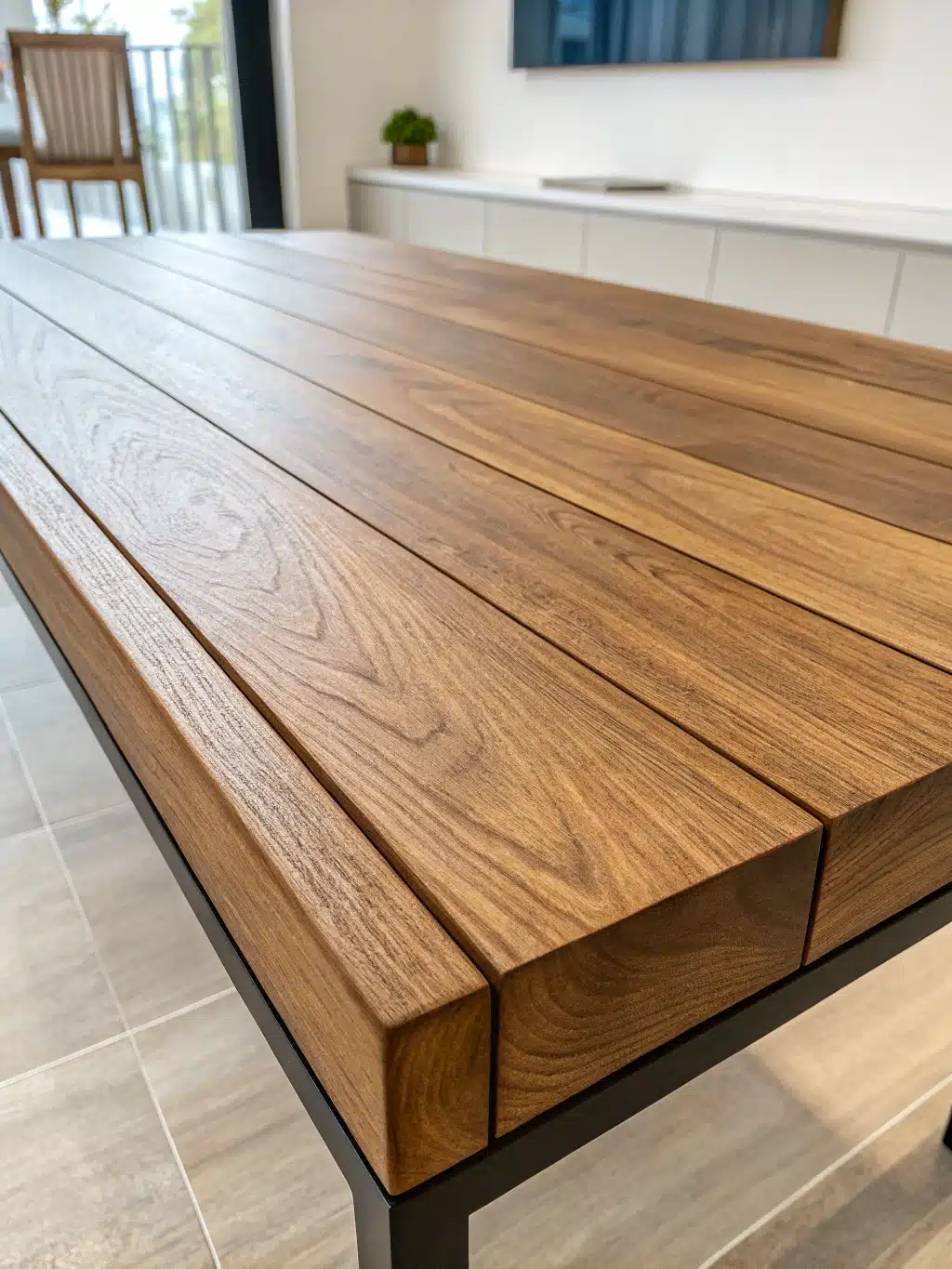
Direct Definition and Heat-Treated Wood Properties
Heat treatment changes wood throughout its thickness rather than placing a protective film on the surface. Controlled heating breaks down part of the hemicellulose, alters lignin, and reduces the number of sites where water molecules readily bond inside the cell walls.
That chemical change separates thermal modification from ordinary kiln-dried wood. Conventional drying removes free and bound water, while thermal treatment changes how readily the dried board takes moisture back from humid air.
Common properties include lower equilibrium moisture content, less swelling and shrinking, improved resistance to some decay fungi, darker through-board color, and reduced impact or bending strength under some treatment schedules. Technical literature often reports equilibrium moisture and dimensional movement reductions around 40–60%, but species, temperature, board thickness, and test method can shift those figures.
- Temperatures commonly range from about 160°C to 230°C.
- Steam or an inert atmosphere limits oxygen and helps prevent combustion.
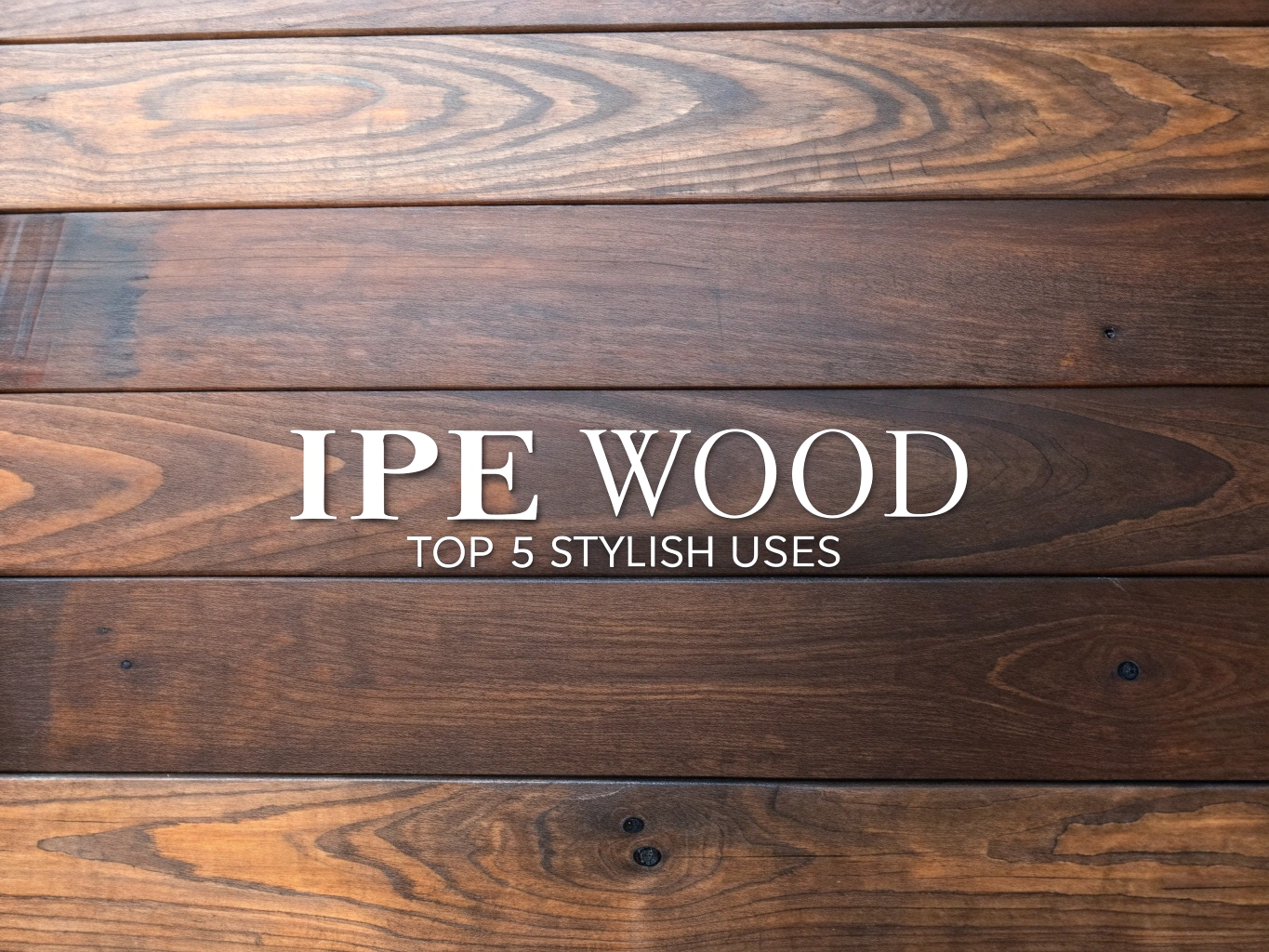
- Color can range from warm caramel to deep brown.
- Fresh cuts expose a similar dark base tone rather than pale untreated wood.
- The process can modify ash, pine, spruce, poplar, and radiata pine.
Freshly machined boards often have a toasted, dry aroma rather than the resin-rich smell of ordinary pine. Their surface can feel smooth and almost powder-dry, while thin corners sound sharper and more brittle when boards tap together.
Moisture, Stability, Decay Resistance, and Limits
Lower moisture uptake reduces the repeated cell-wall expansion that causes cupping, twisting, and open joints. Movement doesn’t stop completely, so installers still need the required deck gaps, siding clearances, end spacing, and ventilation cavities.
Thermal treatment can improve fungal decay resistance because modified wood stays drier and contains fewer accessible nutrients for fungi. The USDA Forest Products Laboratory explains the relationship between wood moisture and biological deterioration in its Wood Handbook; product-specific decay test reports remain the best evidence for a purchase decision.
It can still rot. Standing water, blocked deck gaps, wet end grain, soil contact, failed flashing, and poorly ventilated assemblies can keep the material damp long enough for deterioration. A dark stain around a fastener may indicate metal corrosion, while soft fibers that compress under a blunt screwdriver call for closer inspection.
Thermally modified wood isn’t waterproof or fireproof. It also isn’t automatically termite-resistant, maintenance-free, structural, or suitable below grade. Those uses require product-level testing, grading, a code report, or written approval from the manufacturer and local building authority.
Beginners sometimes treat the rich brown color as proof that every board received the same durability treatment. Color isn’t certification: species, peak temperature, dwell time, chamber atmosphere, and factory control can produce similar-looking boards with different performance.
How Thermal Modification Works
Thermal modification works by drying lumber, holding it at a controlled high temperature, then cooling and reconditioning it. More intense treatment usually produces greater moisture stability and decay resistance, but it can also cause greater strength loss and brittleness.
Heating, High-Temperature Treatment, and Reconditioning
During heating and drying, lumber enters a sealed kiln or modification chamber where heat rises in controlled stages. Moisture leaves the boards, and steam helps control the chamber atmosphere while reducing the chance of scorching or ignition.
At the high-temperature stage, the kiln holds the target temperature for a set period. Heat degrades parts of the hemicellulose and changes cell-wall chemistry; hotter or longer cycles tend to create deeper modification at the cost of more mechanical-property loss.
The process ends with cooling and reconditioning. Steam or water mist lowers the temperature and returns a controlled amount of moisture, with some systems producing final moisture contents near 4–7%. Boards that leave the kiln too dry can feel unusually crisp and split readily during rough handling.
Treatment Variables, ThermoWood Certification, and Classes
Treatment variables matter because ash, pine, spruce, and poplar don’t respond identically to heat. Peak temperature, dwell time, oxygen level, steam rate, initial moisture, thickness, grain orientation, and post-treatment conditioning all affect stability, checking, color, and strength.
ThermoWood is a controlled production and certification framework, while thermally modified wood is the broader material category. The International ThermoWood Association publishes process and classification guidance, but its class names shouldn’t be assigned to products made under unrelated systems.
| ThermoWood class | Approximate treatment temperature | Main emphasis | Typical selection logic |
|---|---|---|---|
| Thermo-S | 185°C (365°F) | Stability | Applications where moisture movement is the main concern and exposure is less severe |
| Thermo-D | 212°C (414°F) | Durability | More demanding exterior applications supported by product documentation |
Thermo-S emphasizes stability and receives a less intense treatment. Thermo-D emphasizes durability and commonly serves exterior cladding or decking, yet the class alone doesn’t confirm structural capacity, fire performance, termite resistance, or ground-contact approval.
Benefits and Limitations
The main benefits are improved dimensional stability, better resistance to fungal decay, consistent through-board color, and modification without conventional preservative chemicals. Its main trade-offs are brittleness, possible strength loss, UV graying, limited insect and ground-contact claims, higher cost, and uneven regional availability.
Stability, Decay Resistance, Color, and Preservative-Free Modification
Dimensional stability makes the material useful for wide siding, tongue-and-groove profiles, deck boards, soffits, trim, and sauna interiors. In exposed work, a straighter board keeps cleaner shadow lines and places less stress on clips, screws, coatings, and joints.
Decay performance comes from reduced moisture absorption and heat-driven changes to nutrients used by fungi. Laboratory classifications describe performance under defined tests; they don’t replace drainage details or approve a board for every climate and exposure category.
The process creates a darker through-board color, so routed edges and fresh cuts don’t reveal the pale core seen under a surface stain. Sunlight still breaks down exposed lignin, turning unfinished boards silver-gray over time.
The modification stage normally uses heat and steam rather than copper-based or biocidal preservatives. Calling every finished product “chemical-free” goes too far because factory stains, fire treatments, adhesives, cleaners, and end coatings may be present.
Thermal treatment can make faster-growing species useful in exterior work. Sustainability still depends on forestry practices, kiln fuel, production yield, shipping distance, service life, coating cycles, and replacement frequency; treatment alone doesn’t settle the environmental comparison.
Brittleness, Structural Loss, Weathering, and Cost
Brittleness and splitting show up most often at unsupported ends, narrow tongues, sharp corners, and screws placed too close to a board end. Support long boards during unloading, use a fine-tooth blade, predrill where directed, and reduce driver torque before the screw head reaches the surface.
Mechanical studies report strength changes ranging from modest losses to roughly 10–30% under some species and treatment combinations. Treat that range as technical context, not a product guarantee, because temperature, duration, moisture, specimen size, and test method affect the result.
Never substitute modified decking for structural framing without grading and written approval. Deck boards may sit over pressure-treated joists, steel framing, or another rated substructure because surface durability doesn’t prove beam, post, ledger, or joist capacity.
UV graying isn’t the same as rot. A weathered board may be firm and dry beneath its silver surface, while uneven sun behind furniture, planters, rugs, roof overhangs, and shaded elevations can leave patchy brown and gray areas.
Insect resistance varies with species, treatment schedule, insect type, moisture, and test conditions. Don’t describe a board as termite-proof without product-specific data, and don’t infer ground-contact approval from a general claim about decay resistance.
The wood absorbs less water but remains permeable to moisture. Waterproof roofs, occupied rooms beneath decks, soil-contact posts, docks, and marine work require separate membranes or products approved for those exposures.
Cost and availability vary more than they do for common cedar or pressure-treated lumber. Modified ash often costs more than pine or spruce, while freight, proprietary profiles, special clips, factory finishing, and limited dealer stock can outweigh the advertised board price.
Thermally Modified Wood Siding

Thermally modified wood siding combines natural grain with lower moisture movement, making it useful for stable rainscreen cladding and detailed façade profiles. The siding remains an outer screen, so the wall still needs a continuous water-resistive barrier, reliable flashing, drainage, and ventilation.
Siding Benefits and Rainscreen Wall Assembly
Siding benefits include straighter joints, reduced seasonal movement, warm natural color, relatively low board weight, and the option to weather gray or carry a pigmented finish. Stable wood is useful, but it can’t correct uneven framing or an out-of-plane furring grid.
A sound rainscreen assembly normally includes structural sheathing where required, a code-compliant water-resistive barrier, flashed openings and penetrations, furring that creates a drainage cavity, screened ventilation openings, and the finished cladding.
- Lap the weather-resistive barrier and flashing so water drains outward.
- Flash windows, doors, deck ledgers, roofs, pipes, vents, and wall bases.
- Use vertical furring behind horizontal siding to create a continuous drainage path.
- Use counter-battens where vertical siding needs horizontal attachment points.
- Keep cavity openings clear and add insect screening where required.
- Follow listed roof, paving, grade, and horizontal-surface clearances.
Barriers and flashing do the primary water-control work. Caulk alone can’t repair reverse laps or missing sill pans, and a beautiful façade can begin staining within one wet season if runoff enters behind the boards at a window corner.
Use the manufacturer’s required cavity depth rather than adopting one universal value. Narrow cavities can work in approved systems, but crushed mesh, excess membrane folds, mortar, sawdust, or horizontal blocking can interrupt drainage and airflow.
Siding Profiles, Fasteners, Ventilation, and Finishes
Siding profiles include tongue and groove, shiplap, channel, bevel, board and batten, rhombus slats, and open-joint rainscreen boards. Compare exposed face coverage rather than nominal width because laps, tongues, and gaps change the quantity needed.
Open-joint cladding requires a UV-stable membrane rated for long-term exposure behind the gaps. Ordinary housewrap may fade, become brittle, or remain visibly distracting, while black furring and dark fasteners help preserve the intended shadow-line appearance.
Use approved stainless fasteners or the corrosion-resistant type listed by the siding supplier. Fastener length, head style, framing penetration, end distance, blind-fastening limits, and local wind loads all affect the schedule.
Predrilling near ends is a reliable split-prevention method, especially with modified ash and thin softwood profiles. A clean countersink should seat the head without crushing fibers; an overdriven screw leaves a dark, dish-shaped recess that catches water.
Drainage and ventilation must remain continuous at wall bases, window heads, transitions, and parapets. Installers often create hidden dams by packing joints with sealant or running horizontal furring without drainage gaps.
Siding can remain unfinished for natural silver weathering, or it can receive a compatible pigmented UV finish. Clear water repellents slow wetting but provide limited color retention, while pigment blocks more ultraviolet light and produces a more even aging pattern.
For related species and detailing choices, compare the material with cedar wood. Cedar may be easier to source and replace locally, while thermal modification can provide lower moisture movement in an approved siding product.
Thermally Modified Wood Decking

Thermally modified wood decking offers real grain, reduced seasonal movement, and better fungal-decay resistance than comparable untreated wood. Successful decks still rely on rated structural framing, specified joist spacing, open drainage gaps, underside airflow, compatible fasteners, and adequate ground clearance.
Modified Ash, Pine, and Spruce Decking
Modified ash is dense, hard underfoot, and often selected for premium decks. Its crisp grain and smooth face feel refined, yet its density and heat-related brittleness make correct pilot holes and approved clips valuable near ends and edges.
Modified pine offers a lighter, lower-density option that often costs less than ash. It accepts everyday foot traffic but dents more readily beneath metal furniture legs, dropped tools, grills, and narrow planter feet.
Modified spruce is lightweight and common in European thermal-wood production. Some spruce profiles are cladding rather than walking surfaces, so buyers need written confirmation that the exact thickness, grade, and groove design are approved for decking.
| Species | Relative handling feel | Practical advantage | Common trade-off |
|---|---|---|---|
| Modified ash | Dense and firm | Hard-wearing surface and premium grain | Higher price and greater need for careful fastening |
| Modified pine | Light and softer | Lower-cost natural-wood option | Dents more readily |
| Modified spruce | Light and crisp | Stable softwood with low handling weight | Deck-rated profiles may be less widely available |
Hardness affects denting, not every aspect of durability. The wood hardness scale helps compare species, but it doesn’t replace decay data, treatment documentation, or installation limits.
Joist Spacing, Gaps, Fasteners, Drainage, and Deck Details
Set joist spacing and gaps from the product manual. Board thickness, species, profile, installation angle, clip geometry, stair use, and expected loads prevent one spacing rule from working across every product.
Support every end joint and maintain the listed end-to-end clearance. Unsupported butt joints flex and split, while gaps packed with leaves hold a dark ribbon of damp debris against the end grain.
Hidden fastener systems create a clean face, but clips aren’t interchangeable. Groove depth, shoulder thickness, clip width, screw angle, and expansion allowance differ, so a near-fit can leave loose boards or fracture the groove during tightening.
Face-fastening works well where permitted. Predrill as directed, keep screws clear of ends, and stop the driver as the head becomes flush; overdriven screws crush the surface and create small water pockets.
Drainage and ventilation protect both the boards and substructure. Keep deck gaps open, slope supporting waterproof layers to drains, avoid placing solid rugs over large areas, and raise planters on broad feet that permit drying.
Dark brown decking can become hot in sunlight. Air temperature, wind, moisture, pigment, board density, and solar exposure all matter, so no broad “cooler than composite” claim is reliable without side-by-side testing of the selected products.
Maintain the manufacturer’s ground clearance and don’t bury fascia or sleepers in soil. A low deck needs enough cross-ventilation to release moisture; tightly enclosed skirting can leave the underside smelling earthy and feeling clammy after rain.
Deck boards don’t form a waterproof roof. Occupied space beneath a deck requires a separate drainage or roofing system with planned outlets, access for cleaning, and details that don’t trap wet debris against wood.
Optional deck details can finish balcony, patio, or platform edges, but small fascia components aren’t substitutes for structural joists or full-size deck boards. Check dimensions, attachment method, load limitations, coating, profile fit, and exterior-use instructions before ordering.

Thermally Modified Deck Fascia
- Made with thermally modified wood
- Low-profile outdoor flooring detail
- Dip-coated for added surface protection
- Designed for balconies and poolside spaces
- All-weather decking tile component
 Buy on Amazon

Thermal Pine Deck Fascia
- Solid imported Scotch pine construction
- Thermally modified for outdoor use
- Low-profile prefabricated deck detail
- Fits balcony and patio projects
- Useful for clean platform edges
Buy on Amazon
Sealing, Maintenance, and Lifespan
Thermally modified wood doesn’t always need sealer for its basic decay resistance, but a compatible finish can reduce surface wetting, simplify cleaning, slow checking, and retain brown color when it contains UV-resistant pigment. No single lifespan applies because exposure, detailing, species, treatment, workmanship, and maintenance differ.
Sealing, Color Retention, Finish Compatibility, and Recoating
Sealing requirements come from the wood and coating manufacturers. Some products may weather unfinished, while factory warranties may require end sealing, all-face coating, a named finish system, or preparation within a set period.
For color retention, a penetrating pigmented oil usually blocks more UV than a clear water repellent. Clear finishes may deepen the brown tone at first, yet that wet-looking richness shouldn’t be mistaken for lasting sun protection.
Low absorbency can change finish compatibility. A coating that soaks quickly into untreated pine may sit tacky on modified wood, while a thick film can peel from horizontal surfaces when water enters through cuts, checks, or fastener holes.
- Read both the board and coating technical sheets.
- Test color, penetration, adhesion, and drying on spare material.
- Prepare the surface with the specified cleaner or sanding grit.
- Coat end grain when required.
- Record temperature, wood moisture, and weather during application.
- Check whether the coating changes deck slip resistance.
- Keep the sample board for future color and adhesion checks.
Cleaning and recoating should begin with dry sweeping and a mild cleaner approved for the finish. Aggressive pressure washing lifts soft fibers and leaves pale wand marks; use low pressure, work with the grain, rinse fully, and let the wood dry before refinishing.
Recoat when the surface shows fading or uneven wetting, not according to a universal calendar. South- and west-facing walls, uncovered decks, stair nosings, and pool edges usually weather faster than sheltered siding beneath deep overhangs.
The products below are optional exterior sealers, not automatic recommendations for every modified board. Test adhesion, penetration, color shift, dry time, slip, recoat procedure, and warranty compatibility before treating the full project.

Plant-Based Wood Sealer
- Plant-based wood treatment
- Resists moisture and UV exposure
- Suitable for indoor and outdoor wood
- Pet and garden-bed safe formula
- Odorless application with no harsh fumes
Buy on Amazon

Nano Poly Deck Sealer
- Clear waterproofing finish
- Polyurethane-enhanced protection
- Made for decks and fences
- Water-based low-VOC formula
- Helps protect exterior wood surfaces
Buy on Amazon
Service-Life Factors, Warranties, and Warning Signs
Service life depends on species, treatment intensity, board quality, climate, sun, ground clearance, drainage, ventilation, substructure condition, installation, fungi, insects, and maintenance. Some manufacturers describe exterior service lives or warranties around 20–30 years or longer, but those claims belong to named products under stated conditions.
A warranty isn’t lifespan. Material may remain usable after a warranty expires, while poor flashing can cause failure long before it does; coverage may exclude labor, freight, finish loss, color variation, checking, incorrect clips, ground contact, or blocked ventilation.
Inspect warning signs such as persistent softness, deep checks around screws, loose clips, ponding at ends, blocked gaps, algae, dark staining below windows, and boards moving underfoot. Gray color alone isn’t proof of decay.
A springy deck may point to a substructure failure rather than defective surface boards. Probe joist tops, rim boards, stair connections, ledger areas, and fastener zones before replacing otherwise sound decking.
Thermally Modified Wood Comparisons
Thermally modified wood offers greater stability than many untreated woods and a natural surface that can be refinished, but pressure-treated lumber has broader structural and ground-contact options, composites need less color maintenance, and Accoya or Kebony use different modification processes.
Pressure-Treated Wood, Cedar, Composite, Accoya, and Kebony
| Material | Modification or protection method | Moisture stability | Decay strategy | Maintenance | Structural caution |
|---|---|---|---|---|---|
| Thermally modified wood | High heat in a controlled atmosphere | High relative to untreated wood | Reduced moisture uptake and altered wood chemistry | Optional finish; pigment needed for brown-color retention | Don’t assume structural approval |
| Pressure-treated wood | Preservatives forced into wood | Varies by species and drying | Biocidal preservatives | Can be stained or sealed | Structural grades and use categories are available |
| Cedar | Natural extractives | Moderate | Durability varies by species and heartwood content | Weathers gray or accepts finish | Species and grade matter |
| Composite decking | Wood fiber and plastic, or mineral-polymer formulation | Low water-driven movement in many products | Nontraditional wood-decay pathway | Cleaning; many products aren’t stained | Requires listed joist spacing |
| Accoya | Acetylation | Very high | Changes accessible hydroxyl groups | Can weather or be coated | Use product-level engineering data |
| Kebony | Furfurylation | High | Polymer modification within wood | Can weather naturally | Don’t classify it as thermally modified |
Pressure-treated wood relies on preservatives and is widely available in recognized structural and ground-contact categories. Thermally modified material is more often selected for visible, above-ground surfaces where appearance and stability have high value.
Cedar relies on natural extractives, with durability varying between sapwood and heartwood and across cedar species. It may be easier to buy locally, cut, fasten, and replace, while modified wood can offer lower seasonal movement.
Composite decking resists water-driven movement and often includes long finish warranties, but it expands differently from wood and can’t always be sanded or refinished. It can become hot in sunlight, and its framing spans vary by product and installation angle.
Accoya wood uses acetylation to change accessible hydroxyl groups. Kebony uses furfurylation that forms polymers within the wood; neither process is thermal modification, though all three aim to improve wood performance.
Application, Maintenance, Structural, and Ground-Contact Comparison
For application comparison, thermally modified wood suits visible siding, decking, soffits, screens, and interior paneling when documentation supports the use. Pressure-treated lumber remains a common choice for concealed framing and soil exposure, while composite serves nonstructural walking surfaces.
Maintenance comparison depends on the desired appearance. Unfinished modified wood and cedar turn gray, pigmented wood finishes need renewal, and composite needs washing but can show scratches, staining, mold films, or heat deformation that can’t be refinished like solid wood.
For structural use, select graded material recognized for the intended load. Thermal modification may reduce bending and impact capacity, so attractive deck boards shouldn’t become joists, beams, posts, stair stringers, or ledgers without engineering data.
Ground-contact approval must be explicit. Pressure-treated products are sold by use category, while Accoya, Kebony, and thermal products have brand- and product-specific claims that shouldn’t be transferred between species, thicknesses, or markets.
Compare each option by installed system cost, not broad material labels. Profile coverage, framing changes, clips, membranes, freight, waste, finish, labor, repair access, and replacement-board availability can reverse an apparent price advantage.
Buying and Cost Guide
Before buying thermally modified wood, verify the species, treatment class, approved application, profile coverage, fastening system, warranty, fire data, and ground-contact limits. Convert lineal-foot prices to effective square-foot cost, then add waste, freight, substructure, accessories, finishing, and labor.
Product Documentation, Application Approval, and Delivery Checks
Request product documentation before accepting a quote. A sample and sales description can’t replace the installation manual, technical data sheet, warranty, durability tests, coating guidance, and code reports required for the project.
- Species and botanical name
- Thermal-modification process and treatment class
- Approved siding, decking, interior, or sauna application
- Above-ground or ground-contact limitations
- Structural grade and span data, where claimed
- Actual dimensions and effective board coverage
- Maximum joist or furring spacing
- Approved screws, clips, and predrilling instructions
- Finish and end-sealing guidance
- Warranty exclusions and claim procedure
- Fire and slip test data where required
- Environmental Product Declaration and sourcing certificates
Species and treatment class need separate entries. “Thermal pine” doesn’t identify the botanical species, peak treatment, durability evidence, surface grade, profile, or walking-surface approval.
Confirm application approval in writing. A thin rhombus profile sold for façades may look like narrow decking, but it may lack the thickness, groove support, surface rating, and span required under foot traffic.
Match fasteners and profiles before ordering. Proprietary grooves can require one clip model, and replacement clips may change; record the brand, profile name, actual dimensions, fastener code, finish color, treatment, and production batch.
At delivery, check every package label against the order before cutting bands. Inspect straightness, split ends, broken tongues, edge damage, surface checking, finish consistency, clip fit, lot numbers, and moisture or storage instructions.
Store boards flat on evenly spaced supports in a dry, shaded, ventilated area. Long pieces can develop a permanent bow when supported only at their ends, and sealed plastic wrapping can trap condensation after outdoor temperature swings.
Follow the supplier’s acclimation directions rather than assuming ordinary lumber rules apply. Thermally modified boards often arrive drier than local air conditions, and opening every package too early can produce uneven moisture exposure across the stack.
Cost, Codes, Safety, Sustainability, and Practical Notes From Real-World Use
Effective board coverage is the exposed width after accounting for tongue overlap, shiplap overlap, required deck gaps, or open joints. Nominal width inflates coverage and leads to expensive shortages late in the installation.
Use this lineal-foot conversion: cost per square foot = price per lineal foot × 12 ÷ effective coverage in inches. A board priced at $5 per lineal foot with 5.5 inches of effective coverage costs about $10.91 per square foot before waste and accessories.
| Example input | Value | Calculation or result |
|---|---|---|
| Project area | 500 square feet | Base measured area |
| Effective board coverage | 5.5 inches | Use exposed width, not nominal width |
| Required lineal feet | 1,090.9 feet | 500 × 12 ÷ 5.5 |
| Price | $5 per lineal foot | $5,454.50 before waste |
| 15% estimating allowance | 163.6 lineal feet | About 1,254.5 total lineal feet |
| Board material after allowance | $6,272.50 | Excludes freight, clips, labor, finish, and substructure |
Use 10–15% waste as a planning allowance for straightforward rectangular layouts. Diagonal decks, stairs, picture frames, complex façades, extensive trimming, short-board patterns, and strict color sorting may need 15–20% or more.
The full installed cost includes boards, taxes, freight, clips, screws, joists or furring, rainscreen accessories, membranes, flashing, finish, equipment, labor, disposal, attic stock, cleaning, and future recoating. Oversize freight can make a distant low board price less competitive than local stock.
Ask the supplier whether the warranty covers material, labor, freight, coating, checking, decay, or only manufacturing defects. Also ask which installation actions void coverage and whether the same profile and clip system are likely to remain available.
Fire requirements vary by species and assembly. Thermal modification doesn’t make wood fire-resistant, so request product-specific ASTM, EN, or code-recognized data for wildfire zones, high-rise façades, commercial projects, and regulated exterior walls.
Don’t transfer a fire-test result from one thickness, coating, mounting method, cavity, or species to another. The International Code Council provides access to model-code information through the International Codes, while local adoption and amendments control the project.
Slip performance changes with texture, finish, water, algae, wear, frost, and cleaning residue. Pool decks, stairs, ramps, commercial walkways, and accessible routes need product-level test values rather than assumptions based on visible grain.
Cutting creates fine wood dust with a dry, toasted odor that can linger in an enclosed shop. Use dust extraction, eye and hearing protection, and suitable respiratory protection; follow the safety data for any factory-applied coating.
Environmental claims need verifiable evidence. Ask for an Environmental Product Declaration, life-cycle assessment, kiln-energy disclosure, forestry source, coating information, transport route, and expected service conditions rather than accepting “green” or “carbon neutral” at face value.
FSC certification or PEFC documentation can verify sourcing and chain of custody within its stated scope. It doesn’t certify thermal-treatment quality, decay class, structural performance, finish safety, or service life.
During real installations, the most common mistake is forcing warped framing to dictate board alignment. Snap control lines, plane or shim the furring or joists first, and reject severe board defects rather than pulling every piece straight with screws.
Another frequent error is cutting all boards first. Install and measure in stages because actual wall and deck dimensions drift, while proprietary profiles may have small batch differences that compound across wide surfaces.
Keep a setup board beside the saw for pilot-hole size, countersink depth, driver torque, coating tests, and clip fit. This scrap catches adjustment errors before they split an expensive finished board.
Buy several full-length spare boards from the same lot and store them flat indoors. Future replacement pieces from another production run may differ in profile, grain, initial brown tone, and weathering rate.
Choose thermally modified wood when its stable natural surface, through-board color, and above-ground durability justify the premium. Choose another material where structural loads, soil contact, marine exposure, fire rules, minimal color care, local supply, or replacement access carry more weight.
FAQs
What Are The Disadvantages Of Thermally Modified Wood?
The main disadvantages of thermally modified wood are higher cost, increased brittleness, and reduced structural strength. The heating process can make it less resistant to impacts, so it is not ideal for every structural use. Its darker color may also weather to gray outdoors without a protective finish.
How Long Does Thermally Modified Wood Last Outdoors?
Thermally modified wood can last 15 to 30 years outdoors when it is installed correctly and kept away from standing water. Its lifespan depends on the wood species, climate, ground contact, and maintenance. Proper ventilation, corrosion-resistant fasteners, and a suitable finish can help extend its service life.
Does Thermally Modified Wood Need To Be Sealed?
Thermally modified wood does not need sealing for decay resistance, but sealing is recommended to protect its color and surface. Without a UV-resistant finish, it will naturally fade to a silver-gray color in sunlight. Apply an exterior oil or stain if you want a more even appearance and easier cleaning.
Is Thermally Modified Wood Waterproof?
Thermally modified wood is not waterproof, but it absorbs less moisture than ordinary untreated wood. Its improved stability helps reduce swelling, shrinking, and cupping. It can still absorb water through end grain, cuts, and prolonged exposure, so protect vulnerable areas with proper installation details.
Is Thermally Modified Wood Better Than Pressure-Treated Wood?
Thermally modified wood is better than pressure-treated wood for some projects, especially when appearance, dimensional stability, and chemical-free treatment matter. Pressure-treated wood is usually less expensive and often better for ground contact or structural applications. Choose thermally modified wood for premium cladding or decking, and pressure-treated lumber for budget-conscious, heavy-duty projects.
Affiliate Disclosure: Some links in this post are affiliate links. If you make a purchase through these links, we may earn a small commission at no extra cost to you. We only recommend products we genuinely believe in.