

Post oak wood is dense hardwood from the post oak tree, Quercus stellata, and it’s best known as a classic Central Texas barbecue wood for brisket. It burns steadily, makes a lasting coal bed, and gives meat a clean, savory, mild-to-medium smoke flavor.
This guide explains post oak from tree basics to smoke flavor, firewood value, pellets, buying formats, storage, and the small fire-management details that separate sweet smoke from bitter bark.
Table of Contents
What Is Post Oak Wood?
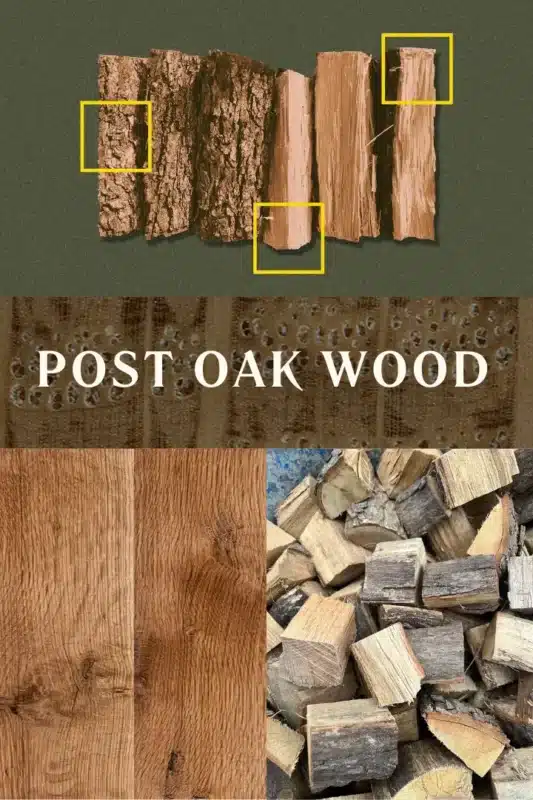
Post oak wood comes from Quercus stellata, a slow-growing oak that handles dry, rocky, sandy, and poor soils better than many hardwood trees. The USDA describes post oak as a native North American oak with a broad range across the eastern and south-central United States, including much of Texas and Oklahoma; see the USDA plant guide.
Quercus stellata basics
Quercus stellata usually grows as a medium-size oak, often around 40–60 feet tall in common field conditions, with a tough crown and cross-shaped leaf lobes that help with identification. In hand, dry post oak feels heavy for its size, with a dull thud when two splits knock together instead of the hollow clack you hear from punky wood.
White oak group
Post oak belongs to the white oak group, which matters because white oaks tend to be dense, durable, and useful for steady fires. If you’re comparing broader oak species, this guide pairs well with our article on white oak wood.
Regional growth
Regional supply explains much of post oak’s barbecue fame. In Central Texas, cooks used what grew close to the pit, so post oak became the default Texas BBQ wood long before packaged chunks and online firewood boxes made it available elsewhere.
Common post oak uses
Post oak uses include smoking wood, firewood, fence posts, outdoor cooking fuel, campfires, and small kiln-dried splits for pizza ovens. The old fence-post use came from its durability, while the cooking use comes from its heat, coal quality, and balanced smoke.
Smoke Flavor and BBQ Uses
Post oak smoking wood gives meat a clean, savory, lightly sweet, earthy smoke that sits between mild fruitwoods and stronger woods like hickory or mesquite. It shines with beef because it adds a wood-fired backbone without covering the flavor of fat, pepper, and browned bark.
Flavor profile
Post oak smoke flavor is mild-to-medium, dry, savory, and smooth when the wood is seasoned well. Good smoke smells warm and nutty at the stack; bad smoke stings the nose, coats the tongue, and leaves a bitter edge on the first bite of bark.
Texas brisket tradition
Post oak for brisket became a Central Texas standard because it supports long offset-smoker cooks with steady heat and moderate smoke. A simple salt-and-pepper brisket gives post oak nowhere to hide, which is why wet wood, poor airflow, and oversized splits show up fast as harsh bark.

Beef ribs and sausage
Beef ribs can take more smoke than poultry or fish, so post oak works well for their fat, marrow, and heavy bark. Texas-style sausage also pairs nicely because the smoke stays noticeable without fighting garlic, black pepper, chile, or rendered pork fat.
Pork, lamb, poultry
Pork shoulder and ribs take post oak well when you want a savory barbecue profile instead of a sweet apple or cherry note. Lamb handles its earthy smoke with rosemary, garlic, chile, and pepper, while chicken and turkey need a lighter hand because long exposure can make the skin taste ashy.
Rub pairings
Rub pairings should stay simple if you want the wood to show. Coarse black pepper, kosher salt, garlic, paprika, cumin, and ancho chile all work because they support post oak’s dry, savory smoke instead of turning the bark muddy or overly sweet.
Burning Performance and Firewood Value
Post oak firewood is valuable because it’s dense, hard, slow-burning, and capable of producing a strong coal bed. Its estimated heat value commonly lands around 24–29 million BTU per full cord, with moisture content and exact source changing real output.
Density and hardness
Dense hardwood burns longer than softwood because each split holds more fuel per volume. Published wood-property references list post oak around 47 lb/ft³ dried weight, about 1,350 lbf Janka hardness, and near 0.67 specific gravity; see The Wood Database for these wood data points.
That hardness also means splitting takes effort. A clean maul strike has a sharp crack through straight grain, but knotty post oak can twist, pinch, and bounce the tool if the round grew under stress.
Heat output and BTUs
Post oak BTU output works well for fireplaces, wood stoves, firepits, offsets, and pizza ovens when the pieces are dry and sized right. The same cord of wet wood gives less usable heat because part of the fire must boil off water before it can heat your cooker or room.
Coal bed quality
Coal bed quality is one reason pitmasters like post oak logs. Once the fire settles, the coals glow orange-red, radiate steady heat, and help each new split ignite without forcing you to smother the firebox with extra wood.
Moisture targets
Cooking wood moisture should usually sit near 15–20% for clean smoke, while green oak can exceed 30% and hiss, bubble, or spit at the ends. Pellets run much drier, often around 5–10%, which is why they swell and crumble so fast after water exposure.
Indoor firewood safety
Indoor burning requires dry, untreated post oak and a chimney or stove system that drafts well. Wet oak smokes heavily, burns lazy, and can raise creosote risk, so don’t treat cooking-grade wood standards as optional for fireplaces.
Post Oak vs Other Smoking Woods
Post oak vs oak is a species question: post oak is a specific oak, while “oak” can mean white oak, red oak, live oak, black oak, or a mixed firewood load. For brisket, post oak offers one of the most balanced oak smoke profiles.
Post oak vs oak
The difference between post oak and oak comes down to precision. If a seller lists “oak,” ask for the species or group, because red oak, white oak, live oak, and mixed oak can all burn well but won’t taste or split the same.
White, red, live oak
White oak and post oak share a smoother, steady-burning profile, while red oak often brings a sharper smoke and a stronger smell when fresh split. For deeper species context, compare it with red oak wood and other oak guides before buying a mixed load.
Live oak can burn hot and dense, but it can be harder to split and manage in smaller backyard pits. Post oak is usually easier to control for long brisket cooks because it gives a familiar smoke without the same weight and stubborn grain.
Hickory and mesquite
Hickory smoke is stronger, sweeter, and more bacon-like than post oak, which makes it great for pork but easier to overuse on poultry. If you like stronger smoke, compare our hickory wood guide with post oak before choosing your brisket fuel.
Mesquite burns hot and tastes intense, almost sharp, when used too long. It works for fast grilling or small blending amounts, but post oak is more forgiving during a 10–14 hour brisket because it doesn’t build bitterness as fast.
Pecan and fruitwoods
Pecan smoke is sweeter and nuttier than post oak, while apple, cherry, peach, and other fruitwoods taste lighter and softer. Use post oak when you want a savory beef profile, and use fruitwoods when poultry, pork, or fish needs a gentler aroma.
Best brisket woods
Best brisket woods include post oak, white oak, hickory in smaller amounts, pecan blends, and mild mesquite blends for cooks who like stronger smoke. Post oak stays at the top for Texas-style brisket because its heat and smoke match long beef cooks so well.
| Wood | Smoke strength | Best use | Watch for |
|---|---|---|---|
| Post oak | Mild-medium | Brisket, beef ribs, sausage | Green wood bitterness |
| White oak | Medium | Beef, pork, firewood | Mixed-species labeling |
| Red oak | Medium-strong | Grilling, beef, Santa Maria-style cooks | Sharper smoke |
| Hickory | Strong | Pork, bacon-like smoke, blends | Over-smoking poultry |
| Mesquite | Very strong | Fast grilling, small blends | Bitterness on long cooks |
| Pecan | Medium-sweet | Pork, poultry, ribs | Too soft for classic brisket taste |
Logs, Chunks, Chips, and Splits
Post oak wood must match the cooker, not just the recipe. A perfect offset split can choke a kettle grill, while a handful of chips disappears too fast to fuel a long brisket.
Logs and splits

Post oak logs and splits suit offset smokers, big barbecue pits, fireplaces, firepits, and larger wood-fired ovens. In an offset, smaller seasoned splits give cleaner control than one oversized log that smolders and forces you to close intake vents.
Post oak chunks
Post oak chunks work best over charcoal in kamado grills, kettle grills, gravity-fed smokers, and small cabinet smokers. Add one or two chunks at a time; beginners often bury half a bag in the coals and wonder why the ribs taste like a cold fireplace.
Post oak chips
Post oak chips fit gas grills, smoker boxes, foil pouches, and short grilling sessions. They ignite fast, so use small amounts and refresh them in stages instead of loading a smoker box so full that airflow stalls.
Mini splits
Mini splits bridge the gap between full splits and chunks. They work in compact offsets, tabletop wood ovens, and pizza ovens where the firebox needs short pieces that light quickly and still throw real flame.
Cooker compatibility
Cooker compatibility saves money and frustration. Offsets want splits, charcoal grills want chunks, gas grills want chips, pizza ovens want dry mini splits, and pellet grills need post oak pellets made for cooking rather than heating stoves.
Post Oak Pellets Guide
Post oak pellets are compressed hardwood fuel for pellet grills, pellet smokers, and smoke tubes. They give an oak-forward flavor with easier temperature control than logs, but their smoke is usually lighter than an offset burning real splits.
How pellets are made
Wood pellets are made from dried hardwood sawdust compressed through a die. Heat and pressure activate natural lignin in the wood, helping the pellet hold shape without chemical binders when the product is made for food-grade BBQ use.
Pellet grill performance
Pellet grill smoke burns clean because the auger feeds small fuel amounts into a hot firepot. That efficiency helps temperature control, but it can taste lighter than stick-burning post oak, so brisket cooks often run a lower early smoke phase before raising heat.
Burn rate and bag life
Pellet burn rate commonly falls around 1–3 lb per hour depending on grill size, set temperature, wind, insulation, lid openings, and meat load. A 20-lb bag may last roughly 6–8 hours at high heat or 10–20 hours during low-and-slow smoking.
Blends vs pure post oak
Pure post oak pellets list post oak as the wood source, while blends may use oak as a base with other hardwoods or flavor woods. Blends aren’t always bad, but buyers chasing the best oak pellets for smoker brisket should read the bag before assuming it’s 100% post oak.
Pellet quality checks

Quality pellets feel smooth, dry, and firm, with low dust in the bottom of the bag. They should smell like clean oak sawdust, not paint, perfume, sour grain, or damp cardboard.
- Choose food-grade hardwood pellets labeled for grills or smokers.
- Check whether the bag says 100% post oak or an oak-based blend.
- Avoid swollen, crumbly, wet, or dusty pellets.
- Keep opened bags sealed in a dry bin away from rain and humidity.
- Empty the hopper for long storage if your grill sits outside.
Common pellet problems
Wet pellets swell, crumble, bridge in the hopper, jam augers, and cause temperature swings. If a pellet breaks into damp sawdust between your fingers, don’t risk a long brisket cook with it.
Weak smoke is another common complaint with post oak pellets. Use a smoke tube, start the cook at a lower temperature, or add a short unwrapped smoke phase before wrapping brisket, rather than pouring greasy drippings into the firepot or blocking airflow.
Buying Post Oak Wood
Buy post oak wood by cooker format first, then compare dryness, species labeling, package weight, and delivery cost. Packaged BBQ wood costs more per pound than local firewood, but it’s cleaner, sized better, and often kiln dried for easier ignition.
Match format to cooker
Format matching prevents the most common buying mistake. Offset smokers need post oak logs or splits, charcoal grills need chunks, gas grills need chips, pizza ovens need mini splits, and pellet grills need post oak pellets or oak-forward BBQ pellets.
Kiln-dried vs seasoned
Kiln dried post oak usually lights faster, stores cleaner, and carries fewer insects than yard-seasoned firewood. Seasoned post oak can be excellent too, but test a freshly split face with a moisture meter instead of trusting cracked bark alone.
Packaged BBQ wood options
Packaged BBQ wood is useful when you need clean, cooker-ready post oak logs, chunks, chips, or mini splits without hauling a cord.

Post Oak BBQ Logs
- Long logs fit common smokers and grills
- post oak delivers a rich BBQ profile
- kiln dried for reliable ignition
- packed for serious backyard cooking
- ideal for smoky, low and slow results
 Buy on Amazon

Post Oak Smoke Chunks
- Ten pound box for frequent smokers
- kiln dried chunks light and burn well
- post oak adds deep, savory flavor
- great for brisket, beef, pork, and BBQ
- made in the USA for dependable quality
Buy on Amazon

Western Post Oak Chips
- Four-pack for convenient stocking
- mild smoke suits many meats
- great with brisket, ribs, and lamb
- pairs well with any rub or seasoning
- ideal for grilling and backyard BBQ
Buy on Amazon

B&B Smoke Chips
- Two-pack gives you handy backup supply
- premium hardwood chips for rich smoke
- works well with meat, fish, and vegetables
- easy to use for grilling and smoking
- post oak adds a balanced wood-fired flavor
Buy on Amazon

Oak Mini Split Wood
- Mini split size for easy handling
- works well in pizza ovens and smokers
- oak offers a classic smoky flavor
- kiln dried for better burn performance
- great for quick cooking sessions
Buy on Amazon

Mini Oak Pizza Wood
- Small cuts fit compact pizza ovens
- burns hot for fast cooking
- made from kiln dried oak
- great for Ooni, Gozney, Bertello, and more
- USA product with convenient ready-to-use sizing
Buy on Amazon
Pricing and availability
Post oak availability is best in Texas and nearby states where the tree grows widely. Online boxes of post oak chunks, logs, or mini splits often cost more because dense hardwood is heavy, and shipping can outweigh the wood value itself.
Price comparisons should use cost per pound for packaged BBQ wood and cubic volume for local firewood. Ask sellers whether “oak” means actual post oak, a white oak mix, red oak, black oak, or whatever hardwood came off the truck that week.
Cord, rick, bundle
A full cord is 128 cubic feet of stacked firewood, often described as a 4 ft x 4 ft x 8 ft stack; the National Institute of Standards and Technology defines cord measurement in NIST weights and measures guidance. A rick or face cord varies by region and log length, so ask for stack dimensions before paying.
Bundles are convenient for camping, test cooks, and occasional grilling, but they’re costly per unit of fuel. A half cord or full cord makes more sense for frequent offset cooking or winter firewood use, provided you can store it dry and off the ground.
Season, Store, and Inspect
Seasoned post oak burns cleaner, tastes better, and gives more usable heat than green post oak. The best wood smells clean and woody, feels solid, shows dry checking, and reads around 15–20% moisture on a fresh split face.
Seasoning guidelines
Seasoning time for split post oak often runs 6–12 months in favorable airflow, sun, and low humidity, with larger splits or humid regions taking longer. Whole rounds dry slowly, so split them early if you plan to cook with them.
Moisture meters work best when you split a piece and test the newly exposed interior, not the sun-baked outside. Beginners often test the end grain, get a low number, and then wonder why the log hisses once it hits the firebox.
Storage basics
Store post oak off the ground on rails, pallets, or a rack, with the top covered and the sides open. Fully wrapping firewood in plastic traps humidity, grows musty smells, and keeps splits from drying.
Pellet storage needs tighter control because pellets fail fast in moisture. Keep bags sealed in a dry bin, and don’t leave an open hopper exposed through rain, fog, or overnight dew.
Prep by wood type
Prep splits by warming the next piece near the firebox before adding it, which helps it ignite instead of smoldering. Chunks rarely need soaking, chips should be added in small rounds, and pellets should stay sealed until use.
Real-world workaround: if a split is slightly bigger than ideal but dry, stand it near the firebox heat for a few minutes and add it only after the previous split has built flame. That small preheat step reduces thick white smoke and keeps the pit from sagging.
Safe post oak signs
Safe post oak is dry, solid, untreated, and free from sour odor, paint, stain, fuel, oil, and heavy mold. The bark can stay on if it’s dry and clean, but scrape off mud, fungus-heavy patches, and flaky dirt before cooking.
Wood to avoid
Avoid treated wood, painted boards, stained trim, pallets of unknown origin, construction scraps, rotten logs, and wood with a chemical smell. The EPA warns that burning the wrong material can release harmful pollutants; see EPA Burn Wise guidance.
Bad post oak gives warning signs before it ruins dinner: hissing ends, bubbling moisture, spongy texture, black oily residue, musty odor, or thick gray smoke that doesn’t clear after the fire is established. When in doubt, save questionable wood for an outdoor firepit, not food.
FAQs
What Is Post Oak Wood Used For?
Post oak wood is commonly used for smoking meat, making firewood, and light construction projects. It is especially popular in barbecue because it burns fairly hot and gives food a mild, pleasant smoke flavor. Some people also use it for fence posts and outdoor projects because it is durable.
Is Post Oak Good For Smoking Brisket?
Yes, post oak is excellent for smoking brisket. It is one of the most popular woods for Texas-style barbecue because it adds a clean, balanced smoke flavor without overpowering the meat. It also burns steadily, which makes it easier to maintain consistent cooking temperatures.
What Is The Difference Between Post Oak And Oak?
Post oak is a specific type of oak, so the main difference is that “oak” is the general family name while post oak is one variety. Post oak usually has a milder smoke flavor and a denser grain than many other oaks. It is also known for being more resistant to decay than some other types.
Can You Use Post Oak Pellets In A Pellet Grill?
Yes, you can use post oak pellets in a pellet grill if they are made for food smoking. They provide a mild oak flavor that works well with beef, pork, and poultry. For best results, choose high-quality pellets made from 100% hardwood with no fillers or softwoods mixed in.
Is Post Oak Good Firewood?
Yes, post oak is good firewood because it burns long and produces steady heat. It is a dense hardwood, so it works well for fireplaces, wood stoves, and outdoor cooking. It does take time to season properly, but once dry, it makes dependable firewood.
Affiliate Disclosure: Some links in this post are affiliate links. If you make a purchase through these links, we may earn a small commission at no extra cost to you. We only recommend products we genuinely believe in.