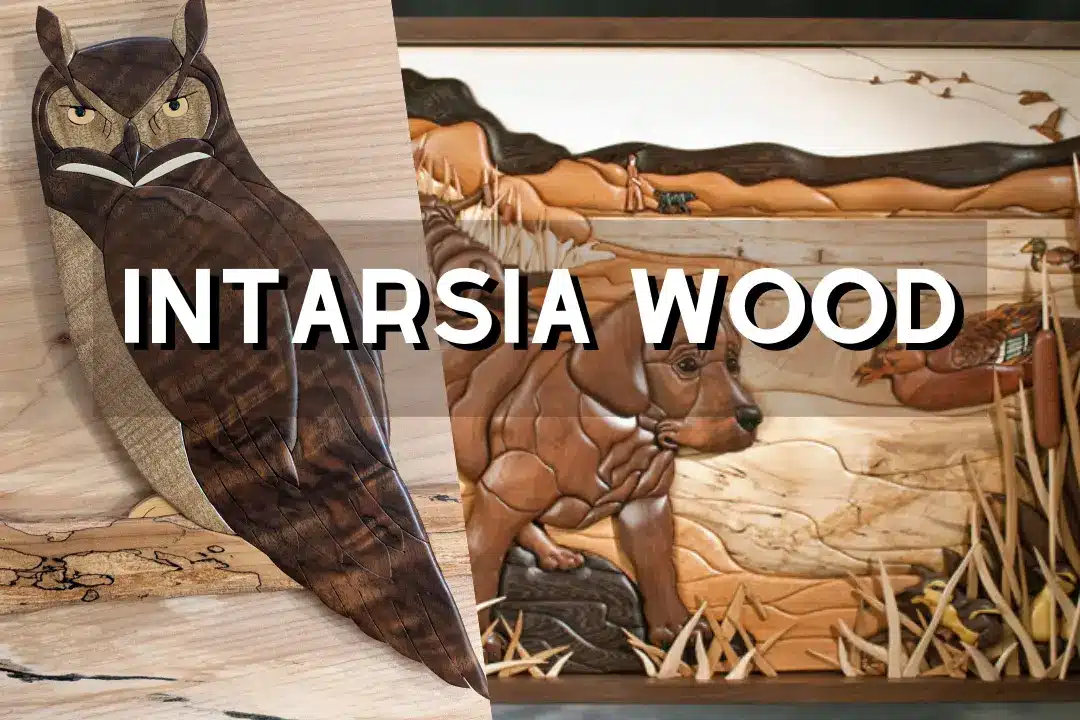


Bog oak is oak wood preserved for centuries or millennia in wet, low-oxygen peat, river silt, or marsh soil. It isn’t a separate tree species; it’s ancient oak transformed by water, tannins, minerals, and time into dark, dense, rare wood.
Best use cases include jewelry, knife handles, carving blanks, decorative veneer, small furniture accents, and premium bog oak flooring where the supply is stable enough for matching boards.
Table of Contents
What Is Bog Oak?
Quick Definition
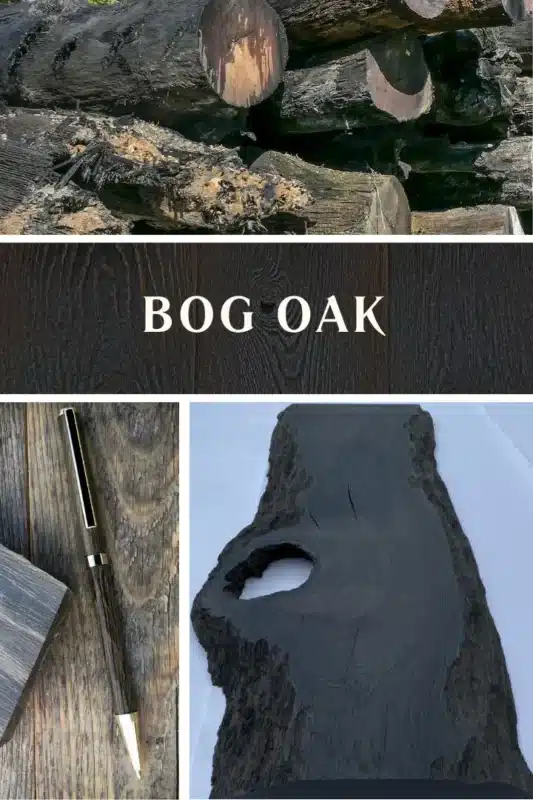
Bog oak wood is ancient oak recovered from waterlogged ground, where oxygen-starved conditions slowed decay and minerals darkened the timber. The wood can look brown, charcoal, gray-black, or near black, but the color depends on soil chemistry, time buried, and the original oak species.
Beginners often assume every black board sold as bog oak is thousands of years old, but that’s a risky shortcut. Some stock is mildly darkened oak, some is chemically treated, and some is reclaimed oak with a story that no seller can prove.
Ancient Bog Oak
Ancient bog oak usually means oak that has sat underground long enough to gain archaeological age, unusual color, and higher collectible value. In the hand, good ancient material feels cool and heavy at first touch, and freshly cut edges can release a faint damp-earth smell mixed with sour tannin.
The age claim matters because a 300-year-old buried oak and a 5,000-year-old buried oak can both look dark, but they don’t carry the same rarity or price. Ask for location, recovery method, moisture content, and any dating paperwork before paying collector-grade money.
Bog Oak vs Oak
Regular oak is fresh or conventionally dried wood from living or recently felled oak trees, while bog oak is old buried oak changed by wetland chemistry. The base anatomy still shows oak traits, including open pores, strong rays, and ring-porous grain, much like the structure seen in white oak wood and red oak wood.
The practical difference shows up at the bench: bog oak can be more brittle, more acidic, harder on abrasives, and less predictable during drying. Fresh oak smells warm and woody when cut; old bog oak often smells sharper, like wet bark, iron, and old cellar air.
How Bog Oak Forms
Bog oak forms when fallen oak becomes buried in wet soil where low oxygen blocks normal fungal decay. Over time, tannins from the oak react with dissolved minerals, slowly shifting the wood from tan or brown into deep gray, blue-black, or black.
Wetland Preservation
Wetland preservation works because many decay fungi need oxygen, while peat and saturated silt restrict air movement around the buried log. The U.S. Environmental Protection Agency notes that wetlands are defined by water saturation, hydric soils, and water-tolerant vegetation, which explains why buried wood can survive where a dry forest log would rot fast; see the EPA wetland definition.
Recovery creates risk because the log may look solid while saturated, then split badly once air and heat reach it. Good suppliers seal the ends, saw oversize, and dry slowly; rushed drying leaves honeycomb checks inside boards that look fine from the outside.
Tannins and Minerals
Oak tannins are natural phenolic compounds that react strongly with iron. That’s why wet oak turns blue-black around steel screws, and it’s also why bog oak darkens when iron-rich groundwater moves through the buried log.
A common mistake is using ordinary steel fasteners during storage, jigging, or glue-ups. The workaround is simple: use stainless steel, brass, plastic cauls, or tape barriers, because black iron stains can creep into pale streaks and ruin a matched set.
Why It Turns Black
The black color comes from a mix of chemical change, mineral staining, and long exposure to acidic or mineral-rich water. Deep black stock often forms where iron levels are high, while gray-brown or chocolate stock may come from different soil and water conditions.
Color isn’t uniform across a whole log. The outside may be jet black, the middle may show coffee-brown streaks, and pockets near cracks can turn gray, so cut layouts should account for color zoning before you promise a customer a perfectly black finished part.
How Old Is Bog Oak?
Bog oak age can range from a few hundred years to more than 8,000 years, depending on where the log was buried and when it fell. Sellers often quote age ranges, but only lab dating can support a precise number.
Typical Age Range
Most usable stock seen in small woodworking markets falls somewhere between 1,000 and 6,000 years old, with younger material also sold when the color and condition are good. Very old pieces exist, but age alone doesn’t make a board useful if it’s cracked, punky, or full of mineral grit.
Age varies by source because river channels move, peat grows at different rates, and old forests drowned in separate climate periods. Irish, Ukrainian, Croatian, Serbian, and English pieces may all be genuine while showing different colors, densities, and fracture patterns.
Dating Bog Oak
Radiocarbon dating measures carbon-14 left in once-living material and gives the most credible age estimate for individual bog oak samples. Labs such as the Oxford Radiocarbon Accelerator Unit test small samples, then report dates with uncertainty ranges rather than one perfect birthday.
Paperwork can mislead if one dated piece gets used to market a whole batch from mixed logs. Match the certificate to the exact slab, log, lot number, or supplier chain, and be wary of listings that use phrases like “up to 5,000 years old” without proof.
Age and Value
Older bog oak can command higher prices, but value comes from the full package: verified age, deep color, dry stability, board size, low defect rate, and legal recovery. A small dated black blank with tight grain may sell faster than a huge slab that keeps opening cracks.
The smart buying move is to pay for usable yield, not folklore. Calculate what remains after trimming splits, sapwood, pith cracks, embedded gravel, and color mismatch, because a bargain slab can shrink into a very costly knife-scale blank.
Bog Oak Wood Properties
Bog oak properties depend on the original oak, burial chemistry, drying method, and defect level. It keeps oak’s ring-porous grain, but it may feel denser, more brittle, dustier, and less forgiving than normal kiln-dried oak.
Color and Grain
Color ranges from tan-gray and tobacco brown to charcoal, blue-black, and deep black. Quartered pieces can show pale medullary rays flashing through the dark surface, similar in layout to quarter sawn oak, but the contrast can look sharper because the background is darker.
Grain selection matters more than many buyers expect. Straight-grained bog oak machines cleaner, while wild grain, pith-adjacent stock, and root sections can chip, tear, or break along old stress cracks hidden under black dust.
Janka Hardness
Bog oak Janka hardness is rarely published as one fixed number because the material isn’t a standard commercial species. For context, the USDA lists typical red oak at about 1,290 lbf and white oak at about 1,360 lbf in common flooring discussions, while the USDA Wood Handbook explains why density, moisture, and species affect wood strength values.
In real cutting, some bog oak behaves harder than expected because minerals dull edges, not because the wood itself equals ebony. A sharp carbide scraper can leave a glassy black ribbon, then suddenly chatter when it hits a gritty mineral pocket.
Stability and Density
Stability depends on drying quality more than age. Properly dried blanks can stay flat, but poorly dried boards may cup, split, or shed thin surface checks months after purchase, especially when moved from a damp shop into a heated house.
Density feels deceptive because wet or partly dried stock feels heavy and solid, then loses weight as bound water leaves. Always verify moisture with a pin meter and compare readings across the board; end grain can dry faster while the center stays wet.
Black Hardwoods Comparison
Among black hardwoods, bog oak sits in a special category because its darkness comes from burial history rather than normal heartwood color. If you need a uniform jet-black look, compare it with ebony wood and broader dark wood types before choosing.
| Wood | Typical Color | Workability Note | Best Fit |
|---|---|---|---|
| Bog oak | Brown-black to deep black | Can be brittle and gritty | Historic accents, jewelry, handles |
| Ebony | Very dark black, often uniform | Hard, dense, checks if mishandled | Inlays, instruments, luxury details |
| Black walnut | Chocolate brown, not black | Machines easily | Furniture, panels, trim |
| Ebonized oak | Artificial blue-black or black | Depends on base oak | Budget black oak look |
The key trade-off is character versus predictability. Bog oak gives real age and natural mineral color, while ebony gives more reliable blackness and ebonized oak gives better cost control.
Morta Bog Oak Explained
Morta bog oak refers to bog oak, often from parts of Europe, marketed with the regional name “morta.” In practice, morta usually describes ancient oak recovered from riverbeds, peatlands, or wet soils and prized for dark color, age, and carving quality.
Meaning of Morta
Morta means old buried oak in many woodworking and pipe-making markets, especially where Balkan and Eastern European suppliers sell dark, ancient oak blanks. Buyers use the word to signal age and origin, but it isn’t a botanical species name.
The word can blur quality grades because some sellers apply “morta” to any dark bog oak blank. Treat it as a regional or trade label, then judge the wood by dryness, cracks, color depth, density, documentation, and how cleanly it cuts.
Regional Origins
Regional origins often include Croatia, Serbia, Bosnia, Ukraine, Ireland, England, and other areas with old river systems and peat deposits. Each region can produce different looks: some stock has smoky gray grain, some has chocolate-black streaks, and some shows high mineral loading that sparks under aggressive grinding.
Origin claims need care because logs move through dealers, sawyers, and blank cutters. A reputable seller can usually tell you the country, river basin or bog area, rough recovery story, and drying history without leaning on vague romance.
Morta vs Bog Oak
Morta and bog oak overlap, but they aren’t always used the same way. Bog oak is the broad English term, while morta often signals European ancient bog oak sold for pipe bowls, knife handles, pens, rings, and decorative work.
The buyer’s shortcut is this: ask what the wood is, where it came from, how dry it is, and how the age was estimated. If the answer stops at “it’s morta,” you still don’t know enough to price it fairly.
Common Bog Oak Uses
Common bog oak uses favor small, high-value projects where rare color and age matter more than wide-board yield. Flooring, jewelry, knife handles, carving, turning, furniture accents, and decor all work, but each use needs different drying and grading standards.
Bog Oak Flooring
Bog oak flooring is rare and expensive because long, stable, color-matched boards are hard to recover from old buried logs. It works best as feature flooring, borders, medallions, or selected rooms rather than a whole-house product, unless the supplier has enough stock from the same batch.
Flooring buyers should compare moisture, thickness, milling accuracy, and finish system with more predictable options like white oak flooring. The biggest beginner mistake is ordering by square footage only; order extra for color sorting, splits, end checks, and waste.
Bog Oak Jewelry

Bog oak jewelry works well because small pieces can avoid large cracks and show dramatic black grain. Rings, pendants, beads, cufflinks, and watch inlays all benefit from the wood’s age story and low visual weight compared with metal or stone.
Skin-contact pieces need a sealed finish because open oak pores can trap sweat, soap, and grit. Thin cyanoacrylate, hard wax oil, or resin stabilization can help, but leave sharp inside ring edges slightly eased so the piece doesn’t feel scratchy after an hour of wear.
Knife Handles
A bog oak knife handle gives a dark, historic look without using tropical blackwood, but it needs dry, crack-free stock. Stabilized blanks perform better in wet kitchens, hunting knives, and hard outdoor use because raw open pores can absorb moisture around pins and tangs.
Pin holes are risky in brittle bog oak. Back the blank with scrap, drill slowly with a sharp bit, clear chips often, and avoid forcing mosaic pins through tight holes because wedge pressure can split a finished scale at the last minute.
Carving and Turning
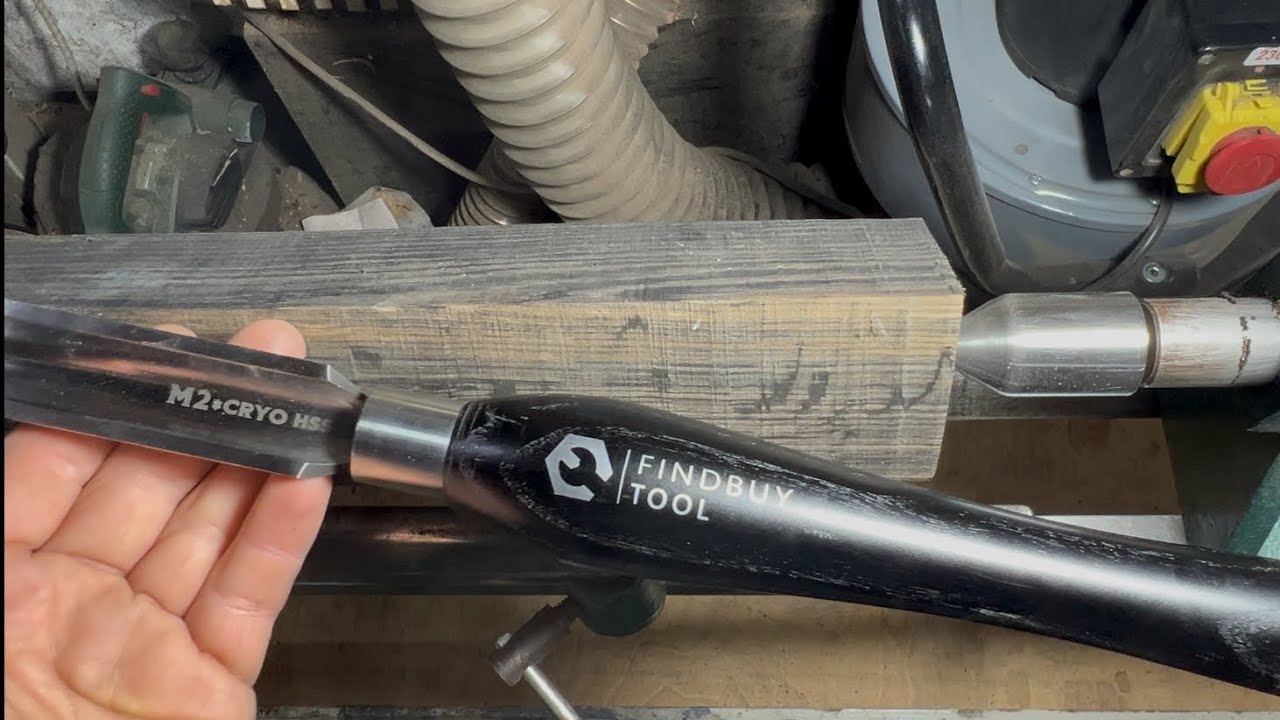
Bog oak carving rewards sharp tools and light cuts. The wood can cut like firm cheese in one area, then chip like dry charcoal near an old shake, so shallow passes and frequent edge touch-ups save more time than heavy cuts.
Turning creates dust that feels dry, peppery, and slightly gritty between the fingers. Use extraction and a respirator, keep speed moderate, and stop at the first clicking sound because that tiny tick often signals a hidden crack opening under centrifugal load.
These small-shop supplies help with safer cutting, sanding, finishing, and moisture checks on bog oak projects.
Furniture and Decor
Furniture makers usually use bog oak as veneer, inlay, drawer pulls, tabletop accents, small panels, and sculptural details rather than full casework. That approach respects scarcity and avoids the movement problems that can come with wide, ancient boards.
Decor pieces need clean design restraint. A narrow black bog oak strip against pale maple or rift oak can look stronger than a large dark panel, and it wastes less rare stock while reducing the chance of visible cracks.
Buying Bog Oak Wood
Buying bog oak wood safely means checking authenticity, moisture, defects, source story, and project fit before price. The best boards aren’t always the blackest; they’re the ones that stay stable and yield the parts you need.
Authenticity Checks

Authentic bog oak should show oak anatomy, natural color variation, and a credible recovery chain. Look for open pores, medullary ray fleck on quartered faces, darkened end grain, and color that runs into the wood rather than sitting like surface dye.
- Ask for moisture readings from the center and ends, not one casual surface reading.
- Request origin details such as country, river, bog area, or supplier batch.
- Check end checks with bright side light before buying expensive blanks.
- Sand a hidden spot if allowed; dyed oak may reveal a paler core fast.
- Smell fresh dust; real bog oak often has a damp, tannic, mineral odor.
The pro workaround for online buying is to purchase one test blank first, cut it, finish it, and leave it in your shop for two weeks. If it moves, cracks, or bleeds color into finish, don’t order a full batch.
Pricing Factors
Pricing depends on verified age, color depth, board size, dryness, defect rate, sawing orientation, and whether the wood has been stabilized. A small, clean, black, dated blank can cost more per cubic inch than a larger brown slab with splits.
Don’t compare bog oak by board-foot price alone. For rings, pens, knife scales, and inlay, the true price is usable pieces per blank after you cut around checks, punky areas, sapwood, and off-color bands.
Ethical Sourcing
Ethical sourcing means the wood was recovered legally, with landowner permission, proper permits where required, and respect for wetlands, rivers, and archaeological contexts. Wetlands can store carbon, filter water, and support habitat, so careless extraction can damage more than a patch of mud.
Ask direct questions about permits, land access, export papers, and whether any finds were screened for cultural value. If a seller treats legal recovery as an annoyance, that’s a red flag, especially with old European material crossing borders.
Best Project Sizes
Small projects win because they need less perfect stock and show the story clearly. Knife scales, ring blanks, pen blanks, pendants, drawer pulls, boxes, veneer strips, and inlays give high visual return with less waste.
Large projects need batch planning. For flooring, tabletops, or cabinet panels, buy all material from one source at once, sticker it in the final work area, and sort by color before milling because later matching can be nearly impossible.
A reliable moisture meter is one of the few tools that can save an expensive bog oak purchase before you cut into it.
Working, Care, and Meaning
Working bog oak takes patience because old buried wood can be dry, acidic, brittle, and mineral-loaded. Care is simple after finishing, but the build stage needs sharp tools, dust control, slow drilling, and conservative sanding.
Cutting and Sanding
Cut bog oak with sharp carbide or freshly honed steel, and take lighter passes than you would on normal oak. The saw note can change from a clean hiss to a gritty rasp when the blade hits mineral-rich grain, and that sound is your cue to slow feed pressure.
Sanding needs discipline because black dust packs into pores and can smear across pale woods during mixed-species work. Sand bog oak parts separately, vacuum often, wipe with alcohol or mineral spirits based on your finish plan, and don’t blow dust across unfinished maple, ash, or oak.
Finishing Options
Finishing options include hard wax oil, oil-varnish blends, shellac, lacquer, polyurethane, cyanoacrylate for small jewelry, and resin stabilization before shaping. Oil deepens brown-black tones, while film finishes can add clearer contrast to ray fleck and pore structure.
Test finishes first on offcuts because some bog oak has acidic or mineral-rich zones that affect cure, color, or adhesion. For small high-wear items, thin CA built in layers can feel smooth like polished horn; for furniture, a satin finish often hides pore unevenness better than gloss.
Maintenance Tips
Maintain bog oak by keeping it out of standing water, strong heat, and sudden humidity swings. Wipe jewelry and handles dry after use, refresh oil or wax finishes when the surface looks dull, and avoid soaking open-pore pieces.
For flooring, use felt pads, pH-neutral cleaner, and humidity control near normal hardwood flooring ranges. Grit acts like cutting compound on dark floors, so entry mats matter more than they do on pale woods where fine scratches hide better.
Spiritual Meaning
Bog oak spiritual meaning often centers on endurance, memory, grounding, protection, and transformation. Those associations come naturally from the material’s story: a living oak fell, stayed hidden in wet earth for ages, then returned as a dark and usable wood.
Use symbolism honestly if you sell jewelry, memorial pieces, or ceremonial objects. Don’t invent false age, sacred origin, or cultural claims; the real story of preserved ancient oak already carries enough weight without exaggeration.
Practical notes from real use are simple: buy smaller than your ambition at first, cut slower than your confidence suggests, and finish samples before committing a rare blank. Bog oak rewards restraint; the best pieces let the black grain, faint ray flash, and old-earth character do the work.
FAQs
What Is Bog Oak?
Bog oak is ancient oak wood that has been preserved in bogs, marshes, or peat bogs for hundreds or thousands of years. The low-oxygen, acidic environment slows decay and turns the wood into a dark, stable material often used for carving, furniture, and jewelry.
How Old Is Bog Oak?
Bog oak can be anywhere from a few hundred to several thousand years old. Many pieces come from trees that were buried long before modern times, so the exact age depends on where it was found and how it is dated. Radiocarbon testing is often used to confirm its age.
Why Is Bog Oak Black?
Bog oak is black because tannins in the wood react with minerals in the peat bog over time. This natural process darkens the timber deeply, often all the way through the piece. The result is a rich black, brown, or charcoal color that is highly prized.
Is Bog Oak Wood Hard?
Yes, bog oak is usually very hard and dense. The long burial process can make it extremely stable, but it may also become brittle in some pieces. Because of that, it is best worked with sharp tools and careful handling, especially when making fine items.
What Is Morta Bog Oak?
Morta is another name for bog oak, especially in craft and woodworking communities. It usually refers to the same ancient oak recovered from waterlogged peat deposits. People often use the term morta when describing high-quality pieces for pipes, knife handles, and other artisan projects.
Affiliate Disclosure: Some links in this post are affiliate links. If you make a purchase through these links, we may earn a small commission at no extra cost to you. We only recommend products we genuinely believe in.