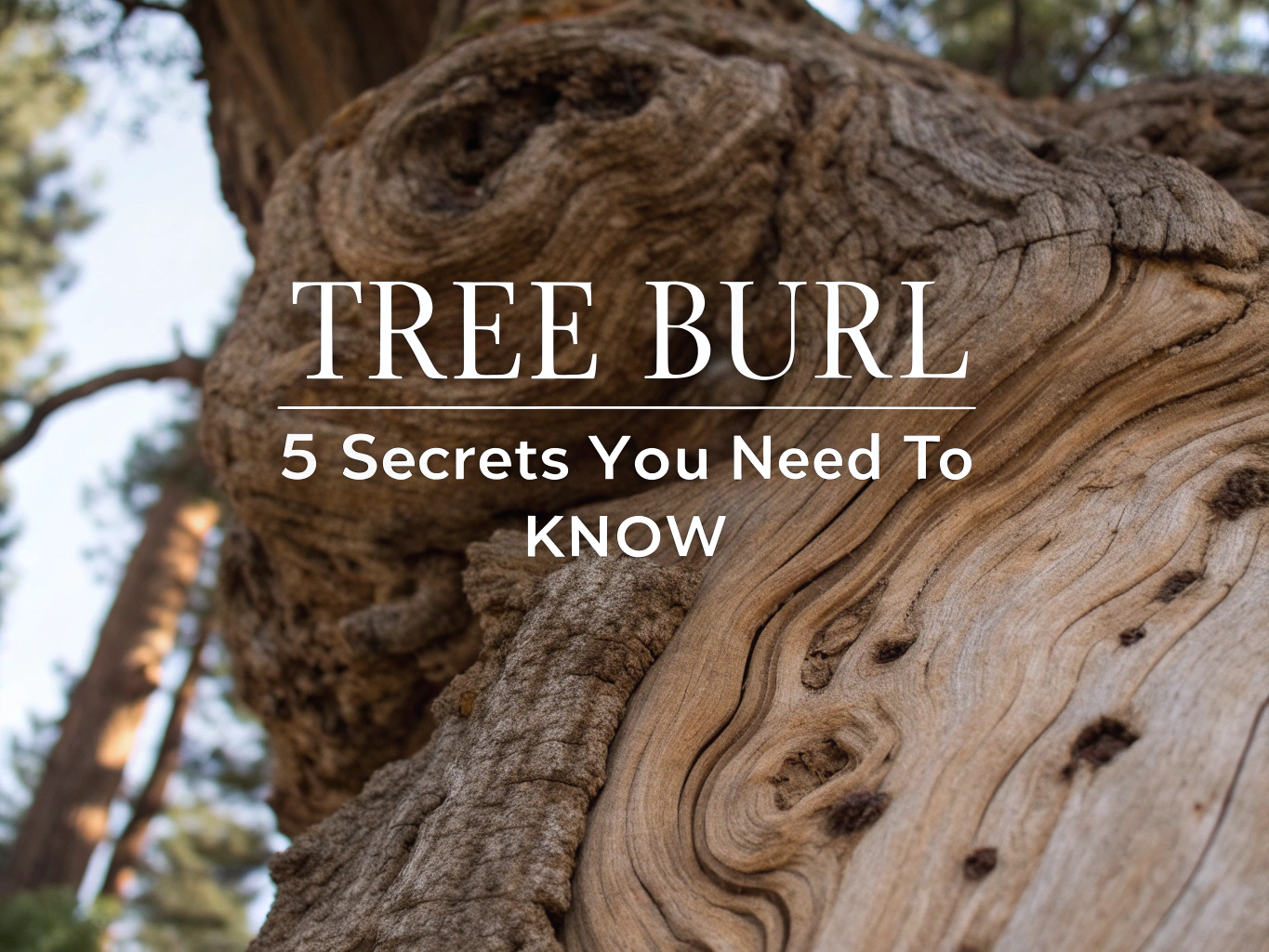

A tree burl is a rounded or irregular woody growth formed when the tree’s vascular cambium produces disorganized grain instead of fibers aligned with the trunk or branch.
Injury, pathogens, insects, environmental stress, and genetic changes may contribute, yet the cause often remains unknown; most intact burls can stay on living trees and shouldn’t be cut off for wood or appearance.
Table of Contents
What Is a Tree Burl?
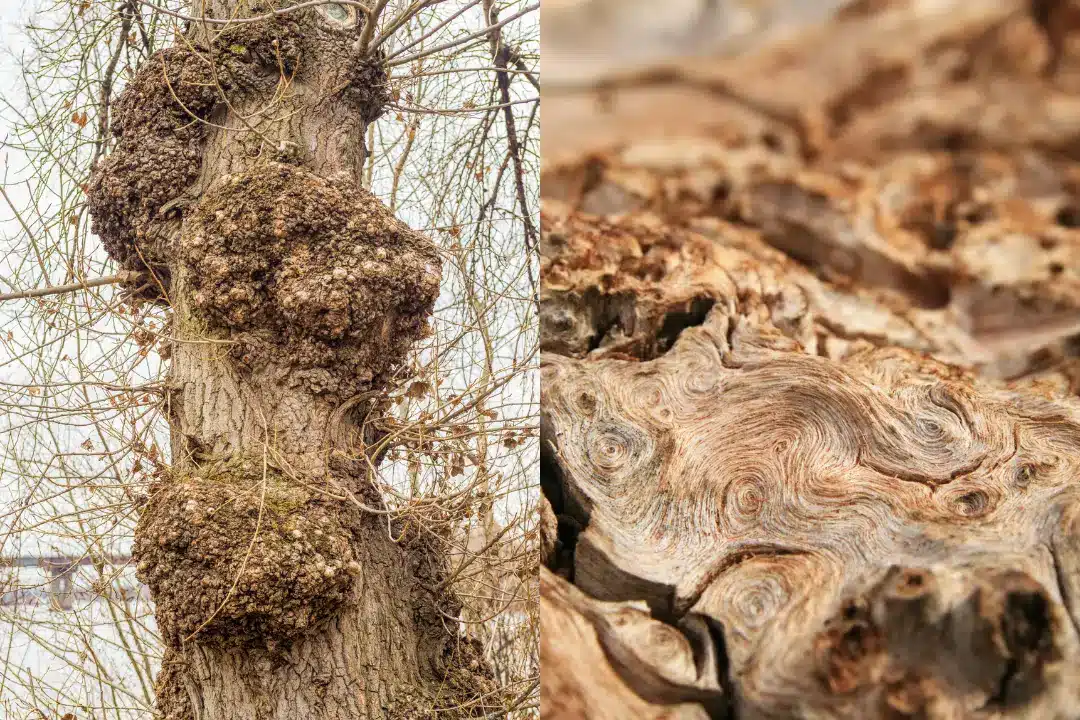
A burl is an abnormal woody growth integrated into a tree’s trunk, branch, root flare, or roots. Bark commonly covers its knobby exterior, while the interior may contain interlocked grain, eye-shaped figures, dormant buds, bark pockets, cracks, or cavities.
Burl or Burr
Burl and burr describe the same broad growth form. “Burl” is common in North American forestry and woodworking, while “burr” appears more often in British usage and names such as burr oak veneer.
A burl isn’t a separate wood species. A maple wood burl still has the base properties of maple, and a burl oak tree produces oak tissue whose density, color, durability, and dust hazards remain tied to that oak species.
Exterior Growth Pattern
A burl on a tree trunk often looks like a round knot that grows on the bark, but its shape can be lopsided, lobed, or wrapped around part of the stem. Unlike a loose object, it can’t be peeled or detached without cutting living vascular tissue.
Common burl locations include the trunk, major branches, root flare, underground roots, and tree base. Root burls can be difficult to recognize before excavation because soil hides their shape and contaminates bark folds with grit and stones.
The vascular cambium is a thin layer beneath the bark. It produces secondary xylem inward and secondary phloem outward: xylem becomes wood and carries water, while phloem transports sugars made by the leaves.
Normal cambium lays down organized annual growth. In burls in trees, localized cambial activity changes direction repeatedly, producing fibers that curve, intersect, or encircle clusters of buds rather than following the main stem.
Woundwood and callus aren’t automatic synonyms for burl. Woundwood forms around an injury margin as the tree closes exposed tissue; a burl is a broader growth pattern and may exist without a visible open wound.
Dormant or adventitious buds can create small circular “eyes” when wood grows around them. These clusters help explain some eye figure, though not every eye marks a complete bud and not every burl contains visible buds.
Inside, burl grain can resemble ripples, feathers, marbling, curls, or tightly packed eyes. The exterior doesn’t reveal whether the center holds attractive figure or a disappointing mix of plain wood, decay, bark inclusions, and voids; see this broader guide to burl wood for finished examples.
What Causes Burls in Trees?
What causes burls in trees varies between individual trees. Injury, repeated irritation, pathogens, insects, environmental stress, and genetic or hormonal changes are plausible triggers, but appearance alone seldom identifies which factor started a particular growth.
Injury and Irritation
Broken branches, rubbing stems, fire, frost damage, browsing animals, mower strikes, and repeated equipment contact can disrupt normal cambial growth. The tree responds by compartmentalizing damage and producing new tissue, sometimes in a dense, irregular pattern.
One injury doesn’t guarantee burl formation. Most pruned branches and bark wounds produce ordinary callus and woundwood, which is why a nearby scar suggests a possible connection rather than proving the burl’s origin.
Pathogens and Insects
Fungi, bacteria, insects, and mites can alter plant growth, yet a tree burl isn’t fungus. It consists of woody tree tissue; a shelf or mushroom growing beside it is a separate fungal structure and may point to internal decay.
Drought, repeated freezing, fire exposure, root disturbance, compacted soil, and severe heat can place a tree under environmental stress. These conditions may change growth or make tissue more vulnerable to other agents, but stress isn’t a confirmed universal cause.
Genetic traits and altered hormone signaling may explain why some species, populations, or individual trees form repeated growths. Such changes can affect bud activity and cell division across the cambium without leaving a diagnostic mark on the bark.
The honest answer to why trees grow burls is often cause uncertain. Several triggers may act together, the original injury may have closed decades ago, or the organism involved may no longer be active by the time someone notices the growth.
How to Identify a Tree Burl
A likely tree burl is a firm woody enlargement covered mostly by continuous bark. Identification becomes less certain when the area is soft, sunken, cracked, mushroom-like, located at the root crown, or linked clearly to a branch base.
Burl on Tree Trunks
A burl on a tree may project from one side or wrap around much of the trunk. Its bark often follows the species’ normal color and texture, though deep folds can trap moisture and organic debris.
Inspect the bark boundary rather than judging size alone. Continuous, firm bark with no cavities is more consistent with a stable growth; dead margins, oozing, loose bark, or fresh cracks point to damage that needs closer assessment.
Burl Versus Crown Gall
A burl describes a woody growth form, while crown gall is a disease commonly associated with Rhizobium radiobacter, formerly called Agrobacterium tumefaciens. Galls frequently develop at the root crown, lower stem, or roots and may disrupt young plants more severely.
Fresh crown galls may look pale and soft before becoming dark and corky. The UC Integrated Pest Management crown gall guide explains transmission and management, but laboratory or on-site diagnosis may still be needed for an ambiguous growth.
A canker is an area of dead bark and cambium rather than a mass of figured living wood. It often appears sunken, discolored, cracked, or bordered by raised callus, and it can girdle a branch or trunk.
A fungal conk is a fruiting body. Shelf-like, hoof-shaped, crusty, or mushroom-shaped structures may feel corky, leathery, or woody; their presence can indicate decay behind bark that still looks solid.
A knot is the embedded base of a branch and normally has a clear relationship to branch growth. A burl is a broader enlargement with grain that may twist around many buds or growth centers.
Burr knots are clusters of root initials above ground, especially on certain apple rootstocks and cultivars. Their small root-like projections distinguish them from the decorative wood figure normally meant by tree burl.
| Feature | Exterior and tissue | Common location | Likely concern |
|---|---|---|---|
| Tree burl | Rounded woody enlargement, often covered by intact bark | Trunk, branch, base, root flare, or roots | Often stable; inspect associated defects |
| Crown gall | Knobby or corky gall that may begin pale and soft | Root crown, lower stem, or roots | Disease can restrict young or heavily affected plants |
| Canker | Dead, sunken, cracked, or discolored bark | Branch or stem | May spread or girdle tissue |
| Fungal conk | Shelf, hoof, crust, or mushroom made by fungus | Trunk, branch, roots, or root flare | Possible internal decay |
| Knot | Embedded branch base | At a former or existing branch | Normal feature, though loose knots weaken lumber |
| Burr knot | Cluster of above-ground root initials | Lower trunk of susceptible fruit trees | May invite breakage, pests, or rooting |
Are Tree Burls Harmful?
Many burls aren’t harmful by themselves, and a tree can carry one for decades. Risk changes when the growth is associated with decay, cracks, cavities, root damage, canopy decline, or a weak load-bearing location.
Signs of Stable Burls
A burl is more likely to be stable when it feels firm, remains covered with intact bark, enlarges slowly, and sits on a tree with a full canopy and normal leaf color. No single sign proves safety, but the following combination supports routine monitoring:
- Continuous bark with no fresh splitting
- No open cavities, wet decay, or crumbling wood
- No fungal conks around the growth or root flare
- No sudden canopy thinning or large dead limbs
- No recent lean, soil lifting, or exposed damaged roots
- No expanding crack through a trunk or branch union
Photograph the growth from the same marked position once or twice a year. A tape measurement around an irregular burl can vary with placement, so mark the measurement line discreetly and record trunk circumference separately.
Tree Risk Warning Signs
Arrange an inspection when you see new structural changes: widening cracks, loose bark, hollow areas, water-soaked wood, conks, carpenter ants alongside decay, dead leaders, soil heaving, or a recent change in lean.
Location affects the consequence of failure. A burl at a major branch union, on a leaning trunk, or over a house, road, play area, parking space, or utility line deserves more attention than a similar growth deep in an unused field.
Don’t remove the burl from a living tree. It isn’t attached like a bracket fungus; cutting it away removes bark, cambium, and wood, opens a large decay entry point, and can reduce the trunk’s remaining load-bearing section.
Beginners sometimes drill into a burl to “test” its figure or value. That small hole reveals little about the interior and breaches protective tissue, while cutting a viewing window creates a much larger wound with no reliable financial payoff.
Safe care means leaving intact bark alone, protecting the root zone from excavation and compaction, and preventing mower or string-trimmer strikes. Don’t fill cavities with concrete or cover wounds with household paint, roofing tar, or improvised sealants.
Call an ISA Certified Arborist if defects are changing, the canopy is declining, or failure could strike people or valuable property. The International Society of Arboriculture offers a searchable Find an Arborist directory.
For a higher-consequence site, ask whether the arborist holds the Tree Risk Assessment Qualification, commonly shortened to TRAQ. A risk assessment considers defect severity, remaining sound wood, species, exposure, likelihood of failure, and what the tree could strike; burl diameter alone can’t answer those questions.
What Makes Tree Burl Wood Distinctive?
Tree burl wood is prized for grain that changes direction across very short distances. Those intersecting fibers create eyes, swirls, curls, feathering, quilted fields, and marbled color that ordinary straight-grained boards rarely display.
Eyes, Swirls, and Curls
Small bud traces can appear as tight circular eyes, while curved fiber bands catch light from changing angles. Under a clear finish, the surface can shift from pale to dark as you tilt it, much like satin moving under a lamp.
Burl figure differs from related grain effects. Birdseye maple contains eye-like marks without being a trunk burl, while curly maple develops repeating bands that run more regularly across a board.
Bark pockets in wood form when growing tissue encloses strips or islands of bark. They add dark contrast but can loosen during machining, trap moisture, weaken thin edges, and interrupt a veneer sheet.
Straight-grained lumber has fibers that mostly follow the stem axis. Burl fibers turn, interlock, and terminate unpredictably, which increases visual interest but also causes tear-out and makes splitting behavior hard to predict; compare these structures in the guide to wood grain patterns.
Oak and Temperate Burls
Oak, maple, walnut, elm, cherry, birch, ash, buckeye, poplar, madrone, and redwood can produce burls. A burl oak tree may yield warm brown figure with visible pores, while maple often shows paler, tightly clustered eyes.
Species still controls baseline properties. A walnut burl differs from oak or maple in pore structure, density, color, odor, and machining behavior; no single Janka hardness or durability rating applies to all wood burl material.
Olive root burl often combines cream sapwood with dark, wandering lines. Thuya burl from Tetraclinis articulata can show dense eyes and a strong aroma, while briar from the lignotuber of Erica arborea is associated with tobacco pipes because it is dense and relatively heat resistant.
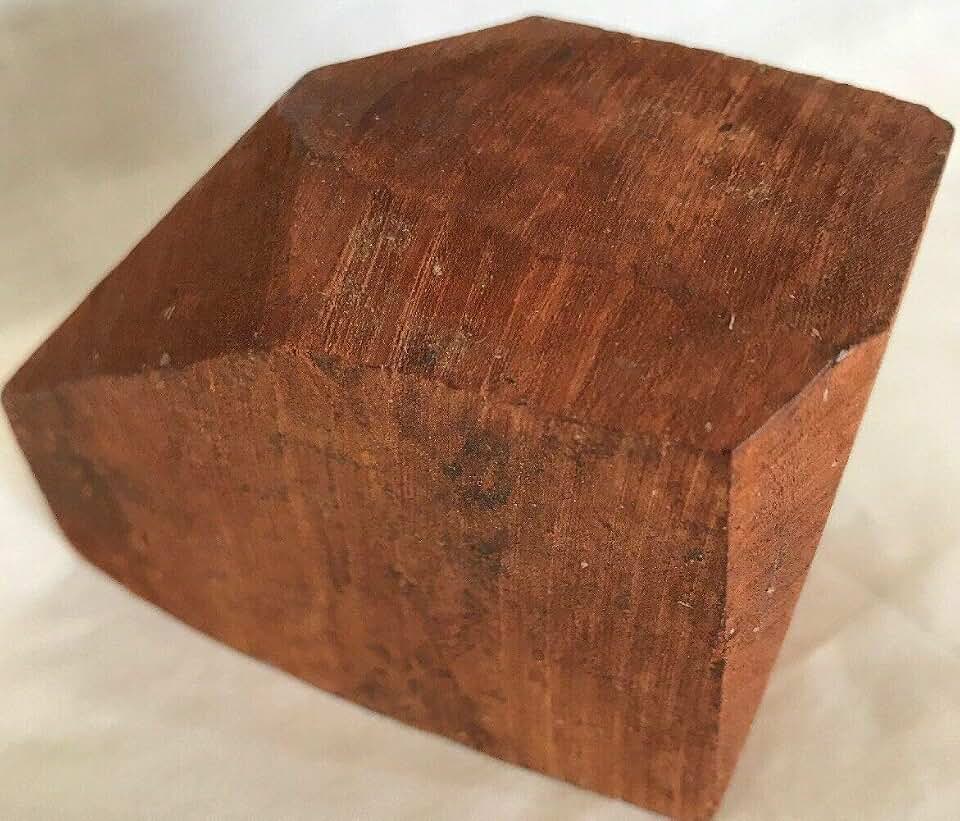
Briar Burl Pipe Making Block
- Genuine briar burl stock for pipe carving
- Plateaux style retains natural outer character
- Ebauchon block provides material for shaping
- Dense wood is valued by pipe makers
- A specialized example of usable burl wood
 Buy on Amazon
Coast redwood burls may carry dormant buds capable of producing sprouts after damage. That regenerative role doesn’t apply to every species, but it makes destructive harvesting especially damaging in redwood habitat; the site’s redwood guide covers the species in greater depth.
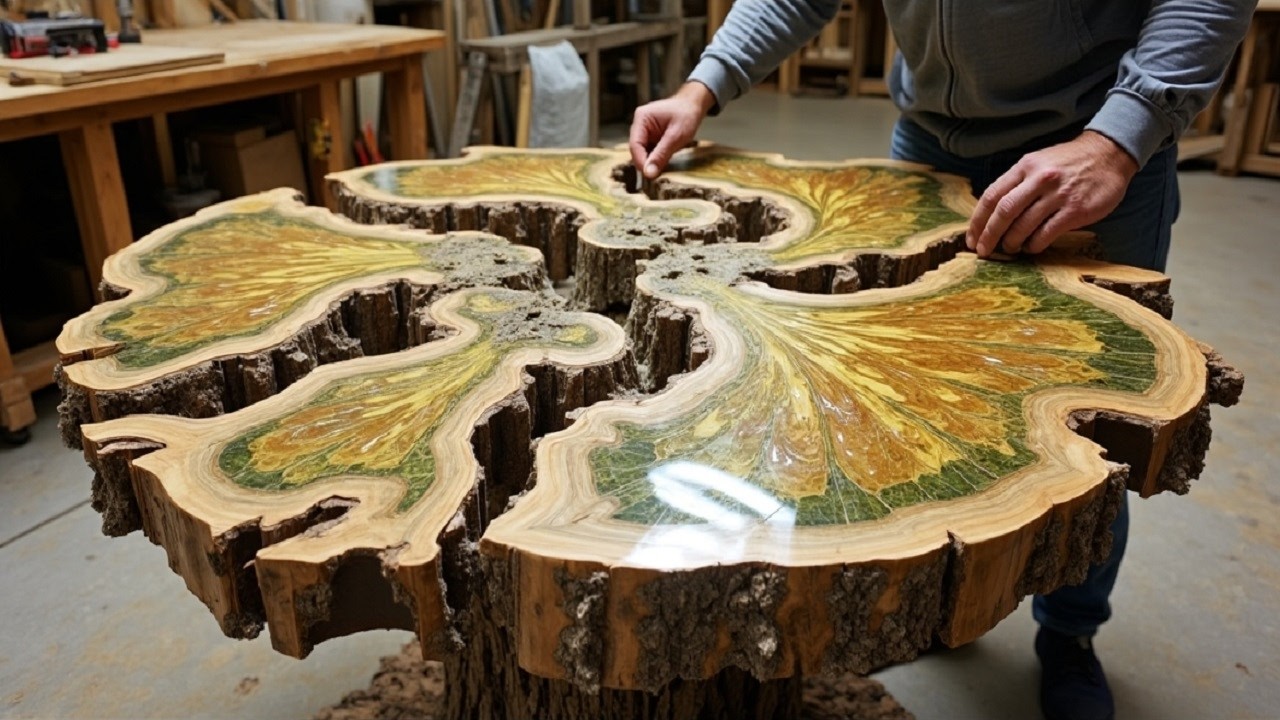
Decorative uses include cabinet doors, jewelry boxes, furniture panels, bowls, pen blanks, knife handles, musical-instrument accents, automotive trim, sculpture, and resin work. The irregular figure suits focal pieces better than broad structural framing.
Burl veneer displays a wide field of figure while consuming a thin layer of scarce material. Bonding it to a stable substrate also reduces some movement problems found in thick, irregular slabs.

Mountain Apple Burl Veneer
- Distinctive burl grain for decorative projects
- Thin sheet suits detailed inlay work
- Adds exotic character to boxes and furniture
- Useful for craft and gift box veneering
- Lets woodworkers highlight natural tree burl figure
Buy on Amazon
Turners use irregular blanks because a bowl or vessel can expose changing grain around its full circumference. The trade-off is vibration, interrupted bark edges, and weak short-grain projections, so secure mounting and conservative cuts matter more than speed; review blank selection in wood turning blanks.
Chaotic grain doesn’t guarantee structural strength. Voids, bark inclusions, short grain, cracks, and decay limit predictable load capacity, making burl better suited to veneer, turned work, handles, and decorative details than beams or safety-critical parts.
Is a Tree Burl Valuable?
A tree burl can be valuable, but there is no standard price per growth. Species, figure, color, sound yield, dimensions, moisture content, processing, provenance, local demand, handling cost, and hidden defects all affect what a buyer will pay.
Burl Value Factors
Buyers place the greatest weight on usable material, not exterior circumference. Dense, consistent figure in a legally sourced and properly dried piece is easier to value than a mud-coated root burl or standing trunk growth whose center can’t be inspected.
- Tree species and reliable identification
- Color, contrast, and consistency of figure
- Sound thickness and usable dimensions
- Cracks, decay, insects, voids, and bark inclusions
- Moisture content and drying history
- Milled, surfaced, stabilized, or unfinished condition
- Legal provenance and transport paperwork
- Buyer demand, shipping weight, and equipment access
Size can mislead because the swelling may conceal rot, hollow zones, embedded bark, insect galleries, stones, or radial checks. A massive root burl can yield less clear material than a smaller, sound trunk section.
Voids become visible only after cutting or imaging, and the first exposed face may not represent the center. Sellers who price green material from one attractive chainsaw cut often overlook internal checking and the waste needed to square irregular edges.
A standing-tree estimate is speculative. The outside can’t confirm grain quality, sound depth, drying loss, access cost, or final yield, and cutting a living tree merely to investigate value creates damage that the possible sale rarely justifies.
Board-Foot Measurement
One board foot equals 144 cubic inches. For a rectangular board, multiply thickness in inches by width in inches by length in feet, then divide by 12; a 2-inch-thick, 12-inch-wide, 6-foot board contains 12 board feet before defect deductions.
Irregular live-edge pieces need an agreed averaging method for width and a clear treatment of holes or missing corners. Gross board footage can overstate burl yield because buyers may discount pith, bark, rot, deep checks, and unusable projections.
Veneer is often priced by square-foot area or by sheet rather than volume. Turning blanks, briar blocks, pen blanks, and sculptural root sections are commonly priced per piece because figure placement and shape matter more than board-foot totals.
Species-based properties still matter. Compare a sample with known walnut wood or olive wood rather than assuming every burl has the same hardness, stability, or finish response.
Legal and Ethical Burl Sourcing
A burl belongs with the tree and land where it grows; finding it grants no harvesting right. Obtain explicit permission from the landowner and check timber, salvage, transport, protected-species, and plant-material rules before moving it.
Ownership and Harvest Permission
Permission should identify the property, tree material, responsible parties, and removal conditions. Verbal claims become difficult to verify after transport, especially with high-value pieces, so buyers benefit from a receipt and basic chain-of-custody record.
Public-land rules vary by agency and location. Dead or fallen wood in a park, municipal reserve, national forest, or protected habitat isn’t automatically free to collect; permits may restrict species, quantity, tools, access roads, or removal dates.
Burl poaching can leave a living trunk with a broad exposed wound or remove basal tissue used for regeneration. Theft also strips the material of legal provenance, making unusually large, rare, or freshly cut pieces a higher-risk purchase.
Lower-Risk Salvage Sources
Safer sourcing starts with trees already approved for removal, storm damage, urban salvage, orchard replacement, documented forestry salvage, sawmill offcuts, and reputable veneer or turning-stock suppliers.
An approved whole-tree removal may make burl recovery reasonable, but the work still needs suitable rigging and milling equipment. Removing only the burl from a retained living tree isn’t a low-impact compromise.
Ask sellers the following provenance questions before paying:
- What species is the wood, and how was it identified?
- Where did it grow, and who owned the tree?
- Was the tree already scheduled for removal?
- Was the burl cut from a living tree solely for sale?
- Is the wood green, air-dried, kiln-dried, or stabilized?
- What moisture readings were taken, at what depth and location?
- Are cracks, bark pockets, insect holes, or voids present?
- Do transport permits or pest restrictions apply?

Olive Root Burl Live Edge Slab
- Rare olive root burl with live edges
- Flattened and sanded for project prep
- Great for resin art and display pieces
- Fits charcuterie board and table builds
- Unfinished surface allows a custom final finish
Buy on Amazon
Working With Tree Burl Wood
Working with tree burl wood requires stable workholding, slow drying, sharp cutters, and protection from dust and hidden debris. Irregular grain raises the chance of movement, tear-out, internal checks, and sudden tool catches.
Milling and Hidden Hazards
Root burls often hold sand, gravel, and stones deep inside bark folds. The first cut may produce a dry scraping sound and bright sparks at the chain or blade, followed by a visibly dull edge that rubs instead of forming clean chips.
Urban material can contain nails, screws, wire, fence staples, bullets, and concrete. Scan several directions with a metal detector, yet treat the scan as risk reduction rather than proof that the wood is clear.
Irregular pieces can roll as soon as a saw enters them. Create a stable cradle, use wedges and rated restraints, establish a flat reference face where practical, and keep hands outside every possible movement path.
Fresh end grain loses moisture fast, so coat exposed faces with a purpose-made end-grain sealer or wax emulsion soon after cutting. Leaving a green burl in sun or moving air for one afternoon can start checks that later extend deep into the piece.
Dry burl slowly with stickers that provide even support and airflow. Weight or restraint can reduce warping, but excessive pressure on a weak, bark-filled slab may start fractures around natural voids.
The familiar one year per inch air-drying rule is too crude for irregular burl. Thickness, species, climate, grain direction, end sealing, airflow, and internal voids alter drying time, and the surface may feel dry while the core remains wet.
Use a calibrated moisture meter and account for species correction, pin depth, temperature, and surface conditions. Pinless meters average a zone beneath the sensor, while short pins may miss a wet core in a thick blank.
For many heated or air-conditioned interiors, a working range near 6–10% moisture content is common, but the target should match the local indoor equilibrium moisture content. Acclimate the wood in conditions similar to its final room before final sizing.
Slow, even moisture loss helps reduce end checking, honeycombing, and warping. The USDA Wood Handbook explains moisture movement and shrinkage, though burl’s changing grain makes standard board predictions less reliable.
Practical Notes From Real-World Use
Sharp tools matter more than aggressive feed speed. A dull plane iron lifts small grain clusters and leaves a fuzzy, torn surface; a fresh edge taking a thin pass produces tight chips and exposes figure without pulling bark pockets loose.
For multidirectional grain, try a high cutting angle, scraper, negative-rake scraper, or very light climb-cut where the machine and workholding allow it safely. Change approach direction whenever the cutting sound becomes harsh or the surface begins to fracture ahead of the edge.
Beginners often sand deeply torn areas until the surface becomes wavy. A better workaround is to stop, stiffen fragile fibers with a light shellac wash where compatible with the finish, recut with a sharp scraper, then resume sanding.
Decide whether cavities belong in the design before filling them. Clear or tinted epoxy can stabilize some voids, but trapped bark, moisture, oil, and dust weaken adhesion; clean the cavity and run a small compatibility test first.
End grain absorbs finish faster than surrounding fibers, creating dark patches and thirsty, dull areas. Test oil, shellac, lacquer, polyurethane, or resin on an offcut and apply thin initial coats rather than flooding the surface.
Dust risk depends on species, particle size, and exposure. Use extraction and a suitable respirator, keep dust off skin, and stop if irritation, wheezing, or unusual sensitivity develops; burl figure doesn’t make a hazardous species safer to machine.
The most reliable projects respect usable yield rather than forcing a cracked burl into an oversized design. Position bowls, veneer leaves, handles, or pen blanks around solid figure first, leaving questionable bark seams and radial cracks outside load-bearing areas.
FAQs
What Causes A Burl To Grow On A Tree?
A burl usually grows when a tree responds to stress, injury, infection, or genetic changes. The tree creates dense, irregular wood around dormant buds, producing a rounded lump on the trunk or branch. Insects, fungi, fire damage, and environmental stress can contribute, although the exact cause is not always known.
Are Tree Burls Harmful Or A Sign Of Disease?
Most tree burls are not immediately harmful and do not always mean the tree is diseased. Many are harmless growths that develop over years while the tree remains healthy. However, a burl with cracks, decay, oozing sap, or dying branches may indicate a separate problem that an arborist should inspect.
Should You Cut A Burl Off A Living Tree?
You should generally not cut a burl off a living tree. Removing it creates a large wound that can allow decay organisms and pests into the tree, weakening its structure. If the burl affects safety, access, or a valuable tree, ask a certified arborist to assess the safest option.
How Can You Tell A Burl From A Crown Gall?
A burl is usually a rounded, woody growth with bark that resembles the surrounding tree. A crown gall is often rougher, smaller, and clustered near the roots, trunk base, or graft union. Crown gall is caused by bacteria, while burls are complex wood growths that may have several possible triggers.
Is A Tree Burl Worth Money?
A tree burl can be valuable when it comes from a desirable species and has attractive figured grain. Woodworkers use burl wood for bowls, furniture, veneers, and decorative pieces. Its value depends on size, condition, species, accessibility, and local rules, since removing burls from living or public trees may be illegal.
Affiliate Disclosure: Some links in this post are affiliate links. If you make a purchase through these links, we may earn a small commission at no extra cost to you. We only recommend products we genuinely believe in.