

The narra tree is a tropical hardwood tree known for its wide shade canopy, yellow flowers, winged seed pods, and valuable reddish brown timber called narra or amboyna wood. In the Philippines, the narra tree is also a national symbol and a practical urban shade tree when planted with enough space.
This guide explains how to identify the narra tree, where it grows best, how it compares with the cascara tree and mahogany tree, and what to check before planting one near a home.
Table of Contents
What Is the Narra Tree?
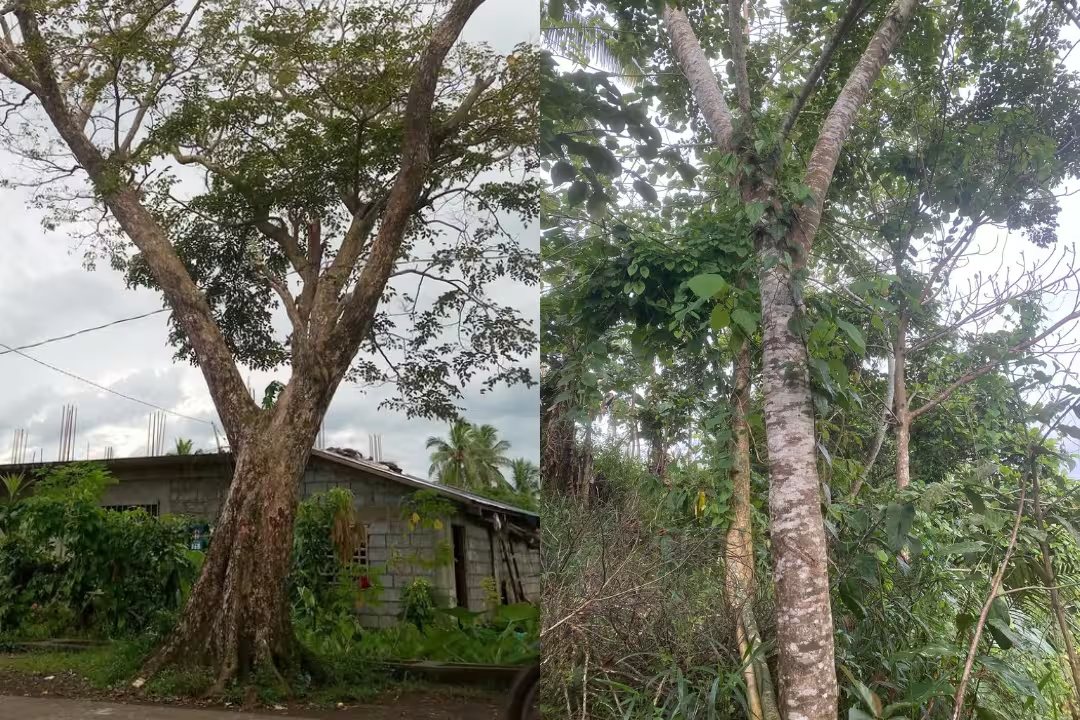
The narra tree is a large deciduous to semi-deciduous tropical tree valued for shade, ornamental planting, nitrogen-fixing ability, and decorative hardwood. Mature trees often develop a broad umbrella crown, so they cool streets and yards better than many narrow, upright ornamentals.
In real planting work, narra behaves like a tree that wants room to spread. The canopy can feel cool and still underneath on a hot afternoon, but that same spread becomes a problem beside low roofs, tight sidewalks, septic lines, and overhead wires.
Scientific name
The scientific name of the narra tree is Pterocarpus indicus. It belongs to the pea family, Fabaceae, which helps explain its ability to form root nodules with nitrogen-fixing bacteria in suitable soil.
The genus name Pterocarpus points to the tree’s winged fruit. If you hold a dry pod, it feels thin, papery, and slightly rough around the rim, with the seed held near the center like a small disc.
Common names
Common names include narra, Burmese rosewood, New Guinea rosewood, Malay padauk, Philippine mahogany in older trade use, and amboyna tree when the discussion centers on figured burl wood. “Philippine mahogany” can confuse buyers because true mahogany belongs to a different botanical group.
In wood shops, people often separate plain narra from amboyna wood. Amboyna usually refers to highly figured burl or curly material from Pterocarpus species, prized for knife handles, veneer, small boxes, and decorative panels.
Native range
Narra is native across parts of Southeast Asia and the western Pacific, including the Philippines, Indonesia, Malaysia, Papua New Guinea, and nearby island regions. It grows in lowland forest, river margins, open seasonal woodland, and disturbed areas where light reaches the crown.
Outside its native range, people plant narra in tropical cities, parks, school grounds, farms, and estates. It doesn’t act like a cold-climate tree, so gardeners searching for BC native trees should look elsewhere; narra needs warm conditions and won’t tolerate hard frost.
National tree status
The narra tree Philippines connection is official: narra is recognized as the national tree of the Philippines. The country’s Official Gazette national symbols page lists narra as the national tree, linking it with strength, shade, and local identity.
That status can create a planting misconception: some beginners assume any narra seedling is fine to dig, move, or cut because it’s familiar. The safer move is to treat local tree rules seriously, especially on public land, titled property, and protected sites.
Narra Tree Identification
You can identify a narra tree by its compound leaves, rounded to umbrella-shaped crown, yellow pea-like flowers, flat circular pods, gray-brown bark, and sometimes buttressed trunk base. The easiest field clue is the dry pod because its flat wing looks unlike a normal bean pod.
When I check young narra beside roads, I look up first, then down. The canopy gives a soft broken shade, while the ground often holds round tan pods that crunch lightly underfoot during the dry season.
Leaves and canopy

Narra leaves are compound leaves with several oval leaflets arranged along a central stalk. The leaflets usually look glossy green when healthy, and the canopy casts dappled shade rather than the dense, dark shade of some broad-leaved ornamentals.
A common beginner mistake is identifying narra from leaf shape alone. Several tropical shade trees have oval leaflets, so pair the leaf check with pods, bark, branching habit, and the tree’s overall crown shape.
Flowers and pods
Narra produces clusters of yellow flowers, often after a dry spell or seasonal shift. The flowers can appear briefly, then drop in soft yellow scatter that sticks to shoes and wet pavement.
The pods are flat, round to disc-like, and winged around the edge. This feature separates narra from many lookalikes, and the NParks Flora & Fauna Web profile also describes its orbicular fruit and yellow flowers.
Bark and trunk
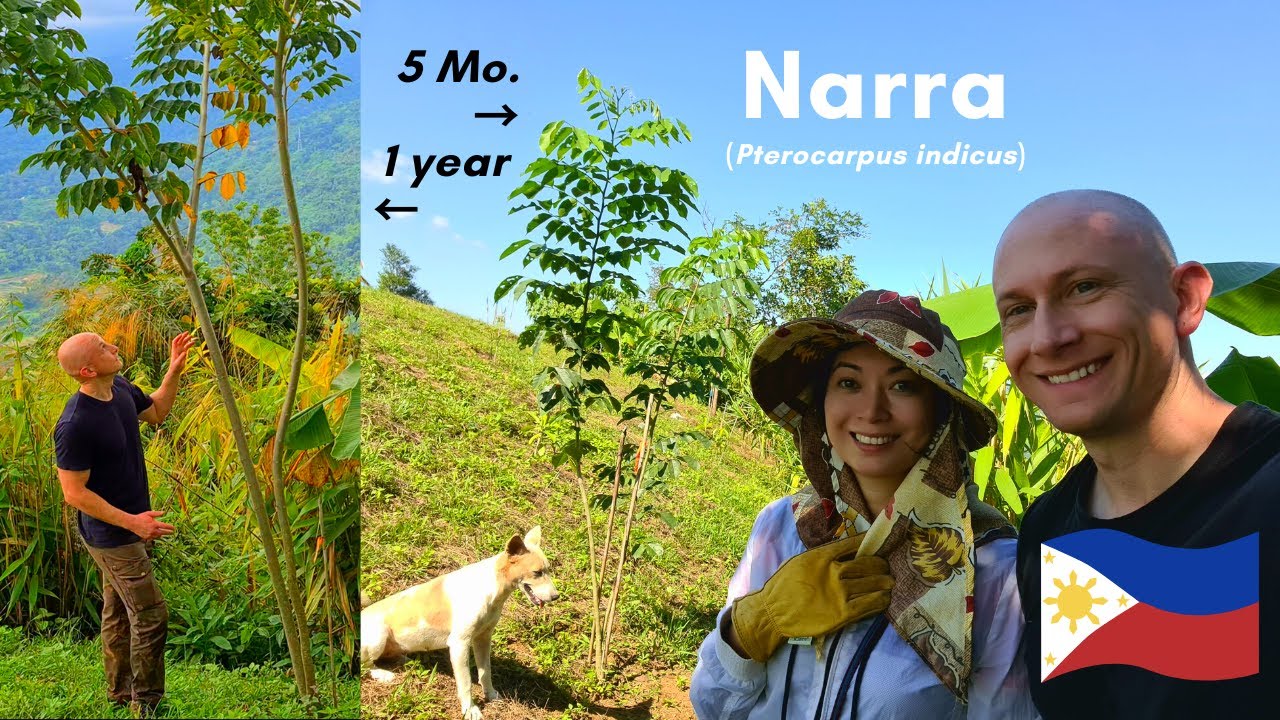
Older narra bark is usually gray to brown, with shallow fissures and rough plates. Mature trunks may develop flared bases, and some specimens show buttress-like swelling where roots meet the trunk.
On neglected urban trees, look for cavities, dead stubs, fungal brackets, and soil heaving near the base. A thick trunk isn’t automatically safe; internal decay can hide behind sound-looking bark.
Amboyna wood features
Amboyna wood from narra-related material is famous for swirling figure, eyes, curl, and reddish orange to golden brown color. Freshly worked pieces can show a warm glow under oil, with pores that darken and make the grain look deeper.
The trade-off is movement and tear-out. Figured amboyna can chip under a dull cutter, so woodworkers often use sharp blades, light passes, and sanding blocks that stay flat across the interlocked grain.
Narra Tree in the Philippines
The philippines narra tree matters because it combines national symbolism, shade value, timber history, and conservation pressure. It’s admired in public spaces, but wild and old-growth sources need protection from illegal cutting and habitat loss.
In towns, narra often works as a civic tree because it gives usable shade without the gloomy feel of denser canopies. On hot pavement, the air below a mature crown feels several degrees cooler, especially where soil isn’t sealed by concrete.
Cultural importance
Narra carries cultural weight in the Philippines because it appears in schools, public grounds, parks, plazas, and local planting programs. Its timber also shaped older furniture traditions, where reddish grain and durability signaled quality.
That cultural value can lead to overconfidence. People sometimes plant seedlings for symbolism, then ignore spacing, pruning access, and drainage. A better plan pairs the symbolic choice with a site check before the first hole is dug.
Natural habitat
In natural settings, narra favors lowland tropical areas, stream edges, seasonal forests, and open sites with strong light. It can handle wet periods better than many dryland ornamentals, but it dislikes long-term stagnant soil around the root crown.
Seedlings in shaded understory often stretch and lean. In nursery selection, choose stock with a straight central leader, firm root ball, and leaves that feel crisp rather than limp or rubbery from stress.
Urban shade tree use
Narra can be one of the best tree for shade near house-sized open yards, campuses, and parking edges if there’s enough soil volume. It’s less suited to narrow tree pits boxed in by concrete because roots need air, water, and space.
The best urban narra plantings leave open soil or mulch below the canopy. Avoid piling soil against the trunk; that traps moisture, softens bark, and invites collar rot.
Conservation concerns
Narra conservation concerns come from timber demand, land conversion, and loss of mature seed trees. The IUCN Red List assesses Pterocarpus indicus as threatened, which is why buyers should ask where lumber came from before paying for narra slabs or veneer.
Beginners often assume reclaimed narra is automatically legal and low-risk. Keep invoices, origin notes, and supplier details because beautiful old boards can still create paperwork problems during resale, export, or commercial use.
Growing Conditions and Habitat
Narra grows best in warm tropical climates with full sun, moderate to high rainfall, and soil that drains after heavy rain. It can handle seasonal dry spells once established, but young trees need steady moisture while roots spread.
The tree performs poorly where cold wind, compacted clay, salt spray, or constant waterlogging weakens new growth. If a planting hole smells sour or the soil stays shiny and wet for days, fix drainage before planting young narra.
Soil and drainage
Narra tolerates several soil types, including sandy loam, clay loam, and alluvial soil, but it needs drainage and oxygen around the roots. The mistake is digging a deep smooth-sided hole in clay; it turns into a bowl that holds water.
Use a wide, rough-sided planting hole and keep the root flare at finished soil level. Backfill with native soil rather than a soft compost pocket, because roots need to move into the surrounding ground, not circle inside amended soil.
Sun and climate
Narra prefers full sun and warm conditions. In partial shade, it may survive, but growth becomes lanky and the crown may lean toward stronger light.
Cold is the hard limit. Narra isn’t a match for frosty temperate yards, and container plants should be protected from chilly wind because young leaves bruise and blacken after cold exposure.
Savannah suitability
A narra tree savannah planting can work in warm seasonal climates where trees get sun, deep soil, and some dry-season rest. Narra fits open woodland edges and pasture-like sites better than deep shade.
The risk is fire, grazing, and weed competition around small saplings. Use a mulch ring, protect the trunk from animals, and keep dry grass away from the stem during the first dry seasons.
Best planting locations
The best planting locations give narra open overhead space, deep soil, and room for a broad crown. Parks, large gardens, schools, estates, farm boundaries, and wide road verges suit it better than narrow courtyards.
- Plant at least several meters from small buildings, walls, and drains where mature roots and crown spread won’t create conflict.
- Choose a spot with full sun for most of the day, not a tight gap between taller trees.
- Keep the root flare visible after planting; buried trunks decline slowly and fail later.
- Use mulch, but leave a hand-width gap around the trunk so bark stays dry.
- Water deeply during establishment rather than sprinkling the surface every day.
For basic planting tools and watering supplies, these starter products can help with young tree establishment.
Narra Tree Care
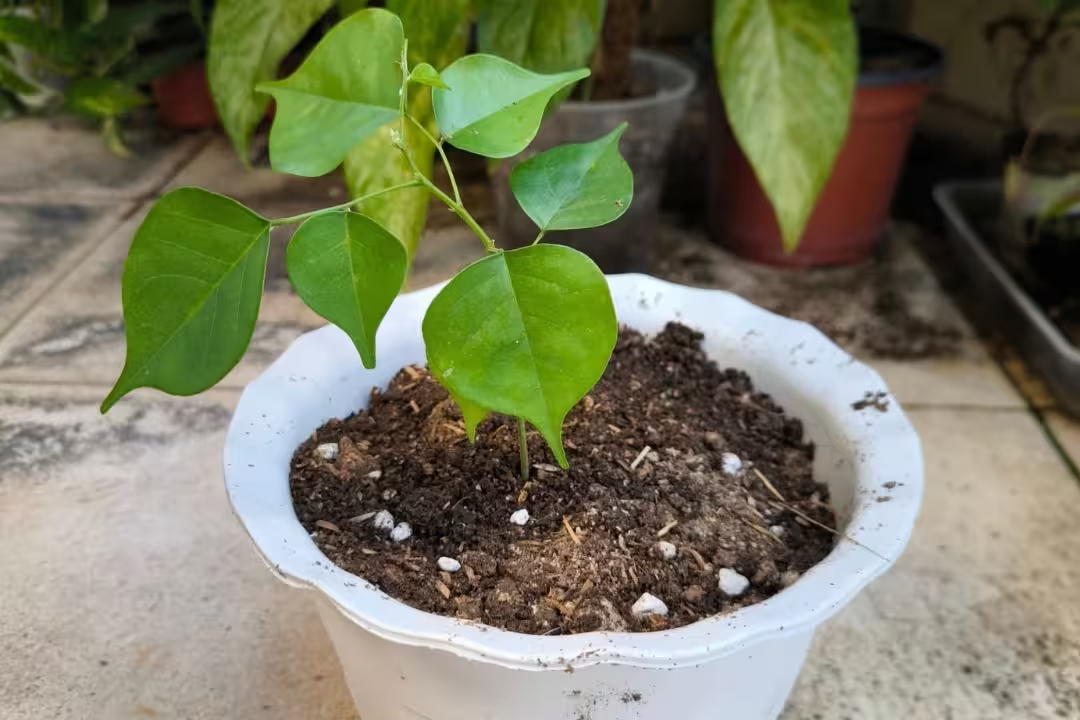
Narra tree care is mostly about deep watering, early structure pruning, root protection, and monitoring for stress. Once established in a good site, narra is less fussy than many ornamental shade trees, but bad planting mistakes show up years later.
Healthy narra leaves should feel firm and slightly leathery, not dusty, curled, or brittle at the tips. If new growth droops in the morning, the tree likely has a root-zone problem, not just afternoon heat stress.
Watering needs
Young narra trees need consistent moisture while roots establish. Water deeply, then let the upper soil begin to dry before watering again, because constant shallow watering trains roots to stay near the surface.
A practical test is to push a finger or small trowel into the soil outside the root ball. If the soil below the mulch is dry and crumbly, water; if it feels sticky and sour-smelling, wait and improve soil aeration.
Pruning basics
Prune narra early to build strong branch structure. Remove crossing branches, tight V-shaped forks, dead wood, and low limbs that block paths, but don’t strip too much canopy from a young tree.
The common mistake is topping the tree to control size. Topping creates weak shoots that grow fast and break later; use reduction cuts back to healthy side branches and keep a natural crown.
Pest issues
Narra can face scale insects, borers, leaf-feeding caterpillars, fungal decay on wounds, and root stress from compacted soil. Most pest problems get worse when the tree is already stressed by poor drainage, injury, or drought.
Don’t spray first and diagnose later. Check leaf undersides, branch unions, trunk wounds, and soil moisture before treatment, because correcting the site stress often reduces pest pressure more than repeated chemicals.
Termite resistance
Can termites eat narra wood? Yes, termites can attack narra sapwood, damp boards, untreated offcuts, and wood in ground contact, but mature heartwood has better natural resistance than many softer timbers.
The professional workaround is simple: never treat “resistant” as “immune.” Keep narra wood dry, lift it off soil, seal end grain, remove sapwood where possible, and use termite barriers in buildings; a moisture meter is useful before storage or installation.
Narra Wood Uses
Narra wood is used for furniture, flooring, veneer, carving, turned objects, musical parts, and decorative joinery. Its appeal comes from warm color, moderate hardness, attractive grain, and better workability than many extremely dense tropical hardwoods.
Compared with very oily woods like teak wood, narra usually feels less greasy under a plane and takes many finishes cleanly. Compared with darker species like rose wood, it often gives a warmer orange-red tone rather than a deep purple-brown cast.
Furniture and flooring

Narra makes attractive tables, cabinets, chairs, doors, stair parts, and flooring when boards are properly dried. It can show ribbon-like grain, amber streaks, and darker pores that pop after oil or clear finish.
The mistake is installing boards too wet. Narra may cup, gap, or check if moisture content doesn’t match the room, so acclimate flooring and use slow, controlled drying for thick slabs before final milling.
Carving and veneer
Carvers like narra because it cuts cleanly when sharp tools meet straight grain. Figured burl and amboyna veneer need more care because swirling fibers can tear, chip, or sand unevenly.
For veneer, a flat backer and balanced construction matter. If you glue highly figured narra to one face of a panel and ignore the reverse side, the panel can bow as the veneer moves.
Durability outdoors
Narra heartwood has moderate durability outdoors when kept above ground and allowed to dry between rains. It isn’t the best first choice for wet ground contact, buried posts, or constantly shaded exterior decking.
The Wood Database narra profile lists narra as a medium-density hardwood with variable color and good workability. In use, the edge feels pleasant under a sharp plane, but the dust can feel peppery in the nose, so dust collection and a respirator are smart.
Legal harvesting notes
Narra harvesting needs legal proof, especially in regions where native stands are protected. Ask for permits, chain-of-custody records, reclaimed-source details, or plantation documentation before buying expensive boards.
If documentation is weak, choose a better-supplied substitute. Depending on the project, mahogany wood, sapele, iroko, or plantation teak may reduce sourcing risk while still giving stable, attractive workpieces.
Narra vs Similar Trees
Narra is often confused with cascara tree, mahogany tree, talisay, agoho, and calantas because people compare shade, timber, or leaf shape. The fastest way to separate them is to check fruit type, leaf arrangement, bark texture, and wood identity.
In the field, don’t rely on one clue. A smooth young trunk, oval leaves, or broad shade canopy can mislead you; fruit and branching pattern usually give a cleaner identification.
| Tree | Main clue | Best known for | Common confusion |
|---|---|---|---|
| Narra tree | Flat round winged pods | Shade and reddish hardwood | Called Philippine mahogany in trade |
| Cascara tree | Simple leaves and dark berries | Medicinal bark history | Not a tropical narra relative |
| Mahogany tree | Woody capsule fruit | Furniture-grade timber | Name used loosely for many woods |
| Talisay tree | Layered branches and large leaves | Coastal shade | Similar broad canopy use |
| Agoho tree | Needle-like branchlets | Windbreak and coastal planting | Looks pine-like, not legume-like |
| Calantas tree | Aromatic cedar-like timber | Light, workable wood | Compared through timber use |
Cascara tree
The cascara tree is not close to narra. Cascara usually refers to Frangula purshiana, a Pacific Northwest tree or large shrub known for bark compounds, simple leaves, and berry-like fruit.
This matters for readers comparing BC native trees with tropical hardwood trees. The USDA Plants Database places cascara in a very different climate and botanical group, so it won’t replace narra for tropical shade or amboyna-type wood.
Mahogany tree
A mahogany tree usually refers to species in Swietenia or related timber groups, not Pterocarpus indicus. The wood can look reddish brown, which is why old trade names confuse narra with mahogany.
For buyers, the name on the invoice matters. If a board is sold as Philippine mahogany, ask whether it’s narra, lauan, meranti, or another timber; true identity affects price, durability, legality, and finishing behavior.
Talisay tree
Talisay, often called tropical almond, has large simple leaves and a layered branching habit. It’s common as a coastal shade tree, and its crown forms horizontal tiers rather than narra’s more rounded umbrella canopy.
Some people mention African talisay tree in local plant discussions, but the label can be loose. Check the leaf type and fruit first, because talisay leaves are broad and single, while narra leaves are compound leaflets.
Agoho and calantas
Agoho tree looks pine-like from a distance because of its fine branchlets, but it belongs to Casuarina, not the pine family. It suits windbreaks and coastal sites better than small home yards where dropped litter and aggressive growth create maintenance work.
Calantas is known for aromatic, workable timber and is closer in conversation to cabinetmaking than shade planting. If you’re comparing tropical furniture woods, also review related species such as sapele wood lumber and monkey pod wood for color, weight, and grain differences.
Planting Near Homes
A narra tree near a home can give excellent shade, lower heat around walls and pavement, and improve outdoor comfort. It needs generous spacing because the canopy, roots, leaf drop, and branch maintenance all increase as the tree matures.
The beginner error is planting a cute seedling too close to the house. A young narra in a pot looks harmless, but a mature tree can dominate a yard, lift weak paving, and drop branches if pruning is ignored.
Shade benefits
Narra shade is useful because the crown spreads wide and filters sunlight into soft shade. Under a healthy tree, the ground feels cooler to the hand than exposed concrete, and parked cars heat more slowly.
Place the tree where afternoon shade hits walls, patios, or parking areas without crowding the roofline. This gives comfort benefits while keeping gutters, tiles, and service cables away from future branches.
Root considerations
Narra roots can spread far in search of water and oxygen. They’re not “foundation hunters,” but roots exploit cracks, leaking pipes, loose paving bases, and moist trenches when those conditions exist.
Use root-friendly design instead of panic cutting. Keep soil open, fix leaking drains, avoid trenching through main roots, and use flexible paving near mature trees where surface roots may expand.
Space requirements
Narra needs large-tree spacing, not ornamental shrub spacing. In a tight urban lot, choose a smaller species rather than forcing narra into a place where repeated cutting will ruin the structure.
As a practical rule, give the tree room for equipment access, crown spread, and root growth. If you can’t picture a truck, ladder, or arborist working safely around the mature canopy, the site is probably too tight.
Safety and maintenance
Safety checks should focus on dead limbs, weak forks, trunk cavities, leaning stems, soil movement, and fungal growth. Large shade trees need inspection after storms, construction work, and long dry periods followed by heavy rain.
Never remove major roots or large limbs without a plan. Sudden heavy pruning can sunburn bark, trigger weak regrowth, and reduce stability, so staged pruning is safer for mature narra trees.
Practical Notes From Real-World Use
The best real-world use of narra is planned shade in a warm site with enough soil volume, not squeezed planting beside concrete. When narra has space, it becomes a long-term asset; when it’s cramped, it becomes a pruning bill.
For planting, the small details matter most: root flare visible, mulch kept off the trunk, deep watering, and no early topping. For wood use, the same principle applies: buy legal stock, dry it slowly, cut with sharp tools, and treat termite resistance as risk reduction, not a guarantee.
If you’re choosing between narra, mahogany, talisay, cascara, agoho, or calantas, match the tree to the job. Narra is best where you need tropical shade, cultural value, and legal decorative hardwood potential, while the lookalikes serve different climates, spaces, and wood uses.
FAQs
What Is Special About The Narra Tree?
The narra tree is special because it is a strong, beautiful hardwood valued for its rich color and lasting durability. It is also admired as the Philippines’ national tree, which gives it cultural and historical importance. Many people plant it for its shade, timber, and ornamental appeal.
Is The Narra Tree Native To The Philippines?
Yes, the narra tree is native to the Philippines. It naturally grows in tropical parts of the country and is well adapted to warm climates. Because of its local importance, it has become one of the most recognized trees in the Philippines.
Can Termites Eat Narra Wood?
Narra wood is highly resistant to termites, but it is not completely immune. Its density and hardness make it much harder for termites to damage than softer woods. In very wet or neglected conditions, however, pests can still cause problems over time.
Is Narra A Good Shade Tree Near A House?
Yes, narra can be a good shade tree near a house if it is planted with enough space. It grows into a large tree with a broad canopy, so it should be kept away from foundations, walls, and utility lines. Proper placement helps avoid future root and branch issues.
How Fast Does A Narra Tree Grow?
Narra trees grow at a moderate pace. Young trees may take several years to establish before they start growing faster, especially in good soil and full sun. With proper care, they develop into large, long-lived trees over time.
Affiliate Disclosure: Some links in this post are affiliate links. If you make a purchase through these links, we may earn a small commission at no extra cost to you. We only recommend products we genuinely believe in.