
JessEm Router Table Buying Guide: Tops, Lifts, and Setup

Table of Contents
A jessem router table is a precision table-routing setup built from JessEm parts such as a table top, lift, fence, insert rings, stock guides, stand, and dust collection. The key buying decision is whether you need a complete system, a jessem router table top, or a lift and fence upgrade for a table you already own.
JessEm makes sense when you repeat cuts, dial in joinery, and want smoother above-table adjustment instead of crouching under a cabinet with sawdust on your sleeves. The wrong setup can still frustrate you, so this guide focuses on fit, safety, cost, and the real limits beginners often miss.
JessEm Router Table: What It Includes
Complete System
A complete JessEm router table system normally combines a table top, router lift or insert plate, fence, stand or cabinet, insert rings, and dust collection parts. Before comparing prices, check the included components on the listing or the JessEm Tool Company site, since many products look like full tables in photos but ship as one component.
Table Top Only
A table top only purchase gives you the flat work surface, not the router, lift, fence, or stand. This route works well if you’re building a cabinet base, but it can surprise new buyers when the box arrives and there’s no lift plate, no motor, and no way to guide stock yet.
Lift Or Fence Upgrade
A lift or fence upgrade is often the smartest path if your current table is flat and stable. I’d rather upgrade a sloppy height adjustment first than replace a usable table top, since the lift controls bit height on rabbets, grooves, lock miters, and repeated profiles.
JessEm Table Router Meaning
The phrase jessem table router is often used backward by searchers, but it usually means a router mounted in a JessEm table setup. The router motor itself may come from Bosch, DeWalt, Porter-Cable, Makita, Milwaukee, Triton, Festool, or another brand, while JessEm supplies the lift, table, fence, or accessories.
Best Fit Users
A JessEm setup fits repeat-focused woodworkers: cabinetmakers, furniture builders, box makers, trim shops, and serious hobbyists who cut the same profile more than once. If your work includes drawer parts, cabinet doors, patterns, box joints, and clean edge profiles, the repeatability saves time and reduces ruined stock.
Less Ideal Users
A JessEm system is less ideal for occasional roundovers, jobsite portability, or first-tool budgets. A beginner who hasn’t yet built safe feed habits may get better value from learning on a simpler table first, then moving up after stock control, bit selection, and test cuts feel routine.
Common Routing Work
A stable router table turns handheld tasks into controlled cuts, especially when the workpiece is narrow, small, or needs repeatable contact with a fence. For broader setup basics, see our router table guide.
- Roundovers and chamfers on cabinet parts
- Rabbets, dados, and grooves for casework
- Flush trimming and pattern routing with bearing bits
- Raised panels with safe multi-pass setup
- Box joints, finger joints, and drawer joinery
- Lock-miter joints after careful test cuts
JessEm Router Table Top

24 x 32 Work Area
The listed 24 inch x 32 inch work area gives more support than compact benchtop tables, especially for cabinet rails, drawer parts, and longer edge profiles. You still need infeed or outfeed support for long boards, since a board hanging off the edge can lever upward and change the cut.
Phenolic Surface
A phenolic-style surface feels slick and cool under your palm, and waxed stock glides with less chatter than it does on rough MDF. The trade-off is that phenolic and laminate tops still need proper support; a premium skin won’t fix a weak base or a twisted cabinet.
Flatness And Support
Flatness matters because a tiny dip around the lift changes bit height and can leave a lip on a profile or a loose dado shoulder. Support the top near the lift opening and across the cabinet rails, since router motors and lifts add concentrated weight in the center.
Lift Opening Checks
Before buying a jessem router table top, measure the lift plate size, corner radius, recess depth, leveling screw layout, and mounting hole pattern. A lift that almost fits can turn into a half-day of routing, shimming, and edge sanding, with a nervous first drop-in where the plate rocks under your fingers.
Stand And Cabinet Fit
The stand or cabinet must resist racking and vibration, or the best top will still feel jumpy during a heavy pass. If you build your own base, leave room for dust hoses, a safety switch, router ventilation, bit storage, and access to the lift wrench.
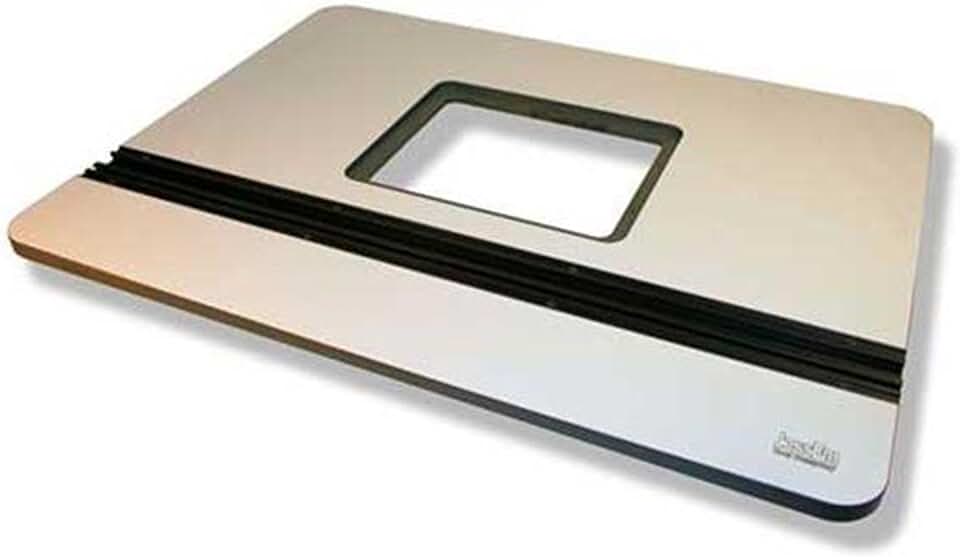
This premium top is the foundation if you want a larger table surface and plan to build the rest of the system around it.
Premium Router Table Top
- Smooth laminated surface for easy routing
- pre-drilled design for faster setup
- durable phenolic build for long-lasting use
- generous 24 inch x 32 inch work area
- ideal foundation for a precision router table
 Buy on Amazon
JessEm Router Lifts

Mast-R-Lift II
The Mast-R-Lift II is a precision-focused lift for woodworkers who want fine above-table height changes and secure settings. A lift like this changes the feel of table routing: instead of reaching under a dusty cabinet, you hear the bit rise in tiny, controlled increments while your eyes stay on the cutter.

Mast-R-Lift II
- Precision router lift for accurate setup
- smooth height changes above the table
- locking system helps hold adjustments firmly
- compact lift-only design for custom builds
- sized for stable router table use
Buy on Amazon
Rout-R-Lift 3.5XT
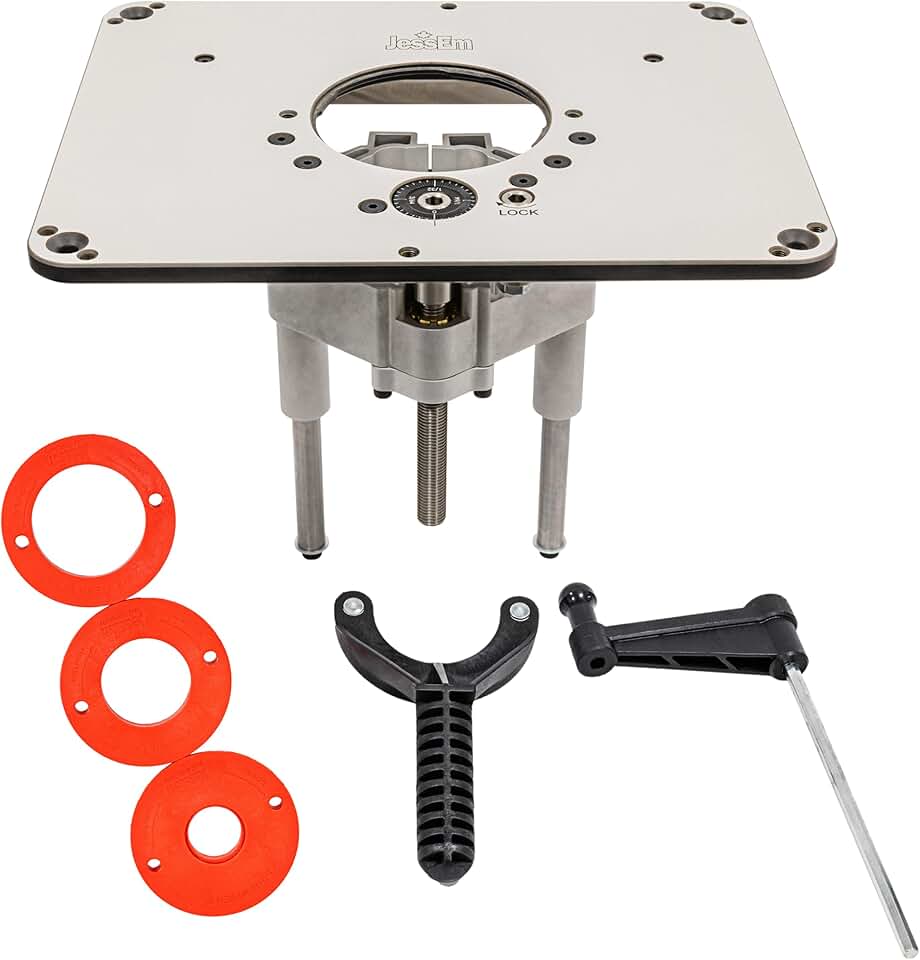
The Rout-R-Lift 3.5XT fits buyers who want smooth above-table adjustment, heavy-duty aluminum construction, a phenolic top plate, and twist-lock inserts. Check router motor compatibility before ordering, since “fits many routers” doesn’t mean your exact router body, switch location, or motor diameter will work.
Rout-R-Lift 3.5XT
- Heavy-duty aluminum construction for reliability
- smooth above-the-table height adjustment
- phenolic top plate for solid support
- twist-lock inserts make changes easier
- built for fast, accurate router work
Buy on Amazon
Mast-R-Lift Excel II
The Mast-R-Lift Excel II suits frequent router-table users who care more about height control than decorative table features. Spending more on a lift often improves daily workflow more than spending more on the cabinet, since bit changes, repeat settings, and multi-pass cuts all run through the lift.

Mast-R-Lift Excel II
- Precise router height control for accurate cuts
- built-in locking system helps keep settings secure
- lift-only design for flexible table setups
- smooth adjustment for convenient bit changes
- made for dependable shop performance
Buy on Amazon
Router Fit Checklist
The best JessEm router lift is useful only if it fits your router. Confirm the router model, motor diameter, body shape, base removal steps, switch access, collet access, and whether adapter collars are needed; our router lift guide covers these checks in more depth.
Plate Opening Checks
A lift plate must sit flush and stable in the table opening. If the opening is too deep, too shallow, or rounded differently at the corners, you’ll fight rocking, proud edges, or a lip that catches stock during a cut.
Above-Table Adjustment
Above-table adjustment helps most during fine joinery, raised panels, and repeated profiles. The pro habit is to sneak up on the final height in small moves, lock the setting if the lift has a lock, then make a scrap test cut before touching finished parts.
Fence, Feed Control, Safety
TA Router Table Fence
The fence controls cut location, stock support, dust capture, and repeatability. The TA Router Table Fence adds steady guidance and a jointing feature, but you still need to align the faces, check the offset, and test the cut before running finished boards.

TA Router Table Fence
- Delivers steady guidance for cleaner cuts
- jointing feature adds extra versatility
- helps improve control on the router table
- built for accurate fence positioning
- ideal for serious woodworking setups
Buy on Amazon
Clear-Cut Stock Guides
Clear-Cut Stock Guides help press the workpiece against the fence and table while your hands stay farther from the bit. They shine on long, narrow stock where fingers tend to creep too close, but they don’t replace push blocks, guards, or a calm feed pace.

Clear-Cut Stock Guides
- Dual rollers help keep stock firmly controlled
- improves safety along the router fence
- supports smoother and more accurate feed
- reduces wandering during cuts
- great for consistent woodworking results
Buy on Amazon
Insert Ring Fit
Insert rings reduce the open gap around the bit, which improves support, chip control, and safety. Use the smallest safe opening that clears the cutter, spin the bit by hand before power-up, and never assume every ring fits every JessEm lift plate.

Insert Ring Kit with Caddy
- Includes multiple rings for versatile routing
- helps match different bit sizes
- keeps inserts organized in the caddy
- compatible with popular JessEm lifts
- useful for cleaner, more efficient table work
Buy on Amazon
Safe Feed Direction
Feed against the bit rotation for most fence-guided router table cuts, keeping the work pressed into the fence with steady pressure. The wrong direction can pull the board forward fast enough to slap your palm and leave a torn, burnt edge before you can react.
Kickback Prevention
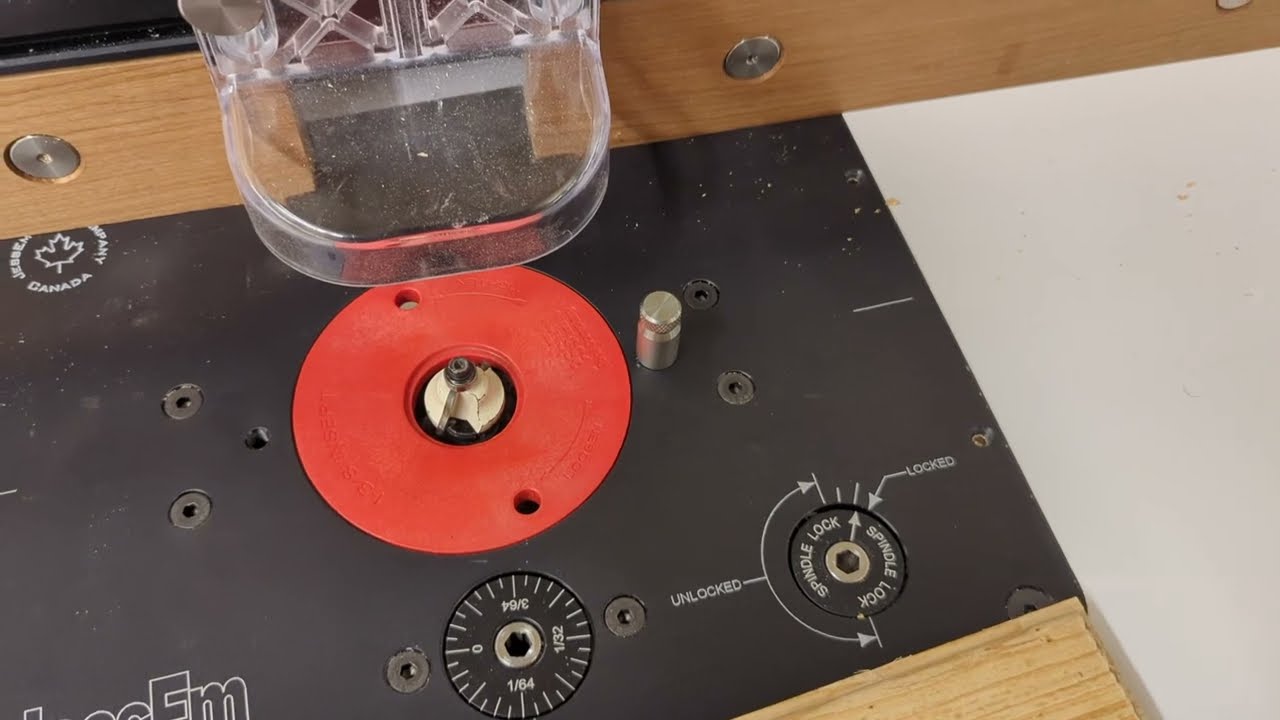
Never trap stock between the bit and fence in a way that creates kickback pressure. Use a starter pin for freehand bearing work, make light passes, support long boards, and stop if the cut begins to sound harsh, high-pitched, or grabby.
Dust Collection And Joinery
Router Table Dust Control
Router tables throw chips and fine dust above and below the table, especially during grooves, dados, and profile cuts. OSHA lists wood dust as a hazard in woodworking operations, and its woodworking hazards page is a useful safety reference when planning dust capture.

Dual Intake Dust Box
- Dual intake design helps capture more dust
- supports a cleaner router table area
- improves visibility while cutting
- integrates with dust collection systems
- built to keep the workspace tidier
Buy on Amazon
Shop Vac Or Collector
A shop vac gives high suction through smaller hose, while a dust collector moves more air through larger ducting. Fence ports often work with vac-style suction, but under-table boxes and cabinet capture usually benefit from higher airflow and fewer hose restrictions.
Motor Cooling Airflow
Don’t seal a router motor inside a dust box without planning cooling airflow. A too-tight cabinet traps warm air, and you can smell hot motor windings before the tool starts to complain; leave an inlet path so dust collection pulls chips without starving the motor.
Box Joint Jig
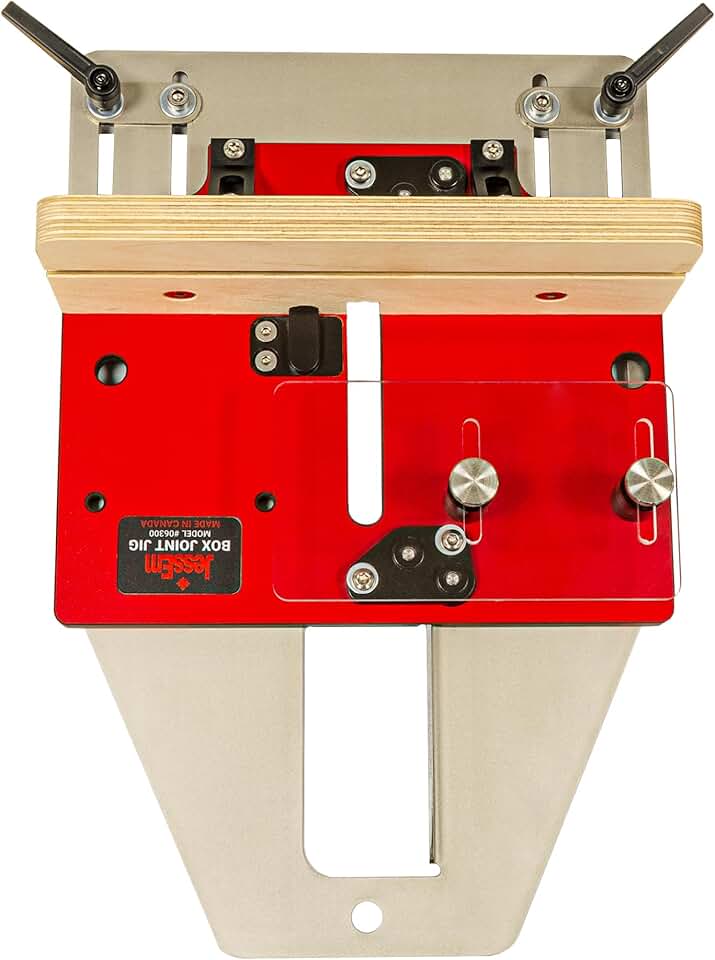
A box joint jig turns a JessEm table into a repeatable joinery station for drawers, small cases, and decorative boxes. The listed jig includes 1/4 inch, 3/8 inch, and 1/2 inch indexing keys, but tight finger joints still depend on bit diameter, stock thickness, and test-fit pressure.
Precision Box Joint Jig
- Makes box joints faster and more consistent
- includes 1/4 inch 3/8 inch and 1/2 inch indexing keys
- smooth bearing glide system for easy movement
- helps create tight fitting finger joints
- great for refined woodworking projects
Buy on Amazon
Rabbets, Dados, Grooves
Rabbets, dados, and grooves reward careful setup because small bit-height changes affect shoulder fit and panel seating. Make the first pass shallow, listen for a smooth cutting tone, clear chips between passes, and record the final fence setting if you’ll repeat the cut later.
Buying Scenarios And Cost
Build Around Top
Build around a JessEm top if you want a 24 x 32 inch work surface and plan to choose the lift, fence, cabinet, and dust system yourself. This route gives flexibility, but the total cost grows fast once you add a motor, lift, stand, fence, insert rings, and safety switch.
Upgrade Existing Table
Upgrade an existing table if the top is flat enough, the base doesn’t wobble, and the lift opening can be adapted cleanly. Measure twice, then check plate size, corner radius, table thickness, router fit, insert rings, and above-table access before placing an order.
Buy Complete System
A complete system reduces mounting surprises because the top, lift, fence, stand, and accessories are more likely to match. The trade-off is higher upfront cost, so this path works best for shops that want a ready precision platform rather than a slow custom build.
Add JessEm Accessories
Add accessories based on the weakest part of your current table. If cuts wander, start with fence alignment or stock guides; if cleanup is awful, address dust capture; if joinery fit varies, focus on the lift, insert rings, and test-cut routine.
Hidden Cost Stack
A working router table can involve 8 or more major parts: table top, lift or plate, router motor, fence, stand or cabinet, insert rings, dust collection, and feed-safety accessories. Heavy components may also bring shipping costs, hose adapters, power switches, push blocks, bits, and sales tax.
| Buying Scenario | Best For | Check Before Buying |
|---|---|---|
| JessEm router table top | Custom cabinet builds | Lift opening, stand support, fence drilling |
| JessEm router lift | Better height control | Router motor diameter, plate size, insert rings |
| JessEm fence | Cleaner guided cuts | Mounting slots, dust port, stock guide fit |
| Complete JessEm system | New serious shop setup | Total cost, floor space, dust collection path |
| Accessory upgrade | Safer repeat work | Duplicate parts, compatibility, real need |
Upgrade Kit Option
An upgrade kit can make sense when you already own a usable table and want better safety, dust control, or repeatability without rebuilding everything. Check whether the kit duplicates parts you already have, and confirm whether it includes a lift, fence, dust parts, or only add-ons.

Router Table Upgrade Kit
- Helps improve routing accuracy
- supports safer table-based work
- promotes cleaner dust collection
- adds useful table accessories in one kit
- designed to streamline router table setup
Buy on Amazon
JessEm Vs Other Options
JessEm Vs Kreg
JessEm leans premium and precise, while Kreg often feels more approachable for hobby shops and budget-conscious buyers. If you’re comparing entry paths, our Kreg router table guide helps frame the difference in cost, setup, and user level.
JessEm Vs Incra
JessEm is strong in router lifts, feed control, and table-routing accessories, while Incra is known for fence positioning and incremental joinery setups. Pick JessEm if the lift and stock-control system matter most; pick Incra if fence indexing drives your work.
JessEm Vs Rockler
Rockler offers a broad accessory ecosystem with many modular parts, while JessEm targets precision components for dedicated table routing. Rockler can be easier to source for casual upgrades, but JessEm often feels more refined during repeated height adjustments and fence-guided cuts.
JessEm Vs DIY
A DIY table can save money and add custom storage, but the hard parts are flatness, lift fit, dust routing, and a fence that stays aligned. A strong hybrid is a shop-built cabinet with a JessEm lift, especially if you enjoy building fixtures but want precision where it counts.
JessEm Vs Budget Tables
Budget tables work for light profiles and small projects, but they often show limits through flex, vibration, small tops, and awkward under-table adjustments. JessEm costs more, yet it pays off when a ruined cabinet door or loose drawer joint costs more than the upgrade would have.
Practical Notes From Real-World Use
The first thing I check on any JessEm setup is how the stock feels as it crosses the lift plate; a tiny proud edge catches with a dull tick you can feel through the board. Wax the surface lightly, level the plate flush, set the fence from the bit with scrap gauges, and keep a notebook of bit heights for profiles you repeat.
The second check is chip behavior. If chips spray forward, pack around the collet, or leave gritty dust on your knuckles after one pass, the dust path needs work before you blame the bit, the router, or the fence.
Setup Mistakes To Avoid
Missing Included Components
The most common beginner mistake is assuming “router table” means a complete working system. Check the box contents for the table top, lift, fence, insert rings, stand, router motor, dust parts, hardware, and safety switch before comparing one listing with another.
Wrong Router Lift
A wrong lift creates an expensive mismatch: the router won’t clamp, the switch hides under the plate, or the collet won’t rise high enough for bit changes. For JessEm-specific fit notes, use our JessEm lift guide before buying.
Weak Stand Support
A weak stand turns precision parts into a shaky system. If the table rocks when you push a board through the bit, add bracing, level the feet, anchor the cabinet if needed, and support the top near the lift opening.
Poor Dust Planning
Poor dust planning leaves chips packed around the router motor and fine dust floating above the table. Plan fence collection, under-table capture, hose routing, and cooling airflow before building a cabinet; retrofitting dust ports later is messier and less clean.
Wrong Insert Ring
The wrong insert ring leaves a large opening that reduces support and can let thin stock dip near the bit. Use the smallest safe opening, check bit clearance by hand, and keep the ring caddy close so you don’t settle for “good enough.”
Unsupported Long Stock
A 24 x 32 inch top still can’t carry long stock by itself. Use roller stands, a side table, or a helper for long boards, and make sure stock guides press the work against the fence without lifting or twisting it.
Skipping Test Cuts
Skipping test cuts is how clean maple turns into scrap fast. Make a trial cut in matching scrap, adjust bit height in small steps, confirm fence position, check joinery fit, and only then run the finished piece through with steady feed pressure.
FAQs
Is JessEm A Good Router Table Brand?
Yes, JessEm is widely regarded as a high-quality router table brand. Its products are known for solid construction, smooth lift mechanisms, and precise adjustability. They are a strong choice for woodworkers who want reliable performance and long-term durability.
Does A JessEm Router Table Top Include The Router Lift?
Not always, because many JessEm tops and tables are sold separately from the lift. Some packages include a router lift, while others are just the table top or stand. Always check the product listing carefully before buying.
What Routers Fit A JessEm Router Lift?
JessEm router lifts fit many popular router models, but compatibility depends on the specific lift. Most are designed for common full-size routers from major brands, while some compact routers may need a different solution. Check JessEm’s compatibility chart to confirm your exact model.
Can I Install A JessEm Router Lift In A Non-JessEm Table?
Yes, many JessEm router lifts can be installed in non-JessEm router tables if the opening matches the lift plate size. This makes them a flexible upgrade option for custom or third-party tables. You should verify the dimensions and mounting requirements before purchase.
Is A JessEm Router Table Better Than A DIY Router Table?
For most users, yes, a JessEm router table is better than a DIY table because it offers better precision, stability, and convenience. A DIY table can still work well if you enjoy building your own tools and want to save money. JessEm is usually the better pick for consistency and ease of use.
Affiliate Disclosure: Some links in this post are affiliate links. If you make a purchase through these links, we may earn a small commission at no extra cost to you. We only recommend products we genuinely believe in.