High Density Fiberboard Guide: Uses, Pros, Cons, and Comparisons

Table of Contents
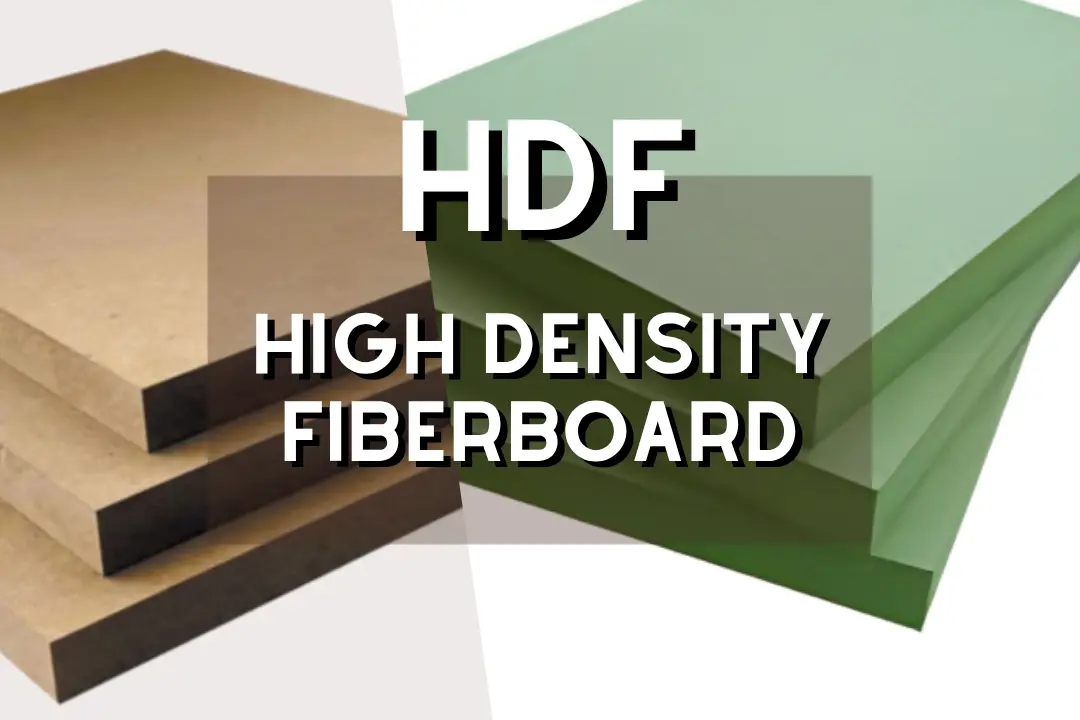
High density fiberboard, or HDF, is a dense engineered wood panel made from compressed wood fibers bonded with resin under heat and pressure. It’s harder and usually thinner than MDF, and it’s used in flooring cores, cabinet backs, drawer bottoms, door skins, pegboard, wall panels, signs, and craft panels.
What Is High Density Fiberboard?
Fiberboard definition
Fiberboard is a wood composite made by breaking wood into fibers, mixing those fibers with binders, and pressing the mat into a sheet. High density fiberboard sits at the dense end of the fiber board family, above most medium-density fiberboard panels and far above soft insulation fiberboard.
A useful fiberboard definition is this: fiberboard is an engineered wood panel made from wood fibers rather than veneers, strands, or large chips. If you’re comparing broader engineered wood panels, HDF stands out because the face feels hard, smooth, and almost slick under your fingertips after sanding.
HDF vs solid wood
HDF isn’t solid wood. It has no natural grain, no knots, and no growth-ring direction, so it behaves more consistently across the sheet than lumber but loses the long-fiber strength that makes solid wood useful for rails, legs, frames, and load-bearing parts.
Solid wood can be planed, joined, repaired, and refinished many times, while HDF works better as a flat panel material. A beginner mistake is using thin HDF like lumber; the panel may look firm, but it can snap with a dry crack when bent across a narrow span.
HDF, MDF, and hardboard
HDF, MDF, and hardboard overlap, but the labels don’t always mean the same thing at every store. MDF means medium-density fiberboard, HDF means high-density fiberboard, and hardboard is often a thin dense fiberboard sold as smooth sheets, tempered panels, or perforated pegboard.
Common HDF terms
HDF meaning is high-density fiberboard. Common product terms include HDF board, HDF boards, HDF sheet, HDF sheets, high density fibreboard, hardboard sheet, tempered hardboard, perforated hardboard, and laminate flooring core. Because retailers mix these names, verify the thickness, density, finish, and moisture rating before buying.
- Use HDF sheet for thin flat panels, backs, skins, and craft blanks.
- Use HDF board for a general panel listing where thickness may vary.
- Use tempered hardboard for denser hardboard treated for better surface durability.
- Use perforated hardboard or pegboard when you need tool storage holes.
Practical note from shop use: HDF has a sharp, dry edge after cutting, and the dust feels powdery rather than sawdust-like. If the edge feels soft or flakes under a fingernail, treat it like a lower-grade fiberboard and avoid screw-heavy construction.
How HDF Is Made
Wood fiber preparation
HDF starts with wood chips, sawmill residue, or recycled wood fiber. The material is cleaned, cooked or softened, and mechanically refined into small fibers that can pack tightly during pressing.
Fiber preparation affects the finished panel texture. Cleaner, finer fibers create a smoother face; coarse contamination can leave tiny hard specks that catch a router bit or show as bumps under paint.
Resin and additives
Resin binders hold the wood fibers together. Manufacturers may use urea-formaldehyde, melamine-urea-formaldehyde, phenol-formaldehyde, or pMDI systems, with wax or water-repellent additives added when the panel needs better moisture resistance.
Moisture-resistant additives help slow swelling, but they don’t make standard HDF a waterproof panel. The edge still acts like a bundle of tiny straws, especially after cutting, drilling, or routing.
Heat pressing process
Heat pressing turns the fiber-resin mat into a dense board. High pressure compresses the fibers, activates the binder, and creates the hard face that makes high density fiberboard useful for laminate flooring cores, door skins, and backing panels.
The press schedule affects density, thickness tolerance, face hardness, and internal bond. A panel can feel hard on the surface but still split near the edge if the internal bond is weak or the sheet is too thin for the fastener used.
Finishes and treatments
After pressing, panels may be sanded, cut, tempered, coated, laminated, veneered, painted, printed, or perforated. Tempered hardboard has added treatment that improves face durability and moisture resistance compared with plain hardboard.
For a visual manufacturing reference, this short video fits the wood fiber panel process well and helps explain why compressed fibers create such a smooth sheet.
Density, Thickness, and Properties
Density ranges
HDF density commonly exceeds 800 kg/m³, with many HDF and dense hardboard products around 800–1,100 kg/m³. MDF commonly ranges around 500–800 kg/m³, while particleboard often falls around 550–750 kg/m³. These are typical ranges rather than universal grades, so confirm the manufacturer’s data sheet.
Density affects hardness, weight, machining, compression resistance, and edge behavior. Higher density can give a tougher face, but it can also make the sheet heavier, harder on blades, and more prone to brittle edge breaks in thin strips.
Wood density is one reason panels feel so different in hand; for more background on material weight and hardness, see this guide to the density of wood.
Common thicknesses
Common HDF thicknesses include 2 mm, 3 mm, 4.8 mm or 3/16 inch, 6 mm or 1/4 inch, and 8 mm. Finished laminate flooring planks may be thicker because the HDF core is combined with a backing layer, printed décor layer, and wear layer.
Thin panels work well for cabinet backs, drawer bottoms, door skins, wall inserts, and pegboard. Thick MDF, including searches like 2 inch thick MDF board or 2″ thick MDF, usually belongs to a different furniture and pattern-making category rather than standard HDF sheet stock.
Surface characteristics
The face of HDF is smooth and uniform, with no knots, voids, or grain reversals. That makes it useful under paint, veneer, melamine, printed film, vinyl, and decorative laminate.
Weight considerations
HDF is heavy for its thickness. A large 4 ft x 8 ft sheet can feel awkward because the weight is spread across a thin, floppy panel, so support the sheet fully when carrying or ripping it.
The common mistake is letting a thin sheet sag off a bench during cutting. That flex can pinch the blade, chip the exit edge, or snap a narrow offcut before the cut is complete.
Fasteners and edges
HDF edges don’t hold screws like plywood. Pre-drill holes, keep screws away from sheet edges, and use staples, brads, grooves, or captured panels where possible.
When fasteners are too close to the edge, thin HDF can mushroom or split. A pro workaround is to capture drawer bottoms in a groove instead of relying on screws through the panel edge.
HDF vs Other Wood Panels

HDF vs MDF
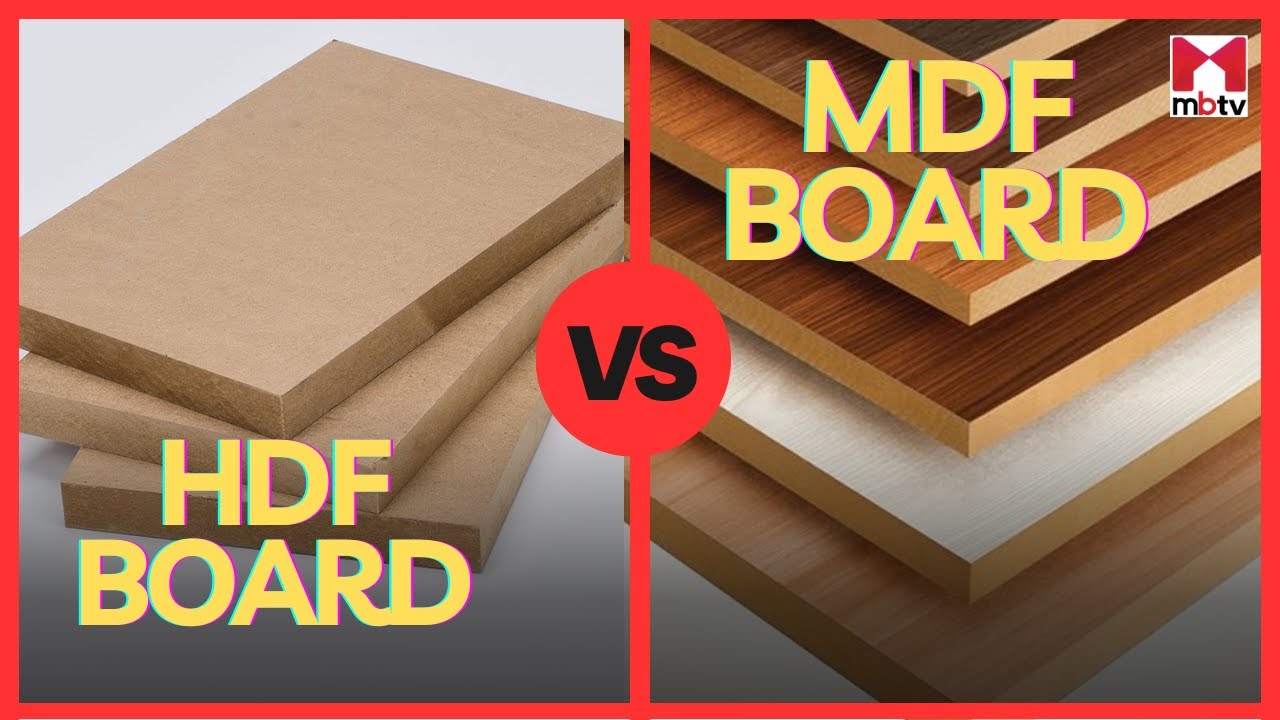
HDF vs MDF comes down mainly to density, thickness, and use. HDF is generally denser, harder, and sold in thinner panels; MDF is commonly used for painted furniture, cabinet parts, trim, shelving, and routed profiles. A product advertised as a high density MDF board may overlap with HDF, so compare its stated density and intended application rather than relying on the label.
HDF is better when you need a thin hard panel, such as a laminate flooring core, cabinet back, drawer bottom, pegboard, or door skin. MDF is often better when you need thickness, clean routed edges, and a paint-ready furniture part; this is also where many people compare black MDF for visible design work.
HDF vs hardboard
HDF and hardboard are closely related, and some hardboard is effectively a high-density fiberboard panel. Hardboard is usually sold as thin sheets, tempered hardboard, perforated pegboard, painted panels, or prefinished backing boards.
Hardboard labels can be market-specific. Instead of trusting the name alone, compare thickness, density, treatment, face finish, emission label, and the manufacturer’s suggested use.
HDF vs particleboard
Particleboard uses larger wood particles, chips, and flakes, while HDF uses refined wood fibers. HDF gives a smoother, denser face; particleboard is often cheaper and common inside low-cost laminated furniture.
Particleboard can work under laminate, but it usually performs poorly after water exposure. If you’re comparing panel cores, this guide to cabinet-grade plywood gives a useful contrast for cabinet projects where screw holding matters.
HDF vs plywood
Plywood is made from cross-laminated wood veneers, so it usually wins for structural panels, screw holding, shelves, cabinets, and subfloors. HDF wins when a very smooth, thin, dense, non-structural surface is the main goal.
Don’t swap HDF for rated plywood in structural work. For construction and cabinet context, compare panel grades in this overview of types of plywood.
HDF vs OSB
OSB is made from oriented wood strands and is common in wall sheathing, roof decks, and subfloors. HDF is smoother and denser, but it isn’t normally used as structural sheathing.
Choose OSB for rated construction uses where the panel carries load, and choose HDF for smooth interior faces, flooring cores, door skins, hardboard panels, and decorative surfaces.
Comparison table
This panel comparison shows why “stronger” depends on the job. Face hardness, screw holding, bending strength, water resistance, and thickness all matter.
| Feature | HDF | MDF | Hardboard | Plywood | Particleboard |
|---|---|---|---|---|---|
| Main material | Refined wood fibers | Refined wood fibers | Dense wood fibers | Wood veneers | Wood particles and chips |
| Typical density | Above 800 kg/m³ | 500–800 kg/m³ | Often 800–1,100 kg/m³ | Varies by species and build | Often 550–750 kg/m³ |
| Surface | Very smooth and hard | Very smooth | Smooth and hard | Grain visible | Rougher without laminate |
| Water resistance | Poor unless treated | Poor unless treated | Varies; tempered is better | Better when rated | Poor |
| Screw holding | Limited at edges | Moderate | Limited in thin sheets | Good | Low to moderate |
| Structural use | Usually no | Usually no | Usually no | Often yes if rated | Limited |
| Common uses | Flooring core, backing, pegboard | Cabinets, furniture, trim | Pegboard, panels, backing | Cabinets, subfloors, construction | Low-cost furniture |
Common High Density Fiberboard Uses
Laminate flooring core
HDF flooring cores are common in laminate planks because HDF machines consistently, supports click-lock profiles, and gives the printed décor layer a dense base. The walking feel is firm, with a sharper tap under shoes than softer panels.
The weak point is standing water. If water gets through seams or cut edges, the core can swell and lift the joint, so wipe spills fast and follow the flooring maker’s cleaning limits.
Cabinet backs and drawers
Cabinet backs and drawer bottoms often use thin HDF or hardboard because the panel is flat, low-cost, and consistent. It works best when captured in grooves or supported by rails rather than screwed through exposed edges.
A common shortcut is using a too-thin drawer bottom for heavy contents. If the drawer will hold tools, books, or dishes, step up the thickness or add a center support strip under the panel.
Door skins
HDF door skins create smooth paintable faces over interior door cores. Molded HDF skins can copy raised-panel shapes without the movement problems of solid wood panels.
For doors, the edge band, hinge area, and latch area still need solid support. Thin HDF skin alone won’t hold hinge screws, so the internal frame or blocking does that work.
Pegboard panels
HDF pegboard is usually perforated hardboard. It works in workshops, garages, utility rooms, and retail displays when the panel has enough backing space for hooks.
Pegboard failure often comes from poor standoff spacing, not just weak panel material. Add furring strips behind the sheet so hooks seat fully and load spreads into the wall framing.
Wall and decorative panels
HDF wall panels can be raw, painted, laminated, veneered, printed, or embossed. They’re good for dry interior accent walls, cabinet interiors, display boards, and smooth decorative inserts.
Skip standard HDF behind sinks, showers, or laundry splash zones. In damp spots, use moisture-rated panels or a water-safe material, then seal every cut edge before installation.
Crafts, CNC, and signs
HDF craft panels and dense MDF craft boards are popular for signs, templates, painted décor, laser engraving, CNC routing, and model work. The smooth face takes paint well, and fine details stay cleaner than on flaky particleboard.
Laser work creates a toasty resin smell, dark edges, and very fine ash. Test settings on a scrap first because dense panels char slower than thin basswood but can flare if the beam lingers.
Pros, Cons, and Moisture Limits
Main advantages
HDF advantages include a smooth face, high surface hardness, consistent thickness, good compression resistance, and strong performance as a finish substrate. It accepts paint, veneer, laminate, melamine, printed film, and decorative overlays well.
- Smooth surface for paint, veneer, laminate, and printed finishes.
- Dense face that resists small dents better than many softer panels.
- Consistent thickness for flooring, CNC work, and factory production.
- Efficient material use because it can use refined wood residue and fibers.
Key disadvantages
HDF disadvantages include poor water tolerance in standard grades, heavy weight, limited structural use, weak edge screw holding, and fine dust during cutting. It’s dense, but density doesn’t make it a framing material.
Beginners often buy HDF because it feels hard and strong, then use it where plywood belongs. Use plywood or OSB for rated structural work, and use HDF for smooth non-structural panels.
Is HDF waterproof?
Standard HDF is not waterproof. The dense face slows quick surface wetting, but water that reaches seams, screw holes, raw backs, or cut edges can cause swelling, warping, finish lifting, and raised joints.
In laminate flooring, water damage often starts as a slight ridge at the seam that you can feel with bare feet before you notice it by eye. Once the core swells, sanding or drying won’t restore the original thickness.
Moisture-resistant HDF
Moisture-resistant HDF may use water-repellent wax, moisture-resistant resin, sealed faces, or treated edges. It’s better for humidity and light incidental moisture, but it still shouldn’t sit in standing water.
For wet rooms, outdoor projects, and concrete contact, choose water-rated alternatives such as exterior plywood, marine plywood, PVC board, cement board, or another panel rated for the exposure.
Sealing exposed edges
Seal HDF edges before paint or installation. Raw edges absorb primer fast, turn fuzzy, and can swell if you flood them with water-based coating.
A reliable workaround is to apply a thin first coat of shellac-based primer, sanding sealer, or thinned PVA glue, let it dry, sand lightly, then prime again. The edge should feel smooth, not furry, before the finish coats go on.
Safety, Cutting, and Compliance
Formaldehyde emissions
HDF may contain formaldehyde-based resin, depending on the binder system. In the United States, composite wood products are regulated under EPA TSCA Title VI, which sets emission standards for covered panel products.
Common limits tied to CARB Phase 2 and TSCA Title VI include MDF at 0.11 ppm, thin MDF at 0.13 ppm, particleboard at 0.09 ppm, and hardwood plywood veneer core at 0.05 ppm. HDF may be classified under MDF or thin MDF rules based on the product and thickness.
Low-emission certifications
Low-emission labels to look for include EPA TSCA Title VI compliant, CARB Phase 2 compliant, NAF for no added formaldehyde, and ULEF for ultra-low-emitting formaldehyde. FSC certification can also help when responsible fiber sourcing matters.
Finished panels often smell less than raw boards because coatings reduce exposed surface area. Still, open the package and check for a sharp chemical odor; strong smell plus poor ventilation is a bad mix in small rooms.
Dust safety
HDF dust is fine, dry, and irritating. It can get in your eyes, nose, throat, lungs, and skin, especially when sanding, routing, drilling, or CNC cutting.
Use a respirator rated for fine particulates, eye protection, ventilation, and a dust extractor. The OSHA wood dust guidance is a useful safety reference for shop exposure.
Cutting and machining tips
Cut HDF with a sharp carbide-tipped blade, full sheet support, and dust collection. Score or tape the cut line when the face finish matters, and feed steadily to reduce edge fuzz and heat marks.
CNC and router bits dull faster in dense fiberboard than in many softwoods. Keep spare bits nearby, listen for a higher-pitched whine, and back off feed speed if the cut starts burning.
Buying Guide and DIY Alternatives
Specification checklist
Buy HDF by specification, not by name alone. Product pages can call the same sheet HDF, hardboard, fiberboard, tempered board, or backing board, so the details decide whether it fits your project.
- Confirm whether it is true HDF, hardboard, MDF, or particleboard.
- Check density if the supplier lists it.
- Match thickness to span, load, and support.
- Check whether the face is raw, tempered, laminated, painted, or prefinished.
- Verify moisture resistance for humid rooms or flooring.
- Look for EPA TSCA Title VI, CARB Phase 2, NAF, or ULEF labels.
- Check whether the panel is rated for indoor, damp, or outdoor use.
Thickness by project
2–3 mm HDF suits lightweight backs, craft inserts, signs, and small decorative pieces. Around 4.8–6 mm works better for pegboard, drawer bottoms, cabinet backs, wall panels, templates, and stronger craft bases.
For drawers, thickness depends on load and support. A 1/4 inch panel in grooves feels much more secure than a loose 3 mm bottom stapled to the underside of a wide drawer.
Surface and finish options
Raw HDF works for painting, laminating, veneering, laser engraving, and custom finishing. Tempered hardboard offers better surface durability, while white-coated or prefinished HDF saves time for cabinet interiors, displays, and backing panels.
Paintable HDF needs sealed edges and thin coats. Heavy water-based paint on raw edges can raise fibers, leaving a rough lip that still shows after the face looks smooth.
Indoor vs damp areas
Standard HDF belongs in dry interior spaces. For humid interiors, choose moisture-resistant HDF or sealed panels; for wet spaces, use exterior-rated plywood, PVC board, cement board, or another water-safe panel.
Concrete floors are a common hidden problem because they can release moisture into panel edges. Use a proper barrier or pick a panel rated for that environment.
HDF panel price factors
HDF panel price depends on thickness, density, sheet size, tempered treatment, moisture resistance, finish, perforation, certification, and purchase volume. Pricing in the high density fiberboard market also varies by region and whether the product is sold as raw sheet stock, flooring-grade core, or prefinished board. Plain hardboard generally costs less than specialized moisture-resistant or decorative HDF.
Flooring-grade HDF cost is usually hidden inside the finished laminate plank price. Don’t compare it directly with raw sheet goods; compare the whole flooring system, including wear layer, edge sealing, locking profile, and water-resistance claim.
MDF craft alternatives
MDF craft boards can stand in for HDF on small signs, templates, painted décor, laser engraving tests, and hobby builds. Most craft boards sold online are MDF rather than industrial high density fiberboard, but the smooth unfinished surface works for many small projects.
These craft-ready MDF options are useful when you need small smooth sheets for painting, engraving, templates, and décor rather than full-size HDF panels.

Craft Ready MDF Boards
- Smooth unfinished surface for painting and decorating
- sturdy 3 mm thickness for everyday craft use
- handy 12 inch by 12 inch size for versatile projects
- easy to cut, engrave, and personalize
- 24 pack gives you plenty for bulk crafting
 Buy on Amazon

Smooth MDF Sheets
- Large 11 inch by 14 inch boards for more room to create
- 1/4 inch thickness adds solid support
- unfinished surface is ideal for painting and engraving
- works well for crafts, carpentry, and DIY projects
- 10 pack is perfect for repeat use and larger jobs
Buy on Amazon

CalPalmy MDF Pack
- Smooth unfinished faces are ready for custom finishes
- sanded edges help create a cleaner look
- 1/4 inch thickness adds dependable strength
- great for hobby crafts, interiors, and carpentry
- 8 pack keeps multiple projects moving
Buy on Amazon

CalPalmy Craft Boards
- Classic 12 inch by 12 inch size fits many projects
- 1/4 inch MDF offers sturdy support
- unfinished surface is easy to paint and customize
- suitable for engraving, carpentry, and decor
- 12 pack is great for ongoing creative work
Buy on Amazon

MDF Board Value Pack
- Thin 3 mm boards are lightweight and easy to handle
- 12 inch by 12 inch size suits many craft ideas
- smooth unfinished surface is ready for paint or glue
- ideal for engraving, carpentry, and decor work
- 24 pack offers excellent project value
Buy on Amazon

Red MDF Craft Boards
- Eye-catching red color adds a bold creative touch
- 3 mm MDF is easy to cut and shape
- 11.8 inch by 11.8 inch size suits many DIY builds
- works well for laser engraving, wood burning, and CNC use
- 6 pack is ideal for matching project sets
Buy on Amazon

Compact MDF Panels
- Small 5 inch by 9 inch boards fit compact projects
- 1/8 inch thickness keeps them lightweight
- smooth MDF surface is ready for paint and craft work
- useful for signs, models, and hobby builds
- 20 pack provides plenty for repeated use
Buy on Amazon
Final guidance: choose high density fiberboard when you need a smooth, dense, non-structural panel, and choose plywood, OSB, cement board, or exterior-rated panels when the job involves load, water, or outdoor exposure. The safest buy is the panel whose thickness, density, moisture rating, finish, and compliance label match the exact project.
FAQs
What Is High Density Fiberboard Used For?
High density fiberboard is used for furniture, cabinetry, flooring, wall panels, and interior doors. It is valued for its smooth surface, strength, and ability to hold paint or laminate well. Many DIY and woodworking projects use HDF when a stable, uniform material is needed.
Is High Density Fiberboard The Same As MDF?
No, high density fiberboard is not the same as MDF. Both are engineered wood products, but HDF is denser and harder than standard MDF. This makes HDF better for thin, durable panels, while MDF is often easier to machine for general indoor use.
Is HDF Stronger Than MDF?
Yes, HDF is generally stronger and denser than MDF. It offers better resistance to impact and wear, which is why it is often used for flooring and high-use surfaces. MDF can still be a good choice when a softer, easier-to-cut board is preferred.
Is High Density Fiberboard Waterproof?
No, standard high density fiberboard is not waterproof. It can swell or weaken if exposed to moisture for too long. Some moisture-resistant versions are available, but they still need proper sealing and protection in wet areas.
Does HDF Contain Formaldehyde?
Yes, many HDF products can contain formaldehyde-based resins used in manufacturing. However, low-emission and formaldehyde-free options are also available. If indoor air quality matters to you, look for products labeled CARB-compliant, E0, or no added formaldehyde.
Affiliate Disclosure: Some links in this post are affiliate links. If you make a purchase through these links, we may earn a small commission at no extra cost to you. We only recommend products we genuinely believe in.