
What is the lightest wood, and which one should you pick for a model or craft? Some species, like balsa, weigh far less than common lumber. This short guide lists the five lightest woods and explains what makes each one light. You will get simple tips on light finishes and common uses.
Table of Contents
Looking for the lightest wood for models, crafts, or weight-sensitive builds? This guide explains densities, ranks the top species, shows uses, and answers “what is the lightest wood?” in clear, practical steps.
What Is the Lightest Wood?
The term lightest wood refers to species with very low density, measured in g/cm³ or lb/ft³, which makes them easy to lift and shape. Builders pick low-density woods for model airplanes, prototypes, insulation cores, and lightweight furniture; you can compare values in this helpful wood density chart.
The Top 5 Lightest Woods in the World
These five options rank among the lightest by published density and common shop use, letting you match weight to purpose. For context across many species, see the Density of Various Wood Species overview.
| Wood Type | Density (g/cm³) | Density (lb/ft³) | Notable Use Cases |
|---|---|---|---|
| Balsa | ≈0.11 | 7–8 | Models, insulation, cores |
| Basswood | ≈0.32 | ≈20 | Carving, instruments, cabinets |
| Bamboo (lowest range) | ≈0.38 | ≈23.7 | Furniture, panels, decor |
| Cedar (Western Red) | ≈0.37 | ≈23 | Outdoor projects, cladding |
| Cypress | ≈0.45 | ≈28 | Outdoor furniture, siding |
1. Balsa
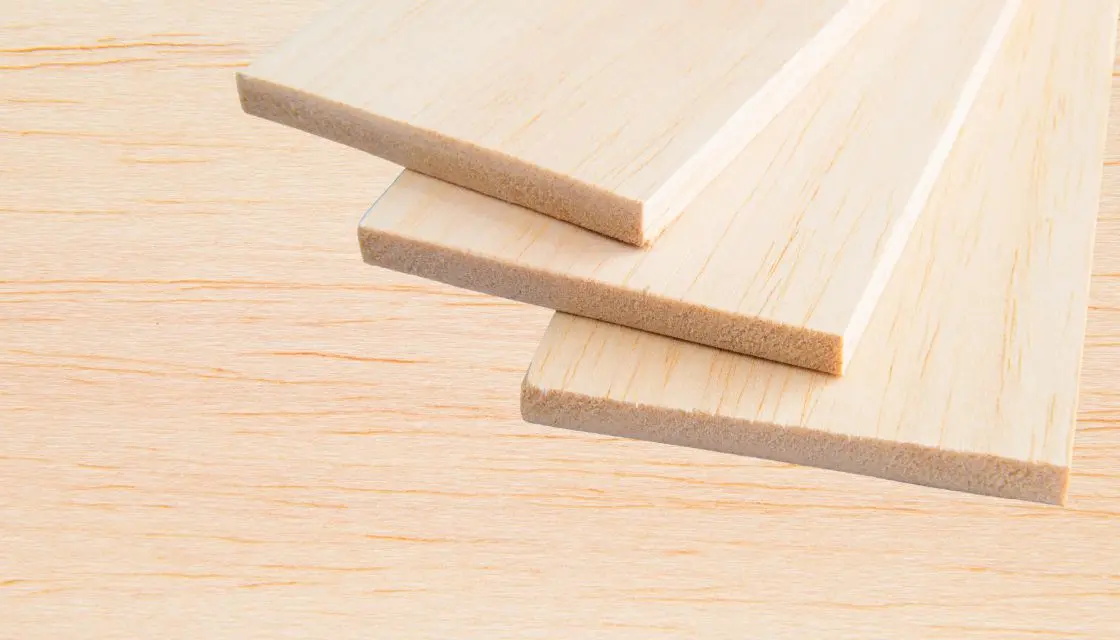
Balsa is known as the lightest commercial wood. It averages about 0.11 g/cm³ (7–8 lb/ft³). Despite being light, it has a strong stiffness-to-weight ratio. For a deeper species profile and project tips, explore our balsa wood guide.

Balsa Wood Craft Sheets & Sticks
- Lightweight unfinished basswood for DIY craft projects
- Includes sheets and dowel sticks for versatile use
- Ideal for woodworking beginners and school projects
- Natural wood you can stain or paint
- Great for model building and creative crafts
 Buy on Amazon
2. Basswood
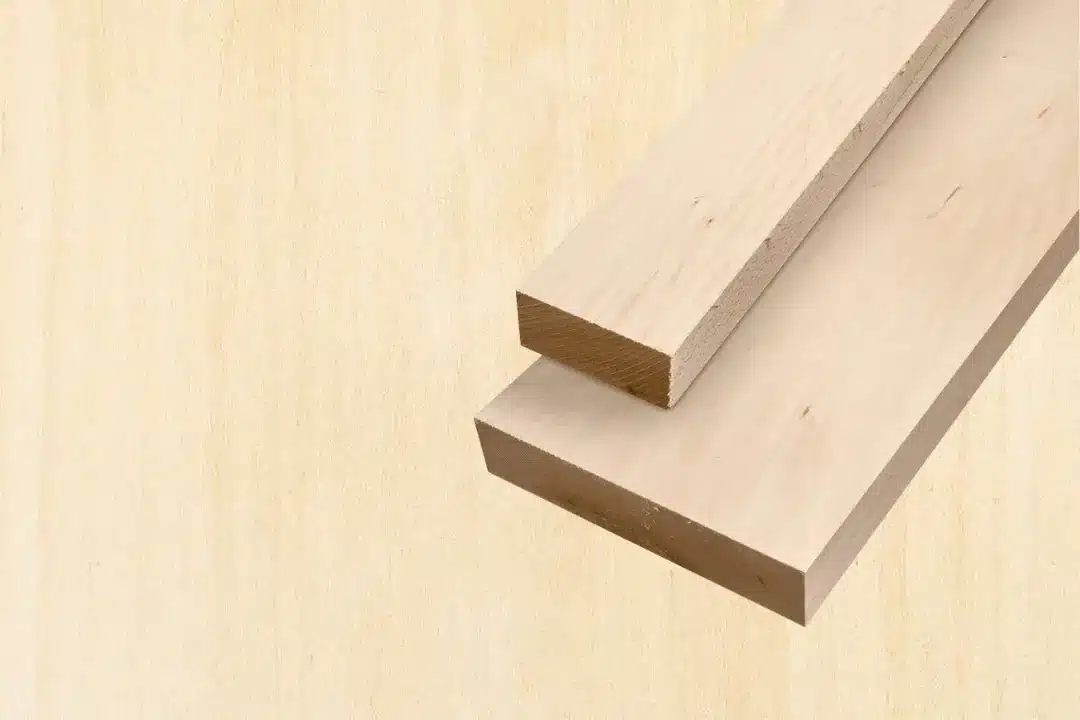
Basswood (linden) is very light and easy to carve at roughly 20 lb/ft³, with a fine, even grain that sands cleanly. Carvers like its predictable cuts; if you need a slightly heavier but still workable option for boxes or paint-grade parts, compare it with poplar wood.

Basswood Carving Blocks Set
- 6 soft unfinished basswood blocks for woodcarving and crafts
- ideal for whittling, DIY woodworking & painting
- smooth surface ready for carving right out of the box
- natural wood you can stain or leave as-is
- great for hobbyists & beginners alike
Buy on Amazon
3. Bamboo
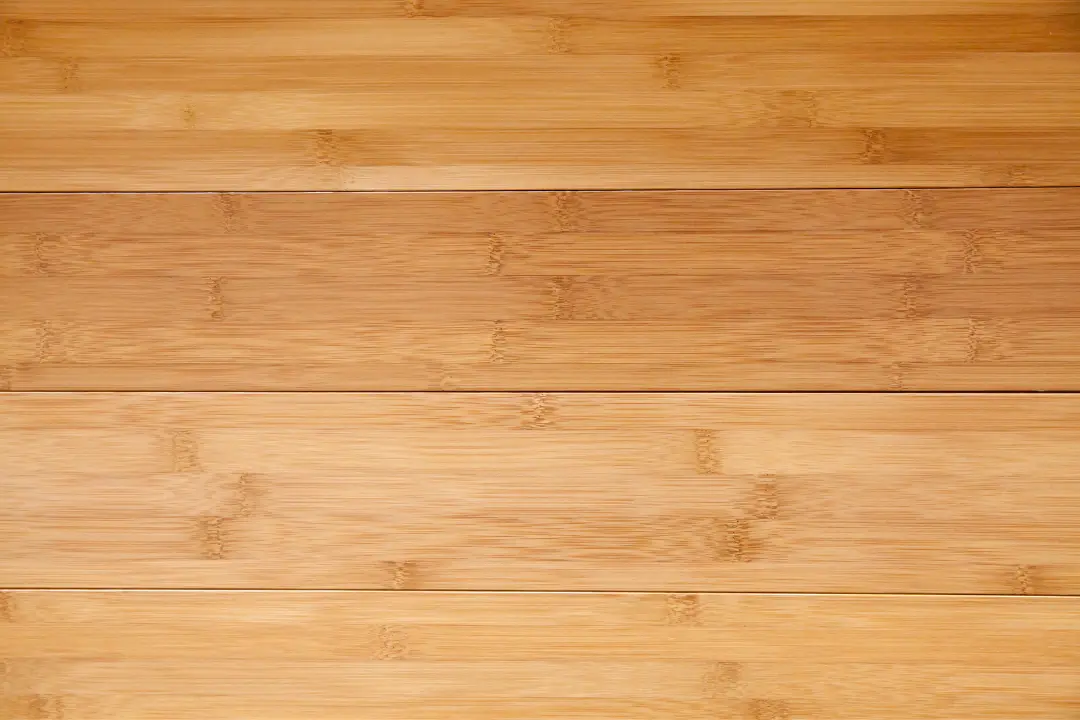
Bamboo is a grass with light-to-moderate density (≈0.38–0.85 g/cm³) and high tensile strength, which suits frames, panels, and decor. Look for species and layups on the lower end of that range if weight targets matter most in your build.

Natural Bamboo Craft Sticks
- Strong natural bamboo sticks for crafts and DIY projects
- Perfect for school projects and handmade crafts
- Easy to cut and use for decorations
- Ideal for models, art, and creative builds
- Versatile sticks for hobbies and crafting
Buy on Amazon
4. Cedar
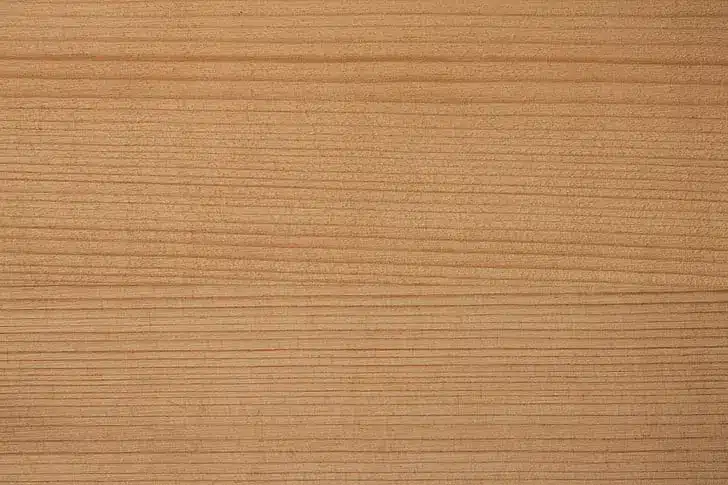
Western red cedar weighs about 23 lb/ft³. It is light and resists decay. This makes it a popular choice for outdoor cladding and benches. For specs, uses, and finishing ideas, see our cedar guide.

UNIVIVO Cedar Wood Closet Blocks
- 100% natural aromatic red cedar
- smooth, lightweight, no rough edges
- fresh cedar scent for closets and drawers
- great for wardrobes, bags, shoes
- long-lasting freshness with gentle sanding
Buy on Amazon
5. Cypress
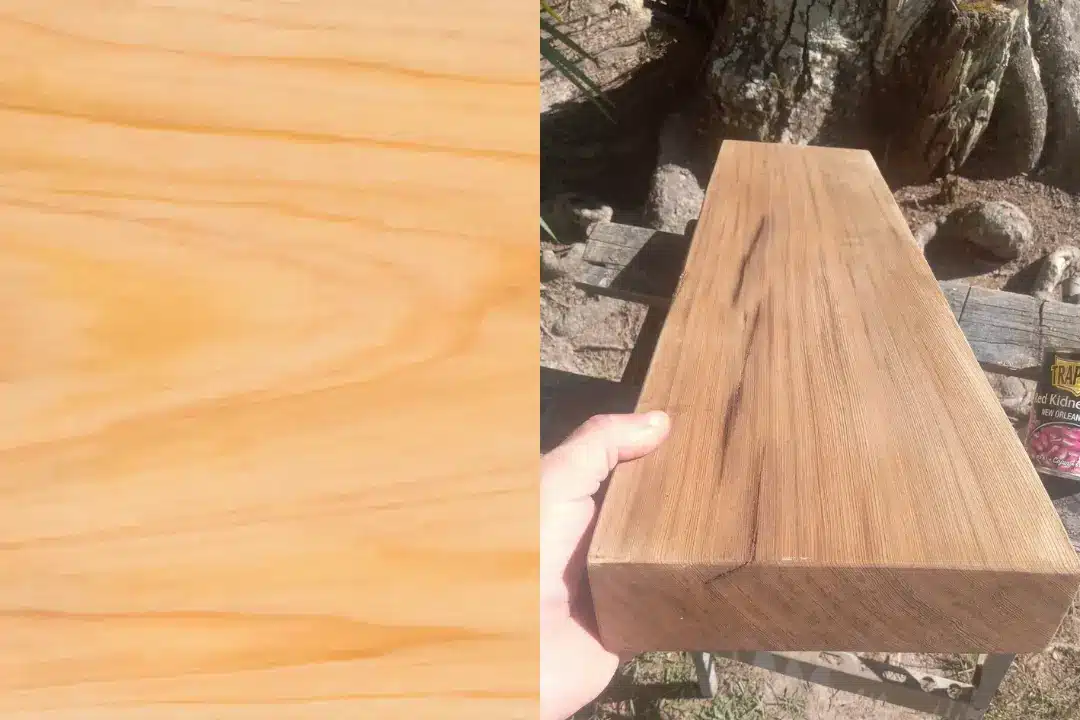
Cypress runs around ~28 lb/ft³ depending on type, and its natural oils handle moisture well. Builders pick it for garden structures, shutters, and trim where lighter boards still need durability.

Hinoki Cypress Veneer Sheets – Straight Grain 5.5×120″
- Premium quality Hinoki Cypress veneer adds natural elegance
- Distinctive straight grain enhances woodworking aesthetics
- Versatile 5.5×120″ size for DIY, speaker renovation, furniture restoration
- Unfinished wood easy to finish with stain or varnish
- Durable and moisture-resistant for interior projects
Buy on Amazon
Scientific Explanation: Why Are Some Woods Lighter?
Cellular Structure
Low-density species like balsa have thin cell walls and large air spaces, so much of the volume is just air. A clear primer on why this lowers weight appears in What Makes Wood Less Dense?.
Moisture Content
Fresh boards carry water weight; drying lowers mass and stabilizes density. For consistent results, acclimate stock to your shop, then sand and finish only after the moisture meter reads stable values across multiple checks.
Lignin Content
Lignin binds fibers; less lignin usually means a lighter board but also a softer surface. Plan your design around that trade-off: use protective skins, harder edge caps, or a tougher finish where wear is expected.
Balsa Wood Products for Your Projects
These balsa picks cover thin sheets and sticks for models, laser work, and class kits; pick thickness by span, load, and detail level.

Craftiff 1/8" Balsa Wood Sheets — 5-Pack
- Extremely lightweight and easy to cut for hobby projects
- Smooth, consistent surface ideal for painting and sanding
- Perfect for model building, prototypes, and crafts
- Unfinished wood accepts glue, stain, and finishes well
- Value pack of 5 sheets for multiple projects
Buy on Amazon
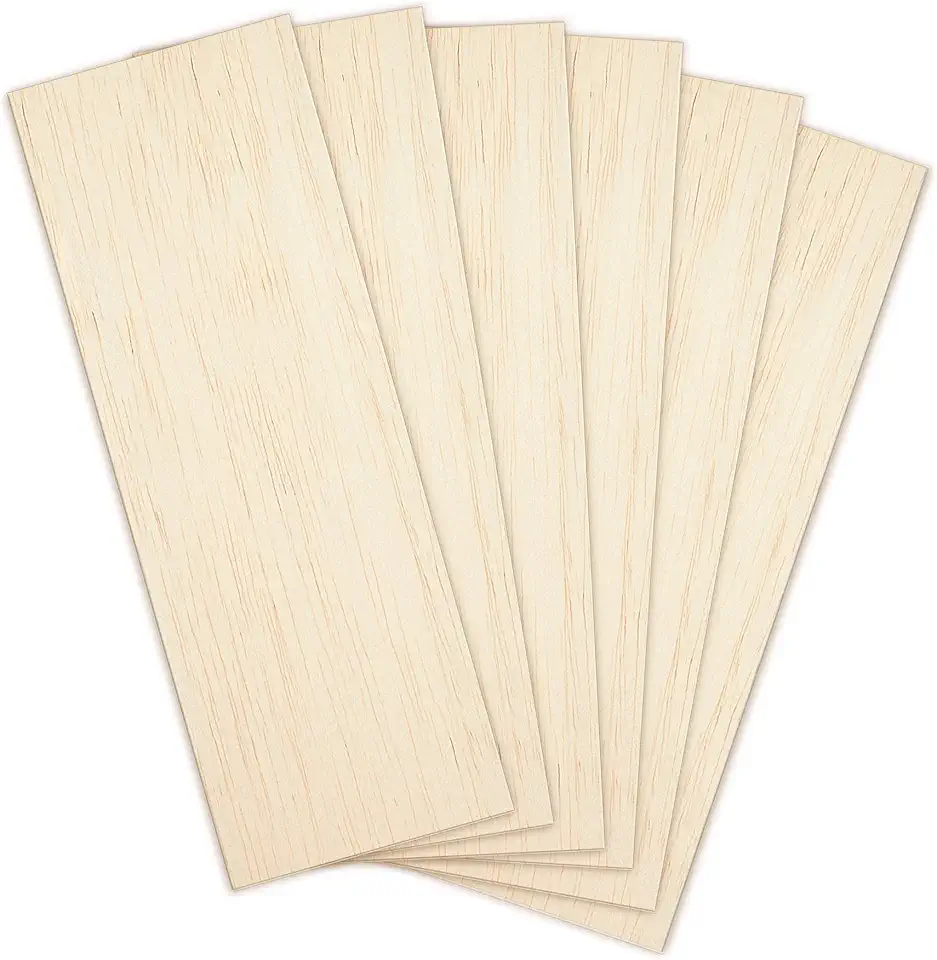
Craftiff 1/16" Balsa Sheets — Pack of 6
- Ultra-thin 1/16"
- sheets ideal for fine detailing and scale models
- Flexible yet stable for curves and delicate shapes
- Smooth surface sands and paints evenly for clean finishes
- Lightweight material perfect for balsa-only builds and prototypes
- Six-sheet pack offers variety and spares for small projects
Buy on Amazon
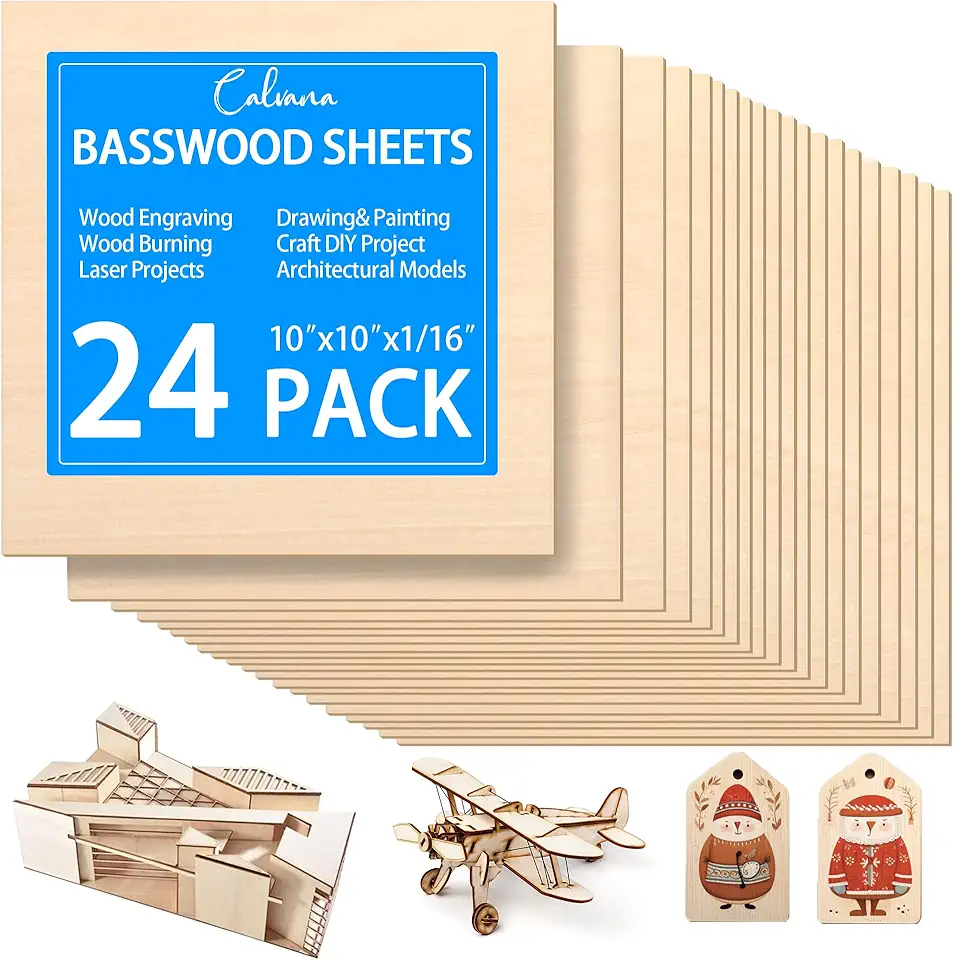
Calvana 10"x10" Balsa Sheets 1/16" — 24-Pack
- Large 10"
- x10"
- size gives plenty of workspace for cutting and engraving
- Consistent 1/16"
- thickness suits laser cutting and fine craft work
- Lightweight balsa is easy to sand, carve, and shape
- Good for laser engraving, model parts, and woodburning projects
- Bulk 24-pack supplies multiple hobby or classroom projects
Buy on Amazon

Craftiff 2mm Balsa Sheets 8x4 — 12-Pack
- Thin 2mm sheets ideal for fine modeling and delicate details
- Smooth, even surface sands and paints beautifully
- Easy to cut with hobby knives and laser equipment
- Lightweight material keeps models low-mass and easy to handle
- Twelve-sheet pack offers great value for hobbyists and crafters
Buy on Amazon

160pcs Balsa Wood Strips 1/8" x 12" — Square Dowels
- 160-piece bulk set for model building, crafts, and repairs
- Uniform 1/8"
- square profile makes measuring and joining simple
- Easy to cut, sand, and glue for precise assemblies
- Unfinished wood accepts paint, stain, and sealers well
- Ideal for bridges, frames, dollhouse trim, and hobby projects
Buy on Amazon
Common Applications of the Lightest Wood
Model Building
Balsa and basswood excel for architectural and aero models because they cut fast, glue cleanly, and keep mass down for better performance. For build methods and joints that hold without excess weight, see our balsa woodworking tips.
- Use CA or aliphatic resin sparingly; extra glue adds weight.
- Orient grain along spans; switch to cross-grain laminations for ribs or webs.
- Test wing or bridge strength with incremental loads and record deflection.
- Seal with light, water-based finishes to avoid mass gain.
Crafting Projects
Hobby crafters like these woods for scroll-saw art, laser engraving, ornaments, and cosplay forms. If you want another light option with a different look for panels or boxes, compare grain and weight with okoume wood or paulownia wood.
Musical Instruments
Basswood is common in electric guitars for a balanced tone and easy machining, while cedar tops appear in classical acoustics for warmth. Keep bodies light with careful cavity routing and thin, hard finishes to preserve snap.
Specialty Engineering
Engineers use balsa as a core material in sandwich panels for boats, drones, and wind blades because it delivers stiffness at very low weight. Pair it with fiberglass or carbon skins and choose grain orientation (end-grain vs. flat-grain) to tune shear and compression performance.
What Is the Lightest Stain for Wood?
The phrase lightest stain for wood means finishes that add minimal color, preserving a pale or near-clear look. You’ll keep balsa, basswood, or maple bright by choosing clear coats, water-white polys, or subtle whitewash blends.
Clear Finishes
Water-based acrylic or polyurethane stays clearer than oil and resists ambering over time. Apply thin coats with light sanding (320–400 grit) between layers; stop as soon as the surface feels smooth to avoid unnecessary build and weight.
Water-White Polyurethanes
Labels that say “water-white” indicate a non-yellowing film, helpful on very pale woods. If you need max clarity, pick satin or matte to cut glare, and test on offcuts since even clear coats can deepen grain slightly.
Whitewash Stains
For a soft, bright tone, wipe on a thin whitewash (premixed, or 1:1 water to white latex for a DIY wash), then remove excess along the grain. Touch up small dings after curing with wax filler sticks so the finish stays clean-looking.
FAQs
What Is The Lightest Type Of Wood In The World?
Balsa wood Is Widely Recognized As The Lightest Commercially Available Wood, With Typical Densities Around 0.1–0.2 G/cm³; Some Specialized Woods And Engineered Foams Are Lighter, But Balsa Is The Most Common Natural Lightweight Wood Used Industrially.
How Is Balsa Wood So Lightweight?
Balsa Is Extremely Lightweight Because Its Cellular Structure Contains Large, Thin‑Walled Cells And High Porosity, So Most Of Its Volume Is Air; Rapid Growth And Low Cell‑Wall Material Content Also Contribute To Its Very Low Density.
Is Balsa Wood Stronger Than It Looks?
Relative To Its Weight, Yes—Balsa Has An Excellent Strength‑To‑Weight And Stiffness‑To‑Weight Ratio, Making It Strong For Lightweight Applications; However, It Is Softer And Less Impact‑Resistant Than Denser Woods, So It Can Be Damaged More Easily Under Concentrated Loads.
Can The Lightest Wood Float On Water?
Yes—Because Balsa’s Density Is Typically Less Than Water, It Floats Well; However, If The Wood Becomes Waterlogged Or Contains Heavier Grain Areas, It Can Sink, So Buoyancy Depends On Dry Density And Saturation.
What Are Common Uses For The Lightest Wood?
Common Uses Include Model Making, Aircraft And Boat Core Materials, Surfboard And Wind‑Turbine Cores, Buoyancy Blocks, Insulation, Packaging, Musical Instruments, And Prototyping; It’s Often Used Where Low Weight And Good Workability Are Important.