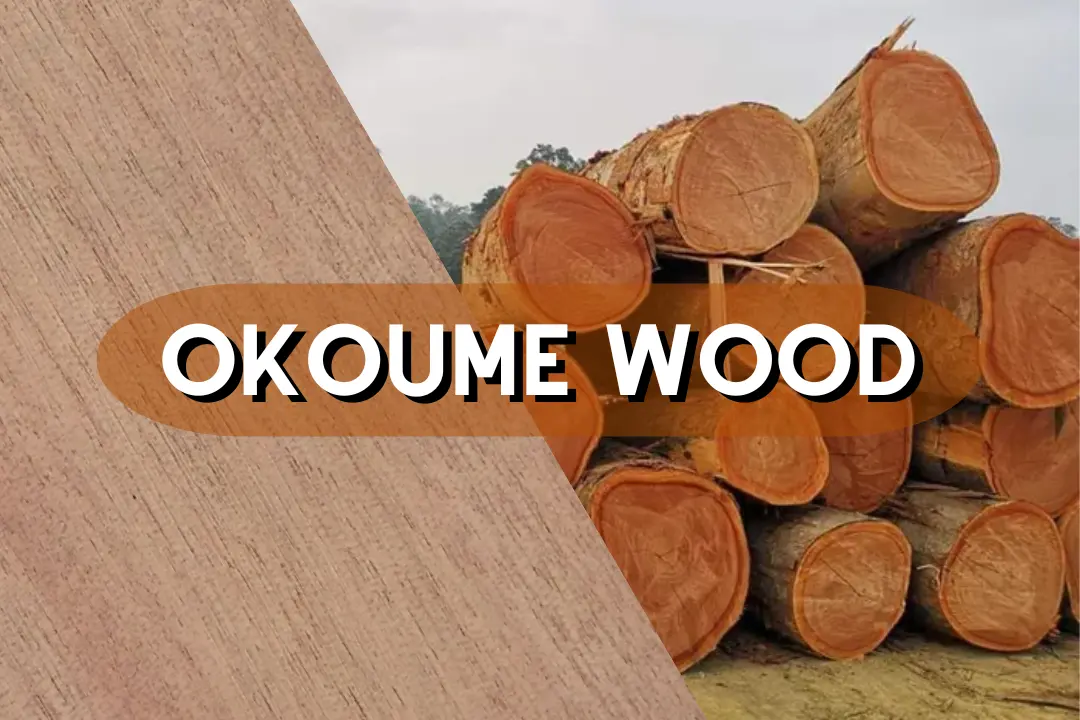

Okoume wood is a lightweight Central African hardwood from Aucoumea klaineana, valued for veneer, cabinetry, instruments, and marine plywood. It machines easily and weighs about 27 lb/ft³, but its low hardness and poor natural decay resistance mean exposed wood needs careful sealing and maintenance.
The key distinction is simple: okoume’s marine reputation comes from well-made plywood, durable adhesive, epoxy, fiberglass, and protective coatings—not from naturally waterproof timber.
Table of Contents
What Is Okoume Wood?
Scientific Identity and Trade Names
Okoume is the timber of Aucoumea klaineana, the sole accepted species in the genus Aucoumea. It belongs to the Burseraceae family and is a botanical hardwood, despite being softer than many woods sold as softwoods.
Trade names include Gaboon wood, Gabon wood, angouma, N’Goumi, acoume, and the less common spelling “okumene” wood. Sellers sometimes call it Gaboon mahogany, but it isn’t a true mahogany from the Swietenia genus.
The accepted name and native distribution can be checked through Kew Plants of the World Online. Scientific identification matters because commercial labels such as “mahogany wood,” “mahagony wood,” or “mohagani wood” can cover unrelated species with very different hardness and decay resistance.
Native Range and Tree Size
This African hardwood is native to west-central Africa and has its strongest commercial association with Gabon. Its range reaches parts of Equatorial Guinea and the Republic of the Congo.
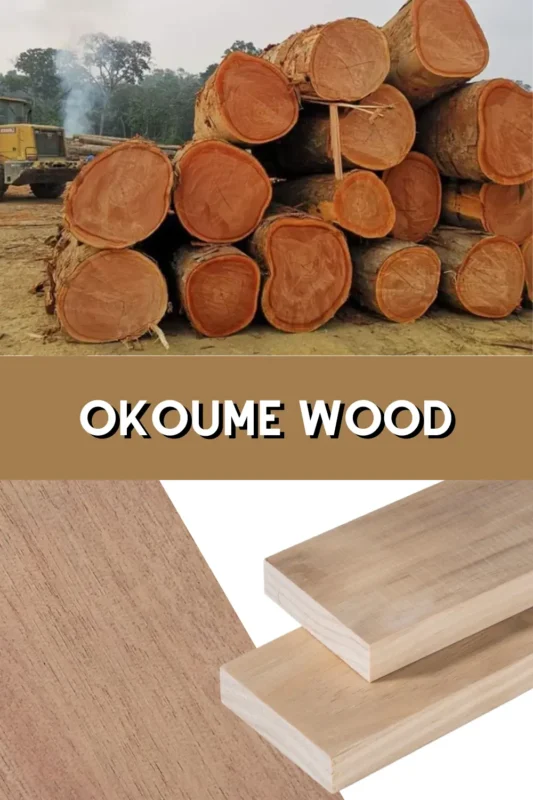
Mature trees commonly reach about 100–130 feet tall, with trunks around 3–6 feet in diameter. Large, straight logs yield broad sheets of veneer, which helps explain why okoume became more prominent in plywood and door skins than in thick, wear-resistant furniture parts.
Color, Grain, and Texture
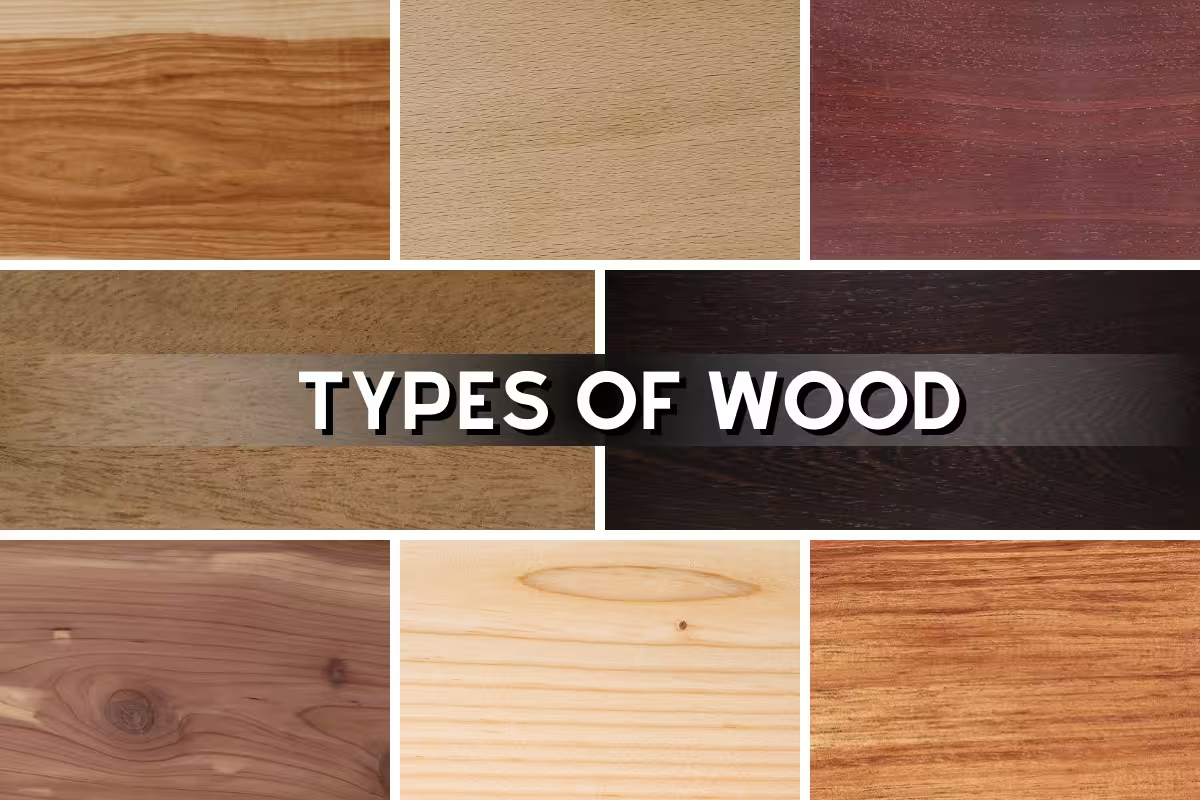
Freshly cut heartwood ranges from pale salmon to pinkish or light reddish brown. The sapwood can look gray-white, and the boundary between sapwood and heartwood may be faint.
A planed board often feels smooth but slightly open-pored under a fingertip. Straight grain produces a calm surface, while interlocked grain can flash a ribbon pattern as the board moves under light; that same grain may leave fuzzy streaks or small torn patches after planing.
Clear finishes deepen the pink tone and can add a warm amber cast. Anyone choosing it for a pale interior should coat an offcut first, since oil-based varnish changes the color more than many waterborne finishes.
Okoume Wood Properties and Durability

Okoume wood properties favor low-weight construction rather than high-wear applications. It is light, moderately stable, easy to machine, and soft enough to dent under concentrated pressure.
Property Table and Test Context
The following figures are approximate averages for clear solid timber, drawn from The Wood Database okoume profile. Values change with moisture content, growing location, specimen quality, and testing method, so they aren’t engineering design values for a plywood hull.
| Property | Approximate value | Practical meaning |
|---|---|---|
| Average dried weight | 27 lb/ft³ or 430 kg/m³ | Light compared with many commercial hardwoods |
| Basic specific gravity | 0.35 | Low wood substance per unit volume |
| Specific gravity at 12% moisture | 0.43 | Supports its lightweight classification |
| Janka hardness | 400 lbf or 1,790 N | Dents and scratches relatively easily |
| Modulus of rupture | 10,890 psi or 75.1 MPa | Moderate clear-wood bending strength |
| Modulus of elasticity | 1.16 million psi or 8.0 GPa | Less stiff than many denser hardwoods |
| Crushing strength | 5,870 psi or 40.5 MPa | Poor fit for highly compressed components |
| Radial shrinkage | 4.6% | Moderate movement across growth rings |
| Tangential shrinkage | 7.1% | More movement along the growth-ring arc |
| Volumetric shrinkage | 12.3% | Moderate overall drying movement |
| Tangential-to-radial ratio | About 1.5 | Fairly balanced movement |
Density, Weight, and Moisture
At roughly 430 kg/m³, dried solid okoume belongs among the lighter commercial hardwoods. For context, a 1-cubic-foot block weighs about 27 pounds at the stated condition, though an actual board may be heavier when it arrives with elevated moisture.
Plywood weight can’t be calculated from solid-wood density alone. Glue content, veneer count, panel moisture, core species, and thickness all matter; our plywood weight guide explains why two nominally identical sheets can feel surprisingly different at one end.
Check solid lumber with a calibrated moisture meter before building wide doors or panels. A board stored in a damp warehouse can feel cool against the palm and may lose measurable width after entering a heated shop.
Janka Hardness and Denting
Okoume hardness is about 400 lbf on the Janka scale. “Hardwood” describes its broadleaf botanical origin, not a hard surface; the distinction is explained further in our wood hardness scale.
A dropped clamp, over-tightened screw, or sharp bench debris can leave a visible depression. Beginners often sand aggressively to remove dents, but that can dish solid wood and cut through thin plywood faces; steam shallow dents in unfinished solid stock or fill and spot-finish plywood instead.
Strength, Shrinkage, and Stability
Okoume provides a useful strength-to-weight balance, but it is less stiff than denser woods such as sapele. Wide solid boards still need expansion space, while cross-laminated plywood moves less because adjoining veneers restrain one another across the grain.
Clear-wood bending figures don’t predict plywood performance. Ply direction, veneer thickness, glue coverage, scarf joints, core gaps, supports, and laminate schedules control how a panel behaves in service.
Advantages and Best-Fit Conditions
Best-fit projects reward low weight, smooth faces, easy machining, and controlled moisture exposure. Practical shop use also shows that finished assemblies are comfortable to lift and thin sheets bend smoothly, while unsupported edges bruise faster than many beginners expect.
- Choose it for lightweight cabinets, boat skins, veneers, interior millwork, instruments, models, and protected furniture.
- Add hardwood lippings or protective edging where cabinet corners will receive repeated impacts.
- Use plywood rather than wide solid boards where stability and strength in two directions matter.
- Avoid bare exterior structures, ground contact, flooring, chopping surfaces, and heavily loaded fastener points.
- Use backing blocks or plates beneath hardware carrying concentrated loads.
Decay Resistance and Outdoor Use
Untreated okoume has poor decay resistance and weak natural resistance to termites and wood-boring insects. It isn’t waterproof, rot-proof, or a sensible bare-wood choice for prolonged wet exposure.
Exterior use is possible when every face, edge, hole, and joint receives a compatible coating system. Water enters cut end grain and fastener holes much faster than a sealed broad face, so one exposed drill hole can defeat an otherwise tidy finish.
Solid Okoume, Veneer, and Marine Plywood
Solid lumber, veneer, and plywood share the same species name but behave as different materials. Panel grade and construction matter more than the word “okoume” printed on a listing.
Solid Okoume Lumber
Solid okoume lumber works well for moldings, carvings, lightweight furniture, instrument components, and protected joinery. Check boards for drying stress, interlocked grain, crushed edges, color variation, and moisture before milling.
Use normal movement allowances in wide parts. Gluing a broad solid panel rigidly inside a fixed frame can split the panel or rack the frame as seasonal humidity changes.
Okoume Veneer
Okoume veneer gives cabinet doors, wall panels, furniture, and door skins the species’ warm color without the weight or movement of thick solid stock. Quartersliced veneer can show ribbon figure, while rotary-cut sheets tend to produce broader grain patterns.
Balance veneered panels by applying a compatible backer to the reverse face. Veneering only one side creates unequal moisture response and can pull a flat substrate into a bow.
Plywood Construction and Grades
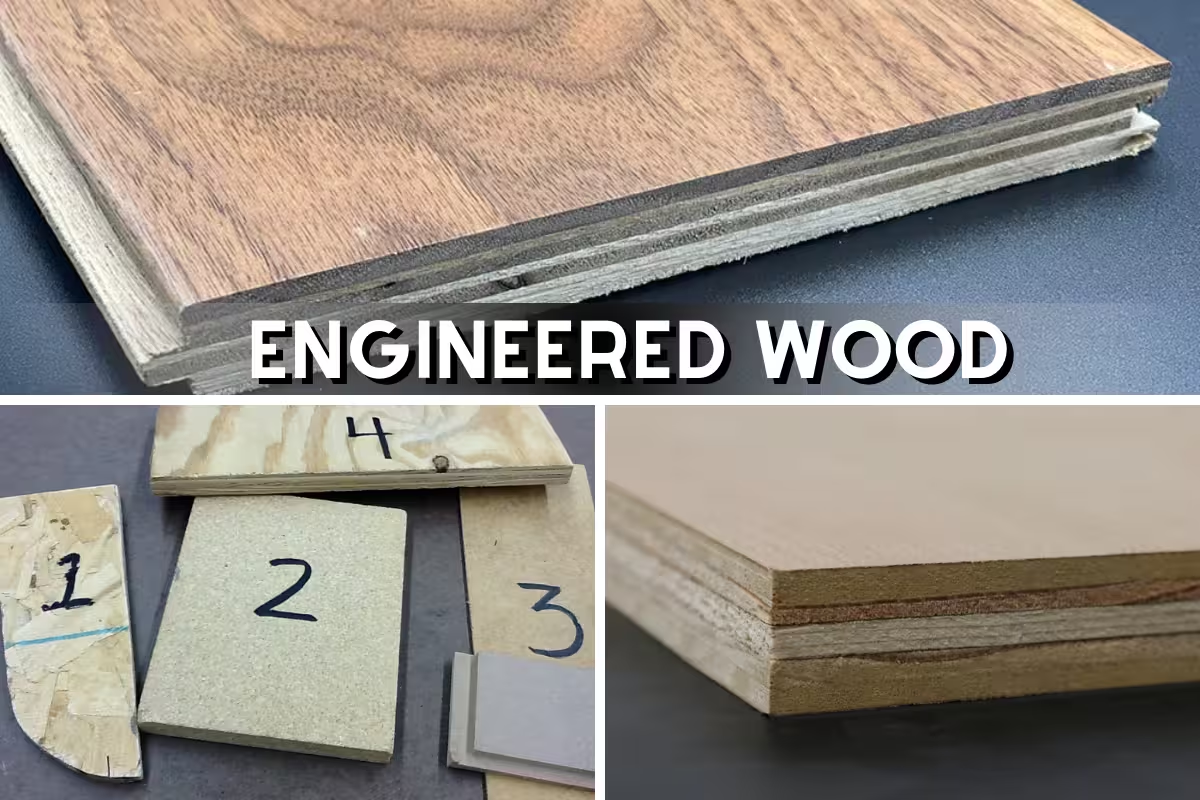
Okoume plywood uses veneers arranged with adjacent grain directions crossing one another. This construction spreads loads in two directions and limits the broad seasonal movement found in solid wood.
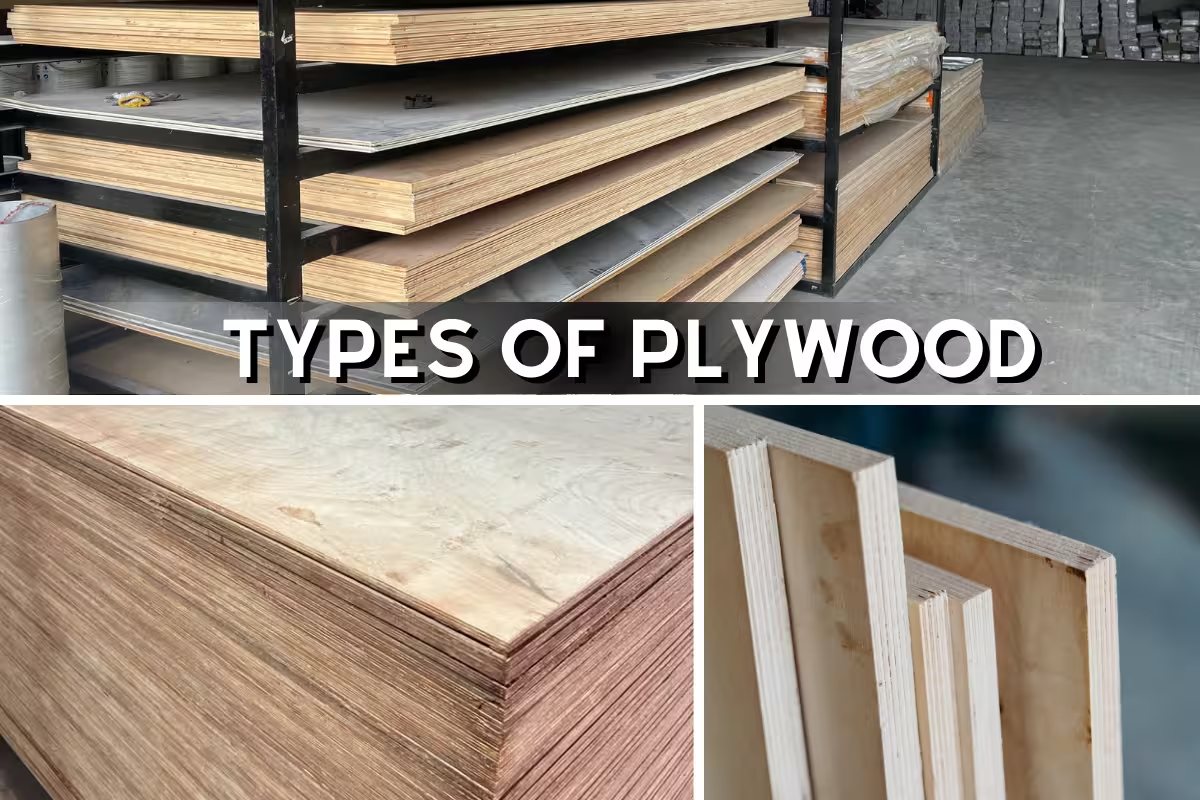
A panel may be full okoume or merely okoume-faced over another core. Review our guide to types of plywood, then request the face species, core species, ply count, bond classification, and grade before comparing panels.
“Exterior,” “marine,” and “waterproof” aren’t interchangeable. Exterior-grade plywood can use a moisture-resistant bond while allowing construction features that don’t meet a recognized marine standard.
BS 1088 and Certification
BS 1088 is a marine-plywood manufacturing specification covering matters such as veneer quality, bond performance, and panel construction. It doesn’t make okoume fibers naturally resistant to fungal decay.
Ask for a manufacturer declaration or certificate naming the standard and product. “BS 1088-style,” “WBP,” and “marine quality” are weaker marketing terms; WBP refers to adhesive performance, not a complete panel grade.
Lloyd’s Register approval can offer separate third-party assurance when tied to the exact product and production source. FSC certification addresses forest sourcing and chain of custody, not glue quality, panel strength, or compliance with BS 1088.
Thicknesses and Panel Inspection
Common metric thicknesses include 3, 4, 6, 9, 12, 15, 18, and 25 mm. Thin panels suit curved skins and laminations, while thicker sheets may suit bulkheads, decks, or cabinetry where the project design calls for them.
Imported sheets may not match nominal inch dimensions, so verify actual size with calipers. Our plywood dimensions guide covers common metric and imperial discrepancies.
- Inspect both faces for splits, patches, sanding defects, checks, and crushed areas.
- Study all four edges for core gaps, overlapping veneers, and irregular ply thickness.
- Ask how many plies are present at the selected thickness.
- Confirm whether the sheet is full okoume or okoume-faced.
- Lay the sheet on a flat reference to check twist and bow.
- Inspect freight for wet packaging, forklift punctures, bent corners, and edge impacts.
Marine Installation and Protection
Successful marine use relies on complete encapsulation, sound drainage, protected edges, and repairable coatings. Follow the boat designer’s specified panel thickness and fiberglass schedule rather than treating a general species value as structural approval.
Seal both faces and every fresh cut. For critical hardware, many designs call for an oversized hole filled with thickened epoxy and then redrilled through the cured plug; this isolates vulnerable wood fibers and spreads local pressure.
For a broader explanation of bond classes, core construction, and wet-service limitations, see our marine plywood guide.
Marine Plywood Product Example
A small okoume marine panel can suit repairs, mock-ups, cabinets, or compact builds where a full sheet would create waste. Verify the manufacturer, actual thickness, ply construction, adhesive bond, and documented standard before using any marketplace panel in a load-bearing boat component.

Okoume Marine Plywood Panel
- Marine-grade Okoume plywood panel
- Three-quarter inch thick for sturdy builds
- Twenty-four inch by forty-seven inch sheet
- Lightweight wood makes handling easier
- Suitable for boat and outdoor projects
 Buy on Amazon
Common Okoume Wood Uses
Common okoume wood uses include boats, cabinets, veneer panels, musical instruments, doors, millwork, models, and small crafts. Its low weight drives most selections; hardness and natural durability rarely do.
Boats and Marine Projects
Marine plywood made with okoume appears in stitch-and-glue hulls, kayaks, canoes, dinghies, bulkheads, cold-molded laminations, and interior cabinets. Thin panels bend with less resistance than many heavier alternatives, making fair curves easier to achieve without forcing the sheet against the frame.
That flexibility doesn’t replace engineering. Decks, motor mounts, high-impact bottoms, and hardware zones may need thicker panels, extra glass, denser inserts, or another material specified by the designer.
Furniture and Cabinetry
Lightweight furniture, cabinet doors, carcasses, drawer parts, decorative panels, and veneered casework suit okoume well. Its lower mass becomes noticeable when lifting a large cabinet onto a wall or moving exhibition furniture between venues.
Protect exposed corners with hardwood edging and use a durable topcoat on desks or tables. For visible casework, compare face requirements with cabinet-grade plywood rather than paying for marine certification that the indoor project doesn’t need.
Instruments and Millwork
Okoume appears in guitar bodies, body wings, drum shells, door skins, moldings, and architectural wall panels. Instrument tone depends on the full build, including dimensions, bracing, hardware, moisture, and the individual board, so species-wide tone claims should be treated cautiously.
Millwork benefits from easy shaping and low weight, but dent-prone profiles need protection during transport. Soft foam between finished parts prevents the sharp pressure marks that cardboard staples and stacked hardware can leave.
Crafts and Models
Boxes, models, carvings, inlays, CNC parts, and laser-cut components make good small-project uses. Test laser settings and extraction on scrap because glue lines, veneer thickness, and individual boards affect edge char and smoke.
Beginners sometimes mistake a mixed sample pack for economical furniture stock. These packs work better for species identification, machining tests, accents, and small boxes because dimensions and color vary between pieces.
Working With and Finishing Okoume
Working with okoume is usually straightforward if tools are sharp and sanding stays controlled. The main shop risks are interlocked-grain tear-out, damaged veneer, crushed fastener holes, dust exposure, and incomplete sealing.
Cutting, Machining, and Sanding
Use sharp, high-tooth-count blades for plywood and support the underside near the cut. A sacrificial backer reduces splintering where the blade exits, while painter’s tape alone rarely controls a dull blade.
Interlocked solid grain responds well to light cutting passes, a high-angle hand plane, or a spiral cutterhead. If the surface turns woolly rather than producing clean curls, sharpen the edge before increasing pressure.
Start sanding at the finest grit that removes machining marks, often 120 or 150 rather than 60. A firm block keeps the surface flat; a soft pad can dig into low-density areas and leave shallow waves visible under reflected light.
Gluing, Fastening, and Safety
Okoume usually glues cleanly when surfaces fit closely and remain free of dust. Use interior PVA for dry furniture, an exposure-rated adhesive for suitable damp-service work, or the specified marine epoxy system for boat construction.
Predrill near edges and stop driving screws as soon as the head seats. The soft face can crush silently beneath hardware, leaving a shallow dish that later collects water; washers, backing plates, and torque control spread the load.
Wood dust can irritate skin, eyes, and airways. Use effective extraction, eye protection, and a properly fitted particulate respirator, then follow product safety instructions for epoxy hardeners, solvents, fillers, primers, and paints.
Clear Finishes, Paint, and Stain
Interior options include waterborne polyurethane, oil-modified polyurethane, lacquer, shellac within a compatible schedule, and varnish. Test the complete system because color shift ranges from a slight salmon deepening to a strong amber tone.
Seal edges before painting, apply compatible primer, fill checks, and sand lightly between coats. Thin face veneers leave little room for correction, so stop as soon as the surface loses its nibs rather than sanding back to bare wood.
Stain can turn blotchy where grain density changes. A tested washcoat or compatible conditioner can reduce uneven absorption, while dye often creates more uniform color than a heavy pigmented stain.
Epoxy, Fiberglass, and UV Protection
Marine systems often combine epoxy encapsulation with fiberglass cloth where the design requires reinforcement or abrasion resistance. Wet out cloth evenly, remove trapped air, and avoid sanding into the fabric while fairing.
Cured epoxy isn’t usually a complete sunlight-resistant finish. Cover it with compatible UV-resistant paint or marine varnish, following the coating maker’s preparation and recoat windows.
A common beginner error is coating the visible face while leaving backs, edges, and holes bare. Coat paired faces on a similar schedule so moisture changes remain balanced and panel distortion is less likely.
Marine Failure Prevention Checklist
Most failures begin at a small moisture path, not across an intact coated face. Annual inspection catches damage while the repair still involves drying and recoating rather than replacing soft core veneers.
- Seal both faces, every edge, and all cutouts before final assembly.
- Recoat freshly trimmed edges rather than relying on the factory finish.
- Use epoxy-isolated hardware holes where the design calls for them.
- Bed fittings with a compatible marine sealant without over-tightening.
- Add fiberglass at seams, impact zones, and structural areas specified by the plan.
- Protect epoxy from sunlight with paint or marine varnish.
- Provide drainage so horizontal joints can’t hold standing water.
- Inspect cracks, blisters, failed sealant, exposed edges, and dark fastener stains each season.
- Open, dry, and repair coating breaches before water spreads through adjoining veneers.
Okoume Versus Other Woods
Okoume’s main comparative advantage is low weight. Mahogany, sapele, meranti, Douglas-fir plywood, and birch plywood may offer greater hardness, impact resistance, stiffness, availability, or natural durability.
Genuine and African Mahogany
Okoume isn’t genuine mahogany. Genuine mahogany wood belongs to Swietenia, while African mahogany usually refers to Khaya species.
Both mahogany groups tend to be harder and denser than okoume, with better wear performance in many solid-wood applications. Okoume remains attractive where a lighter component or veneered panel matters more than impact resistance.
Sapele and Meranti
Sapele wood is substantially denser, harder, and darker than okoume. Both can show interlocked grain, but sapele provides stronger wear resistance at the cost of greater weight and more effort during machining.
Meranti wood covers multiple species, so performance varies. Meranti marine plywood is commonly heavier and may resist impacts better, while okoume can reduce the finished weight of a hull or portable structure.
Douglas-Fir Marine Plywood
Douglas-fir marine plywood can offer higher structural strength and a lower purchase price in parts of North America. Its stronger grain pattern may telegraph through paint, and surface checking can demand extra fiberglass or finishing work.
Okoume usually offers a smoother face and lower panel weight. Neither panel should remain bare in sustained wet exposure, and construction quality still matters more than a species label.
Birch Plywood
Quality birch plywood has harder faces, strong edges, and numerous thin plies, making it useful for furniture, drawers, jigs, and shop fixtures. It is heavier than okoume, and many birch panels lack a marine or exterior-rated bond.
Use okoume for weight-sensitive curved boats and portable assemblies. Choose birch when surface wear, screw holding, and hard edges matter more than low mass, provided its glue bond fits the exposure.
Comparison Table
| Material | Relative weight | Surface hardness | Natural durability | Common fit |
|---|---|---|---|---|
| Okoume | Low | Low | Poor | Lightweight boats, veneer, cabinetry |
| Meranti | Medium | Medium | Species-dependent | Marine panels and boats |
| Sapele | High | Medium-high | Moderate or variable | Furniture, doors, joinery |
| Genuine mahogany | Medium | Medium | Usually better than okoume | Fine furniture, boats, millwork |
| Douglas-fir plywood | Medium | Moderate | Needs protection | Structural and marine panels |
| Birch plywood | Medium-high | High | Grade-dependent | Furniture, jigs, interior structures |
Buying, Pricing, and Responsible Sourcing
Buy okoume by documented species, grade, construction, and origin, not appearance alone. Delivered price, certification, panel damage, and usable dimensions can matter more than the advertised board-foot or sheet price.
Lumber and Plywood Grades
For lumber, confirm thickness, width, length, drying method, moisture content, surfacing, grade, and color expectations. Small planed boards cost more per board foot than rough wholesale stock because machining, selection, packaging, and parcel shipping are built into the price.
For plywood, compare face grade, core species, ply count, repair policy, glue bond, applicable standard, and thickness tolerance. Our explanation of plywood grades helps separate appearance grading from exposure and structural claims.
Supplier Documentation Checklist
A supplier should connect each claim to the exact product, manufacturer, and shipment. A generic certificate from the same company doesn’t prove that the sheet in front of you came from the certified production run.
- What is the scientific species and country of harvest?
- Is the panel full okoume or only okoume-faced?
- Which named plywood standard does it meet?
- Can the seller provide a dated manufacturer certificate?
- What glue-bond classification and ply count apply?
- Are face repairs and core gaps permitted under the stated grade?
- Is FSC or PEFC chain-of-custody documentation available?
- How are concealed defects and freight damage handled?
Delivered Cost and Freight
Thin full marine sheets may sell below one hundred dollars in some markets, while thick certified panels can cost several hundred dollars before freight. These are planning bands, not fixed quotes, because thickness, certification, exchange rates, inventory, region, and import costs change the total.
Calculate delivered cost per square foot by dividing the invoice total by panel area. For a more useful figure, divide by usable area after trimming crushed corners, fork damage, or defects.
Oversize orders may add crating, residential delivery, lift-gate, limited-access, and fuel fees. Photograph torn packaging, damp wrapping, edge impacts, and punctures before signing for a damaged shipment.
A boat budget should also include epoxy, fiberglass, fillers, fasteners, sealant, primer, paint or varnish, and consumables. A cheaper sheet can produce a higher completed cost if rough faces require extra fairing and coating.
Sustainability and Traceability
Responsible sourcing depends on forest management, legal harvest, and supply-chain traceability. Check the current conservation assessment through the IUCN Red List, since assessments can change as new data becomes available.
IUCN status measures extinction risk, while CITES addresses trade controls for listed species. Absence from a CITES appendix doesn’t prove that timber was harvested legally or responsibly.
Request FSC or PEFC chain-of-custody evidence and match certificate codes to supplier records. Certification supports sourcing claims but doesn’t establish marine grade, adhesive performance, void-free construction, or structural fitness.
Craft and Sample Packs
Mixed hardwood packs can provide small okoume samples for identification, carving, finish testing, boxes, models, and accents. Confirm that okoume is included and check actual dimensions, since photographs can make short, narrow boards appear larger.
These product packs offer compact mixed-species stock for craft tests and decorative work.

Exotic Hardwood Craft Pack
- Eight-piece mixed hardwood set
- Includes Purpleheart Zebrawood Padauk and Okoume
- Three-quarter inch by two inch by sixteen inch boards
- Ideal for small woodworking projects
- Adds rich natural color and grain
Buy on Amazon

Exotic Hardwood Variety Boards
- Eight-piece exotic hardwood assortment
- Features Red Zebrawood Purpleheart Padauk and Okoume
- Three-quarter inch by two inch by eighteen inch boards
- Great for crafts inlays and accents
- Distinctive grain brings projects to life
Buy on Amazon
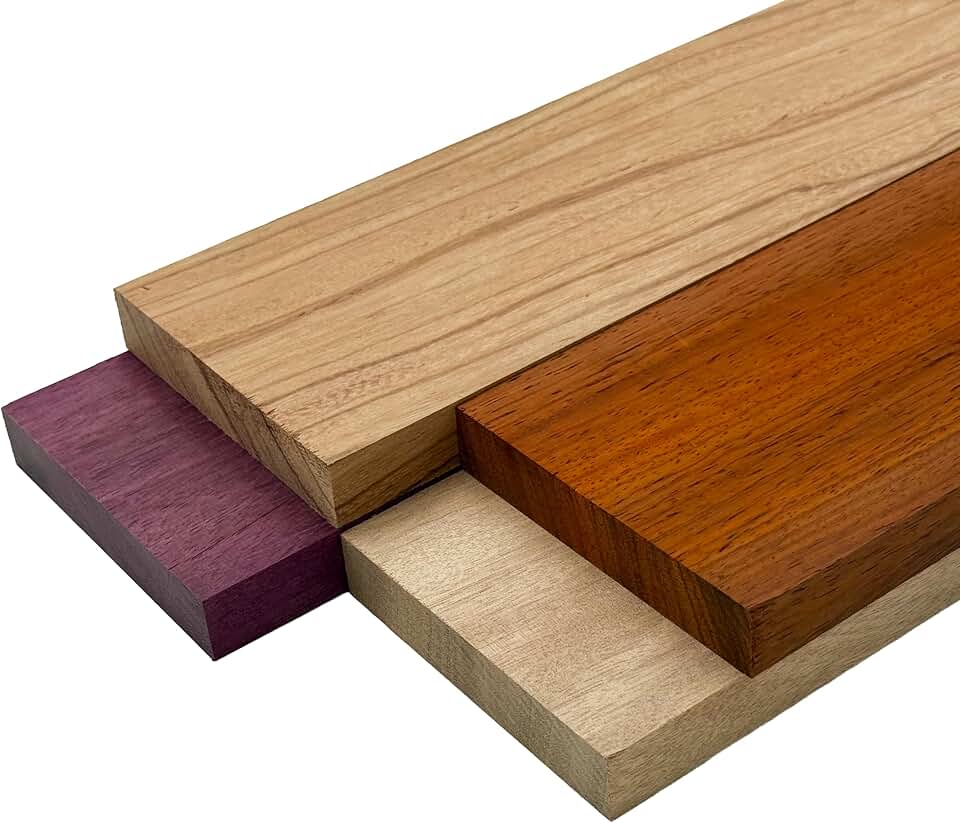
Exotic Hardwood Project Pack
- Four exotic hardwood boards for projects
- Features Red Zebrawood Purpleheart Padauk and Okoume
- Three-quarter inch by four inch by twelve inch size
- Useful for small boxes inlays and accents
- Mixed species offer beautiful color variation
Buy on Amazon
Mixed packs aren’t economical sources for furniture or boatbuilding, and a small sample can’t represent the color range of commercial lumber. Use them to test blade behavior, stain, pore filling, and clear coats before ordering larger stock.
Online Listing Caveats
Online specifications, prices, stock, dimensions, and certification can change. Treat words such as “marine grade”, “void-free,” and “waterproof” as claims requiring product-level evidence rather than proof by themselves.
Check whether listed measurements are nominal or actual and whether boards arrive rough, planed, or sanded. For plywood, request face thickness, core species, ply count, adhesive classification, standard documentation, and a clear damage-return policy before ordering.
Okoume is a strong choice when a project rewards low mass, smooth veneer, and easy machining, provided its softness and moisture limits are addressed in the design. For marine work, buy documented panels, protect every moisture path, and maintain the coating system rather than relying on the species name.
FAQs
Is Okoume Wood A Hardwood?
Yes, okoume is botanically a hardwood, although it is lighter and softer than many familiar hardwoods. It comes from a broadleaf tree rather than a conifer. Its low weight and smooth grain make it popular for plywood, boats, and lightweight furniture.
How Hard Is Okoume Wood?
Okoume is a relatively soft hardwood, with a Janka hardness of roughly 400 lbf. It dents and scratches more easily than oak, maple, or many meranti species. Use sharp tools and predrill near edges; choose a protective finish for surfaces that will receive regular wear.
Is Okoume Wood Waterproof Or Rot-Resistant?
No, solid okoume is not naturally waterproof and has limited natural resistance to decay. Moisture can cause swelling, staining, and rot when the wood is left unprotected. Exterior-grade or marine okoume plywood uses waterproof glue, but its faces and edges still need thorough sealing and maintenance.
What Is The Difference Between Okoume And Meranti Plywood?
Okoume plywood is usually lighter, paler, and easier to bend, while meranti plywood is generally denser, harder, and more varied in color. Meranti is a broad trade name covering several related hardwoods, so quality varies. Both may use exterior glue, but panel durability depends on the grade, core construction, and finish.
Is Okoume Wood Suitable For Outdoor Projects?
Okoume can suit outdoor projects when it is exterior-grade plywood or properly sealed solid wood and receives regular maintenance. It works especially well for painted panels, sheltered furniture, and marine applications with an appropriate coating system. Avoid unsealed edges, direct ground contact, and permanently wet locations.
Affiliate Disclosure: Some links in this post are affiliate links. If you make a purchase through these links, we may earn a small commission at no extra cost to you. We only recommend products we genuinely believe in.