

African Mahogany Wood Guide: Properties, Uses, and Comparisons

Table of Contents
African mahogany is a tropical hardwood from the Khaya genus, used for furniture, cabinetry, doors, veneer, millwork, and decorative woodworking. It looks like mahogany, works well in the shop, and costs less than many genuine mahogany boards, but its grain, color, density, and outdoor durability vary by species and board.
For a clickable title, use: African Mahogany Wood Guide: Properties, Furniture Uses, Sapele Comparison, Cutting Boards, and Buying Tips.
What Is African Mahogany?
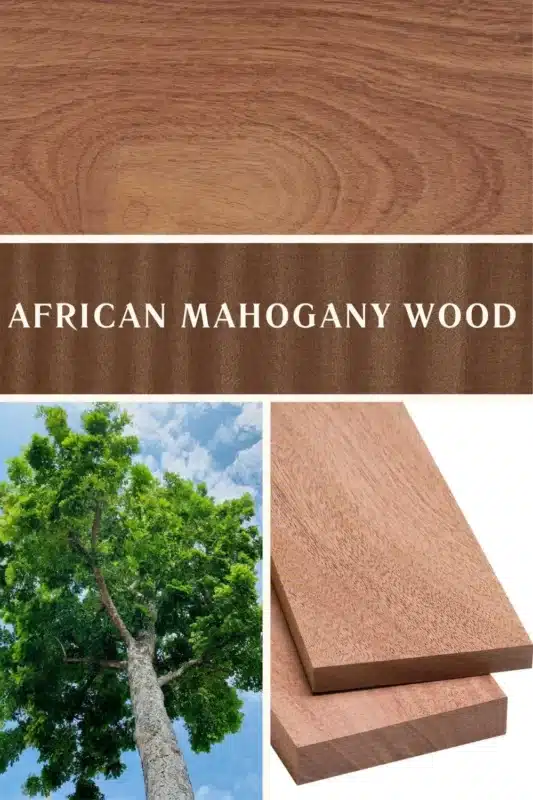
African mahogany wood is a medium-density hardwood sold under a trade name for several Khaya species. It’s valued because it gives builders a warm reddish-brown mahogany look without the sourcing limits and higher cost often tied to genuine Honduran mahogany.
Fresh boards can look pink, salmon, or golden before finish, then warm into a deeper reddish brown after light and oil hit the surface. A freshly planed board often has a soft glow, open pores you can feel with your fingertips, and a faint dry-wood scent when the cutterhead opens the surface.
Khaya Species
Khaya spp. is the botanical group behind most African mahogany lumber. Common commercial species include Khaya ivorensis, Khaya anthotheca, Khaya grandifoliola, and Khaya senegalensis, with Khaya senegalensis often linked to names like Senegal mahogany.
The catch is that lumber yards often sell the boards as African mahogany without naming the exact species. That matters because one stack may feel light and cooperative, while another feels denser, more brittle, or more interlocked under a plane.
Origins and Names
Khaya wood grows across West, Central, and tropical Africa. Trade names include African mahogany, Khaya mahogany, Lagos mahogany, Benin mahogany, acajou d’Afrique, and acajou wood in French-language lumber markets.
Names can cause confusion because acajou may refer to different woods depending on region and trade history. If a supplier lists acajou des Antilles, acajou noix, or plain acajou, ask for the botanical name before buying expensive boards.
Acajou and Khaya
Acajou d’Afrique commonly points to African mahogany, but the word “acajou” has broader use in timber markets. This is one reason online listings can mix Khaya, genuine mahogany, and unrelated red tropical woods under similar labels.
A practical workaround is to ask for Khaya confirmation, country of origin, moisture content, and whether the lumber is flatsawn, riftsawn, or quartersawn. A seller who can’t answer those questions may still have usable wood, but the risk of mismatch rises fast.
Khaya vs Swietenia
Khaya vs Swietenia is the key naming split. African mahogany comes from Khaya, while genuine or Honduran mahogany usually refers to Swietenia, especially Swietenia macrophylla.
Both sit in the Meliaceae family, which explains the visual and working overlap. The distinction still matters for buyers, because genuine mahogany is usually more predictable in grain and texture, while African mahogany gives more variation from board to board; for a deeper species background, compare it with our guide to mahogany wood.
Common Lumber Forms
African mahogany lumber is sold as rough boards, S2S, S3S, S4S boards, veneer, plywood faces, turning blanks, craft boards, and furniture-grade stock. Rough lumber gives the best yield for equipped shops, while S4S boards save setup time for small tools and apartment workshops.
- Rough 4/4 boards for cabinet parts, drawer fronts, and panels.
- 5/4 and 6/4 stock for table aprons, rails, and thicker case parts.
- 8/4 stock for legs, posts, carved parts, and turning blanks.
- Quartersawn veneer and boards for ribbon stripe furniture faces.
- Small craft boards for models, boxes, laser work, and samples.
African Mahogany Wood Properties

African mahogany properties place it in the middle of many furniture hardwoods: lighter than sapele, harder than genuine mahogany by common Janka figures, and stable enough for doors, cabinets, and tables when dried correctly. The most useful values are Janka hardness, density, shrinkage, strength, and decay resistance.
Common technical values align with published wood-species references such as The Wood Database, though real boards can vary because African mahogany is a trade group, not one single tree species. Use the numbers as a planning range, then judge the actual stock in your hands.
| Property | Typical African Mahogany Value | Practical Meaning |
|---|---|---|
| Janka hardness | About 1,070 lbf | Good for furniture, moderate dent resistance |
| Average dried weight | About 33 lb/ft³ / 530 kg/m³ | Lighter than sapele, easy to handle in large parts |
| Modulus of rupture | About 11,710 psi / 80.8 MPa | Strong enough for most furniture frames |
| Radial shrinkage | About 4.0% | Fairly stable across the growth rings |
| Tangential shrinkage | About 5.7% | Manageable movement with good design |
| Rot resistance | Moderate to durable heartwood | Works outside only with sound design and finish care |
Janka Hardness
African mahogany Janka hardness is about 1,070 lbf. That makes it softer than sapele at about 1,410 lbf and hard maple at about 1,450 lbf, but slightly harder than black walnut at about 1,010 lbf and cherry at about 950 lbf.
In use, this means table edges, chair arms, and cabinet doors hold up well, but a dropped pan or metal tool can leave a visible dent. For high-impact tops, use protective pads, thicker finishes, or choose a harder wood for the wear surface.
Density and Weight
Average dried weight is about 33 lb/ft³, or 530 kg/m³. That moderate density makes African mahogany pleasant for large doors, wide panels, bookcases, and desks because the parts don’t feel as heavy as sapele or many denser tropical hardwoods.
Weight can still shift by board. A light board may feel almost cedar-like under a hand plane, while a denser board makes the saw note deeper and throws heavier chips against the dust hood.
Strength Values
Strength values commonly cited for African mahogany include a modulus of rupture around 11,710 psi, elastic modulus around 1,421,000 psi, and crushing strength near 6,780 psi. Those numbers suit furniture frames, casework, cabinet rails, table aprons, and door stiles.
For slender chair parts or thin legs, use grain selection before you rely on averages. Pick straight grain, avoid short grain near curves, and reject brittle boards that chip along interlocked bands.
Shrinkage and Stability
Shrinkage values are roughly 4.0% radial, 5.7% tangential, and 9.3% volumetric, with a T/R ratio near 1.4. That’s favorable for furniture and doors, provided the boards are dry and the design allows seasonal movement.
The beginner mistake is gluing wide solid panels into fixed frames because the wood “looks stable.” Use floating panels, elongated screw holes, breadboard methods that allow movement, or veneer over stable cores for wide built-ins.
Rot Resistance
Heartwood durability is usually rated moderate to durable, but sapwood and lower-density boards should not be trusted outdoors. African mahogany can work for protected exterior doors and trim, but it is not a ground-contact or wet-decking wood.
For outdoor pieces, success comes from water management: seal end grain, slope horizontal surfaces, leave airflow behind trim, and keep finish maintained before gray cracks appear. If you want a tougher exterior comparison, see our guide to iroko wood.
Appearance, Grain, and Finishing
African mahogany appearance ranges from pale pinkish brown to medium reddish brown, often with a natural luster that becomes richer under oil, shellac, varnish, or lacquer. Its open pores and interlocked grain create beauty, but they also create finishing and tearout problems.
The first finish wipe is often dramatic: the surface shifts from dusty salmon to warm red-brown, and ribbon bands flash darker as the light moves. That change is useful for furniture, but it makes offcut testing non-negotiable when color matching multiple boards.
Color and Darkening
African mahogany color can be pale pink, salmon brown, golden reddish brown, or medium red-brown. Freshly milled boards often look lighter than expected, then deepen after UV exposure and finish.
To avoid a patchy tabletop, arrange boards under similar lighting, wipe them with mineral spirits, and group color families before cutting joinery. Dye or toner can bring parts closer, but it won’t fully hide mismatched density or grain direction.
Ribbon Stripe Grain
Ribbon stripe grain appears most clearly on quartersawn African mahogany. The figure comes from interlocked grain reflecting light in alternating bands, which is why panels seem to change from dark to bright as you walk past them.
This figure is beautiful on doors and wall panels, but interlocked fibers can lift during planing. Use sharp cutters, very shallow passes, and scraping on show faces instead of forcing one more heavy pass through the planer.
Texture and Pores
Texture is medium to coarse, with open pores that remain visible under many finishes. If you want a glass-smooth dining table or formal cabinet, plan for pore filler instead of trying to bury the pores under many coats.
A beginner often sands to too fine before staining, then wonders why the color looks weak. Stop around 180 or 220 grit for most furniture finishes, test the schedule, then fill pores after sealing if you want a refined surface.
Identification Clues
Identification clues include reddish-brown heartwood, medium-to-coarse texture, open pores, moderate luster, and straight to interlocked grain. Quartersawn boards may show ribbon stripe, while flatsawn boards can show wider cathedral patterns.
African mahogany is often confused with sapele, utile, meranti, Spanish cedar, and genuine mahogany. If a listing says Philippine mahogany, compare it with meranti wood, because that name often points to Shorea species rather than Khaya.
Best Finish Options
Best finish options include Danish oil, oil-varnish blend, shellac, lacquer, wiping varnish, polyurethane, and exterior spar varnish where exposure demands it. Oil deepens the reddish tone, while shellac and lacquer give a classic furniture glow.
For a formal finish, use this reliable sequence: sand to 180 or 220, apply dye if needed, seal with dewaxed shellac, use pore filler, level lightly, then topcoat with lacquer or varnish. Test on offcuts because some boards drink finish unevenly.
Common Finish Problems
Common finish problems include blotchy color, visible pores, raised grain under waterborne coatings, and scratches that stand out across interlocked bands. The wood can look flat under a clear water-based finish unless you warm it first with dye, shellac, or an oil-compatible system.
The shop fix is simple: never finish the project before you finish a sample board from the same stock. Label each sample with grit, stain, filler, sealer, and topcoat so you can repeat the winning schedule later.
Workability and Shop Safety
African mahogany workability is usually good with hand tools and machines, especially when the grain is straight. The main shop challenge is interlocked grain, which can tear out during planing, routing, and aggressive sanding.
On the saw, the cut often feels smooth and light compared with sapele, and the chips have a dry, reddish dustiness. If the board starts chattering or lifting fibers, slow down and treat it like figured wood rather than plain straight-grain stock.
Cutting and Machining
Cutting and machining are easy when knives are sharp and feed rates are controlled. African mahogany saws, drills, routs, and shapes well, making it friendly for cabinet doors, rails, raised panels, moldings, and curved furniture parts.
Use a sharp carbide blade for crosscuts and support the exit side to reduce splintering. On routers, take multiple shallow passes because deep cuts can lift fuzzy grain along reversing bands.
Tearout Prevention
Tearout prevention starts before the planer: read the grain, mark the feed direction, and avoid heavy passes on ribbon stripe stock. A helical cutterhead helps, but it doesn’t make careless milling safe.
- Joint one face with the grain direction that gives the least lifting.
- Run planer passes at very light depth on show faces.
- Use a card scraper or cabinet scraper on reversing grain.
- Switch to a high-angle hand plane for small areas.
- Reserve the cleanest face for the visible side of the project.
Gluing and Fasteners
Gluing is reliable with PVA, epoxy, polyurethane glue, and other standard woodworking adhesives. If a board feels dusty or slightly oily after milling, wipe it clean and glue soon after final surfacing.
Pre-drill screws near edges and ends because splits can travel along coarse grain. For exterior doors and trim, use stainless steel or corrosion-resistant fasteners to avoid dark staining around hardware.
Sanding Progression
Sanding progression usually works well at 120, 150, 180, then 220 grit for furniture. Skipping grits leaves scratches that appear after dye or oil, especially across ribbon stripe sections.
Use raking light and your bare fingertips to check the surface; torn grain feels like tiny raised whiskers even when it looks smooth. Don’t press hard with a random-orbit sander, because heat and swirl marks can become visible under finish.
Dust Safety
Dust safety matters because African mahogany dust can irritate skin, eyes, and lungs in sensitive users. Use dust collection, eye protection, and a respirator when sawing, routing, or sanding.
The dust is fine enough to hang in light after sanding, and it can leave a dry tickle in the throat if extraction is poor. Vacuum the bench before finishing so open pores don’t trap reddish dust under clear coats.
Practical Notes From Real-World Use
Real-world use shows African mahogany is most dependable when you buy extra length and width for board matching, grain surprises, and milling loss. The boards that look best in the rack aren’t always the easiest to plane, so save figured faces for panels and use straighter grain for rails, legs, and structural parts.
One common mistake is building a door from mixed-density stock: one stile machines cleanly, the other fuzzes, and the finish makes the mismatch louder. Lay out full projects before cutting, keep parts from the same board together, and mark show faces with chalk before the first rip cut.
African Mahogany Furniture and Projects
African mahogany furniture is a strong choice when you want warm color, moderate weight, classic appearance, and good machining. It suits tables, desks, cabinets, beds, bookcases, doors, trim, wall panels, and decorative fronts.
The best projects use the wood’s strength-to-weight ratio rather than treating it like a high-abuse flooring species. It shines in vertical surfaces, frames, panels, and shaped parts where its color and luster can carry the design.
Furniture and Cabinets
Furniture and cabinets are the safest high-value uses for African mahogany. Cabinet doors, drawer fronts, table aprons, case sides, bed rails, and built-ins gain a rich mahogany look without the weight of denser tropical woods.
For kitchen cabinets, use stable panel construction and a durable topcoat because steam, hand oils, and cleaning sprays test the finish more than the wood. Match boards carefully on wide door sets so one pink door doesn’t sit beside one dark red door.
Outdoor Furniture Suitability
Outdoor furniture suitability is limited but workable in protected settings. African mahogany can be used for covered porch furniture, exterior benches under shelter, and decorative outdoor pieces if the design sheds water and the finish is maintained.
For the query “is African mahogany good for outdoor furniture,” the honest answer is: yes, with limits. Don’t use it for ground contact, uncovered horizontal seats that hold rain, or parts where end grain sits in standing water; for more weather-focused comparisons, see teak wood.
Exterior Doors and Trim
Exterior doors are one of the better outdoor uses because the wood remains mostly vertical and can be sealed on all faces. The finish schedule matters more than the species name on the invoice.
Seal end grain, finish the top and bottom edges before hanging, use UV-resistant coatings, and refresh the finish before it cracks. Many exterior failures start at the bottom rail where water wicks into exposed end grain that nobody sealed.
Boatbuilding and Instruments
Boatbuilding and instruments use African mahogany for interior trim, decorative marine joinery, guitar bodies, guitar necks, backs, sides, and drum shells. It offers a mahogany-like look and workable density for shaping and resonant parts.
Marine use needs careful board selection. Choose clear heartwood, avoid sapwood, seal every surface, and don’t assume every Khaya board has equal decay resistance just because the invoice says mahogany.
Turning and Small Projects
Turning blanks in African mahogany work well for pens, knobs, handles, boxes, bottle stoppers, bowls, and small decorative parts. Straight-grain blanks cut cleanly and polish to a warm glow.
Highly interlocked blanks can feel chippy on the lathe, especially near end grain. Keep gouges sharp, take light cuts, and use sanding sealer before final sanding if the surface stays fuzzy.
Pros and Cons
Pros and cons depend on the project. African mahogany is attractive, stable, workable, and widely useful, but it can tear out, vary in color, show open pores, dent more easily than sapele, and raise sustainability questions if sourcing is vague.
- Pros: warm color, moderate weight, good furniture stability, attractive ribbon stripe, and strong finish response.
- Cons: variable boards, interlocked grain, open pores, dust irritation risk, and limited outdoor reliability without care.
- Best workaround: buy extra stock, sort by color and density, mill lightly, and test finish schedules before assembly.
African Mahogany vs Sapele
African mahogany vs sapele comes down to weight, hardness, figure, and workability. African mahogany is usually lighter and easier to machine, while sapele is harder, denser, darker, and often more dramatic in ribbon figure.
Both woods belong to the Meliaceae family, but sapele is Entandrophragma cylindricum rather than Khaya. If you’re comparing these for a door or cabinet project, our full sapele wood guide gives more detail on that species.
Sapele Comparison Table
| Feature | African Mahogany | Sapele |
|---|---|---|
| Botanical group | Khaya spp. | Entandrophragma cylindricum |
| Family | Meliaceae | Meliaceae |
| Average dried weight | About 33 lb/ft³ / 530 kg/m³ | About 42 lb/ft³ / 670 kg/m³ |
| Janka hardness | About 1,070 lbf | About 1,410 lbf |
| Color | Pinkish brown to reddish brown | Golden to dark reddish brown |
| Grain | Straight to interlocked | Often strongly interlocked |
| Figure | Ribbon stripe, mottled, sometimes curly | Ribbon stripe, pommele, quilted, beeswing |
| Workability | Easier overall | Harder and more tearout-prone |
| Best fit | Furniture, cabinets, trim, lighter doors | Premium doors, furniture, instruments, veneer |
When Khaya Is Better
Khaya is better when you want lighter furniture, easier routing, simpler hand-tool work, and a warmer classic mahogany feel. It’s often the better choice for large case pieces where sapele’s extra weight becomes annoying during assembly and delivery.
Choose African mahogany for cabinet doors, interior trim, shaped rails, furniture frames, and projects where workability beats maximum dent resistance. It’s also forgiving for builders still learning grain reading and scraper use.
When Sapele Is Better
Sapele is better when you want stronger dent resistance, darker color, and bolder ribbon figure. It’s a strong pick for premium doors, decorative panels, instrument parts, and showpiece furniture where dramatic figure drives the design.
The trade-off is harder machining. Sapele can tear out aggressively, dull tools faster, and feel heavy in large parts, so budget more time for milling, scraping, and sanding.
Genuine Mahogany Comparison
Genuine mahogany comparison favors Swietenia for refinement and predictability, while African mahogany wins on availability and often cost. Genuine Honduran mahogany is usually finer textured, more uniform, and easier to carve, with common Janka values around 900 lbf.
International trade rules affect Swietenia sourcing; the CITES Appendices list controls for protected species and trade groups. For buyers, the practical step is asking whether the lumber is Khaya or Swietenia before comparing price.
Meranti and Utile
Meranti and utile are other woods that may appear in mahogany-style listings. Meranti, often sold as Philippine mahogany, is usually Shorea and should not be treated as the same wood as African mahogany.
Utile is closer in use and appearance, but it still has its own working traits. If a seller uses only generic mahogany, ask for the genus before buying boards for matched furniture or exterior work.
Is African Mahogany Good for Cutting Boards?
African mahogany cutting boards are better kept to serving, charcuterie, and decorative use than daily chopping. The wood has open pores, medium-to-coarse texture, moderate hardness, and tropical extractives that make it less ideal than hard maple, walnut, cherry, or beech for heavy-use boards.
The search question “is African mahogany good for cutting board” needs a nuanced answer: it can be used for light serving boards with food-safe oil, but it’s not a top professional pick for a hard-working kitchen cutting surface.
Short Answer
Short answer: African mahogany is not ideal for heavy cutting boards. Use it for decorative serving boards, cheese boards, or accent pieces rather than daily chopping boards.
If someone wants the look, keep it as a serving surface and avoid deep knife work. Once knife cuts open the surface, coarse pores and interlocked grain become harder to clean and maintain.
Why It Is Not Ideal
Open pores are the first issue. Traditional cutting board woods tend to be tighter textured, while African mahogany’s coarser pores can trap moisture, food residue, and finish wear more easily.
Hardness is the second issue: at about 1,070 lbf, it’s below hard maple and only slightly above walnut. It can roughen, splinter, or lift fibers under repeated chopping, especially if the grain reverses through the board.
Better Cutting Board Woods
Better cutting board woods include hard maple, walnut, cherry, and beech. Hard maple is a classic choice because it is harder, tighter grained, and widely used in butcher blocks.
| Wood | Approximate Janka Hardness | Cutting Board Suitability |
|---|---|---|
| Hard maple | 1,450 lbf | Excellent for working boards |
| Walnut | 1,010 lbf | Good, slightly softer feel |
| Cherry | 950 lbf | Good for lighter boards |
| African mahogany | 1,070 lbf | Better for serving than chopping |
Serving Board Use
Serving board use is a better fit because the board sees cheese, bread, fruit, and presentation instead of repeated knife blows. The reddish color looks warm beside pale cheeses and bread crusts.
Choose clear heartwood with no cracks, no sapwood, no checks, and no loose grain. Sand thoroughly, break sharp edges, and avoid unknown stains or film finishes that may chip under a knife.
Food-Safe Finishes
Food-safe finishes for serving boards include pure mineral oil, cutting board oil, and beeswax-mineral oil blends. These finishes are easy to renew and don’t form a brittle film that knife marks can break.
Do not use mystery oils, hardware-store stains, or thick film finishes on a board that touches food. Let any oil soak in, wipe it dry, then reapply whenever the surface looks pale and feels dry.
Buying African Mahogany Lumber

Buying African mahogany lumber is easier when you understand rough vs S4S, board feet, moisture content, grade, figure, and sourcing. The cheapest board is not always the best value if you lose too much to cupping, color mismatch, cracks, or surfacing waste.
Ask more questions than the tag answers. A good board for furniture should be dry, clear, stable, and suitable for the cut pattern you need, not just reddish and labeled mahogany.
Rough vs S4S
Rough lumber costs less per board foot and gives you more control over final thickness, but it requires a jointer, planer, or hand-tool milling setup. S4S boards cost more because milling labor and waste are built into the sale.
For small shops, S4S can be worth the premium if the boards are flat and accurately sized. Still bring a straightedge, because surfaced boards can move after milling and arrive with a twist you didn’t pay to fix.
Thickness and Board Feet
Board foot math uses this formula: thickness in inches × width in inches × length in inches ÷ 144. A 1-inch thick, 8-inch wide, 72-inch long board equals 4 board feet.
Common thicknesses are 4/4, 5/4, 6/4, and 8/4. Buy thicker than your final part needs because rough boards lose material during flattening, and interlocked stock may need extra passes to clean both faces.
Price Factors
African mahogany price changes with thickness, width, length, grade, figure, surfacing, certification, supplier type, and shipping distance. Wide, clear, quartersawn, or figured boards cost more than narrow plain-sawn stock.
Small craft boards often look expensive per board foot because the seller has already paid for milling, sorting, drying, packaging, and shipping. That can still be cheaper than buying an 8-foot rough board for a pen, box, or laser project.
Moisture and Grade
Moisture content for indoor furniture is commonly targeted near 6–8%, depending on region and storage. The USDA Forest Products Laboratory’s Wood Handbook explains why moisture and dimensional change drive so many wood failures.
Ask whether the lumber is kiln dried, air dried, FAS, Select, flatsawn, riftsawn, quartersawn, rough, or surfaced. If you don’t own a moisture meter, at least let new boards acclimate on stickers before cutting final joinery.
Sustainability Questions
Sustainability questions matter because Khaya species have faced harvesting pressure in parts of their range. Ask for FSC certification where available, country of origin, species name, and supplier sourcing details.
The Forest Stewardship Council provides one widely recognized certification system, but certification is only one tool. Avoid vague listings that say only “mahogany” with no botanical or regional detail.
Boards and Blanks
Boards and blanks are useful when you need small parts, samples, turning stock, scroll saw pieces, inlay, or laser-friendly sheets. Check dimensions, thickness tolerance, moisture claims, and whether the listing says African mahogany rather than generic mahogany.
Here are small-project options to compare after you’ve checked the dimensions and species wording.

African Mahogany Sheets for Crafts
- Lightweight wood sheets for easy handling
- rich mahogany tone for a polished look
- great for decor, models, and DIY builds
- smooth surface suited to cutting and finishing
- versatile size for creative woodworking projects
 Buy on Amazon
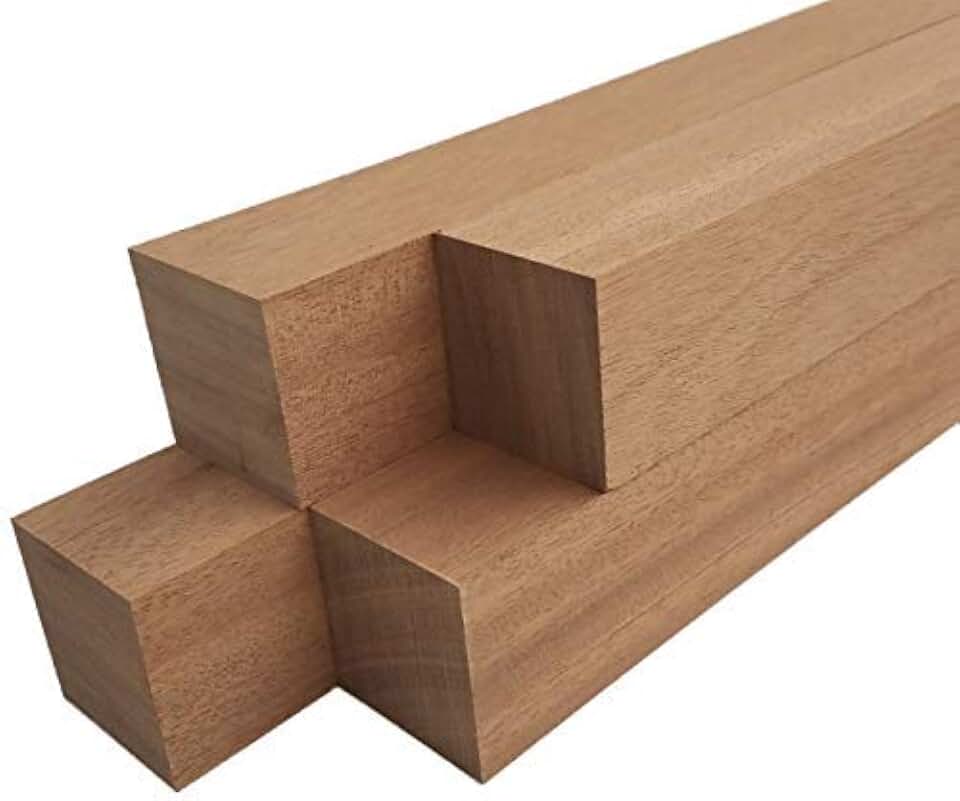
Mahogany Turning Blanks Set
- Set of 4 square blanks for turning projects
- dense hardwood supports clean shaping
- ideal for pens, handles, and small parts
- warm grain adds a premium finish
- consistent size helps with reliable results
Buy on Amazon

African Mahogany Craft Board
- Solid hardwood with a smooth unfinished surface
- easy to cut, engrave, and sand
- ideal for scroll saw and laser projects
- attractive grain works well for decor
- handy size for hobby and craft use
Buy on Amazon

African Mahogany Board Pack
- Pack of 5 boards for larger project needs
- durable hardwood with great working stability
- suitable for cutting, shaping, and finishing
- rich color brings warmth to builds
- useful for furniture parts and shop projects
Buy on Amazon
What to Check
What to check before buying: botanical name, actual dimensions, moisture content, board flatness, cracks, sapwood, grain direction, surfacing level, return policy, and shipping method. Photos should show the real boards or a clear sample of the expected grade.
- Ask if the stock is Khaya and whether the exact species is known.
- Confirm rough, S2S, S3S, or S4S before comparing price.
- Buy extra for milling loss, color matching, and rejected defects.
- Use quartersawn boards for ribbon stripe panels and stable door faces.
- Reject boards with checks, insect damage, severe twist, or pale sapwood for exterior use.
Final takeaway: African mahogany is a good furniture and millwork hardwood when you respect its variation, open pores, and interlocked grain. Choose it for warm color, workable weight, and classic style; choose sapele, maple, teak, or another species when hardness, cutting-board hygiene, or heavy outdoor exposure matters more.
FAQs
Is African Mahogany Real Mahogany?
No, African mahogany is not true mahogany. It is a common trade name for several hardwoods from Africa, especially Khaya species, that look and work similarly to genuine mahogany.
Is African Mahogany Good For Outdoor Furniture?
Yes, African mahogany can be good for outdoor furniture if it is properly sealed and maintained. It has decent durability, but for long-term outdoor use, regular finishing and protection from constant moisture are important.
Is African Mahogany Better Than Sapele?
Neither wood is always better; it depends on the project. African mahogany is usually easier to work and has a warmer, more uniform look, while sapele is often harder, denser, and more striking in grain.
Is African Mahogany Good For Cutting Boards?
African mahogany is not the best choice for cutting boards. It is open-pored and not as food-surface-friendly as woods like maple, walnut, or teak, which are generally preferred for repeated knife contact and washing.
Does African Mahogany Darken Over Time?
Yes, African mahogany usually darkens over time. Exposure to light and air gradually deepens its color, giving it a richer, warmer appearance as it ages.
Affiliate Disclosure: Some links in this post are affiliate links. If you make a purchase through these links, we may earn a small commission at no extra cost to you. We only recommend products we genuinely believe in.


